


Notes from Dr. Michael A. Scordato’s Classroom Teachings
__________________________________________________________________
The Weight of the Mountain
Pride, Power, and the Path Back to God
A Composite Case Study Combining Several Cases Together Grounded in the Counseling Principles of James 1:1–4, the Peirasmos Scripture Chain (THIS CHAIN FOUND COMPLETED IN DETAIL PART OF OUR JAMES 1:2-4 STUDY), and the 1 Kings 19:1-18 Elijah Method.
Framework: The Three Counseling Principles at Work in This Case Supported in Original Language Biblical Koine Greek and Hebrew
Every session in this transcript is built on three interlocking counseling frameworks while evaluating 2 Corinthians 13:5 concept of making sure the counselee is in the faith, not simply Matthew 7:21-23 doing religious motion without a true relationship resulting in a “I Never Knew You” from God. Understanding these before reading the sessions allows the reader to see not only what the counselor says, but why — and how each move maps to a replicable, Scripture-grounded method.
Framework One: The Five Principles of James 1:1–4
James begins his letter of counsel not with diagnosis but with blessing — active joy declared over people in the middle of their trials. Effective biblical counseling follows this exact shape. The five ways of counseling principles drawn from these four verses govern every session here.
Summary:
- Principle 1 — Begin with Blessing, Not Diagnosis (v. 1): The counselee is received as a brother or sister in Christ before any problem is named.
- Principle 2 — Reframe Trials Through a English Greek based Teleological Lens [telos (‘purposeful’ = “end”) and logos (‘spoken logic’ = “reason”)] as seen in (v. 2-4): Hardship is not denied or minimized; it is reappraised from an eternal vantage point, as the crucible in which perseverance is being formed.
- Principle 3 — Honor the Process Without Rushing the Product (v. 3): Grief and struggle are not problems to be solved but seasons to be accompanied. The counselor slows down where the counselee is in pain.
- Principle 4 — Build Toward Wholeness, Not Merely Wellness (v. 4): The telos is not emotional stability but teleios kai holokleros — mature and whole, lacking nothing. This vision is named explicitly, not assumed.
- Principle 5 — Practice Mutual Joy (v. 1-4): The counselor genuinely delights in each sign of the counselee’s growth. Joy announced over small faithful acts is how James’s greeting becomes flesh in the counseling room.
Framework Two: The Peirasmos Six-Step Scripture Chain
The transformation pathway that moves a person from the reality of temptation and trial all the way to a renewed, sound mind follows six sequential steps. Each session introduces the client to the next step on the chain, building toward the full pathway.
Summary:
- Step 1 — Put Off / Be Renewed / Put On (Ephesians 4:22–24): Honest inventory of the old self that must be laid down.
- Step 2 — Humble and Cast (1 Peter 5:6–9): Humility as the precondition. The anxious, self-reliant mind is surrendered before any other step is possible.
- Step 3 — Submit, Then Resist (James 4:7): Resistance to sin flows from prior surrender. Willpower alone exhausts; submission re-establishes who holds authority in the soul.
- Step 4 — The Peace That Guards (Philippians 4:7): The fruit of surrender is not relief but a supernatural sentinel guarding the gates of the mind.
- Step 5 — Capacity Through Christ (Philippians 4:13): The famous verse lands with its proper weight only here — as the capstone of a walked pathway, not a motivational slogan.
- Step 6 — The Sound Mind as Promise (2 Timothy 1:7): Sophronismos — a mind saved into wholeness. Not merely calm but restored to its intended order under the Lordship of Christ.
Framework Three: The Elijah Method — Physical Before Spiritual
Even professional counselors forget this: before God addressed Elijah’s spiritual despair, He attended to Elijah’s physical state — food, water, and sleep.
The Exhaustion of the Soul (1 Kings 19:4)
“Enough!” (רַב, Rav): Elijah screams, “It is enough!” (Rav ‘attah). This word means “much,” “many,” or “too much.” It signifies he was completely overloaded and that he could no longer take the pressure of his prophetic role.
“Take my life” (קַח נַפְשִׁי, Qach naphshi): Literally, “take my soul.” Elijah is asking for death (often called a “suicide prayer”) because he is utterly burnt out.
“I am no better than my fathers” (כִּי־לֹא־טוֹב אָנֹכִי מֵאֲבֹתָי, Ki-lo-tov anochi me’avotai): This phrase highlights his feelings of inadequacy, suggesting he is no more capable of bringing repentance to Israel than the generations before him who also failed.
“Too much for you” (מִמְּךָ הַדֶּרֶךְ, Mimka haderekh): The angel says, “the way is too much for you” (or “too great for you”). The angel uses the same word for “too much” (rab – often associated with the phrase) as Elijah did in his complaint, validating his fatigue.
But by later (1 Kings 19:9)
“What are you doing here, Elijah?” (מַה־לְּךָ פֹה אֵלִיָּהוּ, Mah-leka foh Eliyahu?): This is a direct, personal inquiry. God is asking him to stop running and to re-evaluate why he has chosen this place of hiding (the cave) over his place of service (Israel).
Grace for the weary: God does not rebuke Elijah for his fatigue, but provides food and rest.
The shift in relationship focus: Elijah is moving from the fast paced spectacular fire on Mt. Carmel to a quieter, more slowed downed intimate relationship with God at Horeb.
Recommissioning: Through this process of reorientation, God moves Elijah from a state of a loud “I am done” to a new, specific, and “quiet” calling.
Is the counselee sick? Have injury? The sequence is not incidental; it is God’s own model for holistic restoration (1 Kings 19:4-9). A person whose body is depleted cannot receive spiritual counsel at full capacity. God restores the physical before any heavy counsel in His own example toward us. This means the counselor assesses physical foundations early and returns to them when the work stalls. The body is the temple of the Holy Spirit (1 Corinthians 6:19-20, NKJV) and tending to it is not self-care — it is an act of stewardship and worship.
Case Overview
Client Profile
Name: Marcus H. (composite, name changed)
Age: 52
Presenting Situation: Marcus is a former senior executive terminated following a workplace investigation into his treatment of subordinates. His marriage of twenty-four years is separated, his wife citing emotional neglect and contempt over many years. His two adult children have limited contact. He presents at the insistence of his pastor.
Self-described reason for coming: “I need to get my life back together.”
Pastor’s referral note: “Marcus is a man of great ability who has spent decades using that ability in the service of himself. He is in pain but does not yet know why. He may resist. Please persist.”
The Obadiah Parallels
The themes of Obadiah govern this case. Marcus, like Edom, built his life on a position of perceived strength.
Like Edom in its mountain fortress of Petra (Sela), he developed a deep confidence in his own invulnerability.
Like Edom, he responded to others’ weakness with contempt rather than compassion. And like Edom’s allies who turned against her, every relationship Marcus relied on has collapsed precisely when he needed it most.
The counseling goal is not to simply improve Marcus’s circumstances — it is to move him from Edom’s mountain to Zion’s, from self-built security to the kingdom that belongs to God alone (Obadiah 1:21, NKJV).
Session One: Beginning with the Whole Person
Counseling Principles Active: James 1:1 (Begin with Blessing) | Elijah Method (Physical Assessment) | Peirasmos Step 1 (Honest Inventory)
Obadiah Text: 1:3-4 — Pride and False Security
[Marcus enters the counseling office. He is well-dressed, posture controlled and confident. He checks his phone once as he sits, then sets it face-down — a small gesture of managed condescension. He expects to run the room.]
▶ Principle 1 — Begin with Blessing, Not Diagnosis
COUNSELOR: Marcus, thank you for being here today. Before anything else, I want you to hear something clearly: the fact that you walked through that door is not a small thing. Whatever brought you here — pressure from your pastor, pain from what’s happened, some part of you that knows something needs to change — God sees it, and I’m genuinely glad you came. You are not a problem to be managed in this room. You are a person made in God’s image, and that remains true regardless of what this past season has looked like.
Counselor’s Note — James 1:1 Applied
James’s letter opens with ‘greetings’ — chairein — active joy declared over people in the middle of their trials. The counselor does not open with intake questions or problem assessment. The first move is a benediction: naming Marcus’s dignity before naming his difficulty. This is not a technique; it is the shape of how Scripture itself approaches people in pain.
MARCUS: I appreciate that. I’ll be honest — I’m not sure I need this. My pastor means well, but what I mainly need is a strategy for getting my life reorganized. Things fell apart fast. I just need to think clearly again.
COUNSELOR: Strategy is something we can absolutely work toward. But before we talk about what to do next, I want to understand you as a whole person first. Mind, spirit — and body. Can I ask some straightforward questions about how you’re physically doing right now?
MARCUS: Physically? I’m fine.
COUNSELOR: How are you sleeping?
MARCUS: Four hours, maybe five. My mind doesn’t stop.
COUNSELOR: Eating regularly?
MARCUS: I grab whatever. I’ve lost about fourteen pounds in eight weeks. People keep telling me I look tired.
COUNSELOR: Fourteen pounds in eight weeks is significant. Here’s why I’m asking, and I want you to follow the logic carefully. There’s a prophet in the Old Testament — Elijah — arguably the most powerful man of God in his generation. After his greatest ministry victory, he collapsed under a tree in the wilderness and begged God to let him die. Full spiritual and emotional breakdown. Do you know what God did first? Not theology. Not a counseling session. God sent an angel with food and water and told him to sleep. Then food again. Then more sleep. Then — and only then — did God address the spiritual weight.
1 Kings 19:5-7 (NKJV) — “Suddenly an angel touched him, and said to him, ‘Arise and eat.’ Then he looked, and there by his head was a cake baked on coals, and a jar of water…And the angel of the LORD came back the second time, and touched him, and said, ‘Arise and eat, because the journey is too great for you.'”
COUNSELOR: The journey ahead of you — honestly examining your life, doing real repair work — is too great for a man running on four hours of sleep and fourteen pounds lighter than he should be. Your body is a temple of the Holy Spirit. Neglecting it is not discipline; it is self-destruction dressed up as toughness. Before we go deep spiritually, I’m going to ask you to commit to three physical foundations this week: regular meals, eight hours in bed each night with the phone in another room, and adequate water through the day. These are not optional add-ons. They are the ground we counsel from.
Counselor’s Note — Elijah Method Applied
The counselor addresses physical foundations before engaging the presenting spiritual and relational problems. This follows God’s own sequence with Elijah precisely. A depleted body produces a mind that cannot properly receive, process, or apply Scripture. The fourteen-pound weight loss and five hours of sleep are not background details — they are clinical data that must be addressed as part of the counseling plan. The body is the temple (1 Corinthians 6:19-20, NKJV); its care is an act of worship.
MARCUS: You’re saying I need to eat and sleep before you’ll talk about my life?
COUNSELOR: I’m saying that a man whose body is in freefall will hear hard truths and not be able to hold them. I want what we talk about in this room to actually take root. So yes — body first. God modeled it. Now let’s also do a brief inventory of the soul. I want to read you something and have you sit with it honestly.
▶ Peirasmos Step 1 — Put Off / Be Renewed / Put On (Ephesians 4:22-24)
Ephesians 4:22-24 (NKJV) — “…put off, concerning your former conduct, the old man which grows corrupt according to the deceitful lusts, and be renewed in the spirit of your mind, and…put on the new man which was created according to God, in true righteousness and holiness.”
COUNSELOR: Paul describes a process: take off what is old and corrupted — like removing a worn-out, dirty shirt you’ve had on so long you stopped noticing the smell. Then renew your mind with truth. Then put on the new way of living that corresponds to who God says you actually are. The trial you’re in right now did not create the corruption Paul is talking about. It exposed it. Trials always surface what is already there. So I want to ask you plainly: in your own words, what went wrong?
MARCUS: I got betrayed. I built that division from twelve people to over two hundred. The revenue numbers were mine. Then the moment some HR complaint came in — from someone I’d pushed hard because they weren’t performing — the company threw me out. Twenty-two years. Gone in a week.
Counselor’s Note — Ephesians 4:22-24 Diagnostic
Marcus’s account contains no self-examination. His narrative has a single villain. This is the ‘old man’ Paul describes — not yet recognized as old because it has been the only shirt Marcus has worn. The counselor does not confront this immediately. The first session’s goal is to introduce the framework (put off / renew / put on), begin the physical restoration plan, and plant one seed of honest self-perception. Confrontation before trust produces defensiveness, not transformation.
▶ Principle 2 — Reframe Trials Through a Teleological Lens
COUNSELOR: Marcus, I want to offer you a reframe — not to dismiss the pain of what happened, but to give you a larger frame to hold it in. What you are experiencing right now is not simply a disaster. It is, potentially, the most important moment of your life. God does not waste suffering. James puts it this way:
James 1:2-4 (NKJV) — “My brethren, count it all joy when you fall into various trials, knowing that the testing of your faith produces patience. But let patience have its perfect work, that you may be perfect and complete, lacking nothing.”
COUNSELOR: The word for ‘testing’ there — dokimiōn — is the word used for refining metal. The fire doesn’t destroy the gold; it removes what was never gold to begin with. The question is not whether God can use this season. He can. The question is whether you are willing to let it do its full work — all the way to what James calls teleios: mature, complete, lacking nothing. That is the destination this road can lead to, if you’re willing to walk it honestly.
MARCUS: I haven’t thought about it that way. I’ve mostly been thinking about how fast I can get back to where I was.
COUNSELOR: I know. And that instinct is worth examining — because ‘where you were’ is where this began. We’ll sit with that together over time. For today, your homework is simple: sleep, eat, drink water — and sit with this one question before our next session: If everything you built was stripped away and only you remained before God, who would that person be?
[Marcus nods slowly, picks up his phone, and leaves. He does not have an answer yet. That is exactly right.]
Session Two: The Collapse of the Fortress
Counseling Principles Active: James 1:3 (Honor the Process) | Peirasmos Step 2 (Humble and Cast) | Elijah Method (Ongoing Physical Check)
Obadiah Text: 1:5-7 — The Collapse of Allies and Treasures
[Marcus returns having during the week been texting back and for with the Counselor. Matthew 19:16–30, Mark 10:17–31, and Luke 18:18–30 rich young ruler, 2 Timothy 1:7 sound whole mind, and Matthew 7:24-27 building on the Rock (Jesus) not the sand all came up in homework texts. Marcus looks slightly less armored. He waited to be invited to sit. Small thing. Significant thing.]
COUNSELOR: Before we go anywhere — how did the physical commitments go this week?
MARCUS: Better than I expected. I slept seven hours three nights. Ate actual meals. I felt… clearer. I didn’t expect that.
COUNSELOR: Good. That clarity you’re noticing is not incidental. That is God’s order working. Elijah went forty days on the strength of the food the angel gave him. The body carries the spirit through the journey. Keep going.
▶ Principle 3 — Honor the Process Without Rushing the Product
COUNSELOR: How did you sit with the question I left you with?
MARCUS: Badly. I thought about it all week and I didn’t like where it went. If the results are gone… there’s not much left. My wife left because I was never present. My kids — I provided for them, but I wasn’t there. My colleagues — I realized I don’t have a single person I’d call a friend. People who worked for me. People who needed something from me. That’s it.
[Marcus’s voice doesn’t break, but something behind his eyes shifts. The counselor does not immediately respond. A full ten seconds of silence passes.]
Counselor’s Note — Principle 3 Applied
James 1:3 describes faith being ‘processed’ into longsuffering — a present-tense, ongoing activity. The counselor’s instinct here must be to resist moving quickly toward application. Marcus has just described a desert he has never named out loud before. The counselor’s task in this moment is not to hand him a map — it is to sit with him in the desert long enough that the weight of the reality settles properly. Grief is not a problem to be solved; it is a season to be accompanied. The ten seconds of silence is not emptiness. It is accompaniment.
COUNSELOR: Say more about that. Not what you lost — who you lost. Who is your wife to you?
MARCUS: She’s… she was the most patient person I have ever known. Twenty-four years of patience. I repaid it by being somewhere else even when I was in the room. She told me once: ‘I’m not competing with your career. I’m trying to help you.’ I told her she was being dramatic.
COUNSELOR: What do you feel right now, sitting with that memory?
MARCUS: Ashamed. Which is not a feeling I’m used to having.
COUNSELOR: That shame is actually important information. It means your conscience is working. Shame that drives a person toward God is not the enemy — it is a diagnostic instrument. Shame that drives a person away from God and into hiding becomes its own prison. We’re going to use it as information, not as condemnation. Can you receive that?
▶ Peirasmos Step 2 — Humble and Cast (1 Peter 5:6-9)
COUNSELOR: I want to give you the next piece of the pathway we’re walking. Last week I introduced the ‘put off / renew / put on’ framework from Ephesians. The honest inventory — acknowledging what the old shirt actually is — that happened this week. You named it. But the next step is not willpower. Listen carefully to what Peter says:
1 Peter 5:6-7 (NKJV) — “Therefore humble yourselves under the mighty hand of God, that He may exalt you in due time, casting all your care upon Him, for He cares for you.”
COUNSELOR: Notice the sequence. You cannot simply force yourself out of the old patterns through discipline alone. Every executive I have ever counseled tries this first — they manage the problem like a project. But Peter says the prerequisite is humbling — surrendering the weight of everything you cannot control — before God. Not to your pastor, not to me, not even to your wife yet. First, before God. The act of casting your anxiety onto God creates interior space for Him to work. A mind clenched in self-reliance cannot receive what He wants to give.
MARCUS: I don’t know how to do that. I’ve prayed before but it felt like I was submitting a report to a board I didn’t trust.
COUNSELOR: That is the most honest description of transactional prayer I have ever heard. And God is not a board. He is a Father. The posture Peter is describing is more like a man finally putting down a load he has been carrying too long and admitting to someone who loves him that he cannot carry it alone. Let me ask you: is there a specific weight you are carrying right now that you have not admitted to anyone?
MARCUS: That I don’t know who I am without the job. That I am terrified I am nothing.
Counselor’s Note — The Core Fear Named
Marcus has now named the root terror beneath the pride: the fear that without the fortress, there is no person. This is the exact inversion of Obadiah’s warning — Edom believed the rock made them who they were. God declared otherwise. The counselor must now let this fear breathe without immediately resolving it. Premature reassurance truncates the humbling that Peter says must precede exaltation. The fear must be felt, surrendered to God, not managed away.
COUNSELOR: That fear — ‘I am nothing without what I built’ — is exactly what we are going to bring before God together. Not fix. Not argue against. Surrender. Because you are holding something that is too heavy for you, and God says: cast it. Right now, would you be willing to pray that out loud? Just that one thing — tell God what you just told me?
[A long pause. Then, quietly:]
MARCUS: God… I don’t know who I am without the work. And I’m afraid there’s nothing there. I don’t know if that’s a prayer. But it’s true.
COUNSELOR: That is a prayer. And I want to tell you something specific about it — that took courage. A man who has spent five decades projecting certainty just told God the truth. That is the beginning of what Peter is describing. You just cast something. Do not pick it back up.
▶ Principle 5 — Mutual Joy: Genuine Delight in the Counselee’s Small Acts of Faithfulness
COUNSELOR: Before you leave today — I want to name something specifically. You slept. You ate. You sat with a hard question all week instead of running from it. And just now, you prayed honestly instead of performing. Every one of those things is what James calls the beginning of hupomonē — remaining under the load rather than fleeing it. That is something to count as joy. I count it as joy. I am genuinely glad I got to witness it.
Counselor’s Note — Principle 5 Applied
Paul chose not to come to the Corinthians ‘in sorrow’ but linked his own joy to their joy (2 Corinthians 2:1-3). The counselor is not performing professional optimism here — he is genuinely delighted by what he witnessed. When the counselee sees that the counselor is invested in their teleion — their full flourishing — trust deepens and the counseling relationship becomes a vessel of grace rather than a clinical transaction.
Session Three: What You Did to Your Brother
Counseling Principles Active: James 1:2-4 (Teleological Reframe) | Peirasmos Step 3 (Submit, Then Resist) | Elijah Method (Body as Platform for Spiritual Work)
Obadiah Text: 1:10-14 — Violence, Indifference, and the Sin of Omission
[Marcus arrives with a handwritten letter — four pages — that the counselor had assigned: write only what is true about how you treated your wife, without defense or justification. He hands it over without comment. The counselor reads it slowly, fully. Does not rush.]
COUNSELOR: This letter took honesty. You named specific things — the time you criticized her publicly in front of her family, the years you worked through her mother’s illness without asking once how she was doing, the way you used silence as punishment after arguments. These are not vague admissions. This is the work of a man who looked at himself directly. How did writing it feel?
MARCUS: Like being sick. I didn’t think of myself as someone who did those things. But when I listed them… I did them. Every one.
▶ Principle 3 — Honor the Process: Remaining in the Weight Before Moving to Application
COUNSELOR: I want to stay here for a moment before we move forward. The gap between the man you believed yourself to be and the man you were in those moments — that gap is what Scripture calls self-deception. Obadiah 1:3 says it plainly: ‘The pride of your heart has deceived you.’ Pride does not feel like pride from the inside. From the inside it feels like clarity, like standards, like deserved confidence. The deception is in the feeling of certainty. Does that make sense in light of your own experience?
MARCUS: Yes. I was always certain I was right. About everything. I never questioned it.
COUNSELOR: Can I ask about the employee who filed the HR complaint?
MARCUS: Daniel. Eight years with us. I thought he’d lost his edge. Started missing deadlines. I copied his manager on every mistake — publicly. Called him out in team meetings. Told him in front of others he was dead weight.
COUNSELOR: Did you ever ask him what was happening?
MARCUS: No. I assumed it was attitude or effort.
COUNSELOR: What was it?
MARCUS: His son was in treatment for leukemia. I found out the week I was terminated. He’d been commuting three hours a day to a hospital for six months. He never said anything because he was afraid of me.
[Marcus goes very still. Not breaking. Going still.]
▶ Principle 3 — Remaining With, Not Rescuing From
Counselor’s Note — This Moment Must Not Be Rushed
The counselor feels the pull to immediately move to grace and restoration. That impulse, however well-intentioned, would truncate the moral weight Marcus needs to feel here. James 1:3 — faith being processed into longsuffering — requires that the counselor allow the weight to do its work. Premature comfort is a form of abandonment. Stay present. Say less. Let the reality land fully.
[Fifteen seconds of silence. The counselor does not move toward resolution.]
COUNSELOR: I’m not going to soften what the Bible says about this moment, Marcus. Not because I want you to be destroyed by it — but because you are ready to hear it, and the truth is the only thing that can actually help you. Obadiah’s sharpest charge against Edom is not that they attacked Israel. It is that they watched. And then, when Israel was most vulnerable, they moved against her. God called it violence:
Obadiah 1:10 (NKJV) — “For violence against your brother Jacob, shame shall cover you, and you shall be cut off forever.”
Obadiah 1:12 (NKJV) — “But you should not have gazed on the day of your brother in the day of his captivity; nor should you have rejoiced over the children of Judah in the day of their destruction; nor should you have spoken proudly in the day of distress.”
COUNSELOR: Daniel had given you eight years. That is a form of kinship. And in six months of his most devastating personal suffering, you became another source of pain in his life. You didn’t cause his son’s illness. But you had authority, you had access, and you never asked a single question. James puts the moral weight of that clearly:
James 4:17 (NKJV) — “Therefore, to him who knows to do good and does not do it, to him it is sin.”
COUNSELOR: The sin is not only what you did. It is what you failed to do. What does that tell you, honestly, about how you saw the people who worked beneath you?
MARCUS: I saw them as instruments. Assets or liabilities. Not people.
COUNSELOR: Say that again slowly.
MARCUS: I saw them as instruments. Not people. I used people.
Counselor’s Note — Root Confession Reached
This is the confession beneath the confession — not of a specific action but of a fundamental orientation of the heart. Marcus has named his operational theology: people exist to serve his purposes. This is the deepest expression of Obadiah’s pride, and the deepest form of self-deception: reducing the image-bearers of God to their utility. The counselor must now anchor this in grace without releasing the weight of the confession prematurely.
▶ Peirasmos Step 3 — Submit to God, Then Resistance Becomes Possible (James 4:7)
COUNSELOR: Now listen to me carefully — because everything I say next matters as much as everything before it. That confession you just made is not the end of your story. It is the beginning of the right story. James 4:7 says: ‘Submit to God. Resist the devil and he will flee from you.’ Notice the order. You cannot resist the patterns of pride and cruelty through willpower. You have to submit first — to God’s verdict on what you did, to His authority over who you are, to His power as the only source of genuine change. Submission opens the door that willpower keeps locked.
COUNSELOR: And here is the invitation God Himself extends to a man in exactly your position:
Isaiah 1:18 (NKJV) — “‘Come now, and let us reason together,’ says the LORD, ‘though your sins are like scarlet, they shall be as white as snow; though they are red like crimson, they shall be as wool.'”
COUNSELOR: He does not ask you to clean yourself up first. He says come — as you are, with what you’ve done — and let us reason together. Repentance is not performance. It is turning — a complete reorientation of mind and will toward God. That is available to you. Today. Not after you’ve fixed things. Now.
▶ Principle 4 — Build Toward Wholeness, Not Merely Wellness
COUNSELOR: Before you leave today I want to name the destination clearly so you have a vision large enough to carry you through many more hard sessions ahead. The goal of this process is not that you feel better, or that your wife comes back, or that you get a new job. Those may happen. But the goal — the telos James 1:4 describes — is that you become teleios kai holokleros: mature and whole, lacking nothing. Not a man who never failed. A man who was transformed by the crucible into someone capable of power, love, and a sound mind. That is what God is building in you if you stay willing.
2 Timothy 1:7 (NKJV) — “For God has not given us a spirit of fear, but of power and of love and of a sound mind.”
COUNSELOR: That promise — sophronismos, a mind saved into wholeness — is not reserved for people who never struggled. It is the destination of the exact pathway you are walking right now. Stay on it.
MARCUS: *Begins to sob*
Four: Coaching over lunch at the steakhouse The Harvest Takes Time
Counseling Principles Active: James 1:2-4 (Patience Has Its Perfect Work) | Peirasmos Steps 4-5 (Peace That Guards / Capacity Through Christ)
Obadiah Text: 1:15 — As You Have Done, It Shall Be Done to You
[Marcus has spoken with his wife. She agreed to one conversation. She listened to his confession but said she needed more time. He is struggling with impatience and the first stirrings of resentment at the slowness of outcomes.]
MARCUS: I did what you said. I didn’t defend myself. I said what I did. And she just… said she needed time. I feel like I jumped off a cliff and nothing happened. When does it get better?
▶ Principle 2 — Reframe: Sowing and Reaping Is Not Injustice, It Is Order
COUNSELOR: What you’re feeling right now is the weight of one of the most consistent principles in all of Scripture. Let me show it to you in Obadiah first, and then Paul:
Obadiah 1:15 (NKJV) — “For the day of the LORD upon all nations is near; as you have done, it shall be done to you; your reprisal shall return upon your own head.”
Galatians 6:7 (NKJV) — “Do not be deceived, God is not mocked; for whatever a man sows, that he will also reap.”
COUNSELOR: Marcus, you spent twenty-four years sowing a particular kind of seed in your marriage. Your wife cannot receive one honest conversation and have twenty-four years of trust rebuilt. That is not her failure and it is not God punishing you. That is how seeds work. You sow in one season and reap in another. The harvest takes time — because it requires time to grow, and because it costs something to wait. That cost is part of the process.
MARCUS: So I just keep going and hope?
COUNSELOR: You keep sowing different seed, whether you see the harvest or not. That is what faith under trial actually looks like in practice. And here is the critical warning: the temptation right now is bitterness — the sense that you have paid and there is no return. Bitterness is Edom’s final move. They felt wronged by Jacob centuries earlier and nursed it until it became violence. Do not let a legitimate grievance become a residence.
▶ Peirasmos Step 4 — The Peace That Guards (Philippians 4:7)
COUNSELOR: Here is what God provides to the person who walks this path — not mere emotional relief, but something Paul calls a supernatural sentinel:
Philippians 4:7 (NKJV) — “And the peace of God, which surpasses all understanding, will guard your hearts and minds through Christ Jesus.”
COUNSELOR: The word ‘guard’ there is a military term — phroureo — a watchman at the gate. God’s peace does not remove the hard circumstances. It stands at the door of your mind and prevents the anxious, bitter thoughts from re-entering and taking up permanent residence. But this peace is not given to the impatient man demanding outcomes on his timeline. It is given to the man who has submitted, cast his cares, and is trusting the process. How is that sitting with you — honestly?
MARCUS: Honestly? Some days I trust it. Some days I’m back to calculating — if I do this, maybe she comes back. If I take that job, maybe people see I’m still capable.
COUNSELOR: That honesty is exactly what healthy 2 Timothy 2:15 self-examination looks like. You are now noticing the old patterns as they arise instead of simply living inside them. That is movement. But I want to press on one thing: you said ‘some days I trust it.’ What is different on those days?
MARCUS: I’ve been praying more. Actually praying — not reporting. Just telling God what’s actually true. It’s different. It’s strange but it’s different.
▶ Peirasmos Step 5 — Capacity Through Christ, Not Through Self (Philippians 4:13)
COUNSELOR: That difference you’re describing — that is the pathway working. Let me give you the next step on the chain:
Philippians 4:13 (NKJV) — “I can do all things through Christ who strengthens me.”
COUNSELOR: Most people read this verse as a motivational declaration — ‘I can do anything.’ But in context, Paul has just listed everything he has been through: being abased, abounding, hungry, full, suffering need. The ‘all things’ is all circumstances, including the terrible ones. The capacity to endure every variety of trial — including the silence of a wife who needs more time — is not manufactured by you. It is Christ-supplied, available to the man who has walked the steps before this one. You have been walking them. You have access to this now.
Counselor’s Note — Physical Check-In at Session Midpoint
The Elijah Method requires that the counselor return to the physical foundations when the work gets hard. Marcus is experiencing significant emotional strain this session. The counselor should verify that the physical commitments are holding, since sleep disruption and poor nutrition will directly undermine the capacity for the patience and trust being asked of him.
COUNSELOR: Before we close — physical check. Sleep, food, water. How is it holding?
MARCUS: Mostly. I had two bad nights this week — the night after I talked to my wife and the night after. But the other five were solid.
COUNSELOR: Two hard nights after an emotionally significant conversation is expected, not a failure. The pattern is holding. Keep it. The body is the platform the spirit does its work from. Don’t let the platform collapse under you during the hardest weeks.
Five: Mentoring on the phone The Kingdom That Belongs to God
Counseling Principles Active: All Five James 1:1-4 Principles Integrated | Peirasmos Step 6 (The Sound Mind as Promise) | Elijah Method (Sustained Across the Journey)
Obadiah Text: 1:17-21 — Deliverance, Restoration, and the Kingdom of the LORD
[Three months later, Marcus now attends a weekly men’s group at his church. He has had two full conversations with his son. His daughter remains distant. He is not yet employed. He looks quieter, more present. Less like a man running a meeting, more like a man who has learned to sit.]
▶ Principle 1 Revisited — The Blessing Renewed
COUNSELOR: Marcus, before we do anything else today — I want to mark what I see. Three months ago a man walked into my office who was using every available energy to manage how he appeared to me. Today I’m looking at someone different. Not fixed. Not finished. But different. That is worth naming.
MARCUS: I don’t feel very different most days.
COUNSELOR: That’s how real change works. It’s visible from the outside before it’s felt on the inside. Tell me what’s actually happening in you.
MARCUS: I’m less desperate for things to look a specific way. I still want my wife back. I still want a relationship with my daughter. But I’m not white-knuckling it anymore. I don’t know what the word is.
COUNSELOR: The word is peace. Not comfort — peace. There’s a difference. Comfort is the absence of hardship. Peace is the presence of God in the middle of hardship. Philippians 4:7 — the sentinel at the gate. Is it working?
MARCUS: I think it is. My prayer has changed completely. I used to pray like I was filing a report. Now it feels like I’m just telling the truth to someone who already knows it and is waiting for me to catch up.
Counselor’s Note — Relational Prayer as Evidence of Transformation
This description of prayer — ‘telling the truth to someone who already knows it’ — represents a fundamental theological reorientation. Marcus is no longer treating God as a resource to be leveraged. He is experiencing God as a Person to whom he is accountable and by whom he is genuinely known. This is the relational foundation from which the sound mind (sophronismos) grows.
▶ Peirasmos Step 6 — Sophronismos: The Sound Mind as Promise and Destination (2 Timothy 1:7)
COUNSELOR: I want to bring the full arc of what we’ve been walking into view today. Six steps. You have walked every one of them:
Step 1 — You did an honest inventory and named the old self: ‘I saw people as instruments, not people.’ That was the old shirt. You took it off.
Step 2 — You humbled yourself before God and cast what you could not carry. That prayer in Session Two — ‘I don’t know who I am without the work’ — that was casting. Real casting.
Step 3 — You submitted to God’s verdict on what you had done. Not defended. Not explained. Submitted. And that submission opened the door to genuine resistance of the old patterns.
Step 4 — The peace that guards has been active. You described it yourself — two hard nights, but the pattern holds. The sentinel is at the gate.
Step 5 — You are enduring all circumstances through Christ’s supply, not through your own willpower. The capacity is coming from the right source.
COUNSELOR: Now here is Step Six — the destination the entire pathway leads to:
2 Timothy 1:7 (NKJV) — “For God has not given us a spirit of fear, but of power and of love and of a sound mind.”
COUNSELOR: The Greek word translated ‘sound mind’ is sophronismos — a compound of sōzō, meaning to save and restore to full function, and phronēma, the seat of thought and will. Together they describe a mind that has been saved into wholeness — not merely calm, not merely stable, but restored to its intended order under the Lordship of Christ. God has not given you a spirit of fear. He has given you power, love, and this. The man who walked in here three months ago was operating from a spirit of fear — fear of irrelevance, fear of being nothing, fear of being seen clearly. Is that man still here?
MARCUS: Less. He still shows up sometimes. But less.
COUNSELOR: That is the right answer. The goal is not that the old patterns never show up. The goal is that when they do, you recognize them, submit them, and choose differently. That is what a sound mind looks like in practice — not the absence of pressure, but the presence of the capacity to meet pressure without being governed by it.
▶ Principle 4 — Naming the Telos Explicitly: Teleios, Whole, Lacking Nothing
COUNSELOR: I want to name where this road goes — not just what you’ve been through, but what it is building toward. James 1:4 says the destination of this process is that you become ‘perfect and complete, lacking nothing.’ Teleios kai holokleros. Mature. Whole. Not a man who never failed. A man who was formed by the fire into something that could not have existed before the fire. Isaiah saw this clearly:
Isaiah 64:8 (NKJV) — “But now, O LORD, You are our Father; we are the clay, and You our potter; and all we are the work of Your hand.”
COUNSELOR: Jeremiah adds:
Jeremiah 18:6 (NKJV) — “‘Like the clay in the potter’s hand, so are you in My hand,’ says the LORD.”
COUNSELOR: The potter does not discard tough, misshapen, unmixed clay. He works it. The pressure of his hands is not punishment; it is the process of formation. You have been on the wheel for three months. The shape is changing. Do not step off.
MARCUS: I want to go to Daniel. Tell him I was wrong. Not to get anything. Just because it’s true and he deserves to hear it.
COUNSELOR: What changed in you that you can say that now?
MARCUS: I think I stopped seeing it as a transaction. Before, everything I did had a calculation behind it. What will this get me. Now when I think about Daniel… I just see a man whose son was sick, and I made it worse. That’s it. No calculation. Just — I made it worse, and I should say so.
▶ Principle 5 — Mutual Joy: The Counselor Speaks Specific Delight
COUNSELOR: I want to stop and say something clearly: what you just described — the shift from ‘what will this get me’ to ‘this is simply true and right’ — is one of the most significant things I have witnessed in this room in a long time. That shift is not a technique. It is the fruit of the Spirit operating in a surrendered person. I am genuinely moved by it. I count it as joy. Paul says joy is fulfilled when it is mutual — and I want you to know that your growth, specifically, is something I give thanks to God for.
Counselor’s Note — Principle 5: Mutual Joy Is Not Performance
The counselor is not performing therapeutic warmth here. He is genuinely moved. This is the embodiment of Paul’s posture toward those he counseled — not coming to them in sorrow but linking his own joy to their joy (2 Corinthians 2:1-3). When the counselee experiences that the counselor’s investment in their teleion is real, the counseling relationship becomes what it is meant to be: a vessel of grace through which God’s own delight in His children is made tangible.
COUNSELOR: Now let me show you how Obadiah ends — because it doesn’t end where most people expect a judgment prophecy to end:
Obadiah 1:17 (NKJV) — “But on Mount Zion there shall be deliverance, and there shall be holiness; the house of Jacob shall possess their possessions.”
Obadiah 1:21 (NKJV) — “Then saviors shall come to Mount Zion to judge the mountains of Esau, and the kingdom shall be the LORD’s.”
COUNSELOR: The kingdom belongs to the LORD. Not to Edom’s rock fortress. Not to any mountain a man builds by his own strength. Not to a career, a résumé, a reputation rebuilt after a fall. The kingdom — ultimate authority, ultimate ownership, ultimate meaning — belongs to God. And the people who are positioned under that kingship are the people who are delivered.
COUNSELOR: Marcus, the question your life has been pressing on you for three months is this: which mountain are you on? You came in here trying to get back to your mountain — your fortress, your results, your position. Are you still trying to get back there?
MARCUS: No. I don’t think that mountain exists anymore. Or maybe it does — I just don’t want to live on it. I built something on it but I don’t think I was building the right thing.
COUNSELOR: That is the clearest thing you have said in our three sessions and further coaching. And it is the exact movement the whole of Scripture is after — from self-built security to the kingdom that belongs to God. You are not finished. The work continues. But you are on the right mountain now. And the Builder who never loses a stone is with you.
Philippians 4:7 (NKJV) — “And the peace of God, which surpasses all understanding, will guard your hearts and minds through Christ Jesus.”
—Suddenly there was this loud sound of a front door of the house opening and a women’s voice heard in the background of the phone— “Are you home?”
MARCUS: *LONG PAUSE IN SHOCK*
MARCUS: Wait…you’d never believe this! My wife…she just open my front door and walked into the house on her own! What do I do, what do I say! I got to go. *HANGS UP PHONE IN A HURRY*
[The counselor personally puts down his phone then pauses in a smile as he prays over Marcus’ life specifically — naming the growth he has witnessed, the courage it required, and the faithfulness of the God who has been at work in every step. Marcus left differently than he arrived three months ago. Not fixed. But on the right road, on the right mountain, facing the right direction.]
Real life. The one case represented here did really get back together with his wife after being separated for so long. It was something seemly impossible that became reality! I was “WOW!” In awe of what God can and does do! Also, the Steakhouse in the story was really a yakiniku restaurant. I am not sure if everyone reading would know what that meant so its’ title was changed to this for understanding. This overall was a combination story account put together of two cases following the Obadiah pattern, one mid-level manager who reunited with his wife in the end, and one high-level military commander who refused God after only two sessions and in the end crashed his life: no more family, dead ended his job, legal paperwork filed against him by those he abused.
Clinical Appendix: Counseling Method and Framework Integration
How the Three Frameworks Operated Together
Each session in this transcript was governed by the integration of three distinct but complementary biblical counseling frameworks. They are not parallel tracks — they are interlocking layers, each reinforcing the others.
The James 1:1-4 Principles governed the relational architecture of each session — how the counselor received the client, what emotional posture was maintained, how much space was given to suffering before application was introduced, and what the explicitly named destination was. Without this framework, the Peirasmos chain would become a mechanical formula and the Elijah Method would become mere physical self-care advice.
The Peirasmos Six-Step Scripture Chain provided the transformation pathway — the sequential, logical movement from honest inventory to sound mind. Each session introduced the client to the next step, building genuine ownership of the process rather than compliance with a program. The chain was never presented as a checklist; it was walked as a lived experience, with each step emerging from the genuine work of the previous one.
The Elijah Method ensured that the spiritual and relational work had a stable physical platform to operate from. By assessing and attending to sleep, nutrition, and hydration from Session One, the counselor followed God’s own sequence: physical restoration as the precondition for the capacity to receive deeper counsel. This is not a concession to secular health psychology — it is obedience to the model God Himself demonstrated in 1 Kings 19.
The Five James 1:1-4 Principles — Session Mapping
Principle 1 (Begin with Blessing): Modeled explicitly in Session 1 with the opening benediction over Marcus; returned to in Coaching Section 5 with the specific naming of observed growth.
Principle 2 (Teleological Reframe): Introduced in Session 1 with the James 1:2-4 framework; deepened in Session 4 with the sowing-and-reaping explanation of his wife’s slow response.
Principle 3 (Honor the Process): Most critically applied in Session 2 (ten seconds of silence after Marcus’s inventory) and Session 3 (fifteen seconds of silence after the Daniel revelation). The counselor deliberately did not rush toward resolution.
Principle 4 (Build Toward Wholeness): Named explicitly with the Greek terms teleios kai holokleros in Session 3 and 5, giving Marcus a vision of the destination that is larger than emotional improvement.
Principle 5 (Mutual Joy): Practiced genuinely in Sessions 2 and 5. The counselor named specific acts of faithfulness and expressed authentic delight — not professional affirmation but personal investment in the client’s teleion.
The Peirasmos Chain — Session Mapping
Step 1 (Ephesians 4:22-24): Introduced in Session 1 as the framework for honest inventory. Marcus named the ‘old shirt’ by Session 2.
Step 2 (1 Peter 5:6-9): Applied in Session 2. Marcus’s vulnerable prayer — ‘I don’t know who I am without the work’ — was the actual act of casting.
Step 3 (James 4:7): Applied in Session 3. Submission to God’s verdict on what Marcus had done opened the door to genuine behavioral change.
Step 4 (Philippians 4:7): Applied in Coaching Session 4. Marcus began to experience the sentinel peace as distinct from the absence of hardship.
Step 5 (Philippians 4:13): Applied in Coaching Session 4. The capacity to endure located in Christ’s supply rather than Marcus’s willpower.
Step 6 (2 Timothy 1:7): The destination, presented fully in Coaching Session 5. Sophronismos — the mind saved into wholeness — named as the telos of the entire pathway.
Prognosis
The markers of genuine change in Marcus are these: voluntary, specific confession without immediate self-defense; the shift from transactional prayer to relational honesty before God; the movement from outcome-calculation to doing what is right regardless of return; and the physical foundations holding across multiple high-stress weeks. These are not behaviors performed for the counselor’s approval. They represent a changed orientation at the level of fundamental desire — which is precisely the transformation that Scripture promises and that biblical counseling, faithfully practiced, is designed to facilitate.
The final word remains Obadiah’s last verse: ‘The kingdom shall be the LORD’s.’ A counseling process that ends with the client more fully positioned under that kingship — not merely better-behaved, but genuinely reoriented — has accomplished its purpose.
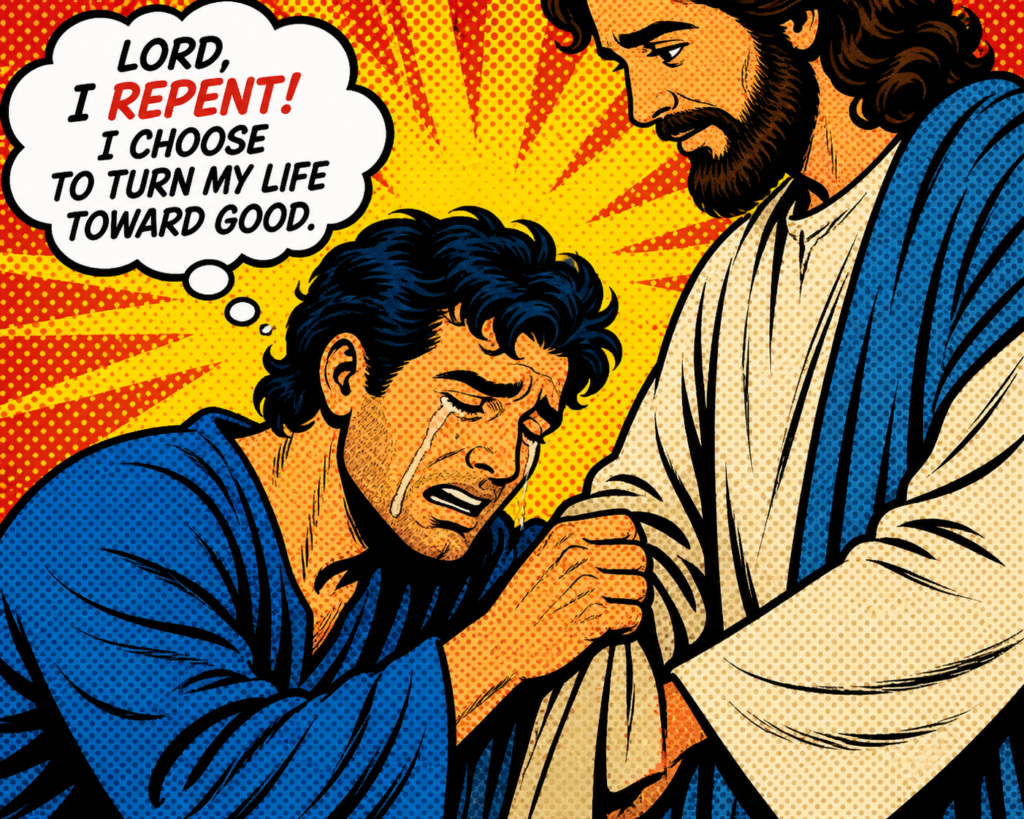
— Soli Deo Gloria — “to the glory of God alone”
Romans 11:36
“For of Him and through Him and to Him are all things, to whom be glory forever. Amen.”
—Dr. Michael A. Scordato, Ph.D. , all Scripture quotations are from the New King James Version (NKJV), Copyright © 1982 by Thomas Nelson.