


Notes from Dr. Michael A. Scordato’s Classroom Teachings
─────────────────────────────
An Essay on God-Ordained Limits, Faithful Stewardship,
and the Path to a Life That Honors God
“Your word is a lamp to my feet and a light to my path.” — Psalm 119:105 (NKJV)
1 in 3 CHRISTIANS SAY THEY FEEL SPIRITUALLY DEPLETED MOST OF THE TIME
62% OF PEOPLE IN CHURCH CITE OVERWHELMING OBLIGATION AS A REASON FOR BURNOUT
$0 WORTH OF TIME IS WHAT MOST WERE EVER TAUGHT THE BIBLE SAYS ABOUT PERSONAL LIMITS
You were taught that saying yes was the Christian thing to do. No one told you it was destroying you. You lent the money. You covered the shift. You led the group no one attended. You signed the loan. You answered the call at midnight. You smiled and said “of course” — and then went home and quietly resented everything. And the entire time, you called it love…but was it?
WHAT NO ONE WARNED YOU ABOUT
A gift with no structure is not generosity. It is a wound waiting to open. Absorbing someone else’s consequences does not help them. It hinders them from the very thing that could actually change them. You memorized half a Scripture and lived by it completely in the wrong direction since you only saw half-of-the-turn context! That is one of the most effective ways to destroy yourself with the Bible.
The inability to say no does not produce gratitude in most people. It produces a quiet contempt and an expectation of access.
Proverbs 25:28 says a person with no rule over their own spirit is like a city broken down, without walls. A city does not crumble in an afternoon. It crumbles wall by wall, stone by stone — until one morning the inhabitants wake to find there is nothing left between them and the wilderness.
Ready to wake up now? Let’s build some walls!!
This is not a lesson about self-care.
It is not a permission slip to cut people off, avoid accountability, or escape the hard work of Christian community. It is an argument — drawn carefully and completely from the whole of Scripture — that God is the Owner, you are the steward, and faithful stewardship of what He has entrusted to you requires something you were almost certainly never taught: the biblical, God-ordained, Jesus-modeled capacity to say no.
Read slowly. See yourself in these pages. And remember: the Psalm 119:105 lamp is still lit.
FIRST, a counseling example
SECOND, the lesson
THIRD, a step by step application guide

READY NOW FOR THE LIFE STORY LESSON?
THE CARDBOARD BED:
─────────────────────────────────
A Story of Broken Boundaries, Faithful Mercy, and the Road Back to Life
“Your word is a lamp to my feet and a light to my path.” — Psalm 119:105 (NKJV)
A Note Before You Read
The story you are about to read is a work of fiction, but it is not an unlikely one. Based off of my work with the homeless of New York City, every pattern of behavior described here — the inability to say no, the collapse of relational limits, the financial unraveling, the slow descent into isolation — is a pattern that repeats itself daily in the lives of real men and women who were never taught what the Bible says about stewardship and limits. Equally real is the other story told here: that God pursues the broken, uses ordinary people as instruments of extraordinary grace, and is in the business of rebuilding lives from the rubble of their worst decisions.
Read slowly. See yourself in both characters. And remember: the lamp is still lit.
Chapter One
A Man Without Walls
Marcus Elijah Webb had a gift for saying yes.
That was how he had always understood it — as a gift. His mother had said so when he was seven years old and gave his lunch to a crying classmate without being asked. His pastor had said so when Marcus was nineteen and stayed after every service to stack chairs, mop floors, and listen to whoever needed an ear. His first girlfriend had said so before she became his wife, and then his ex-wife, and then the woman who told the judge that Marcus had agreed to pay her mortgage on a house he did not live in because he could not bear to see her struggle.
What no one had ever told Marcus — not his mother, not his pastor, not the woman who took his yes for a decade — was that a gift without structure is not a gift. It is a wound waiting to open.
He was forty-one years old the September he found himself standing outside the apartment he could no longer afford, two garbage bags of belongings at his feet, staring at a notice taped to the door in the aggressive orange of official documents. The landlord had been patient. The landlord had, in fact, been extraordinarily patient — seven weeks of grace beyond what any legal obligation required. But patience has an end, and this was it.
- ✦ ✦ ✦
The road to that orange notice had been gradual enough that Marcus had barely noticed it happening, which is the nature of most descents. Proverbs 25:28 says that a man without self-control is like a city with broken-down walls, but a city does not crumble in an afternoon. It crumbles wall by wall, stone by stone, until one morning the inhabitants wake up to find there is nothing left between them and the wilderness.
For Marcus, the first wall had come down years ago, somewhere in the middle of his marriage to Denise. She had been a beautiful woman with a talent for finding the edge of his generosity and pushing just beyond it. He had agreed to co-sign her brother Terrell’s car loan because Terrell needed transportation to a new job — a reasonable enough request, on its face. What Marcus had not done, because it would have felt unkind, was ask to see Terrell’s pay stubs or verify that the job actually existed. It did not. Three months later, Marcus was making payments on a car that Terrell drove to the casino twice a week.
He had not confronted Terrell. He had told himself it was the Christian thing to bear the burden quietly. He had cited Galatians 6:2 to himself in the shower — “Bear one another’s burdens, and so fulfill the law of Christ” — without reading the very next sentence, three verses later, which says with equal authority that “each one shall bear his own load.” He had memorized half a principle and lived by it completely, which is one of the most effective ways a person can destroy himself with the Bible.
- ✦ ✦ ✦
The marriage ended not with a dramatic confrontation but with an exhausted silence. Denise had found someone else — a man who, as she explained it with remarkable candor, knew what he wanted and was not afraid to say no to what he didn’t. Marcus had moved into a one-bedroom apartment in the Southside and thrown himself into work, overtime, and the peculiar busyness that functions as anesthesia for the grieving.
His coworker Raymond had asked him to cover shifts. He covered them. His neighbor Mrs. Patterson needed rides to dialysis three times a week. He drove her. His friend Devon needed a loan to keep the lights on. He lent it — and then lent more when Devon’s lights went out again, which they continued to do with remarkable regularity. His church small group needed a leader because the previous one had moved away. He volunteered, and spent his Thursday evenings preparing lessons for people who often forgot to attend.
He was not doing these things out of joy. He had long since stopped examining whether joy was even part of the equation. He was doing them because to stop doing them would require him to sit alone in his apartment with the question he had been avoiding since the divorce: Who is Marcus Webb when he is not being useful to someone else?
He did not know the answer. He was afraid the answer was: no one.
- ✦ ✦ ✦
The financial unraveling was the most predictable part of the whole story, looking back. Marcus made a decent salary as a hospital supply coordinator, but decent salaries have a way of becoming insufficient when they are being stretched across the needs of an entire neighborhood. The car loan payments. Devon’s accumulated loans, which everyone had silently agreed were now gifts. The credit card Marcus had taken out to cover three months of his mother’s prescription costs when her insurance lapsed, and which he had been making minimum payments on ever since. The emergency fund he had drained to help Terrell again — a different Terrell this time, a young man from church who reminded Marcus of the first one, which should have been a warning but wasn’t.
Proverbs 21:20 says that “there is desirable treasure, and oil in the dwelling of the wise, but a foolish man devours it all.” Marcus was not a foolish man in the conventional sense. He was not gambling or drinking or spending on himself. But he was devouring his treasury just as surely, one act of misdirected generosity at a time, because he had never understood that stewardship of money and stewardship of self-control are the same discipline approached from different directions.
When the hospital downsized his department and offered severance, Marcus took it and told himself something would come through. Something did not come through. He applied for forty-seven positions over eight months. He got three interviews and no offers. He was fifty-six dollars away from covering rent the month the orange notice appeared.
Chapter Two
The Education of the Street
The first night Marcus slept in his car, he told himself it was temporary. He had said that word so many times in his life — temporary — that it had lost all meaning, had become a kind of prayer without God in it, a wish aimed at nothing in particular.
His car was a 2014 Honda Civic with a cracked dashboard and a heater that worked when it felt like it. He parked in the lot of a twenty-four-hour Walmart because the lights stayed on and there were other cars around him and the security guard, a heavy man named Gerald who wore the authority of his yellow vest with cheerful indifference, had looked at Marcus for a long moment on the first night and then looked away in a way that meant I see you, and I am going to see nothing.
He called Devon on the third day. Devon did not answer. He called Raymond, his former coworker. Raymond answered, expressed profound sympathy, and mentioned that his wife’s mother was visiting so the couch wasn’t available, but maybe in a couple of weeks. He called his mother, who was seventy-three and lived in a one-bedroom senior apartment where the lease prohibited additional occupants. She cried. He told her not to worry. He had been telling people not to worry about him his entire adult life, and the habit had its own inertia.
- ✦ ✦ ✦
He ran out of gas money in October, which meant he could no longer drive the car, which meant the Walmart lot was no longer an option because Gerald’s cheerful indifference extended only so far as a vehicle that appeared to be in transit. He packed his two garbage bags and his Bible — which he had carried through every move of his adult life, the spine repaired twice with packing tape — and walked.
The shelter on Meridian Avenue had a thirty-day maximum stay and a six-month waiting list. The church shelter on Delaney Street was full. The drop-in at the community center offered a mat on the floor from seven in the evening to six in the morning and a cup of coffee that tasted like hot determination. Marcus used it for three weeks until a man named Stick took a liking to his Bible and attempted to relieve him of it during the night, and Marcus decided that the street was, in some ways, more honest than the mat on the floor.
He learned the geography of homelessness the way a person learns any geography — by walking it until the landmarks became familiar. The library on Fifth Street opened at nine and closed at eight, and the reference librarian, a young woman named Amara with elaborate braids and an apparent policy against asking questions, never looked up from her desk when Marcus came in to charge his phone at the outlet by the periodicals. The soup kitchen at St. Brendan’s served at noon and at five and had the best cornbread Marcus had ever eaten, a fact that struck him as both comforting and deeply sad. The park on Hollister Avenue had a bathroom that stayed unlocked until ten, and a bench near the south entrance where the streetlight was bright enough to read by.
He read his Bible on that bench. He had not read it with this quality of attention since before his marriage — perhaps not ever. When you have nothing else to do and nowhere else to be, the text opens in ways it does not when you are busy. He read Proverbs over and over. He read Matthew. He read Galatians, which he had always thought he understood, and discovered to his considerable discomfort that he had understood almost none of it.
- ✦ ✦ ✦
One evening in November, sitting on the bench with his collar up against the cold, he read Proverbs 25:28 for the first time with the eyes of a man who had lived it rather than merely quoted it: “Whoever has no rule over his own spirit is like a city broken down, without walls.”
He sat very still for a long time.
He thought about Terrell’s car. He thought about Devon’s lights. He thought about the small group he had led out of guilt for two years, preparing lessons for people who did not come. He thought about Denise, and what she had said about the man who knew what he wanted — and for the first time, he did not feel the anger he had carried about that statement for years. He felt something closer to recognition. He had never known what he wanted because he had never been willing to admit that what he wanted was a legitimate factor in any equation. His needs had never made the list.
“I have been a city with no walls,” he said out loud, to no one, to the park, to the cold air and the orange sodium light above him.
The park offered no reply. But something shifted in his chest — something small and stubborn, like the first green shoot pushing through cracked pavement. It was not hope, exactly. It was more like the memory of hope. The knowledge that hope was a thing that had once existed in him, and might exist again.
Chapter Three
The Flat Cardboard and the Woman Who Stopped
It was a Tuesday in the third week of November when the cold descended on the city with the kind of earnestness that means it has arrived for the season. Marcus had found a piece of flattened cardboard behind the loading dock of a grocery store on Clement Street — a double-layered piece, the kind that had held appliances, wide enough to lie down on and thick enough that he could not feel the concrete through it if he did not move too much. He had found the overhang of an old fire escape above a closed pawn shop on Waverly Alley, and he laid his cardboard there, and he lay on it with his garbage bag as a pillow and his other garbage bag on top of him like a rustling, inadequate blanket.
He was not sleeping. You do not sleep easily when the cold is that specific and the surface is that hard. He was doing something in between — not awake enough to be miserable in a focused way, not asleep enough to escape. He was drifting in the grey country between the two, listening to the distant sounds of the city and the closer sound of his own breathing.
He heard her before he saw her.
The footsteps were deliberate, not hurried. In Waverly Alley, deliberate footsteps at eleven at night were unusual. Most people moved through that alley with the posture of a person who does not wish to see what is in it. These footsteps came and stopped.
He opened his eyes.
She was a woman of about sixty, compact and upright, with natural silver hair cut close to her head and the calm bearing of someone who had long since made peace with the habit of seeing people. She wore a dark coat and sensible shoes and carried two paper cups from the diner three blocks over. She was looking at him with an expression that was not pity — Marcus had learned to recognize pity, had learned to flinch at it — but something more considered than that. More attentive.
“Cold night,” she said. Not a question. A fact, offered as a kind of introduction.
Marcus sat up slowly. “Yes ma’am.”
“I bought two coffees,” she said. “I was going to drink one on the walk home and save one for the morning, but I find I don’t actually want two coffees tonight. Would you drink it?”
He looked at her. He had received charity before — at the soup kitchen, at the drop-in — and it had a particular texture, a transaction embedded inside the gift, a slight forward lean of the giver that said, See what I am doing. This woman was standing perfectly upright. She was not leaning.
“Thank you,” he said.
She handed him the cup and sat down on the concrete step at the base of the fire escape, three feet from his cardboard, with the matter-of-fact ease of a person who sits on concrete steps regularly and does not require an invitation. She wrapped both hands around her own cup and looked at the alley entrance as though they were sitting on a porch.
“I’m Eleanor,” she said. “I walk home this way most nights from the hospital. I’m a patient advocate.”
“Marcus.”
“How long?” she asked. Not unkindly. Just directly.
“Six weeks out here. Eight months before that in the car.”
She nodded. No intake of breath, no visible alarm. Just the nod of a person filing information.
“Are you safe here tonight?”
“Safe enough.”
“Do you want to tell me how you got here?”
He looked at her for a long moment. No one had asked him that question. People had asked if he was okay, if he needed something, if he had family. No one had asked how he had gotten here, which is a different question — a question about the interior life, about the decisions and the patterns and the slow collapse, not just the emergency of the present moment.
“That’s a long story,” he said.
“I have the coffee,” she said.
So he told her.
- ✦ ✦ ✦
He told her about Terrell’s car loan, and Devon’s lights, and the small group he had led without joy for two years. He told her about Denise, not with bitterness but with a kind of clinical honesty that surprised him. He told her about the orange notice and the Walmart parking lot and Gerald the security guard who had practiced the grace of looking away. He told her about the bench in the park and Proverbs 25:28 and the recognition that had come over him on the cold November night when he had said out loud that he was a city without walls.
Eleanor listened. She did not interrupt, did not offer corrections, did not produce reassurances from a pre-assembled supply. She listened the way the reference librarian Amara never asked questions — with a quality of stillness that made the space safe.
When he finished, she was quiet for a moment.
“Can I ask you something?” she said.
“Yes.”
“When you were co-signing loans and covering shifts and lending money you didn’t have — were you doing those things because God told you to, or because you couldn’t figure out how to say no?”
The question landed with the precision of something that had been perfectly aimed. He did not answer immediately.
“Both, at first,” he finally said. “And then, if I’m honest, mostly the second one. But I kept telling myself it was the first one.”
“That’s an honest answer,” Eleanor said. “Most people can’t get there that fast.”
“I’ve had a lot of nights on concrete to think about it.”
She smiled — a real smile, not the performance of one. “Concrete is an excellent counselor. Uncomfortable, but thorough.”
Chapter Four
The Teaching That Came With the Morning
Eleanor did not take Marcus home that night. She was, she explained, a woman of strong convictions about the proper pace of things, and one of those convictions was that a solution offered too quickly to a problem that had been building for years was likely to be the wrong solution. What she did instead was return to Waverly Alley the following morning at seven with a thermos of coffee, two biscuits from the diner, and a worn copy of a biblical counseling workbook she had used for years in the patient advocacy work that had become, over the course of two decades, something closer to counseling ministry.
They sat on the fire escape steps again. The morning light came in at the end of the alley in a pale, horizontal shaft that moved slowly across the concrete as the sun climbed. Marcus ate one of the biscuits and listened.
“I want to tell you how I got here,” Eleanor said. “Not here in the alley. Here in my life.”
“Alright.”
“Twenty-two years ago, I was you,” she said. “Not exactly — I never lost my housing. But I was the woman who could not say no. I was the woman whose generosity was actually a kind of cowardice dressed up in Christian language. And I had a mentor — a pastor’s wife named Ruth, who sat with me over about eight months and walked me through what the Bible actually says about stewardship and limits. And it changed everything.”
She opened the workbook to a page near the beginning, where someone — Ruth, Marcus assumed — had written in a small, precise hand in the margin. The page contained a single verse, printed larger than the surrounding text.
“Moreover it is required in stewards that one be found faithful.” — 1 Corinthians 4:2 (NKJV)
“Faithful,” Eleanor said. “Not heroic. Not unlimited. Faithful. A steward is a person who manages someone else’s property according to the owner’s instructions. The owner, in our case, is God. And God has given us specific things to steward — our time, our money, our emotional energy, our relationships, our bodies. When we try to steward everyone else’s responsibilities instead of our own, we are not being faithful. We are being unfaithful to our own stewardship while interfering with someone else’s.”
Marcus turned the cup in his hands. The steam rose in the cold air.
“I always thought that was the selfish reading,” he said. “That saying no was putting yourself first.”
“I know. I thought that too. But look at what Jesus did.”
She turned the workbook pages carefully, and when she found the passage she was looking for, she handed it to him and let him read it himself, which was the right instinct. Some truths land harder when they come directly from the page.
It was the account in Mark 1:35–38, where Jesus rises before dawn to pray alone, and when the disciples find Him and report that everyone is looking for Him, He does not return to continue the work. He says: “Let us go into the next towns, that I may preach there also, because for this purpose I have come forth.”
Marcus read it twice.
“He said no to the crowd that wanted Him to stay,” he said quietly.
“He said no to a crowd of people who genuinely needed Him,” Eleanor said. “Not because He didn’t care. Because He knew His calling. He knew what the Father had sent Him to do, and He stewarded that mission faithfully. Saying yes to every demand would have meant saying no to His actual purpose.”
“I never read it like that.”
“Most people don’t. We read the healing stories, the feeding stories, the miracle stories, and we construct an image of Jesus as someone who never turned anyone away. But read carefully, and you’ll see a man who withdrew regularly, who limited access to Himself, who confronted when confrontation was needed, and who stayed focused on what He was sent to do even when the immediate emotional pressure was to do something else.”
- ✦ ✦ ✦
They talked for two hours that morning. Eleanor was not a woman who confused teaching with lecturing — she asked as many questions as she answered, and when Marcus spoke, she gave the same quality of attention she had given the night before on the cold fire escape step.
She showed him Galatians 6:2 and 6:5 side by side — the instruction to bear one another’s burdens, and the instruction that each person carry their own load — and explained the distinction between the Greek words: the crushing weight that requires community help, and the ordinary pack that each person is designed to carry for themselves.
“When Terrell needed help with a legitimate need,” Eleanor said, “and he came to you honestly and you helped him — that was burden-bearing. That was good. But when Terrell was making consistently destructive choices and you kept absorbing the consequences without requiring any accountability, you weren’t bearing his burden. You were carrying his load. And the damage was double — you were harmed financially, and Terrell was robbed of the consequence that might have driven him to change.”
The logic of it settled into Marcus like something cold and clear.
“I thought I was protecting him,” he said.
“Consistent rescuing protects no one,” Eleanor said, not harshly. “It just extends the problem with someone else’s resources.”
She turned to Matthew 5:37: “But let your ‘Yes’ be ‘Yes,’ and your ‘No,’ ‘No.’ For whatever is more than these is from the evil one” (NKJV).
“Your yes had no weight,” she said. “Because you had no no. When a person cannot decline, their agreement means nothing — it’s just the path of least resistance. And the people around you, whether they knew it consciously or not, learned that. Devon knew you would lend again. The church knew you would cover. Terrell knew. The inability to say no doesn’t produce gratitude in most people. It produces a quiet contempt and an expectation of access.”
The truth of it was uncomfortable in the way that accurate diagnoses are uncomfortable — it did not feel cruel, because it was precise, but it did not feel good either.
“So what does it look like to do it right?” Marcus asked. “What does a person with healthy limits actually look like?”
“They look like Jesus,” Eleanor said simply. “And they take a long time to become that way, and they fall short regularly, and they need the grace of God constantly to sustain them. But the direction is clear.”
“Trust in the LORD with all your heart, and lean not on your own understanding; in all your ways acknowledge Him, and He shall direct your paths.” — Proverbs 3:5–6 (NKJV)
“Boundaries without that,” Eleanor said, pointing to the verse, “are just walls. What makes them biblical is that they’re built according to the Owner’s instructions, not our own preferences or our own fears. When we set a limit on what we will carry, we should be able to say — honestly, before God — that this limit reflects faithful stewardship of what He has given us, not just self-protection or convenience.”
Chapter Five
The Good Samaritan Does Not Stop Halfway
Luke 10:33–34 describes the Samaritan this way: “But a certain Samaritan, as he journeyed, came where he was. And when he saw him, he had compassion. So he went to him and bandaged his wounds, pouring on oil and wine; and he set him on his own animal, brought him to an inn, and took care of him.”
Eleanor had read that passage with Marcus at the end of their second morning together, and she had pointed out something he had never noticed: the Samaritan did not stand at a distance and feel compassion. He went to the man. He used his own supplies — oil and wine, costly materials — on the wounds. He put the man on his own animal, which meant he walked. He paid for the inn. He promised to cover additional costs on his return.
“That is not a person who did the minimum required to feel good about himself,” Eleanor said. “That is a person who looked at the full need and responded to the full need, at genuine personal cost, with complete follow-through.”
“So how do you do that without ending up like me?” Marcus asked. “Without giving until you’ve given everything?”
“Notice what the Samaritan did not do,” Eleanor said. “He did not move the man into his own home. He did not give up his journey. He did not promise to pay for the man’s entire rehabilitation forever. He assessed the need, he gave what was genuinely required for that need in that moment, he made provision for immediate continuity, and then he entrusted the man to the care of someone else — the innkeeper — who was specifically equipped to provide what was needed next.”
Marcus sat with that for a while.
“He didn’t confuse his role with every role.”
“Exactly,” Eleanor said. “He was not the innkeeper. He was the one who brought the man to the inn. His part was real and costly and important. But it was his part. Knowing the difference between your part and someone else’s part — that is the beginning of sustainable love.”
- ✦ ✦ ✦
The practical help came methodically, the way Eleanor seemed to do most things. She did not sweep Marcus into her life; she built a path with him, which was a different thing entirely. Over the course of three weeks, she connected him with a biblical counselor at her church — a man named Pastor Octavio who had come to faith after his own years of homelessness and who brought to the counseling room the particular authority that only lived experience provides. She helped Marcus navigate the application process for transitional housing, sitting beside him at the computer in the library while Amara continued to see nothing. She connected him with a job readiness program run by a coalition of churches in the city, where Marcus’s background in hospital supply chain proved more marketable than he had believed.
She did not lend him money. He asked once, gently, testing — less out of genuine need than out of the old reflex, the unconscious check to see if the boundaries were real. She said, without any coldness, “I don’t think that’s the kind of help that will serve you well right now, and I think you know that.” He did know it. He had needed to hear her say it anyway.
What she gave him, which proved worth more than money, was her time and her consistency. She showed up when she said she would. She did not show up when she had not said she would — which taught him, slowly and practically, what reliability looked like in both directions. She was warm. She was also, when necessary, direct in a way that did not apologize for itself.
One afternoon, when Marcus was rehearsing the familiar story of Devon’s accumulated debts with what Eleanor recognized as the tone of a man still performing his own victimhood rather than learning from it, she said quietly: “Marcus, Devon made his choices. You made yours. You can grieve your choices and learn from them, or you can keep explaining how Devon is responsible for them. You don’t actually have enough time to do both.”
He was silent for a moment. Then he said, “That’s fair.”
“It is,” she said. “And you’re going to be fine. But only if you decide to be.”
- ✦ ✦ ✦
Pastor Octavio met with Marcus twice a week for the first month, then weekly after that. He was a compact man in his late forties who wore reading glasses on a beaded cord and had the focused patience of someone who understood that transformation is not an event but a process. He assigned Marcus passages to read and journal questions to answer, and he checked the work, which no one had done since Marcus was in school.
They worked through Galatians 6 carefully, untangling the burden-and-load distinction. They worked through Matthew 5 and the meaning of a yes that cost something. They worked through Romans 12, which Marcus had read dozens of times and which now appeared to contain an entire instruction manual he had previously missed.
Romans 12:18 stopped him: “If it is possible, as much as depends on you, live peaceably with all men” (NKJV).
“‘If it is possible,'” Marcus read aloud. “‘As much as depends on you.’”
“The verse assumes,” Pastor Octavio said, “that it will sometimes not be possible. That not all peace is within your power to achieve. That your responsibility ends at your own boundary. You are not accountable for what others choose to do with your honest effort toward peace. You are accountable for the effort. Nothing more.”
It was, Marcus reflected, the permission he had been waiting for his entire adult life. Not the permission to be selfish — he had no interest in that. The permission to be finite. The permission to be a person with an actual edge, a person whose yes meant something because his no was real, a steward with a specific charge rather than an inexhaustible resource to be drawn upon by whoever arrived at the well first.
“For God has not given us a spirit of fear, but of power and of love and of a sound mind.” — 2 Timothy 1:7 (NKJV)
Power. Love. A sound mind. Three things Marcus had possessed individually at various points in his life but had never managed to hold all at once. Power without love had not been his problem — he had always had an abundance of love, or what he had called love, the agreeable, boundary-less version that was really more fear than love. Love without a sound mind had been his undoing — the soft, wide-open generosity that had no structure, no discernment, no capacity to distinguish between a genuine need and a learned helplessness. But the three together — the power to choose, the love that truly served, and the sound mind that could tell the difference — that was something new. That was what he was learning to carry.
Chapter Six
The City with Its Walls Rebuilt
The transitional housing placement came through in January — a shared apartment in a complex run by a faith-based organization on the north side of the city, two other residents, a house manager named Felipe who scheduled weekly house meetings with the same cheerful implacability as a person who has decided that community is not optional. Marcus moved in on a Thursday with his two garbage bags and his taped-spine Bible and a new item he had acquired somewhere in the preceding months: a journal, black cover, half-filled already.
The job came in February. Not at a hospital — the hiring processes in healthcare moved slowly, and Marcus had made peace with that — but at a medical supply distribution company, entry-level receiving and inventory, the kind of work that rewards reliability above almost everything else. He was reliable. He had always been reliable in the outward sense; what he was learning was how to be reliable in a new direction — toward his own responsibilities first, before extending outward.
He told Felipe no when Felipe asked him to cover a house meeting he could not attend, because he had a session with Pastor Octavio that evening and he had learned to treat those appointments as fixed points rather than suggestions. Felipe looked at him with mild surprise and then with something that might have been approval.
He told his coworker Janet that he could not stay late on Thursday to help with the quarterly audit, because he had a commitment. Janet was mildly annoyed. He noted the mild annoyance and did not revise his answer. He noted, too, that the world did not end. Janet covered the audit herself, which she was perfectly capable of doing, and the following Monday she seemed to have forgotten the entire exchange.
He called Devon. Not to reconcile the debt — the debt was gone, written off, and he had made his peace with that through a long conversation with Pastor Octavio about the difference between a loan and a gift and the importance of honesty in knowing which you are giving. He called Devon because they had been friends for twenty years and that mattered, and because avoiding Devon entirely would have been avoidance, not a limit. He said what he needed to say: that he cared about Devon, that he was not angry, and that the financial arrangements of the past were the past. He also said, clearly and without drama, that future requests for money would be declined. Devon said he understood. Whether Devon did understand was Devon’s matter. Marcus had carried his part.
- ✦ ✦ ✦
On a Wednesday evening in March, Marcus sat in Pastor Octavio’s office for what they had agreed would be their final structured session. The work was not finished — the work of this kind is never finished — but it had reached a point where the foundation was sound enough to build on without the scaffolding of weekly sessions. The plan was monthly check-ins. The understanding was that the door was always open.
“What do you know now that you didn’t know before?” Pastor Octavio asked. He asked this question at the end of every session, and Marcus had come to take it seriously.
Marcus thought for a moment.
“I know that boundaries aren’t about protecting myself from people I don’t want to deal with,” he said. “That’s the counterfeit version. The real version is about stewardship — managing what God gave me, according to His instructions, so I can actually do what He put me here to do. You can’t steward what you’ve given away to everyone who knocked on the door.”
“And what else?”
“That saying no is sometimes the most loving thing you can do. Not always. But sometimes. Carrying someone else’s load for them isn’t love — it’s preventing them from building the strength they need. Real love asks what will actually help this person grow, not just what will make the discomfort stop.”
“And for yourself?”
“That I am not the sum of what I do for other people,” Marcus said. “I have been living as though my value was entirely a function of my usefulness. That is not a Christian idea. That is a fear idea. I am a child of God before I am a useful person to anyone. The work flows from the identity, not the other way around.”
Pastor Octavio smiled the slow smile of a man who has seen many people arrive at many realizations and has never tired of it.
“Proverbs 4:23,” he said.
Marcus knew it without opening anything.
“‘Keep your heart with all diligence, for out of it spring the issues of life,'” he said (NKJV). “I used to read that as a warning against sin. Now I read it as an instruction about stewardship. The heart is the source. If the source is unguarded, unexamined, given away to whoever asks for it — everything that flows from it is compromised.”
- ✦ ✦ ✦
He met Eleanor for coffee on the first Saturday of April, at the diner on Clement Street, the one that had sold her the two cups on the night she had stopped in Waverly Alley. He arrived five minutes early, which was a new habit and felt like a declaration of something.
She was already there, a cup in front of her, reading something small and paperback that she put away when he came in.
“You look different,” she said.
“I feel different.”
“How so?”
He thought about how to say it.
“Like a city that has its walls back,” he said. “Not high walls. Not walls that keep everyone out. Just — walls. A perimeter. Something that defines where I end and where the next person begins.”
She nodded slowly, turning her cup in both hands the way he had once turned his in the alley.
“And the gates?” she said.
“Open,” he said. “But I’m the one who opens them.”
She smiled, and for a moment the diner seemed very warm and the April light through the window seemed very generous, and Marcus thought about Psalm 31:15 — “My times are in Your hand” (NKJV) — and felt the truth of it settle in him the way truth does when you have finally stopped arguing with it.
His times were in God’s hand. Not in Devon’s hand, or Terrell’s, or Denise’s. Not in the hands of every person who had ever leaned against his open walls and helped themselves. They were in God’s hand. Which meant Marcus was a steward, not a slave. Which meant the limits he set were not selfishness, but faithfulness. Which meant that when he opened the gate, it was a genuine act of love — costly, chosen, freely given — and not the collapse of a wall that was never there to begin with.
- ✦ ✦ ✦
Three months later, Marcus began volunteering twice a month at the drop-in center where he had once slept on a mat. He did not do this because he felt he owed it to anyone. He did not do it to perform his own recovery or to prove something about who he had become. He did it because he had a specific thing to offer — the knowledge of what it was like to be a man who had given everything away and had nothing left, and the knowledge of what it looked like to rebuild — and the drop-in had people who needed precisely that.
He set limits on the volunteering from the first day. Two evenings a month, which was what he had been asked to contribute and what he had genuinely agreed to, which meant it was a yes that cost something and held something in reserve and was therefore real. He did not give his personal phone number to the men he met there. He connected them with Pastor Octavio and with Eleanor and with the transitional housing program and with the biblical counselor the drop-in had recently retained. He bore the burden where the burden was his to bear. He let others carry their own loads where the load was theirs.
He was not perfect at it. He would not be perfect at it in the years ahead. There would be moments of the old reflex — the hand already extended before the mind had consulted the heart, the yes on his lips before his discernment had even been consulted. He would recognize those moments more quickly now, and correct them with less drama than before, and when he failed to correct them in time, he would bring them to Pastor Octavio or to Eleanor or to the God who had established the limits in the first place and who was patient with the process of a man learning to honor them.
Proverbs 24:16 had become one of his daily anchors: “For a righteous man may fall seven times and rise again” (NKJV). The rising mattered more than the falling. The direction mattered more than the stumbles along the way.
“Now the God of peace who brought up our Lord Jesus from the dead, that great Shepherd of the sheep, through the blood of the everlasting covenant, make you complete in every good work to do His will, working in you what is well pleasing in His sight.” — Hebrews 13:20–21 (NKJV)
Epilogue
On the last Thursday of October — almost exactly one year after the orange notice — Marcus Webb walked back down Waverly Alley. He was not sure why he had wanted to do it; it was not on his route to anywhere. But he had learned to be attentive to the impulses that were not fear-driven, that did not demand anything from him but simply invited him to look.
The pawn shop was still closed. The fire escape was still there. The concrete where Eleanor had sat was still concrete. The space where he had laid his cardboard was occupied now by nothing at all — just the ordinary floor of an ordinary alley in an ordinary city where ordinary things happened every day, including the extraordinary ones.
He stood there for a moment.
He thought about the man who had lain on the cardboard, drifting in the cold grey country between sleep and waking, and what that man had believed about himself — that his value was in his availability, that his love was measured by his yes, that to say no was to be nothing.
He thought about what it had taken to change that belief. Concrete. Cold. A woman who bought two coffees and did not drink one of them. A counselor with reading glasses on a beaded cord and the authority of a man who had lived the material he taught. The Bible, read slowly, on a park bench under a sodium light. The ordinary grace of a God who does not abandon the cities He has built, even when the walls have completely fallen.
He looked up at the sky above the alley, which was the same narrow rectangle of grey-blue it had always been, bounded by the walls on either side.
Even the sky had its edges, he thought. And those edges did not make it less sky. They made it this sky, here, particular, real — the sky above this specific place where a specific thing had happened to a specific man who was loved by a specific God.
He turned and walked out of the alley, into the morning.
— ✦ —

THE LESSON….
The Forgotten Connection
There is a word that has become fashionable in modern conversation — a word used frequently in counseling offices, self-help books, and even Sunday morning sermons — and yet it is almost always severed from the very root that gives it life. That word is boundaries. People speak of setting boundaries with family members, with coworkers, with friends, and with themselves. They speak of protecting their time, guarding their emotional energy, and refusing to be taken advantage of. These concerns are legitimate. But when the concept of boundaries is lifted out of its biblical and theological context and reduced to a mere strategy for self-protection, something essential is lost. Boundaries without Biblical stewardship are, at their core, unbiblical. They collapse into a self-centered posture of cutting people off, running away from difficulty, and avoiding the hard work of relationship.
The purpose of this essay is to restore what has been severed — to show that genuine, healthy, and lasting boundaries are inseparable from the stewardship principles that God has woven throughout His Word. To understand boundaries rightly, we must first understand that we are not the owners of our lives, our time, our relationships, or our resources. We are stewards. Everything we have has been entrusted to us by God, and we are accountable to Him for how we manage it. When that foundational truth is in place, boundaries become not a strategy for self-preservation, but an act of faithful management of what God has given us.
This essay will trace the biblical logic of boundaries and stewardship across three interconnected movements: first, the theological foundation — what God says about ownership and limits; second, the practical anatomy — how we identify, establish, and protect healthy boundaries across the domains of life; and third, the stewardship integration — how boundaries and responsibility work together to produce a life of fruitfulness, freedom, and faithfulness before God.
Look at God! Even in The Elijah Method (1 Kings 19:4–8) we see the boundaries that were cross for the physical body, therefore the stewardship counseling boundaries establishing a lane for which God’s shows a counselor must follow to restore. It ensured that the spiritual and relational work had a stable physical platform to operate from. By assessing and attending to sleep, nutrition, and hydration from Session One let alone any other physical ailment or condition, the counselor is to follow God’s own sequence: physical restoration as the precondition for the capacity to receive deeper counsel. This is not a concession to secular health psychology — it is obedience to the model God Himself demonstrated in 1 Kings 19. From these object lesson points we can now move on into a more fuller understanding and the reasons “why”.
Part One: The Theological Foundation of Boundaries
I. God Is the Ultimate Owner
Any serious discussion of stewardship must begin with a simple but profound declaration that runs through the whole of Scripture: everything belongs to God. The Psalmist declares, “The earth is the LORD’s, and all its fullness, the world and those who dwell therein” (Psalm 24:1, NKJV). The prophet Haggai records God’s own words: “‘The silver is Mine, and the gold is Mine,’ says the LORD of hosts” (Haggai 2:8, NKJV). This is not merely a theological abstraction; it is the organizing principle of all biblical ethics, including the ethics of boundaries.
If God owns everything, then we own nothing absolutely. We are managers, not proprietors. The man who builds a great business has not created it from nothing — he has assembled resources, talents, time, and relationships that were all first given to him by God. The woman who guards her schedule carefully is not merely protecting her own property — she is stewarding hours that belong to the One who numbers our days. When we understand this, the question of how to set limits in life changes fundamentally. We are no longer asking, “How do I protect what is mine?” We are asking, “How does the Owner want me to manage what He has placed in my care?”
“Moreover it is required in stewards that one be found faithful.” — 1 Corinthians 4:2 (NKJV)
The Apostle Paul frames stewardship around faithfulness, not success or self-fulfillment. A steward who sets limits on what he will manage is not being selfish; he is being wise. He is acknowledging that his capacity is finite, that he has been given specific responsibilities, and that attempting to take on more than he can manage well is not generosity — it is unfaithfulness to his particular charge. This logic will prove to be the bedrock of the entire case for biblical boundaries.
II. God Himself Establishes Limits
A striking feature of the biblical narrative is that God — who is unlimited — consistently establishes limits in creation and in covenant. From the very beginning, the act of creation is an act of ordering and separating: light from darkness, water from dry land, one kind from another. This ordering is itself a kind of boundary-setting, and it is declared to be good. The divine pattern embedded in creation is one of definition, distinction, and limit.
When God placed our first parents in the garden, He gave them extraordinary freedom — access to every tree but one. He even gave to them the best of trees that ever existed; the Tree Of Life (Genesis 2:9, Genesis 3:22-24). The boundary He set was not arbitrary cruelty; it was a loving provision designed to protect the relationship between Creator and creature. “And the LORD God commanded the man, saying, ‘Of every tree of the garden you may freely eat; but of the tree of the knowledge of good and evil you shall not eat, for in the day that you eat of it you shall surely die'” (Genesis 2:16–17, NKJV). The limit was the hedge of life.
This pattern repeats throughout Scripture. At Sinai, God marked off boundaries around the mountain where His glory descended. The Mosaic law established clear boundaries in every domain — in worship, in diet, in sexual conduct, in property, in speech, in rest. The book of Deuteronomy is, in many ways, a comprehensive map of limits that God lovingly established for the flourishing of His people. As Moses declared to Israel: “Therefore you shall be careful to do as the LORD your God has commanded you; you shall not turn aside to the right hand or to the left” (Deuteronomy 5:32, NKJV).
The theological implication is clear: if the limitless God consistently establishes limits, then the existence of limits is not a sign of weakness or failure. It is a reflection of wisdom, love, and purposeful design. Limits are not the enemy of a flourishing life; they are the structure within which flourishing becomes possible.
III. Sin as the Violation of Boundaries
The biblical word most often translated as sin carries with it the image of missing the mark — the Greek hamartia suggests an arrow shot that does not reach its intended target. But throughout the Hebrew and Greek scriptures, sin is also consistently described as the transgression of a boundary, the crossing of a limit that God has set. Romans 3:23 declares that “all have sinned and fall short of the glory of God” (NKJV), and the consequences of that boundary-crossing ripple through all of human history.
Types Of Sin:
Hebrew:
chatta’ah / chatat (miss the mark; sin; signifies moral failure): חַטָּאָה / חַטָּאת (חטא is the root)
pash’a — Transgression or rebellion; a breach of trust: פָּשַׁע (פשע is the root)
asham — Trespass or guilt; indicates a violation of God’s commands: אָשָׁם (אָשָׁם)
Greek:
- hamartia (ἁμαρτία) — “sin” in the general sense; literally “missing the mark.”
- paraptōma (παράπτωμα) — “trespass” or “false step”; emphasizes a lapse or deviation.
- parabasis (παράβασις) — “transgression” or “overstepping” (violation of law/command).
- anomia (ἀνομία) — “lawlessness”; deliberate rejection of the law.
- paraptōsis (παράπτωσις) — variant/related form to paraptōma, used for misstep/trespass.
- paraptōmatos / hamartēma (ἁμάρτημα) — forms of hamartia used as noun variants emphasizing the act of sin.
- adikia (ἀδικία) — “injustice” or “unrighteousness”; moral wrong.
- ponēria (πονηρία) — “wickedness” or evil disposition.
- pleonexia (πλεονεξία) — “covetousness”/greed, listed as a sinful vice.
These Greek terms map broadly to Hebrew words like chattaʾ (חטא), pashaʿ (פשע), and asham (אשם) but carry nuanced legal, moral, and theological senses in the New Testament context.
What the fall of Adam and Eve illustrates is not simply an act of disobedience, but the catastrophic result of rejecting God-ordained limits. They were not content to be stewards of the garden; they grasped at ownership. They were not content to operate within the limits of creatureliness; they sought to be “like God” (Genesis 3:5, NKJV). The result was not expansion and freedom but shame, brokenness, and exile. The story of sin is, at its heart, a story of violated boundaries and corrupted stewardship.
This is not a merely historical observation. It is a diagnostic tool for understanding the patterns of our own lives. When we refuse to set appropriate limits in relationships, we often do so because we are trying to control outcomes that are not ours to control — we are transgressing God’s boundary of sovereignty. When we fail to say no to demands that exceed our capacity, we are often operating out of a distorted sense of identity, believing that our worth depends on what we produce — we have made an idol of others’ approval. When we allow others to violate our own dignity repeatedly without correction, we are failing to be faithful stewards of the life and body that God has entrusted to us.
IV. Redemption and the Restoration of Right Limits
A modern definition of Liberty is the state of being free, independent, and having the power to act, speak, or pursue one’s goals without arbitrary external restrictions. Abuse of the right of liberty—often distinguished in philosophy as shifting from “liberty” (freedom within moral/legal constraints) to “license” (excessive freedom disregarded by law and decorum)—occurs when individuals act in ways that harm, restrict, or violate the rights of others while pursuing their own, independent goals. This abuse generally stems from the misconception that absolute freedom permits actions that destroy the liberty of others, which is a contradiction. The reality is that liberty always has to be held within the confines of stewardship limitations and boundaries. Any liberty otherwise becomes corrupted and unhealthy leading into self-destruction.
The good news of the gospel is that what sin has disordered, Christ has come to restore. Galatians 5:1 is a declaration of liberation: “Stand fast therefore in the liberty by which Christ has made us free, and do not be entangled again with a yoke of bondage” (NKJV). But notice carefully what this liberty is. It is not the liberty to do anything we wish. It is the liberty to live according to and in the lane of our design — to be the kind of creature God created us to be, managed by His Spirit, oriented toward His purposes.
Galatians 5:13 adds the necessary balance: “For you, brethren, have been called to liberty; only do not use liberty as an opportunity for the flesh, but through love serve one another” (NKJV). True freedom — the freedom Christ purchased for us — is not lawlessness. It is the freedom to love well, to serve faithfully, and to manage what God has given us in a way that honors Him and benefits others. Healthy boundaries, rightly understood, are one of the primary instruments through which this redeemed freedom is exercised.
“Now to Him who is able to do exceedingly abundantly above all that we ask or think, according to the power that works in us.” — Ephesians 3:20 (NKJV)
Part Two: The Anatomy of Biblical Boundaries
V. Self-Control: The Interior Wall
Before we can speak meaningfully about limits in our relationships with others, we must address the foundational interior reality: self-control. The book of Proverbs offers a searching diagnosis of the person who lacks this quality: “Whoever has no rule over his own spirit is like a city broken down, without walls” (Proverbs 25:28, NKJV). The image is vivid and alarming. A city without walls is not simply inconvenienced — it is completely vulnerable to every outside force, subject to invasion, plunder, and destruction at any moment.
Self-control is listed among the aspects to make up agape love in the fruit (singular) of the Holy Spirit in Galatians 5:22–23, which means it is not produced by sheer willpower or self-discipline techniques. It is the natural product of a life that is increasingly surrendered to the Spirit of God starting off with selflessness in love. Second Timothy 1:7 is equally instructive: “For God has not given us a spirit of fear, but of power and of love and of a sound mind” (NKJV). The sound mind — in the original language meaning the mind made once again whole, not merely wellness — is given to us by God. It is a gift as the precursors are but in order to access our humbleness toward Him is needed (1 Peter 5:6–9 Humble To Be Able To Cast Cares Thought Life), and like all gifts, it must be received, cultivated, and exercised through James 4:7 submission.
Galatians 5:22-23 in the NKJV shows:
“But the fruit (Singular) of the Spirit is love: (with aspects of) joy, peace, longsuffering, kindness, goodness, faithfulness, gentleness, self-control. Against such there is no law.”
Whenever there is an order or a sequence in the Bible it is for a reason or purpose. In seeking Love you will first cultivate joy, and that joy will bring forth peace, and the peace will give you access to patience able to bear on and with that longsuffering which activates kindness, then goodness flows, into faithfulness claret seen, which now opens up your ability to truly be gentle for what next? Self-control. This is the working path to walk built off of this promised Agape selfless love starting point seeking into enablement.
What does the interior wall of self-control look like in practice? It means governing our thoughts in accordance with Philippians 4:8, dwelling on what is true, noble, just, pure, lovely, and of good report- Proverbs 23:23 truth seeking being the balancing point of this optimistic focus. It means guarding our speech, knowing that Proverbs 10:19 warns that “in the multitude of words sin is not lacking” (NKJV), and that Ephesians 4:29 instructs us to let only what is good for edification proceed from our mouths. It means governing our desires, refusing to be enslaved by appetite, and training ourselves to delay gratification in service of longer purposes. The person who cannot govern himself will be governed by whoever or whatever is most pressing at any given moment — and that is not freedom. It is bondage. But there is a way to break free.
The “Temptations”, Peirasmos Scripture Chain Bondage Breaker
The chain of Scripture passages here represents a complete transformation pathway — a movement from the reality of temptation all the way through to the power of the renewed mind. Each passage is a step on that path, and understanding why each one leads to the next is where the pastoral power of the map lies.
Step One: The Call to Change (Ephesians 4:22–24 Physical Map). The journey begins with an honest inventory. Paul commands us to “put off, concerning your former conduct, the old man which grows corrupt according to the deceitful lusts, and be renewed in the spirit of your mind, and put on the new man which was created according to God, in true righteousness and holiness.” This is the starting diagnosis: there is an old way of thinking, feeling, and responding that must be consciously laid down. You must take this off like removing a dirty old worn out shirt. Be renewed in your mind like how the Psalms in the Bible example and show with the super antibaterial soap of proclaiming God’s truth’s/blessings/and forcing a shocking different view to a new concept currently being forgotten or lost. Forgotten or newly recognized thoughts such as reflecting right now on God’s faithfulness in life’s past. So in a new mindset breaking from my current anger/current pride/current fear declaring “God is faithful….”, “I am blessed, I remember when…”, “This is inspirational because…”- a new mindset path accessed by humbling self. Lastly we now finally are in position to put on the bipolar opposite ends of a spectrum correct action enabled to now live in without falling back to the old dirty shirt. The trial does not create the corruption; it surfaces it. The trial reveals which old garments we are still wearing.
Step Two: Humility as the Precondition (1 Peter 5:6–9 Thought Life). You cannot put off the old self by willpower alone. Peter establishes the prerequisite: “Therefore humble yourselves under the mighty hand of God, that He may exalt you in due time, casting all your care upon Him, for He cares for you.” The act of humbling — surrendering the anxious thought life, releasing the crushing weight of what we cannot control — is what creates the interior space for the next step. A mind clenched in self-reliance cannot receive.
Step Three: Submission That Produces Resistance (James 4:7 Promise). “Therefore submit to God. Resist the devil and he will flee from you.” Notice the sequence. Resistance is not the first move; submission is. The ability to resist temptation flows from prior surrender to God. This is why willpower-only approaches to sin management eventually exhaust the person: they attempt step three without steps one and two. Submission re-establishes who holds the authority in the soul.
Step Four: The Peace That Guards (Philippians 4:7 Promise). The fruit of this submitted, humble, casting posture is not merely relief but a supernatural sentinel: “the peace of God, which surpasses all understanding, will guard your hearts and minds through Christ Jesus.” The word translated “guard” is a military term — the peace of God stands at the gates of the mind like a watchman, keeping out the anxious thoughts that would otherwise re-enter through the door of unresolved trial.
Step Five: Capacity Through Christ (Philippians 4:13 Promise). Now the famous verse lands with its proper weight: “I can do all things through Christ who strengthens me.” This is not a motivational slogan for athletic performance; it is the capstone of a transformation process. The “all things” refers to the “all circumstances” Paul has just named — being abased, abounding, hungry, full, suffering need. The capacity to endure every variety of trial is not self-manufactured; it is Christ-supplied, available to the person who has walked the preceding path.
Step Six: The Sound Mind as a Promise (2 Timothy 1:7 Promise). The destination of the entire pathway is Paul’s declaration to Timothy: “For God has not given us a spirit of fear, but of power and of love and of a sound mind.” The Greek word translated “sound mind” is sophronismos — discipline, self-control, and sober thinking….meaning no mental disorder (a mind that has become whole). The fully formed character that James 1:4 calls teleios and Paul here calls sophronismos are portraits of the same person: not someone who never faced pressure, but someone who was transformed by it into a vessel of power, love, and clarity. Isaiah 64:8, “But now, O LORD, You are our Father; We are the clay, and You our potter; And all we are the work of Your hand”. ‘Which enlarges the Jeremiah 18:6 proclamation of God that, “Like the clay in the potter’s hand, so are you in My hand.”
VI. The Domains of Boundary Application
With the interior foundation established, we can trace the practical reach of biblical boundaries across the key domains of life. The goal in each domain is the same: to be a faithful steward of what God has entrusted, within the structure of the limits He has designed.
Boundaries in Relationship
The Bible is extraordinarily realistic about the power of human association to shape character. Proverbs 13:20 states plainly: “He who walks with wise men will be wise, but the companion of fools will be destroyed” (NKJV). First Corinthians 15:33 applies this principle with equal force: “Do not be deceived: ‘Evil company corrupts good habits'” (NKJV). These are not invitations to proud isolation; they are sober recognitions that we are profoundly influenced by the company we keep.
The relational boundary that Scripture calls for is not avoidance of all difficult people, but the discernment to know who we walk with closely, who we allow to shape our values, and who we permit to occupy the innermost circles of our trust and affection. Proverbs 22:24–25 warns specifically against close companionship with an angry person, lest we learn his ways and set a snare for our souls. Second Corinthians 6:14 speaks to the danger of being “unequally yoked” with unbelievers in binding partnerships, using the agricultural image of two incompatible animals harnessed together. The result is not forward motion but painful friction.
These boundaries are established not out of contempt for others, but out of a faithful stewardship of our character. God has entrusted us with a soul that is being shaped — moment by moment, conversation by conversation, relationship by relationship. To manage that process wisely is not selfishness; it is responsible care for what God has given us.
Boundaries in Responsibility
One of the most theologically rich passages on the question of responsibility boundaries is found in Galatians 6. Verse 2 instructs us to “bear one another’s burdens” — using a Greek word that suggests heavy, crushing loads that no one can carry alone. Verse 5, only three verses later, declares that “each one shall bear his own load” — using a different Greek word that suggests the ordinary pack a traveler carries on a journey. These two verses are not in contradiction; they establish a crucial distinction.
There are loads that are ours alone to carry: our choices, our character, our repentance, our growth. No one else can carry these for us, and it is a violation of a person’s God-given dignity to try. There are also weights that are genuinely too heavy for any person to bear alone, and these call for the community’s help. The wisdom of biblical boundaries lies in discerning which is which — and refusing to carry what belongs to another person, not out of indifference, but out of respect for their own responsibility before God.
Matthew 5:37 applies this to the domain of speech and commitment: “But let your ‘Yes’ be ‘Yes,’ and your ‘No,’ ‘No'” (NKJV). A person who cannot say no with clarity and integrity has, in a very real sense, made their yes meaningless. The ability to make genuine commitments depends on the ability to decline other commitments. To attempt to say yes to everything is to honor nothing.
Boundaries in Time
Time is perhaps the most democratic of all God’s gifts — every person receives exactly twenty-four hours in a day. But time is also among the most poorly stewarded of our resources. Ephesians 5:15–16 issues a clear mandate: “See then that you walk circumspectly, not as fools but as wise, redeeming the time, because the days are evil” (NKJV). The Greek word translated “redeeming” carries the connotation of buying back something that has been squandered — recovering time from the grip of distraction, misalignment, and purposeless activity.
The Psalmist offers a prayer that ought to be at the center of any biblical approach to time: “So teach us to number our days, that we may gain a heart of wisdom” (Psalm 90:12, NKJV). To number our days is to recognize their brevity, to feel the weight of what is being used or wasted in each hour, and to orient our time toward what will matter in eternity. The person who has not learned to set limits on what occupies their time will find that their days are consumed not by God’s purposes but by other people’s urgencies and their own undisciplined habits.
Jesus Himself is the supreme model of intentional time management. He withdrew regularly to pray (Mark 1:35). He protected access to Himself even among His disciples, maintaining an inner circle distinct from the broader crowd. He did not heal every sick person in every village. He told His disciples in Mark 1:38, “Let us go into the next towns, that I may preach there also, because for this purpose I have come forth” (NKJV). He knew His calling, and He stewarded His time in service of that calling — even when the crowd’s immediate desires pressed in the opposite direction.
Boundaries in Speech and Honesty
The Bible devotes remarkable attention to the stewardship of speech. James 3 employs two vivid analogies: the bit that turns a horse and the rudder that directs a ship. Both are small in comparison to what they control, and both illustrate that the tongue — small as it is — has an outsized influence on the direction of a life. “So also the tongue is a little member and boasts great things” (James 3:5, NKJV).
Speech boundaries include both what we say and what we refuse to say. Proverbs 17:27–28 commends the restraint of words as a mark of wisdom: “He who has knowledge spares his words, and a man of understanding is of a calm spirit. Even a fool is counted wise when he holds his peace” (NKJV). Ephesians 4:29 frames positive speech boundaries in terms of edification — the question before us in every conversation is not merely “Is what I am saying true?” but “Is what I am saying building up the person who hears it?”
Matthew 7:6 adds the dimension of discernment: “Do not give what is holy to the dogs; nor cast your pearls before swine” (NKJV). This is Jesus instructing His followers to exercise judgment about what is shared with whom and in what context. Not every truth is appropriate for every ear at every moment. Faithful stewardship of speech includes knowing when to speak and when to remain silent.
Part Three: Stewardship, Not Self-Protection
VII. The Critical Difference Between Stewardship and Selfishness
At this point, a crucial clarification must be made, because the concept of boundaries is regularly weaponized in ways that are fundamentally at odds with biblical teaching. There are those who use the language of boundaries as a sophisticated cover for self-centered avoidance — cutting off relationships when they become difficult, refusing accountability, and treating all discomfort as evidence of a boundary violation. This is not the biblical vision of boundaries. It is a counterfeit.
The difference between genuine biblical boundaries and self-protective avoidance can be located in the question of motive and orientation. Biblical boundaries are set in service of faithful stewardship — they are outward-facing, oriented toward the well-being of both the person setting the limit and the people with whom they are in relationship. Avoidance masquerading as boundaries is inward-facing, oriented primarily toward the comfort and protection of the self.
The Apostle Paul models the distinction perfectly. In 2 Corinthians 12:9, God tells him, “My grace is sufficient for you, for My strength is made perfect in weakness” (NKJV). Paul’s response is not to retreat into self-protection but to embrace his limitations as the very context in which God’s power is most evident. A steward sets limits not because the work is too hard but because the Owner has given him specific responsibilities that require him to say no to other things in order to say yes to those.
VIII. The Balanced Call: Bearing Burdens and Carrying Loads
Biblical stewardship of relationships requires holding two truths in creative tension. On one side, we are called to extraordinary sacrifice. First Corinthians 13 — the great charter of biblical love — does not describe a feeling but a commitment. Love “bears all things, believes all things, hopes all things, endures all things” (1 Corinthians 13:7, NKJV). The Christian life is marked by a willingness to bear cost, to endure inconvenience, and to absorb pain in service of another person’s genuine good.
On the other side, 2 Corinthians 9:7 reminds us that giving must be done from genuine willingness and ability: “So let each one give as he purposes in his heart, not grudgingly or of necessity; for God loves a cheerful giver” (NKJV). A giver who has exceeded his capacity is no longer giving cheerfully; he is giving resentfully, and the gift itself begins to carry a kind of poison. Saying yes beyond the limits of our genuine capacity is not generosity — it is a form of deception, both of ourselves and of the person we are ostensibly helping.
Romans 12:15 calls us to “rejoice with those who rejoice, and weep with those who weep” (NKJV) — and this presence, this genuine emotional accompaniment, is itself a form of burden-bearing. We need not solve every problem to fulfill the call to love. We need to be present, to pray, to connect the struggling person with appropriate help, and to bear witness to their difficulty with genuine compassion. This kind of love is sustainable. It can be maintained over the long course of a person’s struggle without burning out the giver, because it does not attempt to carry what only God can carry.
IX. The Wrong Ways to Apply Limits
Because the concept is so frequently misapplied, it is worth naming specifically the patterns that distort biblical boundaries. Proverbs 14:12 provides the necessary warning: “There is a way that seems right to a man, but its end is the way of death” (NKJV). The road to relational and spiritual destruction is often paved with apparently reasonable justifications.
The first distortion is using limits as instruments of control. Some people employ the language of boundaries not to protect healthy relationships but to coerce compliance from others — making their love, their presence, or their help conditional on others behaving exactly as they wish. This is manipulation, and it violates Galatians 5:13’s call to use liberty in love rather than in service of the flesh.
The second distortion is passive avoidance — failing to communicate needs and limits clearly, and then nursing resentment when those unstated limits are violated. Proverbs 15:22 declares that “without counsel, plans go awry” (NKJV), and this applies to the plans of relationship as much as to any other enterprise. Clear, honest, compassionate communication of our needs and limits is itself an act of love, because it allows others to understand and respond to us truthfully.
The third distortion is rigidity without grace. Pastor Chuck Smith’s observation is memorable here: “Blessed are the flexible, for they shall not be broken.” Boundaries must have the capacity to breathe — to adapt to the legitimate and unexpected needs of those we love. A person who applies limits with mechanical inflexibility is not practicing stewardship; they are practicing a kind of relational legalism that misses the spirit of love entirely.
The fourth and perhaps most dangerous distortion is using the concept of self-protection as a permanent justification for refusing the hard work of Christian fellowship. Hebrews 10:25 issues a clear command: “not forsaking the assembling of ourselves together, as is the manner of some, but exhorting one another, and so much the more as you see the Day approaching” (NKJV). The Christian life is designed to be lived in community, with all the friction, difficulty, and beauty that entails. Limits are intended to make community sustainable and healthy — not to provide an exit ramp from the demands of genuine belonging.
X. Jesus as the Model of Stewardship Boundaries
The life of Jesus Christ is the ultimate demonstration of what it means to set limits within a framework of perfect love and radical faithfulness. He did not say yes to everything. He did not meet every need in every location. He did not allow others to define His calling or redirect His mission. And yet no one can accuse Him of selfishness, because everything He did — including what He chose not to do — was governed by perfect attentiveness to the will of His Father.
John 2:24–25 notes that Jesus “did not commit Himself to them, because He knew all men, and had no need that anyone should testify of man, for He knew what was in man” (NKJV). He extended love universally but trust selectively. He invested most deeply in twelve, and most intimately in three. This graduated investment is not favoritism; it is wise stewardship of the relational capacity He had been given for the redemptive mission He had been sent to accomplish.
In Matthew 14:23, after feeding thousands, Jesus “went up on the mountain by Himself to pray” (NKJV). He protected time alone with His Father even in the midst of extraordinary public ministry. He rested. In Mark 4:38, in the midst of a storm that terrified His disciples, “He was in the stern, asleep on a pillow” (NKJV). He knew that His Father held the universe, and He rested in that knowledge. He confronted when confrontation was necessary — the cleansing of the temple in John 2:13–17 is among the most dramatic acts of limit-setting in all of Scripture. And He withdrew when withdrawal was wise — John 6:15 records that when the crowd sought to make Him king by force, “He departed again to the mountain by Himself alone” (NKJV).
The limits Jesus set were never about avoiding sacrifice. He walked straight into the greatest cost imaginable. But they were always about faithful management of the specific mission, the specific relationships, and the specific time that the Father had given Him. This is the model for all Christian stewardship of limits.
Part Four: The Path Forward — Establishing Biblical Limits
XI. The Role of Prayer and Accountability
Establishing and maintaining biblical limits is not a project for the solitary individual. Proverbs 15:22 provides a principle that extends well beyond financial planning: “Without counsel, plans go awry, but in the multitude of counselors they are established” (NKJV). The process of discerning where our genuine responsibilities lie, what we are called to carry, and what we must release requires the wisdom of others who know us, know the Scriptures, and know God.
James 1:5–6 contains a promise that is directly applicable to this process: “If any of you lacks wisdom, let him ask of God, who gives to all liberally and without reproach, and it will be given to him. But let him ask in faith” (NKJV). The discernment required to set biblical limits — to know what God is calling us to, who He is placing in our lives for genuine relationship, and what demands exceed our stewardship mandate — is precisely the kind of wisdom that God promises to give when we ask in faith. Prayer is not merely a spiritual formality in this process; it is the primary means by which we access the divine wisdom we require.
Proverbs 27:17 frames the accountability dimension beautifully: “As iron sharpens iron, so a man sharpens the countenance of his friend” (NKJV). The person who seeks to live by biblical limits without the corrective presence of others who know them well is in danger of self-deception. We are extraordinarily good at convincing ourselves that our self-protective patterns are principled stewardship, or that our genuine need for limits is actually selfishness. We need others to help us see clearly.
XII. Practical Steps Toward Faithful Stewardship of Limits
The path from knowing these principles to living them out requires practical application. The following steps reflect the biblical logic traced in this essay, translated into the concrete choices of everyday life.
The first step is honest self-examination. Before we can set limits wisely, we must see clearly how we are actually spending the resources God has entrusted to us. This means an honest accounting of our time, our emotional energy, our relational commitments, and our financial obligations. Ephesians 5:15 calls us to “walk circumspectly” — to look carefully at where we are going and why. We cannot walk circumspectly if we are on autopilot, responding to every pressure as it arrives without ever stepping back to assess the whole.
The second step is clarifying what God has actually called us to. Ephesians 2:10 reminds us that “we are His workmanship, created in Christ Jesus for good works, which God prepared beforehand that we should walk in them” (NKJV). These prepared works are specific — not everything that presents itself as a good thing, but the particular good works that belong to the particular stewardship we have been given. Time spent in Scripture, in prayer, and in conversation with wise counselors is time spent discerning this calling.
The third step is communicating limits with honesty and grace. Matthew 5:37 calls us to let our yes be yes and our no be no — which requires that we actually be willing to say both, clearly and without manipulation. Many people who struggle with limits do so not because they do not know what their limits are, but because they lack the courage to speak them. The courage to speak the truth in love — Ephesians 4:15 — is essential to healthy relational stewardship.
The fourth step is maintaining limits with consistency and compassion. Fuzzy or inconsistently applied limits create confusion and invite violation. Proverbs 25:19 describes the person who cannot be counted on as “a broken tooth and a foot out of joint” (NKJV) — pleasant to no one, reliable in nothing. Consistency does not require rigidity; it requires integrity. When we say we will do something, we do it. When we say we will not, we do not. This is the foundation of trustworthy relationships.
The fifth step is recognizing when grace calls us beyond our comfort. Limits are not ceilings. There will be moments — and the Bible is full of them — when God calls His servants to go beyond what is comfortable, convenient, or even seemingly sustainable. Moses stood before Pharaoh when every human calculation said to run. Esther approached the king unsummoned when the cost was potentially her life. Paul endured shipwreck, imprisonment, and beatings in the service of his apostolic calling. These are not examples of failed stewardship; they are examples of stewardship elevated to the level of sacrifice by faith. The difference between unhealthy over-extension and holy sacrifice lies in the question of calling: Is this God’s direction, or someone else’s pressure?
XIII. Contentment: The Heart of Stewardship
Beneath all of this — beneath the practical steps, the theological principles, the relational wisdom — there is a heart condition that makes everything else either possible or impossible. That condition is contentment. The Apostle Paul names it in Philippians 4:11: “I have learned, in whatever state I am, to be content” (NKJV). He does not claim to have been born contented; he claims to have learned contentment. It is an acquired virtue, developed through practice, experience, and deepening trust in God’s sufficiency.
Contentment is the antidote to the fear that drives so much unhealthy boundary failure. The person who cannot say no is almost always driven by a fear of what they will lose — approval, love, significance, belonging. The person who cannot say yes, who hides behind the language of limits to avoid the demands of love, is also driven by fear — of loss, of pain, of being taken advantage of. Contentment dissolves both fears, because it rests in the assurance that God’s provision is sufficient, that our identity is secure in Christ regardless of others’ approval, and that the goodness of God does not depend on our perfect management of circumstances.
“I can do all things through Christ who strengthens me.” — Philippians 4:13 (NKJV)
This famous verse, so often lifted from its context and turned into a general slogan of human ambition, is in fact a declaration about contentment. Paul can do all things — including endure scarcity, abundance, persecution, and freedom — through the strength that Christ provides. The Christ-empowered life is not a life without limits; it is a life in which limits are held with peace, managed with wisdom, and offered to God as an act of worship.
Boundaries as an Act of Worship
We have traveled a considerable distance in this essay — from the theological bedrock of divine ownership, through the practical anatomy of limits across the domains of life, to the stewardship integration that makes boundaries genuinely biblical rather than merely self-protective. The argument, traced through the logic of Scripture, is this: because God owns everything, we are stewards; because we are stewards, we have specific responsibilities and specific limits to our mandate; because our mandate is specific, honoring it requires both faithful engagement and faithful refusal; and because all of this is done before the face of God, it is ultimately an act of worship.
Proverbs 3:5–6 provides a fitting summary for the whole: “Trust in the LORD with all your heart, and lean not on your own understanding; in all your ways acknowledge Him, and He shall direct your paths” (NKJV). The person who sets limits in reliance on their own wisdom, their own feelings, or their own preferences will eventually find that those limits serve themselves above all others. But the person who sets limits in trusting acknowledgment of God — asking at every junction, “Lord, what do You want me to carry, and what do You want me to release?” — will find that their limits become instruments of grace, both for themselves and for those around them.
The final word belongs to the Psalmist, whose declaration stands as the lamp that illuminates the entire path of this essay and of all faithful Christian living: “Your word is a lamp to my feet and a light to my path” (Psalm 119:105, NKJV). The light does not fall on the distant horizon; it lights the next step. But the next step is enough. As we take it in faithfulness — setting the limit that needed to be set, releasing the burden that was never ours to carry, saying the yes or the no that faithful stewardship requires — we discover that we are not walking alone. The God who owns everything, who has called us to manage a small portion of what is His, walks with us, directs us, and is pleased when we handle His property with care.
Biblical boundaries are not walls we build against the world. They are the orderly city walls that make flourishing possible within. They are the hedge that defines the garden where good things grow. They are the faithful steward’s honest answer to the question his Master will one day ask: “What did you do with what I gave you?” May we — by grace, through faith, guided by Scripture, supported by community — be found to have answered that question well.
Amen.
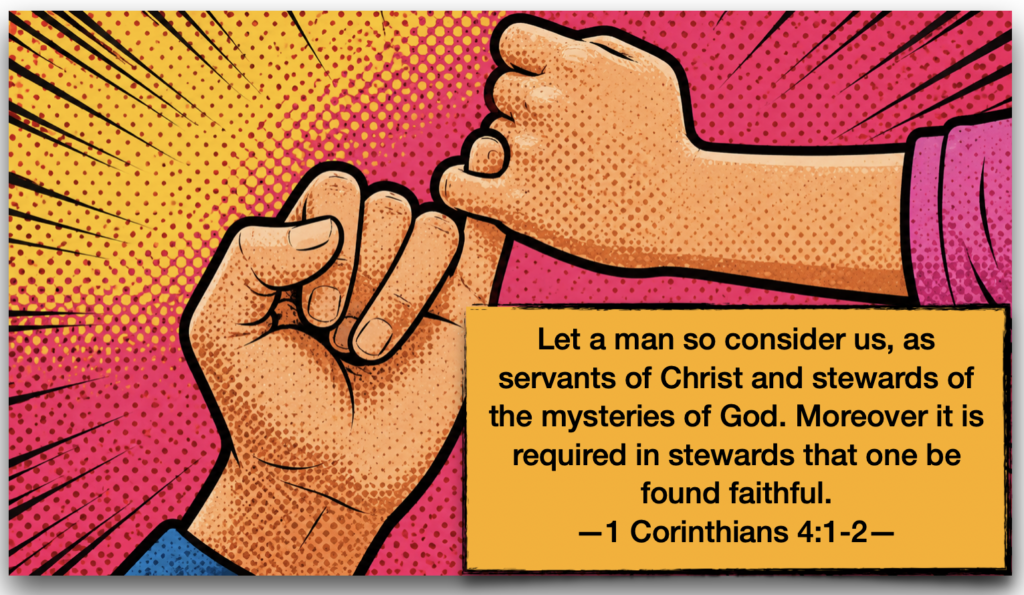
P.A.T.H. (Path) Numbered Self-Evaluation and Application- Straight forward Plan First, Example & Lesson Why Second.
(ROTATE YOUR PHONE 📲TO SEE GRAPH BELOW PROPER)
How to Use This Plan: Walk through each of the four movements in order. Do not rush to Transformation before completing Principles and Awareness. The path is sequential by design — just as God in 1 Kings 19 restored Elijah’s body before addressing his spirit, and just as the fruit of the Spirit in Galatians 5:22–23 moves in sequence from love through self-control, each stage here prepares the ground for the next. Use this with a journal, a trusted biblical counselor, or a small group. Pray before each section. Expect the process to take time. “A righteous man may fall seven times and rise again.” — Proverbs 24:16 (NKJV)
P.A.T.H. Summary Reference
| Movement | Key Verse | Steps | Core Task |
| P — Principles | 1 Corinthians 4:2 | 1–5 | Theological grounding in stewardship |
| A — Awareness | Proverbs 25:28 | 6–10 | Honest naming of patterns and root fears |
| T — Transformation | Ephesians 4:22–24 | 11–16 | Replacing old habits with new practices |
| H — Hope | 2 Timothy 1:7 | 17–21 | Receiving grace and walking in it |
MOVEMENT ONE — PRINCIPLES
Understand Biblical Stewardship, Boundaries, and the Importance of Contentment
Foundation Verse: “Moreover it is required in stewards that one be found faithful.” — 1 Corinthians 4:2 (NKJV)
The Principles movement establishes why boundaries are not selfish — they are sacred. Before a single limit can be set wisely, the soul must be anchored in the truth that God is the Owner and we are stewards. Every step in this movement is an act of theological grounding.
Step 1 — Affirm Divine Ownership
Read aloud and meditate on Psalm 24:1: “The earth is the LORD’s, and all its fullness, the world and those who dwell therein” (NKJV).
Self-Evaluation Questions:
- In practice, do I live as though my time, money, relationships, and energy belong to God — or to me?
- Where in my life am I acting as an owner rather than a steward?
Action: Write a one-paragraph written declaration — your personal acknowledgment before God that everything you have been given belongs to Him. Date and sign it. Keep it in your journal as a reference point.
Step 2 — Study God’s Own Pattern of Limits
Read Genesis 2:16–17, Deuteronomy 5:32, and the creation account of Genesis 1 (noting each act of separation and ordering).
Self-Evaluation Questions:
- Have I believed — consciously or unconsciously — that limits are a sign of weakness or failure? Where did that belief come from?
- If the limitless God consistently establishes limits in creation and covenant, what does that tell me about the nature of limits in my own life?
Action: List three areas of your life where you currently have no functional limit. Next to each, write the word stewardship and ask: What would faithful management of this area look like?
Step 3 — Learn the Burden/Load Distinction
Read Galatians 6:2 and Galatians 6:5 side by side in the NKJV. Note the difference between the crushing baros (burden) and the personal phortion (load).
Self-Evaluation Questions:
- Am I currently carrying loads that belong to someone else — absorbing consequences of others’ choices that they should be experiencing themselves?
- Are there burdens I should be helping others carry that I have declined out of avoidance or self-protection?
Action: Draw two columns in your journal. Label one “Burdens I Am Called to Help Bear” and the other “Loads I Have Been Carrying That Belong to Someone Else.” Populate both honestly.
Step 4 — Understand the Meaning of a Faithful Yes and No
Read Matthew 5:37: “But let your ‘Yes’ be ‘Yes,’ and your ‘No,’ ‘No.’ For whatever is more than these is from the evil one”(NKJV).
Self-Evaluation Questions:
- Is my yes currently meaningful — or do people expect it simply because I have never said no?
- Do I say yes out of genuine willing agreement, or out of fear of disapproval, conflict, or abandonment?
Action: Recall the last three times you said yes to a request. For each one, honestly answer: Was this a willing yes, a fearful yes, or a resentful yes? Record your findings without judgment. This is diagnostic, not condemnation.
Step 5 — Ground Your Understanding in Contentment
Read Philippians 4:11–13: “I have learned, in whatever state I am, to be content… I can do all things through Christ who strengthens me” (NKJV).
Self-Evaluation Questions:
- What am I afraid will happen if I set a limit with a specific person or in a specific area? Name the fear precisely.
- Is my difficulty with limits rooted more in a fear of loss (approval, love, belonging) or in a genuine calling from God to give more?
Action: Write a prayer surrendering your specific fears about setting limits to God. Acknowledge that your identity, security, and provision are in Christ — not in your usefulness to others.
MOVEMENT TWO — AWARENESS
Recognize the Patterns of Self-Deception and the Illusion of Control
Foundation Verse: “Whoever has no rule over his own spirit is like a city broken down, without walls.” — Proverbs 25:28 (NKJV)
The Awareness movement requires honesty of a kind that is uncomfortable and necessary. You cannot rebuild walls you have not yet admitted are missing. These steps move from general recognition to specific, named patterns in your own life.
Step 6 — Honest Inventory of the Interior Wall
Read Proverbs 25:28 and 2 Timothy 1:7: “For God has not given us a spirit of fear, but of power and of love and of a sound mind” (NKJV).
Self-Evaluation Questions:
- Is my daily life governed more by power, love, and a sound mind — or by anxiety, reactivity, and the need to manage others’ emotions?
- Where am I “governing” others’ circumstances or feelings because I cannot tolerate their discomfort?
Action: For one full week, keep a brief daily log. Each evening, note one moment when you said yes out of discomfort rather than conviction, and one moment when you successfully held a limit. Patterns will emerge.
Step 7 — Identify the Half-Scripture Pattern
Read Galatians 6:2–5 and 2 Corinthians 9:7 together. Then read Romans 12:18: “If it is possible, as much as depends on you, live peaceably with all men” (NKJV).
Self-Evaluation Questions:
- Am I using one part of a biblical principle to justify avoiding its complementary truth? (Example: citing “bear one another’s burdens” while ignoring “each shall bear his own load.”)
- Have I been telling myself that my pattern of over-giving or over-absorbing is the “Christian” thing to do, when it may actually be avoidance or fear?
Action: Take the two columns from Step 3 and review them in light of these verses. Adjust any entries that you placed in the wrong column. Bring the revised list to a trusted pastor, counselor, or accountability partner.
Step 8 — Name the Specific Relationships and Roles Where Limits Are Missing
Read Proverbs 13:20 and 1 Corinthians 15:33: “Do not be deceived: ‘Evil company corrupts good habits'” (NKJV).
Self-Evaluation Questions:
- With which specific people in my life do I consistently violate my own limits — and why?
- Are there relationships I am maintaining out of obligation, guilt, or fear rather than genuine love and calling?
Action: List the five relationships in your life that consume the most of your emotional energy. For each, rate honestly on a scale of 1–5: (1) How much of this relationship reflects my genuine calling vs. (2) how much reflects my inability to say no. Bring the results to God in prayer.
Step 9 — Trace the Root Fear
Read 1 Peter 5:6–9 and Proverbs 29:25: “The fear of man brings a snare, but whoever trusts in the LORD shall be safe”(NKJV).
Self-Evaluation Questions:
- What is the specific fear driving my inability to set limits in the areas I have identified? (Fear of rejection? Of being seen as unkind? Of losing the relationship? Of God’s disapproval?)
- Am I more afraid of what people will think of me than of what God sees in me?
Action: Write the root fear by name in your journal. Beneath it, write the truth from Scripture that directly addresses it. (Example: Root fear: “If I say no, they will leave me.” Scripture truth: “I will never leave you nor forsake you.” — Hebrews 13:5, NKJV.)
Step 10 — Recognize the Pattern of the Broken City
Read Nehemiah 1:3–4 — Nehemiah’s response upon learning the walls of Jerusalem were broken down. Note: he wept, mourned, fasted, and prayed before he acted.
Self-Evaluation Questions:
- Have I ever honestly grieved the damage caused by my lack of limits — to myself, to my relationships, and to my stewardship before God?
- Is there unconfessed resentment in me toward people I gave to beyond my genuine capacity?
Action: Spend intentional time in prayer grieving specifically what the absence of limits has cost you. This is not self-pity — it is the honest acknowledgment that precedes rebuilding. Bring the grief before God as Nehemiah did, without accusation toward others and without excusing yourself.
MOVEMENT THREE — TRANSFORMATION
Replace Destructive Habits with Positive, Faith-Based Practices
Foundation Verse: “Put off… the old man… be renewed in the spirit of your mind, and put on the new man.” — Ephesians 4:22–24 (NKJV)
The Transformation movement is not a one-time event — it is a practiced reorientation. Each step here is a concrete replacement: an old pattern named and laid down, a new practice put on in its place, built on the submission sequence of the Scripture chain (Ephesians 4:22–24 → 1 Peter 5:6–9 → James 4:7 → Philippians 4:7 → Philippians 4:13 → 2 Timothy 1:7).
Step 11 — Submit Before You Resist (James 4:7)
Read James 4:7: “Therefore submit to God. Resist the devil and he will flee from you” (NKJV).
Self-Evaluation Questions:
- Am I attempting to resist unhealthy patterns by willpower alone, without first submitting the specific struggle to God in prayer?
- Have I made today’s specific challenge a matter of prayer before responding to the people involved?
Action: Establish a daily morning practice of five minutes of specific submission prayer before engaging the day. Name before God the specific relationship, request, or situation where you need wisdom about limits today. Do not attempt the resistance of Step 11 without first completing the submission of this step.
Step 12 — Practice the Pause Before Responding
Read Proverbs 15:28: “The heart of the righteous studies how to answer, but the mouth of the wicked pours forth evil”(NKJV).
Self-Evaluation Questions:
- Do I respond to requests immediately out of reflex — or do I give myself time to discern whether this is mine to carry?
- What would change in my relationships if I replaced “yes, of course” with “let me pray about that and get back to you”?
Action: For the next thirty days, implement a single practical rule: before agreeing to any new request that requires a significant commitment of time, money, or emotional energy, you will say “Let me get back to you” and allow yourself up to twenty-four hours to consult God and, where appropriate, a trusted counselor. Track the results in your journal.
Step 13 — Speak Your Limits Clearly and Kindly
Read Matthew 5:37 and Ephesians 4:15: “Speaking the truth in love, [we] may grow up in all things into Him who is the head — Christ” (NKJV).
Self-Evaluation Questions:
- Am I communicating my limits directly, or am I using passive avoidance, vague excuses, or silence — and then feeling resentful when those unstated limits are crossed?
- What specific limit do I need to communicate to a specific person this week, and what is preventing me from doing so?
Action: Write out — in advance, in your journal — the exact words you will use to communicate one specific limit to one specific person this week. Keep the words honest, brief, warm, and free of justification or apology. Practice speaking them aloud before the conversation. Then have the conversation.
Step 14 — Replace the Rescuing Pattern with Wise Accompaniment
Read Luke 10:33–37 (the Good Samaritan). Note specifically: the Samaritan assessed the need, gave what was genuinely required, made provision for continuity, and entrusted the man to the appropriate care of another — the innkeeper.
Self-Evaluation Questions:
- Where am I “rescuing” someone in a way that is preventing them from experiencing the consequence that might produce growth in them?
- Am I confusing my role with every role — trying to be the one who brings the injured man to the inn and the innkeeper and the physician?
Action: For each person in your Step 8 list where you identified an unhealthy pattern, answer this question in writing: What is genuinely my part in this person’s situation, and what part belongs to them, to God, and to others who are better equipped? Then identify one concrete step of appropriate help you can offer — and one thing you will stop doing that belongs to them or to God, not to you.
Step 15 — Guard the Interior: Apply Philippians 4:7–8
Read Philippians 4:6–8: “Be anxious for nothing, but in everything by prayer and supplication, with thanksgiving, let your requests be made known to God; and the peace of God, which surpasses all understanding, will guard your hearts and minds through Christ Jesus. Finally, brethren, whatever things are true, whatever things are noble… meditate on these things” (NKJV).
Self-Evaluation Questions:
- What thoughts am I regularly allowing to enter and dwell in my mind that undermine my ability to set and keep healthy limits? (Thoughts of guilt, catastrophe, others’ imagined reactions?)
- Am I consistently replacing those thoughts with what is true — God’s word — or am I allowing the anxious narrative to run unchallenged?
Action: Identify the top two or three recurring thoughts that pull you back toward limit-violating behavior. For each, find and memorize one specific NKJV verse that speaks directly to that thought. When the thought arises, speak the verse aloud. This is the renewed mind of Ephesians 4:23 in practice — not suppression but replacement.
Step 16 — Establish Accountability
Read Proverbs 27:17 and Proverbs 15:22: “Without counsel, plans go awry, but in the multitude of counselors they are established” (NKJV).
Self-Evaluation Questions:
- Do I have at least one person in my life who knows the specific areas where my limits have been consistently unhealthy — and who has permission to ask me hard questions?
- Am I in a position to receive correction from others, or do I tend to explain and justify rather than listen and learn?
Action: Identify one trusted, biblically grounded person — a pastor, biblical counselor, or mature believer — and schedule a specific conversation to share what you have uncovered in Movements One and Two. Give that person explicit permission to follow up with you regularly on the specific areas you have identified. Write the name and the scheduled date in your journal.
MOVEMENT FOUR — HOPE
Discover the Power of Faith, Repentance, and a Renewed Relationship with God
Foundation Verse: “For God has not given us a spirit of fear, but of power and of love and of a sound mind.” — 2 Timothy 1:7 (NKJV)
The Hope movement does not minimize what has been lost through years of unguarded living. It insists, on the authority of Scripture, that God is in the business of rebuilding broken cities — and that the walls He raises are stronger, not weaker, for having been rebuilt by grace. These final steps are not the end of the work. They are the beginning of sustainable, God-honoring life within it.
Step 17 — Receive the Forgiveness That Makes Rebuilding Possible
Read 1 John 1:9: “If we confess our sins, He is faithful and just to forgive us our sins and to cleanse us from all unrighteousness” (NKJV).
Self-Evaluation Questions:
- Have I brought before God, in specific confession, the ways in which my absence of limits has been sinful — not merely unhealthy? (Idolatry of approval; unfaithfulness to my own stewardship; enabling others’ destructive patterns; resentment accumulated in silence?)
- Am I carrying guilt or shame about past failures that is preventing me from moving forward in faith?
Action: Write a specific prayer of confession — naming the particular ways you have been unfaithful to your stewardship. Then write beneath it, in a different color or larger script: “If we confess our sins, He is faithful and just to forgive us our sins and to cleanse us from all unrighteousness.” Receive the forgiveness. Do not return to rehearse the confessed sin.
Step 18 — Declare Your Identity Before Your Usefulness
Read Ephesians 2:10: “For we are His workmanship, created in Christ Jesus for good works, which God prepared beforehand that we should walk in them” (NKJV), and Romans 8:16: “The Spirit Himself bears witness with our spirit that we are children of God” (NKJV).
Self-Evaluation Questions:
- Do I fundamentally understand myself as a child of God who does good works — or as a useful person who, if not useful, has no value?
- What would change in my daily experience of relationships if I were fully convinced that my worth was settled before I did anything for anyone today?
Action: Write this sentence and post it somewhere you will see it each morning: “I am a child of God before I am useful to anyone. My identity is given, not earned. My good works flow from who I am — they do not create it.” Speak it aloud daily for thirty days. Measure what shifts.
Step 19 — Trust the Limits of Others to God
Read Romans 12:18–19: “If it is possible, as much as depends on you, live peaceably with all men. Beloved, do not avenge yourselves, but rather give place to wrath; for it is written, ‘Vengeance is Mine, I will repay,’ says the Lord”(NKJV).
Self-Evaluation Questions:
- Am I able to set a limit with a specific person and release the outcome — their reaction, their choices, their consequences — to God? Or do I feel responsible to manage their response to my limit?
- Do I confuse my responsibility (the faithful effort) with God’s responsibility (the outcome)?
Action: For each limit you have identified in Step 13 and communicated or plan to communicate: write a specific prayer releasing that person’s response entirely to God. Your responsibility ends at the honest, loving expression of your truth. What they do with it is between them and God.
Step 20 — Commit to the Long Walk: Proverbs 24:16
Read Proverbs 24:16: “For a righteous man may fall seven times and rise again, but the wicked shall fall by calamity”(NKJV).
Self-Evaluation Questions:
- Have I set a realistic expectation for this process — that it will involve failure, course correction, and the need for ongoing grace — or am I expecting a once-and-done transformation that, when it does not materialize, will become an excuse to give up?
- Is the direction of my life, even accounting for stumbles, moving toward faithfulness — or am I standing still?
Action: Write a personal covenant — one page — that includes: (1) The specific areas where you commit to practicing biblical limits. (2) The name of your accountability partner and the frequency of your check-ins. (3) The Scripture verses that anchor your commitment. (4) A statement acknowledging that you will fail at times, and that failure is not the end — rising is. Sign it, date it, and share it with your accountability partner.
Step 21 — Walk In It: Open the Gate
Read Proverbs 3:5–6: “Trust in the LORD with all your heart, and lean not on your own understanding; in all your ways acknowledge Him, and He shall direct your paths” (NKJV).
This is not a self-evaluation step. This is an invitation.
The walls are being rebuilt. They are not walls to keep everyone out. They are the ordered structure within which flourishing becomes possible. The gates are real — and you are the one who opens them. When you open them now, from a walled city rather than a rubble heap, what you offer is not the reflex of a person who cannot say no. It is the freely chosen, costly, genuine gift of a steward who has decided — before God, for God, guided by God — that this is what I will give, this is what I will carry, and this is what belongs to the One who owns it all.
Final Action: Return to Psalm 119:105. Read it slowly. The lamp does not light the distant horizon. It lights the next step. Take it.
“Now the God of peace who brought up our Lord Jesus from the dead, that great Shepherd of the sheep, through the blood of the everlasting covenant, make you complete in every good work to do His will, working in you what is well pleasing in His sight.” — Hebrews 13:20–21 (NKJV)