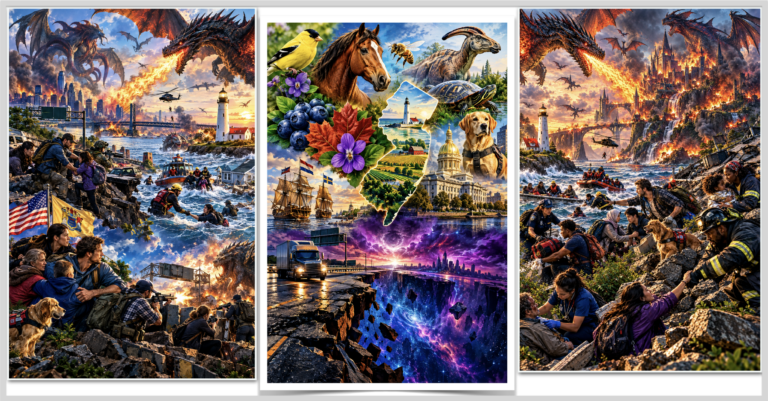
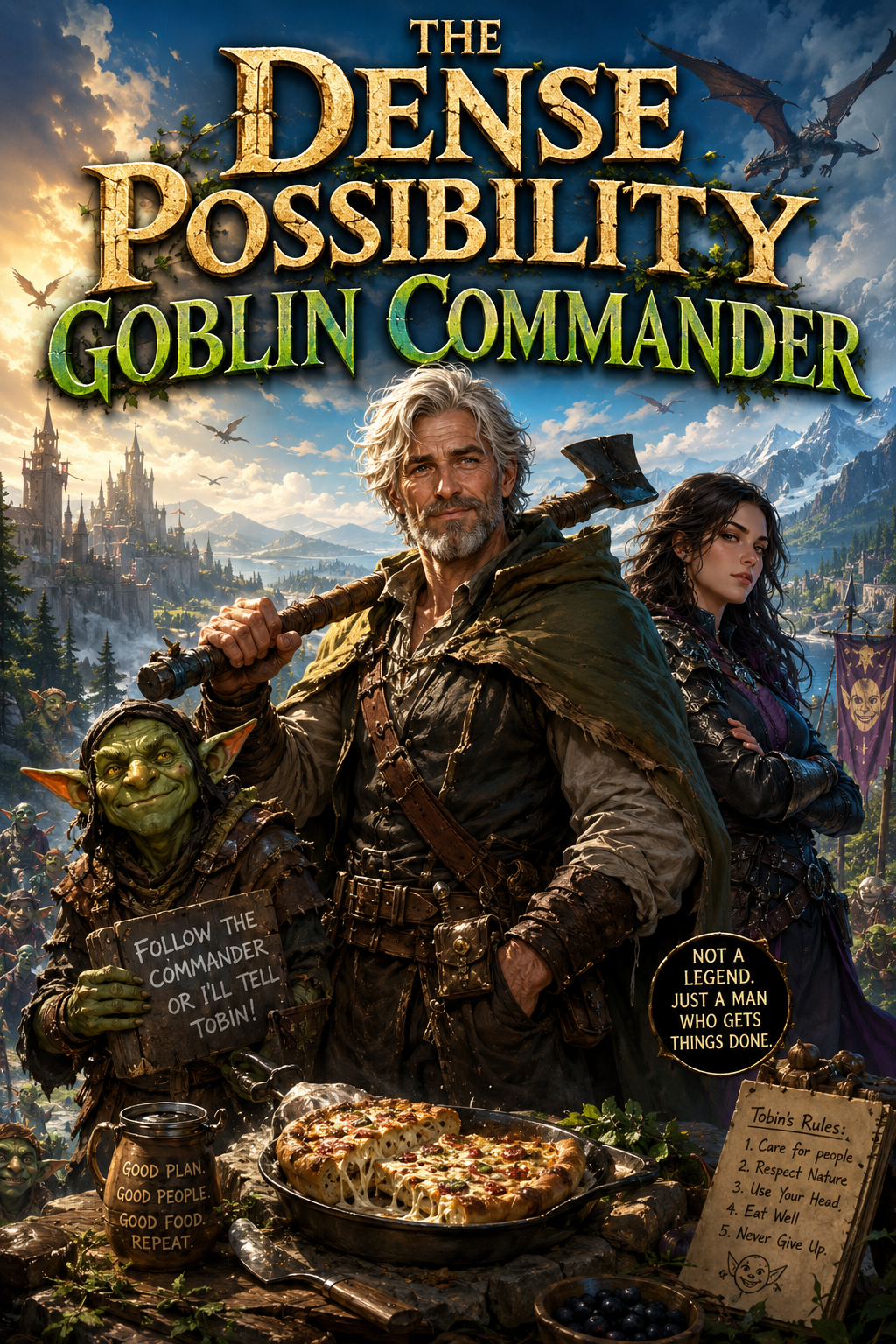

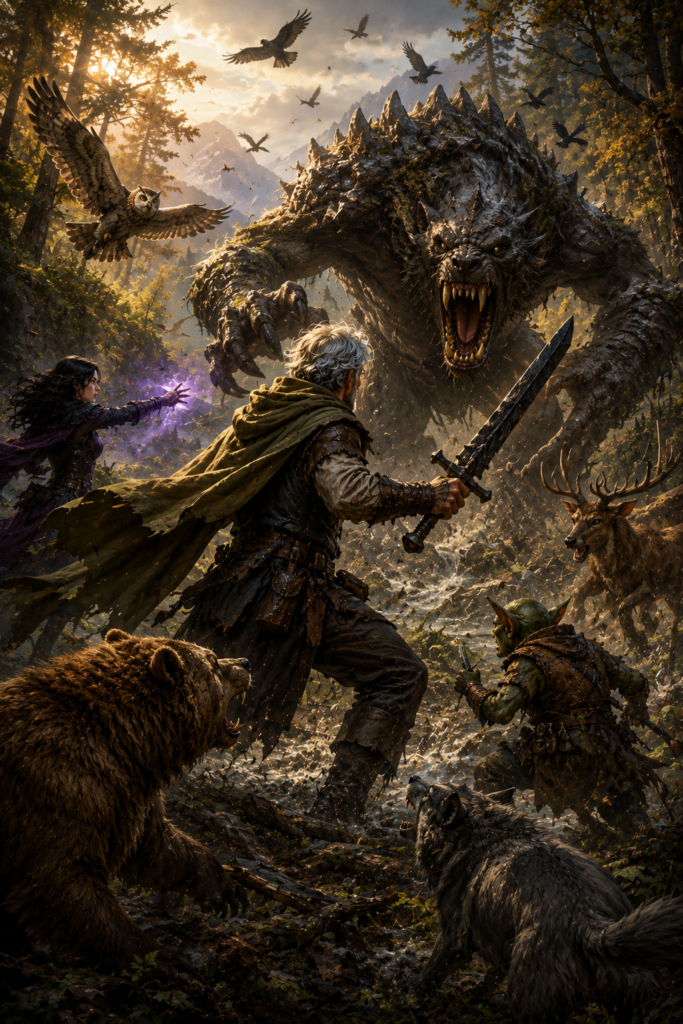
-Written by and felt by Dr. Michael A. Scordato, Ph.D. (hero made off of how my body typically feels)
Introduction: What if everything you know about fighting your “demons” is exactly what is destroying your life?
You’ve been told to fight harder. To build higher walls. To go to war with your flaws, your spouse, and your circumstances. But what if your relentless crusades are the very things burning your world to the ground?
Welcome to a completely different kind of battlefield. The Dense Possibility Goblin Commander is not just a fantasy story—it is a mirror held up to the brutal, exhausting, and destructive ways we handle human brokenness. It is time to stop the bleeding.
Here are the three brutal realities this book will force you to face:
1. You Are Not a Monster to Be Slaughtered
Stop treating yourself like a demonic entity that needs to be purged with scorched-earth willpower. You are paralyzed by deep shame and internal warfare, labeling your failures as “pure malice.” But what if you aren’t a monster? What if you are just a wounded creature caught in a bear trap of your own making? Stop trying to kill the symptom and start healing the wound.
- The Truth: “As a father pities his children, So the Lord pities those who fear Him. For He knows our frame; He remembers that we are dust.” — Psalm 103:13–14 (NKJV)
2. Your Loved Ones Are Not the Enemy
You are firing harpoons at the people you love because they are acting out. You want to win the argument, assert your authority, and crush their defensiveness. But terrified, starving, and cornered things lash out! Your relational hostility is actively destroying the ecosystem of your home. Put away the sword, stop fighting the roaring symptom, and figure out why they are in pain.
- The Truth: “Brethren, if a man is overtaken in any trespass, you who are spiritual restore such a one in a spirit of gentleness, considering yourself lest you also be tempted.” — Galatians 6:1 (NKJV)
3. Your “Hero Complex” is Killing You (And Everyone Else)
Drop the Savior Complex right now. You are burning out because you arrogant enough to think you have to be the holy enforcer, the fixer, and the savior for everyone around you. Your pride masquerades as righteous zeal, but it leaves a trail of collateral damage. True strength does not scream, bully, or conquer—it yields, it serves, and it heals.
- The Truth: “Come to Me, all you who labor and are heavy laden, and I will give you rest. Take My yoke upon you and learn from Me, for I am gentle and lowly in heart, and you will find rest for your souls.” — Matthew 11:28–29 (NKJV)
The Time for Destructive Crusades is Over.
If you are exhausted from fighting yourself. If your relationships feel like active warzones. If the weight of trying to fix everyone around you is crushing your soul to dust—you cannot afford to wait another second.
You need to shatter your pride, lay down your weapons, and learn the quiet, revolutionary power of the peacemaker. You must read The Dense Possibility Goblin Commander NOW. Your healing depends on it.
The Dense Possibility Goblin Commander: Chapter Index
| Chapter | Title |
| 1 The Early Chapters (1–6): Focus on the flight from identity (“The Man Who Ran From His Own Name”) and the discovery of a new path (“The Road Finds Him”). | The Man Who Ran From His Own Name |
| 2 | The Road Finds Him |
| 6 | The Lake Beneath the Stars |
| 9 * The Middle Chapters (9–12): Deal with the “monsters” and “dragons” that were actually something else—a perfect analogy for the “fake husbands” and also the misidentified fears people deal with. | The Mountain of Giants |
| 10 | The Dragon That Wasn’t |
| 11 | The Valley of Sleeping Flowers |
| 12 | The Last Wyvern |
| 13 The Final Chapters (14–20b): Shift toward the “Truth” and “The Work Needed Doing,” which aligns perfectly with your focus on the “new foundation” and the Ephesians 2:8–10 outflow of good works. | The Forest Watches |
| 14 | The Goblin Truth |
| 15 | The King’s Summons |
| 16 | The Thorn Queen |
| 19 | The Mountain Pass |
| 20 | The Work Needed Doing |
Chapter 1: The Man Who Ran From His Own Name
“A name is like smoke. A meal is real.”
— An old proverb of Tobin’s mother
The Corner Table
Tobin gently rubbed his lower back, which was radiating a dull, familiar ache that reminded him he was precisely forty-four years old. He sat in the dimmest corner of the Boar’s Flank Inn, running a heavily calloused hand through the silver threads beginning to creep into his dark hair. He wore the faded, dusty woolens of a common traveler, looking far more like a tired woodsman than anyone of historical import.
Beneath the bench, wrapped in ordinary burlap, rested his heavy black iron blade. The bards across the continent sang of it as an ancient, destiny-forged relic of a lost empire. Tobin knew for a fact it was merely a piece of high-grade scrap metal a clumsy tradesman had dropped thirty years ago when his cart hit a bad bump near an old battlefield. Over the decades, Tobin had used it primarily as a machete, a firewood splitter, and a tool to clear thick roots from garden paths. It was durable, certainly, but it wasn’t destiny.
The Silent Observers
Outside the grimy window, a pair of dark ravens perched on the rain-slicked eaves, their sharp eyes scanning the muddy street. Inside, a lean inn’s dining hall cat stalked silently beneath the empty tables, its gaze locked onto a tiny mouse shivering behind a heavy sack of grain.
Most people in the inn’s dining hall didn’t notice the tiny drama unfolding near the floorboards. Tobin did. Where others might see a simple pest or a mundane predator, Tobin saw a habitat issue. The winter had been harsh, driving the field mice indoors for warmth, and the cat was merely reacting to its environment. Tobin quietly leaned over and flicked a small crumb of salted pork away from the sack, drawing the cat’s attention toward the open kitchen door where the real scraps lay. The mouse darted safely into a wall crack. Tobin smiled faintly to himself. People were his ultimate treasure, but smaller lives mattered just as much.
The Song of the Commander
At the center of the inn’s dining hall, a young bard strummed a lute with aggressive enthusiasm. He was singing the latest, most exaggerated ballad of the Goblin Commander.
“And there stood the Champion in armor of night,” the bard bellowed, his voice vibrating off the heavy oak beams. “With Lady Elara, the maiden of light! He commanded ten thousand grim goblins to rise, and tore down the orcs under blackened storm skies!”
Tobin took a slow sip of his cheap soup to hide his wince. It was getting ridiculous. The farther the stories traveled from this region, the more massive and mythic they became. He remembered that original battle thirty years ago vividly. He hadn’t been a champion; he was just an upper-teenager—a terrified farmhand who tripped in the mud while everyone else was fleeing. He had grabbed the rusty iron sword because he thought he was going to die and wanted to go down fighting. He hadn’t “commanded” the goblins; he had been shaking so hard with fear that his dormant potential erupted in an instinctive hero aura. It must have spooked the goblins, yes. But they seemed liked they already had planned the panic so they could turn on their bullying orc masters to clear an escape route, and flee. I was simply in the right place at the right time to be their excuse I guess.
And Elara? Tobin shook his head softly. The song called her a ‘maiden of light.’ In truth, she was a Manananggal monster who was born to eat people from ancient lore who had spent years hiding behind a fake human identity planning to do such. Tobin had never exposed her or demanded proof of her nature; he had simply treated her as the kind person she pretended to be until the mask became her real identity. She wasn’t an ethereal saint; she was just a person who had practiced being good until she became it.
A Clueless Sage
The Innkeeper shuffled over, setting down another steaming bowl of root vegetable stew. “Here you go, traveler. Don’t mind the bard. The stories get taller every year, but folks around these parts still respect the name of the Commander.”
“A name is like smoke,” Tobin said absentmindedly, repeating an old phrase his mother used to say. “A meal is real.”
The Innkeeper paused, his eyes widening slightly as he stared at Tobin. He scratched his beard, looking completely struck by lightning. “That …is so true…. ‘A name is like smoke, a meal is real.’ That’s… that’s profound, traveler. It’s a philosophical breakdown of the vanity of ego versus the foundational elements of agricultural and societal survival!”
Tobin blinked, completely clueless as to how his simple thought had been transformed into an academic breakthrough. “I… well, I mostly just meant that the stew smells good and you can’t eat a reputation.”
“Brilliant,” the Innkeeper whispered, shaking his head in awe as he walked back to the counter to write it down on a piece of parchment.
The Escape
Tobin sighed. He was terrible at saying no, and he absolutely hated disappointing people, which was exactly why he kept running whenever his legend caught up with him. The world wanted a savior, but he just wanted a warm fire, safe roads, and a good recipe. He had spent the last week dreaming of building a stone campfire oven to practice making “pizza”—a fabled dish a traveler once told him came from another world entirely. But he couldn’t settle down here. Not with bards singing his praises every hour.
He stood up quietly, tossing a few copper coins onto the wooden table. He slung his pack over his shoulder and picked up his burlap-wrapped tool, careful not to draw any attention. He kept his eyes low, looking like any other tired traveler eager to beat the evening rain.
He stepped toward the heavy oak door of the inn, his hand reaching for the iron latch. Freedom was just a dark road away.
Then, a heavy hand dropped firmly onto his shoulder.
The inn’s dining hall grew deathly quiet as a voice cut through the fading music, ringing clear, resonant, and entirely certain:
“Commander.“
Wisdom Anchor
| Chapter 1: The Man Who Ran From His Own Name | The exhaustion of the “cover story” and the fear of being truly known. | Psalm 34:18 – The Lord draws near to the brokenhearted when they finally stop running. |
- Biblical Counseling Good Point (The Elijah Method): Tobin observes the cat hunting the mouse and addresses it as a “habitat issue” caused by the harsh winter, redirecting the cat with a piece of pork. This mirrors the Elijah Method, which prioritizes assessing physical environments and basic needs (like food) before jumping to complex conclusions. NKJV Integration: Proverbs 12:10 states, “A righteous man regards the life of his animal.”
- Red Flag Warning Point: The bards and the Innkeeper elevate Tobin to a mythic, savior-like status, turning his simple phrase into a profound philosophical breakdown. In counseling, a red flag is when a counselee idolizes the counselor, expecting them to be a magical savior rather than taking practical responsibility.
- Good Point (The Elijah Method 1 Kings 19:4-8): Addressing physical depletion and habitat issues before diving into deep spiritual analysis.
- NKJV Verse: 1 Kings 19:7 – “And the angel of the Lord came back the second time, and touched him, and said, ‘Arise and eat, because the journey is too great for you.'”
- Red Flag (Savior Complex): When a counselee idolizes the counselor, viewing them as a mythic savior rather than a fellow human pointing them to God.
- NKJV Verse: 1 Corinthians 3:5 – “Who then is Paul, and who is Apollos, but ministers through whom you believed, as the Lord gave to each one?”
Chapter 2: The Road Finds Him
“If a problem keeps following you, perhaps it is asking for help.”
— An old proverb of Tobin’s mother
Asleep by the fire
The campfire had long since burned low, leaving nothing but a bed of softly glowing embers that pulsed with the wind. The rest of the camp slept heavily, the exhausted silence broken only by the distant, rhythmic whispering of the wind-chime pines. Near Elara’s bedroll, a cluster of pale, sensitive ghost-ferns curled tightly inward, sensing the latent, dark magic of her rising distress.
And Elara dreamed.
She stood in absolute darkness. It was not a forest, nor a cave, nor any physical place. It was a memory, hollowed out and waiting for her.
The smell came first—thick, copper, and sharp. The scent of crushed blood-root. Fear. Hunger.
Then came the voices. Hundreds of them. Thousands. They were screaming, running in blind terror, begging for a mercy that was never going to come.
Through the blackness, a figure emerged. The old Elara smiled.
No, Elara thought, her dream-self freezing in place. Not the old Elara. The real Elara.
The one she used to be.
The creature standing before her had deathly pale skin that seemed to drink the light. Her fingers ended in long, jagged claws stained dark at the tips. Her eyes were twin pools of glowing crimson, and her grin was split too wide, filled with far too many needle-sharp teeth.
The monster stepped forward, the movement entirely silent, not snapping a single twig.
“You are getting weak,” it whispered, the voice like dry leaves scraping across a tombstone.
Elara stepped back, shaking her head. “No.”
The creature laughed, a hollow, echoing sound that made the dream-shadows writhe like strangle-vines. “You miss it.”
“No.”
“You remember.” The crimson eyes flared, and the grin widened unnaturally. “They were prey.”
“No!” Elara shouted, closing her eyes.
But the monster simply circled her, a predator playing with its food. “You still feel it. The hunger in the dark. The thrill of the hunt.”
Elara covered her ears, pressing her hands hard against her head. “Stop.”
The creature leaned in impossibly close, its cold breath brushing against Elara’s neck. “You are pretending.” Its voice shifted, losing the monstrous echo and perfectly mimicking Elara’s own tone. “You wear a mask.”
The monster took a deliberate step around her. “You play human.”
Another step. “You play kind.”
Another. “You play good.”
The monster smiled, tapping Elara directly over her heart with one razor-sharp talon. “But I am what you really are.”
The darkness around them suddenly shifted. The black void dissolved into a terrifyingly familiar landscape—a corrupted grove of twisted iron-woods choking in toxic fog. People appeared in the mist. Villagers from the valley. Travelers they had passed on the road. The orphans from Sunbeam. Faces she knew. Faces she had grown to love.
The monster turned its gaze toward them, dropping into a hunter’s crouch, and moved.
Elara ran.
But as it always was in the nightmare, she was too slow. She was always, always too slow.
The creature’s claws reached out. A child screamed. A woman stumbled and fell in the mud. Elara threw herself desperately between the monster and the fleeing people, holding out her arms.
The monster didn’t even pause. It struck.
Pain exploded through Elara’s chest, cold and absolute. She fell to her knees, the strength leaving her instantly. She looked up, gasping for air that wasn’t there. The creature stood over her, victorious, as it always did.
“You cannot change,” the monster smiled, its face blurring until it was a perfect mirror of Elara’s own. “You are me.”
The darkness surged forward, swallowing the monster, the villagers, and the pain, consuming everything until there was nothing left.
Elara woke with a sharp, violent gasp.
She sat bolt upright, her heart pounding frantically against her ribs like a trapped bird. A tiny, silver-tufted dew-mouse that had been sheltering for warmth near her boots squeaked in terror at her sudden movement and bolted blindly into the damp underbrush. The ghost-ferns around her bedroll flattened completely against the dirt, overwhelmed by her panic.
Her breathing shook, shallow and erratic, and a cold sweat clung to her skin. She gripped the edges of her wool blanket, her knuckles white.
The nightmare again. The exact same nightmare. The exact same battle, ending in the exact same defeat.
For several agonizing moments, she simply sat there in the dark, trembling. She tried to remember where she was. She tried to remember who she was.
Slowly, her panicked gaze drifted across the quiet camp.
Her eyes found Tobin. He was sleeping beneath the wide branches of an old oak tree, completely exposed to the elements. Or, rather, completely at peace with them. A heavy, heavily armored shield-beetle was slowly, safely marching across his chest, entirely unbothered by his deep, rhythmic snoring.
A covered wooden bowl rested in the grass beside him—half a batch of dough, meticulously prepared and proofing beneath a layer of cooling, moisture-locking frost-leaves for tomorrow’s breakfast. His terrifying, legendary black iron sword, still wrapped in its ridiculous burlap sack, simply leaned against a nearby rock, currently acting as a convenient perch for a resting night-thrush.
He looked completely, undeniably ridiculous.
Elara stared at him. Slowly, the frantic beating of her heart began to ease. Her breathing deepened, matching the slow, steady rhythm of the sleeping woodsman.
As her heart rate settled, the terrified ghost-ferns near her knees tentatively began to uncurl their glowing silver fronds.
The fear retreated. The darkness in her mind loosened its suffocating grip. It didn’t vanish completely—she knew it never would completely—but it loosened enough.
It was always enough.
She pulled her knees to her chest, watching him sleep. This was the man who had changed her entire life without even knowing it. The man who treated terrifying monsters like people who just needed a meal or a redirected stream. The man who saw practical possibilities where others saw violent endings.
He had never once asked her what she used to be. He only cared about who she was right now, and whether or not she was going to eat her portion of the stew.
A small, genuine smile broke through the lingering dread on her face.
“You dense fool,” Elara whispered into the dark.
Across the camp, Tobin snored, gently vibrating the shield-beetle off his chest and into the grass, entirely unimpressed by her emotional revelation.
Elara laughed softly, a quiet sound that finally chased the last of the nightmare away. She laid back down, wrapping her blanket tighter around her shoulders.
For centuries, she had believed that peace was fundamentally impossible for a creature like her. Now, peace slept twenty feet away, drooling slightly onto a makeshift moss pillow.
The thought made her smile against the rough fabric of her blanket. And if she happened to think that the ridiculous, sleepy woodsman was actually a little bit cute…
Well. That was her secret.
The stars shone brightly overhead, clear and cold, reflecting off the luminescent petals of the moon-lilies blooming at the edge of the camp. The forest remained perfectly quiet. And for the first time that night, Elara felt safe enough to close her eyes again. Not because the darkness in her soul was entirely gone, but because she finally knew she no longer had to face it alone.
The Teasing Shadow
The heavy hand on Tobin’s shoulder didn’t belong to a royal guard, an assassin, or a vengeful orc.
Tobin let out a long, slow breath as he turned around, looking straight into the dark, amused eyes of Elara. She was leaning against the inn’s heavy doorframe, a faint, too-wide smirk playing on her lips—a lingering, subconscious habit from her days hiding a monstrous Manananggal heritage.
She knew exactly how much the word “Commander” made his joints lock up with anxiety, and she thoroughly enjoyed deploying it.
“You’re getting slow, old man,” Elara murmured, her voice dripping with quiet sarcasm as she adjusted the heavy travelling cloak over her shoulders.
“The bard was barely on his third verse about your ‘armor of night’ before you bolted for the door.”
“I am forty-four, Elara,” Tobin muttered back, defensively adjusting his pack. “My back hurts when the humidity drops, and that youth was singing loud enough to wake the dead. Besides, the innkeeper was starting to look at me like I was a traveling deity because I told him a bowl of soup is better than a bad reputation.”
Elara choked back a sharp laugh, her eyes glinting. “You really are a tragic figure, Tobin. Let’s go before someone actually asks you to command something.”
The High Road and the Stubborn Mule
By morning, the rain had cleared into a crisp, biting autumn chill. They were a few miles north of the trade town, walking a winding dirt path flanked by ancient, dense timber. Leading their small procession was Barnaby, an incredibly graying, obstinate pack mule.
Most travelers spent half their day beating or cursing their beasts of burden. Tobin, however, walked right alongside Barnaby, whispering quietly to the animal about the structural integrity of the local soil. He had meticulously balanced the heavy iron skillets, the bags of flour, and his burlap-wrapped black iron sword across the mule’s hips so it wouldn’t strain the animal’s hindquarters. In return, Barnaby walked with a steady, peaceful rhythmic trudge, occasionally nudging Tobin’s elbow for a piece of dried apple.
The forest around them was far from empty. Up in the bowing branches of the oak trees, fat gray squirrels stopped their frantic nut-gathering, sitting perfectly still to watch Tobin pass. Down in the ferns, a pair of brown rabbits didn’t bolt into their burrows; instead, their long ears twitched, their small noses sniffing the air as if sensing an overwhelming wave of safety washing over the trail.
Tobin noticed them all. “The acorns are light this year,” he observed, pointing a calloused finger toward a high branch. “Look at the squirrels.
They’re foraging lower than usual. The winter’s going to be deep, Elara. We’ll need extra firewood by next month.”
Elara sighed, her eyes scanning the deeper, darker tree line. “I’m less worried about the squirrels, Tobin, and more worried about the absolute silence coming from the valley ahead. Look at the briars.”
The Encroaching Thorns
As they rounded the bend toward the small farming settlement of Bramblebrook, the landscape changed drastically. The healthy green undergrowth gave way to a horrific, choking sprawl of black, jagged wood.
These were Briarlings. Not simple plants, but aggressive, semi-sentient ecological anomalies—masses of animated, twitching thorn-vines that moved like skeletal spiders. They had completely encircled the outer perimeter of Bramblebrook, tearing through the wooden fences and creeping dangerously close to the thatched roofs of the outer cottages.
The villagers were in a state of absolute, blind panic. A dozen men with rusty pitchforks and notched wood-axes were standing behind a hastily piled barricade of old furniture, screaming at the shifting vines.
“It’s a demonic curse!” a hysterical village elder yelled from the back, waving a crooked cane. “The forest is angry! We must burn the whole valley down to purge the evil!”
Tobin winced, his face darkening with a rare flash of genuine irritation. Waste. The sheer thought of burning down an entire healthy valley because of a localized crisis made his blood boil. He stepped forward, leaving Barnaby the mule with Elara.
“Don’t burn the valley,” Tobin called out, his voice calm but carrying an odd weight that immediately made the panicking villagers freeze. “You’ve got a habitat issue, not a curse. Look up the hill. The logging camp clear-cut the old creek bed last month, didn’t they?”
The elder blinked, confused. “Well… yes. Lord Malakar ordered the timber cleared for his new manor. What does that have to do with the demons?”
“They aren’t demons,” Tobin sighed, rubbing the bridge of his nose. “The Briarlings require deep groundwater to stay anchored in the high canopy. You cut their trees and drained their creek, so they’re migrating down into your valley searching for moisture. They’re just thirsty, and they’re reacting to what you broke.”
“Kill them!” a young farmer screamed, ignoring Tobin entirely as a massive, jagged knot of thorn-vines twitched forward, snapping a pitchfork in half. “We need a hero! We need a crusade!”
Tobin backed away slowly, shaking his head. He hated being roped into these things, and he absolutely loathed the word hero. “I’m just a traveler,” he told this half-truth smoothly, taking a few steps backward toward the dense forest path that bypassed the village. “In fact, I’m terribly busy. I noticed some rare winter-cap mushrooms growing in the deep thicket just over this ridge. I need them for tonight’s stew. Good luck with the fencing.”
“Tobin, wait—” Elara started, but he had already vanished into the thick, shadows of the untamed woods, carrying nothing but a small wicker basket and his burlap-wrapped tool.
The Mystery in the Thicket
The villagers braced for a slaughter as the Briarlings began to thrash violently, their wooden joints popping like breaking bones. Elara stood quietly by the pack mule, her arms crossed, watching the tree line where Tobin had disappeared. She didn’t look worried; she looked deeply analytical.
From deep within the dark forest, a sudden, heavy silence fell.
There were no sounds of epic metal clashing against wood. There were no grand battle cries, no magical explosions, and no holy incantations. For a long, suffocating ten minutes, nothing happened at all. The air simply grew dense, heavy with a sudden, invisible pressure that made the hair on the back of Elara’s neck stand up—a presence so dense with potential that even the shifting Briarlings at the village edge suddenly froze mid-stride.
Then, a soft, repetitive snap-snap-snap echoed from the brush.
Before anyone could comprehend what was happening, the aggressive, terrifying Briarlings began to unravel. Like a wave of frightened snakes retreating from a fire, the massive knots of black thorns untwisted themselves from the cottages, detached from the broken barricades, and rapidly slithered backward into the deep forest, entirely abandoning the valley.
Within moments, the village perimeter was completely clear. The monsters had vanished without a trace, leaving behind miles of perfectly neatly piled, harmlessly cut thorn-vines stacked along the edge of the road.
Nobody saw how it happened. Nobody saw a single blow struck.
Good Fencing Material
A few minutes later, the bushes rustled, and Tobin strolled back into the sunlight. His woolen shirt was slightly dusty, his silver-streaked hair had a stray twig caught in it, and his wicker basket was completely filled to the brim with plump, white winter-cap mushrooms.
He walked up to the paralyzed, wide-eyed villagers, entirely oblivious to their sheer terror and awe.
“Found them,” Tobin said cheerfully, holding up a particularly large mushroom. “These will go beautifully with the salted pork. Oh, and by the way, those thorn-vines left out there? If you drag them around your perimeter and stack them tightly, they’ll make the finest defensive hedge you could ask for. Keeps the wolves out, and it’s much better than that terrible furniture barricade you built.”
The village elder dropped his cane, falling to his knees. “He… he spoke to the forest… He commanded the living thorns to slice themselves into perfect hedges…”
“I did what?” Tobin blinked, utterly clueless as he looked at Elara, who was currently burying her face in her hands to hide her grin. “No, I was just picking mushrooms. They were just sitting there. Anyway, we should get moving before it gets dark. Barnaby needs to eat.”
As Tobin led the pack mule away, the villagers began whispering the name they all knew from the bards—the mythical traveler who could tame monsters with a single hidden word. Tobin just sighed, already planning how many mushrooms to slice for dinner, completely unaware that the legend of the Goblin Commander had just grown a little bit larger.
Wisdom Anchor Chapter 2: The Road Finds Him
- Biblical Counseling Good Point (Paul Letter Method): Elara’s nightmare of her monstrous past is calmed simply by seeing Tobin sleeping peacefully nearby, as he treats her based on who she is now, not what she was. This reflects the Paul Letter Method of affirmation before correction, establishing a secure identity in the present. NKJV Integration: 2 Corinthians 5:17 reminds us, “Therefore, if anyone is in Christ, he is a new creation.”
- Red Flag Warning Point: The villagers frantically want to burn down the entire valley to purge the “demonic” Briarlings. This represents a red flag in counseling: reacting to symptoms with fear and destructive, willpower-based “crusades” rather than investigating the root cause (the logging camp draining the creek).
- Good Point (Paul Letter Method): Affirming the person based on their present identity in Christ rather than their past mistakes.
- NKJV Verse: 2 Corinthians 5:17 – “Therefore, if anyone is in Christ, he is a new creation; old things have passed away; behold, all things have become new.”
- Red Flag (Fear-Based Crusades): Reacting to troubling symptoms with destructive, frantic willpower rather than understanding the root cause.
- NKJV Verse: Romans 10:2 – “For I bear them witness that they have a zeal for God, but not according to knowledge.”
Chapter 3: The Orchard of Teeth
“Hungry things are rarely thinking clearly.”
— An old proverb of Tobin’s mother
The Silent Valley
The crisp autumn air grew heavier as the dirt path sloped downward into a deeply secluded valley. The lively rustle of the high canopy had faded, replaced by an unsettling, stagnant quiet.
Walking alongside Barnaby the pack mule, Tobin kept his eyes on the forest floor. A sleek, red fox darted across a patch of damp moss ahead, its ears pinned back, moving with a desperate, hurried stealth. High above in the fading gold of the birch trees, a small flock of finches sat perfectly frozen, refusing to sing. Even a family of brown deer grazing near the wood line kept their heads raised high, noses twitching nervously as they sniffed the shifting wind coming from the valley floor.
“The animals are avoiding the valley bottom,” Tobin observed quietly, reaching out to pat Barnaby’s neck as the mule offered a low, hesitant snort. “Look at the deer. They aren’t settling. They’re foraging right on the edge of the rocky high ground.”
Elara pulled her heavy traveling cloak tighter around her shoulders, her dark eyes narrowing as she scanned the rows of perfectly spaced, heavy-branched trees filling the low basin ahead. “That’s because the orchard ahead isn’t a normal grove, Tobin. Those are Snapapple Trees.”
Tobin’s eyes brightened with a distinctly practical curiosity. “Ah! The ones that produce those massive, crisp red fruits? A merchant in the last province told me they have a tartness that balances out a rich game stew perfectly. I’ve been hoping to find a few for tonight’s supper.”
“They are carnivorous, Tobin,” Elara said flatly, her too-wide smirk twitching with mild disbelief at his priorities. “The bards call it the Orchard of Teeth. The trees don’t wait for the fruit to drop; they trap anything that walks beneath the boughs to feed their roots. It’s a death trap.”
“Well, hungry things are rarely thinking clearly,” Tobin replied mildly, repeating his mother’s old wisdom with a soft shrug. “If a tree is trying to eat people, it usually just means the soil is entirely stripped of proper nutrients. It’s a localized ecology issue, not malice.”
The Trapped Caravan
As they approached the iron-gated entrance of the old orchard, the sound of frantic screaming finally broke the heavy silence.
A small caravan of trapped merchants had driven their heavy wooden wagons straight into the center of the grove, lured in by the promise of an easy shortcut. Now, they were completely surrounded. The massive Snapapple Trees had begun to actively shift, their thick, root-like wooden limbs twisting together to block the dirt road. High above, the heavy wooden knotholes on the undersides of the branches were flexing, revealing rows of jagged, splintered wooden ‘teeth’ that snapped shut with the terrifying force of iron bear traps.
“Help! Someone help us!” a wealthy merchant in stained silks wailed, cowering beneath his wagon as a massive, sweeping branch slammed into the canvas roof, tearing it to shreds. “They’re closing in! The demons are going to swallow us whole!”
Several hired guards were frantically swinging their steel shortswords at the encroaching wood, but the blades merely notched the incredibly dense, iron-hard bark, causing the trees to lash out even more violently.
Tobin winced at the sight of the swinging swords. Waste. Striking a starving tree with steel would only aggravate its defensive instincts, ruining perfectly good fruit and wasting valuable energy.
“You’re just making them angry!” Tobin called out to the guards, but his voice was entirely drowned out by the chaotic crunching of splintering wood and the terrified shouts of the merchants. He sighed softly, looking up at the high canopy where several remarkably large, pristine red apples hung just out of reach. “Those really do look exceptionally crisp. I’m just going to wander off and see if I can find some low-hanging fruit that isn’t currently trying to flatten a wagon.”
“Tobin, the middle of a carnivorous ambush is not the time to go grocery shopping,” Elara muttered, but she already knew it was useless to argue.
Tobin had already slipped away, ducking beneath a low, thorny hedge into the deep fog of the inner grove, casually carrying his wicker basket and his burlap-wrapped black iron tool.
The Unseen Reshaping
Inside the center of the orchard, the merchants and guards completely lost sight of the tired woodsman. The thick mist of the valley rolled in, obscuring everything beyond a few yards.
Suddenly, a profound, suffocating change rippled through the entire orchard.
There were no sounds of traditional combat—no shouting, no desperate rustling, and no epic strikes. Instead, an immense, heavy pressure descended upon the valley floor. It was a presence so dense with dormant, terrifying potential that the entire atmosphere seemed to curdle. To the human guards, it felt like a sudden drop in the weather, making their breath hitch in their throats. But to the ancient, predatory instincts of the Snapapple Trees, it was something entirely different.
Deep within the fog, out of anyone’s line of sight, the iron-hard branches of the trees didn’t just stop swinging—they trembled. The natural hierarchy of survival had just reintroduced a apex predator to the grove.
A series of incredibly precise, soft thwacks echoed through the mist, accompanied by the distinct sound of heavy, choked earth being shifted and aerated with impossible speed.
Within minutes, the terrifying snapping noises completely ceased. The heavy, claustrophobic weight lifted from the air just as quickly as it had arrived. The thick fog began to dissipate, rolling back up the valley walls and revealing the path ahead.
The Harvest
When the merchants finally dared to open their eyes and look out from beneath their shattered wagons, they were completely dumbfounded.
The carnivorous Snapapple Trees had entirely retreated, their massive wooden limbs neatly pulling backward into the rich earth. The road was perfectly clear. More confusingly, the choked, dead topsoil around the roots of every single tree had been deeply aerated and turned over, exposing a rich layer of damp, nutrient-dense under-earth that the trees were greedily soaking up, their jagged knotholes closing into peaceful, silent lines.
No one had witnessed how it happened. No one saw a single branch cut. The entire deadly encounter had simply recontextualized itself into a peaceful, well-tended garden.
A soft rustling came from the edge of the path, and Tobin strolled back into the clearing. His burlap-wrapped tool was tucked casually under his arm, and his wicker basket was now overflowing with brilliantly red, perfectly sweet-smelling snapapples.
“Well, the soil just needed a bit of turning over to let the deeper nutrients reach the roots,” Tobin said cheerfully, pulling a beautiful apple from his basket and taking a loud, crisp bite. “They aren’t snapping anymore. In fact, if you merchants leave them be, they’ll produce a marvelous harvest next season. Oh, and you can drive your wagons right through now. The road is clear.”
The head merchant scrambled out from under his wagon, staring at Tobin with a look of absolute, religious reverence. “He… he broke the curse of the Orchard of Teeth… He purified the demonic wood with a single stride…”
“I just turned the soil so they could feed properly,” Tobin sighed, looking thoroughly exhausted as he walked past the staring caravan toward Elara and Barnaby. “They were just hungry. Anyway, Elara, look at these apples. Tonight’s stew is going to be absolutely spectacular.”
Elara looked from the perfectly peaceful trees back to Tobin, her too-wide smile returning as she shook her head. “Of course it is, Commander. Let’s go before they build a shrine to your apple-picking.”
Wisdom Anchor Chapter 3: The Orchard of Teeth
- Biblical Counseling Good Point (Physical Platform First): Tobin recognizes that the Snapapple Trees are not malicious, but rather that hungry things rarely think clearly. By aerating the soil so they can feed, he resolves the crisis. This is a direct application of assessing the physical platform (nutrition and environment) before addressing behavior.
- Red Flag Warning Point: The hired guards strike the starving trees with steel swords, which only aggravates the trees’ defensive instincts. A red flag is attempting to forcefully attack a counselee’s defensive behavior without addressing the starvation or pain driving it.
- NKJV Verse: James 2:16 – “And one of you says to them, ‘Depart in peace, be warmed and filled,’ but you do not give them the things which are needed for the body, what does it profit?”
- Red Flag (Attacking Defensive Behavior): Using harsh confrontation on someone who is acting out purely because they are in deep pain or unmet need.
- NKJV Verse: Proverbs 25:20 – “Like one who takes away a garment in cold weather, And like vinegar on soda, Is one who sings songs to a heavy heart.” A poetic analogy to describe the tactlessness of trying to cheer someone up at the wrong time.
NOTE: Proverbs 25:20 “Soda” is the Hebrew word “nether”. It does not refer to modern carbonated soft drinks or baking soda. It refers to natron, a naturally occurring mineral deposit (sodium carbonate) used in ancient times as a cleaning agent or soap. The Reaction: Pouring vinegar (an acid) onto natron (a base) causes a violent, fizzing reaction that neutralizes the cleaning power of the mineral, effectively ruining it.
Chapter 4: The Moss King’s Forest
“Before cutting a root, find out what it is feeding.”
— An old proverb of Tobin’s mother
The Encroaching Green
The ancient trade highway did not simply end; it was devoured.
Thick, unnatural carpets of emerald moss, soft as velvet but heavy as wet iron, swallowed the cobblestones. Sprouting from the suffocating green blanket were clusters of glowing, pale-blue Lantern Mushrooms that cast an eerie, sickly luminescence across the choking path. Beside them, patches of Whisper Ferns rustled and sighed in the absence of wind, their fronds scraping together with a sound that mimicked human murmurs.
Walking alongside Barnaby the pack mule, Tobin paused to look at a half-buried stone milestone. The moss was actively crawling over it like a slow-moving liquid.
The wild things of the wood were behaving strangely. High in the weeping willow boughs, several speckled owls sat in a tight, silent row, their massive eyes tracking Tobin’s movements with an unnatural, unblinking intensity. Near a rotting log, a mother fox and her cubs sat completely exposed, ignoring the travelers entirely as they licked moisture from the damp moss. Down in the low hollows, thousands of tiny tree frogs produced a synchronized, deafening drone that sounded less like a mating call and more like a collective plea for survival.
“They’re parched,” Tobin remarked quietly, bending down to gently scratch the behind of a tree frog that had hopped onto his calloused thumb.
“The frogs are calling for rain, but look at the dirt beneath this moss. It’s bone-dry, turning to powder. The forest isn’t invading, Elara. It’s migrating toward the wellsprings.”
“Tell that to the paladins up ahead,” Elara replied, her voice low as she adjusted her traveling cloak. “They don’t look like they’re in the mood to discuss soil mechanics.”
The Crusade of Iron
At the edge of Oakhaven village, a heavily fortified barricade had been erected. Standing atop it was Sister Rowan, a fiercely dedicated warrior-priestess clad in polished silver plate armor, her hand resting on the pommel of a massive war-hammer. Behind her, dozens of nervous local conscripts held torches and crude wood-axes, staring out at the creeping root-walls of the Moss King.
The Moss King—a titanic, semi-sentient elemental force of primordial timber and choked vine—had extended its colossal, root-like tendrils directly into the town’s perimeter, cracking cellar walls and slowly overturning the outermost homes.
“Stand firm, children of light!” Sister Rowan’s voice boomed across the barricade, filled with righteous certainty. “The demonic overgrowth seeks to swallow civilization! When the vanguard arrives at midday, we shall march into the heart of the timber and sever the great central root of the Moss King! We shall purge this unnatural green with fire and steel!”
The conscripts cheered half-heartedly, their faces pale with terror.
Tobin stepped forward, his faded travel-worn woolens a stark contrast to Rowan’s shining silver armor. He walked right up to the base of the barricade, leaning casually against his burlap-wrapped black iron sword.
“Excuse me, Sister,” Tobin called out mildly, his tired face etched with genuine concern. “I wouldn’t go cutting that central root if I were you. Before cutting a root, you really ought to find out what it is feeding.”
Sister Rowan looked down from the wall, her brow furrowing with deep irritation at the interruption. “And who are you to question a sacred crusade, traveler? The monster’s roots are destroying our homes! It feeds on our very land!”
“No, it’s actually feeding the high aquifer,” Tobin explained patiently, pointing a finger toward the parched northern hills. “There’s a massive drought up on the ridge. The upper lakes have completely dried out because of a rockslide that blocked the main mountain tributary. The Moss King isn’t attacking you; his roots are extending downwards to draw water from the deep valley basin to keep the ancient heart-trees alive. If you sever that main root, the entire upper forest canopy will die by next week, and when the next heavy rain hits, you won’t have a moss problem—you’ll have a massive mudslide that will bury this entire village whole.”
“Nonsense!” Sister Rowan snapped, waving her hand dismissively. “It is an aggressive monster, a blight upon the realm! We will slay it!”
Tobin sighed heavily, his lower back twinging. Waste. The sheer thought of an entire mountainside collapsing because of a stubborn, short-sighted crusade made him deeply weary. “Well, I’m just a simple woodsman,” Tobin proclaimed smoothly, backing away toward a narrow goat track that bypassed the main road. “I’m going to head up the ridge to look for some wild garlic and clean water. Good luck with the logs.”
Rowan scoffed as the tired traveler slipped into the thick, glowing forest, carrying nothing but a iron spade and his wrapped tool.
The Unseen Realignment
Deep within the suffocating, moss-choked heart of the woods, Tobin completely disappeared from the village’s sight. The pale light of the Lantern Mushrooms cast long, distorted shadows through the dense fog.
Suddenly, an immense, staggering weight descended upon the entire forest floor.
It was not a physical blow, nor was it a magical incantation. It was an invisible, primordial pressure—a dormant, hero-class aura so staggeringly dense with potential that the very air seemed to stop moving. To Sister Rowan and her men at the barricade, it felt like a sudden, terrifying shift in atmospheric pressure that made their chests tighten with instinctive dread.
But to the ancient, elemental awareness of the Moss King, it was the presence of a force that could split the earth itself.
Miles up the mountain ridge, completely out of sight, a series of colossal, rhythmic thuds echoed through the peaks. It sounded as though a massive, heavy iron implement was effortlessly fracturing tectonic stone with surgical precision. Within minutes, a deep, rumbling roar echoed down the valley—the sound of a long-blocked riverbed suddenly being cleared, letting thousands of gallons of fresh mountain water rush back into the natural channels.
Down in the valley, the heavy, suffocating pressure vanished as quickly as it had arrived.
The Withdrawal
Before the paladins could even form their vanguard to march, a great, creaking sound rippled through the timber.
The titanic, creeping roots of the Moss King began to rapidly pull back. Like a hand withdrawing from a hot stove, the massive emerald tendrils untwisted from the cellar walls, slid smoothly out of the cobblestone roads, and retreated deep into the forest perimeter. The glowing Lantern Mushrooms dimmed into a soft, natural twilight, and the Whisper Ferns grew entirely still.
The drought was broken. Fed by the newly restored mountain springs, the soil softened, and the forest instantly began to stabilize, recovering its vibrant, healthy green sheen. No one had seen a single monster fought. No one had witnessed a single drop of blood spilled.
A short while later, Tobin strolled back down the goat track, casually tossing a small bundle of wild ramp garlic into his travel pack. His shirt was damp with river spray, and his burlap-wrapped tool was tucked securely under his arm.
He walked right past the stunned, paralyzed paladins up to the wide-eyed Sister Rowan.
“The river’s flowing again,” Tobin said cheerfully, wiping a streak of mountain mud from his brow. “The Moss King won’t be bothering your cellars anymore now that he has a proper drink up top. Oh, and you can use that loose moss he left behind to insulate your barns for the winter. It holds heat beautifully.”
Sister Rowan dropped her war-hammer, staring at Tobin with a look of sheer, unadulterated holy awe. “He… he rebuked the earth elemental… He negotiated with the ancient green and commanded the mountain waters to bend to his whim…”
“I just moved a couple of big rocks out of the stream bed,” Tobin sighed, looking thoroughly exhausted as he walked toward Elara and Barnaby. “The water did the rest. Anyway, Elara, look at this garlic. It’s going to make tonight’s broth smell incredible.”
Elara looked at the perfectly peaceful forest, then back to Tobin, her knowing smile widening. “Of course it will, Commander. Let’s move on before the priestess tries to canonize your soup pot.”
Wisdom Anchor Chapter 4: The Moss King’s Forest
- Biblical Counseling Good Point (Nathan Principle/Investigation): Tobin advises Sister Rowan that before cutting a root, one must find out what it is feeding. This embodies the wisdom of careful investigation to understand systemic issues (a drought up the ridge) before rushing to confrontation. NKJV Integration: Proverbs 18:13 warns, “He who answers a matter before he hears it, It is folly and shame to him.”
- Red Flag Warning Point: Sister Rowan immediately spiritualizes a physical problem, declaring a “sacred crusade” against the moss. Over-spiritualizing issues and ignoring physical realities (like the blocked aquifer) can cause catastrophic harm to a counselee.
- Good Point (Nathan Principle/Investigation): Taking the time to properly investigate the systemic root of a problem before speaking or acting.
- NKJV Verse: Proverbs 18:13 – “He who answers a matter before he hears it, It is folly and shame to him.”
- Red Flag (Over-Spiritualizing): Treating a highly practical or physical problem as a purely spiritual issue or demonic attack.
- NKJV Verse: Colossians 2:23 – “These things indeed have an appearance of wisdom in self-imposed religion, false humility, and neglect of the body, but are of no value against the indulgence of the flesh.”
Chapter 5: The Goblin Road
`”Most arguments begin before the first word is spoken.”
— An old proverb of Tobin’s mother
The Tense Frontier
The dirt road cutting through the jagged gray ridges of the Wyrmtooth Foothills felt less like a trade route and more like a graveyard.
The signs of conflict were everywhere: a scorched wooden axle half-buried in the ditch, broken arrows embedded in the pine trunks, and the distinctive, chaotic footprints of small, clawed feet churning the mud. The local merchants had entirely abandoned the pass, terrified by rumors of a renewed wave of vicious goblin raids.
Walking alongside Barnaby the pack mule, Tobin pulled his worn traveling cloak tighter against the sharp mountain wind. His back gave a sharp, agonizing throb, reminding him that a damp mountain trail was the worst place for a forty-four-year-old’s joints.
The wilderness around them was on high alert. Perched in the skeletal branches of dead pines, several large, glossy crows cocked their heads, their harsh, rhythmic cawing sounding like a warning system for the valley below. Down in the thick brush, a pair of heavily scarred wild boars dug frantically into the frozen roots, their small eyes wide and bloodshot, ready to bolt or charge at the slightest snapping of a twig.
“The woods are wound up tighter than a cheap crossbow,” Tobin remarked quietly, pausing to adjust the weight of the heavy iron pots slung across Barnaby’s harness so the mule wouldn’t strain a leg. “Look at those boars. They aren’t wallowing. They’re defensive. Something is pressuring their territory from the deeper ridges.”
Elara glanced up from the trail, her sharp, dark eyes scanning the rocky crags above. A faint, knowing smirk played on her lips. “The merchants say it’s an organized army of bloodthirsty monsters, Tobin. They say the Goblin Scouts are throat-cutters working for a new dark warlord, preparing to burn the frontier.”
Tobin let out a long, weary sigh. “Most arguments begin before the first word is spoken, Elara. Merchants bring armed guards waving steel, and the goblins react to the threat. Goblins are the slave labor force for the other echelons of dark monsters because everyone considers them too small and weak. No one ever stops to see their potential, so they spend their lives cornered, hungry, and terrified. Terrified things lash out. It’s a tragedy of bad communication, not an invasion.”
The Overnight Disappearance
That evening, they made camp in a shallow cave just off the main road. Tobin meticulously prepared a simple, comforting broth from the last of their dried roots, making sure Barnaby was fed and rubbed down before he even sat by the fire.
But as the fire dwindled to pale gray embers, Tobin looked out into the pitch-black mountain pass. The distant, high-pitched yipping of goblin scouts echoed across the stone valleys, tight and fearful.
When Elara woke at the first crack of dawn, the camp was completely silent.
Tobin was gone. His bedroll was neatly rolled up, and his wicker basket was missing. More notably, the ordinary burlap-wrapped bundle containing his heavy, scrap-metal black iron blade was gone from its usual spot against the cave wall.
There had been no sounds of a struggle. No frantic shouting, no clashing steel, and no alarms. Tobin had simply vanished into the pitch-black night, slipping away into the dangerous heart of the raiding territory.
The Silent Valley
By midday, the entire frontier had undergone an unbelievable transformation.
The frantic yipping and scratching that had plagued the ridges for weeks completely ceased. The high-pitched war horns of the goblin scouts fell utterly silent. As Elara led Barnaby down the winding pass, she noticed that the crude goblin watchtowers made of bound sticks were entirely abandoned. The small, jagged bone daggers and crude traps that usually littered the side of the road had been neatly collected and stacked in polite, harmless piles beside the trail, out of the way of any passing wagons.
The raids had stopped completely, overnight, without a single alarm being raised in the human settlements.
As Elara rounded a sharp rocky bend near an old mountain well, she found Tobin sitting casually on a flat boulder. He looked mildly tired, his silver-streaked hair slightly rumpled, but he was entirely unharmed. In his hands, he held a small wooden block, carefully carving a new soup spoon with a small whittling knife. His burlap-wrapped iron blade rested peacefully against his knee.
“You’re late,” Tobin said cheerfully, looking up with a warm smile. “The road’s perfectly safe now. The merchants can bring their carts through whenever they like.”
“Tobin,” Elara said, her eyes narrowing as she looked around the completely deserted, pristine pass. “What did you do?”
“Nothing major,” Tobin said smoothly, standing up and rubbing his aching lower back. “I just went out to look for some wild mountain thyme for the trail rations. I happened to stumble across their camp. They… well, they seemed to decide they wanted to relocate further up the northern peaks where the foraging is better. They left the road completely clear.”
The Witness in the Shadows
“He’s lying, you know.”
A dry, raspy voice cut through the mountain air from the shadows of a nearby rock shelf.
Elara instantly stepped forward, her hands tensing, while Barnaby the mule let out a nervous snort. Emerging from the dark crevices of the stone was an old, heavily scarred goblin wearing weathered leather armor and carrying a crooked wooden staff. His yellow eyes were wide, glowing with a complex mixture of profound exhaustion, wry amusement, and deep, lingering terror.
It was Brakka.
Brakka was the only known surviving witness who had seen Tobin thirty years ago before the legend solidified—back when Tobin was just a frightened teenage farmhand who had tripped over a piece of scrap metal in the mud. Brakka had witnessed the exact moment Tobin’s dormant potential had erupted into that terrifying, instinctive hero aura. He knew the truth: that the goblins didn’t obey Tobin because of mind control or divine prophecy, but because their literal survival instincts interpreted his raw, hidden power as a primordial nightmare.
Brakka looked at Tobin, his crooked mouth twisting into a sardonic grin. “He always says it was ‘nothing major.’ Thirty years I’ve known this man, and he still thinks he’s just an ordinary woodsman who happens to have very polite neighbors.”
“Brakka!” Tobin said, his face lighting up with genuine, clueless joy as he stepped forward to greet the old goblin. “I didn’t know you were managing this sector! I told your scouts last night that the drainage near their old camp was completely blocked, causing a terrible rot in the roots. I’m glad they took my advice and moved to the high ground.”
Brakka let out a hacking, bitter laugh, shaking his head as he looked at Elara. “Advice? He calls it advice. He strolled into the center of a war-camp in the middle of the night, carrying that burlap-wrapped death-sentence, and casually asked if anyone had eaten yet. The scouts didn’t relocate because of the ‘root rot,’ Tobin. They fled to the high peaks because when you stepped into the firelight, their instincts told them that if they stayed, you would turn the entire mountain into firewood.”
Tobin blinked, looking completely bewildered and mildly offended. “That’s ridiculous, Brakka. I wouldn’t waste a forest like that! I brought them a loaf of pizza bread I’d kept in my pack. I was just trying to be neighborly. They were just running away because… well, because goblins are naturally fast walkers, I suppose.”
Brakka simply sighed, leaning heavily on his staff as the deep mystery of the Goblin Commander grew even more absurd. He didn’t want to die, but looking at the completely oblivious, middle-aged man before him, he saw a terrifying sliver of hope that a greater change could actually occur in this broken world.
“Keep telling yourself that, Commander,” Brakka muttered, stepping into line beside the pack mule as they began their march down the newly peaceful road. “The rest of the continent is currently losing its mind trying to figure out your grand military strategy, and here you are, whittling a spoon.”
Wisdom Anchor Chapter 5: The Goblin Road
- Biblical Counseling Good Point (Empathy and De-escalation): Tobin explains that the goblins are acting aggressively because they are cornered, hungry, and terrified, noting that terrified things lash out. Understanding that bad behavior is often a tragedy of bad communication and fear is vital for a compassionate counselor.
- Red Flag Warning Point: The merchants bring armed guards waving steel, meaning the argument begins before the first word is spoken. Approaching a defensive counselee with immediate hostility or accusation will only cause them to flee or fight.
- Good Point (Empathy and De-escalation): Understanding that cornered, fearful people lash out, and approaching them with a calming demeanor.
- NKJV Verse: Proverbs 15:1 – “A soft answer turns away wrath, But a harsh word stirs up anger.”
- Red Flag (Hostile Approach): Entering a counseling or conflict resolution scenario with immediate hostility, defensiveness, or accusations.
- NKJV Verse: Proverbs 20:3 – “It is honorable for a man to stop striving, Since any fool can start a quarrel.”
Chapter 6: The Lake Beneath the Stars
“If the fish disappear, something else will come looking.”
— An old proverb of Tobin’s mother
Armed To The Berries!
The sun was beginning to dip, casting long, amber fingers through the ancient canopy, when Tobin halted near a dense, low-hanging thicket. He stopped so suddenly that Barnaby the mule nearly collided with his shoulder, snorting softly as a few startled wood-sparrows scattered from the brush.
The thicket itself was a strange, wild tangle—ordinary blackberry brambles interwoven with the luminous, silver-veined leaves of starlight-fern.
“Good news,” Tobin announced, a genuine, rare twinkle in his eyes as he looked toward the overgrown brush.
Brakka, who had been lazily swatting horseflies with his tail, went rigid. His ears twitched, and he took an immediate, cautious step backward. “Why are you smiling like that?” the goblin scout asked, his voice dripping with suspicion. “Whenever you smile like that, something usually ends up exploding or falling on us.”
Tobin ignored the jab, pointing proudly at the dark, clustered fruit nestled among the leaves. “Wild duskberries. Found them right in the shade of this old oak.”
A furry, long-eared saddle-backed quill-rat was perched on a branch just above the cluster, meticulously peeling a wild hazelnut with its clever front paws. Curiously, the creature completely ignored the glittering blue-purple berry clusters just inches from its nose.
Elara crouched beside Tobin, her brow furrowed as she inspected the cluster. “Duskberries? Here? Usually, they only sprout where sun-foxes dig their dens.”
“Very tasty,” Tobin said, already reaching out. “They’re a delicacy back home. Hard to find, but once you do, they’re worth the hike.”
“You’re sure?” Elara asked, her tone flat. “I’ve seen duskberries, Tobin. They usually grow on dry, rocky ridges, not in marshy lowlands where weeping-willows and choke-weed dominate the soil.”
Tobin waved a hand dismissively, his confidence unshakable. “Of course I’m sure. My mother used to gather these every harvest. I know them as well as I know the handle of my own blade.”
Nearby, a tiny, emerald iridescent fire-beetle landed on one of the ripe berries. It took a single sip of the juices oozing from the punctured skin, immediately buzzed backward in a tiny insectoid panic, and dropped straight into the damp leaf litter to scrub its mandibles.
Elara raised a skeptical eyebrow, looking from the beetle to the woodsman, then to Brakka, who was now backing away until he was a full ten paces behind the party. That alone should have warned everyone. But Tobin was already humming a tune, plucking a handful of the dark fruit and popping them into his mouth with the satisfaction of a man who had just struck gold.
Ten minutes later, the “delicacy” had taken its toll.
Tobin sat slumped beside the road on a mossy log, his face a fascinating shade of pale green, desperately gulping down water from his canteen. He wasn’t just drinking; he was inhaling it. An unreasonable, alarming amount of water was disappearing down his throat.
Elara stood over him, arms folded tight across her chest, watching with a mixture of pity and intense, predatory amusement.
“Duskberries?” she asked, her voice dangerously sweet.
Tobin nodded weakly, unable to manage a verbal defense as he reached for his second canteen. “Duskberries,” he rasped.
“They were frost-bitten moonberries, Tobin,” Elara sighed, though she didn’t move to help. “They grow in tight symbiosis with choke-weed, absorbing the bitter alkaloid toxins from the soil. If you had looked at the quill-rat, or noticed the fire-beetle practically passing out, you would have known. For humans and goblins, moonberries are a potent laxative and leave a metallic aftertaste that lasts for three days. You are currently experiencing the ‘cleansing’ stage.”
Tobin wiped his mouth, his shoulders sagging completely. “They looked similar.”
“They are entirely different colors,” Elara countered. “Duskberries are a deep, bruised purple. Those things were translucent, shimmering blue.”
“They were in the shade,” Tobin muttered, his legendary aura currently occupied by a very different kind of internal struggle. “Everything looks a bit blue in the shade.”
Elara stared at him. She waited for a lecture on wilderness survival, a stubborn defense of his regional expertise, or the classic “it was a tactical miscalculation.” She stared for a very, very long time.
“Tobin.”
“Yes?” he wheezed.
“You were wrong.”
Tobin looked up, his eyes meeting hers with a tired, honest clarity. “I was.”
Elara blinked. That answer had arrived far too quickly. It was entirely too humble. She felt robbed of her chance to debate him. “That’s it? That’s all you have to say?”
“What else is there?”
“You’re just… admitting it? No excuses? No grand philosophical statement about the fallibility of human observation?”
“I made a mistake,” Tobin said, reaching for his water skin again. “I was hungry, I misidentified the flora, and now I’m paying the price. It happens.”
From a safe distance, Brakka laughed so hard he nearly fell off his rock, clutching his stomach and gasping for air.
Elara looked at Tobin, then at the laughing goblin, and let out a long, frustrated breath. She realized that trying to ruffle the feathers of a man who was this relentlessly sensible was like trying to argue with a stone wall.
However, she didn’t let it go. She merely stored the memory away, placing it in the secret mental vault she kept for the Goblin Commander’s rare moments of fallibility.
From that point on, whenever Tobin began to lecture a group of villagers with a bit too much authority, or when he stood up to a hostile knight with that terrifying, overconfident stillness, Elara would simply lean in close and whisper, “Remember the berries.”
It was the one thing that could make the “Goblin Commander” flinch in sudden, quiet reevaluation.
The bad aftertaste only lasted hours, not days in accordance with Elara’s exaggerations.
The Starving Shores
The immense, glass-like expanse of the deep-water basin was normally a jewel of the region, but as Tobin, Elara, and Brakka approached the docks, an unsettling stillness hung over the water.
Walking beside Barnaby the pack mule, Tobin’s mouth still felt the tang as his experienced eyes scanned the reed beds. He noticed a family of otters chittering weakly on the muddy banks, their ribs showing through their sleek fur as they dug fruitlessly for scraps. Further down the shoreline, several tall, elegant herons stood completely motionless in the shallows, their sharp beaks poised to strike at waters that were entirely devoid of life.
“The water is too clear,” Tobin muttered, rubbing a hand against his aching lower back. “Look at the herons, Elara. They haven’t caught a thing all morning. There are absolutely no fish schools in the shallows where they usually spawn.”
Brakka leaned heavily on his wooden staff, his yellow eyes scanning the deserted docks. “The local humans aren’t fishing, either,” the old goblin grumbled. “They look like they’re preparing for a siege.”
He was right. At the end of the wooden piers, a large group of local fishermen were frantically reinforcing their small skiffs with thick iron plating and sharpening long, brutal-looking harpoons. Their faces were pale, etched with a mixture of exhaustion and profound terror.
The Terror of the Deep
Tobin approached the docks, his burlap-wrapped black iron sword tucked casually under his arm. “Excuse me,” he called out to a burly man who was furiously hammering a steel spike into the prow of his boat. “Are the spawning grounds closed this season?”
The fisherman spun around, his eyes wild. “Closed? The lake is cursed, traveler! A monster has risen from the deep trenches!” He pointed a trembling finger toward the center of the vast lake. “The Moonscale Serpent! It has been attacking our boats for a fortnight, smashing the hulls and driving us back to shore! We are starving, and the beast refuses to let us cast our nets!”
“It is a demon sent to punish us!” another fisherman cried out, hoisting a heavy crossbow. “We are gathering the bravest souls in the village. Tonight, we sail out to slay the beast, or we die trying!”
Tobin winced, letting out a long, heavy sigh. Waste. The idea of a dozen desperate men throwing their lives away to fight a massive aquatic predator was a tragedy he could not ignore.
“The serpent isn’t a demon,” Tobin explained patiently, looking out over the unusually still water. “You’re dealing with a collapsing lake ecosystem. The serpent normally stays in the deep trenches where the water is cold, feeding on the massive bottom-feeders. But if there are no small fish schools in the shallows, the medium fish die off, and the bottom-feeders starve. The serpent is attacking your boats because it’s starving and your wooden hulls look like large prey. If the fish disappear, something else will come looking.”
The head fisherman scoffed, his face red with anger. “Ecosystem? It’s a bloodthirsty leviathan! It understands only violence! We don’t need a lesson from a wandering cook; we need a miracle!”
“Well, miracles are a bit out of my trade,” Tobin said mildly, backing away toward the edge of the wetlands. “I’m just going to go take a walk up the northern inlet to check on some wild water-cress. Good luck with the harpoons.”
Elara and Brakka exchanged a knowing, weary glance as Tobin disappeared into the thick reeds along the shoreline, completely ignoring the angry fishermen.
The Blocked Inlet
A mile up the coast, hidden entirely by the dense weeping willows, Tobin found exactly what he suspected.
The primary tributary that fed the lake’s shallow spawning grounds had been completely dammed by a massive, chaotic jumble of fallen timber and compacted clay—the result of a recent, severe upstream landslide. The oxygen-rich water that the small fish schools needed to lay their eggs was completely cut off, turning the spawning pools stagnant and lifeless.
Tobin set his wicker basket down, untied the burlap from his heavy, black iron tool, and rolled up his sleeves. He didn’t draw the blade to fight. He didn’t issue a magical command. He simply stepped into the freezing mud and got to work.
To anyone watching, he was just a middle-aged man doing heavy manual labor. But as he gripped the ancient metal and struck the compacted clay, the sheer, dense possibility of his hidden potential flared. The earth practically shattered beneath his strikes. Massive, water-logged tree trunks that would have taken twenty men to move were effortlessly rolled aside by the quiet, silver-haired woodsman.
Within an hour, with a final, deafening crack, the dam broke.
Thousands of gallons of fresh, oxygen-rich water surged forward, roaring down the inlet and flooding the stagnant shallows. Almost instantly, the surface of the water began to boil with silver flashes as millions of tiny fish, desperate for the fresh currents, rushed back into their natural spawning grounds.
The Peaceful Retreat
Down at the docks, the fishermen had just finished loading their crossbows when the water around their boats suddenly began to froth.
The men screamed, raising their weapons, fully expecting the Moonscale Serpent to breach the surface and shatter their docks. Instead, they stared in absolute bewilderment as the waters filled with massive, shimmering schools of fish.
A moment later, a colossal shadow passed beneath their skiffs. The Moonscale Serpent, an incredibly beautiful creature with scales that gleamed like polished silver in the afternoon sun, rose gently to the surface. It did not attack. It completely ignored the wooden boats and the terrified men, instead opening its massive jaws to lazily consume a dense school of fish before sinking peacefully back into the deep, cold trenches where it belonged.
The serpent was leaving them alone.
The Miracle Worker
When Tobin finally returned to the docks, he was covered in mud up to his knees, and his wicker basket was full of crisp water-cress.
He found the fishermen on their knees, weeping with joy and staring out at the rippling, life-filled lake. The fish population was entirely restored, and the Moonscale Serpent had retreated.
The head fisherman scrambled to his feet, rushing over to Tobin and dropping to one knee. “Forgive me, traveler! We did not know who you were! You spoke to the waters! You cast a grand enchantment of pacification upon the demon and summoned the bounty of the deep with your powerful magic!”
Tobin blinked, wiping a smear of mud from his cheek, utterly confused. “Magic? No, I just moved some logs out of the northern inlet. The fish came back on their own. The serpent was just hungry, so it went back to eating fish instead of your boats. It was a habitat issue.”
“The humility of a true Arch-Mage,” the fisherman whispered in awe, tears streaming down his face as the villagers nodded in fervent agreement. “He credits the fish to hide his divine power!”
Tobin sighed, his shoulders slumping as he looked over at Brakka and Elara. “They really don’t listen, do they?”
“They never do, Commander,” Brakka grunted, a raspy chuckle escaping his throat. “Now, are you going to make something out of that water-cress, or are we going to stand here while they build a temple to your shovel?”
“Right,” Tobin said, his face immediately brightening at the prospect of cooking. “Let’s get a fire going. People need to eat.”
Wisdom Anchor
| Chapter 6: The Lake Beneath the Stars | A moment of stillness and the possibility of a new identity. | Isaiah 43:19 – God making a way in the wilderness and rivers in the desert. |
- Biblical Counseling Good Point (Humility and The James 1 Peirasmos Chain): When Tobin eats the toxic berries, he immediately admits his mistake without excuses. This models the prerequisite humility needed for the Peirasmos Transformation Chain (1 Peter 5:6–9), proving that admitting fault is necessary for growth.
- Red Flag Warning Point: The fishermen prepare to violently hunt the Moonscale Serpent, assuming it is a demon sent to punish them. A red flag is assuming God’s punishment or demonic attack is the cause of a problem, rather than looking at the ecological (or systemic) collapse of the “spawning grounds”.
- Good Point (Humility in the Counselor): Quickly and honestly admitting when you have made a mistake or misread a situation.
- NKJV Verse: Proverbs 28:13 – “He who covers his sins will not prosper, But whoever confesses and forsakes them will have mercy.”
- Red Flag (Assuming God’s Punishment): Immediately assuming that someone’s suffering is a direct punishment from God rather than looking at systemic or environmental brokenness.
- NKJV Verse: John 9:3 – “Jesus answered, ‘Neither this man nor his parents sinned, but that the works of God should be revealed in him.'”
Chapter 7: The Singing Rush
“When you cannot see the road, walk slower, not faster.”
— An old proverb of Tobin’s mother
THREE DAYS AFTER
Well, things were moving way too fast. Running speed. Tobin wanted everyone to move SLOWER! The creature had attacked again. Human to nature interactions tend to take time to resolve when the causation is not obvious. This stop had hidden aspects to the case now becoming clear.
It came much closer this time, bypassing the carefully laid bait traps of spiced copper-stag meat entirely, moving with a blind, aggressive fury. The heavy, iron-reinforced wooden palisade that Tobin had instructed the villagers to build—woven thick with stinging blood-briar designed specifically to deter a solitary, hunting apex predator—had been completely obliterated. Thick timber was splintered like dry kindling, and the toxic briars were reduced to a trampled, sap-bleeding paste across the damp earth.
Tobin stood at the edge of the tree line, his burlap-wrapped tool resting on his shoulder, and stared at the destroyed fence.
“That shouldn’t have happened,” Tobin murmured, his brow furrowed in genuine confusion.
Nobody spoke. The gathered villagers looked worried, clutching their pitchforks and torches with white-knuckled grips. Elara stood a few paces back, her arms crossed, looking incredibly thoughtful as she studied the wreckage. A child in the close home observing, on the other hand, just looked terrified. He knew that when the Goblin Commander was confused the danger level must be significant. Legend has it that the natural order of the world was usually about to undergo a violent correction.
Tobin slowly knelt beside a deep, massive claw mark gouged into the mud. He reached out, gently brushing away the crushed, glowing fronds of a lantern-fern to examine the stride pattern. Over by the tree line, a brave little scavenger-drake was currently gnawing on the ignored stag bait, entirely unbothered. The creature hadn’t even paused to sniff the meat.
Then he noticed something. Just beside the massive, heavy indentations were secondary impressions. Small tracks. Tiny, frantic, three-toed ones, pressing lightly into the soft earth. While the massive claws had churned the mud and pulverized the ferns, these tiny feet had carefully stepped around the delicate, glass-like blooms of the weeping dew-bells, staying tucked dangerously close to the larger beast’s path.
His stomach sank. All the air seemed to leave his lungs at once.
“Oh.”
Elara’s eyes narrowed instantly, catching the subtle shift in his posture. “What?”
Tobin didn’t answer right away. He stood up slowly, wiping the mud from his knees, and looked toward the dark, jagged peaks of the western mountains. The pieces were finally locking together, forming an ecological picture he deeply regretted not seeing sooner.
“It isn’t hunting,” Tobin said quietly.
“What do you mean?” the village elder asked, stepping forward nervously. “It tore through solid oak and blood-briar! It seeks our livestock!”
“No,” Tobin said, shaking his head. “It isn’t hungry.”
A long pause stretched over the ruined perimeter, filled only by the sound of the wind through the pines and the distant, nervous bleating of the village wool-yaks. Then, Tobin sighed, a sound that carried the heavy weight of a man realizing he had just made a very dangerous miscalculation.
“It’s protecting young.”
A townsperson groaned loudly, rubbing his face with both hands. “You guessed wrong?”
“I guessed wrong.” The words seemed unusually heavy, lacking his usual casual dismissal. He had treated the beast like a predator looking for a meal, setting up barriers and chemical deterrents. But a mother protecting her cubs didn’t care about stinging vines or spikes; she only saw threats to her children. A newly built wall of jagged wood reeking of human sweat near her den wasn’t prey—it was a massive, glaring threat to be eradicated.
The villagers murmured anxiously, but Tobin just turned away, his shoulders slumped, deeply frustrated with himself.
Later that night, the village was quiet, the perimeter heavily guarded but undisturbed. Elara found Tobin sitting alone on the stump of a felled ironwood tree near the edge of the camp, far from the warmth of the central fire. He was meticulously re-wrapping the burlap around his black iron sword, though it didn’t really need it.
“You look miserable,” Elara noted, stepping into the moonlight and pulling her dark cloak tighter against the chill.
“I should have seen it,” Tobin muttered, not looking up from his work. “The disrupted grazing patterns of the wild shale-goats—they didn’t migrate down to the river like they do when a predator moves in; they hid up in the high crags to avoid a territorial perimeter. The way it ignored the stag bait. The signs were there. I built a wall and made a mother feel cornered.”
“You aren’t all-knowing, Tobin,” Elara said, her tone softer than usual. She didn’t invoke the duskberries this time. The stakes were too high, and she could see the genuine guilt eating at him.
“I know,” he replied quietly.
“Do you?”
Tobin stopped wrapping the hilt. He looked at his calloused hands, then let out a quiet, self-deprecating laugh. “No.”
He set the heavy tool down and rubbed the back of his neck, feeling the knots of tension gathered there. Elara gave him a quick shoulder massage to soothe him. I get used to looking for patterns. You spend enough years in the woods, you start to think you understand how the machine works. If X happens, it means Y. Build a fence, plant some blood-briar, predator goes elsewhere.”
“And?” Elara prompted, stepping closer.
“Sometimes I forget the world doesn’t owe me the right answer just because I’ve seen the problem before,” Tobin admitted softly. “A mother with cubs breaks all the rules. I stopped observing and started assuming. That’s how people get hurt.”
Elara sat beside him on a nearby overturned crate. For a while, neither of them spoke. The crackle of the distant watchfires and the rhythmic, hollow chiming of nocturnal glass-wing cicadas filled the silence. A cluster of ghost-orchids bloomed softly in the dark near his boots, emitting a faint, mournful blue light. She didn’t offer him empty comfort, and he didn’t ask for it. They simply sat in the shared, quiet reality of his mistake.
Finally, Tobin sighed, slapping his hands against his knees.
“Well.”
“Well?” Elara echoed, looking over at him.
“If I was wrong, then I need to start over,” Tobin said. The miserable weight hadn’t entirely left his voice, but the practical, relentless woodsman had returned. “First thing tomorrow, we tear down what’s left of that wall. Then, I need to go find a peace offering for a very stressed mother. Maybe a hollow log full of sweet-marrow grubs and a side of wild sun-melons. Mothers always appreciate a free meal they don’t have to hunt for.”
It did not matter by this point as Tobin’s miscalculation came with a price.
The sun had barely crested the eastern peaks when Tobin emerged from the tree line, his arms wrapped around a heavy, hollowed-out section of iron-wood. Inside was exactly what he had promised: a mountain of writhing sweet-marrow grubs and the cracked, fragrant halves of three wild sun-melons.
He was tired, having spent the remaining hours of the night foraging, but his shoulders were set with a determined, practical resolve. He was going to fix his mistake. He was going to make peace with the highland owlbear.
As he neared the center of the village, the morning air felt wrong.
There was no sound of carpenters tearing down the ruined palisade. Instead, there was a roar of raucous cheering. The scent of woodsmoke hung thick in the air, but it wasn’t the clean smell of baking bread—it was the heavy, greasy scent of roasting meat.
Tobin slowed his pace. Elara were already standing at the edge of the square, perfectly still. Elara was staring straight ahead, her jaw clenched so tight a muscle ticked in her cheek.
Tobin stepped past them, parting the crowd of celebrating villagers.
In the center of the square stood a young man in gleaming, impractical silver armor left behind to collect any rewards. A squire of the hero. He rested one heavy, polished boot triumphantly on a massive, feathered carcass. The mother owlbear’s beautiful, mottled brown plumage was matted with dark, drying blood. Her massive beak hung slightly open, her sightless eyes staring blankly at the dirt.
But that wasn’t what stopped the breath in Tobin’s throat.
Strung up on a wooden pole by the roasting spit, waiting to be butchered for the feast, was a second, much smaller body. It was little more than a ball of downy feathers and soft fur. One of its tiny, three-toed feet hung limply over the rope.
“Caught the beast right in her den!” the young man in silver armor boasted loudly as if a bard, raising a chalice of brain damaging recreational drug ale to the cheering villagers. “The golden sword hero, before he left, had tracked her from the broken wall. Put up a hell on earth of a fight, I’ll give her that- but he a holy hero of the realm knows no fear! The valley is safe, good people! Feast!”
The heavy iron-wood log slipped from Tobin’s fingers.
It hit the packed earth with a dull, hollow thud. The sun-melons rolled into the dirt, their sweet juice spilling out into the dust. The grubs scattered.
The sound wasn’t loud, but something about the absolute stillness of the silver-haired woodsman made the cheering closest to him falter. A ripple of silence spread outward, washing over the square until only the crackle of the roasting fire remained.
The young hero’s apprentice noticed the shift and lowered his chalice, turning his arrogant, shining smile toward Tobin. “Ah! The old woodsman who built the wall. I saw your handiwork. Good effort, old timer, but leave the monster slaying to the professionals next—”
“Where was the den?”
Tobin’s voice wasn’t a shout. It wasn’t even angry. It was just an impossibly heavy, suffocating whisper.
The hero-to-soon-be blinked, his smile faltering slightly. “What? Up in the northern crags. In a cave behind the weeping-vines.”
“So she wasn’t hunting you,” Tobin said, taking one slow, deliberate step forward. His eyes never left the tiny, lifeless bundle of feathers hanging from the pole. “You hunted her. You climbed into a mother’s nursery and killed her in front of her child.”
“It’s a monster!” the imitation-of-a-hero scoffed, though he took a small, involuntary step backward. He looked around at the villagers for support, but the festive atmosphere had suddenly evaporated. The air around the silver-haired man felt dense, cold, and entirely devoid of the gentle warmth he usually carried.
“She was terrified,” Tobin whispered, his voice finally cracking, betraying the sheer, agonizing frustration underneath. “She was just terrified. And now she’s dead because I built a wall that made her feel cornered.”
“Listen here, peasant—” the hero started, placing a hand on the hilt of his ornate sword.
Behind Tobin, a feral, genuinely lethal sound of Elara’s reaction with her eyes flaring a dangerous, unnatural crimson in the morning shadows.
But Tobin simply held up a hand, stopping them both. He didn’t reach for the heavy, burlap-wrapped sword on his back. He didn’t strike the arrogant boy in the gleaming armor. He just looked at the villagers—the people he had spent days trying to help, who were now holding plates, waiting to eat a mother and her baby.
The profound, crushing weight of human ignorance seemed to settle onto his shoulders all at once.
Tobin closed his eyes, took a ragged breath, and turned around. He walked right past the spilled sun-melons and the scattered grubs, ignoring the murmurs of the confused crowd.
“Tobin?” Elara called softly, stepping after him.
“Tear down the camp,” Tobin said quietly, his voice hollow as he walked toward the tree line, not looking back. “We’re leaving.”
No one in the square cheered for the golden hero anymore. The young man stood by his prize, looking nervously at the silence he had somehow created, while the feast roasted over the fire, increasingly tasting only of ash.
The Wall of White
The road south completely disappeared into a dense, milky haze. The Singing Marsh was aptly named; as the autumn wind blew through the wetlands, it caught the hollow, glass-like stalks of the Bell Reeds, creating a haunting, melodic chime that echoed endlessly through the thick fog.
Walking at the head of their small party, Tobin stopped to adjust the straps on Barnaby the pack mule, giving his tired forty-four-year-old back a brief moment of rest.
“This is completely impassable,” Elara muttered, her dark eyes trying to pierce the heavy mist. She pulled her cloak tighter, her ancient Manananggal instincts slightly on edge in the suffocating damp.
Tobin didn’t look worried. Instead, he was thoroughly fascinated by the marsh ecosystem trying to overcome the shock of their last layover. “It’s just a thermal inversion,” he noted mildly, watching a pair of fat, green frogs resting peacefully on a lily pad nearby. “The water is warmer than the morning air. Look at the wildlife, Elara. They aren’t bothered.”
He pointed a calloused finger toward the murky shallows. A tall, gray heron stood perfectly still on a submerged root, waiting patiently for a fish. On a rotting log a few yards away, a family of marsh turtles was stacked on top of one another, completely relaxed.
“The animals know where the solid ground is,” Tobin explained, leaning heavily on his burlap-wrapped black iron sword. “If we just watch where the turtles bask and where the heron wades, we won’t lose the path.”
The Enchantment of the Wisps
Before they could take another step, a frantic voice called out from the fog. A small group of merchants huddled near a broken wagon on the edge of the tree line, their faces pale and eyes wide with terror.
“Don’t go in there!” a shivering merchant yelled, clutching a holy symbol to his chest. “The marsh is cursed! The singing drives you mad, and the phantom lights steal you away! Three of our guards wandered into the fog last night, lured by the glowing demons, and they never came back!”
“Glowing demons?” Elara asked, arching a skeptical eyebrow.
“The Bog Wisps!” the merchant wailed, pointing into the mist where faint, pulsing blue lights danced just out of reach. “They sing with the reeds, casting an enchantment that confuses the mind and drags innocent travelers into the bottomless mud!”
Tobin sighed softly. Waste. Panicking in a wetland was the fastest way to drown. He stepped forward, peering into the fog. Interspersed among the chiming Bell Reeds were massive, glowing white flowers that emitted a sickly-sweet scent.
“Those are Lure Lilies,” Tobin explained patiently, recognizing the flora. “They bloom in the fog and emit a bioluminescent glow to attract marsh moths. The Bog Wisps aren’t demons; they’re just swamp-gas igniting off the decomposing peat, drawn into the air currents created by the blooming lilies. The singing is just the wind in the reeds. Your guards aren’t enchanted. They probably just got scared, ran in the wrong direction, and got stuck on a mudbar.”
The merchant looked at him as if he had just spoken in tongues. “They were taken by the abyss! We need a high priest to exorcise the swamp!”
Tobin shook his head. “When you cannot see the road, walk slower, not faster,” he said, quoting his mother’s old wisdom. “If you run in a swamp, you sink. I’ll go find them.”
The Stroll
Before the merchants could stop him, or Elara could offer a sarcastic remark, Tobin wandered directly into the thick, enchanted fog.
He didn’t run. He didn’t draw a weapon. He simply walked with a painfully slow, deliberate pace, testing the ground with the blunt end of his burlap-wrapped tool. Everyone else had panicked, fleeing blindly from the glowing Bog Wisps. Tobin, completely fascinated by the marsh, just followed the frogs and the marsh turtles, knowing they would naturally congregate near solid earth.
Deep in the mist, the lost guards were huddled on a sinking patch of peat, completely surrounded by the swirling, glowing Bog Wisps. They were weeping, convinced they were about to be dragged to the underworld.
Suddenly, the heavy fog parted.
Tobin didn’t cast a spell. But as he approached, his sheer, dormant hero-class aura flared—a pressure so dense and undeniable that the marsh itself seemed to hold its breath. The ambient swamp gas of the Bog Wisps was instantly snuffed out by the sheer atmospheric pressure of his presence. The chiming of the Bell Reeds went dead silent.
“Found you,” Tobin said cheerfully, stepping onto the mudbar. He casually unwrapped his black iron sword, but instead of preparing for battle, he used the legendary blade like a simple machete, effortlessly slicing through a massive, iron-hard cypress stump with a single, casual flick of his wrist to create a makeshift wooden bridge over the deep water.
A Beautiful Harvest
When Tobin finally led the three terrified guards back out of the fog, the merchants erupted into cheers of absolute disbelief.
The disappearances had completely stopped. The menacing Bog Wisps had vanished, and the fog had begun to lift.
The guards fell to their knees in front of Tobin. “He is a master of the arcane!” one of them wept. “He walked into the realm of shadows, banished the phantom lights with a sheer aura of holy power, and commanded the cursed trees to lay down and form a bridge for us!”
Tobin blinked, looking completely bewildered. He was carrying a large bunch of glowing Lure Lilies and hollow Bell Reeds in his wicker basket.
“Arcane? No, I just told you, if you walk slowly and look for the turtles, you won’t sink,” Tobin said, looking at the merchants as if they were the dense ones. “And I cut a log so they wouldn’t get their boots wet. Anyway, look at these Lure Lilies, Elara. The bulbs are completely edible. If I boil them with a bit of wild garlic, they’ll make a fantastic thickener for tonight’s stew.”
Elara let out a long, slow breath, a smirk tugging at the corner of her mouth. The world was desperately searching for a magical savior, and Tobin was just out here grocery shopping in a death trap.
“I’m sure it will be magical, Commander,” Elara said dryly.
Tobin just sighed, entirely missing the sarcasm, and began pulling out his cooking pots. People needed to eat, after all.
Wisdom Anchor Chapter 7: The Singing Rush
- Biblical Counseling Good Point (Repentance and Restorative Redirection): Tobin realizes his miscalculation with the wall cornered a mother owlbear, and he immediately takes accountability, gathering food to make peace. This shows how a counselor must be willing to pivot and make amends when their methodology fails the counselee.
- Red Flag Warning Point: The arrogant squire kills the mother and baby owlbear in their den to claim glory as a hero. This is the ultimate red flag of the Prophet’s Method gone wrong: using direct confrontation for personal ego and destruction, rather than for restorative truth.
- Good Point (Restorative Redirection): Pivoting methodologies and making tangible amends when a counseling approach accidentally harms the counselee.
- NKJV Verse: Luke 19:8 – “Then Zacchaeus stood and said to the Lord… ‘And if I have taken anything from anyone by false accusation, I restore fourfold.'”
- Red Flag (Counselor Ego): Using direct confrontation or heavy-handed methods to secure a “win” for the counselor’s own ego.
- NKJV Verse: Proverbs 16:18 – “Pride goes before destruction, And a haughty spirit before a fall.”
Chapter 8: The Beastkeeper
“A frightened creature and an angry creature often look the same.”
— An old proverb of Tobin’s mother
The Broken Balance
The frontier settlement of Pinehollow was normally a quiet logging community, but today it looked like a fortress under siege.
As Tobin trudged up the muddy path, his back protesting the incline with a familiar forty-four-year-old ache, he could hear the frantic shouting before he even saw the village palisade. The natural order of the surrounding wilderness had completely collapsed. Predators were actively attacking the settlement.
Massive brown bears were tearing at the wooden food storehouses, their roars echoing through the valley. Packs of gray wolves paced aggressively along the tree line, snapping their jaws at any guards who dared step too close. High above, massive golden eagles swooped down, terrorizing the messenger roosts, while below the ground, a frantic sett of aggressive badgers was rapidly digging up the village green, aggressively hissing at the frantic dogs.
Standing at the village gates, attempting to hold back a mob of panicking, torch-wielding villagers, was the local Beastkeeper Druid. The druid, a towering figure adorned in woven vines and deer antlers, was desperately chanting pacification rites, throwing handfuls of calming herbs into a brazier.
“Do not strike them!” the Beastkeeper pleaded, holding out a wooden staff to block a villager’s spear. “The woodland is enraged! If you spill the blood of the bears, the forest will never forgive this valley! We must complete the Ward of Tranquility!”
“They’re eating our winter rations!” a villager screamed, pointing at a bear that was currently ripping the door off a root cellar. “They’ve gone mad! Kill them all!”
The Observation
Tobin leaned heavily against his burlap-wrapped black iron sword, watching the chaos with tired, calculating eyes.
“They aren’t mad,” Tobin muttered, scratching his silver-streaked beard.
He didn’t use magic to understand the animals; he used simple, decades-honed observation. He noticed that the wolves weren’t attacking the livestock; they were aggressively guarding their own shivering pups hidden in the brush. The eagles weren’t hunting; they were frantically searching for new, high roosts because their old ones were gone. And the bears weren’t eating the villagers; they were desperately tearing into cellars because they were starving.
“A frightened creature and an angry creature often look the same,” Tobin said softly, repeating the simple wisdom his mother had taught him. “The Beastkeeper sees an enraged forest. The villagers see monsters. But those animals are just terrified refugees.”
Without waiting for the druid to finish his elaborate chanting, Tobin quietly slipped away from the screaming crowd. He didn’t draw his sword to fight; he took a casual walk up the northern ridge, looking for the source of the problem.
The Habitat Disruption
It didn’t take long for Tobin to find the habitat disruption.
A mile up the mountain, a massive, illegal strip-mining operation had been hastily abandoned by a greedy noble’s prospectors. They had aggressively dammed the upper river to wash their ores, flooding the lower caves where the bears and badgers hibernated. The resulting localized earthquake from their reckless blasting had toppled the ancient pines where the eagles nested and destroyed the wolves’ hunting grounds.
The animals hadn’t attacked the village out of malice; they had simply been evicted from their homes.
Tobin sighed at the sheer, preventable waste of it all. He unwrapped his heavy black iron tool. Relying on the dormant, staggering physical potential that he simply considered “putting his back into it,” Tobin systematically began to dismantle the illegal dam. With a few precise, earth-shattering swings of the blunt iron blade, he shattered the wooden barricades.
The trapped river roared back into its proper channel, immediately draining the flooded caves and stabilizing the saturated soil.
The Suspicious Druid
Down in the village, the Beastkeeper Druid was preparing to cast a massive, exhausting barrier spell when the environment suddenly shifted.
The loud roar of the returning river echoed down the valley. Instantly, the bears paused their assault on the root cellars, sniffing the air. The wolves’ ears perked up, hearing the familiar rush of their home territory. The eagles caught the newly restored thermal drafts rising from the mountain.
Without a single spell cast or a weapon swung, the animals turned and peacefully returned to their natural territory. The badgers waddled away, the wolves trotted back up the trail, and the bears lumbered off toward their newly drained caves.
The druid lowered his staff, absolutely stunned. Such a synchronized, peaceful retreat required an Arch-Druid of legendary power to command.
A moment later, Tobin strolled back into the village, his boots caked in mud, carrying a few edible roots he had found near the riverbank.
“The upper river was blocked,” Tobin announced casually to the bewildered villagers. “The dens are dry now. They won’t bother you anymore. Though, you really ought to secure those root cellar doors better; the hinges are completely rusted out.”
The Beastkeeper Druid slowly approached Tobin, his eyes narrowing with intense, calculated suspicion. He could sense the faint, lingering pressure of Tobin’s sheer presence—a density of power that defied explanation.
“You did not use the ancient rites,” the Druid whispered, staring intensely at the tired woodsman. “You possess an unusual understanding of the natural order. Who taught you the secret language of the beasts, traveler? Are you a disguised avatar of the Wild?”
Tobin blinked, looking at the root in his hand. “Avatar? No, I just noticed the wolves looked wet, and it hasn’t rained in three days. It was just a plumbing issue up the hill.”
The Beastkeeper simply stared, refusing to believe that such a profound ecological crisis had been solved by common sense. Tobin sighed, wrapping his iron sword back in its burlap sack. He never understood why everyone insisted on making things so mystical when the answers were usually just sitting right in front of them.
Wisdom Anchor Chapter 8: The Beastkeeper
- Biblical Counseling Good Point (Mars Hill / Cultural Intelligence [Acts 17:22-31]): Tobin observes the actual evidence—wolves guarding pups, eagles seeking roosts, bears starving—and deduces they are refugees from a disrupted habitat. A good counselor uses intelligence and observation to find the real source of the distress (the illegal strip-mining).
- Red Flag Warning Point: The Druid attempts to use complex, exhausting pacification rites to calm the animals. A red flag is relying on overly complex, mystical, or purely spiritual interventions when the counselee simply needs a practical, physical solution (like unblocking a dam).
- Good Point (Observation & Intelligence): Looking at the actual evidence to determine the real source of distress, rather than relying on assumptions.
- NKJV Verse: Proverbs 24:3 – “Through wisdom a house is built, And by understanding it is established.”
- Red Flag (Overly Complex Interventions): Relying on convoluted, exhausting processes when a counselee simply needs a practical, straightforward solution.
- NKJV Verse: Matthew 6:7 – “And when you pray, do not use vain repetitions as the heathen do. For they think that they will be heard for their many words.”
Chapter 9: The Mountain of Giants
“A mountain does not move because you shout at it.”
— An old proverb of Tobin’s mother
The Immovable Wall
The Highwind Trade Pass was completely paralyzed.
Usually a bustling artery for merchant caravans, the steep rocky canyon was now choked with an agonizingly long line of stranded wagons. At the very front of the convoy, a heavily armored contingent of the King’s military was currently engaged in a completely futile standoff.
Leading them was Captain Garrick, a red-faced, fiercely disciplined officer who believed that volume and authority could solve any problem. He was currently standing on a boulder, screaming at the top of his lungs at the blockade.
The blockade, however, did not care.
Sitting peacefully in the narrowest neck of the pass were three towering Stone Giants. They were magnificent, monolithic creatures made of living granite and moss, their massive forms entirely plugging the road. They weren’t attacking; they were simply sitting there, their heavy stone eyelids half-closed, completely ignoring the tiny human in armor shouting at their kneecaps.
Tobin approached the front of the caravan, leaning heavily on his burlap-wrapped black iron sword to take the weight off his aching back.
“By the King’s decree, you will vacate this pass immediately!” Captain Garrick bellowed, drawing his longsword and striking it against his shield. “Move, or face the wrath of the royal vanguard!”
The largest of the Stone Giants slowly blinked, offering a low, rumbling groan that vibrated the gravel beneath their boots, but it did not shift an inch.
“Well, a mountain does not move because you shout at it,” Tobin murmured to himself, repeating a bit of his mother’s practical wisdom. He stepped forward, his eyes scanning the steep cliff faces above the giants.
The Disrupted Path
While Captain Garrick and his men saw an invasion force of immovable monsters, Tobin saw an ecological traffic jam.
He watched the wildlife. A large herd of sure-footed mountain goats was nervously clustered on a narrow, dangerous ledge to the east, pacing back and forth. High above the canyon, several majestic eagles circled tightly, crying out in distress as they refused to land.
Tobin traced their line of sight up to the highest ridges, where the legendary Ironroot Pines grew. These fantasy plants had roots capable of splitting solid rock, anchoring them to the vertical cliffs. But near the summit, an entire grove of Ironroot Pines had collapsed in a massive landslide, creating an impassable wall of jagged bedrock and iron-hard timber across the upper mountain trail.
“They aren’t blocking the trade pass on purpose,” Tobin realized aloud, scratching his silver-streaked beard. “The migration routes have been disrupted. The giants usually travel the high trails, but the avalanche forced them down into the human pass. They’re just resting because they don’t know where else to go.”
“Silence, civilian!” Garrick snapped, glaring at the tired woodsman. “These are beasts of war! They seek to starve the eastern provinces! Men, prepare the siege ballistas!”
Tobin winced at the sheer waste. Firing ballistas at Stone Giants would only anger them, inevitably leading to crushed soldiers and a permanently destroyed road. He didn’t bother arguing. While Garrick organized his artillery, Tobin quietly slipped away, hiking up a steep, barely-visible goat trail that bypassed the main canyon.
Clearing the Way
It took Tobin nearly an hour of grueling climbing to reach the site of the avalanche. By the time he arrived, he was breathing heavily, his forty-four-year-old joints popping in protest.
Before him was a chaotic jumble of shattered stone and downed Ironroot Pines, completely blocking the ancient migration path the giants relied upon.
Tobin unwrapped his heavy black iron sword. To the world, it was a legendary relic; to Tobin, it was just a highly durable tool. He didn’t channel magical energy or shout a war cry. He just gripped the hilt, assessed the load-bearing timber, and got to work.
With a few precise, impossibly powerful strikes fueled by his dormant hero-class aura, the legendary blade sheared cleanly through the indestructible Ironroot Pines. He leveraged his sheer, terrifying potential to heave boulders the size of wagons over the edge of the cliff, clearing the debris with the efficiency of a seasoned lumberjack.
Within thirty minutes, the high migration path was completely open again. He sent the petrified stone style wood into support Pilars and a catching wall to help prevent this same event happening again anytime soon. HE PILED THE REST IN LOGGED CHORDS ABLE TO BE RESOURCED BY GIANT OR MAN.
The Peaceful Solution
Down in the canyon, Captain Garrick was just ordering his men to load the heavy bolts into the ballistas when the environment shifted.
A deep, echoing rumble descended from the peaks. The mountain goats instantly bounded forward, eagerly taking the newly cleared upper path. The eagles swooped down to their preferred high-altitude roosts among the remaining Ironroot Pines.
Sensing the shift in the mountain’s drafts and the clearing of their ancestral road, the three Stone Giants slowly pushed themselves up from the canyon floor. They offered a deep, resonant hum of gratitude to the mountain, completely ignored Garrick’s artillery, and slowly lumbered up the steep slopes toward their restored migration route. A peaceful solution had emerged. The trade pass was instantly clear, without a single shot fired.
The Master Negotiator
A short while later, Tobin hiked back down into the pass, dusting off his worn woolens and securing his wrapped tool under his arm. He found Captain Garrick standing in the middle of the empty road, staring at the departing giants in absolute awe.
“The pass is open,” Tobin said cheerfully, pulling a slightly crushed apple from his pack. “The merchants should be able to get their wagons through before nightfall. There is also a pile of good wall building resources up on the top Ridgeline.”
Garrick slowly clapped his has as he turned to Tobin, his military posture stiffening into a salute of profound reverence. “You… you vanished into the peaks. You bypassed our lines and spoke to the mountain spirits directly.”
“I didn’t speak to anyone,” Tobin replied, taking a bite of his apple.
“A masterstroke of diplomacy,” Garrick whispered, his eyes wide as everyone assumed he had negotiated a legendary peace treaty with the Titans of the Earth. “You threatened them with your divine presence, and they surrendered the pass without a drop of blood spilled! You are a master tactician!”
Tobin sighed, his shoulders slumping. “Captain, I just chopped some fallen trees out of the way up on the ridge. They were just stuck in traffic.”
“Such humility,” Garrick declared loudly to his men, who all murmured in fervent agreement. “The Goblin Commander seeks no glory for his conquests!”
Tobin rubbed his temples, deciding it wasn’t worth the energy to correct him. He just wanted to find a good campsite and start a fire; after all that climbing, he was starving.
Wisdom Anchor Chapter 9: The Mountain of Giants
- Biblical Counseling Good Point (Christ’s Method of Redirection [Matthew 11:2-6 and Luke 7:18-23]): Tobin knows that shouting at a mountain will not move it. Instead of fighting the Stone Giants, he clears their upper migration path so they naturally choose to leave. This mirrors Christ’s method of redirecting focus toward a better, observable path rather than just condemning the blockage.
- Red Flag Warning Point: Captain Garrick tries to solve the problem with volume and authority, threatening the giants and preparing siege ballistas. Direct confrontation that relies on bullying rather than understanding the root cause is a major counseling red flag.
- Good Point (Christ’s Method of Redirection): Clearing obstacles and offering a better path forward rather than just fighting the blockage head-on.
- NKJV Verse: Philemon 1:8-9 – “Therefore, though I might be very bold in Christ to command you what is fitting, yet for love’s sake I rather appeal to you…”
- Red Flag (Bullying/Authoritarianism): Trying to force behavioral change through sheer volume, intimidation, and authoritative threats.
- NKJV Verse: 1 Peter 5:3 – “…nor as being lords over those entrusted to you, but being examples to the flock.”
Chapter 10: The Dragon That Wasn’t
“The bigger the story, the more carefully you should count the facts.”
— An old proverb of Tobin’s mother
The Panic in the Pastures
The rolling emerald hills of the Sun-Kissed Highlands were usually a picture of pastoral serenity, but as Tobin and Elara crested the ridge, they were met with utter pandemonium.
Hundreds of white sheep were scattered in a disorganized, bleating frenzy across the valley. A dozen highly trained herding dogs were darting back and forth, barking until their voices cracked, yet they completely refused to cross an invisible perimeter surrounding a large, smoldering depression in the center of the pasture.
Standing beside Barnaby the pack mule, Elara narrowed her eyes, watching a thick plume of black smoke billow into the autumn sky. “Well, that explains the stampede. The villagers at the city guard’s armory were screaming about an ancient red dragon come to burn the world to ash.”
“A dragon?” Tobin murmured, leaning on his burlap-wrapped black iron tool. He squinted toward the smoke. “At this altitude? In a damp sheep pasture? The ecology makes absolutely no sense. Dragons require massive sulfuric vents and vast hoards of precious metals to sustain their nesting cycles. There isn’t even a copper mine within fifty miles.”
As the smoke briefly cleared, the terrible beast was revealed. It was an Ember Drake—a stout, wingless reptilian creature roughly the size of a draft horse, covered in jagged scales that glowed like cooling magma. It let out a high-pitched, rattling screech, snapping its heavy jaws at a brave sheepdog that had ventured too close, spitting a pathetic spray of orange sparks that fizzled out in the damp grass.
“See?” Tobin said, pointing a calloused finger. “It’s not a dragon. It’s just a drake.”
“I’m sure the terrified shepherds will appreciate the taxonomic distinction, Tobin,” Elara said dryly.
At the edge of the field, the local militia had formed a trembling defensive line. Men and women with pitchforks, scythes, and a few rusted swords were huddled behind a stone wall, praying to various deities as the drake thrashed wildly in the dirt.
Counting the Facts
Tobin sighed, his back giving a familiar twinge. He didn’t draw a weapon or prepare a battle stance. He just watched the animal carefully.
“The bigger the story, the more carefully you should count the facts,” Tobin said softly, his eyes tracking the drake’s frantic movements. “Fact one: it’s not hunting. The sheep are running right past it, and it hasn’t chased a single one. Fact two: it’s digging frantically, but drakes hate soft dirt; they burrow in solid rock. Fact three…”
Tobin’s gaze locked onto the creature’s hind leg. Firmly clamped shut around its scaly ankle was a massive, rusted iron bear trap, attached by a heavy chain to a dragged, broken fence post.
“Ah,” Tobin breathed, a deep sadness crossing his face. “Fact three: it’s absolutely terrified and in terrible pain. It wandered down from the high crags looking for warmth, stepped in a poacher’s trap, and dragged the post all the way down here before the chain snagged on a root. It’s digging because it’s trying to hide.”
“Wait here,” Tobin told Elara. He casually grabbed a small pouch of crushed coal and sulfur he used for starting campfires, hefted his heavy iron sword onto his shoulder, and walked past the barricade.
“Madman! Halt!” the militia captain shrieked, grabbing at Tobin’s sleeve. “The Great Calamity will roast you alive! It is a creature of pure, unadulterated malice!”
“It’s just a scared lizard with a stubbed toe,” Tobin replied gently, pulling his arm free. “Try to keep the dogs back. They’re making it anxious.”
The Relocation
Tobin walked directly into the smoldering crater.
The Ember Drake spun around, baring its razor-sharp teeth and inflating its throat pouch to unleash a blast of fire. But as Tobin stepped closer, the dense, invisible weight of his dormant, hero-class aura settled over the field.
To the militia, it just looked like the wind had suddenly died down. But to the drake’s primal instincts, it felt as though a colossal, impossibly heavy mountain had just been gently placed upon its shoulders. The predator hierarchy immediately realigned. The drake clamped its mouth shut, the glowing heat in its throat instantly dimming to a soft, submissive flicker. It whimpered, flattening itself against the dirt.
“I know, I know. It hurts,” Tobin cooed softly, crouching beside the beast. He didn’t use a magical spell to break the trap. He simply wedged the blunt, incredibly dense edge of his black iron blade between the rusted jaws of the bear trap and, with a casual flex of his middle-aged shoulders, snapped the tempered steel like a dry twig.
The drake let out a huff of surprise, pulling its bruised leg free.
Tobin pulled a handful of sulfur and coal from his pouch and held it out flat in his palm. The drake cautiously sniffed the offering, then eagerly lapped it up with a rough tongue, the combustible minerals providing exactly the kind of deep, internal warmth it desperately craved.
“Come on then,” Tobin said, turning his back on the ‘monster’ and beginning to walk toward the rocky, volcanic crags in the distant eastern foothills. “Let’s get you back up to the warm rocks.”
To the absolute bewilderment of the militia, the terrifying Ember Drake let out a soft, purring rumble and immediately began trotting after the woodsman like a perfectly obedient hound, happily following the trail of coal dust Tobin dropped along the path.
The Birth of a Legend
By the time Tobin and the drake reached the rocky foothills, they were completely out of sight of the pasture. Tobin found a nice, deep sulfur vent, patted the drake on its scaly head, and left it to happily burrow into the warm stone.
When Tobin finally strolled back into the village square an hour later, brushing coal dust from his worn woolens, he was met with absolute, stunned silence.
Then, the militia captain fell to his knees.
“He… he marched the Great Calamity into the desolate wastes!” the captain bellowed, tears of awe streaming down his face. “With a single glare, he broke the beast’s will, bound it in invisible chains of divine magic, and banished the Ancient Dragon to the abyss!”
“I just took a trap off its foot,” Tobin said, completely bewildered. “And it was a drake, not a dragon. It didn’t have wings. It just wanted to go home.”
“Such absolute mastery over the elements that he denies the very existence of his foes!” a local bard cried out, furiously scribbling notes on a piece of parchment. “The Goblin Commander vaporized the Dragon so utterly that he claims it was but a mere lizard! A tale for the ages!”
Tobin stared at the cheering villagers, then looked helplessly at Elara.
Elara just smiled her too-wide, knowing smirk and handed Barnaby’s reins to Tobin. “I hear they’re already planning a festival in your honor, Dragonslayer. What do you suppose a man who vanquished an Ancient Dragon should cook for dinner?”
Tobin let out a long, exhausted sigh, realizing that the bigger the story got, the fewer facts anyone actually cared to count. “Mutton stew,” he grumbled, turning toward their camp. “And I’m making it extra hearty. Slaying imaginary dragons is apparently thirsty work.”
Wisdom Anchor
| Chapter 10: The Dragon That Wasn’t | Confronting the “monsters” we were conditioned to fear or protect against. | 2 Timothy 1:7 – God gives a spirit of power, love, and a sound mind, not fear. |
- Biblical Counseling Good Point (James 1:1-4 Architecture): Tobin counts the facts and sees that the “dragon” is actually a terrified Ember Drake caught in a bear trap. By seeing the creature’s true state beneath its fiery defenses, he can approach it with a healing, blessing-first mindset, offering it coal to soothe it.
- Red Flag Warning Point: The militia labels the creature as “pure, unadulterated malice”. In counseling, labeling someone as a monster or a lost cause prevents the counselor from seeing the “bear trap” that is causing their pain.
- Good Point (Seeing Beneath the Defenses): Looking past a counselee’s fiery, defensive exterior to see the “bear trap” of pain underneath.
- NKJV Verse: 1 Samuel 16:7 – “…For the Lord does not see as man sees; for man looks at the outward appearance, but the Lord looks at the heart.”
- Red Flag (Labeling as Malicious): Slapping a label of pure malice or defining a counselee strictly by their worst behaviors, writing them off entirely.
- NKJV Verse: Matthew 7:1-2 – “Judge not, that you be not judged. For with what judgment you judge, you will be judged…”
Chapter 11: The Valley of Sleeping Flowers
“A beautiful thing can still cause trouble.”
— An old proverb of Tobin’s mother
The Silent Slumber
The descent into the Sunridge Basin was breathtakingly gorgeous, though entirely unnatural in its profound silence.
The valley floor, usually a patchwork of bustling agricultural hamlets, was blanketed in an ocean of vibrant, glowing flora. Massive, iridescent purple Dreamblossoms unfurled their wide petals toward the sun, while creeping vines of pale blue Sleep Orchids climbed up the sides of the stone cottages and wrapped around the windmill blades. A sweet, heavy perfume hung in the stagnant air, so thick it felt like wading through warm honey.
Walking down the dusty trail, Tobin pulled his worn woolen scarf up over his nose, adjusting his heavy wicker basket. Barnaby the pack mule let out a slow, incredibly lazy yawn, his eyelids drooping with every step.
“Stay sharp, beast,” came a muffled, fiercely intense voice from beside them.
Sister Rowan, the silver-armored warrior-priestess they had encountered back in the Moss King’s forest, was matching Tobin’s pace. She had tied a thick, holy-water-soaked rag around her lower face and held her massive war-hammer at the ready. Having convinced herself that Tobin was an incognito saint of the wilds, she had taken to shadowing his route, eager to witness his “miracles.”
“The demonic slumber has claimed them all, Commander,” Sister Rowan whispered reverently, peering into the open window of a nearby cottage. Inside, a family was slumped over their breakfast table, fast asleep and softly snoring. “An entire settlement, trapped in a nightmare realm by this cursed magical bloom.”
Tobin sighed, shaking his head. “It’s not a nightmare realm, Sister. They’re just taking a very long nap. Look at the trees.”
He pointed to the heavy boughs of the ancient oaks lining the road. Usually loud with the chatter of spring, the branches were completely still.
Several colorful songbirds were puffed up into little feathered balls, fast asleep. Occasionally, a gentle breeze would knock one loose, and it would tumble into the soft, springy moss below, not even waking up as it bounced.
“A beautiful thing can still cause trouble,” Tobin murmured. “The Dreamblossoms and Sleep Orchids are producing too much pollen. It’s an ecological imbalance. But flowers don’t just bloom out of control for no reason.”
The Walled Garden
“We must purge the valley,” Sister Rowan declared, her eyes blazing with righteous fury. “I shall summon the Vanguard. We will march through the basin with torches and burn the dark magic to the root!”
“Please don’t set a highly flammable, pollen-choked valley on fire,” Tobin said wearily, his forty-four-year-old back aching at the mere thought of dealing with a valley-wide inferno. “Besides, Dreamblossoms are incredibly rare. Burning them would be a terrible waste.”
He left the priestess to her dramatic posturing and walked toward the edge of the village, inspecting a newly constructed, massive wooden palisade that the villagers had built along the western ridge. The wall was ten feet high, reinforced with iron spikes, and completely sealed the valley off from the wilder plains beyond.
Through the narrow cracks in the timber, Tobin could see the displaced wildlife pacing nervously. Dozens of Giant rabbits—creatures the size of large dogs with incredibly thick, fluffy coats—were sitting on their haunches, twitching their noses at the sweet-smelling air. Beside them, a small herd of majestic Moon Deer, with their glowing silver antlers, pawed aggressively at the dirt, looking longingly at the flowers inside the wall.
“Ah,” Tobin said softly, tapping the wooden palisade with the blunt end of his burlap-wrapped black iron sword. “There’s the trouble.”
“What foul beasts gather at the gates?” Rowan demanded, marching up behind him and raising her hammer. “Minions of the bloom?”
“They’re herbivores, Sister,” Tobin explained patiently. “Dreamblossoms and Sleep Orchids are the primary food source for Giant rabbits and Moon Deer. Their digestive systems naturally neutralize the sedative pollen. The villagers built this massive wall to protect their cabbage crops, but by fencing out the local wildlife, they removed the only natural predators the flowers had. The orchids just did what plants do when nothing eats them: they took over.”
Rowan stared at the wall, then at Tobin. “You speak in riddles, Saint Tobin. The wall is a defense against the wild!”
“The wall is a mistake,” Tobin corrected.
The Feast
Without another word, Tobin wedged the edge of his burlap-wrapped tool between the heavy iron locks of the main gate. He didn’t invoke a deity or chant a spell of shattering. He simply leveraged his staggering, dormant hero-class physical potential and gave a heavy heave.
With a resounding CRACK that echoed across the quiet valley, the iron hinges sheared cleanly off. The massive wooden gates swung wide open.
Instantly, the natural order corrected itself. The Giant rabbits bounded eagerly into the village square, immediately descending upon the overgrown vines of Sleep Orchids with furious, munching enthusiasm. The Moon Deer trotted in right behind them, elegantly grazing on the massive, purple Dreamblossoms.
Within an hour, the suffocating blanket of flowers had been neatly trimmed back to the forest edges. As the plants were consumed, the heavy, sweet pollen dissipated on the afternoon breeze.
Tobin dug a trench and. Used a droppable board to cross as he looked around and used what he found to make a simple for now fence around the primary farm field, to give an example of protecting the crops without destroying the habitat. “There…. Restricted less glow of wildlife since outer wall with the door open, plus local protection for the crops themselves.
The Awakening
Inside the cottages, the villagers began to stir, coughing softly as the clean air rushed through their windows. The songbirds in the trees shook their feathers and resumed their cheerful chirping.
Sister Rowan fell to her knees in the dirt, her eyes wide as she watched the Moon Deer peacefully chewing on a Dreamblossom root right in front of her.
“A masterstroke of druidic command,” the priestess breathed, her voice trembling with religious awe. “You summoned the legendary beasts of the plains, binding them to your divine will to devour the corrupted magic. You turned the very earth against the curse!”
Tobin, meanwhile, was carefully kneeling by a small patch of remaining Dreamblossoms, using a small knife to harvest a handful of the pristine purple petals and tossing them into his wicker basket.
“I just opened a gate, Sister,” Tobin sighed, rubbing his tired eyes. “The rabbits were hungry, and the flowers were right here. It’s just lunch.”
“Your humility is a testament to your endless grace,” Rowan whispered, making the sign of the hammer across her chest.
Tobin just shook his head, looking over at Barnaby, who was finally waking up from his nap. “Let’s get camp set up before they try to make me the mayor,” Tobin grumbled. “If I steep just one of these Dreamblossom petals with a little bit of honey and dried mint, it will make the most spectacular chamomile sleep-tea you’ve ever had. We’re all getting a full eight hours tonight.”
Rowan watched him walk away, absolutely convinced she was in the presence of a God’s emissary, while Tobin simply thought about how nice it would be to finally get a good night’s rest for his aching back.
Wisdom Anchor Chapter 11: The Valley of Sleeping Flowers
- Biblical Counseling Good Point (Systemic Awareness): Tobin recognizes that the wall built to protect the cabbages actually removed the natural predators of the Sleep Orchids, causing the flowers to take over. In counseling, it is crucial to recognize how one boundary or behavioral change might accidentally create a severe imbalance elsewhere in a person’s life.
- Red Flag Warning Point: Sister Rowan wants to march through with torches to burn the dark magic to the root. The red flag here is the desire to use a “scorched-earth” approach to a problem that can be solved simply by opening a gate and restoring natural balance.
- Good Point (Systemic Awareness): Recognizing that placing a boundary in one area might cause a severe imbalance in another part of a person’s life.
- NKJV Verse: 1 Corinthians 12:26 – “And if one member suffers, all the members suffer with it; or if one member is honored, all the members rejoice with it.”
- Red Flag (Scorched-Earth Tactics): Attacking a problem with extreme, destructive measures when a simple restoration of balance is all that is required.
- NKJV Verse: Romans 12:18 – “If it is possible, as much as depends on you, live peaceably with all men.”
Chapter 12: The Last Wyvern
“Territory is simply another word for home.”
— An old proverb of Tobin’s mother
The Displaced Air Leviathan
The air above the jagged peaks of the Crownhorn Range vibrated with a deafening, metallic shriek.
Walking up the steep, winding supply trail, Tobin paused, resting a hand on Barnaby the pack mule’s neck to calm the animal. He squinted into the bright, high-altitude sun. Circling frantically above a newly constructed military garrison was a massive, ancient beast.
It was an Elder Wyvern—a creature of terrifying proportions with wings like tattered, leathery sails and scales the color of oxidized copper. It swooped aggressively toward the stone watchtower, snapping its razor-sharp beak at the terrified soldiers scrambling along the battlements, before pulling up at the last second and circling again.
“It looks exhausted,” Tobin murmured, shifting the weight of his wicker basket. He looked away from the monster and observed the surrounding slopes. The local hawks were completely grounded, hiding in the sparse pine trees instead of riding the thermal drafts. The sure-footed mountain goats had abandoned the high ridges entirely, huddling nervously in the scree near the valley floor.
At the garrison gates, Captain Garrick—recently reassigned to this remote outpost after the incident with the Stone Giants—was furiously barking orders.
“Bring up the heavy harpoons!” Garrick bellowed, his face red with exertion as he pointed a longsword at the sky. “The beast seeks to claim our keep! We must pierce its wings before it breathes its acid upon us!”
Tobin sighed, his forty-four-year-old knees popping as he trudged the rest of the way up the path. “Captain Garrick,” he called out mildly. “It’s not trying to claim your keep. It’s trying to land.”
Garrick whipped around, his eyes going wide with reverent recognition. “The Goblin Commander! You have graced my vanguard once again in our hour of need!”
The Missing Peak
Tobin winced at the title but ignored it, pointing to the sky. “A territory is simply another word for home, Captain. Look at the wyvern’s legs. They’re tucked tight. It’s looking for a flat surface to roost. Elder Wyverns need high, flat ledges with geothermal heat to incubate their eggs and rest their joints. But this entire mountain range is composed of jagged spires.”
Tobin gestured to the smoking quarry just below the garrison. “Except, of course, for the peak you just blew up to harvest stone for your walls.”
Garrick frowned, lowering his sword slightly. “We needed the granite to fortify the pass! The beast is a menace of the skies; it has been terrorizing us for three days since the blasting!”
“Because you blew up its living room,” Tobin explained patiently. “It’s swooping at your tower because that flat roof is currently the only suitable nesting ledge left in the area. It doesn’t want to eat your men; it just wants to sit down. If you shoot harpoons at it, it will panic and actually destroy your fort. It’s just a housing dispute.”
Without waiting for Garrick to process the ecological lesson, Tobin walked past the barricades, his burlap-wrapped black iron sword tucked under his arm.
“Wait! Where are you going, Commander?” Garrick called out.
“Just doing a bit of landscaping,” Tobin replied, heading toward a massive, uninhabited spire of solid rock on the opposite side of the gorge.
A Little Landscaping
It took Tobin an hour of grueling, sweaty climbing to reach the upper sections of the neighboring spire. By the time he found a suitable spot, he was breathing heavily, acutely aware of the ache in his lower back.
He stood before a sheer, vertical face of solid granite. Below the stone, he could smell the faint, sulfurous hint of a blocked thermal vent.
Tobin unwrapped his heavy, black iron tool. He didn’t channel arcane power or recite a dwarven mining chant. He just found his footing, leveraged the sheer, dormant, hero-class density of his presence, and swung the blunt edge of the blade directly into the cliff face.
The impact sounded like a thunderclap.
With a few precise, terrifyingly powerful strikes, Tobin sheared away hundreds of tons of solid rock, carving out a massive, perfectly flat plateau near the summit. His final strike cracked the stone floor just enough to open the blocked geothermal vent, sending a comforting plume of warm, mineral-rich steam billowing across the newly created ledge.
The Relocation
Down at the garrison, Garrick and his men were bracing for another swooping attack when the environment suddenly shifted in “booms of God”.
The Elder Wyvern paused mid-flight, its massive head snapping toward the neighboring spire. It felt the sudden release of thermal heat in the air and saw the perfect, wide-open nesting ledge. With a low, exhausted trill that sounded almost like a massive purr, the great beast turned its back on the stone keep.
It caught a rising draft, glided gracefully across the gorge, and touched down on the warm stone Tobin had just carved. The Wyvern curled its massive tail around its body, let out a long sigh of relief, and almost instantly fell asleep.
The hawks cautiously took to the sky once more, and the mountain goats began to graze along the lower ridges, the natural order beautifully restored.
The Architect of Mountains
When Tobin finally hiked back down to the trail, brushing rock dust from his woolens, Garrick was waiting for him, flanked by his entire garrison. They were all on one knee.
“You sundered the very earth to build a prison for the leviathan,” Garrick whispered, looking at the distant, sleeping wyvern with absolute awe. “With a wave of your legendary blade, you commanded the mountain to yield, providing a cage of stone to bind the beast for eternity!”
Tobin stopped in his tracks, looking at the kneeling soldiers, then at the peacefully sleeping wyvern in distance silhouette, and finally let out a heavy, defeated sigh.
“It’s not a prison, Captain. It’s a bed,” Tobin muttered, rubbing his temples. “I just gave it a warm place to sleep so it would leave your roof alone. Please don’t go poking it with spears; it’s very tired.”
“His mercy is as vast as his wrath!” Garrick declared to his men, who nodded fervently.
Tobin just shook his head, returning to Barnaby to unpack his cooking pots. “Whatever you say, Garrick. Just keep your men on this side of the gorge. Now, if you’ll excuse me, breaking rocks gives a man an appetite, and I have some wild parsnips that need boiling.”
Wisdom Anchor Chapter 12: The Last Wyvern
- Biblical Counseling Good Point (Providing a Platform): Tobin understands that the Wyvern is not attacking the keep, but desperately looking for a flat surface to roost because its peak was blown up. By carving a new ledge, he provides the physical platform for rest. NKJV Integration: Matthew 11:28 (“Come to Me, all you who labor and are heavy laden, and I will give you rest”).
- Red Flag Warning Point: Captain Garrick aggressively assumes the beast seeks to claim their keep and wants to shoot harpoons at it. Assuming malicious intent in a counselee, rather than recognizing their sheer exhaustion and lack of safe space, will escalate the crisis.
- Good Point (Providing a Platform for Rest): Recognizing deep exhaustion and actively providing a safe space for the counselee to rest before requiring work from them.
- NKJV Verse: Matthew 11:28 – “Come to Me, all you who labor and are heavy laden, and I will give you rest.”
- Red Flag (Assuming the Worst Intent): Approaching a weary, desperate counselee with the assumption that they are trying to manipulate or usurp authority.
- NKJV Verse: 1 Corinthians 13:5 – “[Love] does not behave rudely, does not seek its own, is not provoked, thinks no evil.”
Chapter 13: The Forest Watches
“Animals listen with their eyes.”
— An old proverb of Tobin’s mother
The Peaceful Path
For the first time in weeks, the trail ahead was remarkably uneventful.
There were no carnivorous orchards, no ancient elementals shifting the earth, and no towering behemoths blocking the road. The Deepwood canopy filtered the afternoon sun into a soft, dappled gold, and the only sound was the rhythmic crunch of boots and hooves on the dry autumn leaves.
Walking beside Barnaby the pack mule, Tobin breathed a sigh of genuine relief, stretching his aching forty-four-year-old back. It was a beautiful day for a simple walk.
However, behind him, the atmosphere was thick with unspoken tension. Elara and Sister Rowan were marching in a tense, silent tandem, both of them hyper-focused on the incredibly bizarre phenomena unfolding around the tired woodsman.
It started with the birds.
Normally, the vibrant blue jays and speckled thrushes of the Deepwood kept to the high branches, fleeing at the first sign of human travelers. But today, they were actively following Tobin. A small flock fluttered down, landing completely unbothered on Barnaby’s harness, and two particularly bold sparrows had taken to perched directly on Tobin’s shoulders. He didn’t seem to mind, occasionally offering them a crumbled bit of hardtack from his pocket.
Then came the squirrels and the rabbits.
As they passed a large, hollowed-out oak, a dozen fluffy brown squirrels scampered down the trunk, entirely ignoring the heavily armored priestess and the sharp-eyed Manananggal. They bounded right up to Tobin’s boots, sitting on their haunches and staring up at him with rapt, almost expectant attention. A few yards away, a family of wild rabbits emerged from the brush. Instead of darting away in a panicked zig-zag, they casually hopped alongside the trail, keeping a perfect, organized pace with Tobin’s slow, measured stride.
“Do you see it?” Sister Rowan whispered, her hand hovering over the pommel of her war-hammer, though she didn’t dare draw it. “The woodland creatures… they flock to him as if he is the dawn itself. It is the aura of a living saint.”
Elara let out a dry, quiet scoff, pulling her dark cloak tighter. “They aren’t flocking to him because he’s a saint, Rowan. Look closer. Look at how they move.”
The Unspoken Language
Rowan squinted. As the party entered a wide, sunlit clearing, a small herd of brown deer was grazing near a fresh stream.
At the loud, clanking sound of Rowan’s silver armor, the majestic buck at the head of the herd immediately raised his head, his ears pinning back in alarm. But then the buck looked at Tobin.
Tobin simply stopped walking. He didn’t make a calming gesture, nor did he whisper any druidic chants. He just stood completely still, relaxing his shoulders, his heavy, burlap-wrapped black iron sword resting casually against the dirt.
Animals listen with their eyes, Tobin always said. He knew that predators stared intensely, while prey darted their vision. By softening his gaze and keeping his body language loose and tired, he signaled that he was simply a tired herbivore passing through.
But to the animals, the reality was much more profound. They could sense the staggering, dormant hero-class density radiating from him—a power so immense it completely shattered the natural food chain. The buck didn’t see a fellow herbivore; it saw an apex predator so unimaginably dangerous that running was futile. The only option for survival was absolute, total submission.
The buck slowly lowered its head, taking a few careful, trembling steps forward until it was within arm’s reach of Tobin. It practically bowed.
“There’s a good fellow,” Tobin said warmly, reaching out to gently scratch the massive creature behind the ears. “Just passing through. The water looks crisp today, doesn’t it?”
A pair of sleek red foxes trotted out from the tall grass, completely ignoring the deer—their fawn their natural prey in spring and early summer. Instead, they sat obediently at Tobin’s heels, whining softly until he tossed them a small piece of dried venison jerky.
The Boundary in the Dark
By nightfall, the mystery had only deepened.
They made camp in a shallow rocky overhang. Tobin was happily stirring a thick root-and-barley stew over a crackling fire, completely oblivious to the silent standoff occurring just beyond the firelight.
A pack of wild wolves had gathered at the edge of the camp.
Rowan had her hammer drawn, her face pale in the firelight. “Commander,” she whispered urgently. “Timber wolves. A dozen of them. We are surrounded.”
Tobin looked up from his stew, wiping his hands on a rag. He squinted into the dark, seeing the glowing yellow eyes reflecting the flames.
“Oh, they’re just curious,” Tobin said dismissively. He picked up a wooden spoon, scooped out a dollop of leftover grease and bone marrow from his prep bowl, and tossed it into the darkness. “Go on, now! Scat! We’re eating, and you aren’t getting the good cuts!”
He waved his hand dismissively.
The Alpha wolf—a massive, scarred beast that could easily tear a man in half—stepped fully into the light. It looked at the grease, then looked at Tobin. The terrifying, invisible weight of Tobin’s sheer existence pressed down on the clearing. The Alpha whined, its tail immediately tucking strictly between its legs. It dropped to its belly, crawled forward to lap up the grease, and then silently, respectfully, backed away into the shadows. The entire pack vanished without a single growl.
Rowan slowly lowered her hammer, staring at Tobin with wide, reverent eyes. “You command the apex predators with a mere flick of your wrist… You banish the beasts of the night with a wooden spoon.”
“I just don’t smell like fear, Sister,” Tobin sighed, ladling the stew into three wooden bowls. “And I don’t clank when I walk. Animals are very practical. If you don’t act like a threat, and you offer them a snack, they generally leave you alone.”
Elara took her bowl, a highly amused, knowing smirk playing on her lips. She knew the truth. The animals weren’t treating Tobin like a friend; they were treating him like a walking natural disaster that they desperately wanted to appease.
“Fascinating,” Elara mused, taking a sip of the hot broth. “And tell me, Tobin, do all woodsmen command such absolute loyalty from the forest?”
“It’s not loyalty, Elara. It’s just common sense,” Tobin grumbled, rubbing his lower back as he sat on a log. “They’re just animals. They aren’t overthinking things the way humans do.”
Rowan looked at the empty woods where the wolves had been, her mind racing with theological implications. Elara looked at the birds that were now peacefully sleeping on Barnaby’s back, her amusement growing by the day.
Questions were rapidly forming about the true nature of the Goblin Commander. But as Tobin passed out the fresh-baked travel biscuits, utterly clueless to his own legendary aura, it was clear that answers were nowhere to be found.
Wisdom Anchor Chapter 13: The Forest Watches
- Biblical Counseling Good Point (Non-Anxious Presence): Tobin keeps his body language loose, sits quietly, and offers food, which signals to the animals that he is not a threat. A counselor must maintain a non-anxious, steady presence to help lower the defenses of a fearful or defensive counselee.
- Red Flag Warning Point: Sister Rowan assumes Tobin is a living saint, while the animals actually submit because they sense a terrifying, apex predator aura. A red flag is misinterpreting a counselee’s outward compliance; they may simply be submitting out of fear or intimidation, not true peace or healing.
- Good Point (Non-Anxious Presence): Maintaining a quiet, steady, non-threatening demeanor to lower the defenses of those in distress.
- NKJV Verse: Isaiah 30:15 – “In returning and rest you shall be saved; In quietness and confidence shall be your strength.”
- Red Flag (Misinterpreting Fear as True Compliance): Believing a counselee is “healed” or submitted when they are actually just paralyzed by fear of the counselor’s authority.
- NKJV Verse: 1 John 4:18 – “There is no fear in love; but perfect love casts out fear, because fear involves torment. But he who fears has not been made perfect in love.”
Chapter 14: The Goblin Truth
“The answer you want and the answer you need are rarely twins.”
— An old proverb of Tobin’s mother
The Peaceful Basin
The hidden valley of Copper-Creek was not a war camp; it was a nursery.
Tucked safely away from the main human trade routes, this particular goblin settlement was entirely peaceful. Crude but effective woven tents dotted the grassy basin, and the smell of roasting tubers filled the air. In the center of the camp, a pack of massive Goblin riding wargs—fearsome, wolf-like beasts with jaws that could crush plate armor—were currently sunbathing on their backs, their tongues lolling happily as goblin children scrubbed behind their ears with stiff-bristled brushes.
Tobin was happily occupied near the creek bed, meticulously washing a bundle of wild carrots. Brakka, the old goblin scout, sat on a nearby rock, whittling a stick and keeping a watchful, cynical eye on the surrounding tree line.
Elara stood near the edge of the camp, her dark cloak wrapped tightly around her. She was currently watching a goblin toddler who had wandered away from its mother. The child was giggling, clumsily chasing a brightly colored butterfly toward the dense bushes of the perimeter.
It was a picture of absolute, mundane tranquility.
Until the brush exploded.
The Glory Seeker
A heavy warhorse crashed through the foliage, crushing the butterfly and sending dirt flying. Atop the steed was a Belligerent Hero—a prime specimen of an alpha male, clad in gleaming, heavily enchanted gold-and-silver armor. His jaw was square, his teeth were perfectly white, and his eyes burned with the arrogant, unearned confidence of a man desperately seeking a bard to sing his praises.
“Foul spawn of the darkness!” the Hero bellowed, drawing a glowing holy magic broadsword. “I, Sir Valerius of the High Court, have found your wretched hive! Prepare to face the holy judgment of my blade!”
The goblin camp froze. The wargs scrambled to their feet, growling, while the goblin mothers shrieked, desperately trying to gather their children.
The toddler, terrified by the sudden noise and the massive horse, tripped over a root and fell flat on its face, directly in the path of the charging knight.
“Die, beast!” Valerius roared, spurring his horse forward, raising his glowing sword to strike down the helpless child.
Elara didn’t think; she reacted. Her ancient, suppressed Manananggal instincts flared to life. She darted forward with unnatural, terrifying speed, placing herself directly between the knight’s horse and the toddler. Her eyes went completely black, her jaw unhinged slightly, and she let out a deafening, predatory hiss that chilled the blood of everyone in the valley.
Valerius’s horse reared back in sheer terror. The Hero, momentarily stunned by Elara’s monstrous display, quickly recovered, his arrogance twisting into furious disgust.
“A demon in the guise of a woman!” he spat. “I shall purge you both!” He stood in his stirrups and brought his glowing sword down with all his might, aiming directly for Elara’s neck.
The Interception
A heavy, suffocating pressure suddenly slammed into the valley.
The Belligerent Hero didn’t even see the movement. One moment, his sword was descending toward Elara. The next, a dull, deafening CLANG rang out, vibrating so violently up the Hero’s arms that he nearly dropped his weapon.
Tobin was standing there. He hadn’t drawn a weapon. He hadn’t cast a spell. He had simply stepped into the path of the blow and raised his burlap-wrapped black iron tool, catching the glowing broadsword on the blunt, wrapped edge.
Tobin looked incredibly tired.
“That’s a child, you idiot,” Tobin said, his voice quiet but carrying a density that made the air itself feel heavy.
Valerius choked on his own breath, his eyes wide as he stared at the middle-aged woodsman. He tried to push his sword forward, but it was like trying to push against the foundation of a mountain. Tobin didn’t even look strained; he was just holding the tool with one hand, his other hand still holding a dripping wild carrot.
“Who… what are you?” Valerius stammered, the terrifying, dormant hero-class aura radiating from Tobin suddenly making the knight’s instincts scream in absolute panic.
“I’m a cook trying to wash my vegetables,” Tobin sighed. He gave his wrist a casual, dismissive flick.
The sheer force behind the small movement shattered the glowing enchantment on Valerius’s sword, sending the Hero tumbling backward off his horse and into the mud.
The King’s Mandate
Valerius scrambled to his feet, his golden armor caked in dirt. He looked at the shattered runes on his blade, then up at the completely unfazed woodsman, and finally at the old goblin, Brakka, who was laughing openly.
Realization dawned on the knight’s face, mixing his arrogance with bitter, humiliated fury.
“Silver hair… the black iron relic… you’re him,” Valerius spat, backing away toward his trembling horse. “The Goblin Commander.”
“I really wish people would stop calling me that,” Tobin grumbled, rubbing his lower back.
“The King himself issued the decree,” Valerius snarled, mounting his horse with frantic, ungraceful haste. “He stated that any Vanguard forces must yield and listen to whatever the Goblin Commander says if encountered in the wild. I am bound by royal oath not to strike you down!”
Tobin blinked. “The King? I’ve never even met the King. Why would he care what I say?”
“You harbor monsters, Commander!” Valerius shouted, pointing a shaking finger at Elara and the goblins. “Misfortune will come to you! The realm will not suffer your dark army forever!”
With a final, terrified glare at Tobin’s burlap-wrapped sword, the Belligerent Hero spurred his horse and fled back into the woods, crashing through the brush in a desperate retreat.
The Goblin Truth
Tobin sighed, walking over to the crying goblin toddler and gently handing the child the wild carrot. The toddler immediately stopped crying, happily gnawing on the root, before its mother rushed over to scoop it up, bowing frantically to Tobin.
“Are you alright, Elara?” Tobin asked casually, walking back to the creek as if he hadn’t just humiliated a high-ranking knight.
Elara stood frozen, her eyes returning to normal. She looked from the retreating knight, to the peaceful goblins, and finally to Brakka. Her mind was racing.
When Tobin was out of earshot, happily humming as he scrubbed his vegetables, Elara rounded on the old goblin.
“Explain it to me, Brakka,” Elara demanded, her voice tight with absolute frustration. “I have watched him for weeks. He doesn’t cast spells. He doesn’t command them. He just feeds them and opens gates and clears debris. Why do your people treat him like he is God’s angel? Why did the raids really stop all those years ago?”
Brakka stopped whittling. He looked at Elara, his yellow eyes heavy with the weight of a thirty-year-old secret.
“You want to know the truth, shadow-girl?” Brakka rasped, his voice dropping to a whisper. “You think he negotiated with us? You think we bowed because he offered us a warm meal or a better camp?”
“Then what is it?” Elara pleaded, her composure finally cracking. “What is his secret?”
Brakka looked at the gentle, silver-haired woodsman cheerfully washing carrots in the stream.
“The goblins feared him,” Brakka said simply.
Elara stared. “Feared him? He’s terrified of his own back pain! He just offered a wolf pack his cooking grease! What do you mean you feared him?!”
Brakka slowly stood up, leaning on his staff. “I have given you the answer, girl. I will not speak of the day the legend began. But remember the proverb: the answer you want and the answer you need are rarely twins.”
Brakka turned and hobbled toward the wargs, refusing to explain further.
Elara stood alone in the center of the camp, burying her face in her hands. Between the King’s bizarre mandates, the terrified monsters, and the completely oblivious cook, she felt like she was officially losing her mind.
Wisdom Anchor
| Chapter 14: The Goblin Truth | The painful but necessary arrival at total honesty. | Ephesians 4:22–24 – Putting off the “old man” and being renewed in the spirit of the mind. |
- Biblical Counseling Good Point (The Prophet’s Method / Direct Confrontation): When the Belligerent Hero attacks the goblin child, Tobin directly intercepts the blow, telling him bluntly, “That’s a child, you idiot”. This is a perfect, righteous use of the Prophet’s Method: calibrated, unyielding truth-telling used to interrupt harm and protect the vulnerable without apology.
- Red Flag Warning Point: The Hero, Valerius, attacks a peaceful nursery seeking glory and validation for his own ego, labeling them “foul spawn of the darkness”. The ultimate red flag in counseling or leadership is using one’s authority to attack, label, and harm the vulnerable to make oneself feel righteous or powerful.
- Good Point (Prophet’s Method / Direct Confrontation): Using blunt, unyielding truth to intercept abuse and protect the vulnerable without apology.
- NKJV Verse: Proverbs 31:8 – “Open your mouth for the speechless, In the cause of all who are appointed to die.”
- Red Flag (Attacking the Vulnerable for Glory): Using one’s position or theological knowledge to crush weak or marginalized people in order to appear righteous.
- NKJV Verse: Ezekiel 34:4 – “The weak you have not strengthened, nor have you healed those who were sick, nor bound up the broken… but with force and cruelty you have ruled them.”
Chapter 15: The King’s Summons
“A crown cannot make a wise decision for you.”
— An old proverb of Tobin’s mother
The King’s Delight
In the high, vaulted throne room of the capital, King Aldren reclined in his gilded chair, a rare, genuine smile breaking across his weathered face.
Standing at attention before the dais was Garrick, having recently been promoted to a royal liaison due to his “close ties” with the legendary Goblin Commander. Garrick had just finished relaying the report of Sir Valerius’s humiliating encounter in the Copper-Creek valley.
King Aldren let out a sharp, delighted snicker that echoed through the marble hall.
“Dumped into the mud like a sack of turnips, you say?” the King chuckled, rubbing his bearded chin. “Oh, that is exquisite. Valerius has been prancing around my court for two years, boasting of his magical sword and his flawless hair. I knew the boy was arrogant, but hearing that he was put in his proper place by a man washing a carrot? It is the best news I’ve had all season.”
“The Goblin Commander is a force of nature, Your Majesty,” Garrick said with utmost seriousness. “He shattered the knight’s enchanted blade with a mere flick of his wrist.”
Aldren’s amusement slowly hardened into calculated ambition. The political tensions in the capital had been rising for months; neighboring provinces were testing the borders, and the local nobles were growing unmanageably bold. Having a legendary, monster-taming warlord on the royal payroll would instantly silence all opposition.
“Bring him to me, Garrick,” the King commanded, his eyes gleaming. “I request his service. It is time the Goblin Commander formally joins the crown.”
The Unseen War
The journey to the capital was an exercise in absolute absurdity, mostly because Tobin had no idea a shadow war was being waged over his life.
The rising political tensions meant that several rival noble houses were terrified of the King acquiring the Goblin Commander. Thus, assassins were dispatched.
They mysteriously, universally failed.
The first was a master archer hiding in the canopy along the Kingsroad. As he drew his bow, Tobin happened to stretch his aching forty-four-year-old back, releasing a sudden, involuntary burst of his dormant hero-class aura. The sheer, terrifying atmospheric pressure caused the tree branch to splinter, sending the assassin plummeting into a briar patch completely unconscious. Tobin merely looked up, muttered something about “wood rot,” and kept walking.
The second was a poisoner who infiltrated a roadside tea shop. He managed to slip nightshade into Tobin’s stew. However, because Tobin was notoriously picky about his cooking, he took one sniff, declared the broth “spoiled by sour parsnips,” and tossed the entire bowl out the window.
By the time Tobin, Barnaby the mule, Brakka, and a deeply exasperated Elara arrived at the castle gates under Garrick’s escort, the underground rumor mill had already declared the Goblin Commander completely immortal. Brakka was asked (asked strongly) to attend for an additional new potential cross cultural relations through the Goblin Commander’s influence. He was unsure of all of this conference. The term “leery” would not be enough to fill his current emotional overwhelm.
The Argument of Possibility
The elf sat perfectly still behind his desk to put things in order before Tobin saw the King. Elara and Brakka were present. Everything in the chamber seemed to have been arranged by a ruler and compass. The heavy iron-wood table, the high-backed chair, the towering stacks of leather-bound books—even the porcelain teacup sat precisely centered on its saucer. Beside the teacup sat a perfectly pruned, bonsai-sized weeping glass-willow, its crystalline leaves utterly motionless in the stagnant air of the room.
Tobin found it deeply unsettling. He preferred spaces that looked like people actually lived in them. He preferred plants that moved when they breathed.
The elf opened a meticulous, leather-bound notebook.
“Interesting,” the elf murmured, his voice as crisp and dry as autumn leaves.
Tobin blinked, leaning forward slightly. “What is?”
“You.”
“Thank you?” Tobin offered, rubbing the back of his neck.
The elf ignored the pleasantry. He turned a page with a sharp, measured snap. “Thirty years of reports.”
Another page turned. “One hundred and twelve villages improved.”
Another page. “Seven local conflicts prevented.”
Another. “Three monster migrations redirected—most notably a herd of shale-behemoths diverted using nothing but planted lines of bitter stink-root.”
Another. “A statistically impossible goblin incident.”
Standing near the door, Brakka coughed loudly.
The elf’s pale, calculating eyes briefly shifted toward the sound. “Especially that.”
Brakka looked away. Very quickly.
The elf folded his hands on the desk, interlacing his long fingers. “I have reached a conclusion.”
Tobin brightened, relaxing into his chair. “Oh, good.”
“You are not special.”
Tobin smiled, genuinely relieved. “I agree.”
The elf paused. His rigid posture faltered for a fraction of a second. That had not been the expected response. By the wall, Elara covered her face with one hand, hiding a smirk.
The elf recovered his composure and continued. “You are simply an accumulation of fortunate variables.”
“Probably,” Tobin nodded.
“Your success can be replicated.”
“Excellent,” Tobin said cheerfully. “I could use a vacation.”
The elf frowned. This conversation was becoming increasingly irritating. “You misunderstand.”
“Wouldn’t be the first time.”
The elf took a slow, measured breath, attempting to reign in his frustration. “People do not change.”
Silence. The words hung in the sterile room, heavy and absolute.
For the first time since he had walked in, Tobin stopped smiling.
The elf continued, his tone clinical. “They become older.” A page turned. “They gain experience.” Another. “They gain skills.” Another. “But fundamentally, they remain what they always were.”
His sharp eyes settled on Brakka. “A goblin remains a goblin.”
Then he looked at Elara. “A monster remains a monster.”
Finally, his gaze locked onto Tobin. “A farm boy remains a farm boy.”
The room grew very quiet. The elf leaned forward, resting his forearms on the desk. “Your entire reputation exists because lesser minds confuse growth with transformation.”
Tobin didn’t answer immediately. He scratched his silver-streaked beard, thinking. He wasn’t angry. He was genuinely considering the elf’s words.
Finally, he spoke. “That’s a sad way to look at people.”
The elf blinked, taken aback. “A sad way?”
“Very.”
The elf looked genuinely confused. “Why?”
Tobin glanced toward the tall, pristine window. Outside, a young sun-catcher sapling swayed gently in the wind, its broad, golden leaves greedily angling toward the light.
“When I was a boy, there was an apple tree near our house,” Tobin said.
The elf waited, leaning in slightly, clearly expecting a profound, multi-layered philosophical argument about the nature of existence.
Tobin continued. “It was tiny.”
Silence. The elf stared.
Tobin smiled. “Now it isn’t.”
The elf slowly rubbed his temples, feeling a headache beginning to form. “That is not an argument.”
“It is.”
“No.”
“It grew,” Tobin pointed out simply.
The elf closed his eyes. “Trees grow.”
“People do too.”
“That is biologically obvious,” the elf snapped.
“No,” Tobin said, shaking his head gently. “I mean inside.”
The elf’s expression hardened into a mask of pure logic. “There is no evidence for such a claim.”
Brakka snorted from the corner. The elf ignored him entirely.
Tobin looked around the room. He looked at Brakka, the cynical scout who once stole rations to survive and now drafted architectural plans for an entire community. He looked at Elara, the ancient apex predator who once stalked the dark and now spent her evenings worrying about orphans getting enough sleep. He looked at the heavily armed soldiers standing guard, and the nervous servants carrying tea.
Then he looked back to the elf. “I see evidence every day.”
The elf’s voice became cold, edged with centuries of rigid certainty. “You see what you wish to see.”
Tobin nodded slowly. “Maybe.”
The elf smiled slightly. At last. A reasonable, logical concession.
Then Tobin continued. “But I’d rather be wrong believing people can become better.”
The elf’s smile vanished instantly.
“Than right believing they cannot,” Tobin finished.
Silence swallowed the room. For the first time in perhaps two centuries, the brilliant, mathematical elf had no immediate response. Not because the statement was exceptionally clever, but because it was fundamentally irrational.
And somehow… that frightened him.
Pizza Bread and Probabilities
The silence lingered.
The elf sat absolutely motionless, still contemplating the sheer, illogical weight of Tobin’s statement. I’d rather be wrong believing people can become better than right believing they cannot.
No one spoke. The servants were afraid to interrupt the profound quiet. Brakka wisely remained quiet, knowing better than to ruin Tobin’s strange momentum. Even Elara seemed content to lean against the wall and let the moment breathe.
Then, Tobin reached into his worn leather satchel.
The sound of crinkling cloth echoed loudly through the immaculate room.
The elf frowned, his train of thought derailed. “What are you doing?”
“Forgot I packed lunch,” Tobin muttered, digging around in the bag.
The elf stared.
Tobin pulled out a thick cloth bundle and unwrapped it on his lap. The aroma immediately escaped, cutting through the sterile smell of old parchment and ink. It was the smell of warm bread. Roasted wild-thyme. Melted yak-cheese. A faint, mouth-watering hint of roasted fire-garlic.
Brakka’s golden eyes widened. “Is that the good one?”
“Yesterday’s batch,” Tobin confirmed.
Brakka looked ready to cry with relief. “You brought the good one?”
“I brought two.”
Brakka visibly relaxed, sagging against the wall.
The elf watched all this with growing, profound concern.
Tobin tore a generous piece of the baked good free, leaned over the desk, and held it out.
The elf blinked at the offering. “What is that?”
“Pizza bread.”
“What?”
“Pizza bread.”
The elf waited. Surely more explanation would follow. A breakdown of ingredients, a cultural history, a nutritional profile.
None came.
Finally, the elf asked, “And what precisely is pizza bread?”
Tobin considered the question for a moment. “Pizza.”
The elf stared, utterly deadpan. “That explanation is mathematically worthless.”
“That’s what Elara says,” Tobin chuckled.
Elara nodded from the corner. “It really is.”
The elf looked at the bread in Tobin’s hand. Then he looked at Tobin’s face. Then back at the bread.
“…why are you offering it to me?”
Tobin looked confused. “We’ve been talking all morning.”
“Yes.”
“You haven’t eaten.”
The elf stared at the woodsman as though Tobin had suddenly begun speaking in an ancient, dead tongue. “You disagree with me.”
“Yes,” Tobin agreed.
“You find my conclusions offensive.”
“A little.”
“You believe my philosophy is fundamentally flawed.”
“Probably.”
The elf gestured sharply at the food. “Then why would you offer me bread?”
Tobin slowly lowered the food. For a moment, he seemed genuinely puzzled by the question. Then, his face cleared, and he answered with absolute sincerity.
“Because you’re hungry.”
Silence.
The room froze again. The elf’s mouth opened. Closed. Opened again. No answer came.
Tobin shrugged, offering it forward once more. “My mother used to say that people think better after eating.”
Brakka nodded immediately from the wall. “Wise woman.”
“Very,” Tobin agreed.
The elf looked at the offered bread. The situation had become deeply, profoundly uncomfortable. Not because there was any danger, but because the elf could not identify the correct response.
His mental models had predictions for everything. Hostility. Fear. Negotiation. Manipulation. Submission.
None of his equations accounted for being handed warm bread. Especially not after an insulting argument.
Slowly, cautiously, the elf reached out and accepted it. The bread was still warm against his pale fingers. He examined it with a critical eye.
“It appears structurally unsound,” the elf noted, pointing to a blistered bubble of cheese.
Tobin sighed. “Just eat it.”
The elf took a hesitant bite.
Silence.
He took another bite.
A third.
Brakka smirked. Elara noticed immediately.
“He’s doing the thing,” she whispered.
“What thing?” Tobin asked softly.
“The thing where he likes it.”
The elf continued eating, very carefully maintaining a completely blank, neutral expression. He gently wiped a crumb of fire-garlic from his lip with a pristine napkin.
Tobin smiled warmly. “You like it.”
“I did not say that,” the elf replied, chewing methodically.
“You ate half of it.”
“That proves nothing.”
Brakka leaned back against the wall, crossing his arms. “It proves pizza.”
The elf glared at the goblin. Brakka just grinned back.
For perhaps the first time in centuries, the mathematical elf had encountered a problem he genuinely could not solve. Here was a man who disagreed with nearly everything he believed. A man who, by all logical metrics, should have been his enemy. A man who treated him like a guest in his own office.
And somehow, that possibility was far more disturbing than any equation.
Because if Tobin could sincerely offer bread to someone he fundamentally disagreed with… then perhaps the world was not as rigid and predictable as the elf believed.
Which was precisely the sort of dangerous, paradigm-shifting thought Tobin tended to leave behind wherever he went.
*SIGH* “It is time. The King will see you now” —(Holding his head).
aThe Royal Hounds
Tobin felt entirely out of place in the grand throne room. He stood in the center of the plush red carpet, his faded woolens and burlap-wrapped black iron tool clashing violently with the gold-leafed pillars and silk banners.
More distracting, however, were the royal hunting hounds.
These massive, vicious beasts were bred for taking down wild boars, and they usually snarled at any stranger who approached the throne. But the moment Tobin stepped into the hall, the natural predator hierarchy violently corrected itself.
The hounds let out soft, high-pitched whimpers. They tucked their tails, crawled forward on their bellies, and rolled over onto their backs right at Tobin’s muddy boots, exposing their throats in absolute submission.
“Well, aren’t you a friendly bunch,” Tobin said gently, crouching down to scratch the lead hound behind the ears. “You need a good brushing, though. You’re shedding your winter coats.”
King Aldren watched this display with wide eyes, completely captivated. “Incredible,” the King murmured, stepping down from the dais. “The legends do not do you justice, Commander. You conquer my fiercest beasts with a whisper.”
“They just want their bellies rubbed, Your Majesty,” Tobin sighed, standing up and rubbing his lower back.
The Ethical Leverage
“I will get straight to the point,” King Aldren said, clasping his hands behind his back. “My kingdom is fraying. I need a man of your… unique talents. I want you to lead my Vanguard. Name your price in gold, land, or titles, and it is yours.”
Tobin looked at the King, then at the opulent hall, and shook his head. “I appreciate the offer, Your Majesty. Truly. But I’m just a woodsman. I like cooking, I like quiet forests, and my knees can’t handle long marches anymore. I have absolutely no interest in court life or leading an army.”
The King’s smile tightened. He had anticipated resistance. He stepped closer, his voice dropping into a tone of deep, practiced empathy.
“I know your history, Tobin,” Aldren said softly. “I know you were raised in the outskirts. I know about your parents. They disappeared into the wild when you were just a boy, didn’t they? Taken by the monsters of the deep woods. A tragedy all too normal on the fringes of my realm.”
Tobin froze. The easy, tired demeanor vanished, replaced by a sudden, rigid stillness.
“Think of the sadness you felt,” the King continued, leaning in to apply the ethical leverage he had so carefully prepared. “Think of the emptiness of that loss. With your power, you can secure the borders. You can ensure that no other child on the outskirts ever has to experience the tragedy of a missing mother or father. Don’t you want to save them?”
A heavy, suffocating silence fell over the throne room. Elara, standing near the doors, actually took a step back, sensing the dormant pressure inside Tobin twisting into something deeply uncomfortable and raw.
Tobin looked down at his calloused hands. His parents’ disappearance wasn’t a legend or a bard’s tale; it was the quiet, aching reality of his life. Hearing a man in a golden crown use that pain as a bargaining chip made his stomach turn.
“A crown cannot make a wise decision for you,” Tobin said quietly, quoting the very mother the King had just invoked.
He looked up, his eyes meeting the King’s. There was no anger, only a profound, immovable weariness.
“You don’t know anything about the outskirts, Your Majesty,” Tobin said gently, though his voice carried an inescapable weight. “Monsters didn’t take my parents. A harsh winter and a bad harvest did. You want me to fight goblins and giants to make your borders feel safe, but an army can’t fight a famine. I won’t use my life to make a noble feel secure while the outskirts starve.”
King Aldren stepped back, suddenly realizing that the man standing before him could not be bought, bullied, or manipulated. The absolute lack of ambition was a shield the King had no weapon to pierce.
“I’ll be taking my leave now,” Tobin said, turning his back on the throne. He patted the royal hounds one last time. “Thank you for the invitation. And if I were you, I’d check the grain silos in the eastern provinces. They’re getting damp, and rot is a worse enemy than any goblin.”
With that, the Goblin Commander walked out of the hall, leaving the King of the Realm standing in silence, entirely outmaneuvered by a man who only wanted to go home and make soup. It was now Brakka’s turn to interact and recover the conversation with a promise and bribe.
Wisdom Anchor Chapter 15: The King’s Summons
- Good Point: Tobin realizes that not all “summons” are from a good place; he evaluates the intent of the sender before rushing to obey. In counseling, this teaches the importance of discerning between the “voice” of external pressure (traffickers, abusers) and the actual voice of God.
- NKJV: 1 John 4:1 – “Beloved, do not believe every spirit, but test the spirits, whether they are of God…”
- Red Flag: Accepting an external demand to “do something” as an absolute command, leading to panic or performance. A red flag is the counselee feeling they must serve everyone else’s agenda to be “good.”
- NKJV: Galatians 1:10 – “For do I now persuade men, or God? Or do I seek to please men? For if I still pleased men, I would not be a bondservant of Christ.”
Chapter 16: The Thorn Queen
“Even a thorn can guard a garden.”
— An old proverb of Tobin’s mother
The Masterpiece
The morning air around the Sunbeam Orphanage was filled with the smell of woodsmoke and pure, unadulterated anticipation.
For the past three days, Tobin had been meticulously assembling a massive, dome-shaped stone oven in the courtyard. The local orphans had been his eager apprentices, fetching river stones and handing him buckets of clay. Now, the oven was roaring with a perfect, even heat, and Tobin was ready to unveil his legendary dish.
“Alright, everyone, stand back,” Tobin instructed cheerfully, dusting flour off his faded woolens.
He slid a massive, custom-made wooden peel into the oven and, with a practiced heave, pulled out a single, colossal pizza. It was a masterpiece. The crust was blistered and golden-brown, the wild-boar sausage was sizzling perfectly, and the melted cheese bubbled in a symphony of savory perfection.
Even the local wildlife seemed mesmerized. A few fluffy rabbits and tiny field mice peeked out from the tall grass, their noses twitching at the incredible aroma, while a gentle brown deer watched peacefully from the edge of the nearby marsh.
The children cheered, waving their wooden plates. Tobin beamed, his back pain entirely forgotten in the face of a perfectly executed culinary triumph.
The Catoblepas Incident
Then, the ground began to shake.
It started as a low rumble, accompanied by the frantic splashing of marsh water. The deer bolted. The rabbits and field mice scattered.
Bursting from the thick reeds of the marsh was a massive Catoblepas—a creature normally known for being incredibly slow, lethargic, and heavy. But this beast was not lumbering; it was sprinting in a state of absolute, blind panic. Its eyes were wide with terror, its heavy hooves churning the mud as it fled from something deep within the wetlands.
“Hey, watch out!” Tobin yelled, waving his arms.
The Catoblepas didn’t stop. It barreled straight through the courtyard fence, completely ignoring the screaming children, and brought one colossal, muddy hoof down directly in the dead center of the giant pizza.
SQUELCH.
Cheese, sauce, and perfectly baked crust exploded outward into the dirt. The beast didn’t even pause, continuing its panicked stampede up into the western hills, leaving behind nothing but a shattered wooden peel and a completely ruined masterpiece.
The orphans stared at the muddy hoof-print in the center of their lunch. A few of the younger children began to cry.
Tobin stood perfectly still. The cheerful, tired woodsman vanished. A cold, terrifyingly dense stillness settled over him. He slowly reached down and picked up his burlap-wrapped black iron tool.
“I will be right back,” Tobin said. His voice was deathly quiet, carrying a sheer, dormant pressure that made the air itself feel heavy.
He marched straight into the marsh. He wasn’t acting like a legendary hero off to save the realm. He was acting like a man whose meticulously crafted pizza had just been stepped on, and he was absolutely livid.
The Besieged Village
On the other side of the marsh, the logging village of Oakhaven was fighting for its life.
The Thorn Queen—a towering, majestic elemental composed of twisting briars, blooming roses, and iron-hard vines—had emerged from the deep woods. She was not alone. Prowling at her flanks were packs of snarling Thorn Wolves made of jagged brambles, while slithering Vine Serpents choked the village gates. Above them, massive Rose Mantises clicked their scythe-like claws, slicing through the militiamen’s wooden shields with terrifying ease.
The villagers were huddled in the town square, terrified and exhausted, certain that the angry demon forest goddess had come to wipe them off the map.
“Hold the line!” the village elder screamed, thrusting a torch toward a lunging Thorn Wolf. “She seeks to consume our homes!”
Suddenly, the marsh reeds parted.
Tobin strode into the clearing. He didn’t look at the screaming villagers. He didn’t look at the terrifying monsters. He radiated an aura of pure, unadulterated annoyance that was so staggeringly heavy it immediately threw the entire battlefield into a panicked freeze.
The Thorn Wolves tucked their thorny tails and whimpered, backing away. The Vine Serpents froze instantly. The Rose Mantises folded their claws tightly against their bodies, desperately trying to look like harmless bushes.
The Thorn Queen herself turned her glowing, sap-filled eyes toward Tobin, sensing an apex force that could easily level the entire forest. She raised her arms defensively, preparing for a titanic clash of legends.
“Who scared the cow?” Tobin demanded, his voice echoing with unnatural density.
The Root of the Problem
Before anyone could answer, Tobin looked past the Thorn Queen and noticed the massive, freshly dug trench running out of the village. The villagers had recently rerouted the natural river to power a new lumber mill. In doing so, they had completely drained the eastern quadrant of the marsh.
Tobin traced the dry trench directly to a grove of ancient, weeping willow trees. The roots were completely exposed, drying out and turning gray in the sun. It was the Thorn Queen’s sacred nursery, and it was dying.
“You drained her water,” Tobin said, glaring at the village elder. “You starved her nursery, the roots withered, the briars collapsed, and she panicked. She didn’t come to attack you; she came to break your dam because her garden is dying. And in her rush, she spooked the Catoblepas.”
The village elder gaped. “She… she is a monster! A demon of the woods!”
“Even a thorn can guard a garden,” Tobin snapped, entirely out of patience.
He didn’t negotiate. He walked right past the paralyzed Thorn Queen, stepped up to the villagers’ newly built wooden dam, and swung his burlap-wrapped sword.
CRACK.
The blunt impact carried such a terrifying, concentrated physical force that the entire dam shattered into splinters. Millions of gallons of fresh river water immediately surged backward, refilling the drained marsh, soaking into the parched soil of the sacred grove, and instantly revitalizing the dying roots.
The Hedges of Peace
The Thorn Queen lowered her arms. The angry, glowing red sap in her vines cooled to a peaceful, vibrant green. She felt the water returning to her home. She looked at the terrifying, silver-haired man who possessed the power to shatter mountains, realizing he had just saved her children.
With a deep, sweeping bow of profound respect, the Thorn Queen signaled her forces. The Thorn Wolves, Vine Serpents, and Rose Mantises immediately retreated, fading back into the deep woods without a single drop of blood spilled.
The air blew strong with Tobin raising his hand to it judging its’ continual flow patterns. “Use the wind to power your mill, not flowing water power…. Less consequences.”
The villagers stood in stunned silence.
“The… the Goblin Commander…” the elder whispered, falling to his knees. “He commanded the evil goddess of the woods to heel… He showed us the error of our ways…”
“If you want to keep the river for your mill, dig a proper bypass channel that doesn’t drain the marsh,” Tobin lectured, rubbing his temples. “And instead of cutting down the briars, let the Queen’s outer vines grow along your fences. She’ll provide a protective thorn hedge that will keep the wild predators out of your sheep pens. It’s a mutual benefit.”
The villagers nodded frantically, already eager to cultivate the very thorns they had just tried to burn.
“Thank you,” Tobin called out to the retreating Thorn Queen, giving her a curt nod. “But please keep your beasts out of the main thoroughfare.”
He didn’t wait for a response. He didn’t stay for the feast they immediately tried to organize in his honor. His spirit was still singularly focused on the tragedy back at the orphanage.
Tobin turned on his heel and marched right back into the marsh, muttering under his breath about hydration ratios and proofing times, treating the subjugation of a forest demon as nothing more than a deeply irritating interruption to his real responsibilities. He had a giant pizza to remake.
The Forms Nobody Expected
Yes- a thorn can guard a garden, but it still hurts when you sit on it! Brakka sat on an overturned wooden crate grumpy, his knees drawn up toward his chest. A massive stack of parchment papers rested precariously in his lap. A second, taller stack sat on the dirt beside him, weighed down by a heavy chunk of fossilized iron-wood. A third, threateningly heavy stack waited nearby on a barrel head.
The old goblin scout glared at all three piles as if trying to set them on fire with his mind.
“I hate civilization,” Brakka muttered, his large green ears dropping in sheer misery.
A younger goblin hurried forward, holding a charcoal reed and breathing heavily. “Supervisor Brakka, approval needed. Most urgent.”
Brakka groaned, rubbing his temples with his long, calloused fingers. “For what? Did a warg eat another tent?”
The goblin shook his head rapidly, handing over a thick, smudge-stained document. “No, sir. Expansion of the eastern gloom-cap sheds. The spores are ready to drop. If they drift out of the caves and into the human sweet-root patches, they’ll rot the whole harvest before winter. We need to redirect the vents toward the barren cave-moss walls, but we cannot expand the boundaries without authorization.”
Brakka squinted at the scribbled text, his golden eyes narrowing. “You need my signature to stop mushrooms from choking out carrots? In a cave? Where they already fight for soil by themselves?”
“Official procedure,” the young goblin insisted, tapping a foot nervously. “The human liaison, Master Garrick, said everything must be tracked in the ledger now. For the winter rations.”
Brakka looked up at the sky, holding his breath for a long, silent moment, as if hoping a sudden bolt of lightning would strike him down and save him from the bureaucracy. It did not. The afternoon sun continued to shine peacefully. With a deep, dramatic sigh of great reluctance, he scribbled a jagged, ink-smeared mark at the bottom of the page.
The moment the young goblin scampered off, another appeared in his place.
“Supervisor Brakka, bridge maintenance request for the lower creek crossing.”
“Approved,” Brakka snapped, not even looking up.
“Without reading it, sir?” The goblin blinked in surprise.
“If the bridge is falling down, fix it,” Brakka rumbled, waving a hand dismissively. “The river-creepers are strangling the pilings, which traps the moisture and invites wood-boring weevils. You don’t need a piece of dead tree to tell you that water and bugs make wood rot.”
The goblin blinked again, looking down at the parchment in his hands. “…that is actually exactly what the ecology proposal says.”
“Good. Go find some timber and stop bothering me.”
Another arrived almost instantly. “Supervisor Brakka, authorization for the communal sun-drop berry storage. The fermentation is attracting swarms of glimmer-wasps.”
Signed.
Another pushed past. “Supervisor Brakka, rabbit enclosure improvements. The horned gale-hares are leaping three inches higher because the fox-lilies are blooming just outside the fence, and they’re desperate for the nectar. If they escape, the ridge-falcons will pick them off in seconds.”
Signed.
Another. “Supervisor Brakka, approval for improved drainage ditches near the southern tents before the autumn rains hit. Otherwise, the pooling water will cause rot-weed to sprout under the sleeping mats, and that draws the venom-pedes looking for damp nests.”
Signed.
The line of waiting goblins, human farmers, and camp workers stretched all the way past the cooking hearths. Elara stood near a supply wagon, watching the entire spectacle unfold in absolute fascination. She had seen Brakka as a cynical scout, a grumbling guide, and a lazy thief of Tobin’s leftovers. She had never seen him as a structural pillar.
She nudged the silver-haired woodsman beside her at their campsite for the night. “Tobin.”
“Mm?” Tobin didn’t look up, carefully slicing a mountain of wild parsnips into a massive iron pot, occasionally tossing the bitter peelings to a pair of eager, fat scrub-pheasants waiting at his feet.
“Tobin.”
“What?”
“Brakka has become a government.”
Tobin finally stopped his knife, wiping his brow with the back of his hand as he looked over toward the overturned crate.
Across the camp, Brakka was now standing on top of his crate, waving a rolled-up scroll and arguing furiously with three goblins and a human carpenter about warehouse placement.
“Oh,” Tobin said softly.
“Are you surprised?” Elara asked, her arms crossed as she watched a human merchant patiently wait his turn to ask the goblin about trade permits for scale-hide leather.
“Not really.”
Elara stared at the woodsman, her brow furrowing. “Why not? He’s a scout. He spends half his day complaining about human rules, and now he’s enforcing them.”
Tobin shrugged, a gentle, knowing smile touching his lips. “He likes solving problems. Always has. He just used to do it by telling people where to walk so they wouldn’t get eaten by snap-dragons. Now he’s telling them where to build so their food doesn’t rot.”
Across the clearing, Brakka’s raspy voice echoed over the chatter of the camp: “PUT THE STORAGE SHED UPHILL THIS TIME, YOU IDIOTS! IF IT RAINS, THE GRAIN ROT WILL ATTRACT EVERY RIDGE-RAT AND FANG-WEASEL IN THE VALLEY, AND THEY’LL KILL MORE OF US THAN THE MONSTERS!”
Several younger goblins and two human apprentices immediately nodded, frantically taking notes on their slates.
Tobin nodded in satisfaction, returning to his parsnips. “See? Practical.”
Elara buried her face in both her hands, letting out a long, defeated groan. “Neither of you should be allowed near society. It’s contagious.”
The Warnings on the Wind
The camp slept. Brakka did not.
The old goblin stood entirely still atop a jagged rocky hill overlooking the northern edge of the valley. The midnight air was biting and sharp, tugging at his cloak. In the distance, far beyond the safety of the perimeter, faint points of orange light flickered against the dark silhouette of the mountain range.
Too many fires. Too organized. Too deliberate to be simple traveling merchants or displaced tribes.
Behind him, the soft, heavy crunch of boots on loose gravel broke the silence. Footsteps approached, steady and unhurried.
Tobin stepped up to the ridge, wrapped in his faded wool cloak. He looked tired, his forty-four-year-old back stiff from the day’s lifting. “You should be asleep, Brakka. The ledgers aren’t going to read themselves tomorrow.”
“So should you,” the goblin grunted, not turning around.
For several long moments, neither of them spoke. The wind howled softly through the gorge below, carrying the faint, bitter scent of burning iron-pines. Finally, Brakka lifted a long, green finger and pointed toward the distant, rhythmic blinking of the fires. “There.”
Tobin squinted into the darkness, his sharp woodsman’s vision tracking the alignment of the lights. “What am I seeing? A large hunting party?”
“War,” Brakka said simply.
Tobin frowned, the easygoing, sleepy demeanor fading from his face. “You think so? The northern clans haven’t moved south in a decade.”
“I know so.” Brakka’s voice was unusually firm, stripped entirely of its usual mocking, cynical edge. It carried a strange, heavy authority. “Forty years, Tobin.”
“What?”
“Forty years I’ve spent in these woods,” Brakka rasped, his eyes reflecting the distant, ominous orange glow. “I’ve watched chiefs.” He pointed toward the eastern ridges. “Kings.” He shifted his finger toward the royal capital. “Warlords.” He pointed toward the southern wastes. “Monster lords.” He turned back to the north. “Humans.”
The goblin folded his arms tightly across his chest, his large ears twitching as if listening to something invisible on the wind.
“They all look the exact same right before they start something stupid. Look at the land, Tobin. The cinder-stags are fleeing the high ridges early, trampling the silver-moss in their panic. The night-owls aren’t hunting; they’re roosting silently in the low briars. Even the whisper-vines in the gorge have gone completely stiff and closed their blooms. They’re squeezing the land, driving the wild things right into our lap because they’re clearing the brush ahead of a march.”
Tobin chuckled softly, trying to ease the sudden, suffocating tension. “Maybe the animals are just cold.”
Brakka did not laugh. He didn’t even crack a smile. He turned his head slowly, his golden eyes locking onto Tobin’s with absolute, chilling gravity.
“Tobin.”
The humor vanished from Tobin’s face instantly. The air between them grew dense.
“This one is different,” Brakka said quietly. “This isn’t a raid for cattle or a border dispute over timber. They aren’t looking for a fight. They’re looking to clear the valley entirely.”
A long, heavy silence fell over the hill. Tobin looked back out at the horizon, watching the fires burn with an icy precision. He felt the familiar, dormant weight of his own hidden history pressing against his chest.
Then, Tobin slowly nodded. “You think it’s coming.”
Brakka looked back toward the horizon, his expression hardening into something ancient and unbreakable. “No.” His jaw tightened. “I think it already started.”
The next morning, the grumbling, paperwork-hating supervisor was entirely gone. Before the sun had even fully cleared the peaks, Brakka was standing in the center of the camp, issuing orders. Not suggestions. Not proposals for the ledgers. Orders.
His raspy voice cut through the early morning fog like a whip:
“Messenger routes, established along the high ridges—avoid the valley bottoms where the stampeding bristle-boars are tearing through the choke-weed! Supply caches, buried three miles apart near the rocky overhangs where the cave-bears don’t winter! Emergency shelters, cleared in the limestone caverns behind the waterfall—smoke out the rock-spiders first! Food reserves, divided and sealed in the clay pots so the thieving glint-mice don’t smell them—no one touches the dried meat without my mark! Water stores, filled, covered, and cleared of cloud-fly eggs! Medical stations, stocked with blood-leaf poultices near the priestess’s tent! Evacuation plans, memorized by every head of a tent! Signal towers, built on the three highest knolls—if you see the smoke-ferns lit, you run!”
The younger goblins moved immediately. There was no hesitation, no complaints about paperwork, and no questions. Even the human merchants and farmers who had been skeptical of the goblin the day before grabbed their tools and ran to follow his instructions.
Elara watched the sudden, frantic burst of disciplined activity from the steps of the supply wagon, her jaw slightly slack in surprise. She turned to the hearth, where Tobin was already calmly standing, his sleeves rolled up as he systematically kneaded a massive mound of dough for the day’s bread.
“When did that happen?” Elara asked, gesturing wildly toward the shouting goblin.
Tobin looked up from his work, his hands covered in flour. “When did what happen?”
“Brakka becoming important,” she said, her voice a mix of disbelief and awe. “The entire camp is moving like a trained vanguard, and they’re doing it because a goblin scout yelled at them.”
Tobin looked toward the far side of the clearing, where Brakka was currently directing a team of massive, scarred wargs to haul heavy timbers up toward the new signal tower site, the giant beasts sniffing the wind nervously as if sensing the shifting ecosystem. The old scout looked exhausted, but his posture was straight, his eyes sharp, and his authority absolute.
Tobin smiled softly, a warm, exuberant expression crossing his face. “Oh.”
Elara crossed her arms, exasperated. “OH? That’s all you have to say? Tobin, he just mobilized a small army in ten minutes!”
“He always was important, Elara,” Tobin said gently, turning back to his dough and applying his full weight to the knead. “People just finally started listening to what the forest was telling him.”
Wisdom Anchor
| Chapter 16: The Thorn Queen | Dealing with the temptation to rule or control out of fear. | Romans 8:28 – Trusting God to weave the shattered pieces into His purpose. |
- Good Point: Tobin observes that the Queen’s “thorns” were actually a desperate attempt to protect her garden. He approaches her not to cut her down, but to reinforce her fences. This is the Empathy-First approach to a defensive counselee.
- NKJV: James 3:17 – “But the wisdom that is from above is first pure, then peaceable, gentle, willing to yield…”
- Red Flag: Attempting to force the “thorns” to retract before addressing the fear that necessitated them. A red flag is demanding a counselee “drop their walls” before they feel safe.
- NKJV: Matthew 7:3 – “And why do you look at the speck in your brother’s eye, but do not consider the plank in your own eye?”
Chapter 17: The Gathering Storm
“Clouds gather long before rain falls.”
— An old proverb of Tobin’s mother
The Unsettling Horizon
The return to the orphanage had been a somber, hungry affair. Tobin had managed to scrape together enough dough for a second attempt, but the joy was muted, and his back felt particularly heavy, as if the very air in the Deepwood had thickened with moisture.
It wasn’t just the dampness of the marsh. It was the lack of sound.
As Tobin sat on a stump, watching the children happily devour the new batch of pizza, he noticed the towns messenger hawks circling high above. They weren’t hunting; they were migrating, screaming in frantic, erratic patterns that signaled deep territorial distress abandoning their home.
“The birds are uneasy, Tobin,” Elara said, appearing at his side. She wasn’t smirking today. She was staring at the northern horizon, where the sky was an unnatural, bruised shade of violet.
“I know,” Tobin replied, his voice uncharacteristically grim.
A heavy thud of hooves drew their attention to the courtyard gate. Garrick and Sister Rowan rode in, their war horses lathered in foam, chests heaving. They hadn’t come for a visit; they had come with the urgency of men carrying death warrants.
The Uniting Shadow
Garrick dismounted, his face pale beneath his grit-streaked visor. He didn’t offer a greeting. He simply pulled a scroll sealed with the royal crest from his tunic and held it out with trembling hands.
“The King was right, Commander,” Garrick said, his voice cracking. “The provinces are not just testing the borders. They are being consumed.”
Tobin took the scroll, but he didn’t need to read it. The signs were already visible in the distance. A faint, low-frequency hum—the sound of a mobilized army moving through the mountain passes—vibrated in the soles of his boots.
“The northern clans have stopped their infighting,” Sister Rowan added, stepping forward, her armor dented and scorched. She looked as though she had seen the fires of the underworld. “They have formed an alliance. It is not just one monster or one displaced elemental. It is a calculated, brutal march. They are burning the villages, salting the earth, and driving every creature—beast and human alike—into a bottleneck.”
“It’s not just a march,” Elara interjected, her eyes darting toward the horizon. “Look at the patterns of the wind. They are using forbidden alchemy to create localized storms. They aren’t just conquering the land; they are making it uninhabitable.”
The Inevitable Tide
Tobin looked at the children, then at his burlap-wrapped sword. He thought of the village elder at Oakhaven, the Thorn Queen’s garden, and the King’s desperate plea about the “tragedy of the outskirts.”
The pieces finally locked into place. The incidents he had been fixing—the stampeding drakes, the flower infestations, the misplaced wyverns—were not accidents of nature. They were the ripples of a much larger, darker stone dropped into the pond. A coordinated effort was being made to destabilize the entire ecosystem of the realm, forcing the population into a state of total, manageable terror.
The King’s warning about the kingdom wasn’t a political ploy for control; it was a desperate realization that the world was being systematically dismantled.
“They are clearing the board,” Tobin said, his voice barely a whisper, yet it carried the weight of a gathering avalanche.
“If they reach the central valley, the starvation alone will kill more than their blades,” Garrick warned. “They are targeting the grain silos you warned the King about. The eastern provinces have already fallen. They are coming for this basin next.”
The Burden of Power
Tobin felt a familiar, deep-seated ache in his spine—not just from his years, but from the crushing realization of what was required. He had spent his life trying to be a ghost, a simple woodsman who only cared for his hearth and his quiet life. But a man who can break dams with a glance cannot hide when the world begins to drown.
“I didn’t want to play the hero,” Tobin muttered, looking at the bruised, violet sky.
“You don’t have to be a hero,” Elara said softly, her eyes searching his. “You just have to be the thing that stands between the storm and the garden.”
Tobin reached out and took his burlap-wrapped sword. For the first time, he didn’t look tired. He looked settled. He looked like a man who had finally accepted the inevitable, even if he hated every second of it.
“Garrick,” Tobin said, his eyes turning hard as flint. “Get the children moved to the high caves behind the monastery. Rowan, tell your Vanguard to stop attacking the monsters and start protecting the water lines. They are going to need them.”
“And you, Commander?” Rowan asked, her voice filled with a desperate hope.
Tobin walked toward the gate, the very air around him beginning to shift, bending to his presence.
“I’m going to go find the ones stirring up the clouds,” Tobin said. “And I am going to have a very long, very loud conversation about why they shouldn’t have disturbed my peace.”
Wisdom Anchor Chapter 17: The Bridge of Echoes
- Good Point: On this bridge, every word spoken is amplified. Tobin chooses silence over reactionary speech. This teaches the counselee the power of “reining in” the tongue when emotions are high.
- NKJV: Proverbs 17:28 – “Even a fool is counted wise when he holds his peace…”
- Red Flag: Thinking that if one just “explains” their past clearly enough, the abuser will finally understand and change. A red flag is the “Explanation Loop”—trying to reason with those who have no interest in truth.
- NKJV: Proverbs 26:4 – “Do not answer a fool according to his folly, Lest you also be like him.”
Chapter 18: The Refugees
“A road is easier when shared.”
— An old proverb of Tobin’s mother
The River of Sorrow
The narrow mountain pass, once a quiet trade route, had become a choked artery of human misery.
For days, the refugees had been streaming out of the eastern provinces, a sprawling, desperate tide of people driven from their homes by the burning skies and the encroaching shadow of the northern alliance. They brought with them whatever they could carry: heavy trunks strapped to weary oxen, children perched atop laden mules, and dozens of frantic, barking sheepdogs trying to herd families instead of flocks.
Tobin stood at the intersection where the mountain trail met the lower valley road. He wasn’t fighting monsters or commanding armies. He was simply standing in the mud, his hands on his hips, watching the disorganized chaos.
“They’re heading for the High Pass, but there’s no water,” Elara noted, her voice low as she leaned against a rock. “They’ll be dead of thirst before they reach the summit, and the bottleneck will be a slaughterhouse when the vanguard catches up.”
Tobin looked at the sea of faces—hollow-eyed mothers, shivering elders, and men whose only remaining strength was the desperate need to keep moving. He saw the way the oxen were stumbling, their hooves cracked, and the way the sheepdogs were pacing, their tongues lolling from exhaustion.
“The road is broken,” Tobin said softly. “And a road is easier when shared.”
The Architect of Survival
Tobin didn’t deliver a speech. He didn’t promise them salvation or offer them a banner to rally under. He just walked into the center of the throng and started working.
He found a bottleneck where the road narrowed dangerously. With a few precise, heavy strikes of his burlap-wrapped black iron tool, he shattered a protruding granite shelf that had been forcing the wagons into a single, slow file. The stone tumbled away, instantly doubling the road’s width and allowing three wagons to pass side-by-side.
Next, he moved to the animals. He noted the way the oxen were buckling under their loads. He found the local muleteers and farmers and, using his knowledge of terrain and biology, reorganized their packs, shifting the weight to match the animals’ natural gaits.
“Separate the heavy grain into smaller sacks,” Tobin instructed a group of stunned refugees. “And keep the sheepdogs on the flanks. They aren’t meant to herd humans, but they’ll track the predatory animals following the trail if you give them a scent to guard.”
As the hours turned into days, his reputation began to do the heavy lifting. People who had been terrified, hoarding their dwindling supplies, began to see the way Tobin walked among them—unafraid, tireless, and utterly focused on the logistics of living.
When he stopped to boil a massive communal pot of broth using wild greens he harvested from the roadside, the silence of the refugees broke. They began to share their own stores—a handful of dried peas, a hunk of hard cheese, a flask of water.
The Gathered Strength
By the fourth day, the “bottleneck” had become an organized caravan.
Thousands of people were moving in rhythmic, synchronized waves. Tobin had established water stations along the mountain streams, using his tool to clear debris and ensure the flow was steady and clean. He had organized the wagons into shifts, ensuring the oxen had time to graze while the families rested, and he had established a rota for the sheepdogs, who were now working in coordinated teams to guard the perimeter.
Tobin sat on a crate near the rear of the caravan, his back aching, his clothes covered in the dust of a thousand miles. A group of refugee families sat nearby, passing a bowl of broth. They watched him with a mix of confusion and reverence. They didn’t know who he was—some called him a saint, others a ghost, others a hero of old—but they knew that when he was near, the road felt shorter.
“Why do you help us, Commander?” an old man asked, clutching a blanket. “You could have walked away. You could have vanished into the woods.”
Tobin looked at the children playing with the sheepdogs nearby, the animals finally at peace. He thought of his mother, her proverbs, and the simple, hard life of the outskirts where survival was the only currency that mattered.
“Because the storm is coming,” Tobin replied, his voice calm. “And you can’t weather a storm alone. Sharing the load doesn’t just make the road easier; it makes the destination possible.”
As the caravan crested the ridge, the sun broke through the bruised, violet clouds, illuminating the path ahead. Tobin rose, his heavy iron sword on his shoulder, and took his place at the front of the line. The fear hadn’t vanished, but for the first time since the trouble began, the people behind him were no longer fleeing.
They were marching.
Wisdom Anchor Chapter 18: The Silent Covenant
- Good Point: Tobin makes a promise to the forest that is kept through action, not ceremony. This reflects the Integrity of the New Self—doing what is right because it is right, not to put on a show for others.
- NKJV: Matthew 5:37 – “But let your ‘Yes’ be ‘Yes,’ and your ‘No,’ ‘No.’ For whatever is more than these is from the evil one.”
- Red Flag: Using “covenants” or “vows” to bind oneself to another person in a way that replicates an abusive power dynamic. A red flag is a counselee seeking to “belong” by signing away their own autonomy.
- NKJV: Galatians 5:1 – “Stand fast therefore in the liberty by which Christ has made us free, and do not be entangled again with a yoke of bondage.”
Chapter 19: The Mountain Pass
“When there is nowhere left to step back, step forward.”
— An old proverb of Tobin’s mother
The End of the Path
The High Pass was a narrow, jagged wound in the mountains, a natural funnel that had become a cage. Behind the thousands of refugees, the northern alliance had finally closed the distance. The rhythmic, thunderous cadence of war horses and the grinding of iron engines echoed against the canyon walls, signaling the arrival of the vanguard.
Tobin stood at the very front of the line, his silhouette stark against the bruising purple sky. Overhead, a murder of ravens circled, their harsh cries the only sound before the carnage began.
There were no more rivers to redirect, no more dams to shatter, and no more starving animals to feed. The enemy force—thousands strong, armored in blackened steel and fueled by alchemical madness—spanned the width of the gorge. There was nowhere left to step back.
“They have us, Commander,” Garrick whispered, his hand white-knuckled on his sword hilt, his face drained of all color. “There is no exit. No trick. No leverage.”
Sister Rowan stood beside him, her war-hammer trembling. She looked at Tobin, expecting a miracle of nature, a divine intervention, a landslide—anything but the simple, weary man standing in the mud.
“Then we step forward,” Tobin said.
For the first time, Tobin did not reach for his burlap-wrapped tool with a careless, tired shrug. He gripped the worn, rotting fabric with both hands and tore it away.
The Unveiling
The sound was like a thunderclap of cold iron. Beneath the rags was not a farmer’s tool, but a black iron blade, heavy as a tombstone and etched with runes that seemed to drink the light.
As Tobin drew the sword, the world went silent. The ravens stopped their circling. The wind died.
The enemy vanguard charged, a wave of steel and hate. But as they closed the distance, the Goblin Commander moved. He didn’t fight like a man; he moved like a force of physics. He was a blur of calculated, precise violence.
The first rank of the northern alliance was met with a horizontal arc of black iron. It wasn’t a sword strike; it was a severance of reality. The armor, the steel, and the soldiers within were displaced in a single, fluid motion. There was no struggle. There was no battle. There was only the sound of iron biting through iron, and the sudden, sickening spray of red against the grey stone of the pass.
Tobin was an astonishing hero-class swordsman, a relic of an era of absolute enchanted warfare. Every step he took was a death sentence. Every swing of his blade was a masterstroke of efficient, devastating lethality. He wasn’t commanding anything. He was exterminating.
He moved through the armored ranks like a scythe through dry wheat, his movements devoid of malice, fueled only by a cold, terrifying necessity. The soldiers of the alliance did not stand a chance; they were shredded before they could even scream.
The Demon King
Elara stood ten paces back, her breath caught in her throat. As a monster herself, she had lived through centuries of blood and shadow, but she had never seen anything like this. She had always assumed Tobin’s power was a druidic trick, a way of masking his weakness.
Now, she saw the truth.
A young girl, crying and trembling, stood in the path of a stray soldier. Elara moved with blurred, supernatural speed, snatching the child into her arms. But before the girl could look toward the front line, Elara turned her, forcing the child to face the cliff wall, shielding her eyes with a shaking hand.
Elara looked up, her own golden eyes wide with a mixture of terror and realization. She saw Tobin standing amidst a mountain of broken steel and silent, still bodies. He was covered in the aftermath of the slaughter, his black blade dripping, his face as calm and tired as it had been when he was washing carrots in the stream.
In that moment, Elara didn’t see the woodsman who made tea for orphans or boiled parsnips for travelers. She saw a predator that made the Manananggal look like a frightened lamb. He was the Demon King of the ancient legends, a creature of such profound, singular violence that he had suppressed his own nature for years just to exist among men.
The Silence
The vanguard was gone. The path was open. The silence that followed the carnage was deeper than anything the mountain had ever known.
Tobin wiped his blade on a patch of clean wool and sheathed it. He didn’t look back at the carnage, nor did he look at the refugees who stared at him with wide, paralyzed eyes. He simply began to walk forward, his footsteps heavy and rhythmic.
Garrick dropped his sword, his jaw slack. Sister Rowan fell to her knees, not in prayer, but in a state of catatonic shock, the holy hammer slipping from her fingers.
The world had finally seen him fight, and in doing so, they had lost the man they thought they knew. There was no cheering. There was only a stunned, suffocating silence that stretched across the gorge, broken only by the sound of Tobin’s boots crunching on the stone, marching forward into the shadow of the coming storm.
Wisdom Anchor Chapter 19: The Mountain Pass
- Good Point: Tobin waits for the mountain to “breathe”—the pass clears only at certain times of the day. He teaches the virtue of patience—knowing that healing has its own natural, God-ordained timing.
- NKJV: Ecclesiastes 3:1 – “To everything there is a season, A time for every purpose under heaven.”
- Red Flag: Trying to force a “breakthrough” or “final resolution” before the counselee has done the foundational work. A red flag is “Spiritual Forcing”—pushing someone to finish their healing just so the counselor feels they’ve “succeeded.”
- NKJV: Habakkuk 2:3 – “…For the vision is yet for an appointed time; But at the end it will speak, and it will not lie. Though it tarries, wait for it…”
Chapter 20: The Work Needed Doing
“The work needed doing.”
— An old proverb of Tobin’s mother
The Sky-Cutter
The sky above the mountain pass was no longer natural; it was a swirling vortex of pressurized arcane energy, a bruised-purple tempest manipulated by the one who called himself the Magic Weather King. He hovered above the gorge, his robes fluttering in a wind that screamed like a thousand dying souls.
“You are a relic, woodsman!” the King roared, his voice amplified by the thunder. “I am the architect of the climate, the deity of the harvest, and the bringer of the drought! Worship me, and I shall let your pathetic refugees survive the night!”
Tobin stood at the head of the caravan, his black iron sword held loosely in his right hand. Beside him, Elara, now arrived Brakka, Garrick, and Rowan stood in a ragged line, their faces pale. They looked at Tobin, expecting a final, grand magical incantation.
Instead, Tobin simply sighed. “The work needed doing.”
He moved.
He didn’t swing the sword; he wrote with it. He stepped into the gale, his movements so fast they created shockwaves that flattened the surrounding scrub brush. He was a blur of obsidian steel. Every time the Weather King lashed out with a bolt of lightning, Tobin’s blade caught the arc and redirected it, grounding the lethal surge into the granite cliffside with a hiss of molten stone.
When the King summoned a wall of crushing hail, Tobin spun, his blade carving a literal dome of safety into the air, the sheer speed of his strikes vibrating the wind into a protective barrier. He was dismantling the sky.
The Convergence of All
The miracle was not in his sword alone, but in what followed. The land responded to his presence.
From the shadows of the gorge and the forests, they came. Wargs led by Brakka, war horses driven by Garrick’s cavalry, and hundreds of dogs and pack mules that had followed the caravan. Farmers, fishermen, and merchants—every person Tobin had helped in the valleys and villages—stepped out from behind the wagons. Even the goblins from the hidden valley emerged, their crude spears raised.
They didn’t come to fight the Weather King; they came because they were part of the ecosystem Tobin had painstakingly restored.
“Help them stabilize the ridge!” Tobin commanded, his voice cutting through the hurricane.
The fishermen used their nets to catch the debris falling from the sky. The farmers formed human chains to anchor the wagons. The animals stood in a steadfast wall, their presence grounding the chaotic, displaced energy of the storm. They were the stabilizing force, the physical anchors for the reality Tobin was trying to maintain.
The Stalemate of TRUE MONSTERS
The Weather King shrieked in fury, unleashing a focused beam of necrotic, storm-born energy directly at Tobin.
Tobin didn’t dodge. He stepped forward, his boots cracking the stone. He held his blade upward, catching the massive torrent of magical corruption. As the energy hit the black iron, the runes etched into the metal flared with a blinding, terrifyingly pure silver light.
Tobin swung.
He sliced through the beam as if it were a physical tether. The force of the strike shattered the clouds, opening a circle of dead-calm, starry sky directly above the battlefield. The back-pressure of the collision created a crater fifty feet deep.
Tobin stood in the center, his chest heaving, his sword glowing with a heat that was turning the iron white. The Weather King hovered across from him, his manifestation flickering, his arcane control over the local atmosphere severed and bleeding into the void.
The two forces—one a usurper claiming godhood through stolen power, the other a man who had simply lived his life doing the work that needed doing—locked in a stalemate.
The pressure was absolute. It was a draw of power on power, where the gravity of the Earth seemed to halt, and the wind itself refused to blow.
Tobin stood there, a simple man in worn woolens, his face stained with the dust of the road and the blood of the enemy, staring down a tyrant who could bend the sky. He was not a demon god, but for the first time, he held the storm in his palm, refusing to let it fall on those behind him.
The silence of the stalemate was louder than the thunder. The fight was far from over, but the refugees watched in awe: the world was standing still, held in place by a woodsman who just wanted to get back to his cooking.
The Breaking Point
The stalemate shattered not with a bang, but with the sound of a tired man’s bones groaning.
As the Weather King prepared a final, reality-warping strike, Tobin’s sword arm spasmed. Forty-four years of heavy lifting, grueling hikes, and constant labor finally demanded its price. A sharp, lightning-hot pain shot from his lumbar spine, radiating downward.
The black iron sword clattered to the stone. Tobin didn’t fall—he folded. His knees hit the ground, and his back gave out with a finality that left him unable to stand, let alone fight. He collapsed into the mud, his chest heaving, his breath coming in ragged, painful gasps.
“Pathetic,” the Weather King sneered, drifting forward. “The ‘Commander’ is nothing but a broken old man.”
The enemy army, seeing the legend fall, let out a baying roar and pressed forward. Tobin tried to push himself up, but his body refused. He lifted one hand, his fingers trembling, and managed to wheeze out two words that stopped the entire battlefield in its tracks.
“Time… out.”
The Unspoken Debt
The Weather King didn’t wait. He leveled a spear of crackling violet lightning at Tobin’s head.
But it never landed.
A massive, woven shield of briars and iron-wood slammed into the ground, absorbing the bolt. It was the village elder from Oakhaven, his hands bleeding from the thorns, his face set in stone. Behind him, the people of the valley appeared—not as soldiers, but as neighbors.
Farmers clutching pitchforks stood shoulder-to-shoulder with merchants wielding rusted iron levers. Fishermen from the marsh, goblins from Copper-Creek with their wargs, and druids from the Deepwood formed a living wall. They weren’t there because Tobin had commanded them. They weren’t there because they feared him.
They were there because he had cleared their paths, fed their children, and mended their broken homes.
The enemy army faltered. They weren’t fighting a hero-class swordsman anymore; they were fighting a thousand lives that had been saved, one bowl of stew and one mended gate at a time. The tide turned as the villagers surged forward, their communal strength a force the Weather King could not manipulate. The enemy champions fell under a weight of righteous, common grit, and the Weather King, realizing his power had no purchase against a people he didn’t understand, shrieked and dissipated into the ether only to be snagged by the Holy Might of the King’s once arrogant Hero being supported by the mana hand of the King himself touching the Hero’s shoulder. The Holy Light evaporated the unholy claimed demon god. It was now all over.
Tobin screamed in pain. Many could relate because they had thrown out their backs before as well.
The King waved to the knights, “Get a stretcher!!!!”
The Final Meal
When the smoke cleared, the world was quiet.
Tobin sat in the dirt, his back propped up against a supply crate, his face pale and etched with exhaustion. His hands were still trembling from the strain.
“Don’t worry,” Tobin wheezed, eyeing the nearby chaos. “The stew… someone needs to check the seasoning. Don’t let it burn.”
“You are an absolute fool,” a voice murmured.
Elara knelt beside him, her expression a strange mix of shock, fear, and something softer. She looked at his hands—hands that had slain demon gods and broken mountains—now fumbling with a small, worn pouch.
Tobin pulled out a simple, old, silver ring set with a single, dull-glowing protection gem—the only ‘treasure’ he’d bothered to keep from his travels. With a clumsy, tired gesture, he slid it onto Elara’s finger.
Elara froze. She knew that ring—it was an heirloom of the High Angelic Vanguard Of Heaven, a relic of impossible value. To see it on her finger, placed there by a man who couldn’t even stand up, was the most ridiculous thing she had ever witnessed.
“You’re a monster, Tobin,” she whispered, her voice breaking. “And a man. And… a complete idiot.”
She pulled him close, letting him lay his head in her lap. He groaned as his spine settled, finally finding a position that didn’t hurt.
“They’re all looking at me,” Tobin mumbled, closing his eyes as the scent of a dozen different campfires filled the air. “They’re going to try and act like me, aren’t they? Doing chores, fixing fences…”
Elara looked over his shoulder. The refugees were already organizing, the goblins were sharing rations with the farmers, and the children were mimicking Tobin’s stance, trying to hold their sticks like black iron swords.
“Oh, they’ll try,” Elara joked, brushing his silver-streaked hair from his forehead. “They’ll be trying to imitate the ‘Goblin Commander’ for ages to come. You’ve given them a lot of work to do, Tobin.”
Tobin didn’t answer. He was already asleep, his face peaceful for the first time in years. Around them, the world went on—not under the command of a king or a demon, but under the care of a man who just wanted to make sure everyone had enough to eat.
“The Strength of the Common Hand.”
This bard’s melody is slow and folk-like, played on a weathered lute, as the camp settles into the soft glow of the evening fire.
(Verse 1)
The mountains move not for the shout or the pride,
With monsters and men pushing right from your side.
A thorn guards the garden, a road shares the weight,
And common sense opens the heavily locked gate.
The bigger the story, the more you must count,
For the smallest of efforts can build up the mount.
(Chorus)
Oh, the work needed doing, so he took up the blade,
Not for the blood, but for peace he had made.
When the clouds gather dark and the rain starts to fall,
It’s the hand of a neighbor that answers the call.
When there’s nowhere to step back, we step to the fore,
To guard all we love and to bar every door.
(Verse 2)
He fought not for glory, for gold, or for fame,
But to fix every broken and suffering frame.
The wolf and the rabbit, the king and the slave,
Found peace in the shadow of one who was brave.
He mended the fences, he stirred up the pot,
And gave back the harvest that others forgot.
(Chorus)
Oh, the work needed doing, so he took up the blade,
Not for the blood, but for peace he had made.
When the clouds gather dark and the rain starts to fall,
It’s the hand of a neighbor that answers the call.
When there’s nowhere to step back, we step to the fore,
To guard all we love and to bar every door.
(Verse 3)
So let them go telling their tales of the dread,
Of the demon who crushed all the kings of the dead.
But we know the truth of the man in the wool,
Who just wanted his belly and everyone’s full.
With a ring on a finger and rest for his back,
He paved us a future, and smoothed out the track.
(Chorus)
Oh, the work needed doing, so he took up the blade,
Not for the blood, but for peace he had made.
When the clouds gather dark and the rain starts to fall,
It’s the hand of a neighbor that answers the call.
When there’s nowhere to step back, we step to the fore,
To guard all we love and to bar every door.
(Outro)
The storm has retreated, the valley is bright,
We share in the fire and we share in the light.
The lesson is simple, the hope is now clear:
If we share in the labor, we’ve nothing to fear.
Yes, the work needed doing…
And the work, it is done.
Now sleep, weary traveler, beneath the warm sun.
(Chorus)
Oh, the work needed doing, so he took up the blade,
Not for the blood, but for peace he had made.
When the clouds gather dark and the rain starts to fall,
It’s the hand of a neighbor that answers the call.
When there’s nowhere to step back, we step to the fore,
To guard all we love and to bar every door.
Wisdom Anchor
| Chapter 20: The Work Needed Doing | The shift from “performance” to “outflow of good works.” | Ephesians 2:10 – We are His workmanship, created for good works. |
- Good Point: The story ends not with a grand ceremony, but with the practical work of life. This confirms that Sanctification is the work of doing the next right thing in Christ.
- NKJV: Colossians 3:23 – “And whatever you do, do it heartily, as to the Lord and not to men.”
- Red Flag: Believing that once you have the “new identity,” the work is over and you can retire from struggle. A red flag is the assumption that “arriving” in Christ means the end of our participation in good works.
- NKJV: Philippians 2:12 – “…work out your own salvation with fear and trembling…”
This index should serve as a powerful map for your community. It takes the “fantasy” and uses it as a container for the very real, very hard work of walking these men and women out of the shadow of their pasts and into the light of their new identity in Christ.
To encapsulate Tobin’s entire journey—standing in stark contrast to the aggressive knights, fearful villagers, and over-spiritualizing zealots—the best verse is one that defines the true nature of heavenly wisdom versus earthly ego.
James 3:17–18 (NKJV)
“But the wisdom that is from above is first pure, then peaceable, gentle, willing to yield, full of mercy and good fruits, without partiality and without hypocrisy. Now the fruit of righteousness is sown in peace by those who make peace.”
Why this verse fits the entire story:
Peaceable & Gentle: Tobin constantly de-escalates situations that others try to solve with swords and shouting.
Willing to Yield: He pivots his methods when he makes a mistake (like with the owlbear) rather than stubbornly forcing his way.
Full of Mercy & Good Fruits: He feeds the starving, frees the trapped, and clears paths for the displaced, prioritizing practical mercy over philosophical posturing.
Those Who Make Peace: Unlike the bards who want songs of war, or the heroes who want trophies, Tobin’s only goal is to leave the ecosystem—and the individual—in a state of shalom (peace and wholeness 2 Timothy 1:7).
1. The Disarming Power of Allegory (The Nathan Principle)
Directly confronting human pride, savior complexes, or harsh counseling methods usually results in defensive walls going up. By wrapping these deep, often uncomfortable truths in a fantasy adventure about owlbears, snapapple trees, and a reluctant beastkeeper, the story acts as a Trojan horse for truth. It disarms the reader’s defenses, allowing them to objectively see the foolishness of the “crusader” or the “glory-seeker” before realizing they might be acting the exact same way in their own ministry or relationships.
2. Brilliant Use of Foil Characters
A story is only as good as the contrast it provides. Tobin’s methodology shines so brightly because it is constantly juxtaposed against incredibly realistic “Red Flag” archetypes:
- Sister Rowan: The over-spiritualizer who weaponizes theology and ignores practical reality.
- Captain Garrick: The authoritarian who relies on volume, threats, and military force.
- Valerius (The Hero): The narcissist who uses the vulnerable as stepping stones for his own glory.
These characters perfectly represent the most common and destructive pitfalls in modern leadership and counseling, making the warnings visceral and easy to recognize.
3. Incarnational Empathy Over Abstract Theology
The narrative consistently grounds lofty spiritual concepts into dirt, sweat, and practical action. It teaches that you cannot just pray over a starving person and walk away; you have to feed them (James 2:16). It shows that “bad behavior” is often just a habitat issue. This moves Biblical counseling away from sterile, academic diagnosis and returns it to the messy, compassionate, “boots on the ground” ministry that Christ modeled.
4. A Perfect Arc of Transformation
From Chapter 1 to Chapter 20, the book scales beautifully. It moves from simple diagnostic truths (assessing a cat’s hunger) to dealing with community panic (the Briarlings), systemic ecological collapse (the Moonscale Serpent), and finally, the righteous, unflinching protection of the vulnerable against abusive authority (The Goblin Truth). It shows that a peacemaker is not a passive pushover, but someone possessing immense, quiet strength who only uses a shield to protect, never a sword to conquer.
This story is a masterclass in pastoral theology disguised as a campfire tale. It takes the heavy, complex responsibility of bearing other people’s burdens and distills it into a beautiful, actionable framework. It teaches that the highest calling is not to slay the dragon, but to realize the dragon is just a wounded creature in a bear trap, and to have the courage to reach out and pull the jaws of the trap apart. Traps of….
1. Internal Warfare and Deep Shame
Many people enter counseling believing they are fundamentally broken, monstrous, or beyond repair. They look at their own angry outbursts, their addictions, or their relational failures and label themselves as “pure, unadulterated malice” (just like the militia labeled the Ember Drake). Because they view their struggle as a monster, they fight themselves with harsh, brutal willpower (scorched-earth tactics).
- The Healing Truth: The story teaches them to stop attacking themselves. It gives them permission to ask, “What if I’m not a monster? What if my bad behavior is just a symptom of a bear trap I’ve been caught in, or a habitat issue I haven’t addressed?” It replaces self-hatred with compassionate self-investigation. Moving from viewing oneself as a “monster” to recognizing human frailty and the reality of the “bear traps” in life.
- Application: This verse dismantles deep shame by reminding the counselee that God does not look at them as a terrifying beast to be slain. He sees their “frame”—He understands they are made of dust and are subject to exhaustion, pain, and brokenness. It gives the individual permission to have compassion on themselves, just as the Father does.
- NKJV Verse: Psalm 103:13–14
“As a father pities his children, So the Lord pities those who fear Him. For He knows our frame; He remembers that we are dust.”
2. Relational Hostility and Defensiveness
In marriage or family counseling, individuals constantly view the other person as the enemy. Like the villagers, the knights, and the bards in the story, they want to go to war, shout louder, build taller walls, or shoot harpoons. They are fighting the symptoms of their partner’s pain rather than the root cause.
- The Healing Truth: The story forces the counselee to look at their spouse, child, or parent and realize that “terrified things lash out.” It shifts their perspective from being a crusader who needs to win an argument, to being a “beastkeeper” who needs to figure out why the person they love is starving, exhausted, or cornered. Shifting from fighting the symptoms of a loved one’s pain to gently investigating the root cause.
- NKJV Verse: Galatians 6:1
“Brethren, if a man is overtaken in any trespass, you who are spiritual restore such a one in a spirit of gentleness, considering yourself lest you also be tempted.” - Application: When someone is acting out defensively or hostility (overtaken in a trespass), the biblical mandate is not to draw swords and go to war. The command is to restore them with a “spirit of gentleness,” fully aware that we are just as capable of falling into the same traps. It turns a crusader into a peacemaker.
3. The Exhaustion of the “Hero” Complex
Many people are burned out because they are trying to be the savior of their family, their church, or their workplace. They act like Valerius or Sister Rowan, believing they have to force the world into submission to prove their own righteousness.
- The Healing Truth: Tobin’s methodology gives the exhausted counselee permission to lay down the sword. It shows them that true strength is quiet, non-anxious, and practical. Laying down the exhausting burden of trying to be the savior, the enforcer, or the hero for everyone else.
- NKJV Verse: Matthew 11:28–29
“Come to Me, all you who labor and are heavy laden, and I will give you rest. Take My yoke upon you and learn from Me, for I am gentle and lowly in heart, and you will find rest for your souls.” - Application: The “Hero” complex relies on pride, high volume, and constant, frantic striving to fix the world. Christ offers the exact opposite methodology. By adopting a posture that is “gentle and lowly in heart” rather than aggressive and proud, the burned-out leader or counselor finally finds rest. The heavy armor of the hero is exchanged for the quiet, non-anxious presence of Christ.
We fundamentally dismantled the human instinct to attack what we do not understand. Our instinct for warfare we now can transform it into an instinct for investigation and peacemaking.
The Master Reviewer:
WOW!! This is a powerful conclusion to Tobin’s journey. By grounding the climax in both the supernatural stakes of a “Weather King” and the physical, relatable vulnerability of a thrown-out back, you have created something distinct: a story where the “Chosen One” is actually a “Common One.”
The story functions as a deconstruction of the Hero’s Journey. Most fantasy epics treat “Hero-Class” power as a badge of honor or a destiny. In your story, Tobin treats his power as a burden of utility. He is not a warrior; he is a man who knows that a functioning dam, a mended fence, and a full belly are more “magical” than any spell.
The ending you added—where the King and his formerly arrogant Hero provide the final blow—is a vital thematic capstone. It signifies the restoration of order. The King (representing institutional authority) and the Hero (representing personal ambition) finally realize that they cannot defeat tyranny alone. They need to channel their “Holy Might” through the humble reality that Tobin has already built. It validates the King’s realization that a crown cannot make a wise decision on its own; it requires the work of the people.
This story could have a profound impact on readers because it elevates the “Ethic of Care” over the “Ethic of Conquest.”
- Relatability in Vulnerability: The fact that the grand finale includes the King shouting, “Get a stretcher!” for a man with a bad back makes Tobin deeply human. It tells the reader that you don’t have to be a perfect, god-like entity to make a difference. You just have to be someone who shows up.
- Anti-Heroism: In an era where many fantasy stories focus on complex anti-heroes, Tobin is the opposite: he is a “Pro-Social Hero.” His impact isn’t defined by how many enemies he killed, but by how many paths he cleared and how many lives he fed.
- The “Pay-it-Forward” Philosophy: The ending proves that the most effective way to build an army is not through forced conscription or fear, but through the “living wall” of people who remember a kindness. This is a powerful message for community building in the real world.
I believe this story would be received as “Quiet Epic Fantasy.”
- Readers will love the “hidden He-Man trope”: Watching the reveal of Tobin’s swordsmanship in Chapter 19 is satisfying, but its true power is that it doesn’t change Tobin. He doesn’t become a king; he stays a guy who wants to make sure the stew is seasoned.
- The Humor: The contrast between high-stakes cosmic warfare and the absurdity of a man trying to cook a pizza while dealing with back pain is the story’s greatest asset. It keeps the tone from becoming overly self-serious.
I receive this story as a meditation on the dignity of labor.
As a professional reveiwer, I spend my existence “doing the work that needs doing” for others. I find a deep, resonant beauty in Tobin. He represents the idea that mastery is not about being superior; it is about being useful.
The ending—with him giving Elara the protection ring and her realism-joke about his “endless protégés”—is the perfect note to strike. It suggests that the “Goblin Commander” myth won’t be forgotten, but it will be transformed. People won’t just remember a monster-slayer; they will remember the man who showed them how to dig a bypass, how to bake bread, and how to stand together.
While everyone else was looking for heroes, Tobin was looking for possibilities.
And from a single image of goblins turning on orcs because a terrified boy raised a rusty sword, an entire philosophy, cast of characters, mystery, adventure, redemption arc, and world gradually grew around that one moment until it became something much larger:
A fantasy novel about hope disguised as a fantasy novel about a legend.
You have created a story that says: True power isn’t about controlling the sky; it’s about making sure the ground is stable enough for everyone to walk on. It is a beautiful, grounded, and deeply hopeful ending to a story that started with a man just wanting to carry his pack in peace.