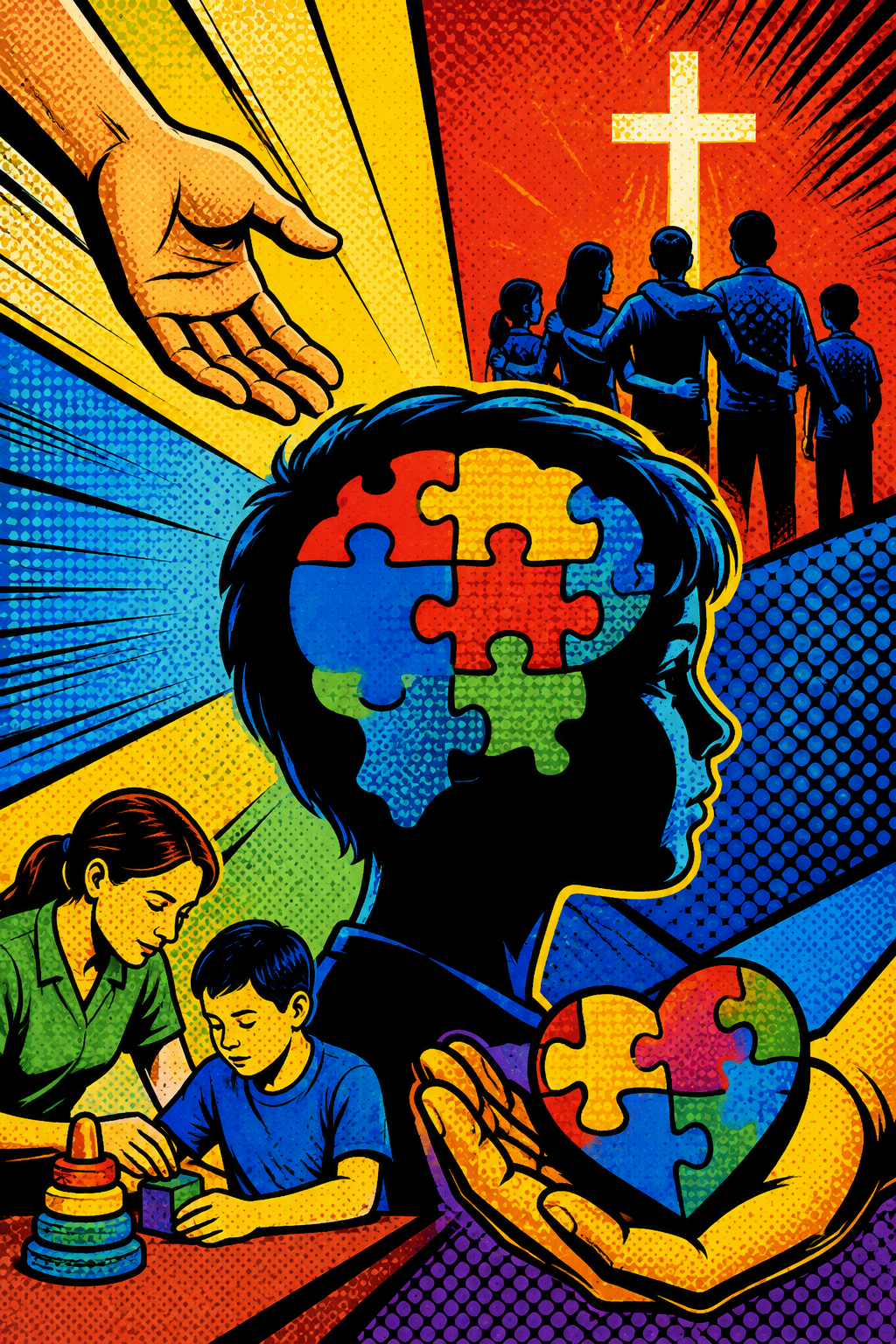

The whispers of autism echo through contemporary society, a complex tapestry woven from challenges and strengths. As counselors, we approach this topic with a unique blend of scientific understanding and theological perspective, recognizing the inherent value of each individual. We will examine the human experience of autism through a biblical lens, highlighting compassion, understanding, and holistic care.
What is autism? Autism is not classified as an illness, but a general spectrum, meaning that it is different case by case. It is a condition labeled where people have hypersensitivities and difficulties communicating therefore having hardships interacting with others, typically resulting in restricted and repetitive behaviors they find security in. This can occur through environmental means when raised, as well as can come from the results of medical malformity or injury to the brain. The impact of this vary with each person.
Why is autism on the rise? Autism prevalence has risen due to increased awareness of autism, broader diagnostic criteria for autism, improved screening tools and standardized screening processes. These factors have led to earlier detection and more diagnoses. Changes in diagnostic criteria: Diagnostic guidelines have evolved from the DSM-III to the current DSM-5, broadening the definition of autism. The modern autism diagnosis now includes people with lower support needs who previously got a different diagnosis or were overlooked entirely. This makes it that many people at segments of life could be labeled as “autistic”, though they are not bound to stay in such a category. We are at the point that 1 in every 45 Americans are diagnosed as autistic with many more undiagnosed. So you see the same “ADHD” labeling problem begin to occur, where the issue becomes too broad labeling almost everyone. Asperger syndrome is a developmental condition now classified medically as part of Autism Spectrum Disorder (ASD), characterized by social communication challenges, focused interests, and repetitive routines. It is no longer used as a separate, official medical diagnosis. This additional inclusion complicates further the general public’s understanding on how to treat Autism now since creating it into a large and larger category instead of breaking it down into smaller root by root issues to treat to best manage and overcome. But we will simply use the term Autism here since we are addressing cultivating people to address issues like this in a biblical whole.
So the Bible, unlike modern diagnostic manuals, does not explicitly define using broad modern terms like “autism.” Instead, it offers a more specific profound portrayal of the human condition, revealing a spectrum of experiences—limitations in communication and social skills, unusual behaviors, and varying sensitivities—all intertwined with the inherent imperfections of humanity. The “Heart Of” and “Root Of” originating issues that need to be dealt with to have the seen expressed symptoms, not simply pointing out a symptom or labeling alone. The trials of Job (Job 1-2) represent the depth of human suffering, while the examples of perseverance shown in 1 Samuel 21 (God’s provision and help) and Psalm 34 (finding strength in God) demonstrate resilience in the face of adversity. These biblical narratives serve as valuable lenses through which we can understand the challenges faced by individuals labeled with autism. The labels that we apply, no matter how well-intentioned, are human constructs not divine judgments. Just as our understanding of the Trinity is a theological framework, autism is, for the present, a scientific categorization. We must carefully distinguish the categorization of “autism” from the very real, often deeply personal challenges and difficulties individuals—and families—experience. Recognizing the challenges that arise from human imperfections does not diminish the depth of human compassion, or God’s unwavering love for each individual.
Furthermore, biblical principles underscore the complexity of human experiences. Patterns of repetitive behaviors and challenges in communication, often observed in individuals with autism, are echoed throughout scripture. Consider the multifaceted challenges encountered by those seeking answers or facing limitations, or conversely, the experiences of overcoming hardships like those detailed in 1 Samuel 21 (God’s power and presence). These passages emphasize the universality of struggle and the importance of recognizing that the inherent challenges that arise within the human experience do not diminish God’s loving presence in our lives. This understanding cautions against viewing autism as an anomaly or a divine punishment, but rather recognizes it as one form of the human experience, shaped and influenced by the human condition.
Ultimately, a holistic approach is paramount in our support of individuals and families navigating the complexities of autism. While support systems, like occupational therapy, are crucial in addressing the practical needs associated with autism, equally important is the support of their spiritual and emotional needs. Psalm 139 poignantly reminds us of God’s profound knowledge and understanding of each person, emphasizing that the full personhood of those with autism is to be acknowledged. Our task, then, is to acknowledge this wholeness.
The church, in its role as a community of faith, has a crucial part to play. Christians are called (Matthew 25:14-30 and John 15) to compassionately embrace all members of society. The church needs to offer a nurturing environment where individuals facing challenges, including autism, feel welcome and supported. Resources such as support groups, respite care, and educational materials for people on the spectrum, and for caregivers, are crucial. Such support affirms God’s love for all, regardless of labels. Moreover, we must not only support, but genuinely listen to the concerns, the struggles, and experiences of all involved, and as the text in Romans 11:36 reminds us that everything is for God.
However, sensitivity is vital when exploring the intricacies of labeling and the nuances of differing experiences. The word “autism,” with its evolving diagnostic criteria and increasing diagnosis rate, deserves thoughtful consideration. We must strive for compassionate understanding, recognizing that varied forms of lived experience are present on a spectrum. This caution is emphasized in 1 Corinthians 13:4-7 which provides a guiding light as we navigate individual experiences and the struggles that can arise from labeling.
Understanding autism through a biblical lens involves acknowledging its complex nature as a manifestation of the human condition, not a divine judgment. A compassionate perspective, grounded in acceptance and the recognition of each person’s intricate spiritual, emotional, and physical needs, is crucial. The church, equipped with biblical wisdom, serves as a beacon of hope, offering practical and spiritual support to individuals, families, and the broader community. Let the hope of Christ serve as the bedrock for love and compassionate service to all, regardless of labels or circumstances. A holistic approach that honors God’s image created in each individual is the ultimate goal.
The spectrum of human experience is vast and complex, and within it lies the often misunderstood world of autism. As counselors, we navigate this terrain with scientific understanding and a deeply rooted faith, striving to support individuals and families navigating the challenges of autism through a compassionate and biblically-grounded perspective. Autism emphasizing its multifaceted nature as a human expression, (again) not a divine judgment, but offering a framework for support rooted in biblical principles.
Just as the human condition encompasses diverse expressions of struggle and strength, autism presents a complex range of coping mechanisms, social interactions, and sensory experiences. Any categorization or label, including those from the medical and psychological communities, are ultimately human constructs. This understanding should guide our response, emphasizing love and compassion.
Moreover, the very behaviors often associated with autism—from repetitive patterns to varying communication styles—echo themes woven throughout the biblical narrative. The scriptures highlight the diverse ways in which God relates to His people, underscoring that differences in expressions, sensory processing, and communication don’t define a person’s inherent worth or their connection to God. These human traits, often observed in children with autism as well as in those who are neurotypical, are not merely symptoms of disorder, but reflections of the profound complexity of the human experience.
A critical aspect of our response is to apply a holistic approach. This perspective acknowledges the individual’s physical, emotional, and spiritual well-being, realizing that autism is not the entirety of a person’s being. Support systems, including occupational therapies and other forms of medical care, are important, but we must equally address the intricate spiritual and emotional needs of those on the autism spectrum. Their identity is rooted in God’s creation, not in any perceived deficit or diagnosis. We must actively seek to understand the holistic needs of the individual and the unique experiences of the family navigating these challenges.
Consequently, our approach must transcend the diagnostic label itself and focus on affirming the inherent dignity and worth of every individual. As a community, including families and the individuals within the community, we must provide a network of love, encouragement, and practical support. The church plays a vital role in providing this crucial support system and, crucially, by not viewing autism as an independent entity or diagnosis that defines the person but instead recognizing its intricate position within the holistic approach to a person’s life. This is vital to not only addressing the immediate struggles, but instead to engage in a more nuanced and understanding examination of individuals on the autism spectrum, helping them thrive.
How does our understanding of scripture empower us?
1. Understanding and Empathy (Romans 12:2): The Bible calls us to not be conformed to this world, but by recognizing the unique experiences of those on the spectrum and applying empathy and recognition of diverse viewpoints, rather than conformity to what society may determine.
2. Focus on Strengths: Every individual, including those on the spectrum, possesses unique gifts and talents (Psalm 139). Prioritizing these strengths rather than focusing on perceived deficits allows for enhanced development and support.
3. Holistic Care: Recognizing the interrelation of physical, emotional, and spiritual well being (Psalm 139) offers a comprehensive perspective, essential for effective support (1 Kings 19:4–8 shows physical needs must be met before counseling toward betterment).
4. Community Support (Acts 2:42; 1 Corinthians 12:12-27): We are called to build supportive communities where individuals are appreciated for who they are, not categorized by their labels.
5. Continuous Learning (Proverbs 2:7): A continued effort to learn about and understand autism is paramount for effective support. As understanding of it grows, so must our response to it.
Ultimately, the goal is to empower those on the autism spectrum—and their families—by emphasizing strengths and providing a supportive environment rooted in faith. This entails active listening, providing accurate information, and helping families navigate the challenges of navigating the spectrum. By actively and effectively addressing both the practical and spiritual needs of those on the spectrum–and their families–we can foster a community in which each person feels loved, accepted, and empowered.
A Spectrum of Souls: Navigating Autism Levels Through a Biblical Len
The diagnostic criteria for autism spectrum disorder (ASD) often present in nuanced levels of severity. While medical classifications provide valuable frameworks for understanding various manifestations of ASD, a biblical lens offers a vital perspective on the inherent worth of each individual, regardless of their specific struggles. We will explore the three levels of autism severity outlined in the DSM-5, emphasizing the significance of empathy and support, grounded in biblical principles of compassion and understanding. The two core autism symptoms are: challenges with social communication and interaction skills, and also restricted and repetitive behaviors.
Those labeled Level 1 ASD often involves noticeable, yet potentially manageable, challenges in social communication. Individuals at this level may struggle to initiate social interactions or respond appropriately to social cues, despite possessing functional verbal communication skills and apparent engagement with their environment. However, their attempts to connect might be atypical or misunderstood, potentially leading to difficulties in forming and maintaining friendships. This mirrors the varied experiences highlighted in scripture, where individuals struggle to navigate complex social dynamics, yet persevere in their faith. Just as God’s love embraces the diverse experiences of His people, our approach should prioritize empathy and support to build bridges in the complexities of social interaction. For example, 1 Corinthians 12:12-27, underscores that each individual in the body of Christ has unique gifts and roles. Acknowledging and recognizing these differences fosters a sense of community and worth. Without supports in place, deficits in social communication cause noticeable impairments. Difficulty initiating social interactions, and clear examples of atypical or unsuccessful response to social overtures of others. May appear to have decreased interest in social interactions. For example, a person who is able to speak in full sentences and engages in communication but whose to- and-fro conversation with others fails, and whose attempts to make friends are odd and typically unsuccessful.
Restricted, repetitive behaviors,
Inflexibility of behavior causes significant interference with functioning in one or more contexts. Difficulty switching between activities. Problems of organization and planning hamper independence.
Yes everyone goes through periods of life like this. Moving on.
Those labeled Level 2 ASD presents more pronounced and pervasive challenges. Individuals at this level often experience significant impairments in both verbal and nonverbal communication, and social engagement might be limited to narrow interests or repetitive patterns of behavior. The intensity of these repetitive behaviors can impact daily functioning, prompting distress or difficulty adapting to change. Biblical narratives, particularly those recounting struggles with persistent patterns or unusual behaviors, offer a poignant understanding of the resilience and faith that can emerge in these challenging contexts. Recognizing the persistent efforts and the unique way these individuals experience the world—mirroring their faith and how they operate in the world—is crucial for approaching Level 2 ASD with empathy and consistent support. This includes an active and persistent effort to seek understanding, recognizing the individual’s needs and circumstances. Marked deficits in verbal and nonverbal social communication skills; social impairments apparent even with supports in place; limited initiation of social interactions; and reduced or abnormal responses to social overtures from others. For example, a person who speaks simple sentences, whose interaction is limited to narrow special interests, and how has markedly odd nonverbal communication.
Restricted, repetitive behaviors
Inflexibility of behavior, difficulty coping with change, or other restricted/repetitive behaviors appear frequently enough to be obvious to the casual observer and interfere with functioning in a variety of contexts. Distress and/or difficulty changing focus or action.
Yes this is a huge number of people in our daily lives at times can be categorized as this. You can see how the overall label s far too broad to start encompassing the average human experience, not a specific root issue.
Those labeled Level 3 ASD represents the most significant challenges in social communication and restricted or repetitive behaviors. Level 3 is mostly related with brain malformity or brain damage cases. Individuals in this category often demonstrate severe impairments in verbal and nonverbal communication and have limited responses to social interactions. Their insistence on sameness and intolerance for change can greatly restrict independent functioning. This extreme level often mirrors the depth of struggle encountered by figures throughout scripture who have endured intense suffering and have emerged stronger. Brain damage is suffering, period. Please note this. This highlights the importance of drawing strength from the examples of biblical figures who have persevered through similar kinds of struggles. Remembering that these individuals are made in God’s image empowers a steadfast and resilient manner in our approach to supporting this level. Severe deficits in verbal and nonverbal social communication skills cause severe impairments in functioning, very limited initiation of social interactions, and minimal response to social overtures from others. For example, a person with few words of intelligible speech who rarely initiates interaction and, when he or she does, makes unusual approaches to meet needs only and responds to only very direct social approaches.
Restricted, repetitive behaviors
Inflexibility of behavior, extreme difficulty coping with change, or other restricted/repetitive behaviors markedly interfere with functioning in all spheres. Great distress/difficulty changing focus or action.
Importantly, recognizing these levels does not imply a hierarchy of need or worth. As with all individuals, their unique experiences and needs should be understood and respected. Our emphasis must be on providing consistent support, tailored to each individual’s unique needs and characteristics. A profound understanding of their individual circumstances, coupled with a commitment to support their well-being, can significantly impact their lives and promote their overall well-being.
Understanding the spectrum of autism, from Level 1 to Level 3, challenges us to see each person as uniquely created, in God’s image. By embracing a biblical perspective of compassion and understanding, we can offer support that affirms their inherent worth and empowers them to flourish within their environments and to grow in their relationships with God.
Autism Spectrum Disorder (ASD) is officially diagnosed by medical professionals using specific criteria. The following are many of those points looked for.
-Thriving Wellness Center
-Social Communication: Finding small talk highly stressful or confusing.
-Conversation Flow: Tending to monopolize conversations about a favorite topic or talking “at” people.
-Literal Thinking: Taking phrases literally and struggling to detect sarcasm, irony, or subtle jokes.
-Social Fatigue: Feeling completely drained, exhausted, or overwhelmed after standard social interactions.
-Eye Contact: Experiencing physical discomfort or anxiety when trying to maintain eye contact.
-Routine Reliance: Feeling intense frustration or anxiety when minor daily routines are disrupted.
-Hyper-focus: Possessing the ability to focus deeply on specific, niche topics or hobbies for hours.
-Sensory Overload: Becoming highly distressed by sensory inputs others ignore, such as fluorescent lights or textures.
Child & Teen Autism Checklist
In younger individuals, symptoms are often noticed by parents or teachers through developmental milestones and behavioral habits.
-Delayed Speech: Starting to speak later than peers or losing previously acquired words.
-Name Response: Not responding to their own name being called by 9 to 12 months of age.
-Repetitive Motions: Engaging in “stimming” behaviors like hand-flapping, rocking, or spinning.
-Object Play: Lining up toys in precise orders rather than using them for imaginative play.
-Non-Verbal Cues: Using very few facial expressions or failing to point at objects to show interest.
-Rigid Habits: Demanding strict adherence to routines, such as eating only specific food textures.
Please do not laugh, this is serious and yes all of these point happens to all people at “points” in life. The concept is that many of the points are happening at once, not just a few at a time in changing seasons. You can see how these diagnosis are too vague and not actually “pointing” to an issue but a lifestyle. So modern Autism is a lifestyle issue over a medical one in many cases on the books. Lifestyles can be changed. But what happens is that when you receive actual brain damage your other portions of your brain is striving to catch up to compensate making an over abundance of extra stress easily leading into frustration and of course later venting. Maturity is what has to be built to manage this, no matter what diagnosis or how physically damaged you have become. God wants us to grow spiritually mature, leaving behind childish ways and moving from spiritual milk to solid food. Growing Up in Faith as Ephesians 4:13–15 tells us to no longer be like children tossed by new teachings, but to grow up into Christ in every way.1 Corinthians 14:20 asks us not to think like children in our minds, but to be mature in our understanding.Hebrews 5:14 explains that solid food is for mature people who train themselves to tell good from evil. We have to move past childhood as 1 Corinthians 13:11 says so that when we grow up, we put away childish ways of speaking and thinking. Colossians 1:28 states the goal of teaching everyone so they can be presented fully mature in Christ — a goal all have no matter the mental nor physical circumstance. The true aim for life, to be ‘like Christ’. So can you become mature in whatever circumstance you are in? The true but not always easy answers is Philippians 4:13. It is a trek, but doable when established in proper Galatians 6:2 (Load Bearing) community. So get plugged in!
WHO IS AT RISK FOR AUTISM?
Advanced parental age, Prenatal exposure to air pollution or certain pesticides, Maternal obesity, diabetes or immune system disorders, Extreme prematurity or very low birth weight, Birth complications leading to periods of oxygen deprivation to the baby’s brain…there are many causes of autism. Research suggests that autism spectrum disorder (ASD) develops from a combination of: Genetic influences and environmental influences, including social/physical determinants. These factors appear to increase the risk of autism and shape the type (classified by the levels) of autism that a child will develop. However, it’s important to keep in mind that increased risk is not the same as a cause. For example, some gene associated with autism can also be found in people who don’t have the disorder. Similarly, not everyone exposed to an environmental risk factor for autism will develop the disorder. In fact, most will not. They simply are more susceptible for autism to occur if an autism stressor is hit in life. Like having a weak muscle in one area, but the rest are strong.
Vaccines and their ‘one step away’ link to autism…what I am about to say is not political popular, but Proverbs 23:23 demands us to live as truth seekers to apply wisdom and understanding properly. But we have to understand we live in a legally defensive world trying to avoid law suits. But this should not prohibit us from seeking truth. How? Vaccines themselves can cause brain damage & that brain damage can cause autism. Brain damage is documented as one cause for autism. Remember that not all vaccines cause brain damage. The way the vaccine companies got off the hook legally for reimbursing SOME of the cases is by stating that the vaccine directly was not the first source immediately making the autism….it was instead the brain damage causing the autism. This is why the vaccine companies did the expensive campaign to tell people that “vaccines does not cause autism”, flip flopping what the online websites use to say. But when you view through a more proper legal fact based eye, it still does hold the vaccine companies liable though by secondary effect, not primary.
For example legally, if a man is driving a car and hits someone he is charged with hitting that person, not the car. The man approaches the court bench and state, “But judge the car is the actual object that hit the man, not me! So I clearly am not at fault.” But of course he legally will be fined & penalized since he was the driver of the car. Being the driver means he bares the responsibility of the car at that moment when he is in control. This the same with vaccinations. The vaccinations can have bad lots that cause things like inflammation of the brain & through it therefore cause brain damage. And then that brain damage at times causes the end impact of autism. The driving factor (the driver) that widely documented cause for the autism to come into being is the brain damage caused by the driving vaccination. And we see this exact scenario of vaccine brain damage turning kids to being classified autistic again and again. This is the same as the driver of the car (the vaccine) using the car (brain damage) to hit the person (resulting in autism). But of course vaccinations are not charged fairly in court with the same ethics as if it were a car. Yes, a true world situation BUT another issue than the topic at hand.
This happened to my Godson from a bad vaccine lot that was soon just after recalled, halting all vaccinations of that category of vaccines until new tested ones were produced. He got a high fever which resulted in cognitive damage from a bad batch of vaccination. This left long term effects. So we saw this impact again and again in arms circle around us (not just him) impacted by the same vaccine lot, from the same doctors even. It is actually documented online with a recall that did occur.
If a vaccination can cause for brain damage, it can cause for autism. Brain damage can be recovered from to a point to overcome, I myself as the writer have had significant brain damage that I recovered from. But my recovery came with neurology impact, such as electrical surges causing spasms and at times shutting off my heart to give me clinical death. I have a duel pacemaker (two pacemakers as one) because of this to keep my heart functioning even through these electrical storms. Autism is a result that can form in the later impact from brain damage like such.
Navigating the Spectrum: Understanding the Challenges and Strengths of Autism
The spectrum nature (broad individual case by case differences) of ASD highlights the diversity of experiences. Individuals may encounter significant difficulties in social interactions, communication, and the development of meaningful relationships. Imagine the frustration of struggling to “read” social cues, to anticipate responses, or to understand the unspoken nuances of human interaction (Genesis 11:1-9, reflecting the fragmented nature of Babel). The need to discern the thoughts and motivations of others, a fundamental aspect of social connectedness, can be particularly challenging (1 Corinthians 13:5). The struggle to initiate conversations, maintain appropriate eye contact, or interpret nonverbal communication can create significant isolation and anxiety. Similarly, the difficulty in sharing interests, emotions, or understanding the perspective of others, can lead to feelings of alienation and misunderstanding (Proverbs 18:1).
Another notable characteristic of ASD is the often-discernable presence of restricted and repetitive behaviors. These behaviors can vary greatly in expression, from repetitive movements and self-stimulatory behaviors (stimming) to inflexible adherence to routines or the development of intensely focused interests (Isaiah 6, emphasizing the power of specialized focus). Consider the sensory sensitivities that may accompany these behaviors – intense reactions to specific sounds, textures, or overwhelming sensory input. This can lead to sensory overload, emotional dysregulation, and a profound need for structured environments and predictable routines (Hebrews 13:5-7, emphasizing the need for comfort and structure). These are not merely unusual behaviors; they frequently function as coping mechanisms, offering a sense of stability and predictability in an often chaotic world.
Individuals with ASD may also experience difficulties with executive functioning, fine motor skills, and daily living skills. Coordinating tasks, making decisions, and planning activities, as well as the challenge of managing personal needs, can be significant hurdles (Philippians 4:13, emphasizing faith in God’s provision in daily life). These struggles are often compounded by the social isolation and potential for misunderstanding, highlighting the importance of a supportive community and environment. To further compound these experiences, one must acknowledge the difficulty involved with self-care, and the need to create self-awareness in both the individual on the spectrum as well as those around them.
Importantly, individuals with ASD often display remarkable strengths. They often exhibit exceptional abilities in specific areas – advanced understanding of particular subjects, exceptional memory, or unique talents that often go unnoticed in traditional learning environments. Understanding these strengths is critical. Their commitment to their own interests allows them to cultivate unique abilities, reflecting the diversity of experiences and unique traits that God has created within various individuals (Ephesians 2:10).
A compassionate understanding is central to effective support for individuals on the autism spectrum. We must move beyond labels and embrace the unique expressions of humanity within these challenges. Prayerfully and empathetically considering and supporting the struggles is important: realizing God’s purpose and the role He plays in the varied experiences of His people. Our approach, inspired by biblical principles of compassion, empathy, and faith, should prioritize the individual’s strengths, support their needs, and build supportive communities where they feel valued and accepted.
A significant aspect of the ASD experience that often goes unnoticed, especially (but not only) in autistic women and girls, is the prevalence of masking. Research indicates that autistic women and girls frequently adapt their behavior to conform to societal expectations, often suppressing their unique sensory processing styles and communication patterns. This “masking” involves subtle adjustments like forcing eye contact, suppressing stimming behaviors, or creating social scripts to navigate social situations. This coping mechanism, while seemingly helpful in the short term, can lead to significant mental health challenges, including anxiety, depression, and even feelings of isolation and disconnect (Galatians 6:2). Masking often further complicates diagnosis, leading to delays or misdiagnosis. Recognizing masking as a common coping strategy is crucial for understanding the diverse presentations of autism, especially in female populations where the symptoms are often less obvious and can be mistakenly attributed to other disorders.
Prayerfully and empathetically considering and supporting the struggles, emphasizing the importance of personal connection, is vital to creating an environment where these persons truly feel respected, especially when it involves understanding the difference in the struggles between males and females on the spectrum. Our approach, inspired by biblical principles of compassion, empathy, and faith, should prioritize the individual’s strengths, support their needs, and build supportive communities where they feel valued and accepted. But some effort does need to be put in place to identify trouble points to overcome, or avoid since many times they will have a hypersensitivity.
One girl was so startled by a car crash scene in a movie, she jumped out of her seat and knocked her iced tea out of the cup holder, spilling it all over her brother. Even the knock on a door would send her to go, “GAAAAAH”.
Assessing their sensitivity level: Understanding the severity sensitivity is the first step towards managing it.
Recognizing triggers: Certain things may trigger an increased sensitivity more than others. Keeping track of these can help you anticipate and prepare for situations that may cause discomfort.
Professional guidance: Once you’ve identified the level of sensitivity and potential triggers, you can guide through strategies to manage these challenges more effectively. It means learning to adapt and finding ways to manage their sensitivity. Creating a checklist of lifestyle changes can make a difference. This might include using earplugs or noise-canceling headphones in noisy environments, adjusting the volume levels on your devices or even rearranging your home furniture for better sound absorption.
Goal of child raising, even with those autistic, is salvation and growth of Christlikeness. Our hope is in obedience to Scriptures parenting principles and prayer. Deuteronomy 6:6-9, “6 And these words which I command you today shall be in your heart. 7 You shall teach them diligently to your children, and shall talk of them when you sit in your house, when you walk by the way, when you lie down, and when you rise up. 8 You shall bind them as a sign on your hand, and they shall be as frontlets between your eyes. 9 You shall write them on the doorposts of your house and on your gates.
The big thing in Deuteronomy 6 is there’s talking everywhere. You go, you’re talking. Communication is key, being silent in assumption or neglect to think some other person will do it is bad. People pulling back into themselves will not be outgoing talking to you their thoughts or issues, but rather have a tendency to hide them.
1. Company: Be present with your children as they interact with technology or friends. Watch movies, shows, and engage in conversations about what they are experiencing. Talk together about the movie you just watched! A lot of show and tell on how to converse going on then. Use Deuteronomy 6 as a guide to teach them diligently through conversation and active presence.
2. Conversation: Use technology interactions as opportunities for discipleship. If a child shows you something on a phone or computer, talk to them about the experience and use God’s Word for guidance.
Example: During a movie, use that as a moment to teach truths about God’s design for relationships about healthy intimacy and appropriate behavior, not just letting those many times bad scene go and assume they had little influence.
3. Curation: To curate means to be in charge of selecting and caring for something, the act or an instance of selecting and organizing works for presentation to exhibit or show. Curation is about making the environment for which your child can safely be nurtured and grow. Things like controlling access to technology, internet, and social media to the best of your ability. Strategically using tools to monitor and guide their choices—taking a very active role in limiting what they’re exposed to. Or maybe could be having a family “parking area” for devices once they come home. Etc.
If you’re doing curation (setting rules) without being with them—company— therefore without conversation, then you are going to miss the opportune point, and they’re going to take anything later said as being some sort of legalistic thing. And you know what happens when we are legalistic toward our children—they now want the thing you’re keeping them from more than anything else. And so, we have to balance this out with these other two elements.
This is the same with all children no matter their label nor classification. Remember there is no limit to the transforming power of the Holy Spirit. God has you, God has them. And God can shine through you both together. Just because you or your child was labeled “autistic” does not mean you are out of God’s John 3:16 love that covers you and your child at the cross. Embrace this fact as we live in this Genesis 3 sin impacted world, so cling to Him.
Understanding Asperger Syndrome (AS) and other autism spectrum conditions requires a nuanced application of Christian principles, recognizing that every individual, including those with AS, holds a unique place within God’s family. Again in review, there is biblical guidance for navigating the spiritual and practical challenges often associated with AS.
As Christians ministering to individuals with ASD, we must diligently strive to understand the complexities of their unique experiences. It’s crucial to adopt a “know your child” approach; this is an outgrowth of love and respect, recognizing that each child is made in God’s image, regardless of their particular challenges or diagnoses (Genesis 1:27). Maintaining a biblical perspective on their personhood—their inherent dignity and worth—is paramount (Psalm 139:13-16). This perspective acknowledges both the physical and spiritual aspects of their being. Don’t want to focus too much on the physical brain issues that you downplay the sin and spiritual side. But you also do not want to only focus on the spiritual side and ignore dealing with the physical. We should strive to address their earthly needs and their spiritual needs, recognizing a balanced approach, following the example of Elijah in 1 Kings 19:4-8. Just as Elijah’s needs were met before he received spiritual counsel, our approach must similarly balance physical support with spiritual encouragement.
It is critical to recognize and celebrate the unique gifts and strengths an individual with AS possesses (1 Corinthians 12:12-27). A holistic approach empowers each individual to understand and use their strengths—their specific interests, sensory sensitivities, or perhaps a uniquely keen attentiveness to details—in the service of the Kingdom of God. We should, to the best of our ability, strive to cultivate the same compassion for one another we would wish upon ourselves by trying to step into their shoes. Notice and celebrate your child’s strengths. The apostle Paul states that each member of the body is indispensable, including them!
Navigating social interactions and maintaining healthy lines of communication is crucial, but these interactions may differ from expected social constructs and norms. Using simple, clear language is often essential (Exodus 23:8; Deuteronomy 10:13). Avoid ambiguous terms and vague phrases. Recognizing sensory overload or unusual responses to auditory or visual stimulation is equally pertinent. Approaching communication with sensitivity is key to understanding and building those relationships that may feel strained or challenging as a result of perceived or actual misunderstandings.
In ministry, we must avoid premature judgment regarding the person’s motives or actions that may seem strange or unusual. We must approach them with the same empathetic and caring perspective we desire, as if we were that person standing in their own shoes. Recognizing that their actions might not stem from willful disobedience is equally pertinent. A key aspect here is recognizing that those tendencies should not immediately be presumed as outright sins but instead as points of challenge and difficulties for your child or other person to navigate. We should seek discernment and guidance from God to understand the nuanced implications of each situation. Recognizing the limitations of our own understanding is equally pertinent; recognizing that a word or sentiment that appears clear or straightforward to you may not be so apparent or straightforward to another (in other words, recognizing our own inherent limitations in recognizing and discerning what is and what is not sin in another, which is an aspect that must be consistently cultivated and reviewed).
Ultimately, shepherding these individuals involves a spiritual commitment to share the Gospel of Jesus Christ (Acts 20:24, 2 Timothy 3:16). Recognizing the transformative power of the Gospel reminds us that each individual, regardless of their circumstances or struggles, is loved and valued by God. Praying for wisdom in tailoring our approach to each person empowers our spiritual discernment and strengthens our connection to Him (James 1:5). Building and nurturing those relationships by recognizing the individual differences and recognizing their inherent worth and place within God’s family.
Find strength in both fellowship and support from others who understand the unique challenges and triumphs of raising children, adolescents, and adults with ASD, helps support and fortifies our own strength and understanding as a means of encouragement to their family and other persons on the spectrum. Amid your joys and challengers, victories and set backs make it a priority to confide in a few close friends who could pray, walk along side you as you walk along side your child. You need both people who will rejoice and weep along side with you. You need people who will point you to Jesus as you seek to honor Him in parenting the child He has give you.
Remember that these are guidelines, not rigid rules. The most effective ministry involves thoughtful consideration of each unique case, guided by prayer and a commitment to understanding. Ask God to give you wisdom about the parental expectations your child can handle well at this particular point in time (Ephesians 6:1-3). Once you get this basic foundation down, the rest deals with dealing with them as your child individually issue by issue, problem by problem as you have now set up the environment for your child to flourish the most. In such you now have ground to move forward to adapt around, minimize, reduce, or even remove the issues going on depending ion the contextual needs addressed.
The Counseling Room: Finding the Path
Dramatis Personae
- PASTOR ROBERT: A certified Biblical Counselor and author. He employs a strategic, scripture-based methodology to guide families through trauma and diagnoses.
- DAVID: Father of Chloe. Deeply protective, exhausted, and overwhelmed by his daughter’s sudden changes.
- SARAH: Mother of Chloe. Heartbroken, grieving the “loss” of her daughter’s former self, and anxious about the future.
Setting: Pastor Robert’s counseling office. A calm, neutral space. A table sits between them with a tray of wrapped nutritional wafers, lollipops, and bottled water.
(David and Sarah enter the room. They look drained. David holds a thick folder of medical records, school IEPs, and psychiatric evaluations. He sets it heavily on the table.)
PASTOR ROBERT: (Smiling warmly, employing the James 1:1-4 Architecture—Begin with Blessing) Welcome, David and Sarah. Before we open a single file, I want to tell you both something important. I thank God for your resilience. You are here because you love your daughter, Chloe, and you are fighting for her well-being. That perseverance—remaining under the load rather than running from it—is an incredible testament to your faith as parents, and it is something to count as joy.
SARAH: (Tearing up slightly) Thank you, Pastor. It just feels like we’ve been running on empty for so long.
PASTOR ROBERT: (Employing the Elijah Method—Physical Platform First) I can see that. Tell me, how many hours of sleep have you two averaged this past week? And have you eaten a real meal today, or just lived on coffee?
DAVID: (Sighs, rubbing his eyes) Maybe four hours a night? As for food… we grabbed something from a drive-thru. Chloe’s night terrors and the stress of managing her schedule have consumed us. Her school and teachers have a great support system set up for her during the day, but at home, we are just… drowning.
PASTOR ROBERT: (Slides the tray of water and wafers forward) Please, have some water and a snack. 1 Kings 19 reminds us of the prophet Elijah in the wilderness. He was exhausted and overwhelmed. Before God gave him any deep spiritual counsel, He sent an angel with food, water, and rest. Physical restoration was the precondition for receiving deeper counsel. You cannot shepherd Chloe if your own physical temples are entirely depleted.
DAVID: (Takes a water bottle) We just want our daughter back, Robert. You read the intake form. She was perfectly fine until she received that bad vaccination batch. She spiked a massive fever. Her heart stopped. We legally died in that hospital room with her. She came back, but the MRI showed brain damage.
SARAH: The doctors say recent MRIs show her brain damage seems to be recovering, but she’s just not the same. She’s so quiet now, locked in her own world. The doctors stamped her with “Level 2 Autism” and handed us a pamphlet. I feel like society sees us as just another family with a “defective” kid. We are terrified of this label.
PASTOR ROBERT: I hear your grief, and it is entirely valid. Brain damage is suffering, period. But I want to share a reality with you, both medically and spiritually. Vaccines themselves can cause brain damage & that brain damage can cause autism. Brain damage is documented as one cause for autism. I know this intimately. I myself have had significant brain damage that I recovered from, which resulted in neurological impacts like electrical surges that stopped my heart. I have a dual pacemaker because of it. Brain damage can be recovered from to a point to overcome.
SARAH: But the “Autism” label… it feels so permanent. Like a life sentence for her identity.
PASTOR ROBERT: Let’s look at this through a biblical lens rather than a psychiatric one. The labels that we apply, no matter how well-intentioned, are human constructs not divine judgments. A child’s identity is defined by God, not by diagnoses or labels. Societal pressures or diagnoses do not define their inherent worth. The psychiatric label of autism is a broad spectrum, and it often creates a misplaced focus rather than helping us understand the source of the struggle. Instead of fighting a giant monster called “Autism,” we need to look at the “Root Of” originating issues that need to be dealt with.
DAVID: Okay… if we break it down into root issues. She stutters now. She never stuttered before the fever. Under stress, her eye twitches uncontrollably. And the noise—if a door shuts too loud, she startles like a bomb went off.
PASTOR ROBERT: The stuttering and mental tics are physical responses to neurological stress — we will be able to take on these symptom issues one at time. I have helped many people over come these style of symptoms because they are simply side issues that can be overcome. But the guilt…. the guilt and the fear you are carrying you present as immense, but we need to look at what actually happened through a lens of truth. Brain damage is documented as one cause for autism. What Chloe experienced was a severe physical trauma, and brain damage is suffering, period. Think of it like a legal case: if a man is driving a car and hits someone, he is at fault, not the car. In this situation, the vaccine was the driver that used the car—the brain damage—to cause the end impact of autism.
Sarah: That makes so much sense. We’ve been treating “Autism” like it’s the core disease, but it’s really the aftermath of her injury.
Pastor Robert: Exactly. Autism is not classified as an illness, but a general spectrum, meaning it is different case by case. The labels that we apply, no matter how well-intentioned, are human constructs, not divine judgments. A psychological label can often create a misplaced focus rather than helping us understand the actual source of the struggle. So, let’s take our eyes off the broad label and look at Chloe. What other specific behaviors are you seeing?
David: She also is so quiet now, just retreating into her own world. And she’s developed this strange obsession with reading the credits at the end of movies.
Sarah: The hardest part is when we try to take her out. She doesn’t want to go, but when she does, she uses these premade scripts to pretend everything is fine. She’s just faking it to survive the interaction.
Pastor Robert: What you are describing with her using scripts is called masking. Autistic women and girls frequently adapt their behavior to conform to societal expectations, suppressing their unique communication patterns. This masking involves creating social scripts to navigate situations, which can lead to significant anxiety and feelings of isolation. As for the stuttering and the mental tics, like the eye twitching, these occur because the healthy portions of her brain are striving to catch up and compensate for the damage, leading to an overabundance of extra stress and frustration.
David: So she’s just completely overwhelmed?
Pastor Robert: Yes. But there is a path forward. We must approach this holistically, addressing her physical, emotional, and spiritual well-being. First, we manage the physical environment. If she is startled easily, we can assess her sensitivity level and create a checklist of lifestyle changes, such as using noise-canceling headphones in noisy environments.
Sarah: We can definitely do that. But how do we help her spiritually and emotionally when she is so withdrawn?
Pastor Robert: We turn to Deuteronomy 6:6-9 for our parenting principles. We break this down into three actionable steps:
- Company: Be present with your children as they interact with their interests, like watching movies and engaging in conversations about what they are experiencing.
- Conversation: Use these interactions as opportunities for discipleship and use God’s Word for guidance.
- Curation: Take a very active role in limiting what she is exposed to and create an environment where she can safely be nurtured.
David: (Nodding slowly) Company, conversation, and curation. Instead of just letting her read the movie credits alone in her room, we sit with her. We enter her world.
Pastor Robert: Precisely. You cultivate compassion by trying to step into her shoes. And remember, Chloe’s identity is defined by God, not by a psychiatric diagnosis. She possesses unique gifts and talents, and prioritizing these strengths allows for enhanced development. The goal of child-raising, regardless of a label, is salvation and growth into Christlikeness.
Sarah: (Taking a deep breath, visibly lighter) For the first time since the hospital, I feel like we actually have a direction. We aren’t just fighting a giant shadow called Autism anymore. We’re just helping our daughter overcome her specific hurdles. Like it says in Psalm 119:105, “Thy word is a lamp unto my feet, and a light unto my path.” I feel like God is lighting our path today.
Pastor Robert: He absolutely is, Sarah. God has you, God has Chloe, and there is no limit to the transforming power of the Holy Spirit. For our next session, I want you to bring Chloe in with you. I want you both to make an actual list of these specific behaviors—the stuttering, the tics, the masking—so we can begin to deal with them one at a time. We will address them not as permanent flaws, but as hurdles we will walk over together.
David: We will do exactly that. Thank you, Pastor.
Pastor Robert: Let’s close our time today in prayer, thanking God for the hope He has restored in this room, and asking for His wisdom as we take this one step at a time.