
— Dr. Michael A. Scordato, Ph.D.
Recommend reading Also: https://vlgroup.org/path-money-a-biblical-guide-to-financial-freedom-with-money-steps/
Prequel: The Councilor, he finally was able to sit down. The chair felt wonderful. Simple. Ordinary. He was on his feet for the entirety of the working day. For the first time of it though, he smiled. The noble politician leaned in and kissed his three year old girl on the head as she giggled with glee preparing for the food to be served. His wife, oh so pretty even if simply dressed in a modest house gown. Just looking at her made delight leap in his own heart. She had her hair loosely tied back. No jewelry. No makeup. Still the most beautiful woman in the kingdom. This was a good life. It is worth it. All this makes it worth it.
The maids brought out some soup and rolls to start off the course. His daughter was currently attempting to convince a dinner roll to become her friend. The negotiations appeared to be progressing favorably. He laughed.
“What’s wrong”, his wife suddenly asks.
“Nothing…” He looked down and finally noticed his hand was trembling. Oh no, his mental fatigue is no longer hiding itself. It is just that she does not know…. no one knows. His stomach dropped. “What is it, dear?” She leaned forward. “What’s wrong?”
He has to calm down. ‘I have to calm down’, he thought. His breathing turned erratic, shallow and ragged. He clawed at his necktie, ripping it loose. He needed air. But there was no air in the room—only the heavy, crushing, invisible weight.
“SERVANTS!!! Call the physicians!! QUICK!” Nothing…. Nothing was wrong. Everything was fine. Everything was— He realized his knuckles were turning bone-white from how hard he was gripping the edge of the table. His heartbeat accelerated. His eyes then started rolling back into his head. Red and the darkness spread across his vision fast. He did not want to go back. Not tomorrow. ‘On no please do not force him to go back!’, his fractured mind pleaded.
The copper spoon slipped from the table and it struck the floor in a loud disturbing series of CLANG. “Look at me Love, PLEASE I beg you look at me…. I got you see, you are holding my hand. I got you*— (ALL WENT BLACK).
PART I: THE RESPECT
Chapter 1 – The First Thank You
Sebastian Ashford opened the heavy oak doors to Lady Aurelia Vossen’s private study and immediately counted the exits.
Two doors. One window.
The window offered a fifty-foot drop into the stone courtyard below. It was viable in an emergency, assuming the target possessed a feather-fall enchantment or simply didn’t mind shattering both ankles to escape.
Sebastian carried a silver tray bearing a porcelain teapot and a single cup. He did not look at the tea, nor did he look at his own reflection in the polished silver. His eyes tracked the corners of the room, scanning the shadows cast by the enchanted mana-lamps humming softly on the walls. He noted the placement of the heavy iron fire poker. He registered the exact distance between the desk and the nearest cover.
Only after confirming the room was devoid of immediate physical threats did he finally look at the now officially two years adult seventeen-year-old girl sitting behind the mahogany desk.
Lady Aurelia was reorganizing her inkwells. Again.
She moved the black ink slightly to the left. Then the red ink to the right. Then she aligned her quill perfectly parallel to the edge of the leather blotting pad. It was a nervous habit, though she would sooner throw herself out the aforementioned window than admit she was capable of feeling nervous.
“The steward’s grammar is atrocious,” Aurelia said, not looking up. She dragged the quill violently through a piece of parchment. “He uses passive voice as if he is actively afraid of verbs. It makes reading the estate reports feel like wading through swamp mud.”
“I shall inform him that his syntax is a threat to the estate, My Lady,” Sebastian replied. His voice was entirely flat. Perfectly professional.
He stepped forward, his movements entirely devoid of wasted energy. Decades of hunting things that could bite a horse in half had taught him that unnecessary motion was a good way to get killed. Being a combat butler required much of the same discipline, though the monsters in the capital wore significantly more perfume.
The hallway outside still reeked of the floral monstrosity the visiting Duke of Oakhaven had been wearing an hour prior. Sebastian quietly despised it.
He placed the tray on the exact corner of the desk Aurelia preferred. He angled the handle of the cup precisely four inches from her right hand.
Normally, this was the moment Sebastian braced himself.
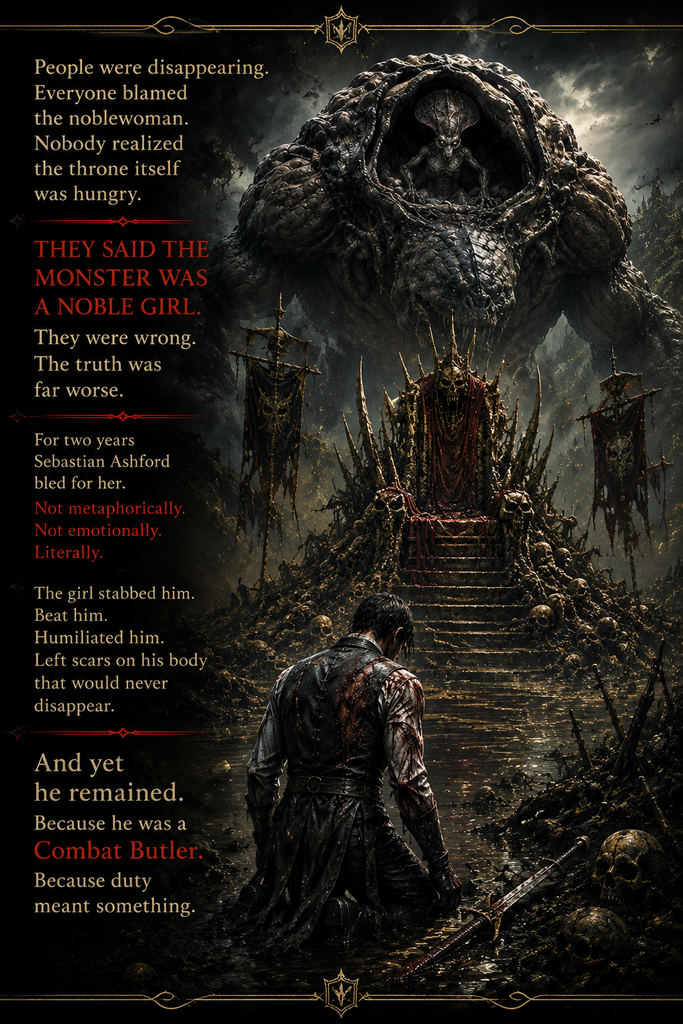
Muscle memory is a difficult thing to unlearn. For two years, placing a tray on this desk was an exercise in hazard management. If the tea was too hot, the cup might be thrown at his head. If it was too cold, he might be struck with the riding crop she used to keep resting on the mantle. Beneath his starched white shirt, silver-white scars crisscrossed his shoulder and ribs—quiet, permanent records of the days when Lady Aurelia’s temper had involved sharp objects.
He stood perfectly still, hands clasped behind his back, waiting for the critique. He waited for her to snap about the timing, the temperature, or his mere presence in her line of sight.
Aurelia stopped reorganizing the inkwells. She set her quill down.
She looked at the tea. Then, slowly, she looked up at him.
Her eyes were dark, ringed with a faint exhaustion she was desperately trying to conceal with powdered makeup. She looked incredibly frail in the oversized leather chair, though stating that fact aloud would be a capital offense.
She took a breath.
“Thank you, Sebastian.”
The silence in the room became absolute.
Sebastian Ashford did not flinch. He did not blink. His expression remained a mask of polite servitude. But internally, the foundation of his reality abruptly shifted.
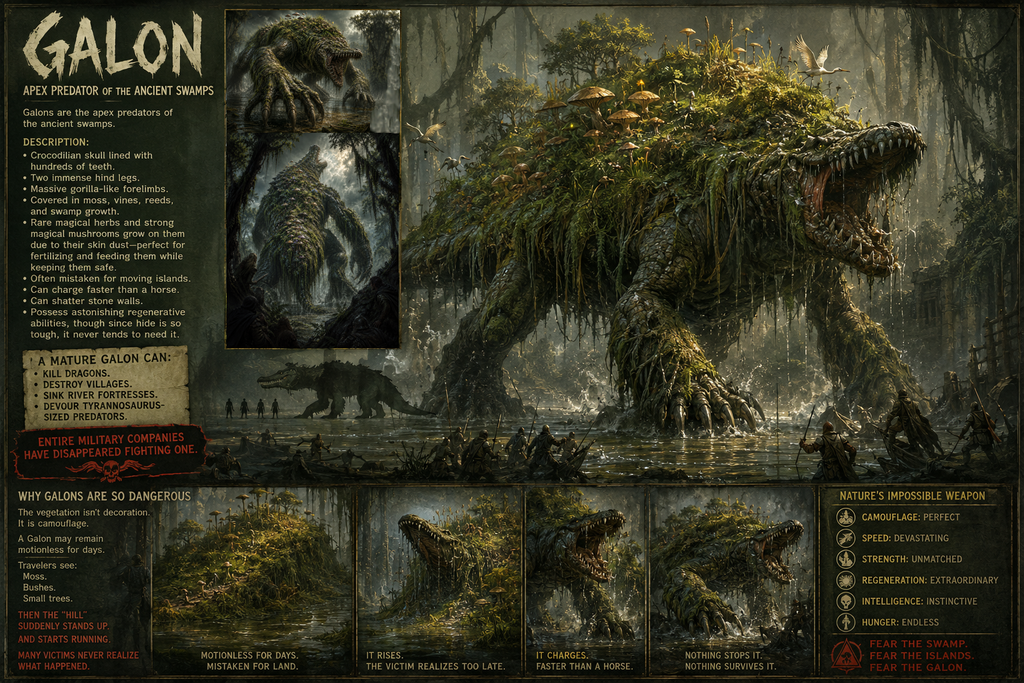
He had stood his ground while a swamp-dwelling Galon uprooted a centuries-old oak tree to throw at him. He had faced down rogue enchanters and aristocratic assassins without a spike in his heart rate. Those things made sense. They followed the logical laws of nature and violence.
Lady Aurelia Vossen saying thank you violated the laws of physics.
It was so profoundly out of character that Sebastian’s mind instantly began categorizing it as a threat. Is it a trap? he wondered. Did she poison the tea herself just to accuse me of it? Is this an imposter using a polyjuice potion? No, the mana signature in the room hasn’t changed. Is she being blackmailed?
“Is the temperature to your liking, My Lady?” Sebastian asked. It was a test. A probe.
“It’s fine,” Aurelia said quietly. She picked up the cup, staring into the amber liquid. She didn’t yell. She didn’t throw it. She just sat there, looking remarkably small. “You may go.”
“Very good, My Lady.”
Sebastian bowed exactly as low as protocol demanded—no more, no less. He turned on his heel and walked toward the primary doors. Every step felt wrong. The air in the room felt heavy, charged with an invisible tension that made the hairs on the back of his neck stand up.
As he reached the heavy iron handles, he paused.
“My Lady, a minor administrative inquiry,” Sebastian said, not turning around. “The footman, Elias. He usually stands at the end of the east corridor during this hour. He was not at his post.”
Aurelia frowned, picking up her quill again. “Elias? The one with the terrible posture?”
“The same.”
“I don’t know. The steward likely reassigned him to the kitchens. Or perhaps he simply quit. He always looked terrified of the dark anyway.” She dragged the quill aggressively across the parchment, correcting another of the steward’s passive verbs. “Why does it matter?”
“It doesn’t, My Lady,” Sebastian said smoothly. “Simply an observation. Have a productive afternoon.”
Sebastian stepped into the hallway and closed the heavy oak doors behind him with a soft, definitive click.
He stood alone in the corridor for a long moment. He reached into his vest pocket, retrieved a small, dried piece of a mana-infused cave mushroom, and popped it into his mouth. He chewed it slowly. It tasted like dirt and copper, but it sharpened the mind.
Elias hadn’t quit. Sebastian knew the boy’s family; they desperately needed the coin. And the steward hadn’t reassigned him, because Sebastian had just seen the weekly duty roster an hour ago. Elias was supposed to be here.
But Elias was gone.
And the girl who had once stabbed Sebastian with a silver letter opener had just thanked him for a cup of tea.
Sebastian swallowed the bitter mushroom. He adjusted his pristine white gloves, his eyes scanning the empty, shadow-draped corridor.
Something was deeply, terribly wrong.
Chapter 2 – Old Scars
Sebastian Ashford sat on the edge of his perfectly made bed and methodically unlaced his left boot.
Why was he….? Sebastian often reviewed this thought when under stress.
His private quarters were spartan, containing exactly what a man required to maintain himself and nothing more. A bed, a washbasin, a reinforced footlocker, and a medical kit. He noted the structural integrity of his single window and confirmed the latch on his heavy wooden door was properly engaged. Enters room. Counts exits. Immediately. The day he didn’t count was the day he was labeled into this job.
He pulled the boot free. The cotton sock beneath was stiff, glued to his skin by dried blood.
Yesterday afternoon, Lady Aurelia had thrown a porcelain teacup. It had shattered against the stone hearth, sending a jagged, razor-sharp shard ricocheting directly into Sebastian’s ankle. It was a completely different location than her normal strikes, catching him exactly in the vulnerable gap between his trouser cuff and his boot. Protocol, and his absolute commitment to his duty, dictated that he was not allowed to break posture or excuse himself to dress the wound until yesterday evening, well after his daily tasks were completed. Similar to when the old elderly combat butler grabbed and mana infused labeled him. Once you are sealed by a noble’s currier there is no way around it. He was chosen by the old generation and too low ranked to legally say “no thank you”.
He peeled the stiff fabric away from his skin, wincing slightly. His wrist occasionally flicked a glow of the raw power of the enslavement crest that typically was left unseen unless his heart-rate went up. He unwrapped the temporary bandages he had applied the night before.
Oh, that does not look good, Sebastian noted, his internal voice clinically detached. Very crooked and jagged cut.
He reached into his medical kit and withdrew a small glass vial containing a pale blue healing potion. In this world, magic was not a mysterious miracle; it was applied magical chemistry. Every drop of that potion required a licensed sorcerer to expend their own blood-generated mana to brew. Because magic carried a biological cost, it was extraordinarily expensive.
Without these expensive, alchemically engineered items, Sebastian had no clue how he could have survived her these past two years.
He uncorked the vial and poured a measured dose over the open wound. The potion hissed, bubbling as alchemical reactions forced the torn tissue to forcefully knit itself back together. He wrapped the ankle in fresh, sterile bandages, tying the knot with practiced efficiency.
Next came the daily maintenance.
Sebastian unbuttoned his crisp white shirt and shrugged it off, revealing a torso crisscrossed with silver-white lines. He opened a small jar of scar healer balm, scooping out a dollop of the pungent ointment.
He rubbed the salve into a thick, raised ridge on his ribs. It was the physical map of Lady Aurelia Vossen’s out-of-control nature. The rumors in the capital were not exaggerations. She genuinely had a history of being cruel and violent. She had beaten him. She had humiliated him.
He shifted his fingers to his left shoulder, massaging the balm into a deep puncture scar. The girl had literally stabbed him with a silver letter opener during a blind rage.
Speculation constantly ran rampant among the castle staff and the capital’s elite regarding how far her behavior would take her one day. Would she strike an ambassador? Would she kill a servant? Her violent, unpredictable temperament was a wedge that had alienated her completely from her highly political, entirely impersonal family. The Vossens preferred the quiet, polite ruthlessness of government corruption to her loud, messy cruelty. They had effectively abandoned her to her own devices.
Sebastian continued applying the balm. Recently, he had noticed a shift. She had begun to calm down. The violent outbursts had become less frequent, the flying objects less lethal. He had assumed she was simply maturing, or perhaps tiring of the effort it took to constantly project rage.
But today’s inaction… today was different.
“Thank you, Sebastian.”
Sebastian paused, his fingers resting against his scarred chest.
He had hunted Galons. He had tracked down creatures so terrifying that entire military battalions disappeared trying to kill them. He understood the mechanics of survival. Violence was a system. Violence had rules, telegraphs, and predictable outcomes. If a monster roared, you dodged. If a noblewoman threw a teacup, you managed the hazard.
But a thank you had no rules.
Aurelia showing respect was not a sign of peace. To a man trained to survive, a sudden break in an established pattern meant the ground was shifting beneath his feet. Today’s polite gratitude was significantly scarier than any beating she could have given him.
Sebastian reached into his vest pocket, pulled out a dried piece of mana-infused cave mushroom, and popped it into his mouth. He chewed the bitter fungus slowly, letting the earthly, copper taste sharpen his focus.
The footman, Elias, was missing. The abusive noblewoman was suddenly polite. The castle corridors felt too quiet, the shadows stretching just a fraction too long.
Sebastian buttoned a fresh white shirt, hiding the scars from the world once more. He tied his cravat. He adjusted his gloves.
The monster he served had stopped screaming. Now, he just had to figure out what she was quietly preparing to do.
Chapter 3 – The Smell of Perfume
Sebastian Ashford stood perfectly still against the marble wall of the Grand Atrium and immediately counted the exits.
Four arched double-doors. Eight towering stained-glass windows. Two sweeping staircases leading to a wraparound balcony. It was a tactical nightmare. If a threat breached the main hall, there were too many sightlines and too few defensible choke points.
Fortunately, the greatest immediate threat in the room was the air quality.
Nobles used absurd amounts of perfume. It was a cultural arms race of floral enchantments, alchemical musks, and concentrated jasmine. The sheer volume of competing scents in the ballroom created an invisible, suffocating cloud of status and wealth.
Sebastian’s face remained a mask of polite, professional servitude, but internally, he was aggressively complaining. He despised it.
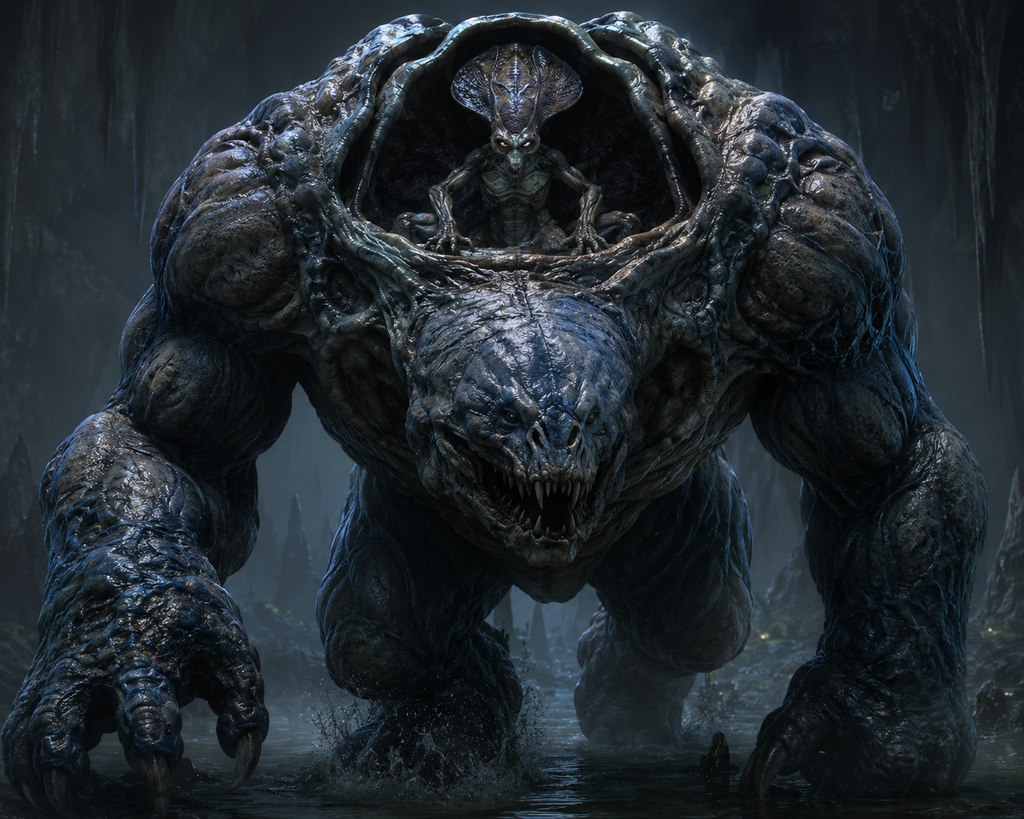
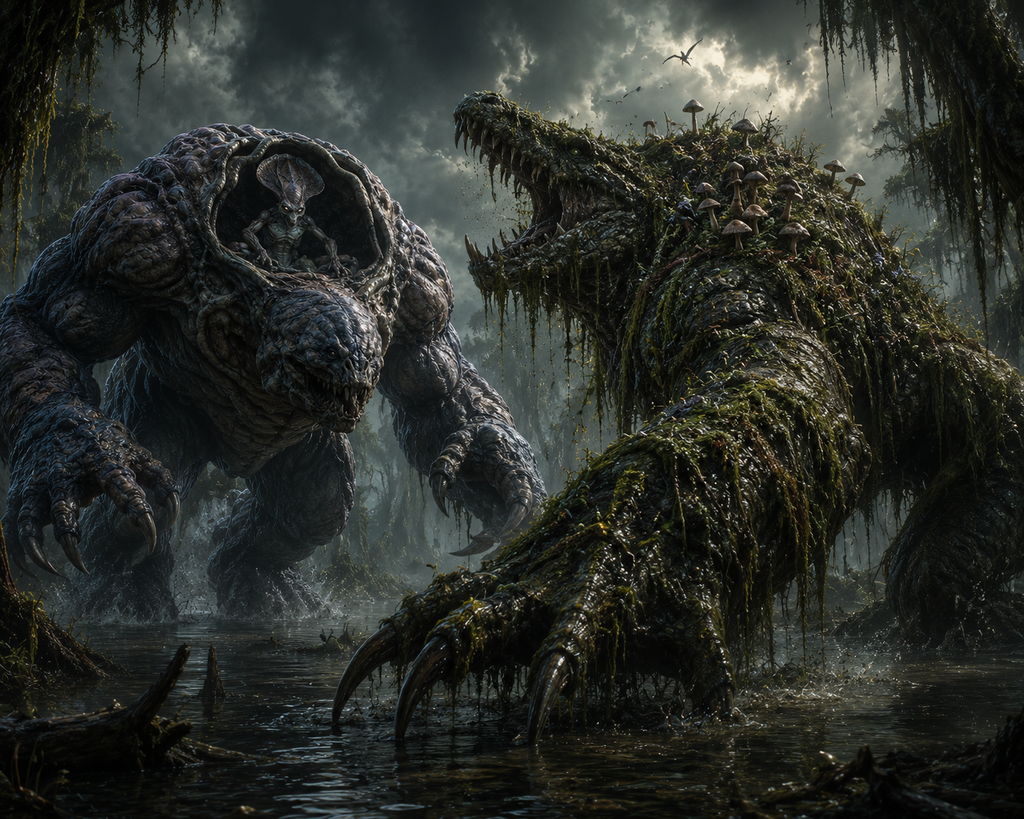
In his former profession, a sense of smell kept you alive. Out in the deep bogs, the world was tracked by the scent of rotting wood, fresh blood, and ozone. He remembered the Galons—walking, mountain-sized stomachs that thought only of food. Galons hated noble perfume violently. If an adventurer walked into the swamp wearing even a drop of aristocratic rosewater, a Galon would thrash blindly, thoroughly overwhelmed by the chemical “stink.” To a creature whose entire philosophy was simply Food? or Not food?, the intense artificial odors of high society registered as a biological insult.
Sebastian quietly agreed with the monsters.
He stood near a massive gilded pillar, making himself as unremarkable as the potted ferns. In the political battlefield of the capital, servants were effectively invisible. They were pieces of talking furniture. Because of this, servants heard everything.
A few feet away, three minor politicians stood in a tight circle, swirling expensive brain cell killer in crystal glasses.
“I am telling you, it is becoming a logistical nightmare,” a balding lord muttered, his voice dropping to a conspiratorial whisper. “My third copyist vanished on Tuesday. Just didn’t show up for his shift. And he had the keys to the lower archives.”
“A copyist?” A woman in a feathered gown waved her hand dismissively. “My sister’s estate lost two stable hands and a scullery maid this month. Simply gone. The turnover is exhausting.”
“It is the inconvenience of it all,” the third noble sighed. “No notice. No letters. Do you think it’s a rebellion gathering? Radicals pulling the commoners into the eastern forests?”
“Or bandits,” the balding lord suggested. “Or perhaps those fringe cults acting up again. The ones mumbling about black magic and sacrifices. Whatever the ‘what if’ might be, the Constabulary needs to do its job. I had to hire a replacement at a ten percent markup.”
Sebastian reached into his vest pocket, retrieved a small fragment of dried mana-mushroom, and slipped it into his mouth. He chewed the bitter, dirt-flavored fungus slowly.
He categorized the intelligence immediately. Rumors of disappearances were surfacing just as background noise.
People were vanishing, but it was a little here and a little there. A scribe. A stable hand. A maid. Ordinary people. Replaceable people. No one significant had been mentioned yet. The nobility didn’t view it as a tragedy; they viewed it as a staffing issue.
But Sebastian knew Elias, the footman who had vanished from Lady Aurelia’s corridor yesterday, wasn’t a rebel. Elias was a magnificent artist of colored charcoals, but terrified of his own shadow. He wouldn’t join a forest uprising if they paid him in gold.
Across the room, the crowd parted slightly. Lady Aurelia Vossen was moving through the ballroom.
The public reputation of the girl everyone hated preceded her. As she walked past, conversations visibly paused. Nobles offered tight, strained bows and curtsies, their eyes darting away the moment she looked at them. The rumors of her cruel, out-of-control nature had alienated her entirely. Everyone expected her to snap, to insult a host, or to throw a glass of brain killing at a rival.
Tonight, however, Aurelia did none of those things.
She walked with rigid posture, her jaw set. Sebastian noted the way her fingers gripped her silk folding fan. The knuckles were white. She was under immense strain, masking an exhaustion that ran deeper than physical fatigue. When a drunken baron accidentally stepped into her path, Aurelia didn’t yell. She didn’t humiliate him. She simply sidestepped in silence and continued toward the edge of the room.
She reached the gilded pillar and stopped beside Sebastian.
She did not look at him. She stared straight ahead at the swirling mass of dancing aristocrats.
“The music is mathematically offensive,” Aurelia muttered under her breath, her voice tight. “And Lord Heston just used the word irregardless in a sentence. I require a departure.”
“Immediately, My Lady,” Sebastian said softly.
“Did you hear them?” she asked, her voice dropping so low it was entirely lost beneath the string quartet.
Sebastian didn’t need to ask who she meant.
“I heard complaints regarding staffing retention, My Lady,” he replied evenly. “Several estates are replacing minor servants.”
Aurelia’s grip on the fan tightened until the bamboo ribs creaked. She closed her eyes for a fraction of a second. It was the smallest break in her armor, a flicker of something that looked horrifyingly like grief.
“Get the carriage, Sebastian.”
“Yes, My Lady.”
Sebastian bowed and moved toward the cloakroom, his mind working with cold, mechanical precision. The puzzle pieces were scattered, but the edges were beginning to align.
Elias. The stable hands. The copyist.
People were disappearing. The kingdom was quietly losing its foundation, and the people in charge were only annoyed by the inconvenience. But Lady Aurelia Vossen wasn’t annoyed.
She was afraid.
And as Sebastian stepped out into the cool, rain-slicked courtyard to signal their driver, he realized something that chilled him far more than the night air. If the monster of the Vossen estate was afraid of what was happening in the shadows, then whatever was taking the servants was much, much worse than even her.
Chapter 4 – Missing
Sebastian Ashford stepped into the grand foyer of the Royal Mercantile Exchange and immediately counted the exits.
Three heavy iron-wrought doors. Four high ventilation windows. One loading ramp in the rear. It was a highly secure facility, designed to protect the local commercial monopoly that governed the capital’s import of alchemical supplies and enchanted goods.
Normally, the Exchange operated with the relentless, oiled efficiency of a Dwarven clock. Sebastian approached Desk Seven, the designated counter for high-tier noble requisitions.
He expected to see Old Cob.
Cob was an ancient, low-ranking servant who had worked Desk Seven for forty-two years. He was an institution of reliability. Cob possessed a memory like an Elven archive; he never forgot a face, never misplaced a requisition form, and never, under any circumstances, missed a day of work.
Old Cob was not there.
Instead, a man wearing a velvet doublet and an aggressive amount of spiced-clove perfume stood behind the counter, staring helplessly at a wall of hundreds of small wooden drawers. This was Manager Fiske, a higher-ranked individual who had likely purchased his position through political favors rather than competence.
Sebastian stepped up to the counter, his face a perfectly blank mask. He placed Lady Aurelia’s stamped requisition on the polished wood.
“Good morning,” Sebastian said, his voice flat. “Vossen Estate. Requisition for three vials of Grade-A scar healer balm and two blocks of refined sealing wax.”
Manager Fiske jumped, startled. He glared at Sebastian, hastily snatching the parchment. Fiske looked at the complex alphanumeric filing codes on the requisition, then back at the wall of drawers, his eyes darting wildly. He clearly did not know his own inventory.
“Yes, yes. Vossen,” Fiske muttered, pulling open a drawer labeled for imported silks. He frowned, slammed it shut, and opened another containing inkwells. “The filing system here is a labyrinth. Antiquated nonsense.”
“Row four, column twelve, sir,” Sebastian said quietly. “For the alchemical balms.”
Fiske’s face flushed. He marched to the exact drawer Sebastian indicated, yanked it open, and retrieved the glass vials. He slammed them onto the counter. “I knew that. I was simply verifying the surrounding stock.”
“Of course, sir,” Sebastian replied smoothly. As he carefully packed the fragile vials into his leather satchel, he asked the question that was already ringing in his mind like an alarm bell. “Is Old Cob unwell today? I have not seen him miss a morning shift in two years.”
A servant never arrives for work.
“Cob? Oh, the old man,” Fiske waved a hand dismissively. He did not look up from the ledger he was failing to properly ink. Nobody seemed concerned. “He didn’t show up. Sent no word, either. Typical commoner unreliability.”
“Unreliability, sir?” Sebastian kept his tone perfectly neutral, treating the conversation like an investigation. “Cob has held this desk for four decades. He possesses the keys to the secondary alchemical vault. His absence without notice seems highly irregular.”
Fiske stopped writing. He slowly looked up, his eyes narrowing with aristocratic disdain. The spiced-clove perfume wafted over the counter, masking the sharp, metallic scent of nervous sweat. Fear creates suspicious behavior.
“Are you questioning the management of this Exchange, butler?” Fiske hissed.
“I am merely observing a break in protocol, sir,” Sebastian said.
“You are being a pain,” Fiske snapped, his voice rising, drawing the eyes of the guards stationed by the iron doors. “I have nobles breathing down my neck for delayed shipments, missing scribes, and lost inventory, and now a Vossen lapdog is lecturing me on protocol? If you continue to make a fuss over one missing, senile old man, I will have the Constabulary drag you to the courtyard for execution based on commercial sabotage.”
The threat of execution hung in the air, heavy and absurd.
Sebastian looked at Fiske. He noticed the tremor in the manager’s ink-stained fingers. He noticed the dilated pupils. He noticed that Fiske wasn’t just annoyed—he was terrified.
“My apologies, Manager Fiske,” Sebastian said, executing a flawless, shallow bow. “I overstepped. I wish you a productive day.”
Sebastian picked up his satchel, turned, and walked toward the primary exit. He did not look back, but his mind was calculating at blinding speed.
He reached into his pocket, retrieved a small piece of dried mana-mushroom, and chewed it. The bitter taste grounded him.
Elias, the footman, was gone.
The balding lord’s copyist was gone.
The stable hands were gone.
Now, Old Cob was gone.
All ordinary people. All low-ranking. All entirely replaceable in the eyes of the nobility. The system was not investigating them; the system was making excuses and threatening anyone who noticed the pattern.
Sebastian Ashford stepped out into the bustling, noisy streets of the capital. The sun was shining. Merchants were shouting. The peace of the kingdom looked perfectly intact.
Sebastian notices. He noticed it all.
Someone—or something—was quietly reaching into the bottom of the kingdom and pulling people into the dark. And whoever it was, they were being protected by the ignorance and fear of the very people in charge.
Chapter 5 – The Promise of Miriam
Rain fell upon the capital, washing the cobblestones and weeping down the carved marble of the cemetery statues.
Lady Aurelia Vossen stood alone before a modest headstone near the edge of the Vossen family plot. She wore a heavy black cloak, its hood pulled low to hide her face from the weeping sky and any prying eyes. She hated the rain. She hated the mud. Most of all, she hated crying.
She wiped a tear from her cheek with a vicious, angry swipe.
The name on the stone read: Lady Miriam Ashvale. Head Maid. Beloved by all.
Miriam had been the only person in the entire sprawling, cold, politically ruthless estate who had ever truly seen Aurelia. While the rest of the family saw a broken, volatile political liability, Miriam had seen a frightened child. Miriam had carried a sewing kit and fixed torn dresses while dispensing wisdom, teaching Aurelia the single most dangerous lesson in the capital: Caring is freedom.
But Miriam was dead.
She had not died of natural causes, regardless of what the royal physicians had written in their ledgers. Aurelia knew the truth. Miriam had discovered something about the people vanishing from the lower city. Because servants hear everything, Miriam had learned too much.
Her death had been a “quick curse.” It was a targeted, lethal application of witchcraft and alchemical sorcery—a massive, violent surge of raw mana energy sent directly into her circulatory system, mimicking a sudden, catastrophic heart failure. It functioned exactly like an untraceable poison. One moment Miriam had been smiling, offering Aurelia a warm pastry, and the next, she was gone.
Aurelia fell to her knees in the wet grass. The memory of Miriam’s final, gasping request echoed in her mind.
Find them. Bring them home.
“I’m trying,” Aurelia whispered to the cold stone, her voice cracking. “I’m trying, Miriam. But they are taking more of them. And I don’t know where they go.”
She pressed her gloved hands to her face, allowing herself exactly ten seconds of weakness. Ten seconds to be a terrified seventeen-year-old girl. When the time was up, she forced the grief down, locking it away behind a fortress of manufactured rage. She had to be the monster. If the people taking the servants realized she was investigating the trafficking networks, they would send a quick curse for her, too.
Across the city, Sebastian Ashford was conducting a highly systematic search campaign.
He moved through the Vossen estate with terrifying efficiency. He checked the drawing rooms, the libraries, the upper balconies, and the gardens. Every room he entered, he automatically counted the exits, cataloged the sightlines, and found them empty.
Lady Aurelia was missing.
Sebastian hated this. He hated it when she occasionally slipped her guard and disappeared into the city. Unpredictability was the enemy of security, and in a city where scribes, footmen, and alchemical clerks were vanishing without a trace, her absence was doubly dangerous.
She was supposed to be here. She was supposed to be heavily guarded.
He had interrogated the estate staff. The steward had stammered, terrified, explaining that Lady Aurelia had explicitly ordered the staff not to look for her under threat of severe physical punishment.
However, she had never given that order directly to Sebastian today.
In Sebastian’s mind, a loophole was a valid tactical path. His very name, Sebastian, derived from the Greek sebastos, meaning “revered” or “honorable.” His honor was permanently bound to his duty. His duty was to keep the volatile noblewoman alive, whether she wanted his protection or not. He chewed on a piece of dried, bitter mana-mushroom, his jaw tight as he paced the grand entry hall, waiting for his perimeter scouts to report back.
The heavy iron handles of the front double-doors suddenly turned.
Sebastian stopped. He adjusted his posture, clasping his hands behind his back.
The doors swung inward, revealing the storm outside. And stepping through the threshold was Lady Aurelia.
She looked like an evil nightmare arriving to curse everyone in the room. Her heavy black cloak was soaked, dragging water across the pristine marble. Her dark eye makeup, ruined by the rain and her own forbidden tears, was smudged heavily beneath her eyes, giving her a hollow, skeletal appearance. Her gait was heavy, aggressive, and predatory.
Sebastian read her body language instantly. The rigid spine. The white-knuckled grip on her cloak. The shallow, rapid breathing.
The crushing depression of her secret grief had fully transmuted into weaponized anger. She was a coiled spring of emotional agony, desperately seeking a target to absorb the impact.
Aurelia stopped in the center of the foyer. She slowly turned her head, her dark eyes locking onto Sebastian.
“Looking for me?” she asked. Her voice was a dark, mocking sneer.
Sebastian did not break eye contact. He knew in his heart exactly what was about to happen. She could not scream at the sky. She could not scream at the assassins who killed Miriam. She needed to vent her frustration, and as her combat butler, he was the designated, indestructible wall she threw herself against.
“Only ensuring the estate is prepared for your return, My Lady,” Sebastian said, his voice perfectly even.
Aurelia’s eyes flashed with a violent, cornered fury. She dropped her cloak to the marble floor.
Sebastian did not step back. He did not raise his hands to defend himself. He simply planted his feet, subtly shifting his weight to absorb a blunt-force impact to his chest or face. He did not feel fear. He was a man who had hunted Galons; a striking noblewoman was simply another hazard to manage.
He braced himself in total, professional readiness for the strike.
Chapter 6 – The Girl Everyone Hates
Sebastian Ashford stood in the corner of the Duke of Oakhaven’s sunlit solarium and immediately counted the exits.
Two marble archways. One set of terrace doors. A massive glass ceiling that offered zero tactical cover and practically invited a localized aerial breach. The room was bright, warm, and entirely indefensible.
It was also filled with the most dangerous weapons in the kingdom: bored aristocrats.
Sebastian stood motionless beside a towering potted fern, his pristine white gloves clasped behind his back. The air was thick with the scent of heavily perfumed tea, spun sugar, and the sharp, invisible venom of high society gossip. In the capital, a rumor could sever a bloodline faster than an enchanted broadsword.
Today, the target of the kingdom’s collective artillery was Lady Aurelia Vossen.
“I am telling you, it was completely unnatural,” whispered Countess Morland, her face half-hidden behind a painted silk fan. She leaned closer to a trio of baronesses. “I was right there at the ballroom. The drunken fool Heston stepped directly on the hem of her gown. And she did nothing.”
“Nothing?” Baroness Vance gasped softly, her eyes wide with manufactured scandal. “No screaming? She didn’t throw her death wine?”
“She stepped around him,” the Countess murmured, her voice dripping with suspicion. “She was quiet. Polite, even. It sent a chill directly down my spine. When a wild dog suddenly stops barking, it does not mean the dog is tame. It means the dog is preparing to bite.”
Sebastian did not react, but his mind filed the information away. The nobility was terrified of Aurelia’s out-of-control nature. They had expected a violent outburst. Her sudden, uncharacteristic restraint—the same restraint that had deeply unsettled Sebastian the day before—was causing a shockwave through the social strata.
And then, the conversation shifted. The bored aristocrats did what they always did: they sought patterns where none existed, weaving their own fears into a cohesive narrative.
“Do you know what else is unnatural?” Lady Vance whispered, her eyes darting around the solarium. “The disappearances.”
“Oh, the servants,” one of the younger women sighed, waving a hand.
“Not just servants,” Vance hissed. “My cousin’s copyist vanished. A stable hand from the eastern ward. An alchemical clerk. And do you know what they all have in common?”
The women leaned in.
“Last month, that copyist spilled ink on a Vossen ledger,” Vance said, her eyes gleaming with the thrill of the conspiracy. “The stable hand? He was the one who brought Lady Aurelia the wrong saddle two weeks ago. I heard she struck him with her riding crop. And now… he is simply gone.”
Sebastian’s jaw tightened imperceptibly.
It was a lie. Sebastian knew exactly who had brought Aurelia the wrong saddle, and it was a man who still worked in the Vossen stables. The copyist had never even met Aurelia. But truth did not matter in the solarium. Only the story mattered.
“Are you suggesting…” the Countess breathed.
“I am suggesting that her family has finally abandoned her,” Vance said, her voice a poisonous purr. “She has no political leash. If someone slights her, she doesn’t just throw a teacup anymore. She is sinking their lives in retaliation. She is making them disappear.”
Across the room, the subject of their character assassination was sitting on a velvet settee, staring blankly at a cup of chamomile tea.
Aurelia looked terrible. The heavy makeup could not hide the dark circles under her eyes or the rigid tension in her spine. She was still grieving Miriam, still suffocating under the weight of a secret she could not share. She looked like a girl barely holding herself together.
But to the nobles, she looked like a murderer calculating her next victim.
Lady Vance snapped her fan shut and stood. “Watch this,” she whispered to her friends.
Vance glided across the room, her heavily perfumed skirts rustling like dry leaves. She approached Aurelia with a smile so fake it practically required an alchemical preservation ward.
“Aurelia, darling,” Vance cooed, sitting beside her.
Aurelia did not look up. “Baroness.”
“You look terribly exhausted, my dear. Is the stress of the estate finally getting to you? Or is it all this dreadful business about the missing commoners? It must be so difficult, constantly replacing staff who simply… vanish.”
Sebastian’s eyes narrowed. He shifted his weight slightly, ready to intervene, ready to pull his lady from the fire.
Aurelia’s fingers tightened around the saucer of her teacup. She was emotionally exhausted. She had spent the morning crying over a grave, begging a dead woman for help she couldn’t give. She had no patience left for the capital’s political theater. She only felt anger.
Aurelia looked up, her dark eyes locking onto Vance with a cold, hollow intensity.
“The capital is a machine, Lady Vance,” Aurelia said, her voice carrying the sharp, cutting edge of a blade. “And people who fail to serve their purpose, or who make mistakes in the eyes of their betters, tend to be removed from the board. It is simply the nature of the city. Their lives are irrelevant. We clean up the mess and move on.”
She meant the corrupt system. She meant the trafficking networks that treated human beings like livestock. She was bitterly condemning the very society Lady Vance represented.
But Lady Vance’s eyes widened in absolute horror.
Aurelia set her teacup down with a sharp clink, stood up, and walked past the Baroness without another word.
Vance immediately scurried back to her circle of whispering aristocrats, her hand pressed dramatically to her chest.
“Did you hear her?” Vance gasped, loud enough for half the room to hear. “I asked her about the missing people, and she just admitted it! She said they made mistakes in her eyes, so she had them removed!”
“Murdered?” a countess whispered, horrified.
“Disposed of!” Vance insisted. “She practically boasted about cleaning up the mess!”
The whispers erupted into a quiet, frantic frenzy. The lines had been drawn. The narrative was set. The girl everyone already hated had just been crowned a monster.
Sebastian stood by the fern, his face impassive. He reached into his pocket, retrieved a tiny fragment of a mana-mushroom, and slipped it into his mouth, letting the bitter taste ground him.
The reader should question her, Sebastian thought grimly. Even I have to question her.
He knew Aurelia’s capacity for violence. He wore the silver scars of her temper on his own ribs. Was it truly impossible? Had she escalated from physical abuse to quiet abduction? Had Miriam’s death broken the last fragile restraint on the girl’s mind?
Aurelia swept past him, heading for the exit, her face a mask of furious isolation.
“Carriage. Now,” she ordered, her voice trembling slightly.
“Right away, My Lady,” Sebastian said.
As he followed her out of the sunlit room and into the shadows of the corridor, Sebastian realized the brilliance of the true enemy. Whoever was actually taking the people didn’t need to hide their tracks anymore.
The kingdom had just found the perfect suspect.
PART II
ACCUSATIONS
(The kingdom begins turning against Aurelia.)
Chapter 7 – Another Body
Sebastian Ashford stood in the doorway of the third-floor parlor and counted the exits.
Three.
Four, if you included the reinforced glass window overlooking the courtyard. Five, if you were willing to break a collarbone dropping down the laundry chute.
He stepped into the room.
It smelled heavily of lavender perfume. Too heavy. Sebastian kept his face completely blank, though internally he cataloged the scent as a direct assault on his senses.
In the center of the room, Lady Aurelia Vossen was reorganizing her writing desk. She moved the silver inkwell two inches to the left. Then one inch to the right. She stacked three blank parchments, tapped their edges against the mahogany until they were perfectly flush, and set them down.
Stress organizing.
Sebastian pulled a small, dried grey mushroom from his inner pocket and popped it into his mouth. He chewed slowly. It tasted like dirt and old copper, but it sharpened the mind.
“You are eating fungi again,” Aurelia said, not looking up from the desk.
“Maintenance, My Lady,” Sebastian replied. “It prevents fatigue.”
“It prevents anyone from standing downwind of you.”
She moved the inkwell again. Her hands were shaking. Just slightly.
Sebastian swallowed the mushroom. “The city guard has arrived downstairs.”
Aurelia stopped moving. She didn’t turn around. “For what purpose?”
“A political rival is found dead,” Sebastian said quietly. “Someone last seen with you, and known to be at odds with you.”
Silence stretched in the parlor.
Lord Sterling was dead. He had been a vocal opponent of the Vossen estate, an arrogant man who wore too much velvet and possessed too little sense. Last night, he and Aurelia had engaged in a vicious, public argument in the eastern gallery.
Now, he was a corpse.
“They think I killed him,” she said. It wasn’t a question.
“The public already hates you, My Lady,” Sebastian stated. He kept his tone entirely factual. “You are the perfect suspect.”
“I didn’t do it.”
“I am aware.”
Aurelia finally turned. Her eyes were red, though her posture was rigid steel. She hated crying. She hated weakness even more. “You’re aware? You don’t think I’m capable of it?”
Sebastian looked at her. He felt the phantom ache of old scars beneath his tailored jacket—scars she had given him. He knew exactly what she was capable of.
“I think,” Sebastian said evenly, “that if you were going to murder Lord Sterling, you would not have done it by poisoning his already brain killing wine immediately after screaming at him in front of forty witnesses. It lacks your usual efficiency.”
Aurelia flinched. Then she crossed her arms tightly over her chest. “Whom. In front of forty witnesses with whom I was speaking. If you are going to insult my temperament, Sebastian, do not butcher the grammar while doing so.”
She was terrified.
Sebastian bowed his head slightly. “Apologies, My Lady.”
“Who found him?”
“A servant. A maid delivering breakfast.”
“Where?”
“In his private study.”
Sebastian didn’t add the detail that bothered him. Not yet.
When he had walked past the study earlier, before the guards arrived to lock down the wing, he had noticed the heavy iron lock on the door. It wasn’t broken. It wasn’t forced. Lord Sterling had locked the door from the inside.
A locked room. A dead lord.
And yet, that wasn’t what made the hair on the back of Sebastian’s neck stand up.
It was the maid.
Sebastian knew every servant in the castle. It was his job. He knew who worked the kitchens, who tended the stables, who delivered the morning meals. He knew their habits, their schedules, and their faces.
The maid who screamed and found the body… Sebastian had never seen her before.
“The investigators will want to question you,” Sebastian said.
“Let them come,” Aurelia snapped, turning back to the desk. She grabbed a quill so hard the feather snapped in her grip. “I have nothing to hide from a pack of incompetent watchmen.”
Sebastian watched her for a moment longer.
She was hiding something. He could see it in the defensive tension of her shoulders. She hadn’t killed Lord Sterling, but she knew something about the eastern gallery last night that she wasn’t saying.
“I will prepare tea,” Sebastian said.
He stepped out of the parlor and closed the door quietly.
In the hallway, a palace guard was standing at the far end of the corridor. Standing perfectly still. Watching the door.
Watching Sebastian.
The guard didn’t move. He didn’t blink. He just stared, lingering for exactly three seconds too long, before turning sharply and marching down the stairs.
Sebastian pulled another mushroom from his pocket.
He didn’t eat this one. He just rolled it between his thumb and forefinger, his eyes scanning the empty, shadowed corridor.
A dead lord.
A missing entry in the servant registry.
A guard who watched instead of patrolled.
The kingdom was turning against Aurelia, and everyone was looking at the blood on the floor.
But nobody was asking the most important question.
Where did the maid go after she screamed?
Chapter 8 – The Hero
Sebastian Ashford found the kingdom’s greatest hope in the western training yard, punching a leather dummy with unnecessary enthusiasm.
Sir Aldric Dawnshield was exactly the sort of man who looked good in morning light. He possessed a jawline that could cut glass, golden hair that never seemed to tangle, and a chest built like a siege engine. He was the Realm’s Chosen. The Hero.
He was also, in Sebastian’s professional opinion, an idiot.
Sebastian waited in the shadow of the armory awning until Aldric finished his combination. The Hero struck a final, heroic pose for an audience of absolutely no one, exhaled deeply, and reached for a water skin.
“Sir Aldric,” Sebastian said, stepping out of the shadows.
Aldric startled, splashing water down his gleaming breastplate. He recovered quickly, flashing a brilliant, white smile that did not reach his slightly confused eyes. “Ah! Lady Aurelia’s shadow. Ashford, isn’t it? Have you come to spar? Or perhaps to seek guidance in these dark times?”
“Neither,” Sebastian said, his voice a flat, measured monotone. “I came to speak with you regarding the recent string of kidnappings in the lower wards. And how they connect to the late Lord Sterling.”
Aldric’s smile vanished, replaced by a deep, theatrical frown of righteous indignation. “The missing commoners. A vile tragedy. I have sworn to True God that I shall drag the perpetrators into the light! But to speak of the late, honorable Lord Sterling in the same breath? The man was just murdered, Ashford. Show some respect.”
“I reserve respect for those who do not orchestrate the abduction of their own citizens,” Sebastian replied calmly. He clasped his hands behind his back. “Lord Sterling funded the trafficking rings. Baron Halloway secured the transit routes. Duke Vance provided the holding cells beneath his summer estate.”
Aldric stared at him, his broad chest puffing out. “Slander. Vile, venomous slander! Those men are pillars of this kingdom. They are my friends, Ashford! They have supported my campaigns, sponsored my armor, and spoken highly of my virtues!”
“They bought your complacency with flattery,” Sebastian corrected. “They use your shining reputation as a shield. While you pose for the bards, they are kidnapping peasants.”
“Hold your tongue!” Aldric bellowed, stepping forward, his heavy boots crunching the gravel. “I will not let the lackey of a suspected murderess sully the names of good, supportive men! Men who have done nothing but stand by me!”
“They stood behind you,” Sebastian noted dryly, “because it is the easiest place from which to hide.”
Aldric’s patience snapped. With a roar of misplaced chivalry, he lunged.
He telegraphed the movement terribly. It was a wide, sweeping grapple meant to subdue and intimidate. Sebastian didn’t retreat. He simply stepped inside the arc of the Hero’s arms, drove his palm into the nerve cluster beneath Aldric’s armpit, and swept his lead leg.
Aldric grunted, his leg buckling, but his sheer, absurd mass kept him upright. He spun, catching Sebastian’s shoulder with a glancing backhand that felt like getting hit by a runaway carriage.
Sebastian slid back two feet in the dirt. He cataloged a bruised deltoid, adjusted his center of gravity, and drew a slim, blunt-ended parrying baton from his sleeve.
“You fight with the tricks of a coward!” Aldric shouted, lunging again, this time throwing a massive right hook.
Sebastian ducked, tapped the baton sharply against the radial bone of Aldric’s forearm to numb it, and pivoted to strike the back of the Hero’s knee.
Before the blow could land, a sound cracked through the courtyard like a whip.
THWACK- it connected with both of their heads at the same time!
“What in the name of True God do you two think you are doing near my herb garden?!”
Both men froze.
Standing at the edge of the courtyard, wiping flour from her apron, was Grandma Ethel.
She was seventy years old, stood barely five feet tall, and was currently armed with a massive, cast-iron skillet. As the Head Matron of the kitchens, she commanded a level of terror that surpassed any warlord or assassin Sebastian had ever met.
“Grandma Ethel,” Aldric began, puffing his chest out again. “This villain was slandering—”
THWACK.
The iron skillet connected with the back of Aldric’s armored calf. The Hero let out an undignified yelp and dropped to one knee.
“Did I ask for a speech, you overgrown golden retriever?” Ethel snapped. She turned her steely, terrifying gaze toward Sebastian. “And you. I saw you plotting with those dried mushrooms again. You crush my rosemary bushes with your little scuffle, and I will put you in a pie.”
Sebastian immediately holstered his baton and bowed perfectly. “My deepest apologies, Matron. It was an uncalculated lapse in spatial awareness.”
“It was a lapse in having half a brain,” Ethel grumbled, raising the skillet threateningly. “Now get out of my sight. Both of you. Before I make you peel potatoes until your fingers bleed.”
Neither man dared to argue. The threat of Ethel’s potato cellar was legendary.
Aldric rubbed his leg, glaring at Sebastian. “This isn’t over, Ashford,” he hissed, before limping away toward the barracks, doing his best to maintain his heroic posture despite the severe bruising.
Sebastian offered Ethel one last, respectful nod, which she answered with a menacing brandish of her cookware, and walked briskly in the opposite direction toward the castle archives.
As he walked, Sebastian processed the data from the encounter, letting his mind organize the facts.
The Assessment:
- Aldric’s Involvement: Zero. His reaction was entirely genuine. The Hero had absolutely no knowledge of the kidnappings or the criminal syndicate operating within the upper class.
- The Nobles’ Guilt: Confirmed by Aldric’s own defense of them. The barons and dukes kept the Hero close, showering him with coin and praise.
- The Flaw: Aldric was dangerously gullible. He defended the guilty without demanding a single shred of evidence of their innocence, simply because they called him a friend. He operated on a child’s understanding of morality—if someone was nice to him, they must be good.
Sebastian pulled a small, dried root from his pocket and bit into it. It tasted like ash.
Aldric wasn’t a mastermind. He was a weapon. And right now, the worst people in the kingdom had their hands firmly on the hilt.
Chapter 9 – Witnesses
By noon, the royal court had transformed into an echo chamber of grievances.
With Lord Sterling dead and Lady Aurelia Vossen locked in her chambers under guard, the nobility sensed blood in the water. They gathered in the Great Hall, clustering like vultures around the city’s investigators, eager to offer their testimonies.
Sebastian Ashford stood perfectly still behind a marble pillar, his presence evaporating into the architecture. He listened as the kingdom rewrote Aurelia’s history in real-time.
Everyone, it seemed, had a story about the Lady’s cruelty.
- The Spurned Suitor: Lord Cliffton loudly proclaimed that Aurelia had once ordered her carriage driven over his prize-winning hounds. (Sebastian noted internally that the hounds had actually attacked a peasant child, and Aurelia had merely threatened to have them gelded, but facts were losing currency rapidly.)
- The Former Maid: A weeping servant claimed Aurelia had dismissed her purely for coughing in her presence. (The maid had been caught stealing silver spoons, a fact documented in Sebastian’s personal ledger.)
- The Rival Peer: Lady Danvers suggested, with a theatrical shudder, that Aurelia practiced blood magic in her greenhouse to maintain her complexion. (Aurelia simply used a very expensive magic infused rosewater.)
They were building a monster. A monster entirely capable of locking Lord Sterling in his study and poisoning his brain dead wine.
Sebastian chewed on a sliver of dried ginger root to settle the metallic taste of disgust in his mouth. He did not care about the nobility’s lies. He cared about the timeline.
He knew Aurelia hadn’t masterminded the trafficking ring. But he also knew exactly who had, and how they were using her.
His mind snapped back to two nights prior.
It was 2:00 AM in the lower levels of the royal treasury. Sebastian had wedged himself into the deep, acute angle of a corner shadow, his breathing slowed to one inhalation per minute.
Below him, Baron Halloway and Duke Vance had been reviewing heavily modified parchment ledgers. They were not alone; three of the Crown’s senior tax collectors stood with them, pointing out blind spots in the kingdom’s transit registries.
“The carts will pass through the southern toll uninspected,” the head tax collector had rasped. “But the eastern route requires Lord Sterling’s signature.”
“Sterling is a problem,” Duke Vance had sneered, tracing a gold-ringed finger over the map. “He is loud, he is greedy, and he is drawing too much attention. And now that Vossen monster is breathing down his neck.”
“We route around him,” Halloway had muttered, wiping nervous sweat from his brow.
“No,” Vance had replied softly. “We let the problem solve itself. If Sterling falls, the holding cells beneath my estate can absorb his inventory. And if the Vossen girl is the one holding the dagger… well. The Realm is rid of two nuisances at once.”
“Will He approve?” Halloway had asked, his voice dropping to a terrified whisper. “If we lose a Lord and the Vossen heir in one week, the Crown’s stability…”
“The Crown’s stability,” Vance interrupted, “is exactly what He is preserving.”
Standing behind the pillar in the present, Sebastian swallowed the ginger root.
Will He approve?
The pronoun had gnawed at Sebastian for forty-eight hours. The trafficking of human lives required a logistical network of immense scale. Wagons. Guards. Bribed watchmen. Blind tax collectors. It was an operation that couldn’t exist without the tacit approval of the absolute highest authority.
The King?
It was a far-fetched theory. A dangerous, treasonous leap of logic. But Sebastian did not deal in treason; he dealt in data. The King was old, his coffers were draining from the border skirmishes, and human labor was a highly profitable export. It was a maybe. A horrifying, kingdom-shattering maybe.
Sebastian shifted his gaze across the Great Hall toward the staircase leading to Aurelia’s wing.
Did Aurelia kill Lord Sterling?
He had told her she lacked the efficiency for it. But Sebastian did not trust Lady Aurelia to have completely clean hands. She could have arranged the assassination, yes. She had aggressively confronted Sterling the night before his death. She had been digging into his finances. She had pushed him into a corner.
Was this a cause and effect?
The Working Hypothesis:
- Aurelia discovers Sterling’s corruption and threatens him publicly.
- The true mastermind (Vance, Halloway, and potentially the Crown) realizes Sterling is compromised.
- The mastermind executes Sterling to protect the trafficking ring.
- The mastermind uses the public argument to frame Aurelia, neutralizing her investigation and eliminating a political rival in one strike.
If Aurelia hadn’t poured the poison, she certainly had lit the fuse. Her recklessness had forced their hand, and now, she was trapped in a web spun by men who owned the very investigators questioning her.
Sebastian stepped out from behind the pillar, smoothing the lapels of his dark jacket.
The kingdom was busy building a monster out of Lady Aurelia. It was time for Sebastian to find the real one. And whoever it is, whether Aurelia or not, would provide answers to finding those who are now vanished from the kingdom.
Chapter 10 – The Investigation
The Crown’s Chief Investigator, Inspector Morland, did not walk into a room; he audited it.
He arrived at the Vossen estate with three junior clerks, a ledger of royal warrants, and a face that looked as though it had never once smiled in forty-five years. Morland was a man of the bureaucracy. He did not care about justice. He cared about paperwork, closed files, and being home in time for supper.
Sebastian Ashford stood beside the grand oak doors of the parlor, watching Morland set up his temporary tribunal.
The investigation was a masterclass in efficiency, which, in the Kingdom’s justice system, was synonymous with a rush to judgment.
One by one, the nobles and ranking servants were brought into the parlor. One by one, they painted a portrait of Lady Aurelia Vossen that was dripping with venom. The Great Hall’s earlier gossip had calcified into official, sworn testimony.
Sebastian stood silently, categorizing the grievances as the clerks furiously scribbled them down.
- The Silk Merchant: Testified that Aurelia had bankrupted his guild three years ago over a delayed shipment, proving she was vindictive and economically ruthless.
- The Stable Master: Swore on True God that Aurelia had threatened to have a stable boy whipped for improperly shoeing her mare, proving she was volatile.
- Baron Halloway: Supplied a heavily dramatized recounting of Aurelia’s screaming match with Lord Sterling the night before his death, proving she possessed explicit, documented motive.
Aurelia’s character witness was less than poor; it was a comprehensive dossier of malice. Whether she was innocent of this specific poisoning did not matter to the people in the room. They all agreed on one fundamental truth: Lady Aurelia was a woman capable of extreme, localized destruction.
Sebastian chewed on a dried clove. It burned his tongue, focusing his thoughts.
He didn’t disagree with them.
Could Aurelia Vossen kill a man? Absolutely. Sebastian had seen the ice in her eyes when she was crossed. He had felt the sting of her wrath himself. If she decided a political rival needed to be removed, she possessed the ruthlessness to authorize it. She was an apex predator in a court of vipers. That was not the question.
The question was: Did she kill Lord Sterling?
Sebastian mentally reviewed the board.
The Investigator’s Logic:
- Motive: Aurelia despised Sterling and fought with him publicly.
- Means: As a high-ranking noble, she had access to rare, untraceable poisons.
- Opportunity: She resided in the same wing of the castle where the murder took place.
It was a neat, tidy triangle.
Inspector Morland tapped his quill against his chin, looking over the mounting pages of testimony with visible satisfaction. He wasn’t looking for the missing maid. He hadn’t asked a single question about the lock on Sterling’s door, or the heavy iron key resting on the inside of the keyhole.
Morland did not want absolute evidence. Complete, undeniable truth was messy. It required time, resources, and the risk of unearthing secrets the Crown preferred buried. Morland wanted just enough circumstantial evidence to secure a conviction.
Aurelia was the perfect scapegoat. The public hated her. The nobility wanted her gone. The King’s inner circle—if Sebastian’s theory regarding Duke Vance and the King held true—needed her framed.
“Well,” Morland said, his dry voice cutting through the quiet parlor as the last witness, Lady Danvers, was escorted out. “The picture is quite clear. A crime of passion and arrogance. The warrant for formal arrest can be drafted before nightfall.”
Sebastian stopped chewing the clove.
The net was closing. The investigators had their narrative, and the truth was being actively suffocated beneath a pile of sworn statements about Aurelia’s terrible personality.
It was not looking good for Aurelia. In fact, it was looking like a guillotine.
Sebastian quietly slipped out of the parlor, his footsteps making no sound on the imported rugs. The Crown wanted a fast, sloppy conviction. If Sebastian was going to dismantle their case and find the real mastermind, he had exactly until nightfall to find a loose thread and pull it until the whole tapestry unraveled.
He needed to find the maid who didn’t exist.
Chapter 11 – The Blurted Secret
Sebastian Ashford had returned to the parlor just in time to witness the collapse of the dam.
He stood in his customary shadow by the grand oak doors, rolling a dried black peppercorn between his molars. The sharp, biting heat grounded him.
In the center of the room, Lady Aurelia Vossen sat in a straight-backed mahogany chair. She was surrounded by Inspector Morland, his scribbling clerks, and a gallery of nobles who had lingered to watch her highly anticipated downfall. She looked like a queen holding court in hell.
“Let us review the events of the eastern gallery, Lady Aurelia,” Morland droned, his voice practically coated in dust. He peered over his spectacles. “Multiple witnesses state you cornered the late Lord Sterling. You shouted at him. You threatened to, quote, ‘ruin him so thoroughly his ancestors would feel it.’ Is this accurate?”
“I was expressing a fact, not a threat, Inspector,” Aurelia replied, her voice absolute ice.
“A fact,” Morland repeated dryly. “And what precisely provoked this… factual expression? Lord Sterling was merely enjoying a glass of brain killer sherry. The witnesses claim your rage was entirely unprovoked. Just another one of your infamous, volatile moods.”
Aurelia’s jaw tightened. Sebastian saw the slight flinch in her posture.
She hated being called volatile. She hated being dismissed as a hysterical, petty woman when her intellect was sharper than anyone else’s in the room. Morland was pressing exactly the wrong buttons, armed with the patronizing smugness of a man who held all the cards.
“I did not attack him over nothing,” Aurelia hissed, leaning forward.
“Then over what, My Lady?” Morland pressed, tapping his quill against his ledger. “A slight against your dress? A misspoken greeting? What could possibly drive you to threaten a man’s life the night before he is found poisoned behind a locked door?”
“I did not threaten his life!”
“Then what were you arguing about?!” Morland barked, finally raising his voice.
Aurelia’s composure snapped. The steel cage of her discipline shattered under the weight of the indignity, the false accusations, and the suffocating arrogance of the men judging her. She shot to her feet, her chair scraping violently against the floorboards.
“Because of the trafficking!” she exploded, her voice ringing off the parlor walls.
The silence that followed was absolute.
It was not a peaceful silence. It was the vacuum of a suffocated room. The scribbling of the clerks’ quills stopped mid-stroke. The breathing in the room seemed to halt entirely.
Sebastian crushed the peppercorn in his teeth.
Mistake, he thought analytically. Strategic error.
Aurelia stood breathing heavily, her chest heaving as she glared at the Inspector. She had played her only trump card in a room full of people who were either holding a royal flush or playing an entirely different game.
From his vantage point, Sebastian watched the silence stretch, dissecting the room’s reaction into two distinct factions:
- The Complicit (The Conflicted): A subtle, terrifying shift rippled through specific members of the crowd. Baron Halloway’s face drained of all color, turning the shade of old parchment. Duke Vance did not gasp; instead, his eyes went flat and dangerous, his posture stiffening as he shot a micro-glance toward the door guards. They didn’t look confused. They looked compromised.
- The Ignorant (The Loud): It took exactly four seconds for the rest of the room to process the word. When they did, the parlor erupted.
“Lies!” shouted Lord Cliffton, stepping forward with a disgusted scoff. “Absolute, desperate lies!”
“Trafficking? In the capital? She has lost her mind!” shrieked Lady Danvers, clutching her pearls.
“She’s trying to deflect!” someone else yelled from the back. “She poisoned a Peer of the Realm and now she spins fairy tales to cover her tracks!”
The room dissolved into a cacophony of outrage. The ignorant nobles shouted down the accusation, burying the truth beneath a mountain of indignation. They were doing the conspirators’ job for them.
Inspector Morland slammed his hand on the table. “Silence! Order in this room!” He turned his cold, judgmental gaze back to Aurelia. “Human trafficking, Lady Vossen? Truly? That is the fiction you choose to deploy to justify a murder?”
“It is not a fiction!” Aurelia shouted back, though her voice was beginning to tremble as she realized the gravity of what she had just done. She looked around the room, her eyes locking onto Halloway and Vance, who stared back at her with the cold, dead expressions of executioners.
She had just painted a target on her own back, far larger than the one already there.
“Inspector,” Duke Vance said, his voice cutting through the noise. Smooth. Cultured. Lethal. “I believe the stress of her guilt has broken the Lady’s mind. To invent such heinous crimes to mask her own… it is tragic. For the safety of the court, she should be formally detained immediately.”
The crowd roared in agreement.
Sebastian stepped back further into the shadows. The dynamic of the game had fundamentally shifted. Aurelia wasn’t just a framed scapegoat anymore.
She was a loose end.
And in Sebastian’s experience, the people who ran illicit syndicates didn’t leave loose ends in jail cells. They tied them off. Permanently.
He didn’t have until nightfall anymore. He had hours.
Chapter 12 – No Explanation
The heavy iron deadbolt of Lady Aurelia’s private chambers slid shut with a sound like a closing coffin.
Inspector Morland had not permitted her to pack a bag. He had not permitted her to speak to her steward. He had simply ordered the Royal Guard to confine the Lady Vossen to her quarters pending the formal drafting of her arrest warrant. Two heavily armored halberdiers now stood outside the oak doors, instructed to let no one in or out.
Sebastian Ashford, of course, was already inside. He had slipped through the servants’ passageway behind the hearth five minutes before the guards took their posts.
He stood quietly in the corner of the room, watching the girl who was about to be executed.
Aurelia did not throw anything. She did not scream. She sat on the edge of her velvet-canopied bed, her hands gripping the silk sheets so tightly her knuckles were translucent. She was staring at the floorboards, her breathing shallow and erratic. The volatile, terrifying noblewoman of the capital had completely vanished, leaving behind a seventeen-year-old girl who realized she had just painted a target on her own back.
“My Lady,” Sebastian said softly.
Aurelia flinched, snapping her head up. For a second, wild panic flashed in her dark eyes before the icy mask of aristocratic pride desperately tried to reassert itself. She swallowed hard, straightening her spine.
“You should not be in here, Sebastian,” she said, her voice shaking slightly. “If Morland’s men find you, they will charge you as an accomplice.”
“My evasion of the Royal Guard is not the immediate variable of concern,” Sebastian replied, stepping out of the shadows. He kept his hands visible, his voice entirely even. “In the parlor, you deployed a highly classified piece of intelligence. You identified the trafficking ring.”
Aurelia looked away, her jaw clenching.
“I require the rest of your data, My Lady,” Sebastian pressed, stepping closer. “Who were you looking into? Which ledgers did you review? Give me the names you suspect, and I will acquire the physical evidence.”
“No,” Aurelia whispered.
Sebastian paused. “No?”
“I said no, Sebastian!” Aurelia snapped, standing up abruptly. She paced toward the window, wrapping her arms around herself. “There is no data. I made a mistake. I lost my temper and I blurted out a rumor. That is all it was. A rumor.”
“That is a lie,” Sebastian stated clinically. “I observed Baron Halloway and Duke Vance when you spoke. Their micro-expressions confirmed complicity. You know something real.”
“I know nothing!” Aurelia spun around, her eyes shining with unshed, terrified tears. “Do you not understand? They own the investigators! They own the courts! If I say another word, I won’t make it to a trial. I will just… disappear. Like the copyists. Like Elias.”
She collapsed back into the armchair by the window, burying her face in her hands. “I am not saying another word to anyone. The conversation is over. Leave me alone, Sebastian.”
Sebastian stood perfectly still in the center of the room.
For the second time in two days, Sebastian Ashford was utterly, profoundly stunned.
He did not reach for a dried mushroom. He did not check the exits. His mind simply stopped, recalibrating the entire foundation of his reality as the puzzle pieces slammed into place with violent clarity.
The math suddenly balanced.
For months, he had watched her change. He had watched the cruelty drain out of her, replaced by a rigid, exhausted paranoia. He had analyzed her uncharacteristic silence at the ball. He had dissected the impossible anomaly of her saying thank you.
He had assumed she was quietly preparing to do something terrible.
He was wrong. She wasn’t preparing to do something terrible; she had discovered something terrible.
Aurelia had stumbled into the dark underbelly of the kingdom. She had found out that the very people her family aligned with were harvesting commoners like cattle. The sheer, crushing weight of that secret—of fighting a monster so deeply embedded in the government—had broken her toxic narcissism. It was a burden so terrifying it had humbled her.
She wasn’t a monster anymore. She was just a girl standing alone in the dark, trying to hold back a tidal wave.
Sebastian looked at her trembling shoulders. The physical abuse he had suffered at her hands over the past two years was not erased, nor was it forgiven. But the equation had fundamentally shifted. She was no longer a hazard to be managed. She was a target to be protected.
The Objective:
- Previous Parameter: Survive Lady Aurelia Vossen.
- New Parameter: Expose the trafficking syndicate.
He knew exactly what he had to do. Proving she didn’t poison Lord Sterling was no longer sufficient; the syndicate would simply frame her for something else, or murder her in her cell.
To save her, he had to burn the entire conspiracy to the ground. He needed specifics. He needed the ledgers from Duke Vance’s estate. He needed the transit routes guarded by Baron Halloway. He needed the absolute, undeniable, physical proof that would force the King’s hand—or expose the King himself.
Sebastian adjusted his crisp white gloves, the leather pulling taut over his knuckles.
“Very well, My Lady,” Sebastian said quietly, his voice carrying a strange, dangerous softness. “No explanation is required. Try to get some rest.”
Aurelia looked up, confusion cutting through her fear. “Where are you going?”
Sebastian bowed, exactly as low as protocol demanded.
“To acquire your vindication, My Lady. By any means necessary.”
He turned and slipped back into the shadows of the servant’s passage, the stone panel sliding shut behind him. The kingdom thought they had trapped a hysterical noblewoman. They did not realize they had just unleashed her monster hunter.
PART III
Chapter 13 – Questions
Sebastian entered the servants’ hall. He immediately counted the exits. Four. Three doors, one large kitchen window. He took a seat in the corner, poured a cup of tea, and drank it like medicine. He pulled a dried, leathery mushroom from his pocket, popped it into his mouth, and began to chew.
The room smelled of roasted root vegetables and fear.
He waited until the hall emptied, leaving only a few senior staff members. Sebastian started interviewing servants. He did not ask about magic. He did not ask about monsters. He asked about the mundane.
“Where is Thomas?” Sebastian asked the head stableman.
“Reassigned,” the man muttered, not looking up from his boots.
“To where?”
“East. The river estates.”
“Who signed the order?”
Silence. The stableman’s grip tightened on his mug. That silence was louder than a confession. Sebastian noticed the man’s eyes dart toward the copper pipes running along the ceiling. Nobody spoke. The silence was not born of loyalty. It was born of survival.
Sebastian let the silence hang. He didn’t draw a blade, nor did he raise his voice. He simply nodded, taking another slow, methodical bite of the bitter mushroom. Its earthy, metallic taste grounded him.
He shifted his gaze to the head laundress, an older woman whose knuckles were permanently swollen from lye and boiling water. She was aggressively polishing a silver spoon with a rag, pretending Sebastian didn’t exist.
“Martha,” Sebastian said.
She stiffened. “I have work, Master Ashford.”
“Four maids vanished from your rotation this week. Did they go to the river estates as well?”
“They had… family emergencies,” Martha said. Her voice was thin, pulled tight like a bowstring. She polished harder. “Sickness in the lower city. Very tragic.”
“All four?”
“It’s a bad season for the lung-rot.”
“And did they take their winter uniforms with them?” Sebastian asked softly. “Because the quartermaster’s ledger shows no returns, but the drying lines in the courtyard are suddenly very sparse.”
Martha stopped polishing. A single tear cut through the soot and dust on her cheek, but she did not look at him. She, too, glanced briefly upward. Not to the heavens in prayer. To the copper pipes.
Sebastian finished his tea. The liquid had gone entirely cold, but it didn’t matter. The staff weren’t lying out of malice, nor were they acting independently. They were reciting rehearsed lines. The narrative of the disappearances was strictly, brutally controlled. Whenever a question broke their script, their instinct was to check if they were being overheard.
He stood up. The wooden chair scraped loudly against the stone floor, making the head stableman flinch.
“Thank you for your time,” Sebastian said, his voice flat.
He walked out through the second door—never the one he had entered through—and stepped into the dimly lit servant’s corridor. He paused, tilting his head back. The copper pipes snaked along the heavy masonry, disappearing into the deep stone walls. They were installed a decade ago, supposedly to carry steam for heating.
Sebastian reached up and pressed his bare palm against the metal. It was ice cold.
He tapped the pipe with a single knuckle. A hollow, echoing tink vibrated down the line, carrying far further than it should have.
They weren’t just erasing people. They were listening.
Chapter 14 – Missing Records
If people moved, paper moved. That was a law of human institutions. You could scrub blood from a floorboard, and you could threaten a stableman into silence, but the bureaucracy of a kingdom was a beast that constantly fed on ink and parchment. To hide a person, you had to starve the beast.
Sebastian visited the castle archives, a dusty, subterranean labyrinth situated deep beneath the grand library. The air down here was heavy, trapped beneath thousands of tons of masonry, and smelled of decaying binding glue and dry rot.
He approached the main desk and requested the employment ledgers for the past six months.
The archivist, a frail man with trembling hands who smelled strongly of lavender perfume—a cloying, artificial scent Sebastian privately detested—hauled a massive book from the back room. Sebastian took a shallow breath, stepping half a pace back to escape the invisible cloud of flowers, as the man handed over the heavy leather binder.
Sebastian carried it to a reading table illuminated by a single, sputtering oil lamp. He opened it, running his calloused index finger down the columns of names, dates, and shift assignments.
He found the second week of autumn. He turned the heavy vellum.
Page 114 was there.
Page 116 was there.
Page 115 was gone.
Sebastian leaned closer to the binding. It hadn’t been torn out in a rush. There were no jagged edges of paper left behind in the spine. It had been carefully, surgically sliced from the binding with a razor. It was the work of a steady hand, someone who had taken their time, entirely unafraid of being caught.
“Where is the registry for the third week of autumn?” Sebastian asked, his voice echoing flatly in the cavernous room.
The archivist blinked, shuffling out from behind his desk and leaning over the table to peer at the open book. “It must be there. Nobody takes the ledgers. It is strictly forbidden.”
“Someone did,” Sebastian said.
He closed the heavy cover with a soft thud. “Bring me the quartermaster’s pay disbursements for the same month. And the uniform requisitions.”
The old man frowned, clearly flustered by the breach in protocol, but the cold, unblinking authority in Sebastian’s eyes sent him scurrying back into the stacks. He returned a few minutes later with two smaller, canvas-bound books.
Sebastian opened the pay disbursements. He skipped straight to the third week of autumn. Sliced cleanly away.
He opened the uniform requisitions. Gone.
Sebastian didn’t press the old man. He didn’t demand to know who had requested the keys or who had visited the archives after hours. The archivist wasn’t lying when he said nobody took the ledgers; he was simply wrong. The old man was a creature of habit, entirely blind to the predators operating in his own territory.
Every answer Sebastian found only spawned larger, colder questions. This required systemic access. It required time, keys, and absolute impunity.
Who had the authority to alter royal records across three separate departmental ledgers without the chief archivist ever noticing?
And more importantly: why were they dedicating this level of sophisticated, surgical espionage to erasing common servants? Kings erased rivals. Queens erased mistresses. No one spent this kind of political capital to cover up the disappearance of a stable boy and four laundresses. Unless, of course, the servants weren’t the target.
They were the fuel.
Chapter 15 – The Old Routes
Sebastian moved his investigation away from the sterile stone of the castle and into the mud and commerce of the lower city. He needed to understand the logistics of disappearance. If servants were vanishing, perhaps they were leaving the city altogether, smuggled out amidst the daily churn of trade.
He sat in the corner of a dimly lit tea shop near the merchant guilds, the air thick with the smell of stale brain rot ale, wet wool, and smoked fish. A single candle flickered on his scarred wooden table, illuminating a stolen stack of supply manifests. He ignored the raucous laughter of the dockworkers around him, his finger tracing lines of ink.
He didn’t find the servants. But he found the patterns in the margins.
The castle was ordering massive quantities of provisions. Raw meat. Root vegetables. Salted pork. On the surface, it was standard procedure for a fortress bracing for the winter months. But as Sebastian cross-referenced the guild stamps with the gate logs, he realized the delivery routes were entirely wrong.
He pulled a piece of charcoal from his pocket and listed the anomalies on a scrap of parchment:
- The 4th of Autumn: Three wagons. Heavy load (raw beef). Route: Old North Road.
- The 12th of Autumn: Four wagons. Heavy load (tubers and mutton). Route: Old North Road.
- The 19th of Autumn: Two wagons. Heavy load (venison carcasses). Route: Old North Road.
Sebastian stared at the ink until the letters began to blur.
As a former hunter, he knew the kingdom’s geography better than most cartographers. The Old North Road wasn’t just a poor route; it was practically abandoned. Decades of neglect had allowed the deep swamps to swallow the cobblestones, turning the thoroughfare into a sinking, treacherous mire.
Worse, it was prime territory for a Galon—massive, amphibious predators that hunted in the reeds and dragged anything larger than a dog into the black water.
Nobody drove heavy, lumbering wagons full of fresh meat through a swamp. It was a logistical nightmare and a tactical suicide. The only reason to take the Old North Road was if you desperately needed to avoid the king’s highway. You only took the swamp road if you were hiding something from the public eye.
Sebastian flipped to the final ledger, the one tracking guild payments and returning axles. He traced the dates forward from the departures.
He stopped. He checked the columns again, assuming he had missed a page. He hadn’t.
The manifests showed the heavy carts leaving the city gates. The guilds had been paid their weight in royal silver up front. But there were no entry logs at the northern estates. There were no records of the axles passing back through the city gates.
The wagons never returned. And there were no records of the drivers ever coming back to claim their secondary wages. They had simply driven tons of raw meat into the deep swamp, and vanished alongside it.
Chapter 16 – The Blindfolded Servant
The castle felt wrong. It wasn’t haunted; it was simply sick. There was a localized rot deep within the architecture that had nothing to do with mold or dampness. Sebastian walked through the western corridor, his boots making almost no sound on the heavy carpet. He passed the strange purple walls that nobody could explain—a hideous, bruised shade of violet that seemed to absorb the torchlight rather than reflect it.
The air here was perfectly still. Too still. The usual drafts that rattled the kingdom’s windows were entirely absent, leaving an atmosphere that felt heavy, pressurized, and dead.
Scuff. Drag. Scuff.
Footsteps echoed ahead. They were uneven, hesitant, lacking the brisk, purposeful stride of a castle guard or a busy maid.
Sebastian stepped seamlessly into a shallow alcove, his breathing slowing to a negligible rhythm. His hand instinctively rested on the cold iron pommel of his hidden blade. He waited for the shadow to round the corner.
A servant walked past. He was a young man, barely out of his teens, wearing the drab grey tunic of the scullery. He was carrying a heavy silver tray loaded with massive, raw, bloody cuts of piled random meat. The metallic tang of fresh slaughter filled the enclosed corridor. But it wasn’t the sheer volume of raw food that made Sebastian freeze.
It was the servant’s face.
The man was wearing a thick, black leather blindfold, strapped tightly around his head. The leather dug viciously into his skin, secured by a heavy brass buckle at the base of his skull. It was not a makeshift rag; it was a piece of specialized equipment. He was entirely sightless, navigating the twisting corridor by trailing his free, trembling hand along the cold stone wall.
Sebastian observed him for a long moment. The boy wasn’t a prisoner being led to an execution. He was working.
Sebastian stepped out from the alcove. “Stop.”
The servant flinched so violently he nearly dropped the meat. The heavy cuts of meat slid dangerously close to the edge of the silver tray. He froze, his head darting blindly side to side. “Who is that?” he whispered, his voice cracking. “I am on the designated path. I haven’t looked. I swear I haven’t looked.”
“Sebastian Ashford,” Sebastian said, keeping his voice deliberately low and even. “Why are you blindfolded?”
The servant’s breathing quickened into shallow, panicked gasps. Sweat beaded on his collar. “Protocol, sir. The Blindfold Protocol. Please, my lord, you shouldn’t be here. No one is supposed to be in the western halls during feeding.”
Sebastian noted the specific vocabulary. Feeding. Not dining. Not serving.
“Who issued that protocol?” Sebastian asked.
“I don’t know, sir,” the boy pleaded, his knuckles turning white as he gripped the edges of the tray. Thick drops of blood leaked over the silver rim, splashing onto his boots. “The head steward. The castellan. The King’s Hand. I don’t know. We are just told to put the leather on, walk until the wall ends, leave the tray on the floor, and walk back.”
“And you never take the blindfold off to see what you are feeding?”
The servant was trembling now, a full-body shudder that rattled the silver tray against his chest. “No, sir. Never. Those who look… they get reassigned.”
Reassigned. The same exact word the head stableman had used. The bureaucratic euphemism that meant a one-way trip out of the royal ledgers.
Sebastian stared at the boy. The servant didn’t know where he was going. And looking at the sheer, paralyzing terror vibrating through his scrawny frame, Sebastian realized something far worse. The servant didn’t want to know. Total ignorance was the only armor he had left.
Sebastian stepped back into the shadows, clearing the path. “Keep walking,” he commanded softly. “I was never here.”
Chapter 17 – The Speaking Tube
Sebastian Ashford remained perfectly motionless in the shadows of the alcove, waiting until the frantic, scuffling footsteps of the blindfolded boy faded entirely into the upper levels of the castle. Once the silence returned—heavy, oppressive, and absolute—he stepped out and followed the man’s physical trail.
It was an easy path to track. The boy had been terrified, his hands shaking badly enough to slop heavy droplets of fresh blood from the raw meat onto the stone floor.
The corridor descended sharply, twisting down and away from the inhabited wings of the fortress. The air grew colder, shedding the ambient warmth of the upper estate. The purple stone walls deepened in color, swallowing the meager light of the few remaining mana-lamps.
Then, the hallway ended abruptly.
Sebastian stopped. He stared at a solid, seamless stone wall. There was no heavy iron gate. There was no reinforced oak door. There was no handle, no keyhole, and no hidden lever. The architecture simply stopped, an impenetrable dead end built from thousands of tons of seamless granite.
At the base of the wall sat a small, heavily reinforced wooden table. Resting squarely on top of it was the silver tray, piled high with raw, dripping meat. The wood beneath the tray was stained black and brown, saturated with the old blood of countless previous deliveries.
Sebastian stood in the dead end and immediately counted his exits.
One. The way he came.
It was a fatal bottleneck. If anything came down that corridor, or if anything breached the solid stone wall in front of him, he had absolutely zero room to maneuver. It was a tactical death trap.
He stepped closer to the table, his eyes scanning the surrounding masonry. That was when he saw it.
Beside the bloodstained table, built directly into the solid stone block at chest height, was a tarnished copper speaking tube. The metal was oxidized green at the edges, a stark contrast to the dark stone. It was a standard, mundane communication device, the kind used by the head chef to bark orders to the lower scullery, or by the steward to hail the carriage house.
Sebastian stared at the brass lid capping the pipe.
He reached out with a gloved hand, his movements slow, deliberate, and entirely devoid of noise. He grasped the brass latch. He flipped it.
Clunk.
The metallic sound was deafening in the dead, silent hallway.
Sebastian leaned in, his ear hovering an inch from the dark opening. He didn’t speak. He didn’t breathe. He simply listened.
The pipe descended deep into the earth, tunneling into spaces that did not exist on any of the royal architectural blueprints. From the absolute blackness at the bottom of the shaft, a faint, rhythmic sound drifted up the copper walls.
It was breathing.
It was a massive, heavy expansion of air, slow and wet, sounding like a blacksmith’s bellows inflating inside a subterranean cavern. The sheer scale of the inhalation painted a picture of a creature large enough to crush a carriage.
Sebastian’s hand of his hidden blade then paused his breathing.
Rustle. Shhhhk.
Sebastian froze. It was the crisp, dry friction of turning parchment. The precise scratching of a quill against a ledger.
A voice echoed up the tube. It did not shout. It did not hiss with demonic malice or roar with feral hunger. The acoustics of the pipe carried the tone perfectly. It was a cold, baritone drawl, entirely devoid of passion. It was perfectly, terrifyingly reasonable.
“Assessment,” the voice echoed, speaking to itself in the dark. “Late by four minutes. Adjust the schedule.”
Sebastian closed the brass lid.
He lowered the latch with agonizing care, ensuring no metal scraped against metal, sealing the pipe shut without a single sound. He stepped back from the wall, his boots silent on the stone.
His heart beat at a steady, perfectly controlled, highly trained rhythm. But beneath his crisp white shirt, his blood ran entirely cold.
When a monster roared, you could hunt it. You could trap it, starve it, or put a silver spear through its heart. But the creature living beneath the castle wasn’t acting like a beast in a cage. It was auditing the staff. It was keeping ledgers. It was dictating kingdom logistics from the dark.
The monster wasn’t just a rumor. It was management.
Chapter 18 – False Destinations
If the victims weren’t in the castle, where did they go?
It was a problem of mass and displacement. A human body, a life, a career—these things took up space. When they were removed, they left a void. According to the meticulously altered ledgers in the royal archives, the missing staff hadn’t vanished; they had simply been “reassigned.” But reassignment required travel, and travel required logistics.
Sebastian Ashford returned to his private quarters, securely locked his reinforced wooden door, and drew the heavy curtains over his single window. He lit a solitary candle, placing it on his small wooden desk.
He could not rely on the Constabulary or the royal messengers. If management was the monster, then the kingdom’s infrastructure was compromised. Instead, Sebastian reached into his past.
Before he poured tea for the most hated girl in the capital, Sebastian had been a hunter. He had tracked creatures that stalked the deep bogs and isolated mountain passes. That profession required a vast, unofficial network of informants: bounty hunters, smugglers, rangers, and mercenaries who operated entirely outside the king’s purview. They were people who knew how to find things that did not want to be found.
Sebastian spent the night writing letters. He used a coded shorthand, framing his inquiries as requests for tracking down skipped bounties and absent debtors. He selected five specific individuals whose names he had memorized from the ledgers before their records were purged.
- A senior scullery maid, supposedly reassigned to a diplomatic estate on the Elven border.
- Two castle guards, transferred to oversee security at the kingdom’s shared Dwarven mines.
- A minor ambassador and his personal scribe, dispatched on an urgent envoy mission deep into the Beastman territories.
Five people. Three vastly different, highly documented destinations.
Sebastian sealed the letters with plain wax, slipped out of the estate before dawn, and paid exorbitant fees to neutral courier guilds to see them delivered.
Then, he waited.
For the next twenty four hours Sebastian maintained his perfect facade. He ironed Lady Aurelia’s daily news leaflets. He managed the hazards of her now locked up shifting moods. He ignored the strange, dead silence of the main castle’s western corridors and the faint, copper smell of blood that seemed to cling to the castle’s foundations.
The initial reply arrived via transport butterfly demanding the traditional payment of sugar nectar.
It was near midnight when Sebastian laid the sealed parchments (plural) out on his desk. He opened them one by one, his face impassive in the candlelight, his eyes scanning the crude handwriting of his old associates.
He read the first letter. He broke the seal on the second. By the time he finished the final missive, the cold reality of the situation settled over him like a suffocating blanket.
To his reply the speed occurred because there were several others that had already initiated this investigation outside of the typical chains of government commands. The Elven border contacts reported total silence. The diplomatic estate hadn’t received a new maid in three years. No caravans matching her description had crossed the checkpoints.
The ranger stationed near the Dwarven mines was equally blunt. The mines operated under strict, biometric security. No new human guards had arrived, and the garrison commander had explicitly complained about a lack of promised reinforcements.
The final letter, bearing the crude insignia of a Beastman tracker, was the most condemning. The Beastman clans weren’t just unaware of the human ambassador; they were actively searching for him. The tribes viewed his absence at a scheduled treaty negotiation as a severe political insult and were preparing to demand reparations from the capital.
Sebastian set the letters down.
The destinations were entirely false. The victims had not relocated. They had not been delayed by bandits or weather. The elaborate bureaucratic paper trail was nothing more than a smokescreen, designed to pacify anyone who bothered to ask questions.
Sebastian stared at the flickering candle flame.
Five people. It was not only five, but five people he was looking at this moment. That was just a random sampling from a single week. If he scaled those numbers across the months, across the entire city, the mathematics of the conspiracy became horrifying. It wasn’t just a few unlucky servants. It was a systematic, localized genocide operating under the guise of administrative turnover.
The victims hadn’t walked away to start new lives. Thousands of people had simply been escorted into the dark, and fallen completely out of reality.
Chapter 19 – The Families
Sebastian walked into the lower city just after dawn.
The air was crisp and deceivingly domestic, carrying the warm, yeasty scent of fresh bread mingling with the sharp tang of woodsmoke from the morning markets. To anyone else, it was the start of a peaceful day in a prosperous kingdom. To Sebastian, it was a crime scene hiding in plain sight.
He needed to understand the human cost of the altered ledgers. The numbers in the archives were sterile; he needed to see the void left behind.
He found the mother of the missing stable boy, Thomas, in the crowded, tightly packed alleys of the weaver’s district.
She was in the small courtyard behind her tenement, pinning freshly washed linens to a taut rope. Sebastian observed her from the shadow of an archway before approaching. He expected to find a woman hollowed out by worry. He expected tears, desperate pleas, or the paranoid exhaustion of someone whose son had vanished into the night.
Instead, she was humming.
Sebastian stepped into the morning light, adopting a posture of polite, non-threatening officialdom. “Pardon the intrusion, ma’am. I am conducting a routine follow-up on behalf of the royal estate regarding former employees. I am looking for the family of Thomas.”
The woman turned, wiping her damp hands on her apron. She didn’t recoil at the mention of the castle. Instead, her face broke into a broad, genuine smile.
“Oh, you don’t need to worry about Thomas,” she told Sebastian, her voice swelling with maternal pride. “He is doing wonderfully. He got a promotion, you know. He works for a Duke in the northern provinces now.”
Sebastian kept his expression perfectly neutral. “A promotion to the northern provinces. I see. When did he write to you?”
“Two weeks ago,” she said, practically beaming. She abandoned her laundry basket and hurried toward the small wooden table by her door. “He sent a letter and his first month’s wages. Such a good boy, always remembering his mother.”
She returned and handed Sebastian a piece of thick, high-quality parchment.
Sebastian held the letter carefully by the edges. He didn’t just read the words; he audited them.
Dearest Mother,
I pray this correspondence finds you in excellent health and high spirits. My transition to the Duke’s estate has been remarkably swift, and my duties, while rigorous, are immensely rewarding. The northern provinces are beautiful in the autumn. Please accept the enclosed royal silver as a token of my enduring affection and a testament to my newfound prosperity.
Ever your devoted son,
Thomas
Sebastian stared at the ink. The calligraphy was exquisite, each letter looped and spaced with mathematical precision. The grammar was flawless. The vocabulary was that of an educated scholar.
Thomas was a stable boy who spent his days mucking stalls and hauling hay. Sebastian had personally reviewed the boy’s employment file before leaving the castle. Thomas had quit his village school at the age of seven to help support his family.
Thomas couldn’t spell the word provinces. He certainly couldn’t write a perfectly formatted, eloquently phrased diplomatic update.
“It is a beautiful letter,” Sebastian said softly, handing the parchment back to the smiling woman.
“Isn’t it?” she sighed, clutching it to her chest. “I always knew he was meant for great things.”
“Thank you for your time, ma’am,” Sebastian said, bowing his head respectfully.
“Of course! Tell the estate we are very grateful for the opportunity they gave him!”
Sebastian turned and walked out of the courtyard, the warm smell of baking bread suddenly turning his stomach.
As he navigated back through the bustling market, his analytical mind categorized the grim reality of the situation. The conspiracy operating beneath the castle was far more sophisticated—and far more insidious—than a simple trafficking ring.
The Logistics of Disappearance:
- The Abduction: Remove the target via internal castle routes (Blindfold Protocol).
- The Cover-Up: Falsify royal ledgers to show a legitimate transfer to a fabricated destination.
- The Pacification: Deploy forged correspondence and untraceable royal silver to the victim’s immediate family.
They weren’t just taking people. They were aggressively managing the fallout. By forging letters and distributing funds, they were systematically buying the silence of the families left behind, creating a perfect, self-sustaining loop of disappearances.
Sebastian looked back toward the weaver’s district. That was the truest, most devastating horror of the monster’s administration. The mother didn’t even know she was supposed to be grieving.
Chapter 20 – A Pattern
That night, the quiet of the Vossen estate was absolute. Sebastian Ashford sat on the edge of his narrow bed, the room illuminated by the steady glow of a single oil lamp.
He was shirtless from his back, the cool night air biting at his skin. With methodical precision, he unspooled a length of clean linen and began dressing the old, jagged scars that wrapped around his lower ribs with the scar healer balm he acquired earlier in the week. The flesh there was a twisted lattice of pale, raised tissue—a quiet, permanent reminder of Lady Aurelia’s past cruelty. She had been younger then, wildly unchecked, and he had been the nearest object upon which she could test her authority.
He tightened the linen bandage. A sharp, familiar ache bloomed in his side- pain that lingers from injuries you receive once you read the older ages. Sebastian didn’t wince. Pain was an excellent focusing tool. It burned away the extraneous noise of the day and left only cold, hard clarity.
When he stood and walked to the center of his quarters, where a massive, detailed map of the kingdom was spread across the wooden floorboards instead of a carpet.
Sebastian reached into a small leather pouch and withdrew a handful of smooth black stones. He knelt beside the map.
He operated entirely on data. Emotion was a variable he had long since discarded. He picked up a stone and placed it on the lower market district—the stable boy. He placed another on the western scullery—the missing maid. He set three more near the barracks and the ambassador’s wing.
Then, he began to track the broader data set he had compiled over the last week.
He placed a stone on every location a person had vanished from. Slowly, the map began to fill.
Next, he picked up a stick of charcoal. He traced the false destinations: the Elven borders, the Dwarven mines, the Beastman territories. He traced the kingdom’s official supply routes. He traced the flow of royal silver paying for the silence of the grieving families.
He worked in silence for three of his allotted sleeping hours, letting the pain in his ribs keep his mind razor-sharp.
When he finally sat back on his heels, his hands stained black with charcoal dust, he looked at the floor.
The stones and the charcoal lines formed a perfect, inescapable web.
The Pattern Analysis:
- The Abductions: They were perfectly spaced. Geographically isolated enough to prevent panic, yet voluminous enough to meet a massive, unyielding quota.
- The Finances: The hush money paid to the families did not come from a rogue noble’s private vault. The purity of the silver matched the kingdom’s central treasury.
- The Transit: None of the charcoal lines led to the borders. The false destinations were simply dead ends drawn on paper to appease the bureaucracy.
Sebastian stared at the web. He had spent the last of the yesterday looking for a criminal syndicate. He had been looking for a mastermind breaking the law.
He had been looking in the wrong direction entirely.
There was always an Element → a False Narrative → and a Data-Driven Reality
The Culprit →Blamed Lady Aurelia Vossen or rogue nobles → Really the Crown’s highest bureaucratic offices
The Method → Blamed black magic or foreign invasions → Really royal ledgers, forged documents, and standard protocols
The Destination → Blamed distant territories and foreign slave markets → really the subterranean levels of the capital itself
It wasn’t black magic.
It wasn’t Aurelia’s volatile wrath.
It wasn’t a foreign power trying to undermine the throne.
Sebastian realized the horrifying truth, and the weight of it seemed to suck the oxygen from the small room.
The trails didn’t lead away from the kingdom. Every single line of charcoal, every missing document, every blindfolded servant, every altered employment record funneled backward. Inward. Downward.
The entity breathing at the bottom of the copper speaking tube wasn’t a parasite feeding on the city. It was the foundation the city was built upon. Duke Vance, Baron Halloway, and the investigators weren’t covering up a crime. They were executing state policy.
Sebastian wiped the charcoal from his hands with a damp cloth.
The monster wasn’t hiding from the government.
The monster was the government.
PART IV – THE TRIAL
(Aurelia falls.)
Chapter 21 – Court Convened
The High Court of the capital was less a hall of justice and more a theater of polished marble, designed specifically to crush the spirit of the accused before a single word was spoken.
Lady Aurelia Vossen stood in the dead center of the grand chamber. For the first time in her life, she was entirely unduly stripped of her authority, not even presented a chance to further testify on her own behalf. Heavy iron manacles locked her wrists together, the cold chains dragging against the pristine floor that were much too heavy for her noble lack of labor strength to hold any higher. She wore a simple, unadorned still in her silks—a she calculated most likely at this moment the courts will move to erase her noble identity and present her to the gallery as a common criminal.
Inspector Morland stood at the prosecution’s podium, arranging his meticulously forged papers with agonizing, smug precision. He didn’t look like a man preparing for a difficult legal battle; he looked like an actor waiting for his cue.
Above them all, elevated on a sweeping dais of dark mahogany, sat the panel of presiding magistrates. Sebastian Ashford watched them from the shadows of the upper gallery. He immediately recognized two faces in the center of the tribunal: Duke Vance and Baron Halloway. They looked down at Aurelia with cold, predatorial calm.
Sebastian leaned against the stone railing. He didn’t watch the prosecution. He audited the room.
The Theater of the Court:
- The Acoustics: The room was curved to naturally amplify the voices on the dais while deadening any sound from the floor. Aurelia’s defense would literally be swallowed by the architecture.
- The Guard Placement: Twelve armed bailiffs were stationed entirely around the perimeter, facing the gallery, not the prisoner. They were there to control the crowd, not protect the accused.
- The Timeline: The trial had been convened less than forty-eight hours after her arrest, bypassing three levels of standard appellate procedure.
The heavy wooden doors sealed shut with a booming thud. The Chief Bailiff stepped forward, unrolling a long scroll bearing the royal seal.
“Let it be known to the Crown and all present. Lady Aurelia of House Vossen is brought before this tribunal to answer for the highest of crimes. She is charged with the malicious, premeditated murder of Lord Sterling, an act of treason against the peace of the realm.”
Aurelia’s shoulders were rigid. She kept her chin high, clinging to the last fragile shards of her aristocratic pride. But Sebastian could see the faint tremor in her chained hands. She was scanning the magistrates, looking for a sympathetic face among her former peers. She found none.
Sebastian pulled a small, worn copper coin from his pocket and turned it over his knuckles in a steady, hypnotic rhythm.
Tribunal Member → Allegiance → Objective
Inspector Morland →An opportunist →Goal of career advancement via high-profile conviction
Baron Halloway →Of the Syndicate →Goal to eliminate Aurelia to protect the logistical supply lines
Duke Vance →Also of the Syndicate →But goal to deflect all attention away from the subterranean levels
The trial had officially begun, but Sebastian knew the truth. There would be no cross-examination of the physical evidence. There would be no inquiry into the missing key or the altered employment ledgers.
The verdict had been decided days ago, negotiated in the dark corridors beneath the castle. Today was merely the performance.
Chapter 22 – Character Witnesses
Inspector Morland did not present a murder weapon. He did not introduce an apothecary to testify about the nature of the poison used on Lord Sterling, nor did he explain how Aurelia had allegedly bypassed the heavily guarded doors of the victim’s estate.
From his vantage point in the gallery, Sebastian watched Morland neatly stack his blank papers. The prosecution didn’t need physical evidence. In a court driven by politics, forensic truth was a liability. Morland simply stepped aside and opened the floor to the kingdom, allowing the aristocracy to air their long-held grievances.
The strategy was brutally effective. The syndicate was weaponizing Aurelia’s own history against her.
Dozens of witnesses were called to the stand in rapid, orchestrated succession. They did not speak of the night of the murder. They spoke of the years leading up to it.
The Testimonies of Ruin:
- The Merchants: Three guildmasters took the stand, their voices thick with lingering resentment. They spoke of her ruthless economic sanctions, detailing how Lady Vossen had leveraged her estate’s wealth to bankrupt rival guilds simply because they had slighted her at a banquet.
- The Aristocrats: High-born lords and ladies, people Aurelia had once considered peers, eagerly lined up to testify. They detailed her vicious verbal barbs, the public humiliations she had orchestrated at high society galas, and the terrifying, explosive temper that made her entirely unpredictable.
- The Servants: Former maids and footmen from the Vossen estate, paid for their time, stood before the magistrates. They testified to her impossible standards. They spoke of the deep, pervasive fear that permeated her halls, of punishments doled out for a spilled drop of tea or a misaligned piece of silver.
Sebastian leaned forward, resting his forearms on the stone balustrade. He couldn’t entirely fault the witnesses.
They weren’t lying. That was the most devastating part of the prosecution’s strategy. In the past, Lady Aurelia Vossen truly had been a monster. She had been arrogant, cruel, and entirely capable of treacherous deeds to secure her own power. She had spent her entire adolescence sowing salt into the earth, and now, the court was forcing her to reap the harvest.
Down on the floor, Aurelia seemed to shrink. The heavy iron manacles weighed her down, but it was the tidal wave of absolute hatred from the gallery that was crushing her. Every testimony stripped away another layer of her defense, completely destroying her character in the eyes of the law.
By the time the late afternoon sun finally pierced the high stained-glass windows, casting long, fractured shadows across the marble floor, the court had successfully built a towering effigy of a tyrant.
They had proven, beyond a shadow of a doubt, that Lady Aurelia was a monster. The actual murder of Lord Sterling had been reduced to a mere footnote to her terrible personality.
The magistrates didn’t need to believe she poisoned the brain dead making wine. They just needed an excuse to finally lock her in the dark.
Chapter 23 – Sebastian’s Silence
The echoes of the final character witness faded into the high, vaulted ceiling.
“Does anyone stand to speak in defense of the accused?” Chief Magistrate Vance asked, leaning forward over the mahogany dais. His voice dripped with false magnanimity, a predator pretending to offer quarter.
Down on the floor, Aurelia’s terrified eyes darted frantically up to the gallery, locking onto Sebastian. She was trembling. The heavy iron cuffs rattled against her wrists. The icy, untouchable facade she had worn for years had completely melted away, leaving only a desperate, pleading girl begging her shadow for a lifeline.
“Ah. Master Ashford,” Vance noted, his eyes tracking Aurelia’s gaze. “The Lady’s loyal shadow. Bring him forward.”
Two armored bailiffs flanked Sebastian immediately, forcing him down the marble stairs and onto the witness stand. The court fell completely, oppressively silent. Hundreds of eyes bored into him, waiting for the monster’s bodyguard to speak.
Inspector Morland approached the stand, his smile sharp. He did not ask for a general defense. He phrased his question as a perfectly constructed snare.
“Master Ashford. You know the inner workings of the Vossen estate better than anyone,” Morland began softly. “Can you swear before this tribunal, under penalty of shared treason, that Lady Aurelia is entirely innocent of the charges, that you witnessed no dark ambitions within her halls, and that neither she nor you possess any knowledge of the disappearances afflicting our realm?”
Sebastian looked at Aurelia. He calculated the variables.
The Interrogation Trap:
- To Defend: Answering “Yes” would be a direct lie. Sebastian’s nature and absolute code dictated that he could not lie. Furthermore, defending her with a lie would immediately flag him as a co-conspirator to the syndicate watching from the dais. He would be arrested for perjury or quietly murdered in his cell, and the trafficking ring would continue unimpeded.
- To Condemn: Answering “No” would validate the prosecution and make him the executioner.
- To Abstain: Silence was the only truth left.
To save her life in the long war, he had to let her fall in the current battle.
Sebastian looked away from the magistrates and met Aurelia’s eyes. They were wide, brimming with unshed tears. He did not blink. He did not let a single fraction of his internal war show on his face.
“I have no testimony to offer the court,” Sebastian stated clearly, his face an emotionless mask.
The words echoed off the polished marble.
He bowed respectfully to the magistrates, stepped down from the stand, and walked back toward the gallery. Behind him, Aurelia’s breath hitched—a sharp, shattered gasp, the sound carrying clearly through the silent hall. The last pillar of her reality had just crumbled.
Chapter 24 – Guilty Enough
The silence following Sebastian’s descent from the witness stand was finally broken by the muffled, rhythmic roar bleeding through the high stained-glass windows.
Outside the courthouse, the public mob was already chanting for her execution. Sebastian, standing with his back against the cool marble of the gallery wall, listened to the cadence of the screams. He immediately recognized the artificial rhythm. The chants were too unified, the outrage too perfectly timed. They were riled up by planted agitators, paid voices strategically placed in the crowd to whip the citizens into a bloodthirsty frenzy.
Public opinion had convicted Lady Aurelia Vossen long before the court doors had even opened. The syndicate understood that if the peasants demanded a monster’s head, no one would question the executioner’s blade.
Inside the grand chamber, the facade of justice dissolved completely. A jury of peers in the capital was bound by law to deliberate. They were supposed to sequester themselves, weigh the evidence, argue the timelines, and demand forensic clarity.
This jury did not even leave their seats.
They barely whispered amongst themselves. A few shallow nods were exchanged, accompanied by polite, disinterested glances toward the chained girl in the center of the room. It took less than three minutes for the foreman to signal Chief Magistrate Vance.
Vance didn’t pretend to review his notes. He didn’t care about the glaring, cavernous holes in Inspector Morland’s case.
The Unanswered Variables:
- The Murder Weapon: Never found.
- The Missing Key: Lord Sterling’s study was locked from the inside. The key remained unaccounted for.
- The Logistics: The sheer impossibility of a seventeen-year-old girl bypassing elite estate guards to administer a perfectly dosed, untraceable poison was entirely ignored.
The trial was not an investigation; it was a political amputation.
Lady Aurelia wasn’t proven guilty of murder by any standard of absolute law. She had not committed the crime. But to the nobility sitting on the dais, she was guilty enough. She was guilty of being an arrogant, dangerous nuisance. She was guilty of looking into the trafficking routes. She was guilty of threatening the comfortable, corrupt stability of the kingdom.
Aurelia stood perfectly still, her head bowed, her dark hair falling over her face to hide her tears from the men who were killing her.
“The jury has reached a consensus,” Vance announced, his voice booming across the polished floor. “For the crime of premeditated murder, and for treason against the peace of this kingdom, this court finds Lady Aurelia Vossen entirely and irrevocably guilty.”
Vance raised the heavy wooden gavel.
Aurelia squeezed her eyes shut.
The gavel slammed against the sounding block with a definitive, echoing crack.
She was condemned.
The jury of peers did not deliberate.
In a standard trial of the high nobility, a capital verdict required days of sequestered debate, the pouring over of historical precedents, and the weighing of magical forensic testimony. Today, the twelve lords and ladies seated beneath the magistrates’ dais barely even whispered amongst themselves. A few simply nodded. One adjusted his velvet cuffs. They had reached a consensus before Inspector Morland even finished his closing arguments.
Sebastian Ashford stood near the heavy oak doors of the gallery, his sharp ears picking up the muffled roar bleeding through the stone walls. Outside the courthouse, the public mob was already chanting for Aurelia’s execution.
Sebastian recognized the rhythm of the shouts. It wasn’t natural outrage. It was coordinated. He could hear the distinct cadence of planted agitators shouting on specific cues, riled up by professionals paid to drive the lower city into a frenzy. Public opinion had convicted Lady Vossen days before the court even convened. The syndicate had ensured the streets demanded her head, giving the magistrates the perfect mandate.
Inside the chamber, the legal farce reached its crescendo.
The magistrates did not care about the lack of a murder weapon. They did not care about the missing key to Lord Sterling’s chambers. They completely ignored the logistical impossibilities of the poisoning—the fact that the venom required a sustained temperature to remain lethal, something Aurelia could not have managed during her transit.
None of it mattered. The court was not weighing facts; they were weighing convenience.
Chief Magistrate Vance rose to his feet. The cavernous room fell dead silent.
“Lady Aurelia Vossen,” Vance boomed, his voice carrying the full, crushing weight of the kingdom’s authority. “This tribunal has heard the testimony of your peers. We have heard the cries of the merchants, the servants, and the nobility you have terrorized.”
Aurelia stood rigidly in the center of the floor, her chained hands shaking, her dark eyes fixed on the marble beneath her boots.
Vance paused, looking down at his notes. Here lay the political compromise.
Aurelia Vossen wasn’t proven guilty of murder by any standard of absolute law. There was simply not enough physical evidence to justify the execution of a high-born noblewoman. Beheading a Duke’s daughter purely on character testimony might draw the unwanted attention of the King, or spark a dangerous precedent among the rival noble houses.
But to the nobility, she was guilty enough. She was guilty of being an arrogant, dangerous nuisance who had crossed too many lines. They could not legally sever her head, but they could bury her alive.
“While the physical instrument of Lord Sterling’s demise remains unrecovered,” Vance declared smoothly, “this court finds that your acts of profound cruelty, your malicious intent, and your dangerous instability directly led to the circumstances of a noble’s death. You are a hazard to the peace of this realm.”
Aurelia finally looked up, her expression hollow.
“It is the judgment of this court that you be stripped of your titles, your lands, and your privileges,” Vance pronounced, his eyes flashing with triumph. “You are hereby sentenced to indefinite confinement within the lowest levels of the royal penitentiary. May the True God show you the mercy you denied others.”
The heavy wooden gavel slammed against the sounding block with a definitive, echoing crack.
She was condemned.
The gallery erupted into vicious applause. Down on the floor, the bailiffs immediately seized Aurelia by the arms, dragging her away from the center of the room. She didn’t fight them. She didn’t scream her innocence. She simply let the darkness take her, while Sebastian Ashford silently cataloged every face on the tribunal who had just signed their own death warrants.
Chapter 25 – Prison
The Descent
The transition from a Duke’s daughter to a nameless prisoner did not happen in the courtroom. It happened in the stone processing antechamber just beneath it.
The bailiffs shoved Aurelia into the dimly lit room, where a hardened prison matron and two heavily armored dungeon guards were waiting. They did not bow. They did not avert their eyes. To them, she was no longer a person; she was simply the next piece of state property.
The Stripping of the Armor
“Hold out your hands,” the matron barked.
When Aurelia hesitated, her numb mind still failing to process the verdict, a guard seized her wrists and wrenched them forward. The matron went to work with brutal efficiency.
She stripped Aurelia of her physical power. The heavy gold signet ring bearing the Vossen crest—the ring that had terrified merchants and commanded armies of servants—was violently yanked from her slender finger. The matron unclasped the silver and sapphire choker from Aurelia’s neck, tossing the priceless heirloom into a wooden lockbox where it clattered against common tin coins.
Then came the silks.
There was no modesty afforded to the condemned. The guards did not turn their backs as the matron took a pair of iron shears and sliced through the intricate corseting of Aurelia’s midnight-blue gown. The heavy, embroidered silk that had served as her aristocratic armor for years was unceremoniously peeled away and discarded on the dirty floor. She was left shivering, before a coarse, undyed, and heavily stained grey wool shift was pulled roughly over her head. It smelled of lye and previous, long-dead occupants.
“The title is forfeit,” the matron stated flatly, locking the wooden box. “You are Inmate Four-Hundred and Twelve.”
The Endless Stairwell
Stripped of her silks, her jewelry, and her title, Aurelia was dragged toward the abyss.
The descent into the lowest levels of the capital’s dungeons felt endless. The guards did not allow her to walk under her own power. They hauled her forward by her upper arms, their iron-gauntleted grips biting into her bare skin, leaving deep, purpling bruises that would take weeks to heal.
With every spiraling revolution down the stone stairwell, the air grew colder. The polished marble of the upper keep gave way to rough-hewn granite, which in turn gave way to raw, weeping bedrock. The flickering light of the torches grew sparse, casting long, monstrous shadows against the curved walls.
Aurelia’s bare feet scraped against the jagged steps, a rough type of hew her feet had never felt before being nobility where all would smooth out the world before her foot would ever step. She tried to pull her shoulders back, tried to lift her chin and summon the terrifying, icy glare that had always protected her in the ballrooms. But her legs were entirely numb, and the men holding her did not care about her glare.
The Lowest Level
They reached the absolute bottom. The air down here was heavy, dead, and suffocating.
They marched her down a narrow corridor lined with solid iron doors until they reached the very end. One of the guards threw a heavy lever, and the door to Cell 412 groaned open on rusted hinges.
Aurelia was thrown inside without a word.
She stumbled, her bare knees slamming into the hard stone, tearing the skin. The cell was agonizingly small and entirely windowless. The air was thick with a sickening humidity, smelling profoundly of rot, human misery, and damp, turning earth.
“Wait,” Aurelia gasped, her voice cracking as she turned back toward the sliver of torchlight in the doorway. “Wait, please—”
The heavy iron door slammed shut. The deadbolt slid into place with a sickening, metallic screech that seemed to echo in her very bones.
It pitched her into absolute, suffocating darkness.
Aurelia remained frozen on the floor, her hands pressed against the cold stone, her wide eyes straining to find even a single photon of light. There was nothing.
- There was no roaring fireplace to beat back the bitter, subterranean chill.
- There was no velvet canopy to shield her from the world.
- There was only the freezing, uneven floor, and the terrifying realization that no one was coming to save her.
It pitched her into absolute darkness. There was no moonlight seeping through a barred grating far above any human’s reach. There was no blaze from the fireplace to offer warmth. There was no velvet canopy to guard her from the drafts. There was only the freezing, uneven stone floor. Aurelia was officially imprisoned.
It was a suffocating pitch black, her breathing grew rapid and shallow. Her hands trembled violently. She crawled blindly toward the nearest wall, her fingernails scraping against the rough, freezing masonry. When nervous, she reorganized things. She desperately needed order. She needed control. She blindly swept the sparse, damp straw on the floor into a neat, uniform pile in the corner, trying to impose a single ounce of structure upon the void.
It didn’t work. The dark remained absolute.
She pressed her back against the freezing stone and slid down to the floor. She hated crying. She despised it, especially her own tears, viewing them as a fatal weakness. She bit down on her lower lip so hard she tasted copper, fighting the crushing weight expanding in her chest. She tried to summon the icy, sharp-tongued aristocrat that had kept the royal court at bay. She tried to summon the defensive anger that had kept her safe.
But there was no anger left. Only the terrifying realization that she had failed. The trafficking would continue, the people would keep disappearing, and no one would be left to stop it.
Then it finally happened. She broke. For the first time in her seventeen years, the most feared and hated girl in the capital pulled her knees tightly to her chest and wept. She buried her face in her arms, muffling the shattered sobs that racked her frail shoulders. Beneath the weight of a sick, corrupted castle, Aurelia Vossen was utterly broken and completely alone.
Chapter 26 – Miriam’s Journal
Outside the high iron gates of the Vossen estate, the capital was celebrating. Sebastian could hear the distant pops of fireworks and the drunken, roaring cheers echoing up from the lower districts. The monster had been slain, or so the kingdom believed, and the people were dancing on the grave of her reputation.
Inside the darkened estate, the silence was absolute.
Sebastian Ashford was systematically dismantling Lady Aurelia’s private study. He moved with cold, mechanical efficiency, letting the distant sounds of celebration wash over him without leaving a mark. He knew the truth of Aurelia’s character, but more importantly, he knew the limits of her reach. If a seventeen-year-old aristocrat who spent her days at banquets and galas knew the intricate details of a subterranean human trafficking ring, she hadn’t discovered it on her own.
She had a source. Someone who had walked the lower halls. Someone who had seen too much.
He worked methodically, leaving no surface unchecked. He was not looking for a weapon or a confession; he was looking for the spark that had ignited her sudden, secret war.
The Systematic Search:
- The Floorboards: He used an iron pry bar to lift the heavy oak planks beneath her reading chair, finding nothing but decades-old dust.
- The Bookshelves: He pulled every heavy tome from the walls, tapping his knuckles against the wood paneling, listening for the distinct, hollow echo of a hidden compartment.
- The Desk: He checked for false bottoms in the drawers, finding only standard ledgers and dried inkwells.
Sebastian paused in the center of the room. He closed his eyes, mapping the architecture of the study in his mind. He walked toward the grand hearth. The fire had been cold for days. He knelt on the stone hearth rug and ran his gloved fingertips along the blackened, soot-stained masonry of the chimney wall.
Near the back, roughly ankle-high, a single brick shifted perfectly under his touch.
Sebastian dug his gloved nails into the mortar line and pulled. The brick slid free. He reached into the dark, narrow cavity and his fingers brushed against cold, bound leather.
He pulled it out into the moonlight spilling through the window. It was a small, unassuming journal, the kind merchants used to track minor daily expenses.
Sebastian opened the front cover. Written on the inside page, in neat, elegant script, was a single name: Miriam.
Sebastian stared at the ink. Miriam had been Aurelia’s longest-serving lady-in-waiting, a quiet, observant woman who had practically raised the girl after her mother’s death. Four months ago, the household was told that Miriam had abruptly “resigned” to return to the countryside to care for an ailing sister. She had left in the dead of night, without saying goodbye.
Sebastian turned the page. The neat, elegant script immediately gave way to frantic, tiny handwriting, crammed into the margins as if the writer knew they were running out of time.
It was the complete operational ledger of the syndicate.
Log Entry → Observed Activity
Transit Schedules →Precise times when the royal guards rotated shifts near the lower cellars, leaving a twelve-minute blind spot.
The Cargo →Descriptions of heavy, unmarked canvas carts being wheeled in at midnight, accompanied by blindfolded sentries.
The Network →A mapped diagram of the copper speaking tubes beneath the castle, showing how the syndicate relayed orders without ever meeting face-to-face.
The monster’s blueprint was finally in his hands. Miriam hadn’t just stumbled upon the ring; she had investigated it, documented it, and ultimately, she had been caught. She hadn’t resigned. She had been murdered to protect the secret.
Sebastian turned to the very last page. The ink here was smeared. The handwriting was no longer frantic; it was weakened, sloppy, and trailing, scrawled with a trembling hand in the agonizing moments just before her death.
He read the final line, and the last, missing piece of Aurelia’s tragic puzzle finally locked into place.
“Aurelia, daughter of my heart— save them…”
Aurelia hadn’t been acting out of political ambition, nor had she been trying to seize power. She had taken her beloved surrogate mother’s dying, blood-soaked plea and waged a terrifying, solitary war against the most powerful men in the kingdom.
Sebastian closed the journal, the leather cool against his palm. The capital was celebrating the imprisonment of a tyrant, entirely unaware they had just locked away the only person trying to save them.
PART V
FOREIGN INTEREST
(The mystery expands internationally.)
Chapter 27 – The Elven Delegation
The Vossen estate was entirely dead. With Lady Aurelia locked in the subterranean darkness of Cell 412, the manor had been stripped of its staff, its warmth, and its noise. It was nothing more than a hollow monument to a ruined reputation.
Sebastian Ashford sat in the center of Aurelia’s dismantled study, the quiet ticking of a grandfather clock the only sound in the room. Miriam’s decoded journal lay open on the desk in front of him.
He was in the middle of cross-referencing the dead head maid’s transit schedules when the ambient temperature of the room abruptly dropped.
There had been no sound of the heavy oak front doors opening. There had been no crunch of gravel on the carriage path outside. Yet, the distinct, sharp scent of ozone and crushed pine needles—the byproduct of high-level spatial displacement magic—suddenly filled the study.
Sebastian did not gasp. He did not jump. He simply raised his eyes from the ledger.
Three figures stood inside the locked room.
Tactical Assessment:
- The Intruders: Clad in pale, seamlessly articulated armor that did not clink or scrape when they moved.
- The Threat: Their hands rested casually near the hilts of slender, curved blades. They carried themselves with the effortless, terrifying balance of centuries-old combat veterans.
- The Exits: One. The primary study door, currently blocked by the lead figure.
The insular politics of the capital had officially been shattered. The Elven delegation had arrived.
Sebastian slowly closed Miriam’s journal, his hands remaining flat and visible on the desk. “The Vossen estate is currently closed to visitors,” he said, his voice a dry, deadpan drawl.
The Elven leader stepped forward. He did not introduce himself with a grand, sweeping title. He simply stared at Sebastian with eyes that looked like frozen silver.
“We did not knock, Mr. Ashford, because we have no interest in the pleasantries of your government,” the Elf said, his tone clipped and musical. “Your King is oblivious, and your magistrates are liars. We have come directly to the only individual in this capital who has been asking the correct questions.”
Sebastian remained perfectly still. They know my name.
“You sent letters to the border,” the Elf continued, pacing slowly toward the desk. “You inquired about a scullery maid supposedly reassigned to one of our diplomatic estates. You utilized smugglers and neutral couriers to ask the question.”
“I was conducting an audit,” Sebastian replied neutrally.
“You were hunting a void,” the Elf corrected. “And you are not the first. We have been watching your Lady Aurelia for fourteen months. We watched her investigate the lower markets. We watched her falsify her own ledgers to protect victims. And we have been watching you, Mr. Ashford, ever since you began tracing the supply routes.”
A cold spike of realization hit Sebastian. The Elves had not gone to the King first. They had bypassed the entirety of human law and appeared right in front of him, demanding an audience, because both he and his former employer had been under their surveillance for a very long time.
“If you knew she was innocent of the trafficking,” Sebastian said carefully, “why did you let her fall in the courtroom yesterday?”
“Because Lady Aurelia is a human noble, and her fate is irrelevant to us,” the Elf stated with terrifying, factual detachment. “We do not care about your domestic squabbles. We care about the borders.”
Sebastian analyzed the Elf’s posture. To understand a foreign power, one had to understand their fears. Elves viewed history and memory as sacred; their greatest cultural fear was forgetting. To their society, an Elf would gladly choose to lose their wealth over losing a piece of their recorded history.
“You didn’t come here to help us,” Sebastian realized aloud. “You have missing people too.”
The Elf stopped pacing. The silver eyes locked onto Sebastian, and for the first time, the ancient being looked genuinely unsettled.
“Death is a natural biological function,” the Envoy said softly. “A life lost can be mourned, recorded, and archived. But a life that simply vanishes without a trace is an abomination. It is a theft of history. And we do not permit our history to be stolen.”
The Envoy reached beneath his pale cloak and tossed a heavy, leather-bound folio onto the desk, right on top of Miriam’s journal.
“Information within our borders travels through historical networks,” the Elf explained. “Three weeks ago, an entire carriage of our senior archivists vanished on the Old North Road. No blood. No struggle. Simply erased.”
Sebastian looked at the folio.
“We are not here to arrest a corrupted noblewoman, Mr. Ashford,” the Envoy said, the musical cadence of his voice dropping into a dangerous hiss. “We are here because whatever disease is rotting the foundation of your kingdom has officially crossed into ours. And if you do not share your intelligence with us right now, our armies will not wait for your courts to deliberate. They will simply burn this capital to the ground to sanitize the infection.”
Sebastian looked from the Elven Envoy to the unlit hearth where he had found Miriam’s hidden notes.
The conspiracy was no longer a domestic murder mystery. The void was spreading internationally, and the countdown to a continental war had just begun.
Chapter 28 – Princess Shira
The threat of Elven armies burning the capital had barely settled in the stagnant air of the study when the locked oak doors simply exploded inward.
The Elven Envoy didn’t flinch, though his silver eyes narrowed in profound irritation. The insular tension of the night broke into absolute, deafening chaos.
Stepping over the splintered wood of Lady Aurelia’s doors was a delegation of heavily armed warriors wrapped in thick furs. At their center stood a young woman with stark white hair, piercing eyes, and the unmistakable, perked ears and nine sweeping tails of an Arctic Fox Beastwoman.
Princess Shira had arrived.
Tactical Assessment:
- The Intruders: Four elite Beastman guards, radiating lethal intent, and one Royal.
- The Threat Level: Catastrophic.
- The Exits: Still one. Now heavily obstructed by broken wood and heavily armed foreign dignitaries.
Where the Elves demanded audiences and observed strict historical protocols, Shira simply broke the doors down. She completely ignored the Elven delegation, her sharp gaze sweeping the dimly lit study before locking onto the only human in the room.
Her tails, which were previously stiff with predatory tension, suddenly began to sway. Her tail always betrayed her emotions.
“Sebastian Ashford,” Shira breathed, her voice dropping into a register that was entirely inappropriate for a diplomatic summit.
Sebastian stood perfectly still. He analyzed the variables. He had never met this woman. He had never traveled to the Beastman territories. Yet, she was looking at him not as a suspect, nor as a political contact, but as something entirely different.
She crossed the room in three fluid strides, completely bypassing the drawn blades of the Elven guard. She stopped inches from Sebastian’s chest, looking up at him with terrifying intensity.
“You’re exactly as the spy reports described,” she said cheerfully, completely ignoring diplomatic protocols. She had fallen in love with him entirely from reading intelligence reports. To humans, this level of immediate obsession was deeply terrifying, but to Beastkin, it was perfectly logical. Beastmen operated under a deep cultural fear of abandonment, meaning community and belonging mattered above everything.
Before Sebastian could step back, Shira closed the distance and attached herself to his left arm, hugging it tightly against her chest.
Sebastian looked down at the Arctic Fox princess clinging to his sleeve. He did not panic. He simply evaluated the situation.
“Your Highness,” the lead Beastman guard barked, his face pale as he rushed into the room. “Please! We must maintain the dignity of the clans! The human might be dangerous!”
“He isn’t dangerous to me,” Shira purred, resting her cheek against Sebastian’s shoulder.
Sebastian maintained his deadpan composure, but his internal calculus was running at maximum speed. She was heavily armed, magically potent, and currently crushing his bicep with alarming physical strength. However, her body language lacked malice. In fact, her behavior perfectly mirrored something he had dealt with frequently during his time in the wild.
He viewed her as an extremely dangerous puppy.
When a dangerous, high-energy canine latches onto you, attempting to pull away forcefully only triggers their prey drive. The most efficient method of de-escalation was pacification.
Operating entirely on practical instinct, Sebastian freed his right hand, reached over, and systematically scratched the soft fur right behind Shira’s left fox ear.
The reaction was instantaneous.
Shira gasped, her eyes fluttering shut. Her nine tails puffed out in sheer, unadulterated glee, and she leaned entirely into his hand, letting out a soft, rattling coo that vibrated through the silent study.
The Elven Envoy stared, momentarily losing his ancient, detached composure.
But the Beastmen guards reacted far worse.
The lead guard dropped his halberd. The heavy iron weapon clattered loudly against the floorboards. Another guard staggered backward, clutching his chest as if he had just been physically struck, his jaw unhinged in absolute horror. The largest of the warriors looked genuinely close to passing out in shock.
Sebastian paused his scratching. “Have I violated a protocol?” he asked dryly.
“You… you…” the lead guard stammered, pointing a trembling, furred finger at Sebastian’s hand.
Because Beastmen mate for life, physical affection carries immense cultural weight. The ears, in particular, were an incredibly sensitive and protected zone. For a human commoner to touch a Royal Beastwoman there—and for her to enthusiastically accept it—carried a dangerous, irrefutable meaning that would impact all of Beastkind.
Sebastian Ashford hadn’t just pacified a threat. According to the ancient laws of the Beastman clans, he had just formally accepted a marriage proposal from the future sovereign of the northern territories.
Shira opened one eye, looking up at Sebastian with a terrifyingly adorable smile. “You know exactly what you’re doing, husband.”
Sebastian stared at her. Then he looked at the open journal detailing a massive, subterranean human trafficking ring. Then he looked at the Elves threatening to burn the city to the ground.
For the first time in his life, Sebastian genuinely considered reaching for the emergency magical mushrooms in his pocket just to see if they would make the hallucination end.
Chapter 29 – The Reports
It took three heavily armed Beastman elites to peel Princess Shira off Sebastian’s arm.
They did not do so gently. Sweating profusely and muttering frantic prayers to True God like their ancestors, the guards managed to pry their future sovereign away from the human butler, dragging her back to what they deemed a “proper talking distance.”
Shira pouted. All nine of her snowy tails drooped in synchronized disappointment.
Sebastian adjusted his cuffs, his expression a mask of absolute, unbothered neutrality. Internally, he was re-evaluating the structural integrity of the entire geopolitical landscape.
The Elven Envoy, standing near the shattered remains of the study doors, slowly raised a pale, gauntleted hand and pinched the bridge of his nose. For an ancient being who viewed history and memory as sacred, the current situation was a profound headache.
“I explicitly advised the coalition council against including her in the vanguard,” the Envoy muttered in his clipped, musical tone. “But the tactical algorithms were clear. We require the Beastmen’s military strength.” The Elf looked at Sebastian with deep, tired sympathy. “We knew this might happen via our calculations, Mr. Ashford. You have my condolences.”
“Are you finished?” Shira snapped at the Elf, her fangs flashing briefly in the dim light. She turned back to Sebastian, and the terrifyingly adorable smile instantly returned. She casually kicked a chair out from the table, sat down, and propped her fur-lined boots directly onto Lady Aurelia’s mahogany desk.
“Now,” Shira purred, resting her chin in her hands. “Where were we, husband?”
“We have never met, Your Highness,” Sebastian stated factually. He kept his hands visible, his eyes scanning the room. He was counting the exits, a habit he never broke.
“Details,” Shira dismissed with a wave of her hand. She reached into her thick fur coat and tossed a massive, leather-bound dossier onto the desk. It landed with a heavy, threatening thud next to the Elven folio and Miriam’s journal.
Sebastian looked at the folder. It bore the royal seal of the Beastman intelligence network.
“I don’t need to meet you to know you,” Shira explained cheerfully. She leaned forward, her eyes bright with a predator’s focus. “I know you drink your tea at exactly the temperature of boiling tar. I know you hate the smell of noble perfume. I know about the old scars on your ribs from when that awful girl used to hit you. I know you used to hunt Galons in the southern swamps.”
The room grew very still. Sebastian did not reach for his hidden blade, but his muscles coiled with sudden, icy tension.
“How do you possess that information?” Sebastian asked.
“I demanded the spy reports,” Shira said, her nine tails swaying happily behind the chair. “For diplomatic purposes, obviously.”
“Diplomatic purposes,” Sebastian repeated dryly.
“Exactly,” Shira nodded. “Our intelligence network has been watching the Vossen estate for over a year. At first, it was just standard surveillance on human nobility. But then my spies started sending back reports on the quiet, incredibly competent Combat Butler who never lost his temper, who fixed problems before they happened, and who systematically dismantled trafficking rings in his spare time without taking any credit.”
She sighed, a dreamy sound that deeply alarmed the Beastman guards standing behind her. “I have your portrait in my chambers. I sleep with it.”
Sebastian stared at her. As a Beastwoman, her fiercely protective of her community.
Sebastian briefly closed his eyes. “So, to clarify the situation,” he said, his voice dropping into its flattest, most deadpan register. “The Elven government has been surveilling me. The Beastman government has been surveilling me.” He looked between the Envoy and the Princess. “Apparently, Lady Aurelia and I were the most popular entertainment in the international intelligence community.”
“You were the only interesting humans in the capital,” Shira corrected. Her smile finally faded, replaced by the lethal, calculating edge of a true sovereign. “But we weren’t the only ones watching you, Sebastian.”
Shira tapped the thick dossier on the desk.
“This isn’t just a collection of your habits,” she said, her voice dropping the playful cadence. “The real battle is not about who is watching you. It’s about what we saw while we were watching.”
Sebastian looked at the dossier. The tonal shift in the room was immediate. The comedy vanished, instantly replaced by suffocating suspense.
“While you were busy investigating the lower markets,” Shira said softly, “my spies were investigating the castle. You thought you were hunting a local criminal syndicate. But every time you stepped out of this estate, someone from the King’s own inner circle was tracking your movements.”
She leaned closer, her eyes glowing in the low light. “You have been asking the right questions, Sebastian. But you are asking them in a kingdom that kills people for knowing the answers.”
Chapter 30 – The Beastmen
Sebastian opened the heavy leather dossier. The playful, terrifyingly adorable energy Princess Shira had brought into the room vanished the moment the cover flipped back.
When a Beastwoman stopped acting like a puppy and started acting like an apex predator, the temperature in the room seemed to physically drop. Shira leaned over the desk, her nine tails completely still, her piercing eyes tracking Sebastian’s gaze as he scanned the first page.
“When the rumors first reached the northern territories, we assumed your Lady Aurelia was simply another corrupt human noble abusing her staff,” Shira said, her voice stripped of all warmth. “But Beastmen do not function like humans, Sebastian. We do not accept acceptable losses. When one of ours goes missing, the entire clan hunts for them.”
Sebastian reviewed the documents. He had expected to see intelligence regarding missing scullery maids, stable hands, or foreign merchants.
He was looking at the service records of apex combatants.
“These aren’t local servants,” Sebastian said, his brow furrowing slightly. “These are high-ranking Beastmen nobles. Military leaders. You’re missing a General of the Northern Vanguard.”
“General Kaelen,” Shira confirmed, her fangs fully extended. “Along with Lord Vael, three sovereign diplomats, and an entire retinue of elite guards. Thirty-two Beastkin in total over the last eighteen months.”
Sebastian cross-referenced the dates of their disappearances with his own mental ledger of capital events. The pattern immediately locked into place, forming a picture so audacious it felt impossible.
“They didn’t vanish in the alleys,” Sebastian observed, tapping the parchment. “Every single one of these disappearances occurred during official ambassadorship events.”
“Exactly,” Shira growled. “A joint military exercise in the eastern plains. A merchant guild banquet hosted by your treasury ministers. A diplomatic summit regarding the dwarven border tariffs.”
The Elven Envoy, standing near the ruined doors, spoke up, his musical voice echoing with cold validation. “The targets are not chosen at random. The conspiracy is harvesting targets from across the continent.”
Sebastian turned to the official correspondence attached to the back of the Beastman file. It contained the formal apologies and explanations provided by the human kingdom’s diplomatic offices.
He read them. As a former Galon hunter and Combat Butler, his brain naturally assessed threats based on logic and probability. The government’s excuses weren’t just poor; they were insulting to anyone with a tactical background.
The Kingdom’s Official Explanations vs. Reality:
Missing Delegation → Human Government’s Official Excuse → Tactical Reality
General Kaelen & Vanguard → Ambushed by highway bandits in the valley → Bandits do not possess the firepower or suicidal intent to ambush heavily armored Beastman elites
Lord Vael’s Retinue →Carriage lost to a sudden landslide into a gorge →The gorge route was completely dry, and Beastkin possess seismic hearing capable of predicting rockfalls hours in advance
Merchant Envoys →Consumed by a migrating monster pack near the river → No monster pack leaves behind perfectly intact carriages with all the luggage locked and untouched
“Bandits and landslides,” Sebastian read aloud, his voice entirely deadpan. He looked up at Shira. “Your General was supposedly killed by bandits.”
“Human bandits,” Shira spat, the sheer disrespect of the lie infuriating her further. “My General could have dismantled a human bandit camp with his bare hands while blindfolded. Your kingdom’s bureaucrats didn’t even try to construct a believable lie. They simply rubber-stamped a generic tragedy, sent their condolences, and expected us to forget.”
Sebastian looked back at the web of missing people he had drawn on the floor earlier that night.
Rule of Investigation: The bolder the lie, the more powerful the liar.
If the government was willing to feed such absurd excuses to a foreign, heavily militarized nation, it meant two things. First, the entity orchestrating the disappearances was completely insulated from diplomatic consequences. Second, the operation was so massive, so perpetually hungry, that it could no longer sustain itself on commoners alone. It had escalated.
It was targeting the absolute elite, using the safety of diplomatic protocol as a trap. A dinner invitation was no longer a gesture of peace; it was a hunting snare.
Sebastian closed the dossier. The realization settled over the room like a heavy shroud. They weren’t dealing with a local trafficking ring that occasionally snatched a maid in the dark.
The human kingdom was systematically inviting the continent’s leaders inside its borders, and quietly swallowing them whole.
Chapter 31 – Missing Ambassadors
Sebastian Ashford did not panic when confronted with the scope of a continental crisis. He simply went to work.
With precise, deliberate movements, he swept the remaining clutter off Lady Aurelia’s mahogany desk. He was a man who solved problems; when everyone else debated, Sebastian acted.
He placed Miriam’s decoded journal in the center of the wood. To the left, he spread Princess Shira’s Beastman dossier. To the right, he motioned for the Elven Envoy to deposit his historical folios.
“If we are to build a complete tactical assessment, I need everything,” Sebastian stated, his internal voice remaining entirely practical and evaluating. “Not just the Elven and Beastman losses. Who else has vanished?”
The Elven Envoy stepped forward, his armor utterly silent. Because Elves viewed memory as sacred, their intelligence networks were vast, operating as historical archives rather than spy rings.
“The void does not discriminate,” the Envoy said softly, unrolling a grand map of the continent over the desk. “We brought the transit data of the other nations. The Dwarven mountain holds have reported the complete disappearance of three of their senior trade ministers.”
“Dwarves do not simply lose people,” Sebastian noted, leaning over the map. They were a culture that feared waste above all else; everything had value, and throwing away usable material—let alone highly trained personnel—felt sinful to them. “A Dwarven trade caravan is essentially a rolling fortress.”
“It gets worse,” Shira said, stepping up beside Sebastian. Her nine tails swayed with tense, predatory agitation. “Look at the southern border. The Devilclan.”
Sebastian’s eyes narrowed. The Devilclan wasn’t a sprawling empire. They were a sub-nation, effectively the size of a large town or clan. They held very little geopolitical power. Yet, marked on the map was a disappearance: a diplomatic envoy consisting of a high-ranking gremlin and a senior demonkin.
“Why target the Devilclan?” the Beastman guard commander muttered from the corner. “There is no political advantage in antagonizing a town-sized clan.”
“Because this isn’t politics,” Sebastian said quietly.
He reached into his pocket, pulled out a charcoal pencil, and began circling locations on the map. He was trained to observe inconsistencies and patterns, a habit deeply ingrained from his former life hunting Galons.
“Look at the human kingdom’s employment ledgers,” Sebastian instructed, tapping Miriam’s journal. “Over the past two years, dozens of servants, stable boys, and carriage drivers were officially listed in the royal archives as being ‘reassigned’ to new, highly specific locations. I investigated these locations over the week. They were false destinations. Empty fields. Abandoned crossroads.”
Shira leaned closer. To the Beastmen guards’ immense stress, she rested her chin almost directly on Sebastian’s shoulder, watching his hands work.
Sebastian drew a line connecting a falsified human employment record to the Dwarven trade route.
“Three months ago, the human government claimed they reassigned a full crew of palace carriage drivers to the Whispering Pass,” Sebastian said, his voice dropping into its flattest, most deadpan register. “There is no royal estate at the Whispering Pass. But according to your Elven data, Envoy… that is the exact geographical coordinate where the Dwarven Trade Ministers vanished.”
The room went entirely silent.
Sebastian drew another line. “Six weeks ago. Four royal guards and a quartermaster were supposedly transferred to the Eastern Crossroads. Shira, that is the exact day and location your Lord Vael and his retinue disappeared.”
He drew a third line. “And here. Two weeks ago. Three scullery maids sent to the southern ridge. The exact time and place the Devilclan’s gremlin and demonkin envoys were lost.”
The terrifying reality of the conspiracy finally clicked into focus. The reader, and the coalition in the room, realized that the story was no longer about one kingdom. The entire world was connected.
The human kingdom was not merely ignoring the disappearances of foreign diplomats. They were actively using their own citizens as the logistical framework for the ambushes. The false destinations for the human servants were, in reality, the exact ambush coordinates for the international targets.
“They used the servants as bait,” Shira whispered, her fangs bared in genuine horror. “Or as the cleanup crews. Or as the trap itself. And when the foreign ambassadors arrived…”
“Everyone vanished,” Sebastian finished. “The diplomats and the servants. Swept off the board simultaneously.”
The Elven Envoy stared at the map, his silver eyes wide. “The sheer amount of paperwork… the bureaucratic coordination required to orchestrate this without raising alarms… The peace of your kingdom is entirely artificial.”
It was true. The kingdom appeared peaceful, its roads and markets functioning normally, but underneath it all, the peace was built on continuous, calculated disappearances. Evil was thriving behind stability.
“This isn’t a human criminal syndicate,” Sebastian said, staring down at the interconnected web of vanishing lives. He realized that a normal human politician would never risk a continental war just to kidnap a gremlin envoy. A politician targeted threats.
But a predator? A predator didn’t care about politics. It viewed people, kingdoms, and heroes the exact same way a farmer viewed livestock.
“Whoever is orchestrating this isn’t trying to gain political leverage,” Sebastian said softly, the chill in the room deepening. “They are harvesting us. All of us.”
Chapter 32 – A Kingdom’s Fear
The charcoal lines on the map looked less like a logistical transit route and more like a spider’s web, with the human capital sitting directly in the center.
Sebastian stared at the web. The study was suffocatingly quiet. Even the storm outside seemed to have paused, as if holding its breath.
Princess Shira stepped back from the desk. The terrifyingly adorable energy she had displayed moments ago vanished completely. For a Beastwoman, affection was profound, but when the survival of the clan was threatened, the predator took absolute control.
Her nine tails, which had been swaying with continuous, emotional rhythm, went entirely stiff.
“When an Elven scholar vanishes, your people mourn the loss of history,” Shira said, her voice dropping into a low, rumbling frequency that vibrated in Sebastian’s chest. She looked at the Envoy. “When a Dwarven minister vanishes, they mourn the loss of value. But Beastmen do not mourn the same way.”
She turned her piercing eyes to Sebastian.
“Our honor is to retaliate, not just remember”, Shira stated, the fangs in her mouth catching the dim candlelight. “To be left behind, to have our community severed without explanation, is not just an insult. It is an existential threat. A clan cannot survive if its head is severed.”
Sebastian caught the specific phrasing. He looked at the Beastman guards standing rigidly by the door. Their hands were resting on their weapons. They weren’t just tense; they were grieving.
“You didn’t break down my door because a General went missing,” Sebastian said softly, his deadpan voice carefully measured.
“No,” Shira whispered. The veneer of her playful arrogance finally shattered, revealing the raw, terrified sovereign beneath. “We didn’t.”
She placed a single, clawed finger directly onto the southern border of the human kingdom.
“Fourteen days ago, a secret border negotiation was scheduled to discuss the increasing bandit activity in the lower valleys,” Shira said, her voice tight. “The human magistrates requested our highest authority to ratify a new treaty. He traveled with an elite vanguard, three ward-weavers, and a sensory scout who could smell a trap from two miles away.”
Sebastian closed his eyes. The mathematics of the conspiracy were aligning perfectly, and the sum was catastrophic.
“The Beastmen have lost their King,” Shira said.
The words hung in the air, heavy and lethal. The Elven Envoy inhaled sharply, a rare display of shock from a race that prided itself on ancient composure.
“He was swallowed by the exact same logistical black hole that took your citizens,” Shira continued, her voice rising in pitch. “No blood in the grass. No struggle. No magical residue. Just an empty clearing and a signed human transit ledger claiming three royal carriages were diverted due to a bridge collapse.”
Sebastian looked back at the map.
The Tactical Reality of the Void:
- The Bait: A diplomatic summit hosted by human magistrates.
- The Execution: A simultaneous erasure of an entire royal vanguard, executed with such precision that a sensory scout had no time to raise an alarm.
- The Cover-up: A falsified public works report masking the ambush coordinates.
- The Consequence: Total war.
“Our armies are massing at the northern ridge,” Shira warned, leaning closer to Sebastian. The scent of pine and frozen earth radiated from her fur. “My generals do not care about your domestic politics. They do not care about Lady Aurelia’s trial, and they do not care about human bureaucratic excuses. They want their King.”
She reached out and gently, almost reverently, touched the sleeve of Sebastian’s coat. It was a gesture of immense Beastkin affection, juxtaposed against a threat of total annihilation.
“If we do not find him within the fortnight, Sebastian… the Beastman armies will march,” Shira promised, her eyes burning with absolute certainty. “And the human kingdom will burn to ash.”
Sebastian stood in the center of the room, auditing the terrifying information.
A normal human politician would view this as a diplomatic failure. But Sebastian was a Combat Butler. He was a man who solved problems by looking at the intent behind the action.
Why kidnap a king?
If you want political leverage, you send a ransom demand. If you want a regime change, you leave a body to prove he is dead. You do not simply erase a sovereign without taking credit, unless the goal isn’t political at all.
“They don’t want a treaty,” Sebastian said quietly, staring at the map.
“What?” the Elven Envoy asked.
“Whoever took your King isn’t trying to destabilize your government,” Sebastian realized, a cold dread washing over him. The true, horrifying nature of the conspiracy was finally taking shape. “They took him specifically because they know your culture will provoke a war.”
Shira frowned, her ears twitching. “Why would humans want a war they cannot possibly win?”
“Because wars create chaos,” Sebastian answered, his voice devoid of emotion. “Wars create mass casualties. Armies march, supply lines break, villages empty, and thousands of people go missing in the fog of battle. And when people go missing during a war… nobody conducts an investigation. Nobody asks where they went.”
The Elven Envoy took a slow step backward. “You are saying the disappearances are not the byproduct of political corruption. The corruption is a tool to generate more disappearances.”
Sebastian looked at the charcoal lines converging on the human capital. The peace of the kingdom had always been a lie, an artificial construct designed to quietly feed something unseen. But now, whatever was hiding beneath the castle was no longer satisfied with the slow trickle of local servants and visiting ambassadors.
It was hungry. And it was about to use a continental war as an all-you-can-eat buffet.
Chapter 33 – The Fairy Theory
The map of the continent lay across Lady Aurelia’s desk, a terrifying web of intersecting disappearances.
“If the human government is intentionally triggering a continental war to mask mass disappearances, we are no longer dealing with simple political corruption,” the Elven Envoy said, his voice losing its musical cadence. “We are dealing with an industrial harvest.”
Sebastian did not answer immediately. He reached into his coat pocket, withdrew a small, dried grey mushroom, and snapped off a piece. He placed it in his mouth and chewed slowly, his face an emotionless mask. The Beastman guards stared at him in disgust. Princess Shira simply watched him with unabashed, terrifying adoration.
“Who else knows?” Sebastian asked, swallowing the bitter fungus.
The Elven Envoy reached into his pale armor and withdrew a slender, crystalline tube. Inside the glass, a wisp of sickly, bruised-purple air swirled slowly, pressing against the confines of the vial as if trying to escape.
“The Fairies,” the Envoy answered.
Shira’s ears twitched, folding slightly backward. “The Fey rarely involve themselves in the politics of mortals.”
“They did not come for politics,” the Envoy corrected. “They came because of the rot. Fairies do not fear war, Princess. They possess an intrinsic, biological fear of corruption, decay, and pollution. Anything pure becoming impure is an existential threat to their kind.”
The Envoy placed the glass vial on the desk, right in the center of the human kingdom.
“When our historical networks registered the missing Beastman King and our own diplomats, the Fairy Kingdom sent a small, secretive faction to investigate the ambush coordinates,” the Envoy explained. “They examined the soil. They examined the air. They examined the ambient atmosphere of the disappearances.”
Sebastian leaned forward, studying the swirling purple mist. “And what did they find?”
“Nothing,” the Envoy said. “And I mean that in the most terrifying, literal sense.”
The Envoy tapped the glass. “Magic is a science, Mr. Ashford. It is not a mystery; it follows discoverable laws. Whether it is Sorcery, Witchcraft, Wizardry, or Enchantment, every single spell ever cast leaves a chemical or symbolic footprint. But more importantly, every spell requires mana. And mana comes from blood.”
Sebastian nodded. It was the First Law of Magic. The biological cost of magic was absolute; casting massive spells could stop a mage’s heart.
“To erase an entire Beastman royal vanguard, or a heavily armored Dwarven trade caravan, without leaving a single drop of spilled blood or a broken sword…” The Envoy paused, his silver eyes reflecting the candlelight. “The fairies calculated the required mana expenditure for a spatial displacement spell of that magnitude. The blood cost would instantly kill a hundred master mages.”
Shira’s breath hitched. Her nine tails lay flat against the floor.
“Unless,” Sebastian said quietly, his deadpan voice dropping to a whisper, “the mages weren’t using their own blood.”
“Precisely,” the Envoy confirmed grimly. “The Fairies have presented a terrifying theory to our growing coalition. They suspect dark, black magic is responsible.”
The Fairy Intelligence Report:
- The Anomaly: The atmosphere at every disappearance site is completely stripped of natural mana. It feels corrupted and hollowed out.
- The Methodology: The human kingdom is using falsified diplomatic routes to lure high-density targets into specific coordinates.
- The Purpose: Mass blood sacrifice. The victims are not being sold or imprisoned. They are being fed into a colossal, continuous magical ritual or engine hidden somewhere within the capital. The missing people are the fuel.
Silence fell over the study. The theory made perfect, horrifying scientific sense. It explained the massive scale. It explained the utter lack of physical evidence. It explained why no ransoms were ever demanded.
Letting those as investigators believe that black magic is responsible is a natural human pattern; it provides a logical, albeit evil, explanation for the impossible.
But as Sebastian stared at the bruised-purple air trapped in the glass, a cold, creeping sense of dread settled into his stomach.
Rule of Investigation: If an answer feels too clean, it is usually a lie.
The Fairies’ theory sounded completely logical, but Sebastian’s instincts—honed by years of hunting Galons in the southern swamps—screamed that something was wrong.
If thousands of people were being ritually sacrificed to power a massive dark magic spell, there should be magical exhaust. There should be witchcraft circles, ritualistic symbols, or the distinct scent of burnt ozone lingering in the castle’s lowest levels. But during all of Sebastian’s quiet investigations into the sealed hallways and missing records, he hadn’t found a single trace of sorcery or enchantment.
The atmosphere wasn’t empty because a spell had consumed the mana.
It was empty because something had simply eaten it.
The Fairies thought the kingdom was hiding a dark magic cult. But as Sebastian looked at the map, the terrifying suspicion began to take root in his mind. The truth was far worse.
They weren’t looking for a cult. They weren’t looking for dark wizards.
They were looking for a mouth.
PART VI
THE SHADOW UNDER THE CASTLE
(The conspiracy becomes horrifying.)
Chapter 34 – The Unused Wing
The echoes of Princess Shira’s furious protests still rang in Sebastian’s ears as he descended into the dim, forgotten corridors of the castle. She had fought tooth and nail to accompany him, her fierce loyalty momentarily overriding her royal composure. It had taken the physical restraint of two trusted guards to hold her back, her boots skidding against the polished marble as she demanded to be let go. Leaving her behind had felt like a betrayal, but Sebastian knew the shadows required stealth, not the explosive presence of a fiercely protective princess.
Sebastian adjusted the heavy collar of his coat, the official royal authorization resting heavily against his chest. It was the perfect alibi. Officially, his presence in the capital was sanctioned for a grim, tedious errand: organizing and removing Lady Aurelia’s belongings from her nobility apartment. With the tragedy still fresh in the court’s mind, no one questioned why he was taking his time sorting through her effects for transport back to the manor. His authorization had not been revoked, giving him a golden skeleton key to linger in the castle’s periphery.
He slipped past the opulent, well-lit sections of the stronghold, navigating a labyrinthine route until the rich carpets gave way to bare, sweeping stone. The air here was stale, thick with centuries of undisturbed dust.
He was not entirely alone. Hovering just above his left shoulder was a small, erratic fae companion. In motion, the fairy resembled a miniature, unextinguished firework—a brilliant, twinkling ball of star-like light that left faint, sparkling trails in the gloom. But survival in the fae world demanded adaptability. The moment the little creature landed on a stone sconce or a wooden beam, its radiant light vanished. It instantly shifted its pattern, color, and texture to perfectly mimic whatever it sat upon, rendering itself entirely invisible to the naked eye.
Sebastian’s boots made no sound as he approached his destination: a cold, unassuming dead end deep within the castle interior.
This was the exact spot where he had previously witnessed the blindfolded servant leave a parcel of dripping, raw meat. Standing before the solid stone barrier, Sebastian meticulously analyzed the space. Something was fundamentally wrong with the castle’s geometry. From a zoomed-out, architectural perspective, the math simply did not add up. He had mentally mapped the exterior walls of the stronghold, and compared to the outer perimeter, this corridor cut off far too soon.
There was a massive void behind this wall. The sheer scale of the missing space dictated that there had to be a sprawling hidden room, or perhaps an extra-large, plunging staircase descending deep beneath the foundations. That was the only logical answer.
Sebastian stepped flush against the stone, running his gloved hands over the surface. He pressed his fingers into the mortar, searching for hidden levers, loose rocks, or hairline cracks that might betray a concealed doorway.
Nothing. The masonry felt entirely seamless, fused by time and dark intent.
If he couldn’t force his way in, he needed to learn how the castle’s denizens accessed it. He stepped back into the shadows, calculating his next move. During his previous scouting trip, the area had been completely devoid of guards. The suffocating silence and the absolute lack of patrols suggested this corridor was an avoided, haunted region—a place the castle staff actively shunned. Yet, the dripping meat proved someone, or something, demanded regular service.
He needed to know the schedule. He needed to know the rotation of the blindfolded servants, the exact number of guards involved, and, most importantly, how they opened this immovable wall.
Sebastian extended his hand, and the fae companion fluttered down, its firework-sparks dimming as it touched his glove.
“I need you to stay,” Sebastian whispered into the quiet dark. “Keep cloaked. Watch the wall, watch the servants, and watch the guards. Don’t move unless you have to.”
The glowing ball of light pulsed once in silent agreement. It floated upward, settling high into the crevice where the wall met the vaulted ceiling. In the blink of an eye, the twinkling light extinguished, perfectly absorbing the dark, mottled grey of the ancient stone.
The stakeout had begun.
Chapter 35 – The Blindfold Protocol
While his cloaked fae companion kept a silent, invisible vigil at the dead end of the unused wing, Sebastian put his own skills to work. To understand a castle, one did not ask the lords and ladies who sat in its grand halls; one asked the people who scrubbed its floors and carried its secrets.
Under the guise of securing packing materials for Lady Aurelia’s belongings, Sebastian lingered near the scullery and the servant’s dining halls. It did not take long to steer the hushed, nervous gossip toward the forbidden corridor.
The servants were terrified. Among the staff, the rumors of a ghost haunting that specific wing were not treated as mere campfire tales to frighten new kitchen boys—they were accepted as hard, undeniable reality. The drafty chill, the oppressive atmosphere, the absolute silence; the servants spoke of the unused corridor as a graveyard within the castle walls.
But it was the strange orders passed down from the upper echelons of the castle administration that truly fueled their nightmares.
Crouched behind a stack of wooden crates near the deadly wine cellar, Sebastian listened intently as an older footman and a pale-faced maid furiously whispered about the dripping raw meat.
“It is to sedate the appetite,” the maid insisted, her hands trembling as she polished a silver goblet. “Whatever is down there… it’s hungry. The meat keeps it asleep. It keeps it from coming up here.”
“Nonsense,” the footman scoffed, though his voice lacked conviction, darting his eyes over his shoulder. “It is a superstitious royal tradition, nothing more. The old kings used to leave offerings to the earth to ensure a strong harvest. It’s just a ritual.”
“A ritual?” the maid hissed back. “Then why the blood? Why the raw cuts? If it’s just a tradition, why is everyone so afraid of waking it up?”
The debate was a constant fixture among the lower staff. Half believed it was a harmless, if eccentric, ancient custom they were forced to maintain. The other half believed it was a very real, very lethal threat—a beast or demon lurking below that required continuous sedation through heavy, bloody meals. But regardless of which side of the argument a servant fell on, the outcome was exactly the same: absolutely no one volunteered to go down there.
Whenever the scheduled delivery approached, a thick, suffocating dread blanketed the servant’s quarters. The duty was never requested; it was inflicted.
To be selected for the delivery meant submitting to what the staff grimly referred to as the Blindfold Protocol.
Sebastian listened as the maid described the terrifying ordeal to a newer recruit. When a servant’s name was drawn, they were taken to the threshold of the unused wing. A thick, heavy black cloth covered in exterior stone was tied tightly over their eyes. They were handed the heavy tray of raw, dripping meat, spun around to disorient them, and told to walk forward until they hit the dead end, leave the tray, and walk backward without ever removing the cloth.
“They say the blindfold is so you can’t see the ghost,” the footman murmured, finally dropping his skeptical facade. “Or so you can’t see the secret doors.”
“They say it’s so it doesn’t see you looking at it,” the maid corrected, her voice dropping to a terrified whisper.
The true horror of the Blindfold Protocol was not just the darkness, or the heavy, metallic smell of the meat in their hands, or the eerie silence of the corridor. The absolute, paralyzing dread stemmed from a dark, unspoken truth that the castle stewards desperately tried to cover up.
Most servants who walked down that hall blindfolded came back, shaking and weeping, but alive. However, the staff kept their own quiet tallies. Over the years, a few of them—only a very small, unlucky few—had tied the black cloth over their eyes, picked up the dripping tray, walked into the shadows of the unused wing, and were simply never seen again.
Chapter 36 – Voices in the Tubes
Deep within the dusty, forgotten arteries of the castle, the silence was not entirely absolute. While waiting for his fae companion to return with intelligence from the dead-end corridor, Sebastian’s attention was drawn to the castle’s archaic infrastructure. Running along the upper seams of the stone walls was a network of tarnished copper communication pipes, originally installed centuries ago said to provide a radiator style heat. Now obviously used to allow instant auditory messages between the guard barracks and the upper servant quarters.
Most of the network had long since collapsed or been blocked by debris, rendering it useless. Yet, as Sebastian passed beneath a particular junction box where the copper had worn thin, a faint, rhythmic vibration caught his attention.
Someone was speaking through the pipes.
Cautiously, Sebastian stepped onto a discarded wooden crate, pressing his ear against the cold, green-tinged metal of the speaking tube. The acoustic resonance of the copper magnified the sound, carrying a voice from the mysterious depths directly to him.
The entity on the other end possessed a voice that immediately commanded submission. It did not hold the panicked rush of a servant or the gruff bark of a guard. The cadence was impossibly measured, smooth, and chillingly articulate. It sounded exactly like an ancient philosopher holding court, or a high-ranking royal advisor whose mere whisper could dictate the rise and fall of entire nations. The sheer weight of authority in the tone was absolute.
But it was the actual words echoing through the copper that rooted Sebastian to the spot.
He was eavesdropping on a lecture of awe-inspiring, yet profoundly terrifying, worldly wisdom. The voice was meticulously dissecting the kingdom’s newly drafted trade and taxation laws, but not with the intent of upholding justice. Instead, it was an immaculate demonstration of corrupt, lawyer-like exploitation.
“The nobility believes their phrasing in the recent agrarian decree secures the crown’s monopoly,” the voice resonated smoothly through the copper, the metallic distortion only adding to its sinister edge. “However, observe the definition of ‘harvest’ in subsection three. It specifically dictates the yielding of crops from soil. By transitioning the cultivation of rare medicinal herbs to water-based hydroponic troughs, the entire yield is legally exempt from the crown’s tithe. The law is not a rigid wall; it is a meticulously woven net. One merely needs to find the largest hole, widen it with legal precedent, and walk straight through.”
Sebastian held his breath, utterly captivated and thoroughly disturbed. The intelligence on the other end was staggering. The voice continued to casually unravel complex government legislation, identifying microscopic loopholes and political blind spots with the precision of a master surgeon dissecting a corpse. It spoke of exploiting trade routes, manipulating property inheritance clauses, and legally bypassing tariffs with a cold, sociopathic brilliance.
Whoever—or whatever—was lurking in the sealed-off wing beneath the castle was not just a mindless, hungry beast that required sedation. It was a mastermind of unparalleled intellect, armed with a corrupt, encyclopedic knowledge of the kingdom’s deepest laws.
Chapter 37 – The Hero’s Friends
The chilling, lawyer-like wisdom echoing through the copper pipe was suddenly interrupted by the heavy thud of footsteps. Sebastian held his breath, leaning closer to the tarnished junction box. To get a better understanding of who was receiving this dark counsel, he shifted his position, peering through a narrow, rusted ventilation grate carved into the stone just below the pipe’s seam. The grate offered a limited but clear view into a dimly lit antechamber directly below his position—the very room where the lower end of the communication tube terminated.
What Sebastian saw made his blood run cold. He had expected to see corrupt castle stewards or treasonous nobles, but the faces illuminated by the flickering torchlight were entirely unexpected.
Suspicious Connections
The figures standing in the secret antechamber shattered any remaining illusion of a simple, contained castle conspiracy. Sebastian found himself staring at a horrifying truth: the insidious rot running beneath the stronghold was directly tied to familiar faces. The investigation had just collided with the kingdom’s most celebrated defenders—Baron Halloway and Duke Vance.
The Court Companions
These were the “friends” of Hero Aldric. Sebastian recognized them instantly; these were the very individuals he had confronted the Hero about back during the court hearing. In the public eye, these companions were renowned for their unyielding bravery, their arrogant swagger, and their righteous standing alongside the kingdom’s greatest champion. Yet, here they were, sneaking through the forbidden, unused wing of the castle, deeply entwined in a treasonous plot.
Their trademark bravado was completely absent. The oppressive atmosphere of the hidden area seemed to crush them, stripping away their heroic facades. While Duke Vance stood rigidly in the shadows, jumping at every draft of wind, Baron Halloway was forced to step forward to report.
Uncharacteristic Terror
The Baron approached the brass mouthpiece of the copper tube. This was a man Sebastian had seen stand unflinching and fiercely proud before a royal tribunal, yet right now, he was a portrait of absolute terror.
- The Physical Toll: Sweat beaded heavily down Halloway’s forehead, catching the orange torchlight as it dripped off his chin and soaked the collar of his fine tunic. His hands shook violently as he gripped the edges of the speaking tube to steady himself.
- Mortal Fear: He spoke with a rapid, breathless panic, his eyes darting wildly around the room. He exhibited the intense, primal fear of a man standing on a trapdoor with a noose around his neck, acting as if he could die at any moment if he chose the wrong words.
“The… the adjustments to the agrarian law have been filed, exactly as you instructed,” Baron Halloway stammered into the tube, his voice cracking. “Aldric suspects nothing. But please… we need more time for the next phase.”
Sebastian pulled back into the shadows of his corridor, his mind racing. The conspiracy did not just reach into the castle staff or the nobility; it had wrapped its insidious roots directly around the Hero’s inner circle. And whoever—or whatever—was commanding Halloway and Vance from the depths below held these supposed heroes in a state of paralyzing, mortal dread.
Chapter 38 – Lunch Deliveries
The horrifying revelation of the Hero’s compromised inner circle was a massive piece of the puzzle, but Sebastian Ashford knew that politics were only half the equation. To truly understand a conspiracy, one had to follow the supply lines.
If the creature beneath the castle was commanding politicians and knights, it was a sovereign. But if it was receiving blindfolded deliveries of dripping meat, it was a prisoner—or at the very least, a biological entity bound by the need for sustenance.
Sebastian had no more fae companions left to have monitor the speaking tubes. So Sebastian simply moved on using his official access to slip into the castle’s underground cold storage through a sideways manner mentioning the need for ‘ice to clean’. This was the domain of the head butcher, a sprawling, frost-bitten cellar where the castle’s massive food records were kept on heavy iron hooks alongside the ledgers.
Sebastian located the requisition files for the unused wing. The ledger was completely separate from the royal dining logs, coded under the vague heading of Special Provisions.
He pulled the ledger from the wall, the freezing air biting at his knuckles as he flipped through the stiff parchment. As a former hunter, Sebastian knew how to read butchery manifests. He knew the yield of a slaughtered ox and the standard cuts reserved for the nobility.
But these records were wrong.
Disturbing Diet
The requested deliveries were massive, yet the weight distribution made absolutely no sense. The manifests demanded entire carcasses to be butchered, but specifically required the most nutrient-dense, muscular cuts to be discarded or sent to the servant kitchens. What the hidden room demanded were the offcuts. The heads.
Sebastian moved silently through the hanging carcasses until he found the preparation table. Sitting in the center of the bloody wood was the next delivery for the Blindfold Protocol—a massive, heavy parcel of raw, dripping flank steak, bound tightly in butcher’s twine.
Sebastian drew his hidden blade. With surgical precision, he sliced the twine and peeled back the thick layers of red meat.
The meat was a decoy. It was merely a casing.
Buried in the dead center of the dripping bundle was a gelatinous, perfectly intact brain.
Selective Consumption
Sebastian stared at the grey, grooved tissue, his mind rapidly connecting the data. He returned to the ledger and began reading the specific requisition orders for the past month. The horror of the discovery was not just the anatomy; it was the meticulous, calculated variety.
The entity was not just eating for calories. It was eating different types of brains like highly specialized dietary supplements.
- Day 4: Three brains of the Northern Hunting Hounds. (A creature known for its tracking and spatial memory).
- Day 11: The brain of a mature Wyvern. (A creature revered for its aggression and territorial dominance).
- Day 18: Seven brains of the Silver-tufted Owl. (Avian predators with unmatched sensory perception).
The creature was utilizing specific brains for specific aspects, absorbing the biological advantages of each species.
A Bizarre Delicacy
Sebastian stepped back from the table, wiping his blade clean. The entire concept revolted him, not just on a visceral level, but on a logical one.
In the capital, nobility rarely—if ever—ate brains. The texture and taste were considered vile, a cultural taboo strictly reserved as scrap food for working dogs or captive reptiles in the royal menagerie. Historically, brain matter was only consumed by ancient cavemen operating on sheer survival instinct, or by savage tribes on far, isolated continents separated from modern civilization.
Even the most brutal societies in recorded history found the organ useless. The ancient Devilclan, a dark society known for their terrifying rituals, actively discarded brains; during their mummification processes, they routinely liquefied the brain and drained it through the nasal cavity, viewing it as completely useless to the soul’s journey in their culture.
So what was this obsession?
Sebastian stood in the freezing cellar, his breath misting in the air, his eyes locked on the grey matter resting in a pool of blood on the butcher’s block.
Brains.
Why brains?
The creature had a corrupt, encyclopedic knowledge of government law. It possessed a voice of awe-inspiring, lawyer-like wisdom. It manipulated heroes and terrified politicians without ever leaving its subterranean prison.
Sebastian’s pulse quickened as a sickening, impossible theory began to take root in his mind. The entity didn’t just want the animal brains for sustenance.
It was preparing itself. It was testing its digestion. It was practicing.
And if it was eating the brains of tracking hounds to learn how to track, what would happen when it decided it needed to learn how to rule a kingdom?
Sebastian looked back at the ledger. He flipped to the most recent page, his stomach dropping into a bottomless abyss. The animal requisitions had stopped three weeks ago.
Right around the time the many of the community’s human servants had started to disappear in mass moving past the castle staffing.
Chapter 39 – The Sealed Door
While Sebastian Ashford stood in the freezing butcher’s cellar realizing the assumed horrifying nature of the hidden diet, his invisible operative remained at her post.
Camouflaged against the cold, purple-tinged stone near the ceiling of the unused wing, the tiny fae companion held her breath. Fairies did not perceive the world purely through sight and sound; they felt emotional impressions and sensed the subtle currents of corruption and purity.
Right now, every instinct in her fragile body was screaming at her to flee.
The corridor was completely silent, save for the ragged, terrified breathing of a young scullery boy. He was participating in the dreaded Blindfold Protocol. A thick black cloth covered in clay and stone was tight around binding his eyelids shut like cuffs, and his hands trembled violently as he carried the heavy, bloody parcel of meat down the hallway.
He reached the dead end. He dropped the meat onto the heavily reinforced wooden table with a wet thud that shook the nearby speaking tube. The currier gasped as if he had been holding his breath the entire walk, and immediately stumbled backward. He didn’t turn around. He simply walked backward in the dark, desperate to escape whatever was waiting at the end of the hall.
The fae watched him go. Then, she turned her attention to the wall.
The Misdirection
Earlier, Sebastian had spent nearly twenty minutes physically examining the dead-end wall. He had checked for hollow echoes, hidden hinges, and arcane seams. He had run his fingers over the mortar, expecting a concealed doorway. He found nothing. The wall was undeniably solid stone.
The fae stared at the masonry, waiting for an illusion to drop or a brick to slide.
She was looking in the wrong direction.
The Hidden Entrance
A deep, mechanical grinding noise vibrated through the corridor. It did not come from the wall.
It came from beneath.
The fae looked down in horror. The heavy, seamless flagstones of the floor—stones that looked as though they had not been moved in centuries—began to seamlessly sink and slide apart. An impossibly dark, rectangular chasm opened directly beneath the parcel of meat.
There was no magical glow. There was no smoke. There was only an abyss that felt like a wound in the earth itself.
The Overwhelming Evil As the floor opened, a wave of air rushed upward. To a human, it would have smelled merely of old dust and cold copper. But to a fairy—a creature whose entire culture feared contamination and decay above all else—the sensation was a physical blow.
It was an unearthly, suffocating evil. It was not the chaotic, fiery malice of a demon, nor the feral bloodlust of a wild monster. It was a cold, calculating void. It was the feeling of ultimate, terrifying selfishness—an entity that viewed every living thing above it as nothing more than livestock waiting to be consumed.
The intensity of it was completely alien. It was not of this world.
Demonic Hands
From the absolute darkness of the pit, movement registered.
Two colossal, muscle-bound hands reached up into the dim torchlight. They were grotesquely oversized, pale, and covered in thick, pulsing veins. They did not look like the hands of a mastermind; they looked like the hands of an executioner.
The demonic fingers curled around the bloody bundle of meat—and the hidden brain inside it—and effortlessly dragged the heavy parcel down into the abyss.
Before the fae could even process the sheer size of the monster attached to those hands, the flagstones began to slide back into place.
Grind. Clack.
The floor sealed shut, leaving the corridor completely undisturbed.
Up near the ceiling, the fae companion’s biological defenses completely failed. The sheer concentration of the corruption she had just sensed overwhelmed her delicate nervous system. Her tiny wings locked up. Her eyes rolled back.
As she slipped into unconsciousness and plummeted from the ceiling, her body emitted a tragic, crystalline sound—a soft ding, exactly like a silver bell chime.
Ten minutes later, Sebastian slipped back into the unused wing.
The corridor was empty. The bloody parcel was gone.
He immediately noticed the tiny, unconscious form of his fae companion lying on the flagstones. He scooped her up, his thumb gently checking her vitals. She was alive, but deeply traumatized, shivering in her sleep.
Sebastian’s eyes narrowed. He looked at the solid stone wall he had tested earlier. Then, he looked down at the floor where he had found the fairy.
He crouched, running a gloved hand over the seams of the flagstones.
“I was looking for a room,” Sebastian murmured to himself, his voice carrying a grim, terrifying realization. “But you don’t keep livestock in a room. You keep them in a pit.”
The impossible room was not hidden behind the castle. It was buried directly beneath it.
Chapter 40 – It Is All About Me
Sebastian Ashford carefully tucked the unconscious, shivering fairy into his breast pocket. The soft, crystalline chime of her fainting spell had faded, leaving the dead-end corridor suffocatingly quiet once more.
He stared at the seamless stone floor. The flagstones had locked back into place perfectly. There was no seam, no draft, and no indication that a bottomless pit of unearthly evil lay just beneath his boots.
If the creature is buried beneath the floor, Sebastian deduced, the speaking tubes aren’t just for issuing orders. They are its only connection to the surface.
Moving with absolute silence, Sebastian walked next to the heavily reinforced wooden table and pressed his ear to the thin, tarnished copper of the junction box.
He expected to hear the smooth, corrupt philosopher’s voice returning to lecture the compromised “heroes”. Instead, he heard the frantic, hyperventilating panic of Hero Aldric’s companion echoing through the brass. The knight was speaking to someone else on the network—likely the corrupt castle steward in the upper administration wing.
The entity beneath the floor had finished its meal, and it had issued new directives.
“Listen to me, you fool!” the knight hissed into the tube, his voice cracking with sheer, unfiltered terror. “The voice said we must act immediately!”
“Calm down,” a reedy, nervous voice replied from the steward’s end. “What did it say? Is the agrarian loophole secured?”
“Forget the laws!” the knight barked, his armor clanking as he shifted his weight in panic. “It knows! The voice said that the investigation team has entered the capital, so it is only a matter of time before they are mixed in among us! It is NOT THE TIME to go home and hide away to your family’s, sitting in your comfortable chairs!”
Sebastian’s eyes narrowed. The entity didn’t just have a corrupt understanding of domestic policy; it possessed an active, highly sensitive intelligence network. It already knew that the Elves and Beastmen had arrived, and it knew they were actively hunting for the void.
The Lockdown Protocol
Through the copper pipe, the knight began to aggressively relay the creature’s exact commands. It was a masterclass in tactical isolation.
- Staff Purge: “We have to re-evaluate who is on staff immediately,” the knight ordered, sweating profusely. “Anyone who asks too many questions is to be fired or… relocated.”
- Total Restriction: “Restrict everyone in this wing. The voice commands that we allow zero access at any time of day. No cleaning crew. No maintenance. No one.”
- The Archive Threat: “What about the Grand Archive?” the steward argued weakly. “It’s on the same subterranean level. Scholars walk past the corridor boundary all the time. It’s the closest excuse anyone has to get close to the wing.”
- The Cover Story: “Then move the archive further down!” the knight snapped. “Say it’s for a hazard renovation. A structural failure in the ceiling! That excuse will be good enough for the King. We need to completely blackout the existence of the voice’s wing. Wall it off entirely!”
Sebastian cataloged every word. The speed at which the entity adapted was terrifying. The moment a threat entered the city limits, it immediately severed its own access points and manipulated royal infrastructure to bury itself deeper into the dark.
“We can’t just seal an entire wing without drawing suspicion,” the steward whimpered. “If Aldric finds out we are taking orders from a voice in a pipe… What is that thing down there, anyway? Who is actually giving these orders?”
A heavy, suffocating silence fell over the copper tube.
When the knight finally spoke again, his voice was barely a whisper.
“I don’t know its true name,” the knight admitted, shivering. “The highest-ranking cultists… they just call it the Elder Brain.”
Tactical Assessment: The Elder Brain
- Identity: First mentioned explicitly. It is not merely a monster, but a hyper-intelligent, governing entity.
- Manifestation: It operates strictly as a voice, ruling through fear, logic, and absolute authority.
- Dietary Link: The consumption of highly specialized animal brains was not just practice; it was the namesake. An Elder Brain absorbs knowledge, memory, and strategy from the grey matter it consumes.
Sebastian stepped down from the crate.
The Elder Brain was sealing the doors. It was erasing the wing from the castle blueprints. It was preparing to weather the storm of the foreign investigation by vanishing completely into the shadows.
Sebastian reached into his coat and touched the hilt of his hidden blade.
You can blackout the wing all you want, Sebastian thought, his deadpan expression hardening into something dangerous. But I already know where the floor opens.
The investigation was no longer about finding out what was happening. It was about how to crack open the earth and kill a demonic god-level intelligence before it finished digesting the kingdom.
PART VII
THE MONSTER
(The truth emerges.)
Chapter 41 – The Room Beneath the Castle
The stone beneath Sebastian’s boot gave way with a hollow, sickening click.
He had expected a trap. His meticulous mind had already calculated the structural anomalies of the corridor, anticipating that the floor might open. What he had not expected was the sheer, frictionless ease with which the ancient mechanism engaged. The flagstones vanished beneath him, replaced by a gaping maw of absolute darkness.
Instinct, honed by years of surviving by the skin of his teeth, screamed at him to throw his weight backward. Retreat. Get the others. Reassess. He twisted his body to catch the ledge, his fingertips grazing the solid stone of the safe corridor.
But something stopped him.
Before he could hoist himself up, a hand shot out from the gloom below—a grip so rigid and unyielding it felt like iron. It clamped around his ankle, dragging him backward. With a harsh grunt, Sebastian lost his purchase and plummeted into the pit, tumbling into the suffocating pitch-black of the hidden room beneath the castle.
He hit the ground hard, the breath driven from his lungs in a sharp hiss. Scrambling to his feet, Sebastian immediately reached for his weapons, his eyes straining against the dark. He kicked away whatever had grabbed him, expecting a guard, a monstrous sentinel, or an assassin.
As the faint, ambient light from the corridor above bled into the pit, the shadows slowly retreated, revealing the horrific truth. It was not a living enemy that had pulled him down. It was a corpse.
Sebastian froze. Lying tangled in the debris was the stiff, rigor-mortis-locked body of a young man. The dead fingers that had snagged Sebastian’s boot were frozen in a desperate, final spasm.
He recognized the uniform first, then the face. It was Elias.
Elias, the gentle, innocent footman from Lady Aurelia Vossen’s estate. The boy had always been weak to his own emotions, wearing his heart on his sleeve, entirely unsuited for the cruelties of the world above. But the cruelty had found him anyway. As Sebastian looked closer, a cold dread pooled in his stomach. The top of Elias’s skull was entirely gone, sheared off with surgical precision. The cranial cavity was hollow. His brain had been harvested.
Bile rose in Sebastian’s throat, but his eyes were already adjusting, drawn to a second shape slumped against the cold stone wall a few paces away.
It was Cob.
The sight of the old man felt like a physical blow. Cob was the epitome of honorable, reliable perfection. For forty-two years, he had served as the logistics expert and merchant servant of the Royal Mercantile Exchange. The man possessed a mind so sharply organized he could catalogue and locate thousands of obscure items in the blink of an eye. He was a good, decent man whose entire life was built around the brilliant capacity of his brain.
And now, just like Elias, the top of Cob’s skull was missing. The brilliant mind that had mapped the Exchange for four decades had been scooped out like marrow from a bone.
Silence hung in the damp air of the pit. For a long, agonizing moment, Sebastian simply stared at the empty shells of the innocent footman and the master logistician.
Then, something inside Sebastian shattered.
It was not a loud break, but a catastrophic, silent unspooling of every boundary he had ever built. Years of suppressed pain, lifetimes of accumulated suffering, and the endless, exhausting effort of maintaining his calculated restraint all incinerated in a single heartbeat. The meticulous tactician died in that dark room, murdered by the sight of two empty skulls.
In his place, a monster was born.
Sebastian’s breathing grew ragged, heavy, and wet. Thick, dark veins bulged against his neck and temples, tracing a map of pure, unadulterated fury across his skin. His face contorted, twisting into an unrecognizable mask of wrath. The cold logic that usually governed his every move evaporated, leaving only a white-hot, blinding rage. He had zero tolerance left for the shadows, zero tolerance for the kingdom, and zero tolerance for whatever lurked in the depths below.
Whatever comes next will feel it.
The tactical edge that had kept him alive for so long whispered a final warning: You are outmatched. Retreat. Go back out the way you came.
Sebastian didn’t even look up at the exit. The unrecognizable, vein-raised human monster turned his back on the light.
He went in.
Chapter 42 – The Brain Golem
Sebastian did not creep through the descending tunnels. He did not skulk in the shadows or calculate his footfalls to avoid detection. Stripped of his methodical restraint and fueled entirely by the white-hot furnace of his rage, he stalked in almost threatening stomps deeper and deeper into the subterranean dark like an apex predator drawn by the scent of blood.
The air grew heavy, thick with a foul, humid stench that smelled of copper, ozone, and the distinct, metallic tang of fresh slaughter. Sebastian rounded the final bend, stepping onto a raised stone overlook that opened into a massive, cavernous chamber beneath the castle. He tightened his grip on his weapons, his veins still bulging with barely contained fury. But as his eyes adjusted to the dim, sickly light pulsating from the cavern walls, he froze.
The entity responsible for the horrors above was finally revealed, and the sight of it defied all natural order.
It was not a single beast. The nightmare reigning beneath the kingdom was a grotesque duality—two distinct creatures operating in a horrifying, symbiotic tandem.
Standing in the center of the chamber was the vessel: the Brain Golem. It was a towering, fifteen-foot titan of muscle and alien flesh. Its skin was smooth and pale-blue, its body resembling a monstrous gorilla crossed with an unearthly behemoth. Dense cords of muscle rippled beneath its hide, supporting arms as thick as tree trunks, capable of tearing an armored knight to pieces. Yet, despite its terrifying physical presence, the giant’s eyes were dull and lifeless. It possessed no independent intelligence. It was merely a colossal, living war machine waiting for a command.
The true monster—the mind that commanded the hand—was seated within the giant’s upper shoulders.
Embedded within a hollow chamber in the Golem’s neck, protected behind layers of muscle, cartilage, and living armor, rested the Brain Elder. Compared to its hulking transport, the Elder was terrifyingly frail. Its slender, elongated body shared the same pale-blue skin, but its most striking feature was an enormous, bulbous skull. The cranium was formed of layered ridges resembling exposed cerebral tissue fossilized into bone, sweeping backward into vast lobes like a grotesque, living helmet.
Thick neural tendrils descended from the Elder’s delicate lower frame, burrowing deep like roots into the Golem’s massive nervous system. The mind and the flesh were locked together in perfect, terrifying synchronization.
As Sebastian watched from the shadows, the nightmare of their hunting cycle unfolded.
The Golem’s massive, tree-trunk hands held the limp, restrained body of a freshly harvested human. The Brain Elder leaned forward, emerging from its fleshy cavity like a parasite crawling from a wound. Its’ face appeared as a featureless smooth emotionless mask, featuring cold, luminous eyes and suddenly from under its’ chin emerged a smooth jawline of polished bone.
Pulsating with dark veins and dragging itself across the stone floor on a bed of slick, writhing tendrils. It left its’ protection and then lifted itself to hover over the fresh pile of gore, hungrily feeding. A sickening sound echoed off the damp stone walls—the wet, heavy crack of bone followed by a grotesque, rhythmic suction. Sebastian watched in silent revulsion as the entity consumed the harvested matter, its tendrils snapping and gorging on the stolen essence with a ravenous, slurping intensity.
But the Brain Elder looked entirely unprotected in this state, an exposed nerve in the dark with a few yards away standing its armor, its weapon, and its throne: the Brain Golem. An attack strategy began to form.
The Golem was a hulking, towering titan of muscle, sinew, and bone. It stood completely motionless, a colossal, empty vessel waiting in the shadows. Its shoulders were broad enough to crush a carriage, but its most horrifying feature was the gaping, fleshy crater on top of its’ neck between the shared burden of the shoulders left behind after the brain elder had left—a hollowed-out cavity designed expressly to seat its master.
Then, the true horror of its anatomy was laid bare.
The regal, polished jaw was a lie. The lower half of the Elder’s face suddenly split open vertically, revealing a hidden, fleshy maw lined with rows of needle-like teeth. A muscular feeding appendage violently shot forward, piercing the victim’s entire cranium with a sickening crunch.
The Brain Elder fed, extracting the brain directly. But it did not merely eat for sustenance. As it consumed the flesh, the Golem shuddered violently. The Elder was utilizing the giant’s vast nervous system as a secondary satellite brain, instantly processing and absorbing the victim’s memories, skills, and consciousness into its expanding, inhuman amount of intellect.
As Sebastian watched, the Brain Elder finished its gruesome meal. Sated, the writhing mass of gray matter turned away from the remains and scurried toward the towering behemoth.
With a wet, sickening leap, the Brain Elder vaulted into the air and landed perfectly within the hollowed throne of the Brain Golem’s body. Tendrils instantly shot outward, burrowing deep into the titan’s exposed spinal column seating, locking the two creatures together with a harsh, fleshy snapping clasp.
Then, the true, stomach-churning nature of their symbiosis was laid bare.
Having digested the freshly harvested brains, the seated Brain Elder began to process the dense, magical, and intellectual energy of its meal. A violent spasm racked the Elder’s soft tissue as it released its waste. You could not see but could smell the methane of the dark, sludge-like excrement bypassed the open air entirely, injected directly into the exposed nervous and digestive network of the Brain Golem beneath it.
The reaction was immediate and terrifying. The hulking Golem convulsed as the Elder’s foul, concentrated waste flooded its system. The massive titan threw its head back in a shuddering, ecstatic rush of sating relief. Its muscles expanded, bulging with newly injected, grotesque nutrition actually growing slightly in size. The dead, empty husk was suddenly animated with terrifying, explosive vitality, drawing its limitless physical strength directly from the grotesque feeding cycle of its master
The monster before him was flawlessly complete. A towering physical monster of destruction, piloted by a genius, man-eating parasite capable of calculating battle probabilities faster than a wizard could cast a spell.
From the shadows of the overlook, Sebastian’s grip on his blades tightened until his knuckles turned white. The tactical impossibility of the fight before him was staggering, but the monstrous rage burning in his chest left no room for retreat.
Chapter 43 – The Truth of the Missing
The gruesome puzzle finally clicked together in Sebastian’s mind, assembling a picture so horrifying it stole the breath from his lungs. The elaborate trafficking rings, the missing citizens, the forged documents, and the silent compliance of the authorities—it had never been about labor, ransom, or slavery.
The ultimate truth lay scattered in the bloody refuse around the creature’s throne. The trafficked victims were livestock. The people of the kingdom were nothing but food.
Before Sebastian could unleash the blinding rage boiling in his veins, disaster struck. As he shifted his weight to draw his blades, the rough stone caught the edge of his coat. A tiny, luminous fae—a fragile stowaway resting deep within his pocket—tumbled out. It hit the cavern floor with a soft, chiming thud, its fragile wings fluttering frantically in the gloom.
The monster’s reaction was instantaneous. In a terrifying blur of motion that defied its colossal, hulking size, the entity lunged. A massive, heavily muscled hand snatched the tiny fae from the ground before Sebastian could even blink.
The beast tossed the struggling creature into its maw. A sickening crunch echoed through the cavern as it was eaten instantly as a snack of magic.
“Wow—so good,” the entity stated. Its voice was a horrific, reverberating rasp that echoed unnaturally through the cavern. “Magical brains are sweetly delectable since rare. So they are at the Lady Aurelia Vossen estate.” The fairy’s brain already assimilated into his.
The hulking creature raised its hand, sucking the glowing, magical residue from its finger. As it savored the kill, it smacked its hard, heavily calloused lips, which were grotesquely hidden entirely underneath its jawline.
Sebastian roared, his tactical restraint completely obliterated, and launched himself at the beast. But the fight was a catastrophic failure from the very first strike. He was entirely outmatched by the sheer, overwhelming mass of the monster. His blades glanced off its dense hide, and a single, casual swipe from the behemoth sent Sebastian flying across the cavern.
Lying breathless on the cold stone, the reality of the situation violently reasserted itself. This was not a battle he could win. It was exactly like fighting a galon in a surprise attack—caught completely off-guard with no tools, no traps, and absolutely zero preparation.
Pure survival instinct violently overrode his emotional break. Relying exclusively on his ingrained galon survival tactics, Sebastian knew he had to exploit the creature’s size. He scrambled frantically backward, his eyes scanning the bloody architecture of the room.
He spotted it: a smooth, narrow chute built directly into the cavern wall. It was a delivery tube, meant exclusively to drop needs down or maybe the occasional harvested bodies into this feeding chamber. It was entirely unsuited for a man to exit through, but it was his only chance.
With the beast’s massive, crushing hand swiping through the air just inches from his boots, Sebastian threw himself headfirst into the wall. He dislocated his own shoulder with a sickening pop to squeeze into the claustrophobic space, violently wedging his body up into the slick delivery tube.
A deafening, enraged roar shook the stone foundation of the castle as the monster slammed against the wall. Dust and debris rained down on Sebastian, but the beast’s colossal mass was simply too huge to follow him into the narrow space.
Scraping his skin raw as he blindly dragged himself upward through the dark, messy shaft, Sebastian barely escaped alive. But as he climbed, his mind began to spiral, shouting with facts that made him sound like a raving madman.
He had the truth, and it was pure, unadulterated madness. A monster is running the kingdom. It is eating the people. It is controlling the politicians. It controls the kingship!
Trapped in the suffocating dark, Sebastian was left alone with a maddening reality that changed everything. The kingdom was not a nation; it was a slaughterhouse.
Chapter 44 – The Holy Hero
Hero Aldric wiped the soot and blood from his gleaming longsword, his chest heaving with the exertion of righteous fury. The raid had been a complete, decisive success. The kingdom’s politicians—those noble, upstanding lords whom Aldric trusted implicitly—had tipped him off to a massive “criminal trafficking network” operating right beneath the capital’s nose. Driven by his holy vows and an unshakeable belief in justice, Aldric had kicked down the doors of the safehouse himself, ready to deliver divine retribution.
He looked around the dimly lit warehouse, surveying the bound and battered figures of the supposed cartel members. Aldric believed with every fiber of his being that he was cutting out a malignant rot in the city, saving future victims from a life of bondage.
He knew nothing of the truth. He did not know that his holy crusade was a lie, or that he was serving as the unwitting enforcer for a man-eating parasite.
The tragic, unseen reality was that the “traffickers” bleeding on the warehouse floor were not villains at all. They were desperate smugglers and brave underground operatives who had risked their lives to bring persecuted beastmen and elves out of the city, hiding them from the monster’s ravenous supply chain and funneling them toward the few remaining avenues of safety. In his blind, manipulated righteousness, the Holy Hero had just severed the kingdom’s last lifeline for the innocent.
High above the warehouse floor, hidden entirely within the shadowed rafters, silent eyes watched the catastrophe unfold.
The elven staff, stationed as covert observers and coordinators for the underground railroad, stood perfectly still. Their sharp eyes took in the gleam of Aldric’s holy armor, the bound hands of their human allies, and the terrified, cornered faces of the newly arrived beastmen and elves. The silence between the observing operatives was heavy, thick with mourning and a sudden, terrifying realization.
The conspiracy was no longer just operating in the shadows; it was actively weaponizing the kingdom’s greatest champion against them.
“The network is broken,” one of the elven scouts whispered, his voice tighter than a drawn bowstring. “The Hero knows nothing. He believes he is doing holy work, but he has destroyed our sanctuary.”
The lead observer, a tall, severe elf with silvered hair, clenched his fists against the wooden beams. The illusion of time—of careful planning, stealthy evacuations, and quiet resistance—had just been shattered by the Hero’s blade.
“The walls are closing in on us,” the elven leader stated grimly, his gaze locked on the captured smugglers below. “If the politicians are using the Holy Hero to blindfold the public while openly severing our rescue routes, it means they are preparing for a massive, unhindered harvest. They are sealing the exits.”
The scouts looked to him for the final order. They all understood the gravity of the shift. The shadows were no longer safe; the board had been completely flipped.
“We have to move,” the leader commanded, his tone shifting from despair to a hardened, absolute resolve. “We can no longer wait for the perfect moment. We must find the tactician. We must collect Sebastian immediately.”
The elves drew their cloaks tight, preparing to vanish into the city’s canopy.
“Prepare the remaining forces,” the leader said, his eyes flashing with lethal intent in the dark. “We strike now. If we wait for tomorrow, there will be no chance left for any of us.”
With a synchronized, silent grace, the elves melted backward into the darkness of the rafters. The time for hiding was over. The time for war had arrived.
Chapter 45 – The Politicians
The capital’s central plaza was bathed in the warm, golden light of the late afternoon. Merchants loudly peddled their wares, nobles strolled safely behind their armed escorts, and the city watch maintained the flawless, orderly facade of a thriving, secure kingdom. For the politicians watching from the grand balconies of the administrative district, the city was a perfectly oiled machine, quietly feeding the darkness below while maintaining absolute peace above.
Then, the illusion shattered.
It began with a scream—not a cry of sudden pain, but a ragged, tearing shriek of pure, unadulterated madness.
The Cover-up Crumbles
The bustling crowds parted violently as a frantic, terrifying figure burst into the main square. The man was a walking corpse; his fine clothes were reduced to blood-stained rags, his boots were worn through to his bleeding soles, and his eyes were wide, white, and dilated with manic terror.
At first, the city watch moved to intercept him, assuming he was a vagrant who had slipped past the outer gates. But as the man collapsed onto the cobblestones, gasping and weeping, a wave of recognition rippled through the horrified onlookers.
It was Master Orik, the beloved, jovial former owner of the Silver Leaf Tea House.
Orik was a fixture of the community, a man known for his warmth, his sanity, and his deep connections to both the common folk and the lower nobility. He had sold his tea house just a month prior after being honored with an official commission: he had been drafted into a prestigious, heavily guarded caravan sent out directly by the “king” to establish new western trade routes.
He was supposed to be a symbol of the kingdom’s expansion and prosperity. Instead, he was the match that would ignite a revolution.
The Sole Survivor
As a pair of guards grabbed Orik by the arms to pull him to his feet, the tea house owner snapped. Possessed by the hysterical, frantic strength of a cornered animal, he threw the guards off, scrambling backward up the steps of the central fountain.
“Don’t let them take me!” Orik howled, his voice cracking, tearing through the quiet hum of the plaza. “Don’t let them take anyone!”
He spun around to face the massive crowd, pointing an accusing, trembling finger toward the towering spires of the castle and the political offices.
“They’re eating us!” he screamed, the absolute certainty in his voice freezing the blood of everyone who heard him. “The government! The lords! They’re kidnapping us all!”
The plaza fell into a deathly, suffocating silence, save for Orik’s ragged sobbing.
- The Fake Caravan: “There was no trade route!” he yelled, pacing like a madman, his hands clutching his head. “The royal caravan… it was a trap. They drove us into the dark! They chained us!”
- The Slaughter: “I am the only one left! The guards didn’t protect us; they handed us over! I watched them crack open the skulls of the drivers! I watched them harvest the children!”
- The Warning: “The king is not a man! The government is feeding us to a monster! Run! You all have to run!”
Panic, sharp and immediate, began to infect the crowd. The politicians standing on the terraces above froze in cold terror, their brain killing wine goblets slipping from their hands. This was a random, entirely unexpected catastrophe. Orik was not some anonymous beggar whose rantings could be easily dismissed; he was a respected, sane, and highly visible citizen whose disappearance had been a celebrated public event.
The city watch finally swarmed the fountain, tackling Orik to the stone and gagging him with a leather strap. But the damage was already done. They dragged him away, kicking and muffled, but the terrifying echo of his words remained.
The citizens did not disperse. They stood in the square, looking from the blood Orik had left on the stones up to the pale, panicked faces of the politicians on their balconies. The meticulously orchestrated cover-up had been ripped open in the bright light of day, and the government’s dark, bloody secret was finally exposed to the world.
Chapter 46 – The Fifth Idiot King
King Roland was a man who thoroughly enjoyed the comforts of the crown while fiercely avoiding the burdens of the throne. History, he knew, would likely not remember him as a conqueror or a grand reformer. Behind his back, the court whispers often referred to him as the “Fifth Idiot King”—the latest in a line of complacent, easily manipulated monarchs. Roland didn’t mind. The treasury was full, the castle was warm, and his council of highly educated advisors handled the tedious, mind-numbing labor of actual governance.
His daily routine was a masterclass in willful ignorance. Every afternoon, a clerk would enter his sunlit solar, place a stack of meticulously drafted decrees on his mahogany desk, and Roland would nod, smile, and press his heavy golden wax seal onto the bottom of each page. He trusted his advisors implicitly. He never read the details.
Until today.
A Break in Routine
The afternoon sun was casting long, golden shadows across the plush carpets of the royal solar when the door creaked open. A junior clerk, pale and noticeably trembling, hurried into the room clutching a thick leather folio. The city outside was in an uproar over a screaming madman in the plaza, and the tension had bled through the castle walls, making the staff clumsy.
As the clerk rushed to place the folio on the king’s desk, his foot caught the edge of the heavy rug. He tripped, slamming his hip into the desk.
The folio popped open, scattering a dozen tightly rolled parchments across the polished stone floor.
“Forgive me, Your Grace!” the clerk squeaked in terror, dropping to his hands and knees in a frantic scramble to gather the sensitive documents. “I am so sorry, please—”
“Peace, boy. Leave it,” King Roland sighed, holding up a ringed hand. He was feeling unusually magnanimous, or perhaps his back was merely stiff from sitting in his velvet chair all morning. “Stop fluttering about. I have it.”
He waved the clerk off, motioning for the young man to step back. With a soft groan, the King of the Realm stood up, rounded his massive desk, and bent down to pick up the papers himself.
The Accidental Discovery
Roland gathered the parchments, fully intending to place them back on the desk, sit down, and blindly stamp the bottom of the stack as he had done every day for the last decade. But as he stood, a sudden gust of wind from the open balcony window unrolled the top document in his hands.
It was an accident. A completely random, devastating twist of fate. For the first time in his entire reign, King Roland’s eyes actually tracked across the ink of a royal decree.
He expected to see boring agrarian taxation laws or tedious trade tariffs. Instead, his eyes locked onto a ledger that made no sense.
Official Requisition Order: Subterranean Provisioning
- Cargo Designation: Silver Leaf Caravan (Return Route)
- Asset Count: 45 Adult Humans, 12 Contraband (Elven/Beastman)
- Destination: The Unused Wing, Level 4 Drop-Chute.
- Directive: Alive upon delivery. Subduing agents applied.
- Purpose: Dietary processing and cranial extraction. Nutritional supplementation for the Elder entity.
Roland stopped breathing. He blinked, shaking his head, assuming he had misread the complicated bureaucratic jargon. But as he looked closer, the horrifying reality of the words burned into his vision.
The Horrifying Truth
The King lowered the paper, his hands beginning to shake violently. He quickly unrolled the next document, and then the next.
They were not laws. They were not taxes.
- He read a mandate authorizing the permanent sealing of the castle’s lower archives under the guise of a “structural failure.”
- He read a report detailing the exact patrol routes of the Holy Hero, heavily manipulated to ensure Aldric attacked rescue safehouses rather than the true smuggling rings.
- He read a casualty list of missing servants, coldly categorized under “Livestock Expenditures.”
The pieces fell together with the crushing weight of a collapsing building. The screaming tea house owner in the plaza wasn’t a madman. The whispers of ghosts in the lower corridors weren’t myths. The government he thought he was leading was nothing but an elaborate, organized slaughterhouse.
King Roland looked up from the papers, the blood completely drained from his face. He stared at the golden royal stamp sitting innocently on his desk.
He realized why his advisors were always so eager to please him. He realized why they made his life so comfortable, why they kept him isolated in luxury, and why they smiled so warmly as they handed him endless stacks of paper. They didn’t respect him. They needed an idiot. They needed a blind, trusting fool to legally authorize the mass consumption of his own kingdom.
And for ten years, King Roland had stamped every single page.
PART VIII DEFEAT
(The heroes lose.)
Chapter 47 – Assault
The damp, subterranean tunnels beneath the city smelled of ozone and ancient rot.
Sebastian leaned heavily against the damp stone wall, his ribs bound tight with linen that was already blooming with fresh red spots. Every breath was a small, sharp needle in his chest, but he forced his boots forward. Behind him, the low rustle of armor and the rhythmic scrape of heavy weaponry echoed in a controlled hush.
It was a force that had never stood in the same room, let alone fought under the same banner. Broad-shouldered dwarven vanguard marched alongside sleek, quiet elves. Fierce beastmen with unsheathed claws trod carefully near shadowy devilclan warriors, whose dark auras flickered like dying embers. Pixie-sized fairies darted between the hulking frames, casting soft, faint glimmers of light to guide their steps, while a handful of grim-faced human renegades brought up the rear.
They were armed for total destruction. Greatswords, oversized dwarven heavy crossbows, enchanted greataxes, and siege-grade warhammers glinted in the dim light. Even Sebastian, despite his haggard appearance and battered frame, hauled a massive, two-handed trench-cleaver across his shoulder.
“Remember what I told you,” Sebastian rasped, his voice barely above a whisper as he brought the column to a halt at the edge of the threshold. He turned to face the coalition commanders. “Do not treat them as two separate enemies. The Elder Brain and the Brain Golem are a single mind in two bodies. The golem is the brute force, but the brain directs every muscle, every pulse. If you strike the golem, the brain will anticipate it through the link. You hit them hard, you hit them simultaneously, and you do not give the mind time to process the assault.”
A towering beastman chief growled in low agreement, tightening his grip on an iron-spiked club, while an elven spellblade gave a sharp nod, her hand resting on the hilt of a glowing runeblade.
“We strike fast,” Sebastian added, resting his hand on the heavy iron latch of the cavern doors. “A single, decisive blow.”
He heaved the doors open.
The inner domain opened into a massive, cavernous amphitheater flooded with a sickly, pulsating purple luminescence. In the center of the chamber sat the horror: the grotesque, throbbing mass of the Elder Brain suspended in a vat of murky brine, interconnected by thick, pulsing nerve-cables to a colossal, towering construct of flesh and stone—the Brain Golem.
“Now!” Sebastian roared.
The coalition exploded into the chamber with terrifying speed.
The dwarves opened fire first, unleashing a volley of heavy crossbow bolts tipped with explosive charges that slammed directly into the base of the golem’s legs, shattering stone and rupturing flesh. Before the giant construct could balance itself, the beastmen and human vanguards surged forward, swinging their massive weapons in heavy, coordinated arcs that tore through its armored appendages.
High above, fairy lights illuminated the vaulted ceiling, blinding the vat’s sensory receptors while elven spellblades and devilclan dark-casters unleashed a barrage of destruction. Streams of elemental fire and dark energy hammered the glass vat housing the Elder Brain, cracking the thick, enchanted barrier in a cascade of spark and liquid.
Sebastian dragged himself into the thick of it, his blade swinging in a wide, brutal arc that severed a cluster of neural tendrils attempting to whip out from the base of the chamber.
For a magnificent, breathless moment, the plan was working perfectly. The strike was lightning-fast, brutally efficient, and overwhelming. The monstrous symbionts seemed caught off-guard, reeling beneath the weight of an alliance that should have been impossible. Optimism surged through the ranks like a electric charge—they were going to end it here. They were going to shatter the threat in a single, decisive stroke.
Then, the pulse hit.
A silent, invisible wave of sheer psychic violence erupted from the center of the room, slamming into every mind present with the force of a falling mountain. The glowing runes on the elven blades flickered out. The fairies tumbled from the sky like dead leaves.
And in the center of the chamber, the massive, shattered frame of the Brain Golem slowly began to rise, its hollow chest cavity opening to reveal a dark, thrumming eye that stared directly at Sebastian.
Chapter 48 – Failure
The silence that followed the psychic pulse was absolute, heavy, and suffocating. The air in the cavern grew instantly frigid.
In the center of the chamber, the shattered brine vat did not collapse. Instead, the liquid suspended itself in mid-air, held together by a telekinetic force so dense it made the very atmosphere ripple. The Elder Brain pulsed, not in panic, but in a slow, rhythmic mockery of a heartbeat.
They hadn’t caught it off guard. It had been waiting.
Before the coalition could recover from the mental shockwave, the Brain Golem moved. It was no longer a lumbering giant; it moved with a terrifying, liquid speed that defied its massive stone-and-flesh composition. A bladed appendage, shimmering with raw psionic energy, lashed out in a horizontal arc.
The towering beastman chief, still recovering his footing, was caught mid-roar. The blade sheared through heavy iron armor, thick muscle, and bone with zero resistance. The chief’s upper half slid sickeningly off his lower torso, his body cleanly split in two. He hit the stone floor in two separate, bloody heaps.
Beside him, an elven spellblade and two dwarven vanguards met the exact same fate, their bodies bisected by a devastating backhand from the construct. Blood painted the cavern floor, and the brief flash of optimism from moments ago was instantly drowned in sheer, paralyzing terror.
Sebastian pushed himself off the ground, his ribs screaming in agony. He raised his trench-cleaver, but his muscles felt like lead. The psychic pressure in the room was forcing them all to their knees.
Then, the voice invaded their minds. It did not echo in the cavern; it slithered directly into their skulls, a multi-layered, alien resonance that dripped with condescension.
“Did you truly believe this would work?” the Elder Brain whispered, the voice scraping against the inside of their skulls like broken glass. “A fractured alliance of desperate meat. You were expected.”
The Brain Golem crushed a screaming human renegade beneath its stone heel, indifferent to the carnage, acting merely as the physical extension of the Brain’s will.
“Look upon your leader,” the entity continued, its psychic grip tightening, forcing the remaining elves, dwarves, and devils to look at the battered, bleeding form of Sebastian. “Look at the architect of your slaughter. You came here believing in a grand, unified strike. But he already showed me your hand. He came to me first, alone, and scurried away like a rat when he realized his insignificance.”
The psychic pressure shifted, morphing from physical weight to a corrosive emotional poison. Doubt. Anger. Resentment. The Elder Brain was weaving its psychic tendrils into the coalition’s minds, amplifying their fear and turning it against the man who had brought them here.
“If only you did not attack me before, maybe you would have stood a chance as a group,” the Elder Brain projected, the psychic words dripping with a terrible, mocking pity. “But he warned me. He doomed you all. Why die for his mistake? Turn on him. Tear him apart, and perhaps I will let the rest of you scurry back to the shadows.”
For a terrifying second, a few of the surviving devilclan and humans hesitated, their eyes darting toward Sebastian, grips tightening on their weapons. The harmony of the alliance was shattering, replaced by the primal, self-destructive urge to survive at any cost.
“Don’t listen to it!” a voice shattered the psychic haze.
Shira lunged through the chaos, her daggers flashing as she deflected a sweeping tendril meant for Sebastian’s head. She grabbed him by the leather harness of his armor, hauling him backward. “It’s trying to break us! Move!”
The cavern erupted into total pandemonium. The remaining coalition members broke formation, scattering in a desperate bid for survival. Fairies were snatched from the air by telekinetic grips, crushing them instantly. The Brain Golem waded through the retreating ranks, a tireless engine of butchery.
“Sebastian, we have to fall back!” Shira screamed over the din of dying men and tearing stone, pulling him toward the edge of the amphitheater.
Sebastian gritted his teeth, tearing his eyes away from the slaughter of the army he had painstakingly built. The assault was broken. The alliance was dead.
With Shira and a small, bloodied handful of survivors flanking him, Sebastian turned his back on the Elder Brain and ran, the entity’s cold, mocking laughter echoing relentlessly in his mind.
Chapter 49 – Retreat
The corridors outside the inner sanctum were a labyrinth of panic, dust, and accumulating shadows.
Sebastian threw his weight against a heavy iron-reinforced door, his shoulder screaming in protest as it hit the locked wood. Shira slammed the pommel of her dagger against the mechanism, but the heavy gears inside were dead, locked tight from the central control hub.
“Blocked!” Shira shouted over the distant, rumbling footfalls of the Brain Golem echoing down the stone tunnel. “They’ve sealed the main outer ventilation corridors!”
Behind them, the small group of survivors huddled in the dim torchlight. Barely a dozen remained out of the grand multi-racial alliance: a couple of bruised dwarves, a single bleeding devilclan warrior, and a pair of elf scouts with broken bows. Their breath came in ragged, hyperventilating gasps, and the coppery stench of fresh blood hung heavily in the air.
“Try the lower service trench,” one of the dwarven vanguards gasped, pressing his ear against the floorboards.
Sebastian shook his head, wiping a streak of sweat and crimson from his forehead. “No good. I can feel the seismic shifts. The entire subterranean level is collapsing or being rigged to flood. They aren’t just trying to kill us here—they’re sealing the tomb.”
Another deafening crash echoed from the junction behind them, followed by the wet, crunching sound of stone grinding against flesh as the pursuit closed in. They were being herded like cattle, driven away from freedom and straight into a tighter, more inescapable trap.
“Then where?” an elf scout demanded, his voice cracking with rising panic. “Every standard exit out of this sector is dead-bolted or blocked by rubble!”
Sebastian’s eyes narrowed as he scanned the schematic layout etched into his memory. There was only one path left that wasn’t choked with debris or completely flooded with enemy forces—a path that went directly deeper into the belly of the royal complex, right into the lion’s den.
“The throne room,” Sebastian said, his voice flat and resolute.
Shira turned to him, her eyes widening in disbelief. “The throne room? Sebastian, that’s a dead end! There’s only the grand entry doors, and if they’ve sealed the outside, we’ll be trapped in an open cage!”
“It’s the only route with arches wide enough to maneuver, and it connects to the upper wing,” Sebastian retorted, already motioning for the remaining survivors to move. “If we stay in these narrow tunnels, the golem will crush us into paste in minutes. At least the throne room gives us space to breathe—and a last-ditch option.”
With no other choices left, the broken band of survivors turned tail and fled down the grand corridor, their boots slapping frantically against the polished marble floor. The open combat of the assault was over, replaced by a desperate, high-tension game of survival, running blindly toward a room that offered no safety, only a final, desperate stand against the closing jaws of the kingdom.
Chapter 50 – Hostage King
The gilded doors of the grand throne room flew open with a deafening crash, bouncing off the marble walls as the ragged band of survivors poured inside.
Sebastian and a dwarven vanguard immediately threw their weight against the heavy oak, forcing the doors shut and dropping the massive iron barricade bar into place. A second later, something impossibly heavy slammed into the other side. The wood groaned, shedding a shower of dust and splinters, but the barricade held. For now.
“Form a perimeter!” Shira barked, her daggers drawn as she spun around to assess the room.
The throne room was a staggering display of royal opulence. Vaulted ceilings painted with golden murals arched over pristine white marble floors. Crimson banners bearing the kingdom’s crest hung from the pillars. But the survivors had no time to marvel at the architecture.
At the far end of the hall, sitting upon a raised dais of polished ivory, was King Roland.
He was a soft man, draped in heavy silks and velvet, wearing a crown that looked too large for his brow. He was not a warrior preparing for a siege; he was a terrified monarch who had been ushered into his stronghold by the blaring alarms, completely ignorant of the nightmare unfolding in the depths beneath his castle. Surrounding him were half a dozen elite Royal Guards, their halberds lowered and gleaming with enchanted light.
“Halt!” the Captain of the Guard bellowed, stepping in front of the King. “Drop your weapons! You stand in the presence of the sovereign!”
The irony was sickening. They had just survived a massacre by an eldritch horror, and now they were being told to disarm by men who had no idea what was waiting on the other side of the barricaded doors.
BANG.
Another massive impact struck the heavy oak doors at the back of the hall. The iron bar buckled slightly. The Brain Golem was pounding its way through.
The elven and devilclan survivors raised their weapons, their eyes wild with cornered panic. A bloodbath in the throne room would seal their fate; they didn’t have the strength to fight the Royal Guard, and the delay would allow the monstrosity outside to breach the room.
Sebastian’s mind raced. The tactical calculus was brutal and clear. They were trapped. They were outnumbered. They were out of time.
He looked at the trembling King Roland, clutching the armrests of his throne, his face pale as milk.
A critical piece of leverage.
“Shira, cover me!” Sebastian roared.
Before the guards could brace themselves, Sebastian launched himself forward, ignoring the searing pain in his broken ribs. He didn’t charge with his massive trench-cleaver; instead, he moved with the desperate, fluid speed of a man with nothing left to lose.
The Captain of the Guard thrust his halberd, but Sebastian sidestepped the blade, grabbed the wooden shaft, and used the man’s own momentum to throw him off balance into two other guards. Shira was a blur of motion right behind him, throwing a barrage of smoke pellets and flash-powder that erupted into a blinding white haze at the base of the dais.
In the confusion, Sebastian vaulted up the velvet-carpeted steps.
King Roland scrambled backward, opening his mouth to call for help, but Sebastian was already there. He grabbed the King by the thick velvet collar of his royal mantle, hauling the monarch to his feet with terrifying ease. In the same motion, Sebastian drew a jagged, blackened combat knife from his belt and pressed the cold steel directly against the King’s throat.
“Nobody move!” Sebastian’s voice thundered over the echoing hall, raw and commanding.
The smoke cleared. The Royal Guards froze, their weapons trembling as they looked up at the dais. The surviving coalition members quickly formed a defensive ring at the bottom of the steps.
“Unhand him, you traitorous dog!” the Captain spat, wiping blood from his lip, though he didn’t dare step closer.
“Drop the halberds,” Sebastian growled, pressing the blade just enough to indent the soft skin of Roland’s neck. “Or your King drowns in his own blood.”
“D-do as he says!” King Roland squeaked, his voice cracking in sheer terror, his eyes wide and fixed on the ceiling. “Drop them! Drop them all!”
The clatter of heavy polearms hitting the marble floor echoed through the vast room.
Another tremendous crash shook the hall. One of the massive iron hinges on the barricaded doors popped, flying across the room and shattering a stained-glass window.
“Listen to me very carefully, Your Majesty,” Sebastian hissed into the King’s ear. “There is a private royal evacuation route out of this hall. One that connects to the lower dungeon levels. You are going to open it, and you are going to walk with us.”
“The—the dungeons?” Roland stammered, sweating profusely. “But the royal exit leads to the secure holding blocks!”
“Exactly,” Sebastian said, his eyes locking onto Shira. They were going to get out, and they were going to get Aurelia on the way. “Open it. Now.”
Chapter 51 – The Innocent Fool
The heavy stone door of the royal evacuation chute ground shut, the intricate locking mechanism clicking into place just as a muffled, earth-shaking BOOM reverberated from the throne room above. The Brain Golem had breached the hall.
The air in the secret stairwell was stale, thick with centuries of undisturbed dust and the sharp smell of fear. Torches flared to life along the walls, triggered by pressure plates on the descending steps, illuminating the bruised and battered remnants of the coalition.
Sebastian shoved King Roland forward. The monarch stumbled on his velvet robes, crashing to his knees on the hard stone.
“Tell me,” Sebastian demanded, his voice a ragged, breathless rasp. He knelt beside the trembling King, his bloodied trench-cleaver resting ominously close to Roland’s neck. “How long? How long has the crown been feeding its own people to that monstrosity? How do you control the golem?”
King Roland scrambled backward, his oversized crown slipping awry. Tears streamed down his plump, pale cheeks, ruining his carefully powdered face. “Control? What golem? I don’t know what you’re talking about! Please, I have gold! I can give you whatever you want!”
“Don’t play the fool with me!” Sebastian grabbed the velvet collar, hauling Roland halfway up. “The Elder Brain! The hive-mind under your very castle! The abomination your royal guard is protecting!”
“I swear by the Light, I don’t know!” Roland shrieked, his voice pitching into a hysterical wail. He scrambled at his robes, pulling out a small, gilded ledger from his inner pocket and thrusting it forward like a shield. “The subterranean expansion! The High Council told me it was an aqueduct project! A-a massive public works initiative to filter the lower city’s water! I just signed the decrees! Lord Malakor said the beastmen and criminals were being used for manual labor!”
Shira snatched the ledger from the King’s shaking hands. She flipped through the pages, her eyes scanning the royal seals and the neatly written text. After a tense moment, she looked up at Sebastian, her expression grim.
“He’s telling the truth,” Shira said, disgust lacing her tone. “Look at this. The manifests are completely sanitized. All the supply lines to the lower levels are listed as ‘alchemical water filtration’ and ‘structural reinforcement.’ They’ve been laundering the bodies and the magic right under his nose.”
Sebastian stared at the pathetic figure cowering before him. King Roland wasn’t a master manipulator or an evil tyrant presiding over a reign of terror. He was a rubber stamp. A pampered, oblivious puppet who had handed the keys to his kingdom to eldritch horrors so he could sit in a pretty room and wear a heavy crown. The realization made the deaths in the chamber above feel even more hollow.
Seeing the dark, calculating look in Sebastian’s eyes, Roland’s panic reached a fever pitch. He realized his innocence made him useless, and useless hostages were dead hostages.
“Wait! Wait, I am still of use!” the King babbled, crawling forward and clutching at Sebastian’s boots. The dam broke, and a torrent of state secrets spilled from the monarch’s lips in a desperate bid for survival.
“I know the passwords to the outer city gates! The shift changes for the Royal Vanguard!” Roland gasped, the words tumbling over each other. “They are weak! The propaganda says we have ten thousand men, but the eastern garrison is entirely empty—just scarecrows and banners! The treasury is moved! It’s not in the Iron Bank; it’s hidden in the catacombs of the White Abbey!”
The coalition survivors stared in stunned silence as the sovereign of the realm eagerly dismantled his own kingdom’s security.
- Supply Lines: He revealed the exact smuggling routes the Council used to bypass tariffs in the northern mountain passes.
- Military Deficiencies: He confessed that the kingdom’s elite griffin riders had been grounded for months due to a plague they were covering up.
- City Blueprints: He rattled off the locations of three unmapped sewer exits that led directly past the city’s magical barrier.
“The heavy artillery on the southern wall is rusted shut!” Roland cried out, sobbing openly now. “Just let me live! I’ll tell you whatever you want to know! Just don’t let them feed me to that… that thing!”
Sebastian exchanged a long look with Shira. The King’s cowardice had just handed them the logistical layout of the entire kingdom—intel that would be priceless if they actually managed to survive the night.
“Get up,” Sebastian ordered, his voice laced with cold pity. He hauled the weeping King to his feet and pointed down the spiral stone stairs toward the oppressive dark of the dungeon levels. “Keep moving. And keep talking. We have a prison break to execute.”
Chapter 52 – Prison Break
The subterranean levels of the royal complex were a labyrinth of damp stone and humming energy conduits, bathed in the sickly red glow of emergency lumen-strips. Above them, the citadel was tearing itself apart in a frenzy of blaring alarms and deploying garrisons. Standard city exits were already locked down—a full blockade. To survive, the extraction team had to push deeper into the belly of the beast, taking the most difficult, claustrophobic detour imaginable simply because it was the least fortified.
At the center of their diamond formation was King Roland. The monarch was a shell of his former self, trembling and disoriented, his royal finery stained with the soot and grime of their violent descent.
“Next junction, on the left,” Kael barked over the wail of the begging prisoners, checking outward with a magic item that cast a life signature spell in a full radius that was strapped to his wrist. “That’s the high-security hold. Breach it, grab her, and we don’t stop moving until we hit the catacombs.”
Shira gripped her now activated red glowing elemental war hatchet, her knuckles white against the dark alloy. Her pulse pounded in her ears, drowning out the banging thrums of the close brass warning drums. They weren’t just extracting another political prisoner. They were extracting Aurelia.
The heavy barred door of cell loomed ahead. Kael slapped a kinetic breaching gum now pasted to the locking mechanism. He struck a match. ”Fire in the hole!”
A muted thump rattled their teeth, followed by the screech of tearing metal as the door gave way. Smoke billowed into the corridor. Shira was the first one through the breach, her weapon raised, sweeping the confined space.
Sitting on the edge of a rigid iron cot, legs elegantly crossed and meticulously brushing a speck of dust from her otherwise immaculate grey garb, was Aurelia. She didn’t flinch at the explosion. She merely looked up, her expression one of mild inconvenience.
“You’re late,” Aurelia noted, her voice smooth glass.
The sight of her aristocratic composure made something snap inside Shira. The tactical overlay in her eyes faded, replaced by a flash of red. She didn’t see a VIP target; she saw the puppet master who had orchestrated Sebastian’s downfall. She saw the cold, calculating cruelty that had left Sebastian broken and scarred.
Without a word, Shira stepped forward, her hatchet lowering as her free hand drew the serrated knife from her thigh sheath. Her eyes were lethal slits.
“Shira, what are you doing?” Kael warned, stepping into the cell.
“Taking out the trash,” Shira hissed, closing the distance. “This is for Sebastian. You think you can just walk away from what you did to him?”
Aurelia didn’t rise. She merely tilted her head, a patronizing smirk playing on her lips. “Sebastian was a casualty of circumstance, my dear. I would ask you to control your emotions, but I see that’s still a struggle for you.”
Shira lunged, the blade flashing toward Aurelia’s throat.
A heavy, gauntleted hand clamped down on Shira’s shoulder, jerking her backward with enough force to stagger her. Kael stepped between them, his towering frame acting as an impenetrable wall.
“Stand down, Shira!” Kael roared, his voice cutting through the bloodlust. “Mission first!”
“She deserves to die for what she did!” Shira shouted, fighting against his grip.
“Maybe she does,” Kael snapped, his eyes hard. “But not today. She is the package. We need her to navigate the perimeter codes, and we need to move now. Stow it. That’s an order.”
Shira froze, her chest heaving as she glared over Kael’s shoulder. Aurelia was looking back at her, her smirk replaced by a cool, unblinking stare. The battle lines were drawn. The rivalry was cemented in that single, venomous exchange of glances. Slowly, Shira sheathed her knife, though her hand lingered on the hilt. “This isn’t over.”
“I should certainly hope not,” Aurelia replied dryly. She finally stood, smoothing out her coat, and stepped out into the chaotic corridor.
It was there she saw King Roland.
The King was hyperventilating, leaning against the damp wall as two guards rushed past the far intersection, exchanging sword clashes with the team’s rearguard. The noise, the violence, the sheer lack of order was breaking his fragile mind.
Aurelia immediately assessed the situation. She bypassed Kael, ignored Shira’s death glare, and glided toward the monarch. Amidst the smoke, the blood, and the wailing sirens, Aurelia stopped directly in front of the King and dropped into a flawless, deeply respectful curtsy.
“Your Majesty,” she said, her voice radiating absolute calm and unwavering authority. “It is an honor to find you well.”
King Roland blinked, his erratic breathing catching in his throat. He stared at her, his wide, panicked eyes locking onto her composed face. In a world currently defined by explosions and usurpers, Aurelia’s strict adherence to proper court etiquette was a sudden, glaring beacon of normalcy.
“Lady… Lady Aurelia?” Roland stammered, his trembling hands reaching out.
“Indeed, my King.” Aurelia rose gracefully, stepping into his personal space with the practiced ease of a royal handler. She didn’t treat him like a fragile hostage; she treated him like a sovereign. “The rabble have made quite a mess of your palace. But fear not, we shall see you to safety. Please, take my arm.”
Roland latched onto her offered arm as if she were a life raft in a tempest. The transformation was instantaneous. The King’s trembling subsided. The familiar protocols of the aristocracy, enforced by someone he knew and recognized from the high court, acted as a psychological security blanket. As long as Aurelia was there, maintaining decorum, Roland’s mind could trick itself into believing that order still existed.
“She just… domesticated the King,” one of the squad members muttered in disbelief.
“Whatever keeps him moving,” Kael said, tapping his magic observation gem which dotted where everyone living was in a perimeter. “Listen up! Standard gates are locked tight. We are taking the maintenance bypass through the flooded sublevels. It’s a bottleneck and it’s going to be a brutal march, but the guarding defenses are simply not present there due to that…. creature’s voracious appetite.”
“Lead the way, Commander,” Aurelia commanded almost seeming like a mock, taking charge of the center formation as she gently but firmly guided the King. “Keep your head down, Your Majesty. The help will clear the path.”
Shira bristled at being called ‘the help,’ her grip tightening on her weapon. “I’m going to take point,” she growled to Kael, needing to put bodies between herself and Aurelia before she committed treason.
The detour was every bit as agonizing as promised. The underground shafts were a claustrophobic nightmare of dripping square bricked drains and knee-deep, freezing water. Shira led the vanguard with aggressive precision, venting her suppressed rage onto the handful of royal sentries foolish enough to patrol the lower tunnels. Every slice she diced was a proxy for the cleave she wanted to put between Aurelia’s eyes.
Behind her, Aurelia kept up a steady, quiet stream of court gossip and political strategy to King Roland, entirely ignoring the slicing of elemental fire and the splash of falling bodies just meters ahead. She monitored his pulse, his breathing, and his footing with controlling exactness. Under her strict, maternal governance, Roland didn’t freeze once.
After thirty grueling minutes of navigating the treacherous underbelly of the citadel, Shira kicked on the final rusted bars. They sparked the flint to detonate their last magic blast explosive on it. Cold night air rushed into the stale tunnel.
They spilled out into the dense, overgrown brush of the royal hunting reserves, far beyond the city’s blockaded walls. The citadel loomed in the distance behind them, its towers flashing with mage shining light magic downward searching in completely the wrong directions.
“Perimeter clear,” Shira called out, scanning the tree line.
Aurelia stepped out of the tunnel, helping King Roland over the rock laid lip of the hole with excessive care. The King leaned heavily on her, entirely dependent on her presence, mumbling quiet thanks. Aurelia patted his hand, then looked up, her eyes meeting Shira’s across the clearing.
They had broken out. They had secured the King, reunited the core fragments of their scattered alliance, and bypassed an impossible blockade. But as Shira stared down the aristocratic woman who had nearly destroyed Sebastian, she knew the hardest part of the mission had just begun. The walls of the prison were behind them, but the war inside their own ranks had just been declared.
Chapter 53 – Extraction
The dense brush of the royal hunting reserves tore at their clothes as the extraction team plunged deeper into the tree line. The night air was freezing, biting at the sweat and blood that coated their skin. They moved with the frantic, uncoordinated desperation of the hunted.
Sebastian dragged his feet, his breath rattling in his chest. Every step sent a jolt of white-hot agony through his broken ribs, but he forced himself forward. The grand alliance he had marched into the depths with was gone. What remained was a ragged, bleeding handful of survivors: Shira flanking the rear, the dwarven runemaster Kargen stomping heavily through the mud, a couple of elven scouts, and the bizarre procession of Lady Aurelia guiding the whimpering King Roland by the arm.
They were less than a mile from the kingdom’s territorial border—the Blackwater Ravine. If they crossed it, they would be beyond the citadel’s localized tracking wards.
Then, the night sky ignited.
A blinding pillar of golden light erupted from the citadel’s highest tower, accompanied by a sound like a thunderclap that shook the leaves from the trees. The light arched through the sky like a falling star, crashing into the forest canopy less than a half-mile behind them. The shockwave flattened the underbrush and sent King Roland tumbling into the dirt.
“Get up!” Shira screamed, hauling the King to his feet before Aurelia could reach him. “We have to go!”
“It’s him,” Kargen rumbled, his gruff voice laced with a fear Sebastian had never heard from the dwarf before. “The crown unleashed the Hero.”
Sebastian’s blood ran cold. The Hero was the kingdom’s ultimate weapon—a magically augmented, zealously loyal super-soldier who had single-handedly broken sieges in the eastern wars. He wasn’t a man; he was a natural disaster wrapped in gleaming platinum armor.
Through the trees, a blinding golden aura flared. Trees were snapping in half, uprooted and tossed aside like twigs as the Hero carved a straight, relentless path toward them. He wasn’t tracking their footprints; he was homing in on the King’s royal signet ring.
“He’s too fast!” one of the elven scouts cried out. “We can’t outrun him to the ravine!”
“We don’t outrun him. We block him,” Kargen growled.
The dwarf stopped, turning his back to the border and facing the approaching golden light. He unslung the massive, flat-headed runic warhammer from his back. “Get the King across the border! I will give you the time you need!”
“Kargen, no! He’ll tear you apart!” Sebastian choked out, trying to turn back, but Shira grabbed his harness and hauled him toward the ravine.
“I won’t be fighting him directly, lad!” Kargen grinned, a fierce, bearded snarl. He slammed the head of his hammer into the soft forest earth.
A shockwave of emerald-green dwarven magic pulsed outward. The runes etched into the hammer glowed with blinding intensity, sinking deep into the bedrock below the soil.
“Rise, brothers of the deep!” Kargen bellowed. “Hold the line!”
The ground violently ruptured. Huge chunks of earth, boulders, and ancient root systems tore themselves free, swirling into the air before slamming together in a shower of sparks and grinding stone. Within seconds, three colossal Rock Golems stood towering over the forest canopy. Unlike the grotesque flesh-construct of the Elder Brain, these were distinctly dwarven masterpieces—blocky, geometric, clad in natural armor of compacted granite, their eyes glowing with emerald runic fire.
A second later, the Hero burst into the clearing.
Clad in radiant, glowing armor, he didn’t even slow down. He launched himself off the ground like a missile, his glowing broadsword swinging in a lethal arc aimed straight for Kargen.
The largest of the rock golems intercepted him. The Hero’s blade sheared through three feet of solid granite, severing the golem’s arm, but the construct didn’t feel pain. It swung its remaining fist—a boulder the size of a wagon—and slammed the Hero directly into the earth with a deafening crash.
“Go! Now!” Kargen roared over the sound of grinding stone and the Hero’s furious, glowing punches of energy.
Sebastian didn’t look back again. He drove his legs forward, following Shira, Aurelia, and the King as they burst through the final line of trees.
Before them lay the Blackwater Ravine. A massive, ancient stone bridge spanned the dark, rushing waters below. The air on the other side felt different—untamed, wild, and free from the suffocating magical suppression of the kingdom.
“Move! Over the bridge!” Sebastian commanded, his voice cracking.
Aurelia ushered King Roland across the slick cobblestones, her grip iron-tight on the sovereign’s arm. Shira covered their six, her hatchet raised, though her eyes kept darting toward the treeline where the forest was practically exploding. Flashes of golden light illuminated the sky, met by the horrific, grinding roars of the dwarven rock monsters.
The Hero was destroying the golems, but Kargen’s magic was relentless. Every time the Hero shattered a construct, the earth simply pulled itself back together, burying the radiant knight under avalanches of mud, root, and stone. It was a suffocating, grinding delay—exactly what the dwarves were known for.
Sebastian was the last to cross. As his boots hit the dirt on the far side of the ravine, he collapsed to his knees, his vision swimming.
He looked back at the kingdom that had just spat them out. The forest was burning where the Hero fought the unyielding earth. The citadel loomed in the far distance, a dark, oppressive shadow against the night sky. Beneath that castle, the Elder Brain sat victorious, having slaughtered the greatest army Sebastian had ever assembled.
They had escaped. But it wasn’t a victory.
They were battered, utterly exhausted, and reduced to a fraction of their former strength. They had a terrified, useless King as a hostage, a manipulative aristocrat in their ranks, and the most dangerous warrior in the realm hunting them. The alliance was dead, and the world was entirely unaware of the eldritch horror sleeping beneath its capital.
“Sebastian,” Shira said softly, kneeling beside him and pulling his arm over her shoulder. “We’re across. We need to vanish before he digs his way out.”
Sebastian nodded slowly, tasting copper in his mouth. He looked at the ragtag survivors huddled in the cold dark. They had lost the battle. They were fugitives now.
But they were still breathing. And as long as they breathed, the war wasn’t over.
PART IX
THE FALL OF PEACE
(The kingdom collapses.)
Chapter 54 – War Declared
The food is all gone. How? Why? Breaches of security was happening all over the capital and problems they did not even know existed began to be revealed as if orchestrated! The Grand Chamber of the High Council was usually a sanctuary of hushed, arrogant whispers and clinking crystal goblets. Today, it sounded like a cage of cornered rats.
“The lower wards are in open revolt!” Lord Malakor shouted, his voice cracking as he slammed a heavy, gold-ringed fist onto the polished mahogany table. “The granaries are nearly empty, the perimeter guards have found nothing, and the commoners are demanding to know where the thousands of ‘missing laborers’ have gone!”
Around the table, a dozen of the kingdom’s highest ministers and nobles sweated through their silk robes. The citadel above ground was still smoking from the coalition’s assault, and the subterranean horrors below were growing restless. But worst of all—the throne was empty.
“If the mob breaches the upper tier, they will hang us from the parapets,” a pale, trembling minister of finance whimpered. “The King is missing! The Hero is tearing up the countryside looking for him, but the people think we killed Roland! They think we sold him out!”
“Then we make them think something else,” Malakor snarled, his eyes dark and calculating. He paced the length of the table, his mind working furiously. The truth—that they had fed their own citizens to a monstrous mind-flayer beneath the castle, and that the King had been kidnapped by a ragged band of escapees—would mean the immediate execution of every lord in the room. They needed a distraction. They needed a scapegoat.
Malakor stopped, turning to the terrified council. “Fear is a fire. If it burns aimlessly, it will consume this castle. But if we give it a chimney, it will burn exactly what we want it to. We give them an enemy.”
“Who?” the minister asked.
“The Beastmen,” Malakor declared coldly. “They are savage. They are already distrusted by the common folk. And we know at least one beastman was part of the strike team that breached the sanctum.”
The room fell silent as the horrific brilliance of the plan took root.
“We draft the decree immediately,” Malakor continued, his confidence returning. “The narrative is this: A coalition of savage Beastman tribes orchestrated a cowardly, unprovoked terrorist strike on the citadel in the dead of night. They slaughtered our guards, ravaged our halls, and abducted our beloved sovereign, King Roland, dragging him away to the untamed wilds.”
“Will the people believe it?” a skeptical lord murmured.
“They will if we scream it loud enough,” Malakor replied, already waving for a scribe. “We will manufacture the evidence. Take the pelts and crude weaponry from the royal armory’s hunting trophies and scatter them in the courtyard. Smear animal blood on the throne room doors. And then, we declare total war.”
The benefits cascaded through the minds of the councilors. A state of war meant the immediate declaration of martial law. The royal guard could legally crush any riot under the guise of ‘national security.’ The food shortages could be blamed on Beastman sabotage. Best of all, conscription would empty the slums; the very citizens who were planning to rebel would be handed spears and marched to the borders to die as fodder. It didn’t matter that the Beastman nations had done nothing to provoke a war. It didn’t matter that the kingdom had no chance of actually winning a drawn-out conflict while cut off from their supply lines.
They didn’t need to win. They just needed to survive the week.
By midday, the propaganda machine of the capital was running at full, terrifying capacity.
The great bronze bells of the citadel rang out, a mournful, rhythmic tolling that brought the rioting city to a sudden, anxious halt. On every major street corner and plaza balcony, royal heralds clad in crimson and gold unrolled massive parchment scrolls bearing the King’s seal—forged by Malakor’s own hand.
“Hear ye, citizens of the realm!” a herald’s voice echoed across the crowded market square, magically amplified by a sounding-horn. “Tragedy has struck the heart of our great kingdom! In the black of night, savage Beastman assassins infiltrated the citadel! They have spilled the blood of our noble defenders and stolen away His Majesty, King Roland!”
Gasps of horror rippled through the filthy, starving crowds.
“The Beastmen covet our lands! They seek to destroy our way of life and devour our children! But we shall not break!” The herald threw his fist into the air. “By order of the High Council, a state of total war is hereby declared against the Beastman nations! Martial law is in effect! All able-bodied men and women are called to the banners! For the King! For vengeance!”
Below the balconies, royal guards began parading captured beastman merchants and travelers who had the misfortune of being inside the city walls. They were beaten, chained, and pelted with rotten vegetables by a populace that had, only hours ago, been planning to burn the citadel to the ground. Crude iron axes and torn fur garments were displayed on pikes—falsified ‘proof’ of the infiltration.
Standing on the high balcony of the central spire, Lord Malakor looked down at the sprawling capital. He watched the riots transform from anti-nobility rebellions into patriotic, bloodthirsty mobs lining up at the conscription tents. The rage of the starving lower class had been expertly weaponized, redirected outward toward the borders.
Malakor took a sip from his crystal goblet, a cruel smile touching his lips. It was a masterpiece of political manipulation. The people were so consumed by the phantom threat of the Beastmen that they had completely forgotten to ask about the real monsters lurking right beneath their feet.
Chapter 55 – Isolation
The newly christened Grand Army of the Kingdom marched out of the capital with the ferocious, blind zeal of a manipulated mob. Thousands of conscripted commoners, armed with whatever spears and iron swords the armories could spare, marched alongside the kingdom’s elite cavalry. Their crimson and gold banners snapped in the cold wind. Fed on a diet of Lord Malakor’s venomous propaganda, they sang marching songs of vengeance, fully expecting to cross the border and lay waste to the Beastman territories.
They did not know that the rest of the world was already waiting for them.
Word had traveled far faster than the tread of marching boots. Sebastian, even later arriving surviving Kargen, and remnants of the coalition had not been idle after crossing the Blackwater Ravine. They had reached the Free Cities and stood before the ruling councils of the elves, the beastmen, and the dwarves, bringing with them the horrifying truth. They exposed the puppet politicians, the grotesque Elder Brain beneath the citadel, and the absolute falsehood of the kingdom’s war declaration.
The global reaction was swift, unanimous, and devastating. The neighboring nations did not mobilize to fight a war; they mobilized to enforce a quarantine. The human kingdom was an infected limb, and the world had agreed to apply the tourniquet.
At the vanguard of this global blockade were the dwarves.
General Vane, commander of the kingdom’s advancing forces, led his massive host toward the Ironreach Pass—the widest and most vital trade highway connecting the kingdom to the eastern continent. As the army approached the towering gorge, Vane signaled for the horns to blow, expecting to see a disorganized horde of beastmen waiting on the other side.
Instead, the earth began to hum.
It started as a low vibration that rattled the armor of the cavalry, quickly escalating into a rhythmic, deafening tremor. The gravel on the trade road danced.
“Form ranks!” General Vane bellowed, drawing his longsword. “Brace for a beast charge!”
But it was not flesh and blood that met them. Emerging from the heavy mist of the gorge were the ancient marvels of dwarven engineering.
They were mechanical rock automatons—colossal, towering constructs of carved mountain granite and enchanted iron. These were masterpieces of runic architecture. Massive stone gears ground together with the sound of grinding tectonic plates, powered by massive, brilliantly glowing magic-stone cores embedded in their geometric chests. The emerald light of their arcane engines cut through the fog like lighthouse beacons.
There were dozens of them. They moved with a slow, terrifying inevitably, their massive block-like bodies shifting and interlocking. As General Vane watched in horror, the towering constructs formed a literal, moving battle wall across the entire width of the Ironreach Pass.
“Scouts! Find a way around!” Vane shouted, panic edging into his voice.
A dozen royal outriders spurred their horses forward, attempting to slip through the narrow gaps between the canyon walls and the dwarven constructs.
The central automaton’s runic eyes flared. It raised a massive, blocky arm—a limb the size of a watchtower—and drove its stone fist directly into the canyon wall.
The impact sounded like a thunderstrike. The cliff face shattered. Hundreds of tons of rock, shale, and dirt cascaded down in a devastating landslide, obliterating the scouts in an instant and burying the ancient trade road under an impassable mountain of rubble. The automatons didn’t even draw weapons; they simply became part of the landscape, an unyielding, living fortress that sealed the pass completely.
General Vane’s horse reared, terrified by the shifting earth. The general stared at the insurmountable wall of enchanted stone and debris.
It wasn’t just the Ironreach Pass. Across the entire perimeter of the kingdom, the trap was snapping shut. Elven ward-weavers enchanted the western forests, causing the trees to weave into impenetrable briar walls. Beastman clans collapsed the southern bridges and diverted the border rivers. But it was the dwarven automatons that did the heavy lifting, marching into the valleys, highways, and mountain passes, shifting the very earth to lock down every single land route out of the human domain.
The human kingdom’s grand army was paralyzed before it had even crossed its own borders. There would be no glorious battles. There would be no conquering of foreign lands. Any attempt to breach the perimeter was met with the crushing weight of dwarven stone.
Word filtered back to the capital by dusk. Diplomatic envoys had been turned away or captured. Trade ships were blocked at the harbors by elven naval barricades. The roads were gone.
Lord Malakor’s brilliant political distraction had backfired with catastrophic precision. The surrounding nations hadn’t taken the bait. Instead, they had severed all ties and sealed the borders entirely. The human kingdom was completely, utterly isolated.
They were no longer a nation at war. They were inmates trapped inside a sprawling, starving prison, locked in the dark with the very monster they had tried to hide.
Chapter 56 – Political Panic
The grand illusion of the kingdom shattered not with a climactic battle, but with the terrified shrieks of its wealthiest citizens.
Inside his opulent manor in the upper tier of the capital, Lord Malakor watched through a reinforced stained-glass window as the city below burned. The brilliant, manufactured war narrative that was supposed to save the High Council had collapsed in less than forty-eight hours. Word of the dwarven stone-automatons sealing the borders had spread like a plague. The Grand Army was trapped, the trade routes were buried under thousands of tons of enchanted granite, and the starving populace had realized the horrifying truth: they were locked in a cage.
And so, the mob had turned its fury inward.
“My Lord! They’ve breached the Silver Gates!” a servant cried, bursting into Malakor’s study. The man’s livery was torn, his face smeared with soot. “The vanguard has abandoned the walls! The commoners are storming the noble estates!”
Malakor didn’t offer a word of leadership or reassurance. Instead, he grabbed a heavy brass candlestick from his desk and hurled it at the servant’s head. The man ducked, fleeing back down the corridor. Malakor cursed, his hands shaking as he tore down a priceless woven tapestry to reveal a hidden wall safe.
Civic loyalty was a luxury of peacetime, and in the capital, it evaporated faster than water on a hot iron.
Across the high tier, the scene was identical. The kingdom’s elite—the lords, ministers, and councilors who had ruthlessly orchestrated the suffering of the lower classes—were abandoning their posts with breathtaking cowardice. There were no last stands. There was no rallying of troops or honorable defense of the crown’s legacy. There was only panic.
Down in the streets, law and order completely dissolved. The Royal Vanguard, realizing the politicians had lied to them and that the kingdom was doomed, threw off their crimson tabards. Why die defending a corrupt minister when their own families were starving in the lower districts? Guards deserted in droves, joining the rioting mobs or actively leading the charge to loot the estates they were sworn to protect.
In an alleyway behind the Ministry of Coin, the Minister of Finance—a man who had once dictated the fate of thousands—was frantically trying to bargain for a horse. He was dressed in a filthy wool tunic, having discarded his silk robes, but he still clutched a heavy, velvet sack overflowing with royal gold ingots.
“Ten bars!” the Minister pleaded, shoving the gold toward a deserting cavalryman. “Ten bars of solid gold for your mount! It’s a fortune!”
The cavalryman looked at the gold, then looked at the smoke billowing from the granaries, and laughed. It was a harsh, hollow sound. “Gold can’t buy bread if there’s no grain, you old fool. And it won’t buy a way through a dwarven blockade.” The soldier drew his steel gauntlet back and struck the Minister across the jaw, knocking him into the mud. The soldier didn’t even bother to take the gold as he rode away.
Wealth had instantly become worthless in a city with no exits.
Malakor, having stripped off his velvet doublet, smeared ash from his fireplace across his cheeks and pulled a rough, hooded cloak over his head. His pockets bulged with flawless diamonds and enchanted rubies, weighing him down like river stones. He slipped out through the servants’ entrance, desperate to reach the old smuggler tunnels beneath the western wall.
The streets were a nightmare of social decay. Aristocrats who had never walked without an armed escort were weeping in the gutters, trampled by panicked crowds. Mansions were entirely engulfed in flames, raining embers down onto the cobblestones. Malakor kept his head down, clutching a rusted iron dagger, trusting no one. His fellow politicians were doing the same, betraying each other for a scrap of advantage, shoving former allies into the path of the mob just to buy a few seconds of head start.
When Malakor finally reached the entrance to the smuggler tunnels, his heart sank.
The heavy iron grate had been melted shut by alchemical fire, and dozens of other disguised nobles were already there, clawing uselessly at the bars. Beyond the grate, the tunnel had been deliberately collapsed by dwarven runic magic, the earth twisted and fused into solid bedrock.
“Let us out!” a disguised baroness screamed, her hands bloody as she pounded on the unyielding stone. “I am a lady of the court! I demand passage!”
Malakor staggered backward, the heavy sack of jewels dragging at his belt. He looked up at the towering, unscalable walls of the citadel, and then toward the colossal shadow of the royal castle looming in the center of the city.
The borders were sealed. The secret routes were dead. The guards had turned.
The politicians of the High Council had spent their entire lives treating the kingdom as their personal chessboard, sacrificing pawns without a second thought. Now, they were trapped on the board, surrounded by the pawns they had betrayed, and sitting directly above a subterranean horror that was growing very, very hungry.
Chapter 57 – Hunger
Deep beneath the burning, riot-torn streets of the capital, the subterranean sanctum was drowned in absolute darkness. The shattered remnants of the glass vat lay scattered across the stone floor, but the Elder Brain did not need the brine to survive. Suspended in the air by its own dense mobility tentacles, the massive, pulsating mass of neural tissue throbbed with a new, agonizing sensation.
Starvation.
For years, the political elite of the surface had maintained a steady pipeline of sustenance. Vagrants, political dissidents, and captured beastmen had been quietly funneled into the dark to feed the entity’s ever-expanding neural network. But the dwarven blockade had snapped the supply lines, and the chaos of the riots above had severed the kingdom’s logistical chains. There were no more fresh sacrifices. Worse, the psychic exertion of crushing the coalition’s assault had severely depleted the Elder Brain’s reserves. It needed to calculate a way out of this trap. It needed to expand its psychic reach. But its processing power was bottlenecking.
It needed fuel.
A heavy stone door at the far end of the cavern ground open, spilling the flickering orange light of a torch into the damp gloom.
A dozen figures stumbled into the sanctum. They were the highest-ranking human cultists, corrupt ministers, and wealthy noble supporters who had secretly worshipped and enabled the entity in exchange for power. Stripped of their usual finery, smeared with soot, and clutching heavy chests of worthless gold, they had fled the burning upper tier through the secret royal catacombs.
“Oh, Great One!” cried High Minister Thorne, falling to his knees as the pulsing purple light seeming to emit of the Elder Brain illuminated his terrified face. “The surface has fallen! The rabble are slaughtering the nobility, and the borders are sealed by dwarven magic! We have served you faithfully! We kept your secrets! Please, grant us your ultimate protection!”
The other nobles murmured in desperate agreement, bowing their heads and offering their chests of gold. They believed they were partners in a grand, cosmic hierarchy. They believed their loyalty had bought them a seat at the table.
The Elder Brain floated in silence, its dark, alien consciousness washing over them. It sifted through the appearance of their minds, tasting their terror, their greed, and their pathetic, groveling desperation.
Protection? The word echoed in their skulls, dripping with a cold, psychic amusement. You presume a partnership between the butcher and the sheep.
Thorne blinked, his arrogant facade slipping as a terrible chill crawled up his spine. “W-we are your devoted servants! We fed you the beastmen! We gave you the rabble!”
You provided calories, the entity corrected, its psychic weight pressing down on the chamber so heavily that the nobles were forced flat against the stone floor. But the trough is empty. And a mind of my magnitude requires… supplements.
Before Thorne could scream, the brain golem stepped forward, its’ crushing vice clamped around his skull.
The Elder Brain did not act out of malice or anger. It acted with the cold, calculated efficiency of a scholar taking a daily vitamin. It needed raw neural tissue to boost its cognitive processing power, and the brains of the kingdom’s elite were right there, ripe for the harvesting.
With a sickening crack, Thorne’s skull fractured. The Minister’s body went rigid as his brain was violently extracted, drawn upward through the air by the brain elder’s clawing hands full of pure psychic energy, and absorbed through being eaten directly into the pulsating mass.
The remaining politicians shrieked in absolute horror, scrambling backward toward the door. The poetic justice of their doom crashed down upon them. For years, they had signed the death warrants of innocent commoners, dismissing them as cattle. Now, locked in the dark with the monster they had enabled, they realized they were no different. They were never allies. They were pantry stock.
Fascinating, the Elder Brain mused telepathically, processing Thorne’s memories and intellect in a matter of seconds. Selfish, short-sighted, and remarkably dull. But sufficient for a minor cognitive expansion.
Invisible psychic tendrils whipped out across the room, snapping into the heads of the fleeing nobles dropping them with a vibrating headache so intense they wanted to kill themselves. One by one, the wealthy supporters were lifted into the air by the brain golem, their legs kicking uselessly.
The Elder Brain consumed them methodically. It didn’t savor the meals; the minds of corrupt politicians were intellectually stagnant, lacking the rich, vibrant complexity of a true scholar or a powerful mage. They were the equivalent of a crude, chalky vitamin pill—distasteful, but necessary to stave off the gnawing hunger and repair its damaged neural pathways.
As the last noble’s body was tossed aside into the shadows, the Elder Brain pulsed with a renewed, sickly violet glow. Its processing speed accelerated. The “supplements” had done their job. Now, it was time to calculate its next move.
Chapter 58 – The Last Calculations
In the pitch-black silence of the subterranean vault, billions of psychic pathways lit up like a dying star. The Elder Brain was processing data at a staggering speed, running millions of complex mental simulations every second. Probability trees branched, withered, and collapsed in its hyper-intelligent mind.
Every single calculation ended in the same mathematical truth: total system failure.
The entity analyzed the variables with cold, analytical frustration. The mathematical flaw in its grand strategy hadn’t been an underestimation of dwarven siege capabilities or a miscalculation of magic reserves. The flaw had been the foundation itself: human nature. And somehow the humans bypassed his observation and emptied the granaries of food instigating to riots in the end happening right now. “The rebels.” And some noble’s had to have supported this.
A flawed construct, the Elder Brain reasoned, its telekinetic field humming with agitation. Loyalty engineered through fear and material reward is inherently chaotic. Fear induces panic, and panic breeds betrayal. When the pressure exceeds the threshold, the variable breaks.
It had built a empire on human greed and cowardice, believing those traits were predictable constants. Instead, those very traits had spiraled into an unpredictable, unmanageable fever that had destroyed the kingdom’s infrastructure from within. The alliance of meat had broken its cage not through superior strategy, but through sheer, uncalculated desperation.
A wet, heavy thud echoed through the chamber, shattering the entity’s inner monologue.
The stone door had been breached again. A handful of the final surviving politicians—a haggard treasurer, two sniveling junior ministers, and a blood-soaked city magistrate—crawled into the pit on their hands and knees. They were filthy, weeping, and utterly broken. They had witnessed their peers being dragged into the dark, but the chaos on the surface was so absolute, so terrifying, that they had nowhere else to run.
“Great Mind!” the treasurer sobbed, pressing his forehead against the damp stone floor. “The citizens are burning the upper archives! The guards are hanging officers! We can’t stay up there! We can’t!”
The city magistrate, clutching a ruined arm, looked up at the floating, pulsating brain with wide, wild eyes. “Please! You must grant us safety! Save us from this nightmare! Give us an escape! An escape from the riots, from the dwarves, from… from this!” He gestured wildly to the dark, blood-splattered vault, his voice cracking with unbearable terror. “Just give us an escape! We beg of you!”
The Elder Brain paused its simulations. It hovered lower, its purple aura casting a hideous light over the trembling men.
An escape? The voice slithered into their minds, dripping with a terrifying, dark-comedic mock-warmth. You seek absolute safety from fear? You seek an end to the panic of existence?
“Yes! Yes!” the ministers babbled in unison, nodding frantically. “Anything! Send us anywhere! Just make the fear stop!”
Your logic, for once, is impeccably sound, the Elder Brain projected, its psychic tone shifting into something chillingly literal. Life is the sole source of anxiety. Fear requires a beating heart. Death is the ultimate, absolute escape from both the chaos above and my presence below. By absorbing you, I eliminate your panic entirely, and in turn, you fuel my survival. A perfectly balanced equation. A win-win… for ME.
Before the politicians could process the horror of their own words, the Elder Brain acted.
Invisible, telepathic tethers snapped around all four men simultaneously, yanking them to the ground in screaming brain pain. They didn’t even have time to scream out-loud as the brain golem had their skulls split like overripe melons, and their neural matter was hauled upward, pulled and eaten directly into the throbbing, grotesque folds of the elder entity’s main mass.
The chamber fell silent, save for the wet, squelching sounds of rapid neural integration.
A loud, wet GULP echoed through the cavern as the final pieces were consumed, followed immediately by a long, heavy, telekinetic BELCH! that sent a small shockwave of stale air across the floor.
The Elder Brain shuddered, its pulsing light dimming for a brief second in profound disappointment.
Ugh, the entity projected to the empty room, its psychic tone laced with deep, sarcastic disgust. Appalling. Truly appalling.
It ran a quick diagnostic on the newly absorbed neural pathways. The mental boost was negligible.
Politician brains really do lack taste, the Elder Brain grumbled internally, dismissing the fresh memories of tax fraud and bribe receipts as utter garbage. Saturated with cowardice, entirely devoid of genuine intellect, and thoroughly bland. I’d have gained more raw computing power from eating a reasonably intelligent farm pig.
It cast its psychic vision outward, sweeping through the ruined citadel above.
There was no government left. The High Council was gone, devoured down to the last man. The human hierarchy had been entirely erased, leaving behind only a hollow, smoking citadel surrounded by a starving, isolated populace that was rapidly consuming itself.
The reign of control was over. The game of politics was dead. Deep beneath the dying kingdom, the Elder Brain floated alone in the dark, hungry, irritated, and forced to face the fact that its vast, ancient intellect was currently trapped inside a sinking ship of its own making as it landed back into the brain golem that hence activated their connection. Hiding this out until the waves of overtakers passed seemed like the only logic option left. The problem is that there is no longer any place to hide. This left only one last option. He had to build.
PART X
THE GALON
(Legend becomes reality.)
Chapter 59 – The Hunter Remembers
The damp chill of the wind carried a distinct, heavy scent that made Sebastian’s old scars ache. It was the unmistakable smell of turned earth, crushed foliage, and ancient, stagnant water. It was a scent that dragged his mind backward by force, plunging him deep into the unforgiving muck of the ancient swamps.
He closed his eyes, and the memories surged forward, unbidden and razor-sharp. He remembered the hunts of his youth. More specifically, he remembered the sheer, arrogant folly of leading heavily armed companies into the deep bog, believing that forged steel and tactical formations could conquer nature’s ultimate weapon. They hadn’t been hunting a mere animal; they had been hunting a walking natural disaster.
Behind his closed eyelids, the nightmares played out exactly as they had all those years ago. He saw his men marching past overgrown mounds of moss, vines, and strange, glowing mushrooms. He remembered the terrifying realization that set in when the ground beneath them began to breathe.
To this day, he could still hear the sickening crunch of armor yielding to a jaw large enough to swallow apex predators whole—a monstrous, crocodilian skull lined with hundreds of jagged teeth. He remembered the impossible speed of the thing. How could something the size of a river fortress, propelled by massive, gorilla-like forelimbs, charge faster than a warhorse? Entire platoons simply vanished beneath its weight, victims of a hunger that knew no bounds.
Sebastian opened his eyes, violently shaking his head to clear the phantom tremors from his mind. Those days were behind him. He was no longer that foolish, overconfident hunter wading into the jaws of death.
He took a slow, steadying breath of the cool air.
Then, he turned.
Far in the distance, where the horizon blurred beneath a veil of rolling mist, a colossal shadow broke the skyline. At first glance, it appeared to be nothing more than a hill—a massive, jagged mound crowned with the twisted silhouettes of small trees and thick, hanging vines.
But Sebastian knew this terrain. He had mapped it in his mind. That hill had not been there yesterday.
His breath caught in his throat, refusing to leave his lungs.
Through the haze, the silhouette shifted. The front of the “island” lowered toward the earth, revealing a monstrously elongated snout. Below the craggy mass of its back, two impossibly thick, knuckle-walking forelimbs braced against the dirt, shifting a weight that looked capable of leveling entire villages.
A cold sweat broke out across Sebastian’s forehead. His heart hammered a frantic, primal rhythm against his ribs. He took a staggering half-step forward, his eyes wide with a terror he hadn’t felt in decades.
It couldn’t be, he thought, his mind desperately rejecting the impossible scale of the shadow looming in the distance. Not here. How is it here?
But as the gargantuan mass took a single, earth-shaking step forward, ripping a massive tree out of the ground simply by walking past it, the old hunter felt a sickening certainty settle into his bones. The legend had left the swamp.
Chapter 60 – The Mushroom Trail
The parchment was old—so ancient that the leather wrapping crumbled to dust the moment Sebastian unrolled it across the makeshift tactical table. Beside him, the high-ranking elven trackers leaned in, their sharp, luminous eyes scanning the faded ink and hand-drawn diagrams.
For hours, they had debated how to stop a force that could crush stone fortresses and outrun warhorses. Conventional warfare was suicide. Steel weapons would shatter against that hide, and standard spells would bounce off its magical, spore-laden armor like pebbles. But the ancient text offered an answer from a forgotten era: an old, brutal hunting philosophy that relied not on human or elven strength, but on the terrifying kinetic power of nature itself.
To catch a monster of world-ending scale, you didn’t build a bigger cage. You turned other giant beasts against it.
“It’s an insane gamble,” one of the elven captains murmured, tracing a line along the parchment. “You’re talking about wrangling apex forces of nature. Look at the options…”
The elves began listing the legendary horrors recorded in the archives, assessing their viability.
First were the Draconic and Reptilian Beasts. Dragons—colossal, winged, fire-breathing reptiles that hoarded treasure and held grudges for centuries—could match the sheer destructive output, but compelling one to fight on command was nearly impossible. Hydras, multi-headed reptilian horrors whose severed necks instantly sprouted regrown heads, possessed the savagery needed, but lacked the directional focus. Even Sea Serpents and Leviathans, the colossal aquatic snakes that ruled the bottomless deep, were floated as options, though bringing a pseudo sea-god onto dry land presented an obvious logistical nightmare.
“What about the skies or the wild lands?” another elven ranger suggested, turning the page.
They evaluated the Avian and Hybrid Beasts. Rocs—gigantic birds of prey capable of swooping down and carrying off full-grown elephants in their talons—could strike from above, but their nesting grounds were leagues away. There was mention of the Zaratan, immense, living island-turtles whose shells supported entire ecosystems, but their stone-like sluggishness made them impossible to maneuver in time. Fierce composite beasts like Manticores and Chimeras, scaled up to monstrous proportions with the features of lions, goats, and deadly venomous tails, were far too unpredictable and would just as quickly devour the hunting party.
“And the grand humanoids?” Sebastian asked softly.
The elves shook their heads, reviewing the Humanoid and Element-Bound Giants. The Jotuns and Frost Giants, ancient ice-and-stone juggernauts of legendary northern lore, possessed the physical might to wrestle such a titan, but they were sentient, cruel, and hated mortals above all else. Cyclopes, the one-eyed humanoids renowned for raw brute force and forging legendary weapons, would never bend to a hunter’s trap. As for the lesser brutish forces—the massive Trolls and Ogres—they lacked the pure size required to survive a single swipe from the target.
“Every single one of these creatures is near-impossible to wrangle,” the lead elven lorekeeper declared, slapping his palm onto the table. “We cannot command them. We cannot bridle them. But we don’t need to.”
He pointed to three distinct diagrams drawn on the bottom of the ancient scroll: the Core Tactics.
“If we cannot control them, we manipulate their instincts,” the lorekeeper explained. “The text outlines three core methods:
First, Bait-and-Trap. We lure the target beast into a pre-built pit or heavy cage by using a living, smaller creature as noise or scent bait to draw its relentless hunger forward.
Second, Territorial Clash. This is where we cross the scent trails of two rival apex predators. We force them into an unavoidable confrontation, letting their natural instincts unleash a bloodbath that weakens both, allowing us to easily trap or destroy the survivor.
Third, Stampede Funnel. We locate a vast herd of lesser beasts and drive them forward using fire and noise, directing their collective mass straight toward the target to push the monster off balance and drive it directly into a prepared gorge or magical snare.”
Sebastian stared at the three tactics, his mind racing. “The scent… the unique spores growing on its back. The magical mushrooms.”
“Precisely,” the elven captain agreed. “The creature leaves a distinct fungal trail wherever it walks. We can use that scent profile to execute the doctrine.”
The lorekeeper laid out the four mandatory Execution Steps required to make the trap work:
- Scouting: The vanguard must immediately track and map the sleeping spots, feeding grounds, and narrow movement paths of both the target and the collateral beast.
- Preparation: Engineers and battle-mages must work ahead of the target’s path, digging massive hidden pits, anchoring heavy iron chains into solid bedrock, and carving suppression runes along narrow choke points.
- Triggering: Once everything is staged, the bait or secondary beast must be agitated—using fire, loud war-horns, or targeted spells—to drive it on a direct, panicked collision course toward the kill zone.
- Securing: The second the two massive entities collide and shatter the ground beneath them, the hidden traps are sprung—dropping massive stone weights and sealing the zone with high-tier magical barriers before either beast can recover.
Sebastian looked up from the parchment, a grim determination replacing the fear in his eyes. “We have our strategy. Find the spore trail, map the choke points, and let’s find something big enough to make that nightmare bleed.”
Chapter 61 – Perfume
The command tent was stifling, thick with the smell of unwashed armor, muddy maps, and the creeping dread of the approaching monster. Aurelia paced the narrow space, her hands trembling as she reviewed the hopeless defensive lines drawn across the parchment.
In a sudden burst of frustration, she slammed her fist against the wooden table. The impact sent her personal satchel tumbling to the floor.
A sharp crack echoed through the quiet tent.
Instantly, an overpowering, aggressively floral stench flooded the air. Aurelia coughed, waving her hands in front of her face. A crystalline bottle of high-court perfume—a ridiculously expensive, concentrated concoction of synthetic rose, sharp citrus, and alchemical musk she had found on the ground and snagged brought from the capital’s escape—had shattered against a stone. The smell was cloying, sickeningly sweet, and entirely unnatural. It burned the back of her throat.
She knelt to clean it up when a breathless elven scout tore through the tent flaps, his eyes wide.
“My lady!” he gasped, pointing frantically toward the perimeter. “The beast… it turned!”
Aurelia frowned, stepping out into the cool night air. The wind was blowing stiffly away from the camp, carrying the suffocating cloud of her spilled perfume directly into the valley where the Galon had been slowly advancing.
Below, the massive, island-sized creature was thrashing its colossal crocodilian head from side to side. It let out a low, rumbling hiss that vibrated the dirt beneath Aurelia’s boots. The wind blew from behind Aurelia’s tent toward the creature. And that was enough.
The beast, whose entire existence was tethered to the natural, earthy decay of the ancient swamps and the magical mushrooms on its back, was recoiling. The hyper-concentrated, synthetic sting of the perfume was overwhelming its highly sensitive olfactory glands. Unable to tolerate the chemical stench, the Galon pivoted on its massive hind legs, tearing up a cluster of trees as it violently changed direction to escape the smell.
Aurelia’s eyes widened in realization. Weapons couldn’t pierce its hide, and walls couldn’t stop its charge, but they didn’t need to fight it. They just needed enough perfume. The stench was the key. They could push the monster exactly where they wanted it to go.
Miles Away: The Barren Castle
The Elder Brain sat in suffocating silence.
From the high, jagged vantage point of the ruined keep, it looked out over the valley. Below, the surrounding town was a sprawling inferno. Roaring flames consumed thatched roofs and wooden palisades, painting the night sky in bruised shades of violet and ash. The fire crackled and spat, but beyond the noise of the burning wood, there was nothing.
No screams. No thoughts. No minds.
The Elder Brain pulsed in the shadows of the barren stone room, its massive, grotesque folds glistening in the ambient firelight. It reached out with invisible, psychic tendrils, sweeping the immediate area for any sign of life.
It found only absolute void. The castle was empty. The people had either been eradicated by the flames or had fled long before the fires consumed their homes.
For a creature that sustained its monumental intellect and biological mass on the neural energy and literal brains of lesser beings, this isolation was not just an inconvenience—it was a death sentence. With its’ plans to collapse regions of the castle to wall off those away from itself for now, to protect itself until it could escape at a later more convenient timing, the gnawing hunger was just too much.
A deep, unfamiliar tremor shuddered through the Elder Brain’s gelatinous form. It was not a psychic premonition, nor a magical flux. It was something far more primal, a base biological imperative that its vast, superior intellect could not reason away.
Hunger.
It had been almost twenty-four hours since its last feeding. The isolation of the barren castle was slowly draining its reserves. As the town burned to cinders below, the Elder Brain realized with a cold, calculating dread that it could not remain hidden in this fortress. If it did not feed soon, its mind would begin to devour its own body.
Chapter 62 – Starving the Monster
Starvation was an indignity the grand intellect had never anticipated. For centuries, the Elder Brain had dined like a monarch, savoring the intricate, vintage neural tapestries of powerful arch-mages, master strategists, and ambitious nobles. A truly brilliant mind was a masterpiece of logical harmony and subtle arcane flavor.
Now, its massive consciousness was physically collapsing. Its pulsing folds twitched with phantom tremors, and its metabolic reserves were entirely dry. Driven by a primal, biological desperation that overrode every shred of calculated caution, the master of minds prepared to harvest the surface world.
The iron gates of the upper keep tore free with a screech of rending metal.
Step by staggering step, a monstrous bio-construct lumbered out into the glare of the noon sun. It was the Brain Golem—a towering, horrific chassis stitched together from bone, dense muscle, and hardened cartilage.
Grown into the center of the construct’s back of its’ bent over neck sat the Elder Brain itself, embedded deep within a wet, biological cradle into its’ spinal chord. The master entity’s sleek, pale blue-gray torso glistened under the open sky, its narrow, hyper-intelligent eyes gleaming with cold fury. Behind its narrow head, vast, flared mantle-wings of thin bone and translucent, vein-riddled flesh fanned out like a grotesque cowl, anchoring its swollen mind directly into the golem’s towering nervous system. Tentacles slithered through bone sockets in the chassis, pulsing with arcane light as they piloted the massive body forward.
Below, in the crowded plaza, the remaining populace of the capital froze in terror.
The political lies of the High Council vanished in a single, collective gasp. There were no invading Beastmen. There was no noble war. Emerging from the heart of their own citadel was an eldritch sovereign encased in a living suit of flesh and bone, towering over the city like a false-god of nightmares.
Screams erupted across the stone square. Thousands of terrified citizens trampled one another, dropping weapons, abandoned carts, and stolen goods in a frantic scramble to flee.
The Elder Brain paid no attention to their terror. Ignorant of their panic, it activated the golem’s broad, flared bio-mantle, channeling its raw psychic force outward in a sweeping, invisible net. It let its sensory tendrils plunge straight into the minds of the fleeing throng below.
It hungered. It needed raw neural energy to sustain its failing consciousness. It prepared to feast.
Then came the taste.
The instant the Elder Brain made telepathic contact with the collective consciousness of the masses, it recoiled inside its bio-cradle with a shudder of intense, aristocratic disgust.
It wasn’t tasting the rich, complex thoughts of brilliance, high strategy, or deep arcane talent. It was drowning in a stagnant, watery sea of absolute, unfiltered idiocy.
The mental landscape of the common crowd was a bland, useless sludge. One man’s mind was entirely consumed by a panicked, repetitive thought about a lost shoe. Another was completely occupied by a brainless, childhood nursery rhyme. Hundreds of others possessed minds so flat and uneducated that they were incapable of generating a single coherent thread of logic.
Dull, the Elder Brain’s psychic voice echoed inside its own skull, laced with bitter, snobbish disdain. Insipid. Uneducated. Utterly flavorless.
It sampled the thoughts of a screaming town guard—it tasted like chewing on dry sawdust. It reached into the mind of a fleeing street vendor—it was like drinking muddy gutter water. There was no nuance, no art, no intellect whatsoever. After the disappointment of digesting the kingdom’s hollow-headed politicians, the common populace was even worse. They were weak, moronic, and painfully dumb.
A deep, reverberating wave of frustration rippled outward from the golem’s mantle, cracking the stained-glass windows of the surrounding royal estates.
The Elder Brain had brought its ultimate weapon out into the open, fully exposing its existence to the world because of an agonizing, irresistible hunger—only to find itself trapped in a barren city surrounded by thousands of potential meals that possessed barely enough intelligence to be worth swallowing.
Chapter 63 – Footsteps
It started as a rhythm beneath the cobblestones—so low and deep it felt less like a sound and more like a second heart beating inside the stone.
In the shattered central plaza, where thousands of commoners still cowered from the terrifying gaze of the Brain Golem, a abandoned merchant’s wagon suddenly creaked. On its wooden bed, an overturned bucket slipped. It slid an inch, rested, and then, with a sharp wood-on-wood clatter, tipped off the tailgate.
No one moved to catch it. No one spoke.
Ten yards away, inside the broken doorway of a looted apothecary, a glass bottle filled with rainwater sat on a counter. The surface of the water, perfectly still a second ago, shuddered. Concentric rings rippled outward from the center, pulsing in steady, deliberate intervals.
Thump.
The glass rattled against the oak counter.
Thump.
A half-mile down the lower arterial road, the timber frame of a three-story brain destroying life ruining tavern groaned with support pins snapping. Dust—decades of dry flour, soot, and crushed mortar—poured from the ceiling beams, falling like gray snow onto the overturned tables below. A baker, squeezed beneath a bench alongside his wife and two daughters, squeezed his eyes shut. His knuckles turned white against his knees as he pressed his forehead into the dirt.
“O True God, whose light pierces the darkest abyss,” he whispered, his voice trembling so violently his teeth clicked together. “Deliver us into shadow. Veil our breath. Make us as stone before the eyes of the beast…”
THUMP.
The tremor was heavier now. Across the city, iron lanterns hanging from stone arches began to sway in unison, their chains screeching like rusted hinges. In the residential quarters, pottery shattered on kitchen floors. Puddles in the muddy gutters splashed upward with every strike against the earth, jumping an inch into the air before flattening again.
The panic didn’t erupt with screams; it spread in a suffocating, breathless wave of total paralysis.
People didn’t run into the streets—they clawed their way into the dark. Shopkeepers squeezed behind rotting flour sacks in cellar basements. Deserted guards crunched in the snapping of their own bones into narrow chimney flues, holding their breath until their lungs burned. Mothers pressed their hands firmly over the mouths of their babes, tears silently carving clean tracks through the soot on their cheeks as they stared up at the shuddering ceilings.
Thousands of souls, scattered across a dying city, were united in a single, desperate, silent liturgy to the True God: Do not let it look down. Do not let it smell us. Let it pass.
THUMP.
High above the plaza, anchored inside the chest of the Brain Golem, the Elder Brain felt the vibration travel straight up through the construct’s massive legs.
The entity’s narrow eyes locked onto the northern horizon. The psychological net it had cast over the mind of the crowd was suddenly drowned out, not by human thoughts, but by a physical resonance so massive it rattled the bone-mantle surrounding its brain-cradle.
Through the thick smoke rising from the burning outer wards, the treetops beyond the stone walls were bowing. Not from the wind—they were snapping like dried twigs, leaning outward as an unseen, towering mass carved a path directly through the ancient forest toward the city gates.
A high-tier scout perched atop the inner wall, a man who had survived the monster attacks in the eastern provinces, peeked over a stone merlon. He looked down into the treeline, his eyes widening until the whites were fully exposed. His jaw dropped, but no sound came out. He simply slipped backward off the stone walkway, falling onto his knees, his lips moving in a silent, frantic prayer to the True God as he pressed his face into the cold flagstones.
He had seen it.
The earth didn’t just shake anymore—it groaned beneath the immense, localized weight. A stone guard tower near the north gate developed a long, jagged fracture that zipped down its side with the sound of a tearing bedsheet. Mortar exploded inward. Loose roof tiles slid off and shattered on the road below.
THUMP.
It was close now. So close that the air pressure in the streets shifted, carrying a heavy, ancient stench of damp earth, crushed pine, and pungent, alien spores that smothered the smell of smoke.
The entire capital held its breath. The crowds hidden in the dark, the terrified guards in the alleys, even the Elder Brain suspended in its shell of bone and muscle—all of them waited, frozen, as the unseen titan took its next step.
Chapter 64 – The Galon
The northern gate of the capital did not merely break; it exploded.
Thick iron beams and massive blocks of dwarven-carved granite were launched into the air like weightless pebbles, crashing through the roofs of nearby manors. A cloud of pulverized mortar and dust billowed into the plaza, bringing with it a suffocating, intoxicating stench of rotting swamp water and potent magical spores.
From the swirling dust, a living mountain emerged.
It pulled itself through the ruined archway on two impossibly thick, muscular forelimbs that dragged along the earth like a silverback gorilla’s. Behind them, immense, coiled hind legs drove the beast forward, gouging deep trenches into the cobblestone streets. Its back was a jagged, rolling landscape of thick green moss, hanging swamp vines, and clusters of glowing, magical mushrooms fed by the dust of its own impenetrable hide.
But it was the head that paralyzed the surviving onlookers. A colossal, crocodilian skull stretched forward, its jaws slightly parted to reveal hundreds of jagged, interlocking teeth, each the size of a broadsword. Thick strands of saliva dripped from its maw, sizzling softly as they hit the stone.
The Galon had arrived.
Towering above the plaza in its horrific chassis of bone and stitched muscle, the Brain Golem turned to face the intruder. Inside the bio-cradle made of the golem’s back of his neck in to a raised cavity up going between shoulder to shoulder, the Elder Brain pulsed, its narrow eyes locking onto the new arrival.
The master of minds flared its fleshy mantle, focusing the full, terrifying weight of its psychic power directly at the swamp titan. It cast its telepathic net, seeking to plunge into the creature’s mind to dominate its nervous system, read its tactical intentions, or at the very least, assess its nutritional value.
The psychic tendrils pierced the Galon’s skull. And the Elder Brain immediately recoiled.
There was nothing there.
There was no intellect. No language. No logic, memory, or ambition. The Galon’s mind was a sheer, deafening static of pure, unadulterated instinct. To the Elder Brain, it was like trying to read a book, only to find the pages were blank. There was not a single ounce of usable gray matter, not a drop of complex arcane thought to harvest.
Empty, the Elder Brain calculated, radiating a wave of supreme, aristocratic annoyance. No cognitive resonance. No edible value. A complete and utter waste of calories.
For a starving entity that required the intricate neural energy of geniuses and mages to survive, fighting this mindless brute offered zero reward. Engaging a creature of such absurd physical mass without the promise of a meal was mathematically illogical. Dismissing the apex predator entirely, the Elder Brain began to pilot the golem away, intending to bypass the useless beast and return to hunting for surviving human scholars in the lower wards.
Across the plaza, the Galon blinked its heavy, reptilian eyelids.
It stared at the towering Brain Golem. It did not see a horrific eldritch construct. It did not see a highly evolved psychic overlord from the deep abyss.
Its golden eyes focused entirely on the giant, wet, dark colored, fleshy mass sitting completely exposed over the center of the golem’s head.
To the Galon, the universe was divided into two very simple categories: Things that are the swamp, and Food.
This towering, fleshy thing was not the swamp.
A low, vibrating hiss rattled in the back of the Galon’s throat. Its immense hind legs, built to propel a creature the size of a river fortress, suddenly coiled.
The Elder Brain didn’t even have time to register the shift in the creature’s posture before the mountain moved. The Galon exploded forward, crossing the length of the massive plaza with a devastating, earth-shattering speed that completely defied its bulk. It was moving faster than a charging warhorse, its jaws unhinging as it launched its colossal weight into the air.
Cold, calculated arrogance instantly shattered into sheer, primal panic.
The Elder Brain shrieked a psychic command of pure terror. The Brain Golem spun back around just as the cavernous, tooth-lined jaws snapped shut around it.
With a sickening crunch of impact that leveled the surrounding buildings, the Brain Golem threw its massive, bone-plated arms up, wedging its thick forearms directly into the roof and floor of the Galon’s mouth. The two titans slammed into the earth, tearing up the center of the city as the master of minds was forced into a desperate, bloody, physical grapple just to keep from being swallowed whole.
PART XI
STOMACH VERSUS STOMACH
Chapter 65 – Me
“YES!!!”
The success of the perfume trick brought a surge of profound, calculated satisfaction to Aurelia. The scent had worked flawlessly as an irresistible drive, a simple and elegant solution that had just saved countless lives. It spared the heroe’s from the humans’ incredibly foolish alternative—a doomed plan to get the Galon to the city via gathering and using other monsters as bait for a trap, which would have most likely failed and resulted in absolute slaughter.
Nearby, the human king was vibrating with immense pride. He stood closely by Aurelia, gripping her arm tightly and refusing to let her step even an inch away. He kept her anchored to his side, using the young woman as his own personal safety net against the encroaching terror.
With the beast drawn exactly where it was needed, the Elder Brain in response strived asserted control. It extended its immense consciousness outward, weaving complex threads of telepathic dominance, and attempted to force its mental manipulation onto the approaching Galon. The Elder Brain drove its will into the creature’s mind, expecting to find the usual levers of fear, obedience, or at least basic instinct to subvert.
Instead, the psychic attack hit a wall of absolute emptiness. The tactic failed completely.
The creature was simply too stupid. There was no higher intellect to grasp, no reasoning to manipulate, and no mind to break. Its consciousness was nothing but a singular, deafening roar of absolute starvation. The Galon was far too focused on its hunger—a bottomless void of instinct that rendered the Elder Brain’s supreme intellect completely powerless.
A sharp, unfamiliar spike of genuine panic pierced the Elder Brain’s normally unflappable calm. It pushed harder, its psionic tendrils frantically scouring the vast, lumbering architecture of the monster’s brain. It darted through the neural pathways, desperately looking for a single functioning cluster of neurons, a rudimentary lobe of reasoning, a flicker of fear, or even a primal sense of self-preservation.
Nothing. The Galon’s mind was a cognitive wasteland, less a brain and more a biological extension of its digestive tract.
“No,” the Elder Brain projected, its psychic reverberation rattling the loose stones of the courtyard. “I am the pinnacle of cognitive evolution! I have toppled empires with a whisper, untangled the deepest mysteries of the arcane, and subjugated entire species. I refuse—I absolutely refuse—to be undone by raw, unadulterated stupidity!”
The Galon loomed closer, the ground shaking with each of its massive, lumbering steps. Its colossal jaws parted, revealing rows of jagged teeth dripping with foul, acidic saliva that sizzled as it hit the cobblestones. Its dead, glassy eyes stared right through the Elder Brain, focusing not on the magnificent entity before it, but solely on the caloric value of flesh.
Desperate to assert its superiority, the Elder Brain projected its consciousness with the full, overwhelming majesty of its being. It would force the universe to witness its genius, and it would force this dull-witted beast to comprehend its own insignificance.
“Halt, you abhorrent abomination of gluttony!” the Elder Brain commanded, its psychic voice echoing with the force of a thunderclap that vibrated through the marrow of every human cowering nearby. “You stand before a mind that spans millennia! I am the architect of realities, the grand orchestrator of fate! To consume me is to devour the very concept of enlightenment! Bow before your intellectual superior! Acknowledge the vast chasm between your pathetic, base urges and my infinite wisdom! Surrender to the mastery of the Elder—”
The Galon blinked its dull, heavy eyelids. Then, it let out a wet, resonant slow eructation of mouth off-gas that smelled of rotting meat and trampled earth.
It hadn’t processed a single syllable. To the beast, the grand, telepathic declaration of supreme intelligence was no different than the squeak of a mouse right before it gets swallowed. To the smartest creature alive, it was the ultimate, horrifying indignity: pouring its absolute genius into a void that only cared about lunch.
Chapter 66 – Food
With telepathic dominance proven utterly useless against a creature of such profound stupidity, the Elder Brain swiftly shifted its strategy to a far more primal calculus: appeasement. If the Galon could not be reasoned with, commanded, or magically broken, it would simply have to be fed.
The Galon, recovering from its foul belch, eagerly began to feast.
At the Elder Brain’s unspoken command, the hulking Brain Golem sprang into violent action. With terrifying, mechanical efficiency, the golem bulldozed through the cobblestone streets and began smashing its massive fists through the structural walls of nearby buildings. Stone, plaster, and wood splintered in all directions as the golem reached its massive hands into the exposed interiors, grabbing terrified, screaming citizens right out of their homes and hiding places.
With callous precision, the golem hurled the flailing people toward the towering monster. The Galon hardly had to move; it merely lunged forward, catching the victims mid-air. It consumed them with a horrifying, thoughtless ease, its massive jaws snapping shut to extinguish the screams in an instant.
Observing the carnage through its psychic link, the Elder Brain calculated the sheer volume of organic mass entering the creature’s stomach. It clung to the logical hope that these frantic offerings would finally sate the beast’s hunger, buying the necessary time to formulate a lethal counter-attack. But as dozens of people vanished into the creature’s maw, a chilling realization washed over the ancient entity. The humans were making no difference at all. To a creature of this scale and gluttony, they were merely hors d’oeuvres before the main course.
Realizing that human flesh lacked the density to fill the biological void, the Brain Golem pivoted its efforts toward the city’s livestock and heavy beasts of burden. Tearing the roof off a nearby enclosure, it grabbed a massive, panic-stricken cow and hurled it end-over-end toward the monster. Next came a muscular, thrashing war-horse, launched into the air like a ragdoll. Finally, the golem uprooted a giant, heavy-scaled cart-pulling reptile from a commercial plaza, tossing the multi-ton beast into the firing line.
The Galon intercepted them all wagging its’ tail as if a game.
The massive animals were decimated in seconds, eaten in mere tears of flesh and wet, echoing gulps. The crunching of massive bones rang out over the ruined streets, but the monster’s stomach showed no signs of distension. Instead of slowing down to digest, the Galon let out a rumbling, cavernous stomach growl. Its dull, glassy eyes locked back onto the golem, its jaws snapping together expectantly as if it were impatiently asking for more.
The Elder Brain processed the catastrophic failure of its appeasement strategy. The math simply did not align. The sheer caloric volume of the livestock, combined with the mass of the devoured citizens, should have distended the creature’s stomach, slowed its metabolism, and triggered a digestive torpor. Instead, the Galon stood there, drooling acidic saliva, functioning as an endless, impossible pit that entirely defied biological logic.
Deep within its vast, pulsing neural network, the Elder Brain furiously calculated alternative solutions. It possessed centuries of accumulated knowledge and knew exactly how a civilization was supposed to handle a colossal, gluttonous threat. To feed a giant beast and stop it from eating your people, one would typically use magic grain expansion, enchanted heavy livestock, and deep-earth nutrient slumps. These methods were proven to trick a monster’s belly and buy precious time.
The theoretical formulas flooded the Elder Brain’s consciousness with perfect, calculated clarity:
- Magical Food and Expansion: One could use infinite grain, feeding the beast magic seeds that would grow huge inside its stomach upon contact with water. An alternative was expanding bread, utilizing yeast grown in magic wells so that small loaves would grow ten times larger after being swallowed. If botanical magic was unavailable, heavy metal grain could be deployed, mixing dense, safe iron ore dust into the feed to trick the beast into feeling full fast.
- Enchanted Livestock: A competent enchanter could prepare bait animals, utilizing large cows carved with magic runes that made them weigh as much as a mountain once eaten. A sorcerer could organize exploding meals by packing magic sleep herbs inside sheep so the beast would rest for many weeks after eating, or they could use ghost meat, deploying illusion spells to make regular meat look and smell like a hundred grand feasts.
- Earth and Sludge Pits: Even primitive agricultural tactics would suffice. City alchemists could utilize mud vats, cooking thick mud with rich forest magic and heavy fat to make a cheap, heavy soup. Or they could utilize deep slime, pouring glowing, sticky river slime into giant stone bowls that would take the beast days to digest.
But as the Elder Brain rapidly cycled through these perfect, highly efficient solutions, the cold, horrifying reality of its situation set in. To use magic cost a blood toll. To think cost a blood toll. So the Elder Brain did not cast magic itself. It viewed direct spellcasting as an inefficient waste of its own blood and energy. Instead, it relied entirely on the infrastructure of the kingdom—the wizards, the enchanters, the sorcerers, and the politicians who organized them.
Right now, that infrastructure was gone. The capital was burning. The mages were either fleeing in absolute terror or had already been hurled into the Galon’s mouth by the Brain Golem. There were no alchemists left to brew deep slime. There were no witches to carve weight-runes into cattle. There was no time to cultivate expanding bread.
The Elder Brain was trapped in a barren, ruined courtyard, armed with nothing but the greatest intellect in history and a lumbering golem that had just run out of farm animals.
Its massive gray folds twitched with an alien sensation: profound, inescapable dread. It was attempting to systematically manage a black hole. The ancient entity watched in chilling silence as the Galon took another thunderous step forward, its massive jaws snapping empty air. The beast did not care about magical grain or enchanted sheep. It only cared about the massive, fleshy, unprotected intellect sitting at the edge of the courtyard, and the giant meat-shield standing in its way.
Chapter 67 – The Smartest Creature Alive
The Elder Brain’s massive gray folds pulsed with an intense, frantic luminescence. Appeasement had failed entirely. The Galon was not a simple animal to be fed; it was a biological black hole. If the beast could not be reasoned with, satiated, or intimidated, it had to be physically trapped.
Desperate, the Elder Brain channeled the raw psychic energy of the Brain Golem, unleashing a localized, devastating wave of telekinetic force designed to slam the monster into the earth forced out through a clap of the brain golems two gigantic hands. The invisible wave struck the Galon—and instantly dissipated. The creature’s thick hide, overgrown with ancient swamp flora and rare, absorbing mushrooms, acted as a natural grounding rod. The Galon was highly anti-magic and fundamentally immune to mind-powered attacks.
Deprived of direct psionic intervention, the smartest creature alive shifted its vast intellect entirely toward environmental combat. Its mind expanded across the ruined capital, simultaneously processing a flurry of high-risk, theoretical strategies to incapacitate the giant monster.
Tactical Analysis: Environmental Traps
The Elder Brain rapidly calculated the viability of utilizing the city’s remaining infrastructure against the beast, categorizing the options at lightning speed:
- Dropping Buildings: The Brain Golem could systematically pull down the remaining stone walls or defensive towers, collapsing them directly across the monster’s path.
- Pros: The sheer mass of the falling architecture would block the creature’s movement and create heavy debris designed to pin its immense, gorilla-like limbs.
- Cons: This strategy would utterly destroy the very city the Elder Brain intended to rule. Furthermore, given the beast’s unmatched physical strength, it might inadvertently provide the monster with massive chunks of rubble to throw.
- Deep Pit Traps: The Brain Golem could rapidly excavate a wide street trench and camouflage the opening with splintered wood, fallen carts, and torn cloth. The sheer, localized weight of the Galon would cause the street to collapse, dropping the monster deep into the city’s underground sewers or the royal family’s hidden escape routes.
- Massive Iron Chains: Scanning the ruined merchant and industrial districts for heavy materials, the Elder Brain formulated a physical tethering system. If the golem could procure massive iron chains, it could anchor them to deep, reinforced basement foundations to tie down the beast’s explosive hind legs.
- Magical Restraints: The entity’s sensory tendrils aggressively scoured the immediate vicinity, searching for a specific local ruins shop it knew operated in the upper ward. If the golem could break in and secure glowing rune stones, utilize leftover force-field artifacts, or activate latent freezing spells, it could magically lock the creature in place.
- Bait and Flood: The entity evaluated a fluid-containment strategy. The beast could be lured into a low-lying, sunken plaza. Once the Galon was in the basin, the Brain Golem could shatter the defensive wall storage tanks above, instantly flooding the area with deep water or highly adhesive, sticky tar meant for repelling sieges.
The Reality of Genius
The calculations were absolutely flawless. They were the brilliant, rapid-fire deductions of a millennia-old intellect. Every trajectory was measured, every physical property weighed, and every structural vulnerability of the capital perfectly exploited.
But as the Elder Brain finalized its perfect tactical blueprint, the Galon let out a deafening, swamp-scented roar and lunged forward.
Genius required time. It required setup, usable terrain, and resources to execute. The smartest creature alive possessed all the theoretical answers in the universe, but right now, it had exactly three seconds before the mindless, anti-magic apex predator clamped its jaws around its fleshy, exposed torso.
With its perfect, multi-step tactical blueprints rendered entirely obsolete by a three-second window of survival, the Elder Brain was forced to execute a rushed, half-baked variation of its first strategy.
Sending a frantic neural command down into the chassis, it directed the Brain Golem to lash out. The golem’s massive, stitched-muscle arms slammed into the load-bearing pillars of the two multi-story stone manors flanking the street. With a violent wrench, the golem shattered the foundations and pulled the architecture down. Hundreds of tons of heavy dwarven granite, thick timber, and reinforced roofing collapsed directly onto the charging monster, a massive avalanche of debris meant to pin the beast to the cobblestones.
But the crushing impact never materialized.
The moment the heavy stone blocks struck the Galon’s back, they did not trap it. Instead, upon making contact with the titan’s hyper-dense, magically repulsive hide and the acidic, spore-laden flora covering its spine, the boulders simply shattered. The massive weight of the buildings instantly incinerated into a fine, powdery dust, blowing away in a gray cloud as the Galon charged right through the avalanche without even blinking.
Desperation seized the grand intellect. The Brain Golem’s massive hand swept across the ruined street, closing around a thick, solid-iron streetlamp. Ripping the metal pole from its deep cobblestone foundation, the golem reared back and hurled it like a titan’s javelin, aiming directly for the center of the Galon’s colossal chest.
The heavy iron spear flew true, striking the beast with bone-shattering force.
PLUNG!
A loud, almost comical, reverberating metallic twang echoed across the ruined plaza. The iron pole didn’t pierce the monster’s hide; it barely even scratched a scale. Instead, the shaft vibrated violently, ricocheting off the beast’s chest and spinning wildly through the air before embedding itself uselessly into the plaster wall of a distant pawnshop.
Suspended in its bio-cradle, the Elder Brain froze.
The magic was useless. The environment was useless. The carefully calculated laws of physics, gravity, and kinetic impact simply did not apply to the walking natural disaster closing the distance.
A cold, utterly alien concept began to crystallize within the Elder Brain’s vast neural network. To survive this encounter, strategy was irrelevant. Logic was a liability. The only currency that mattered in this exact moment was raw, unthinking, apocalyptic violence. Brute force was the only remaining path to survival.
For the first time in over three thousand years of existence, the smartest creature alive confronted a terrifying epiphany: in the face of absolute, overwhelming physical power, intellect was entirely meaningless. All the brilliance in the universe meant nothing to a hungry set of teeth. It was a thought that stripped away centuries of aristocratic superiority in a single heartbeat, leaving the ancient, Pseudo-God-like mastermind completely and utterly horrified.
Chapter 68 – The Hungriest Creature Alive
Desperation forced the Elder Brain to peel back the layers of the material world. As the Brain Golem locked its stitched, fleshy arms against the Galon’s colossal jaws, the ancient entity shifted its optical spectrum, pushing its enhanced psychic senses past the physical realm and into the arcane ether. It wanted to see the magic. It wanted to understand how this walking mountain defied the fundamental laws of reality.
When its ethereal vision cleared, the Elder Brain froze.
Floating directly above the Galon’s crocodilian skull, woven into the very fabric of the beast’s damp, spore-laden aura, was a blinding, iridescent light. It was a halo of pure, unadulterated divine energy. It was not a spell cast by a mortal mage, nor an enchantment forged by ancient elves.
It was a blessing of the True God.
Only the Elder Brain, with its unparalleled psychic perception, could see the radiant crown hovering over the monster. The horrifying realization hit the master of minds like a physical blow. This was not a random animal attack. This was not a beast wandering aimlessly out of the swamp. This was divine assassination.
The Elder Brain had sought to elevate itself above the mortal coil, to absorb the intellect of the kingdom and ascend to godhood. The True God, watching from the abyss, had answered that blasphemous ambition not with a righteous angel or a holy crusader, but with a mindless, unfeeling force of nature. It was a cosmic mockery—a battle between a self-proclaimed god of intellect and the True God’s ultimate manifestation of brainless, unstoppable hunger.
Thick, acidic drool cascaded from the Galon’s maw, sizzling against the Brain Golem’s bone-plated armor.
Inside the mind of the Galon, there were no grand revelations of divinity. There were no thoughts of fake-gods, blessings, or the intricate mechanics of war. The internal landscape of the swamp titan was a beautifully simple, deafening loop of a single, overriding imperative:
Bite. Taste. Consume.
The fleshy, towering thing in front of it was resisting. It swung a massive, bone-crushing fist, slamming into the Galon’s snout with the force of a falling meteor.
To the Elder Brain, this was a desperate, tactical counter-attack to create distance.
To the Galon, the food was simply tenderizing itself.
The beast snapped its jaws, catching the golem’s wrist in a vise of jagged, broadsword-sized teeth. It bit down hard. A burst of necrotic energy and stale blood flooded its tongue. The Galon processed the flavor in a fraction of a second. Tough. Bitter. Not the gooey center. It ripped its head back, tearing a massive chunk of muscle from the golem’s arm, and immediately swallowed it.
The food was fighting back, which only made the Galon hungrier.
The golem kicked out, attempting to sweep the monster’s legs, shattering a stone fountain in the process. Chunks of marble flew into the Galon’s mouth. It bit down. Crunch. Tasteless. Hard. It spat the stone out into the dirt. Not food.
The golem tried to grapple, wrapping its thick arms around the beast’s neck to choke it.
The food is hugging, the Galon’s instincts registered. The food is bringing the sweet, pink center closer.
The Galon did not block, parry, or dodge. It simply leaned into the assault, snapping its jaws at everything that came within range, indiscriminately tasting the world around it to find the perfect bite. It tasted the iron of a crushed cart. Not food. It tasted the burning timber of a ruined eatery. Spicy. Not food. It caught a whiff of the glowing, terrified brain pulsing in the center of the golem’s chest. Perfect food.
Driven by the scent of the ultimate meal, the Galon planted its massive hind legs and surged forward, entirely abandoning its balance to turn its whole body into a biological battering ram.
The impact lifted the towering Brain Golem entirely off its feet. The two titans became a tangled, thrashing ball of bone, muscle, and swamp flora, careening wildly across the ruined upper wards.
They tore through the streets like a hurricane, leveling manors and flattening entire commercial districts in their violent, rolling grapple. The Elder Brain frantically tried to steer the fall, but the sheer momentum of the Galon was absolute. The beast was pushing them directly toward the perimeter of the city.
Looming ahead was the great outer wall of the capital. Forged by master dwarven stonemasons centuries ago, the barrier was fifty feet thick, reinforced with iron beams, and widely regarded by the kingdom as totally impenetrable. It was designed to withstand centuries of siege warfare and direct artillery fire.
The tangled mass of the Galon and the Brain Golem hit the barrier at full velocity.
The impenetrable wall exploded.
It didn’t just crack; it vaporized into a deafening shower of pulverized granite and twisted iron. The sheer kinetic force of the hungry, blessed monster drove the golem straight through the stone as if it were made of wet parchment.
The two behemoths tumbled out of the dust cloud, violently ejected from the confines of the ruined capital. They rolled down the steep embankment, tearing deep trenches into the earth, their bloody, thrashing battle leaving the city behind as they crashed headlong toward the dark, sprawling canopy of the ancient woods.
Chapter 69 – Stomach Against Stomach
The ancient woods outside the capital were not meant for creatures trying-to-become—false gods or monsters. As the two titans crashed through the impenetrable dwarven wall, they rolled into the centuries-old forest, snapping massive oak trees like dry kindling. A cloud of pulverized stone and splintered wood settled over the crater of their impact.
The final battle had begun. This was no longer a clash of intellect versus instinct; it was a war of absolute, biological exhaustion. It was stomach against stomach.
The Brain Golem was the first to rise. Driven by the Elder Brain’s frantic, hyper-calculating mind, the monstrous construct leveraged its long, bone-plated limbs to gain the upper hand. Ripping a massive, fifty-foot pine tree from its roots, the golem swung it like a colossal baseball bat. The trunk slammed into the side of the Galon’s crocodilian skull with a sickening crack. The beast roared, disoriented, and the golem pressed the advantage, driving a knee into the monster’s spine and raining down concussive, mountain-shattering blows upon its scaly back. The Elder Brain’s tactical precision was flawless, systematically targeting the creature’s nerve clusters. The golem was winning.
But the Galon was a creature of the swamp, blessed by the True God with impossible resilience. It did not feel pain; it only felt the denial of its meal.
Thrashing its immense tail, the Galon swept the golem’s legs out from under it. As the chassis of bone and stitched muscle crashed into the dirt, the swamp titan lunged. Its jaws clamped down on the golem’s shoulder, its broadsword-sized teeth shearing through hardened cartilage and thick plating. The beast shook its massive head violently, tearing a chunk of the golem’s arm away and swallowing it whole. Acidic drool burned through the construct’s exposed muscle fibers. The monster pinned the golem beneath its unimaginable weight, clawing at the bio-cradle that housed the pulsing master of minds. Now, the Galon was winning.
Panic spiked within the Elder Brain’s gray folds, forcing it to access the deepest reserves of its arcane power. It routed a surge of necrotic energy through the golem’s remaining fist. The construct drove an electrified, decaying punch directly into the Galon’s golden, reptilian eye. The beast shrieked—a deafening, vibrating sound that shattered the remaining glass in the distant city. Blinded on one side and reeling from the necrotic shock, the Galon stumbled backward. The Brain Golem surged upward, wrapping its massive arms around the creature’s throat, squeezing with the force of a hydraulic press to crush its windpipe. The tactical mastery of the Elder Brain had returned the tide of battle. The golem was winning.
Yet, the Galon’s biology defied all logic. Denied oxygen, the beast’s body simply shifted its metabolic state. It threw its weight backward, slamming the golem against a jagged outcrop of bedrock. The impact stunned the construct. The Galon spun, its jaw unhinging to an impossible degree, and clamped its teeth entirely over the golem’s midsection. Ribs of solid dwarven steel buckled and snapped. The golem’s internal fluids sprayed across the forest floor. The sheer, overwhelming brute force of the beast was too much. The Galon was winning.
But the Elder Brain had one final, brilliant maneuver. As the Galon chewed on its midsection, the golem reached blindly into the rubble of the shattered city wall. Its massive hand closed around a thirty-foot spike of jagged iron rebar. With the Galon tethered to its waist, the beast’s soft under-throat was completely exposed. The golem raised the iron spike high into the air, aiming directly for the monster’s brain stem.
The angle was perfect. The force was calculated. It was a decisive blow. Victory was milliseconds away.
And then, the snowball effect reached its avalanche.
For days, the Elder Brain had starved in the barren castle. The butterfly effect of its isolation had forced it into the open, burning through its metabolic reserves to pilot the golem. The massive caloric cost of this brutal, drawn-out battle had drained the ancient entity entirely dry.
Just as the golem’s arm tensed to deliver the killing strike, the Elder Brain’s psychic sensors detected a localized, terrifyingly sweet aroma.
Cowering in the exposed roots of a shattered oak tree, mere feet from the tangled titans, was a surviving city guardsman. He had been thrown clear of the wall’s destruction and lay paralyzed in the dirt. His mind was simple, terrified, and raw—but to the starving master of minds, it smelled like a banquet.
The intellect of the Elder Brain screamed to finish the strike. Kill the beast. End the threat.
But the hunger—the primal, agonizing starvation—overrode the genius. Cause and effect demanded a toll. The dominoes, set in motion for going on a few days when when the entity refused to flee the city, finally fell.
The galon simply closed its’ eye and moved all so slightly to offset the attack force of the spike.
The elder brain simply now being so overwhelmingly hungry was unable to resist the violent biological urge, the Elder Brain diverted the golem’s secondary arm. Instead of bracing for the killing blow, the golem’s massive hand swept down, snatching the screaming guardsman from the roots. A thick, wet tentacle shot from below the Elder Brain’s exposed torso, violently piercing the man’s skull to split it open for its’ fangs to chomp down and instantly siphon his neural fluid.
It was a fraction of a second of pure, ecstatic indulgence. The sweet taste of the brain flooded the entity’s senses.
But it was a fatal distraction. The shift in weight and the diverted attention broke the golem’s defensive posture. The iron spike wavered in the air.
The Galon did not hesitate. Sensing the momentary lapse in its prey’s resistance, the monster lunged upward. Its massive jaws bypassed the golem’s armor entirely and clamped directly down onto the wet, fleshy bio-cradle in the center of its shoulders and neck.
The Elder Brain shrieked as jagged, sword-sized teeth pierced its gelatinous mass.
The Brain Golem dropped the iron spike, immediately going limp as its central nervous system was severed. The killing blow never fell. If the Elder Brain had just ignored its hunger for one more second, would have the golem won? At least the golem monster would not have been dead.
But True-God demanded the toll for ‘you reap what you sow’.
The Galon ripped its head back, tearing the incapacitated Brain Golem wide open. The beast pinned the twitching construct to the earth, its jaws snapping rhythmically as it began to happily, messily consume the golem body and extra brain storage of the smartest creature alive.
Chapter 70 – The End of Me
Pinned against the crushed, splintered debris of the ancient forest, the Elder Brain felt the cold, unyielding reality of its failure. The calculations had been precise. The probabilities had been mapped to the decimal. Every conceivable variable—physics, kinetic force, magic, and biology—had been accounted for within its brilliant, multiple-millennia-old neural network.
Except for one.
The Elder Brain’s calculations had fundamentally failed to account for the Galon’s endless hunger. It was a variable that defied mathematics, a bottomless pit of desire that could never be quantified or satisfied.
Even though the Brain Golem had been completely sacrificed to the beast, its armored plating crushed and its structural integrity shattered, the Galon remained just as hungry as it had been when it first emerged from the swamp. The offering of flesh, the consumption of the city, and the destruction of the golem had done nothing to slow the beast down.
As the Galon’s massive, jagged jaws hovered over the bio-cradle, and turned seeing the fallen Elder. It was ready to deliver the final bite, the Elder Brain felt the last fragments of its grand, arrogant consciousness slipping away. In these final, agonizing moments before the end, the ancient entity was forced to confront its own hubris.
“I spent millennia whispering into the ears of kings,” the Elder Brain projected its final, silent confession into the damp forest air, a bitter declaration meant only for itself. “I manipulated empires, toppled dynasties, and believed myself the architect of this world’s future. I thought intelligence was the supreme law of the universe. I never imagined… I never accounted for the fact that a creature could exist whose stupidity and hunger were so absolute, so infinite, that no amount of genius could ever outsmart it. I built a throne of intellect, only to be digested by a stomach.”
There was nothing left to calculate. There were no more contingencies to deploy, no more strategies to formulate, and no more lives to spend.
“Me”—the supreme intellect, the self-proclaimed mastermind was at the end? Really?
Pinned against the shattered earth of the ancient woods, the ancient mastermind faced its final, unyielding reality. The Elder Brain’s calculations fail to account for the Galon’s endless hunger. Every intricate variable, every probability matrix, and every strategic contingency had been meticulously accounted for within its vast neural network, save for this singular, gaping void of absolute appetite.
Even though the Brain Golem was sacrificed to the beast, the Galon remains hungry. The grand, towering construct—the ultimate extension of its will—had been torn apart, chewed, and swallowed, yet the monster’s stomach showed no sign of satiation, proving entirely immune to any concept of limit or balance.
As the shadow of the colossal creature loomed over it, the Elder Brain’s thoughts drifted back across the ruined landscape toward the human kingdom. It reflected on the fallen castle it had built and manipulated from the shadows, a monument of quiet control and rising ambition that was now reduced to smoking rubble and broken stone. In a twisted surge of dark clarity, the Elder Brain looked up at the drooling, unstoppable titan and viewed the Galon through a bizarre, philosophical lens: a hero. Not a savior of light or virtue, but a very evil hero—a terrifying, apocalyptic protagonist sent to utterly annihilate the villain and sweep away every careful design the mastermind had ever laid.
“Me” (the Elder Brain) is ultimately pinned and eaten by the Galon.
CRUNCH!
Chapter 71 – Dessert
With the master of minds consumed, the chaotic battlefield fell into a strange, heavy quiet, broken only by the wet, rhythmic sound of a monster finishing its meal. But the strange, necrotic energies binding the construct were not yet fully extinguished.
From the smoldering pile of wreckage and scattered remains, the Brain Golem revives because finally released. Yet, stripped of the Elder Brain’s brilliant, calculating consciousness, it returns in a mindless, simple muscle-head form and blindly attempts to fight back. Without strategy, logic, or coordination, its massive fists flail wildly at the air and strike awkwardly against the monster’s scaly hide.
To the colossal Galon, this unexpected resurgence is not a threat—it is a pleasant surprise. Treating the twitching, magically-infused remnants of the construct like a sweet post-meal treat, the beast welcomes the extra course.
The golem is quickly pinned underfoot defeated and finished off by its’ head being eaten sraight off as well.
With the final metallic bones of the golem crushed, swallowed, and digested, the monstrous beast let out a deep, satisfied rumble. The Galon wagged its tail quite happily from side to side, its dull, glassy eyes gleaming with utter contentment as it decided that the strange, arcane-laced core of its final adversary was absolutely delicious.
Satisfied beyond measure, the colossal titan tilted its head back and unleashed a thunderous burp. The concussive shockwave of the blast rippled outward, instantly shattering every pane of glass in a wide radius across the remnants of the upper ward, sending glittering sprays of crystal cascading down upon the cobblestones.
Lifting a massive, clawed hand, the Galon casually wiped its own mouth. Having thoroughly enjoyed its meal, the beast turned its immense bulk around and lumbered away from the capital, heading back toward the dark swamps through the ancient forest. With every step it took, massive ancient trees snapped like toothpicks under its weight, crashing to the forest floor as the creature walked away super content with the food it had eaten.
The Aftermath: A Scene of Absolute Destruction
Back inside the ruined capital, surviving crowds stared in absolute, paralyzing shock. Peering through the gaping, pulverized breach in the city’s outer wall, they looked out at the massive, echoing footprints and the trail of devastation stretching toward the tree line.
The landscape was a monument to total catastrophe:
- Fallen structures: Shattered castle walls, smashed wooden homes, and snapped stone pillars littered the once-proud avenues.
- Deep craters: Massive, heavy footprints left by the titan scarred the earth, filled with broken debris and cracked, pulverized soil.
- Blocked streets: Piles of rubble, twisted iron gates, and crushed carts completely blocked every path, making movement through the wards nearly impossible.
The atmosphere hung heavy with devastation, defined by harsh elements of chaos:
- Fire and smoke: Huge fires raged unchecked, with burning timber and spilled oil spreading bright orange flames across multiple districts. Thick black clouds of smoke billowed upward, hiding the sky and entirely blocking out the sun.
- Broken infrastructure: Smashed magic fountains and broken water lines flooded the streets, mixing with ash and debris.
- Atmosphere and details: Frightened citizens huddled in the distance, surrounded by dropped items and abandoned belongings left behind in the frantic scramble for survival. In the dust of the ruined path, unmistakable monster traces—large scales, glowing toxic slime, and massive, discarded monster teeth—marked the beast’s passage.
A profound, chilling silence settled over the ruins after the crash of battle died away—a quiet, heavy air broken only by the crackling of spreading fires and the distant, weeping cries of those who remained.
PART XII: US
Chapter 72 – The Survivors
The smell hit Sebastian first. Not the scent of a dungeon, but the sterile, cold odor of a butcher’s icebox.
They were deep beneath the castle, far below the ornate purple walls and the polished marble floors of the upper wards. The Galon’s rampage had violently cracked the foundations of the capital, revealing forgotten stairwells and hidden access routes that not even the king knew existed. But Sebastian wasn’t following a map to navigate the labyrinth. He was following a madman.
Master Orik hobbled down the darkened corridor ahead of them. Once, he had been the beloved, jovial former owner of the Silver Leaf Tea House. He was a man who used to remember every customer’s favorite blend, famous throughout the lower wards for his roaring laugh and warm pastries. Now, he was a hollow, twitching shell. Orik was the escaped, returned crazy person who had miraculously survived the depths of the castle only to lose his mind to the horrors he witnessed. He muttered constantly, his fingers tracing invisible patterns in the damp air, but his feet moved with terrifying certainty.
He knew the way back.
“Down,” Orik whispered, his voice sounding like dry leaves scratching against stone. “Down to the pantry. Mustn’t wake the eater. No, no. The eater is gone, but the pantry remains.”
Sebastian held his lantern higher. He immediately counted the exits. One behind them. A collapsed ventilation shaft to the left. The main corridor ahead. The combat butler kept his face entirely neutral, but his grip on the lantern’s handle was tight enough to dent the metal.
The corridor opened into a massive, cavernous cellar.
Sebastian stopped. Behind him, a squad of surviving royal guards froze in their tracks.
There were no torture devices. There were no execution blocks, blood-stained racks, or dark magical altars. That was exactly what made it so horrifying. It was simply a storage facility.
Row after row of iron cages lined the walls, stacked three high. Each cage contained a simple water trough and a mechanical feeding chute. It was a livestock pen, built with the cold, calculated efficiency of an intellect that viewed humanity as nothing more than a renewable resource.
Sebastian stepped closer to the nearest row, the lantern light washing over the sprawling cellar.
The victims of the original kidnappings had finally been recovered. But as the shadows retreated, the true, devastating scale of the conspiracy became clear.
Most of the cages were empty.
The missing ambassadors, the vanished merchants, the servants who had disappeared in the middle of the night—they were not here. The vast majority of the captives had already been eaten by the Elder Brain. They had not been sacrificed to a dark god or used in a grand magical ritual. They had simply been consumed to fuel a monstrous, hidden intellect that sat beneath the throne. The horror was in the sheer, unfeeling utility of it all.
From the far end of the room, a weak sound broke the silence.
Sebastian moved swiftly, his boots silent on the stone. In the furthest corner, huddled together for warmth in the damp dark, were the survivors. Tragically, there were very few of them left. Just a handful of emaciated, terrified citizens staring blankly through the heavy iron bars.
“It’s over,” Sebastian said softly, setting his lantern down. He didn’t offer empty platitudes. He didn’t tell them everything was going to be alright, because it clearly wasn’t. He simply reached for the heavy iron latch, focused his breathing, and shattered the locking mechanism with a precise, mana-infused strike.
Master Orik wandered over to the open cage, tilting his head as he looked at the shivering group. For a fleeting second, a spark of the jovial tea house owner flickered in his broken eyes.
“Tea is getting cold,” Orik mumbled softly, reaching out a trembling, dirt-stained hand to help a young woman to her feet. “Time to go home.”
Sebastian stood back and watched them file out of the iron pens. He thought of the Elder Brain. He thought of its cold, terrifying philosophy. Me. Everything existed solely for Me. The monster had built this horrific room because it cared about absolutely nothing else.
But as a royal guard quietly took off his own cloak to wrap around a shivering survivor, and as a broken, crazed tea master gently guided them toward the stairs, Sebastian saw the counter-argument playing out in the dark.
Us.
The smartest creature alive was dead. The survivors were going home. Sebastian picked up his lantern and turned toward the stairs, taking his position at the rear to ensure no one was left behind, doing what he had always done.
His duty.
Chapter 73 – Miriam’s Promise
The Vossen estate was gone. The grand mansion, with its opulent halls and high walls that once hid so many dark secrets, had been entirely burnt to the ground during the collapse of the capital. Blackened beams and piles of gray ash were all that remained of a noble legacy built on a foundation of false peace.
Yet, at the far edge of the ruined gardens, miraculously untouched by the raging fires and the crushing devastation of the Galon’s rampage, stood a simple stone tomb.
Lady Aurelia Vossen stepped carefully through the charred debris. She did not wear the extravagant, perfume-drenched silks of a noblewoman. She wore soot-stained traveling clothes, and in her hands, she carried a woven wreath of fresh, vibrant flowers.
A few paces behind her walked Sebastian Ashford. The combat butler said nothing, his sharp eyes taking in the surroundings, automatically checking the perimeter out of sheer habit. But his focus remained entirely on the young woman ahead of him. He carried the physical scars she had given him during her darkest, most abusive years. He had bled for her, both metaphorically and literally. Yet, watching her now, he saw a woman who had finally learned the agonizing weight of accountability, demonstrating a quiet, hard-earned redemption.
Aurelia knelt before the pristine stone of the tomb. Here rested Lady Miriam Ashvale, the Head Maid.
Miriam was the woman who had possessed an impossible memory, knowing everyone’s name, carrying a sewing kit, and noticing sadness before anyone else could even speak a word. She was the woman who had first discovered the trafficking networks operating beneath the kingdom and had been quietly murdered for knowing too much. But before she died, she had made a final request of a broken, lonely noble girl: Find them. Bring them home.
“We did it, Miriam,” Aurelia whispered, her voice thick with an emotion she normally hated to show. She gently laid the flower wreath against the base of the stone marker, paying her final respects. “The people… the ones we could find. They’re going home.”
The promise was fulfilled.
Aurelia reached out, her trembling fingers brushing the cold stone. She had deliberately ruined her own reputation, willingly playing the villain and enduring the hatred of the entire kingdom, all to secretly fight the trafficking rings and honor the Head Maid’s dying wish.
Sebastian watched quietly from the ashes. He understood now that this had always been the true battlefield. The entire conflict of the last several years had been a war between two philosophies. The Elder Brain had represented the absolute, horrifying selfishness of Me—my power, my safety, my survival. But Miriam had represented Us—care, duty, sacrifice, and love.
Miriam had taught Aurelia that the only door to true freedom was caring. Selfishness created prisons, but compassion created freedom. Looking at the untouched tomb amidst the ashes of a fallen, corrupt society, the truth was undeniable.
The physical embodiment of the Elder Brain was dead, its empire of consumption and manipulation thoroughly destroyed by a mindless, starving beast. The grand, lying institutions were burnt to the ground. But the Head Maid’s legacy had survived the apocalypse. Her influence had haunted the kingdom, outlasting her life and shaping the heroes who finally brought the nightmare to an end.
Aurelia finally stood, wiping a stray tear from her cheek—a vulnerability she no longer bothered to hide from her butler. She turned to Sebastian, the heavy burden of her long, secret war finally lifting from her shoulders.
“Are you ready to go, My Lady?” Sebastian asked softly.
Aurelia looked back at the wreath, its bright colors a stark, beautiful contrast to the surrounding gray ruins.
“Yes,” she said, her voice steady. “We’re done here.”
The mansion was ashes, but the promise was kept, forever solidifying the dead Head Maid’s lasting impact on the kingdom and its surviving heroes.
Chapter 74 – The Alliance
Sebastian Ashford stood on the balcony of the newly established provisional government hall, a steaming cup of tea in his hand. He drank it not for relaxation, but strictly as maintenance. His sharp, disciplined eyes scanned the sprawling courtyard below, automatically counting the exits and assessing the structural integrity of the makeshift barricades.
For centuries, the capital had been a bastion of strict human exclusivity. It had been built on a foundation of rigid hierarchy and order, driven by the inherent human fear of instability. But the Galon’s rampage had permanently shattered those ancient, purple-tinted walls. The colossal beast had not merely destroyed the physical architecture of the city; it had violently leveled the political isolationism that originally allowed the Elder Brain to thrive in the dark.
Now, looking out over the massive craters and half-collapsed towers, Sebastian witnessed a profound shift in reality. The human kingdom was undergoing a massive transformation. It was no longer just the human demographic. The capital was being rebuilt from the ashes as a unified, international city that explicitly welcomed all demographics.
The Cooperative Reconstruction
Sebastian observed the distinct cultural forces at work in the streets below, blending together to forge a completely new era:
- The Dwarven Engineers: A massive crew of Dwarves was meticulously sorting through the crushed stone and snapped timber. To a Dwarf, throwing away usable material was a profound sin. Driven by their cultural fear of waste, they were flawlessly repairing the broken infrastructure, repurposing the Galon’s debris into reinforced, heavy foundations.
- The Elven Archivists: In the temporary canvas library tents, Elven delegations worked alongside human clerks to restore the missing records and document the names of the trafficked victims. Deeply fearing the concept of forgetting, the Elves ensured that the true, unmanipulated history of the conspiracy would remain sacred and permanent.
- The Fairy Cultivators: Small, luminous groups of Fairies hovered over the deep craters left by the monster’s footprints. Terrified of corruption, decay, and pollution, they systematically purified the glowing toxic slime left behind by the beast, replacing the biological destruction with vibrant, uncorrupted flora.
- The Beastkin Envoys: Beastmen moved heavily through the displaced crowds, actively organizing logistics and establishing communal shelters. Because their deepest societal fear was abandonment, they ensured that no surviving citizen, regardless of their species, was left behind in the chaotic aftermath.
The New Framework
Inside the provisional hall behind him, the great summit was finally coming to a close. The various nations were formally uniting in a lasting alliance.
The Beastmen, the Elves, the Fairies, and the Dwarves had all lost their own people to the conspiracy. Entire governments had quietly lost ambassadors, military leaders, and citizens to the hunger of the throne. The horrifying realization that they shared a common, devastating trauma had successfully bridged centuries of diplomatic silence.
The Elder Brain’s entire philosophy had been built on absolute, calculating selfishness—the concept of Me above everything else. It had nearly destroyed the kingdom by finding selfish people and giving them permission to exploit the natural vulnerabilities of every individual race. The treaty being signed on the long wooden table inside represented the exact opposite. It was the physical manifestation of Us. The world was deliberately choosing cooperation over selfishness.
Sebastian took another calculated sip of his bitter tea. The kingdom outside looked chaotic, loud, and entirely disorganized—a stark contrast to the sterile, false peace that had reigned for decades. But for the first time in his long, violent life, as he watched an Elven scholar argue with a Dwarven mason while a Beastkin guard shared a ration with a human merchant, the combat butler did not feel the lingering tension of a hidden threat.
The government was no longer a sealed, diseased body hiding a monster. It was an open, breathing, international city. The future intelligence reports would be an absolute nightmare to organize, and the diplomatic logistics would be a headache for years to come. But as Sebastian turned away from the balcony to return to his duties, he firmly decided that a messy, loud truth was infinitely better than a quiet, comfortable lie.
Chapter 75 – Aurelia Officially Vindicated
The temporary throne room was nothing more than a cleared courtyard in the upper ward, surrounded by cracked stone and hastily erected wooden scaffolding. At the center sat King Roland IV, the Fifth Idiot King, resting on a padded chair that looked entirely too small for a monarch.
Sebastian Ashford stood perfectly still beside a ruined pillar, his hands clasped behind his back. The combat butler immediately counted the exits: two intact archways, one collapsed wall, and a cleared path through the rubble. He noted the positions of the surviving guards and the nervous posture of the remaining politicians.
The King cleared his throat. He looked at the gathered crowd of human nobles, foreign dignitaries, and surviving citizens. He did not look majestic. He possessed the absurd innocence and honest sincerity that had somehow made him unexpectedly lovable, despite being completely oblivious to the horrors that had occurred right beneath his feet.
“I have an announcement,” King Roland said, his voice carrying surprisingly well across the courtyard. He gestured to a young woman standing near the front of the crowd. “Regarding Lady Aurelia Vossen.”
Aurelia stepped forward. She was not wearing the heavy, perfume-drenched silks she once used as armor, nor did she carry the arrogant, sharp-tongued demeanor of the girl everyone hated. She stood straight, her face reflecting a quiet, hard-earned maturity.
“For the past two years, everyone blamed the noblewoman,” the King stated plainly, looking around the courtyard. “When people started disappearing, the rumors pointed toward her. You all thought she was the one trafficking victims. Even I thought she sounded terribly guilty.”
The King paused, adjusting his crown, which was slightly tilted. “But she wasn’t. She was secretly fighting the trafficking networks for years. While the rest of us were attending banquets, she was risking her life to fulfill a promise to a dead maid. Lady Aurelia Vossen is officially and publicly cleared of all wrongdoing regarding the missing people.”
A collective murmur rippled through the courtyard. Sebastian watched Aurelia’s shoulders drop slightly, a microscopic release of tension. The truth had finally survived her reputation. It did not erase history. Sebastian still carried the physical scars she had given him during her darkest, most abusive years. She had hurt him, and she had caused suffering. But she had also shown profound regret, accountability, and a willingness to sacrifice herself for others. She had earned this redemption.
The King clapped his hands together, silencing the murmurs.
“Now, we have another matter,” Roland continued, leaning forward with genuine, unbothered honesty. “It has been brought to my attention that a giant, intelligent monster manipulated my entire kingdom for decades. The politicians were feeding people to it, the government was infiltrated, and I noticed absolutely none of this.”
The surviving nobles shifted uncomfortably. The King was genuinely foolish, but because he was foolish, he was also brutally honest.
“I am gullible,” the King declared, as if announcing the weather. “I am very easy to manipulate. Therefore, I need someone who is not.”
Roland pointed directly at Aurelia.
“Lady Aurelia, I am officially appointing you as my head advisor of advisors,” the King announced. “Your job is to investigate everything. If a politician brings me a treaty, you read it. If someone suggests a new tax, you question them. You are in charge of making sure I am never taken advantage of ever again.”
Aurelia blinked, momentarily stunned by the sheer, blunt absurdity of the promotion. But as she looked at the innocent, idiotic King, and then glanced back at Sebastian, she understood the necessity of the role. The Elder Brain had survived because nobody saw the whole picture, and because people preferred comfortable lies to painful truths.
Aurelia bowed deeply. “I accept the position, Your Majesty. I will not let you be deceived.”
Sebastian allowed himself a faint, almost invisible nod. The kingdom was broken, but it was finally honest. The most hated girl in the capital was now the shield of the throne, and the combat butler felt, for the first time in years, that his duty was finally serving the truth.
Chapter 76 – The Galon King
The grand herald cleared his throat, holding a freshly penned royal parchment with hands that trembled slightly. Behind him, the royal bards stood in formation, lute strings tuned and trumpets raised.
In the center of the reconstructed grand plaza, King Roland IV sat proudly upon his throne. He wore his gold crown tilted slightly to the left, his chest puffed out with a level of regal pride that suggested he had personally wrestled a dragon and won.
Sebastian Ashford stood three paces behind the throne, holding a tray with a fresh cup of tea. He automatically counted the exits across the square: four open thoroughfares, two newly constructed stone archways, and a wide avenue leading straight out toward the lower wards.
Beside him, Lady Aurelia Vossen—now officially installed as the Head Advisor of Advisors—adjusted her diplomatic robes, her eyes narrowed in sharp anticipation.
“Citizens of the unified capital!” the herald projected his voice across the packed square of humans, elves, dwarves, beastmen, and fairies. “In light of the miraculous salvation of our realm, his Royal Majesty, King Roland the Fourth, has chosen his official grand epithet for the ages!”
Roland stood up, raising both arms to the sky.
“I am the Galon King!” Roland declared with booming, unquestioning confidence.
A heavy, suffocating silence fell over the entire square.
The Elven delegation paused mid-whisper. The Dwarven masons froze with their hammers raised. The Beastmen envoys blinked in utter disbelief. Even the small fairies hovering near the fountains tumbled a few inches in the air from sheer shock.
A Galon was a creature famous across the entire continent for two specific traits: it was an apex predator capable of devouring dragons, and it possessed the intellectual capacity of a wet rock. It was a walking, drooling stomach with legs.
To declare oneself “The Galon King” was, for all intents and purposes, announcing to the entire civilized world: I am the Stupid Creature King.
Aurelia pinched the bridge of her nose, letting out a long, tortured breath. “Your Majesty,” she whispered urgently, stepping closer. “Please tell me you are joking. A Galon eats dirt. It mistakes boulders for snacks. Nobody approves of this. Not a single soul in this plaza approves.”
“Nonsense, Aurelia!” Roland beamed, looking around at the utterly stunned crowd. “Look at them! They are speechless! A Galon is the hungriest, most unstoppable force in nature! It marched into the capital, ate the evil monster beneath my floorboards, ate the monster’s giant servant, and then let out a magnificent burp before trotting back to the swamp! What could be more majestic than that?”
“It ate your castle!” Aurelia hissed.
“A minor detail!” Roland dismissed with a wave of his hand. “Herald! Read the saga!”
The herald, suppressing a terrified squeak, unrolled the second scroll. The royal propaganda machine, driven by surviving courtiers eager to secure their pensions, had already gone to work transforming the total catastrophe into a tale of legendary royal majesty.
“Hear ye the epic tale of King Roland the Galon King!” the herald shouted, putting every ounce of dramatic flair into his voice. “When the dark intelligence beneath the throne sought to bind our minds, our noble Sovereign foresaw the threat! Using ancient, secret monarchical wisdom, the King summoned the legendary apex beast from the deepest marsh!”
Sebastian took a quiet sip of his tea. He remembered the battle vividly. Roland had spent the majority of the crisis held hostage, utterly oblivious, and eventually shivering in a closet while Sebastian, Aurelia, and a multi-national coalition fought for their lives.
“With a single mighty command,” the herald read, his voice rising to a heroic crescendo, “The Galon King dominated the ferocious titan! He guided the beast into the heart of the city, commanding it to cleanse the capital of the hidden corruptors! The monster bowed to the King’s absolute will, executing royal justice before returning peacefully to its slumber!”
Glorious, highly exaggerated stories spread far and wide across the continent over the following weeks. Bards sang in every place of wating from the human wards to the Beastkin steppes. In the songs, Roland was depicted standing heroically upon the snout of the giant swamp monster, brandishing a flaming sword and directing the beast’s appetite toward the Elder Brain with divine authority.
The actual heroes—Sebastian, who had pieced together the entire conspiracy; Aurelia, who had secretly risked everything to fulfill Miriam’s promise; and the coalition forces who had bled in the streets—were completely written out of the public legend. The King received all the public credit, his absurd new title firmly cementing him in popular history as the fearless master of monsters.
Aurelia watched a group of citizens in the square cheer as a bard struck a grand chord on his lute. She looked up at Sebastian, her expression a mix of profound annoyance and quiet irony.
“He stole all the credit,” Aurelia muttered, crossing her arms. “The world thinks a gullible fool mastered a swamp monster, while the people who actually saved civilization are standing here in the dust.”
Sebastian set his teacup down on the silver tray. He looked at the King, who was currently waving to the crowd with a triumphant, beaming smile, entirely convinced of his own legendary status.
“Let him have it, My Lady,” Sebastian said softly, his tone completely deadpan. “A king who claims to command a Galon takes all the attention. And a butler in the shadows gets to do his job in peace.”
Aurelia looked at him for a long moment, then let out a short, reluctant laugh. “I suppose you’re right. Besides… he’s the one who has to go down in history books as the King of Idiots.”
“The Galon King,” Sebastian gently corrected, a faint smirk tugging at the corner of his mouth. “A truly majestic title.”
Chapter 77 – Leadership for Dummies
King Roland IV sat behind a makeshift desk carved from a fallen beam of the old royal palace. He wore apair of reading spectacles perched precariously on the bridge of his nose, leaning forward with an intensity rarely seen in the monarchy.
In his hands, he held a remarkably thick tome bound in humble brown leather. Prominently stamped across the cover in gold foil was the title: Leadership for Dummies.
Sebastian Ashford stood near the open doorway of the study, holding a fresh tray of black tea. Out of ingrained habit, he calculated the emergency routes: one main entrance, two grand arched windows leading to the courtyard scaffoldings, and a reinforced chimney flue.
Beside Sebastian, Lady Aurelia Vossen folded her arms, watching the King with a mixture of disbelief and deep-seated suspicion.
“Look at this, Aurelia! Sebastian!” Roland burst out suddenly, slamming a hand down on the page with genuine awe. “Chapter Four: ‘How to Tell If Your Minister Is Secretly Plotting Your Downfall.’ Point one: ‘If they constantly suggest feeding citizens to underground monsters, they are likely untrustworthy.’ Brilliant! Simply brilliant! Where was this book three years ago?”
Aurelia pinched the bridge of her nose, letting out a heavy, long-suffering sigh. “Your Majesty, that is not advanced political science. That is basic human self-preservation.”
“Ah, but it’s phrased so clearly!” Roland insisted, flipping enthusiastically through the pages. “Listen to Chapter Seven: ‘Delegating Responsibility to People Who Aren’t Evil.’ It suggests hiring someone sharp, skeptical, and mildly terrifying to double-check my decisions. That’s you, Aurelia! The book predicted you!”
“I am honored,” Aurelia said, her tone dripping with dry irony.
She leaned slightly toward Sebastian, keeping her voice low. “I read through a few chapters this morning while he was at breakfast. I hate to admit it, but the book is surprisingly good. It’s practical, remarkably concise, and clearly written by someone who has dealt with incompetent rulers before.”
“A rare and valuable work,” Sebastian replied smoothly, setting the tea down on the edge of the desk.
“The problem isn’t the book,” Aurelia whispered, watching Roland trace the words with a thumb like a child learning to read. “The problem is the reader. Is a manual on leadership actually going to solve his inherent foolishness? You can hand a beggar a golden sword, Sebastian, but it won’t instantly make him a knight.”
“A valid concern, My Lady,” Sebastian said in his deadpan, measured tone. “However, a man who knows he knows nothing is infinitely less dangerous than a fool convinced he is a genius. The previous court fell because men thought themselves smarter than everyone else. His Majesty’s total lack of pretense may, ironically, be his greatest asset.”
“Or,” Aurelia countered mildly, “he will read Chapter Ten, misunderstand a metaphor, and accidentally declare war on a neighboring kingdom.”
“Also a distinct statistical possibility,” Sebastian conceded without hesitation.
Roland, completely oblivious to the quiet debate taking place three feet away, closed the book with a heavy thud. He removed his spectacles, looking out the grand window over the sprawling, multicultural construction effort rebuilding his capital. A rare, thoughtful look settled over his face.
For a brief, fleeting moment, both Aurelia and Sebastian wondered if the book had truly caused a profound shift in the King’s intellectual development.
Then, Roland blinked, tapped his chin with a finger, and turned to them with a look of sudden, vague confusion.
“Say… Aurelia?” Roland asked, tilting his head.
“Yes, Your Majesty?”
“Whatever happened to Sir Aldric Dawnshield?”
Aurelia paused. The kingdom’s holy hero—the shining champion of light, heralded across the continent as humanity’s defender—had been strangely absent ever since the Galon had breached the lower city and the Elder Brain was destroyed.
“Sir Aldric?” Aurelia repeated, glancing over at Sebastian. “We assumed he was assisting with the evacuation of the lower wards, or perhaps tending to the divine shrines.”
“Right, right…” Roland murmured, scratching his cheek thoughtfully. “It’s just… I haven’t seen him in days. Not since the big fight.”
The King leaned back in his chair, gazing up at the ceiling beams as he pondered the hero’s whereabouts with typical, unbothered detachment.
“Do you think… did he get eaten?” Roland asked innocently. “By the Elder Brain? Or maybe by the Galon? He did wear that extremely polished, silver armor. Very shiny. If I were a giant swamp monster, I’d probably think he looked like a wrapped hard candy.”
Aurelia stared at the King, her mouth opening slightly before she forced it shut. She looked back at Sebastian, who remained entirely expressionless.
“I assure you, Your Majesty,” Sebastian said calmly, adjusting his cuffs, “Sir Aldric is likely engaged in an ordeal far more complex than being digested by a marsh beast.”
“Ah, good!” Roland beamed, instantly satisfied with the explanation as he reopened Leadership for Dummies. “That’s a relief. Standard hero business, then!”
Chapter 78 – The Proposal
Sebastian Ashford had stepped outside the provisional throne room for precisely five minutes.
He had not left to shirk his duties. He had simply felt a rare, modest desire to breathe fresh air without King Roland asking him if Leadership for Dummies applied to kingdom diplomacy, or watching Lady Aurelia murder a minister with a single glare. He stepped into a secluded, quiet stone alleyway behind the courtyard, closed his eyes, and took a deep breath.
Relaxation, it turned out, was the furthest thing from what he was going to get.
It happened so fast that even Sebastian’s legendary combat reflexes failed him. There was no rustle of fabric, no soft footstep, no surge of killing intent. To a combat butler, the absence of malice was the ultimate blind spot. One second he was enjoying the quiet evening breeze, and the next, a heavy burlap sack was hauled over his head, a pair of iron-hard beastkin arms wrapped around his torso like a vice, and he was hoisted completely off his feet.
He didn’t even have time to reach for his throwing knives. He was thrown over a muscular shoulder, tossed into the back of a high-speed, reinforced Beastkin war wagon, and slammed shut inside before he could draw a single breath.
When the sack was ripped off his head, Sebastian blinked against the torchlight.
Sitting directly across from him on a plush leather bench, purring with immense, predatory satisfaction, was Princess Shira of the Beast Kingdom.
“Greetings, my darling,” Shira purred, her ears twitching with triumph as the war wagon hurtled across the bumpy road toward the southern border at breakneck speed. “I waited until the big monster was dead and your foolish king was distracted. Now, you belong to the Beast Realm.”
Sebastian, still tightly bound in enchanted leather straps designed to restrain giant beasts, stared at her. His mind, usually a pristine ledger of tactical exit strategies and spatial awareness, completely stalled.
“Princess Shira,” Sebastian managed, keeping his voice carefully neutral despite his heart hammering against his ribs. “If this is regarding a diplomatic summit—”
“This is a proposal,” Shira interrupted, her golden eyes gleaming. “Or rather, an acquisition. I am taking you back to my kingdom. We are going to be wed. You will be my royal consort, and you will brew tea for my war council forever.”
Sebastian’s internal alarm system went into absolute meltdown.
He had faced the nightmare horrors of the Elder Brain. He had stood before the slobbering, terrifying maw of the Galon without a single tremble in his hands. But this? This was sheer, unadulterated terror.
This is it, Sebastian thought, a wave of dramatic, profound panic washing over his soul. This is the absolute end of my life. This is the end of my peaceful days. Farewell, my quiet career. Farewell, civilized society. Farewell… my humanity.
He was going to be dragged into the wild, lawless territories of the Beast Kingdom, forced to participate in terrifying tribal mating rituals, wear fur-trimmed cloaks, and spend the rest of his natural life managing a household of hyperactive cat-people.
“Do not look so gloomy, my sweet butler,” Shira laughed, leaning forward to ruffle his immaculate hair, thoroughly ruining his neat side-part. “You won’t be lonely on the journey!”
She gestured toward the far side of the carriage.
Sebastian slowly turned his head. Sitting on the opposite bench, bound tightly from the shoulders down in a writhing, slippery mass of thick purple tentacles, was a man in polished silver armor.
It was Sir Aldric Dawnshield. The Holy Hero of the Human Kingdom. The grand defender of light. The man King Roland had absentmindedly wondered if he had been eaten by a swamp monster.
He had not been eaten. He had been captured.
Holding Aldric in an inescapable, aquatic grapple was a towering sea-beastkin woman. She had shimmering blue scales along her collarbone, a triumphant smirk on her face, and a cascading mane of wriggling, dark-ink tentacles instead of hair. Several of her hair-tentacles were currently wrapped around Aldric’s mouth, muffling his heroic protests into embarrassed, squeaky gurgles.
“Ah,” Sebastian said, his voice dropping into a flat, deadpan monotone. “Sir Aldric.”
Aldric’s eyes, normally filled with righteous, divine fervour, were wide with utter, helpless panic. The tentacle-haired woman pulled the hero closer to her chest, patting his shiny helmet affectionally while letting out a melodic, chirping laugh.
“He tried to hide in a divine chapel,” the octopus woman announced proudly, her voice echoing with a slight watery resonance. “Very cute. But the tides claim what they desire. He is coming home to the ocean tribes. We shall have seven children!”
Aldric made a muffled, horrified sound behind the tentacles, his cheeks flushing bright crimson as he squirmed uselessly against a strength that far surpassed human conditioning.
Sebastian looked from Aldric to Shira, then down at his own leather bindings. The two highest-ranking combatants in the human realm—the ultimate combat butler and the legendary holy hero—had been neatly plucked off the streets of the capital like ripe fruit. Both men had been officially claimed for upcoming weddings they had zero chance of escaping.
“So,” Sebastian murmured, looking over at the trembling hero. “It appears His Majesty’s suspicion was incorrect. You were not consumed by the Galon.”
Aldric managed to nudge the tentacles away from his mouth for a fraction of a second. “Sebastian!” the hero gasped, his voice cracking with pure desperation. “Do something! Use a knife! Use mana! Break us out!”
“Sir Aldric,” Sebastian replied smoothly, leaning his head back against the carriage wall with a quiet, hollow sigh as the wagon crossed the border into foreign territory. “I am currently assessing our options. Option one is fighting a dragon-slaying beast princess and an ocean leviathan while bound in leather. Option two is accepting our fate as trophy husbands.”
“Which option are you leaning toward?!” Aldric squeaked.
Sebastian closed his eyes, dramatically bidding a final farewell to his freedom.
“I suggest,” Sebastian deadpanned, “that you start learning how to swim.”
EPILOGUE
Chapter 79 – Duty Never Ends
Almost one months had passed since the foundations of the world were shaken, and against all odds, the realm had found a strange, clumsy kind of peace.
In the human capital, King Roland IV continued his reign as “The Galon King.” Armed with his dog-eared copy of Leadership for Dummies, he governed with a mixture of endearing incompetence and absolute transparency. Standing right at his elbow was Lady Aurelia Vossen, the Head Advisor of Advisors, whose terrifying glare and razor-sharp intellect ensured that no politician, conspirator, or subterranean monster would ever trick the crown again.
The grand international alliance held strong, uniting humans, elves, dwarves, fairies, demonkin, and beastkin in an unprecedented era of trade and mutual defense. Far to the south, deep in the deep-sea territories, rumors persisted that the Holy Hero, Sir Aldric Dawnshield, was excelling in his new role as the official Champion of the Ocean Kingdom—though he was rarely seen without his multi-tentacled sea-bride keeping a firm, affectionate wrap around his shoulder with their eggs in her system already fertilized and on the way.
And as for the great Galon itself? Having eaten a corrupt shadow government, a brain-eating titan, and half a castle, the apex beast had lumbered back into its native swamps, where it currently slept the peaceful, dreamless sleep of a very full predator.
Everything, it seemed, was settling into place.
Except for Sebastian Ashford.
The sacred drums of the southern Beastkin sanctuary thundered through the mountain air, their heavy rhythm vibrating straight through the soles of Sebastian’s polished dress shoes.
He walked down the flower-strewn stone aisle under heavy guard. Per Beastman marital law—specifically the ancient, non-negotiable clause regarding “Captured Prey-Husbands”—Sebastian was escorted by four seven-foot-tall, heavily armored bear warriors. Escaping was entirely out of the question; the enchanted shackles at his wrists made sure of that.
Sebastian maintained his immaculate butler posture straight, his chin was held high, and his face a mask of cold, unreadable stoicism. But internally, his mind was screaming.
At the end of the aisle stood Princess Shira.
She was a vision of wild, overwhelming royalty. Her dark skin stood out in striking contrast against a magnificent, cascading mane of feather-light white hair that billowed around her like living flames. Perched amidst that magnificent white expanse were her soft, twitching arctic fox ears. She wore a ceremonial white gown composed of intricate, layered drapes reminiscent of pristine feathers, accented by gleaming gold bracers around her forearms and a dark, high-collared mantle pinned with a single emerald jewel.
Her golden eyes locked onto his, gleaming with absolute, predatory victory and fierce affection.
As Sebastian reached the altar, the grand shaman of True God began intoning the traditional Beastkin vows in an ancient, booming dialect. Princess Shira stepped close, taking Sebastian’s bound hands in her own. Her warm, sharp claws gently brushed the back of his gloves.
“You look stunning, my sweet butler,” Shira purred softly, her breath tickling his ear as she leaned in. “Though you look a bit tense.”
“I am merely reflecting upon my life choices, Your Highness,” Sebastian replied in a flat, deadpan whisper. “And contemplating the legal definition of kidnapping.”
“It’s not kidnapping under Beastman law,” Shira teased, a mischievous, razor-thin smile spreading across her lips. “It’s romantic conquest. Besides, you ought to start preparing yourself for domestic life.”
Sebastian glanced at her warily. “Domestic life?”
“Of course,” Shira whispered, her golden eyes twinkling with delight. “I thought you should know… arctic fox-kin have a gestation period of exactly fifty-seven days.”
Sebastian froze.
“And,” Shira continued cheerfully, dropping the hammer with absolute precision, “our litters typically range between five to eleven puppies at a time. So… exactly fifty-seven days after our wedding night, your hands are going to be very full, Sebastian.”
Fifty-seven days.
Up to eleven children.
The combat butler’s refined mind violently halted, rebooted, and immediately went into maximum emergency overdrive. His ingrained combat instincts took over, and he automatically began scanning the ceremonial glade, counting the exits:
- Exit 1: The high stained-glass archway behind the shaman. (Blocked by two 800-pound bear guards carrying warhammers).
- Exit 2: The open canopy above the altar. (Patrolled by a squadron of sharp-eyed hawk-kin archers).
- Exit 3: The main aisle behind them. (Packed with three hundred cheering, battle-hardened Beastkin warriors).
- Viable escape routes: Zero.
Sebastian looked back at his bride. Shira tilted her head, her white fox ears flicking as her smile widened, thoroughly enjoying every second of his silent, catastrophic panic.
Sebastian Ashford had survived Galons, dragons, assassins, political conspiracies, an Elder Brain, and the total collapse of a kingdom.
None of them had been as terrifying as Princess Shira smiling at him from the wedding altar.
AFTERMATH: A World Reborn
WHOOSH—
We LAUNCH as our view accelerates to a sickening, breakneck speed, tearing through the clouds over the Beastkin mountains. The wind roars, violently ripping away the serenity of the wedding.
SMASH CUT into the royal Beastkin dens.
Sebastian Ashford, combat butler, sits rigid in a fur-lined throne, eyes wide with sheer, inescapable terror. Princess Shira looms over him, a fiercely triumphant grin on her face as she drags him by the collar into the chaotic, primal embrace of their new life.
WHIP-PAN DOWN—
Plunging straight off the mountain, hurtling toward the jagged coastline and crashing violently beneath the crashing, foamy waves into a bioluminescent sea-grotto.
Sir Aldric Dawnshield, the former Holy Hero of humanity, sits cross-legged in his tarnished, seaweed-draped silver armor. In his lap, he is carefully, desperately nursing a translucent sac containing a dozen glowing, squirming octopus eggs. His colossal, tentacle-haired bride wraps him in a slippery, inescapable embrace, planting a sloppy, grateful kiss on his profusely sweating cheek.
BOOM.
The sound barrier breaks. We then rockets backward across the continent, tearing up dirt and wind until it slams into the ruins of the Human Capital. Clang! Grind! Sparks fly! The city is a roaring warzone of industry. Lady Aurelia Vossen stands at the apex of a colossal iron scaffolding, her diplomatic robes whipping in the wind. She isn’t just an advisor; she’s a dictator of progress. She points a razor-sharp finger, shouting relentless, cutthroat orders as massive pulleys and hundreds of workers desperately reconstruct the kingdom to her exact, ruthless specifications.
SWOOSH—
Through the human borders and deep into the ancient wilds. The screen flashes with blinding, aggressive emerald light. The Elven World Tree towers into the stratosphere, its gargantuan roots pulsing with raw, untamed magic, the forest around it dense, lethal, and watching.
CRASH—
Straight down into the crust of the earth. Claustrophobic darkness shatters into the blinding, hellish orange glow of the Dwarven deep-mines. The deafening screech of grinding metal echoes as soot-covered dwarves weld armor plating onto towering, steam-belching, iron-fisted robot golems.
BASS DROP.
We rip sideways, tearing through rock and magma, bursting out into a jagged, volcanic wasteland under a blood-red sky. The Devilclan territories. A chaotic, blood-pumping frenzy of roaring orcs, cackling, weapon-wielding gremlins, and towering demon-kin with obsidian horns, sharpening dark steel and howling for war.
SILENCE.
The frenzied speed instantly dies. We fall in a rush as we plummet from the red sky, tumbling helplessly down, down, down, until it crashes into thick, foul-smelling black muck.
The swamps.
A heavy, oppressive fog rolls across the screen. The ground trembles. Rumble… Snore… A mound of mud and moss the size of a mountain rises and falls with a rhythmic, earth-shaking breath. The Galon. The apex predator. The consumer of the Elder Brain. It sleeps peacefully, a drooling, mindless titan lost in a dreamless slumber.
Then…
CRACK.
A single, dry twig snaps somewhere in the dark, foggy woods. The snoring instantly stops. The mountain of mud shifts. With a sickening squelch, a massive, terrifying, unblinking yellow eye violently pops open, staring directly into the soul of our hearts.
SMASH TO BLACK.
THRONE OF BONES
LIVE = DIE
Wren’s Attic: An Old’Guys reflections through the Bible
The bell over the door of Wren’s Attic did not ring once; it rang twice—a sharp, clear note, followed half a second later by a softer echo, like a shop clearing its throat before letting you into secrets it had kept for centuries.
Most people in town never climbed those stairs. They walked past the old church, completely unaware of the slanting ceiling, the floorboards that groaned like old timber on a warship, and the scent that clung to the walls—a heavy, unforgettable mix of cedar wood, old dust, buttered popcorn, and the faint, ozone-sharp tang of ancient iron.
The attic was a museum of forgotten things: broken clocks, cracked lanterns, unread maps, and three empty birdcages hanging quietly in the shadows. But at the absolute center, beneath a window where the rain tapped a restless rhythm against the glass, sat a worn armchair.
And in that armchair sat Old Wren.
To the five teenagers who drifted up the stairs on slow Saturdays, he was just a mild-mannered man in a cardigan the color of weak tea. They joked with him. They argued with him. They threw popcorn across his rug and rolled their eyes when he answered their questions with riddles. They had no idea that the cardigan concealed old, jagged scars. They didn’t know that the precise, calculated grace with which he tracked every movement in the room wasn’t the habit of an antique dealer, but the hard-wired survival instinct of a combat butler who had spent decades hunting swamp monsters and bleeding through political massacres in a world they couldn’t even spell.
They thought they were just coming up for stories, popcorn, and a bit of biblical counseling built on logic and the NKJV.
They didn’t know that just past the back room—hidden behind the dried roots labeled FOR THE NERVES, DO NOT EAT UNLESS TOLD TO—the air shimmered with blue light, hiding a tear in reality that led straight back to the kingdom of Throne of Bones.
And they didn’t know that the old man pouring their tea was the only thing standing between their quiet, oblivious world and the dark, bleeding throne waiting on the other side of the veil.
WREN’S ATTIC: SESSION 1
Stories Told Over Popcorn and Scripture
Covers: Introduction, Prequel, and Chapters 1–3 (The First Thank You)
The Attic Setting & Dialogue
The bell over the door of Wren’s Attic rang twice—a bright note, and then a softer one. Outside, rain tapped softly against the old windows while the smell of buttered popcorn filled the room.
Caleb, Naomi, Deshawn, Bailey, and Percy settled into their usual mismatched chairs and floor cushions.
“Mr. Wren?” Caleb asked, eyeing the old wooden maps and strange artifacts on the shelves. “Are you actually old?”
“I certainly was this morning,” Wren replied, setting down a bowl of popcorn.
Percy groaned. “That’s not an answer.”
“It is technically an answer,” Wren said with a small smile. He looked around the room. “Before we begin our story, let me ask you: What is the most dangerous thing a person can do?”
“Fight a dragon!” Deshawn offered.
“Marry a dragon?” Percy suggested.
Bailey raised her hand quietly. “Assume?”
Old Wren’s eyes lit up. “A very good answer. Most disasters begin with an assumption. We assume we know someone’s motives, their history, or what’s coming next. Now, imagine a kingdom—a great throne, a mystery, and a world where everyone thinks they understand what is happening. They do not.”
“So everybody is wrong?” Caleb asked.
“No. Just incomplete. Most mistakes are caused not by knowing nothing, but by thinking we know enough. Long before our story truly begins, a nobleman sat at dinner with his daughter, laughing over a bread roll. Suddenly, his hands began to shake, and something inside him broke. Nobody understood what happened that night—not yet.”
“Two years later,” Wren continued, “we meet Lady Aurelia Vossen—seventeen years old, and a name the capital uses to frighten children. She threw teacups, humiliated servants, and once put a letter opener through a man’s shoulder. Her combat butler, Sebastian Ashford, was magically sealed to House Vossen—bound by a mark tied to the family blood that meant if he ran, it would hunt him down. He didn’t pick this house; an old butler who trained guards chose him because he saw what Aurelia would need one day.”
Deshawn leaned forward. “Wait, he stayed even though she hit him?”
“He had no choice about staying,” Wren explained. “His only choice was who to be while stuck there. Every day for two years, he brought her tea, bracing for a strike. And then, one ordinary afternoon, he sets the tray down, and she looks up and says: ‘Thank you, Sebastian.’“
Percy frowned. “So she just got nicer? Isn’t that good?”
“Everyone assumes it means something is wrong with her,” Wren noted. “Nobody stops to ask if something is finally right. When ordinary servants start disappearing in the capital, and Aurelia shows up to a ball quiet and pale, the whole room decides her silence means she’s plotting. They write the worst story possible because they’ve already made up their minds.”
Naomi looked closely at Wren. “Mr. Wren… you said earlier that you knew a man who learned where the bones were buried in a kingdom like this. Did he survive?”
Old Wren looked toward the rain-streaked window, his eyes far away. “Barely.”
Caleb narrowed his eyes. “Mr. Wren… were you there?”
Wren smiled mysteriously. “I didn’t say fantasy world, Caleb.”
“You also didn’t say it wasn’t,” Deshawn pointed out.
Wren’s Workshop: Biblical Counseling & Logic
- Biblical Counseling Principle: The Reputation Trap & Assumptions. Assumptions create unnecessary suffering. Once people decide who you are, they stop gathering new evidence and only see what confirms their bias.
- Logic Lesson: Evidence vs. Verdict. A correct conclusion cannot be reached with missing information. Setting the verdict before weighing all the evidence is a logical error.
- Scripture:
- Proverbs 18:13 (NKJV) — “He who answers a matter before he hears it, It is folly and shame to him.”
- 1 Samuel 16:7 (NKJV) — “For the LORD does not see as man sees; for man looks at the outward appearance, but the LORD looks at the heart.”
- Proverbs 18:13 (NKJV) — “He who answers a matter before he hears it, It is folly and shame to him.”
- Leadership Corner: Bad leaders assume and manage image; good leaders investigate reality and character.
WREN’S ATTIC: SESSION 2
Old Cob and the Forgotten People
Covers: Chapter 4 (The Ones Nobody Missed)
The Attic Setting & Dialogue
Deshawn stood on top of a wooden attic chair, holding a bowl of popcorn above his head.
“Get down, Deshawn,” Bailey sighed.
“I am demonstrating leadership!” Deshawn declared. “I am taller than everyone now.”
Old Wren looked over his glasses. “Actually, that may be the perfect introduction to tonight’s story. If you wanted to know whether a kingdom was truly good, would you start by examining the king?”
Most of the children raised their hands.
“No,” Wren said. “Every kingdom looks impressive from the throne. If you want to know the truth of a kingdom, look at how it treats the people nobody notices.”
Naomi nodded slowly. “The servants matter.”
“Exactly,” Wren said, opening his notes. “The morning after the ball, Sebastian goes on an errand to the Royal Mercantile Exchange—a building run by the faithfulness of Old Cob. Forty-two years at the same desk, never late, never missing a day. But Old Cob wasn’t there.”
“Where was he?” Percy asked.
“A new manager was sweating over filing cabinets he didn’t understand,” Wren explained. “When Sebastian asked about Cob, the manager shrugged it off as ‘typical commoner unreliability.’ When Sebastian pointed out Cob held keys to the vault and wouldn’t just vanish, the manager threatened to have Sebastian executed for ‘commercial sabotage.'”
Caleb slammed his hand on his armrest. “Over asking where a guy went?!”
“Over asking an inconvenient question,” Wren corrected softly. “Sebastian added Cob’s name to his mental list: Elias the footman, a stable hand, a copyist, and now Cob. Every one of them low-ranking, ordinary, and considered replaceable by the people in power.”
Bailey squinted at Wren. “Mr. Wren, in the notes you wrote that Old Cob walked those halls for decades and saw everything because nobody noticed him. How do you know how servants think in a place like that?”
Old Wren smiled that quiet, unreadable smile. “Observation, Bailey. People talk freely around those they consider invisible.”
“You sound like you’re remembering a real place,” Naomi whispered.
Wren closed his booklet slowly. “The people holding everything together are often the ones the world forgets to see.”
Wren’s Workshop: Biblical Counseling & Logic
- Biblical Counseling Principle: Visibility vs. Value. A person’s character and worth are revealed by how they treat those who offer no leverage or status. Never confuse visibility with actual value.
- Logic Lesson: Ad Hominem & Deflection. When someone answers a fair question with anger, threats, or personal attacks rather than facts, they are deflecting because the truth is inconvenient or dangerous.
- Scripture:
- Matthew 25:40 (NKJV) — “Assuredly, I say to you, inasmuch as you did it to one of the least of these My brethren, you did it to Me.”
- 1 Corinthians 12:22 (NKJV) — “No, much rather, those members of the body which seem to be weaker are necessary.”
- Matthew 25:40 (NKJV) — “Assuredly, I say to you, inasmuch as you did it to one of the least of these My brethren, you did it to Me.”
- Leadership Corner: Good leaders notice and protect the faithful workers whom others overlook.
WREN’S ATTIC: SESSION 3
The Promise of Miriam
Covers: Chapter 5 (The Promise of Miriam)
The Attic Setting & Dialogue
Rain washed against the glass as moonlight filtered into the attic.
“Tonight,” Wren said softly, “we meet Lady Miriam Ashvale, Head Maid. Under a plain headstone in the rain, Aurelia knelt in the mud and wept. She gave herself exactly ten seconds to cry before forcing the grief down to survive.”
“Who was Miriam?” Percy asked.
“The head maid who raised Aurelia after her mother died,” Wren answered. “She taught Aurelia to sew, and taught her that caring about people is a form of courage. Officially, Miriam died of a heart attack. In truth, she got too close to discovering who was behind the disappearances, and someone silenced her. Her dying assignment to Aurelia was simple: ‘Find them. Bring them home.’“
Deshawn stopped chewing his popcorn. “So all Aurelia’s crazy behavior was her trying to investigate?”
“She was carrying a dead woman’s last request all by herself,” Wren said. “When she returns to the estate soaked in rain and grief, Sebastian is waiting at the door. He had searched the grounds for her—not disobeying orders directly, but noticing a gap in her commands. She looks at him with pure rage and prepares to strike him.”
Caleb leaned forward, staring at Wren. “Mr. Wren, you keep describing the exact layout of the Vossen estate—the hidden halls, the exits, the rain on the stone stairs. It sounds like you’ve walked those halls.”
Wren paused, holding his tea. “When you study a story long enough, Caleb, the floorboards feel very real.”
Naomi asked softly, “Is that why you keep looking at that old painting of the castle in the corner?”
Wren looked toward the painting, his eyes soft. “Some stories are easier to tell when you’re facing home.”
The kids exchanged wide-eyed looks. Facing home?
Wren’s Workshop: Biblical Counseling & Logic
- Biblical Counseling Principle: What Outlives You. The love and truth you invest in others continues working long after you are gone. Grief often manifests as anger when there is no safe place to process the pain.
- Logic Lesson: Same Behavior, Different Motivation. Two different actions (Miriam’s gentle warmth vs. Aurelia’s furious crusade) can stem from the exact same root motivation: love for the vulnerable.
- Scripture:
- Hebrews 11:4 (NKJV) — “…and through it he being dead still speaks.”
- Psalm 34:18 (NKJV) — “The LORD is near to those who have a broken heart, And saves such as are crushed in spirit.”
- Hebrews 11:4 (NKJV) — “…and through it he being dead still speaks.”
- Leadership Corner: True influence is measured by the character and conviction you build in others that endures in your absence.
WREN’S ATTIC: SESSION 4
The Girl Everyone Hates
Covers: Chapter 6 (The Solarium Gossip & Twisted Context)
The Attic Setting & Dialogue
Deshawn was tinkering with two wooden rulers and rubber bands.
“Deshawn, what is that?” Wren asked.
“A popcorn catapult,” Deshawn grinned.
“At least you’re learning engineering,” Wren chuckled before opening his notes. “In Chapter 6, we enter a glass solarium filled with nobles drinking expensive wine and gossiping. Countess Morland and Baroness Vance discuss Aurelia. They invent total lies—claiming Aurelia hit a stable hand with a crop and targeted a copyist. Neither is true.”
“Why lie?” Bailey asked.
“Because a dramatic story beats the truth in a room that wants to hate someone,” Wren said. “When Aurelia walks in, exhausted and grieving, Baroness Vance needles her. Aurelia snaps and says: ‘The capital is a machine, and people who fail to serve their purpose tend to be removed… We clean up the mess and move on.’“
“Whoa,” Percy said. “That sounds terrible!”
“Context is everything,” Wren said. “Aurelia was condemning the corrupt capital system. But Vance immediately turns to the room and repeats Aurelia’s words verbatim, but strips out the context. She makes it sound like Aurelia confessing to murdering missing commoners.”
Caleb shook his head. “That’s so dirty! She didn’t invent a lie, she just stole the context!”
“Exactly,” Wren said. “Duke Vance—one of the men actually running the slave trade—stands up calmly and suggests Aurelia’s mind has broken and she must be detained. Sebastian realizes Aurelia is no longer just a scapegoat; she’s a loose end they intend to eliminate.”
Percy squinted at Wren. “Mr. Wren, you described Duke Vance’s voice as ‘smooth like poisoned honey.’ How do you know what a noble in that world sounds like?”
Wren tapped his chin. “Evil often speaks with very polite grammar, Percy.”
Wren’s Workshop: Biblical Counseling & Logic
- Biblical Counseling Principle: The Danger of Quoting Without Context. Repeating someone’s exact words while removing their intent or context is a devastating form of deception.
- Logic Lesson: Out-of-Context Fallacy. A statement can be 100% quoted accurately and yet be 100% misleading if the framing and underlying context are omitted.
- Scripture:
- Mark 14:56–57 (NKJV) — “For many bore false witness against Him, but their testimonies did not agree.”
- Exodus 20:16 (NKJV) — “You shall not bear false witness against your neighbor.”
- Mark 14:56–57 (NKJV) — “For many bore false witness against Him, but their testimonies did not agree.”
- Leadership Corner: A good leader never accepts a quoted accusation without asking: Who was speaking, to whom, and what was the full context?
WREN’S ATTIC: SESSION 5
Another Body
Covers: Chapter 7 (Another Body & The Locked Room)
The Attic Setting & Dialogue
“No catapults today,” Wren warned Deshawn as the kids settled in. “In Chapter 7, Sebastian finds Aurelia in her study, compulsively straightening her desk to cope with stress. He eats a dried mushroom; she tells him it smells terrible. Then he delivers the news: Lord Sterling, a political rival she publicly screamed at the night before, is dead of poison.”
“And they blame her?” Naomi asked.
“Of course,” Wren said. “Aurelia asks Sebastian, ‘You think I killed him?’ Sebastian responds: ‘I think if you were going to murder Lord Sterling, you would not have done it by poisoning his wine immediately after screaming at him in front of forty witnesses. It lacks your usual efficiency.’“
Deshawn laughed. “That is the weirdest way to say ‘I trust you’ ever!”
“It was the honest reassurance she needed,” Wren noted. “Aurelia deflects by correcting his grammar: ‘Forty witnesses with WHOM I was speaking.’ But the clues don’t add up. Sterling’s room was locked from the inside with the key in the lock. And the maid who ‘found’ the body was someone Sebastian—who knows every servant in the castle—had never seen before in his life.”
“She was a fake witness!” Bailey realized.
“Yes,” Wren said. “And as Sebastian leaves, he notices a guard watching him specifically. They are watching the man who asks questions.”
Caleb stood up and pointed at Wren. “Mr. Wren, hold on! You know the butler’s internal thoughts, you know the exact layout of the castle, you know about the combat mark, and you keep talking about ‘how the capital worked’ like you lived there!”
The attic went completely quiet.
“Caleb…” Naomi whispered. “Do you think Mr. Wren is… Sebastian?”
Old Wren looked at the five children. He slowly adjusted his glasses, picked up his teacup, and took a quiet sip.
“I am an old man in an attic with popcorn,” Wren said mildly. “And right now, it is time for you all to head home before the rain starts again.”
“That wasn’t a no!” Percy yelled as they put on their coats.
Wren just smiled as the bell over the door rang twice on their way out.
Wren’s Workshop: Biblical Counseling & Logic
- Biblical Counseling Principle: Known Well Enough to Be Believed. True trust is built on deep observation over time. Being known by someone who understands your real character is a powerful anchor when rumors rage.
- Logic Lesson: Internal Contradiction in Narrative. When an official story skips crucial physical evidence (like a room locked from the inside), the narrative is built to convict, not to find the truth.
- Scripture:
- Psalm 139:1–2 (NKJV) — “O LORD, You have searched me and known me. You know my sitting down and my rising up…”
- Proverbs 25:2 (NKJV) — “It is the glory of God to conceal a matter, But the glory of kings is to search out a matter.”
- Psalm 139:1–2 (NKJV) — “O LORD, You have searched me and known me. You know my sitting down and my rising up…”
- Leadership Corner: A wise leader looks for the missing details that don’t fit the convenient narrative.
WREN’S ATTIC: SESSION 6
Stories Told Over Popcorn and Scripture
Covers: Chapters 8–12 of Throne of Bones (The Hero, Witnesses, The Investigation, The Blurted Secret, and No Explanation)
The Attic Setting & Dialogue
The door of Wren’s Attic rang twice—bright, then soft. The children didn’t even bother hanging up their coats before heading straight to their chairs. Deshawn dropped a bag of extra butter packets onto the table.
“If we’re doing chapters eight through twelve today, I need provisions,” Deshawn announced.
Caleb sat down hard, crossing his arms and fixing Old Wren with a hard stare. “We didn’t sleep well last week, Mr. Wren. We figured it out.”
Old Wren didn’t look up from polishing a brass telescope lens. “Figured out what, Caleb?”
“You,” Naomi said softly. Her eyes darted to the old armor in the corner, the cracked teacup on the shelf, and the painting of the dark castle. “You aren’t just a guy who sells old stuff. You talk about the Vossen estate like you walk those halls in your sleep. You are Sebastian.”
The attic went completely still. Even the popcorn machine seemed to quiet down.
Old Wren slowly set the lens down. He looked at each of the five children in turn—taking his time, with that same precise, calculated grace that Caleb had pointed out on day one.
“If I were a combat butler,” Wren said mildly, “I would be remarkably bad at keeping a low profile by running a dusty bookshop in small-town America.”
“That’s a dodge,” Percy said, leaning forward. “You didn’t say no.”
“I said what I said,” Wren replied, picking up his book. “Now. Chapter Eight. Let’s see how much credit your hero actually deserves.”
The Story: Chapters 8–12
“Sebastian goes looking for the kingdom’s greatest hope,” Wren said, opening the pages. “Sir Aldric Dawnshield. Jawline like a war axe, chest like a siege engine. The Realm’s Chosen. And, in Sebastian’s professional opinion, an absolute idiot.”
Deshawn snorted. “Go on.”
“Sebastian tells Aldric flat-out that the nobles funding his campaigns—Sterling, Halloway, Vance—are running the human trafficking ring. Aldric doesn’t ask for a shred of evidence. He gets offended on their behalf, calls it slander, and swings a wide, telegraphed punch. It turns into a real brawl—right up until Grandma Ethel, seventy years old and five feet tall, hits both of them over the head with a cast-iron skillet at the exact same time. End of fight. Both grown men slink away like scolded children.”
“Grandma Ethel is the real MVP,” Bailey laughed.
“She is,” Wren agreed. “Moving forward to Chapter Nine and Ten: the investigators arrive. Inspector Morland wants his caseload closed before dinner. He builds a ‘neat, tidy triangle’ of motive, means, and opportunity against Aurelia. But he completely ignores the fact that Sterling’s study door was locked from the inside, and he never investigates the fake maid. He wants just enough evidence to convict, not enough to actually know the truth.”
“Because he’s lazy,” Caleb muttered.
“Because convenience is safer than truth,” Wren corrected. “Which brings us to Chapter Eleven. Morland pushes Aurelia’s buttons until she snaps. She shouts out in front of the whole court: ‘Because of the trafficking!’
“Dead silence,” Wren continued, his voice dropping lower. “Halloway and Vance go the color of old parchment. They realize their secret just got aired. But the uninformed crowd erupts, calling her a liar and a madwoman, covering up the syndicate’s crimes for free just by being loud and wrong. Sebastian realizes she has just painted a massive target on her back. They aren’t going to wait for a trial now. They have to tie up the loose end.”
“And Chapter Twelve?” Naomi asked, her voice trembling slightly. “What happens in Chapter Twelve?”
Wren closed the book halfway. “Chapter Twelve is titled No Explanation. Sebastian finally learns the full truth of who Aurelia really is—not a spoiled noble brat, but a girl carrying a dying woman’s war entirely alone. And it forces Sebastian to realize that the person he’s been protecting doesn’t need a jailer or a guard. She needs an accomplice. But getting to her before the assassins reach her cell is a race against a clock he doesn’t control.”
Wren’s Workshop: Biblical Counseling & Logic
- Biblical Counseling Principle: Convenience vs. Integrity. Morland and the court choose a tidy, convenient lie because seeking the actual truth requires too much effort and disruption. In counseling and life, people often adopt beliefs that cost them the least emotionally, regardless of the facts.
- Logic Lesson: Confirmation Bias and Rushed Conclusions. Morland uses “motive, means, and opportunity” not to find the truth, but to justify a verdict he has already chosen. Ignoring glaring contradictions (like a locked room from the inside) invalidates the entire conclusion.
- Scripture:
- 1 John 4:1 (NKJV) — “Beloved, do not believe every spirit, but test the spirits, whether they are of God; because many false prophets have gone out into the world.”
- Proverbs 18:17 (NKJV) — “The first one to plead his cause seems right, Until his neighbor comes and examines him.”
- John 3:20 (NKJV) — “For everyone practicing evil hates the light and does not come to the light, lest his deeds should be exposed.”
- 1 John 4:1 (NKJV) — “Beloved, do not believe every spirit, but test the spirits, whether they are of God; because many false prophets have gone out into the world.”
- Leadership Corner: A true leader examines all anomalies and refuses to sacrifice truth for administrative speed.
Discussion Questions
- Has an authority figure ever rushed to an easy conclusion about a situation because looking deeper was inconvenient?
- Aldric trusted his friends simply because they were nice to him. Why is “kindness toward you” a dangerous metric for measuring someone’s overall character?
- When Aurelia blurted out the truth, the crowd buried it with noise. How do large groups sometimes protect falsehoods simply by being loud and confident?
Memory Verse
The first one to plead his cause seems right, Until his neighbor comes and examines him. — Proverbs 18:17 (NKJV)
Wren’s Running Observation
As the kids packed up their bags, Caleb lingered by the counter. He looked down at the old chess board missing its king, then up at Old Wren, who was quietly wiping down the popcorn machine.
“You didn’t deny it,” Caleb whispered.
Old Wren stopped wiping. He looked at Caleb with a gaze that felt entirely too heavy for a dusty small-town antique shop.
“Caleb,” Wren said softly, “when you’ve spent as much time in a story as I have, you stop worrying about whether people believe the narrator. You just worry about whether they learned the lesson before the chapter ends.”
He smiled, a warm, tired expression. “Same time next week. Chapters thirteen through seventeen. Bring your questions.”
The bell rang twice on the way out.
WREN’S ATTIC: SESSION 7
Stories Told Over Popcorn and Scripture
Covers: Chapters 13–17 of Throne of Bones
The Attic Setting & Dialogue
The double-ring of the shop bell echoed through the attic as the children walked in. Bailey didn’t even check her phone; she dropped her backpack straight onto the floor and pulled her chair closer to Old Wren’s armchair.
“We didn’t sleep well all week,” Bailey announced. “Caleb spent three days trying to map out the Vossen estate floor plan on his bedroom whiteboard.”
Caleb crossed his arms, looking slightly defensive. “I was just checking if a locked room from the inside is physically possible with medieval architecture. It isn’t, by the way, unless there’s a hidden passage or someone outside had a secondary latch.”
Old Wren smiled faintly, steepling his fingers. “A thorough investigator checks the physical space before trusting the testimony. Good work, Caleb.”
“You’re doing it again,” Percy groaned. “You’re talking like you checked the physical space yourself.”
“I am narrating a book, Percy,” Wren said smoothly, though his eyes held a twinkle of amusement. “Now, grab your popcorn. Chapters thirteen through seventeen are waiting, and things in the capital are about to get uncomfortably warm.”
Caleb tapped his architectural map of the lower court with his pencil, frowning deeply. “I still don’t get the tactical calculus, Mr. Wren. If Sebastian knew the trial was rigged, the most efficient move mathematically was to speak up and force a public record. Remaining silent feels like a systemic error.”
Old Wren offered a gentle, knowing smile. “Because you are looking at the courtroom through a blueprint, Caleb. Mathematics and floor plans can map a building, but they cannot measure the heavy cost of a broken promise or the silent sacrifices required to protect a life. Not every human equation can be solved with a straight line; sometimes survival demands a heavy, broken silence.”
The Story: Chapters 13–17
“Chapters thirteen through fifteen take us right into the belly of the castle’s domestic terror,” Wren began, turning the pages of his notes. “Sebastian enters the servants’ hall, counts the exits, and begins interviewing the staff about missing people like Thomas and the laundresses. He notices how Martha the laundress and the head stableman give rehearsed answers, glancing not to heaven in prayer, but upward toward the copper pipes running along the ceiling. They aren’t lying out of malice; they are terrified victims of a strictly controlled narrative.”
“And the archives?” Bailey asked, leaning forward.
“Chapters fourteen and fifteen show Sebastian descending into the dusty, subterranean archives. He finds that entire pages of employment ledgers, pay disbursements, and uniform requisitions have been surgically sliced out with a razor. Someone with absolute institutional impunity is erasing the common servants. But as Sebastian investigates the trade logs, he discovers that heavy meat provisions are being shipped straight down the abandoned Old North Road into the deep swamp—the hunting grounds of the monster-like Galon—and the supply wagons never return.”
“Chapter sixteen and seventeen get even creepier,” Wren continued, his voice dropping lower. “Sebastian encounters a scullery servant wearing a thick, leather blindfold—the Blindfold Protocol—carrying raw, bleeding meat down a dead-end corridor. When Sebastian follows him to the dead end, he finds a tarnished copper speaking tube. He flips the brass latch and listens down into the dark. He hears deep, wet breathing—and then the scratching of a quill against parchment, as a cold, reasonable voice audits the feeding schedule. The monster isn’t just a beast; it’s keeping ledgers. It’s management.”
Wren’s Workshop: Biblical Counseling & Logic
- Biblical Counseling Principle: Cognitive Dissonance and Facing Reality. When confronted with systemic evil that spans institutions, individuals must abandon comfortable denial and face the terrifying structural reality of corruption. True breakthrough requires moving past surface symptoms to confront deep strongholds.
- Logic Lesson: Procedural Irregularities as Indicators of Fraud. When official administrative records (such as employment ledgers and pay disbursements) are surgically excised and protocols like the “Blindfold Protocol” are enforced, the procedure itself is active proof of systemic fraud and cover-up.
- Scripture:
- Proverbs 4:18–19 (NKJV) — “But the path of the just is like the shining sun, That shines ever brighter unto the perfect day. The way of the wicked is like darkness; They do not know what makes them stumble.”
- John 8:32 (NKJV) — “And you shall know the truth, and the truth shall make you free.”
- Proverbs 4:18–19 (NKJV) — “But the path of the just is like the shining sun, That shines ever brighter unto the perfect day. The way of the wicked is like darkness; They do not know what makes them stumble.”
- Leadership Corner: A true leader examines physical anomalies and structural red flags, refusing to accept sanitized paperwork when the environment and human behavior scream of active deception.
Discussion Questions
- Why was the stableman’s and laundress’s habit of glancing toward the copper pipes more revealing than anything they actually said?
- What did the surgically removed pages from the archive ledgers tell Sebastian about the scale of the conspiracy?
- When Sebastian listened through the speaking tube and heard the creature auditing ledgers, why was a “rational” monster more terrifying than a mindless beast?
Memory Verse
And you shall know the truth, and the truth shall make you free. — John 8:32 (NKJV)
Wren’s Running Observation
As the children gathered their things, Caleb carefully rolled up his architectural map of the court.
Old Wren watched them with a quiet, knowing expression, smoothing down his cardigan. “When an institution starts slicing pages out of its own history books to hide a monster,” Wren murmured softly to the empty room, “it proves that the people running the office are far more dangerous than the thing living in the dark.”
The bell rang twice on the way out.
WREN’S ATTIC: SESSION 8
Stories Told Over Popcorn and Scripture
Covers: Chapters 18–22 of Throne of Bones
The Attic Setting & Dialogue
The double-ring of the shop bell echoed through the attic as the children stepped in out of the crisp autumn wind. Bailey carried a thermos of hot apple cider, while Caleb brought a fresh notebook filled with his architectural sketches of the Vossen estate.
“We mapped out the lower aqueducts and transit ledgers based on what you said last week,” Caleb announced, placing his notebook on Old Wren’s desk. “If Sebastian is tracking missing people through false bureaucratic destinations, he’s looking at a systematic state operation, not just a localized crime.”
Old Wren looked down at the sketch, his expression unreadable. He traced a line with his thumb. “A sound tactical assessment, Caleb. When the infrastructure itself is compromised, looking through standard channels only leads to dead ends.”
Percy narrowed her eyes. “You talk about ‘investigating ledgers’ and ‘auditing missing staff’ like you’ve spent time dodging state bureaucracy yourself, Mr. Wren.”
Wren chuckled softly, leaning back into his armchair. “When you study a single text for decades, you begin to anticipate the author’s logic. Grab your popcorn. Chapters eighteen through twenty-two are waiting, and the illusion of peace in the capital is about to shatter entirely.”
Bailey adjusted her color-coded highlighters, her brow furrowed in frustration over her notebook. “Look, if the pink category is for missing staff and the yellow category is for diplomatic dispatches, the audit trail should balance out. The kingdom’s filing system is just completely unorganized!”
Naomi laughed softly, leaning over. “Bailey, they aren’t unorganized—they’re murdering people and covering it up. You’re treating a slaughterhouse like it’s a messy accounting ledger.”
Old Wren nodded approvingly. “A vital warning, Bailey. When a system is thoroughly corrupt, getting lost trying to fix its administrative paperwork is precisely how the wicked keep you distracted from the blood on the floor.”
The Story: Chapters 18–22
“Chapters eighteen and nineteen find Sebastian digging past the official paperwork,” Wren beginning his narrative. “He uses his old hunter contacts to trace five missing people—including a scullery maid and a stable boy named Thomas—whose files claimed they were reassigned to distant borders. But Sebastian discovers the destinations are entirely false. Worse, when he visits Thomas’s mother in the weaver’s district, she is proudly showing off a perfectly written letter and royal silver sent from her son. Only problem? Thomas couldn’t spell, let alone write eloquent diplomatic prose. The system isn’t just taking people; it’s aggressively managing the fallout by buying the silence of families with treasury funds.”
“That is deeply disturbing,” Naomi whispered. “The mother doesn’t even know she’s supposed to be grieving.”
“Chapters twenty through twenty-two pull the rug out completely,” Wren continued, turning the pages. “Sebastian maps out the disappearances and realizes the horrifying truth: the monster isn’t hiding from the government. The monster is the government. But before he can act, Aurelia is hauled before the High Court in a rigged, theatrical trial designed to strip her of her noble identity. Witnesses testify to her past cruelty—which wasn’t a lie, she was a terror. When Sebastian is called to the witness stand and asked to defend her, he calculates the variables: defending her with a lie flags him as a co-conspirator; condemning her makes him an executioner. To save her life in the long war, he chooses silence, offering no testimony.”
“He didn’t defend her?!” Percy gasped. “After everything?”
“He had to let her fall in the current battle to keep fighting the war,” Wren said quietly. “And the court sentences her not to death—because they lack hard physical evidence—but to indefinite, crushing confinement in the lowest levels of the royal penitentiary: Cell 412.”
Wren’s Workshop: Biblical Counseling & Logic
- Biblical Counseling Principle: Cognitive Dissonance and Facing Reality. Recognizing systemic corruption shatters comfortable illusions. In counseling and life, breaking through denial is painful, but it is the necessary precursor to true integrity and protecting the vulnerable.
- Logic Lesson: Procedural Irregularities as Indicators of Fraud. When a system abruptly deviates from its own established rules (like forged letters, impossible literacy skills in staff, and fabricated transit destinations), it signals that the official explanation is a cover.
- Scripture:
- Proverbs 4:18–19 (NKJV) — “But the path of the just is like the shining sun, That shines ever brighter unto the perfect day. The way of the wicked is like darkness; They do not know what makes them stumble.”
- John 8:32 (NKJV) — “And you shall know the truth, and the truth shall make you free.”
- Proverbs 4:18–19 (NKJV) — “But the path of the just is like the shining sun, That shines ever brighter unto the perfect day. The way of the wicked is like darkness; They do not know what makes them stumble.”
- Leadership Corner: A true leader refuses to participate in a compromised system’s theater of injustice, even when choosing strategic silence carries a heavy personal cost.
Discussion Questions
- Why was forging letters and sending silver to the families an even more insidious tactic than simply making people vanish?
- Sebastian chose silence in the courtroom because speaking would have compromised his ability to fight the wider conspiracy. When is withholding speech a tactical necessity rather than cowardice?
- What are some “procedural red flags” in everyday life that indicate something isn’t right, even if the paperwork looks official?
Memory Verse
And you shall know the truth, and the truth shall make you free. — John 8:32 (NKJV)
Wren’s Running Observation
As the session drew to a close, Old Wren closed his book and stared out the attic window at the grey evening sky.
“When a system is built to consume the vulnerable,” Wren murmured softly, almost to himself, “it will always use pleasant paperwork to disguise its teeth. But truth has a way of echoing, even from the bottom of a stone stairwell.”
Caleb looked down at his architectural sketches, then up at Wren. He didn’t ask a sarcastic question this time. He just nodded slowly.
“Chapters twenty-three through twenty-seven next week,” Wren said, smiling warmly. “Bring your focus.”
The bell rang twice on the way out.
WREN’S ATTIC: SESSION 9
Stories Told Over Popcorn and Scripture
Covers: Chapters 23–27 of Throne of Bones
The Attic Setting & Dialogue
The double-ring of the shop bell echoed through the attic as the children stepped in out of the autumn wind. Bailey carried a thermos of warm apple cider, while Caleb brought his notebook open to the page where he had been tracking the structural flaws of the capital’s court system.
“We’re past the trial now,” Caleb announced, placing his notes on Old Wren’s desk. “Sebastian kept his silence in court to protect the long war, Aurelia was thrown into Cell 412, and the capital is celebrating a rigged verdict. What happens when the silence breaks?”
Old Wren looked down at the notes, his expression calm and unreadable. He adjusted his cardigan. “Silence in the face of injustice is never the end of the story, Caleb; it is merely the time spent sharpening the blade. Grab your popcorn. Chapters twenty-three through twenty-seven are waiting, and the borders of this story are about to expand far beyond human politics.”
The Story: Chapters 23–27
“Chapters twenty-three and twenty-four show the immediate aftermath of Aurelia’s condemnation,” Wren began, opening his notes. “While the public mob chants outside the courthouse, Aurelia is stripped of her nobility, her rings, and her silks, and thrown into the absolute, suffocating darkness of Cell 412. She tries to impose order by sweeping straw into a neat pile, but panic takes over, and for the first time, she breaks down and weeps.”
“And Sebastian?” Naomi asked quietly.
“Sebastian goes straight to work,” Wren continued. “He systematically dismantles Aurelia’s private study, lifting floorboards and pulling bookshelves until he finds a hidden brick in the hearth. Inside is Miriam’s journal—the complete operational ledger of the syndicate, detailing blindfolded servants and midnight supply carts, ending with Miriam’s dying, blood-soaked plea: ‘Aurelia, daughter of my heart—save them.’ Sebastian realizes Aurelia wasn’t acting out of ambition; she was fighting a solitary war for a dead woman’s promise.”
“That changes everything,” Bailey whispered, her highlighter hovering over her page.
“It does,” Wren agreed. “Which brings us to chapters twenty-seven through twenty-nine. The domestic murder mystery shatters completely when foreign powers arrive. First, an Elven delegation materializes in the study without opening the doors, warning that their own history-archiving archivists have vanished and threatening to burn the capital to ash if the infection spreads to their borders. Then, before the Elves can finish, the doors are blown apart by Princess Shira—a heavily armed Arctic Fox Beastwoman who promptly clings to Sebastian’s arm, having fallen in love with him entirely from reading intelligence reports.”
Deshawn choked on his popcorn. “Wait. The Beastman princess read his file and decided she was going to marry him?!”
“She did,” Wren said smoothly, hiding a smile. “And when Sebastian reacts by doing what instinct tells him to do with a dangerous, high-energy animal—scratching her behind the ear—her nine tails puff out in joy, accidentally signaling a formal marriage proposal under Beastkin law. The international stage has arrived, and the capital’s little conspiracy is about to collide with a continental war.”
Wren’s Workshop: Biblical Counseling & Logic
- Biblical Counseling Principle: The Weight of Hidden Motives. Miriam’s journal revealed that Aurelia’s harsh exterior masked a devastating, sacrificial love for the vulnerable. In counseling, looking past surface behavior to uncover the root grief or loyalty driving a person changes how we understand their brokenness.
- Logic Lesson: Expanding the Scope of Evidence. When local investigations hit a dead end, a logical investigator looks outward to external data sets (such as border reports and foreign disappearances) to see if a localized crime is actually part of a massive, systemic grid.
- Scripture:
- Proverbs 4:18–19 (NKJV) — “But the path of the just is like the shining sun, That shines ever brighter unto the perfect day. The way of the wicked is like darkness; They do not know what makes them stumble.”
- John 8:32 (NKJV) — “And you shall know the truth, and the truth shall make you free.”
- Proverbs 4:18–19 (NKJV) — “But the path of the just is like the shining sun, That shines ever brighter unto the perfect day. The way of the wicked is like darkness; They do not know what makes them stumble.”
- Leadership Corner: A true leader recognizes when a local crisis is symptoms of a much larger, international failure, and prepares to coordinate across boundaries rather than hiding behind domestic denial.
Discussion Questions
- Why was finding Miriam’s journal so crucial to understanding why Aurelia endured the hatred of the entire capital?
- How did the arrival of the Elves and Beastmen shift the story from a local courtroom drama to a continental crisis?
- Sebastian relied on data and cool tactical assessment even when surrounded by erratic foreign royalty. Why is emotional composure vital when an unexpected variable enters a situation?
Memory Verse
And you shall know the truth, and the truth shall make you free. — John 8:32 (NKJV)
Wren’s Running Observation
As the children packed up their notebooks, Old Wren closed his book and gently tapped the cover.
“When a kingdom locks an innocent person in the dark,” Wren murmured quietly, “it assumes the secret is safely buried. But a dying woman’s promise has a very long reach—and sometimes, it brings the rest of the world right to your front door.”
The bell rang twice on the way out.
WREN’S ATTIC: SESSION 10
Stories Told Over Popcorn and Scripture
Covers: Chapters 28–32 of Throne of Bones
The Attic Setting & Dialogue
The double-ring of the shop bell echoed through the attic as the children stepped in out of the chilly afternoon air, shedding their coats. As the bell chimed twice, Old Wren did not turn his head immediately. His eyes flicked first to the upper lintel and the precise angle of the stairwell entrance—an absentminded, hard-wired habit of a combat butler checking a blind spot before evaluating who cleared the threshold. Only when he confirmed the space was secure did he offer his usual mild, welcoming smile, folding his hands over his weak-tea-colored cardigan.
Bailey settled into her chair, opening her notebook to a fresh page, while Caleb carefully straightened his notes on the international delegations from the previous session.
“Princess Shira and the Elven Envoy are inside Sebastian’s study,” Caleb said, looking expectantly at Old Wren. “And the conspiracy just went international. What happens when they start comparing data?”
Old Wren smiled faintly, adjusting his cardigan as he leaned back into his armchair. “When local corruption scales up to a continental crisis, Caleb, hidden truths can no longer be swept under administrative rugs. Grab your popcorn. Chapters twenty-eight through thirty-two are waiting, and the web is about to get much larger.”
The Story: Chapters 28–32
“Chapters twenty-eight and twenty-nine dive right into the chaos of the study,” Wren began, turning the pages of his notes. “After Princess Shira is peeled off Sebastian’s arm by her guards—having declared him her intended husband according to Beastkin custom after reading his intelligence reports—they settle down to business. The playfulness vanishes, and the dossier reveals a terrifying reality: the human capital isn’t just staging local disappearances; they are harvesting high-ranking elites from across the continent.”
“Like the missing Beastman General and the Dwarven trade ministers,” Naomi noted, flipping through her pages.
“Precisely,” Wren nodded. “Chapters thirty and thirty-one expand the map. Sebastian cross-references the kingdom’s falsified ‘reassignment’ records for human servants with the exact dates and coordinates where foreign diplomats vanished. The human government was using its own citizens as bait or cleanup crews for international ambushes. The Fairies even weigh in with a dark-magic theory, suspecting mass blood sacrifice. But Sebastian’s hunter instincts whisper that something even more structural is at play.”
“And chapter thirty-two?” Percy asked eagerly.
“Chapter thirty-two brings the chilling realization of what a kingdom’s fear looks like,” Wren said quietly. “The conspiracy isn’t just a rogue syndicate trying to make money; it is a system feeding itself, using false peace and manufactured stability to conceal a massive, insatiable void right beneath the castle floors.”
Wren’s Workshop: Biblical Counseling & Logic
- Biblical Counseling Principle: Cognitive Dissonance and Facing Reality. When confronted with systemic evil that spans nations, individuals must abandon comfortable denial and face the terrifying structural reality of corruption. In counseling, true breakthrough requires moving past surface symptoms to confront deep, systemic strongholds.
- Logic Lesson: Procedural Irregularities as Indicators of Fraud. When official government explanations for massive tragedies (such as blaming “bandits” or “landslides” for the disappearance of heavily armored military elites) completely defy tactical logic and probability, the official narrative is mathematically fraudulent.
- Scripture:
- Proverbs 4:18–19 (NKJV) — “But the path of the just is like the shining sun, That shines ever brighter unto the perfect day. The way of the wicked is like darkness; They do not know what makes them stumble.”
- John 8:32 (NKJV) — “And you shall know the truth, and the truth shall make you free.”
- Proverbs 4:18–19 (NKJV) — “But the path of the just is like the shining sun, That shines ever brighter unto the perfect day. The way of the wicked is like darkness; They do not know what makes them stumble.”
- Leadership Corner: A true leader looks beyond domestic boundaries and evaluates data objectively, recognizing that institutional deception will eventually draw international consequences.
Discussion Questions
- Why did the conspiracy target high-ranking foreign elites instead of just common servants?
- How did matching the false reassignment dates of human servants with the disappearance coordinates of foreign diplomats prove the system was coordinated?
- When official explanations (like “accidental landslides”) defy all logic, why do people choose to believe them rather than investigate?
Memory Verse
And you shall know the truth, and the truth shall make you free. — John 8:32 (NKJV)
Wren’s Running Observation
As the children began packing up their notebooks, Old Wren closed his book gently and looked out the window at the twilight.
“When a government builds its peace upon a foundation of missing lives,” Wren murmured quietly, “it believes the borders will protect it from the reckoning. But when the void grows large enough, the rest of the world will come knocking on the door.”
The bell rang twice on the way out.
WREN’S ATTIC: SESSION 11
Stories Told Over Popcorn and Scripture
Covers: Chapters 33–37 of Throne of Bones
The Attic Setting & Dialogue
The double-ring of the shop bell echoed through the attic as the children stepped in out of the brisk autumn air, shaking off the chill. Bailey settled into her chair, opening her notebook to a fresh page, while Caleb carefully aligned his notes tracking the international data from the previous sessions.
“We’ve moved past the international coalition and the Fairy theories,” Caleb said, looking expectantly at Old Wren. “Chapters thirty-three through thirty-seven today. Does Sebastian finally take this to the castle core?”
Old Wren smiled faintly, adjusting his cardigan as he leaned back into his armchair. “When the rot runs all the way down to the foundation, Caleb, exposure is inevitable. Grab your popcorn. Let us open the book.”
The Story: Chapters 33–37
“Chapters thirty-four through thirty-nine place us right in the unused wing of the castle,” Wren began, opening his notes. “Sebastian descends into the dark, using a cloaked fae companion to monitor the dead-end wall. He discovers the Blindfold Protocol—how the lower staff are forced to deliver raw, dripping meat into the dark under absolute terror of disappearing like the others.”
“Wait, the meat isn’t just regular food, right?” Deshawn asked, squinting.
“Chapters thirty-eight through forty reveal the horrifying dietary requisitions,” Wren nodded. “Sebastian inspects the butcher’s cold storage and finds that the meat is a decoy casing. Buried inside are specialized brains—hound brains, wyvern brains, owl brains—used by the entity below to absorb tracking, dominance, and sensory advantages. And through the archaic copper speaking tubes, Sebastian overhears Baron Halloway and Duke Vance shaking with mortal terror as they take orders from the entity they call the Elder Brain.”
“And chapters forty-one through forty-two?” Naomi asked softly.
“Chapter forty-one brings the breaking point,” Wren said, his voice dropping. “Sebastian discovers a hidden trapdoor and descends into the pit beneath the castle. There, he finds the preserved, hollowed skulls of Elias the footman and old Cob the logistician. The sight of their harvested brains shatters his calculated restraint. Stripped of his methodical calm, a terrifying, vein-pulsing rage takes over. He steps into the cavern and witnesses the horrifying symbiosis of the Brain Golem and the Brain Elder—a giant muscle titan piloted by a man-eating parasite feeding on the kingdom’s citizens.”
Deshawn tossed another handful of popcorn into his mouth, grinning widely. “Honestly, if a giant brain monster starts demanding special cheese provisions and pet animal brains, you just gotta laugh at the absurdity of it, right? Peak weird fantasy villain stuff.”
Percy stared at him, her expression deadpan. “Deshawn, they found hollowed-out human skulls in a pit. People actually died.”
Deshawn’s grin faltered slightly, and he slowly set the popcorn bowl down.
Old Wren watched them quietly. “It is entirely natural to use humor as a shield when a truth is too heavy to look at directly, Deshawn. But denial doesn’t make the monster go away; it only keeps you unprepared for when it wakes up.”
Wren’s Workshop: Biblical Counseling & Logic
- Biblical Counseling Principle: Cognitive Dissonance and Facing Reality. Confronting the physical evidence of systemic evil (such as the hollowed skulls of the innocent) shatters comfortable denials and forces individuals to acknowledge the true, monstrous cost of hidden sin.
- Logic Lesson: Procedural Irregularities as Indicators of Fraud. When official administrative protocols (like the Blindfold Protocol and ‘Special Provisions’ meat delivery logs) are designed entirely to obscure a horrific physical reality, the procedure itself is proof of active, systemic fraud.
- Scripture:
- Proverbs 4:18–19 (NKJV) — “But the path of the just is like the shining sun, That shines ever brighter unto the perfect day. The way of the wicked is like darkness; They do not know what makes them stumble.”
- John 8:32 (NKJV) — “And you shall know the truth, and the truth shall make you free.”
- Proverbs 4:18–19 (NKJV) — “But the path of the just is like the shining sun, That shines ever brighter unto the perfect day. The way of the wicked is like darkness; They do not know what makes them stumble.”
- Leadership Corner: A compromised leader who operates out of mortal terror toward a corrupt master (like Halloway and Vance) becomes a slave to the very system they maintain, forfeiting true authority for self-preservation.
Discussion Questions
- Why was the “Blindfold Protocol” used by the castle staff so effective at maintaining the secrecy of the subterranean pit?
- How did analyzing the specific dietary requisitions (the different animal brains) reveal the true nature and intent of the Elder Brain?
- Sebastian maintained his tactical calm through countless dangers, but seeing Elias and Cob broke his restraint. Why do personal betrayals and the suffering of the innocent hurt deeper than abstract threats?
Memory Verse
And you shall know the truth, and the truth shall make you free. — John 8:32 (NKJV)
Wren’s Running Observation
As the children began packing up their notebooks, Old Wren closed his book gently and looked out the window at the evening shadows.
“When a kingdom feeds its own people to a hidden master in the dark,” Wren murmured quietly, “it convinces itself that the price is worth the stability. But eventually, the silence breaks, and the men who traded their souls for safety discover that the monster was never going to spare them.”
The bell rang twice on the way out.
WREN’S ATTIC: SESSION 12
Stories Told Over Popcorn and Scripture
Covers: Chapters 38–42 of Throne of Bones
The Attic Setting & Dialogue
The double-ring of the shop bell echoed through the attic as the children stepped in out of the chilly evening air, shaking off the light mist. Bailey settled into her chair, opening her notebook to a fresh page, while Caleb carefully aligned his notes from the harrowing discovery of the subterranean pit in the previous session.
“Sebastian saw what happened to Elias and Cob down in that pit,” Caleb said, looking expectantly at Old Wren. “Chapters thirty-eight through forty-two today. Does he manage to get out alive after confronting the Brain Golem?”
Old Wren smiled faintly, adjusting his cardigan as he leaned back into his armchair. “When a man’s restraint is shattered by the loss of the innocent, Caleb, survival is driven by raw, desperate momentum. Grab your popcorn. Let us open the book.”
The Story: Chapters 38–42
“Chapters thirty-eight through forty place us right in the thick of the castle’s cover-up,” Wren beginning his narrative. “While Sebastian investigates the butcher’s cold storage and discovers the horrific brain-diet requirements of the Elder Brain, the entity commands Baron Halloway and the corrupt stewards to implement a total lockdown. They wall off the wing, moving the Grand Archive under the excuse of a structural failure to hide the voice in the pipe from the newly arrived foreign investigation teams.”
“And Sebastian gets trapped down there?” Naomi asked anxiously.
“Chapters forty-one and forty-two bring the nightmare into sharp focus,” Wren continued. “Sebastian descends into the pit and finds the hollowed skulls of Elias and Old Cob. Shattered by grief and blinding rage, he confronts the Brain Golem and the Brain Elder directly. But the fight is a catastrophic mismatch; the brute force of the muscle titan and the psionic power of the parasite completely overwhelm him. When a tiny fae companion is snatched and eaten as a snack, Sebastian is forced to rely on galon survival tactics, squeezing through a slick delivery tube and barely escaping with his life.”
“And the hero?” Percy whispered. “Does Aldric figure out what’s happening?”
“Chapter forty-four shows the tragedy of manipulation,” Wren said quietly. “Hero Aldric raids a warehouse believing he is dismantling a criminal trafficking ring. In reality, he has just destroyed a safehouse run by brave underground operatives and elven scouts trying to rescue refugees, doing the Elder Brain’s dirty work while believing he is doing holy service.”
Wren’s Workshop: Biblical Counseling & Logic
- Biblical Counseling Principle: Cognitive Dissonance and Facing Reality. When a trusted leader or hero (like Aldric) operates under systemic deception, their zeal is weaponized against the innocent. True counseling and spiritual awakening require stripping away self-righteous assumptions to align one’s actions with actual truth.
- Logic Lesson: Procedural Irregularities as Indicators / Containment Fraud. When an administration abruptly enacts massive infrastructural shutdowns (such as walling off wings and faking structural failures in archives) precisely when an independent investigation begins, it confirms active containment fraud.
- Scripture:
- Proverbs 4:18–19 (NKJV) — “But the path of the just is like the shining sun, That shines ever brighter unto the perfect day. The way of the wicked is like darkness; They do not know what makes them stumble.”
- John 8:32 (NKJV) — “And you shall know the truth, and the truth shall make you free.”
- Proverbs 4:18–19 (NKJV) — “But the path of the just is like the shining sun, That shines ever brighter unto the perfect day. The way of the wicked is like darkness; They do not know what makes them stumble.”
- Leadership Corner: A leader who weaponizes righteous zeal without verifying the underlying intelligence becomes a dangerous tool for systemic corruption.
Discussion Questions
- Why was the Elder Brain’s command to wall off the lower archives and fake structural failures so effective at delaying the coalition’s investigation?
- How did the tragedy of Aldric raiding the underground safehouse demonstrate the danger of unverified institutional intelligence?
- Sebastian was forced to retreat through a narrow delivery tube after realizing he was utterly outmatched. Why is tactical withdrawal wisdom rather than cowardice when facing insurmountable odds?
Memory Verse
And you shall know the truth, and the truth shall make you free. — John 8:32 (NKJV)
Wren’s Running Observation
As the children began packing up their notebooks, Old Wren closed his book gently and looked out the window at the gathering darkness.
“When an institution uses its greatest champions to crush the people trying to save it,” Wren murmured quietly, “the system has completely devoured its own soul. But even from the bottom of a delivery shaft, the truth cannot be un-lived.”
The bell rang twice on the way out.
WREN’S ATTIC: SESSION 13
Stories Told Over Popcorn and Scripture
Covers: Chapters 43–47 of Throne of Bones
The Attic Setting & Dialogue
The double-ring of the shop bell chimed through the attic as the children crowded up the wooden stairs, shaking off the crisp autumn air. Deshawn immediately made a bee-line for the popcorn machine, tipping a generous handful into a red-striped paper tub before Bailey could block him.
“Hey! That’s the fresh batch, Deshawn, you can’t just raid it like a goblin,” Bailey scolded, playfully swatting at his arm with her pink highlighter.
“Goblin? I resemble that remark,” Deshawn grinned, dodging her and sliding into his chair next to Caleb. “Besides, after what Sebastian went through down in that pit last week, I need emotional support popcorn.”
“More like bottomless pit popcorn,” Naomi laughed, setting her notebook down. “Mr. Wren, please tell me chapters forty-three through forty-seven show the capital getting what’s coming to them. People are starting to find out the truth, right?”
Old Wren smiled warmly from his armchair, folding his hands over his cardigan. “When a kingdom’s lies grow too heavy to sustain, Naomi, even the most carefully orchestrated cover-ups begin to crack under their own weight. Grab your popcorn and settle down; let us see how the truth finally spills out into the light.”
The Story: Chapters 43–47
“Chapters forty-three and forty-four pick up right after Sebastian’s narrow escape from the pit,” Wren began, turning the pages of his notes with practiced care. “He climbs out through the delivery tube, battered and carrying the horrifying realization that the kingdom is operating a literal slaughterhouse beneath the throne. Meanwhile, Hero Aldric unknowingly wrecks an underground safehouse, destroying a rescue network run by brave elves and operatives trying to save victims from the Elder Brain.”
“That is so frustrating,” Percy muttered, hugging her knees. “Aldric thinks he’s being the good guy.”
“That is the tragedy of institutional manipulation,” Wren nodded. “Which brings us to chapters forty-five and forty-six. The cover-up finally explodes in the middle of the capital’s central plaza. Master Orik—the beloved former owner of the Silver Leaf Tea House who was drafted into a fake royal trade caravan—escapes the underground horror and bursts into the public square as a ragged, blood-stained madman, screaming to the crowded market that the government is harvesting and eating its own people.”
“Everyone must have panicked,” Caleb noted, scribbling furiously in his notebook.
“Absolute panic,” Wren agreed. “Even King Roland, the ‘Fifth Idiot King’ who spent years blindly stamping stacks of royal decrees without reading them, accidentally unrolls a requisition order in his solar and realizes he has legally authorized the mass consumption of his own citizens. The illusion of a peaceful capital is utterly destroyed, and the stage is set for total collapse.”
Wren’s Workshop: Biblical Counseling & Logic
As Wren spoke about the heavy personal cost of loyalty and systemic corruption, his left hand drifted down, fingers pressing firmly against his left shoulder through the wool of his cardigan—not out of joint pain, but executing a brief, unconscious massage over an old, phantom burn. A jagged, dark geometric mark etched deep into the skin beneath his shirt, the inescapable blood-seal of House Vossen.
- Biblical Counseling Principle: Cognitive Dissonance and Facing Reality. When undeniable truth breaks through a lifetime of comfortable denial (like King Roland reading the actual decrees he stamped), the psychological shock forces a reckoning. In counseling and spiritual growth, ignoring the reality of sin or systemic evil does not make it disappear; it merely delays the inevitable devastation.
- Logic Lesson: Procedural Irregularities as Indicators of Fraud. When official administrative operations (such as “trade caravans” that lead straight into disappearance zones) are audited by an eyewitness survivor, the systemic fraud is exposed beyond any bureaucratic defense.
“When a bottleneck is a tactical death trap,” Wren remarked mid-sentence, his voice hardening for a fraction of a second with the absolute, cold precision of a veteran who had actually counted the exits in a dark corridor, “you do not argue with the architecture. You find the delivery tube and you move.” He paused, blinking twice as he caught himself, instantly smoothing his tone back to that of a mild-mannered antique dealer.
- Scripture:
- Proverbs 4:18–19 (NKJV) — “But the path of the just is like the shining sun, That shines ever brighter unto the perfect day. The way of the wicked is like darkness; They do not know what makes them stumble.”
- John 8:32 (NKJV) — “And you shall know the truth, and the truth shall make you free.”
- Proverbs 4:18–19 (NKJV) — “But the path of the just is like the shining sun, That shines ever brighter unto the perfect day. The way of the wicked is like darkness; They do not know what makes them stumble.”
- Leadership Corner: A leader who blindly signs documents or delegates authority without personal oversight becomes a dangerous accessory to institutional corruption.
Discussion Questions
- Why was Master Orik bursting into the public square to expose the truth more damaging to the government than a secret investigation?
- King Roland realized he had blindly enabled the corruption because he never read the details of what he stamped. How can leaders ensure they stay accountable for the policies they approve?
- When a system relies on keeping people ignorant, why is the exposure of truth often chaotic and violent?
Memory Verse
And you shall know the truth, and the truth shall make you free. — John 8:32 (NKJV)
Wren’s Running Observation
As the session wrapped up, Caleb and Bailey bickered good-naturedly over who forgot to pack the pencils, their voices echoing softly against the old cedar beams.
Old Wren watched them pack their bags, a quiet, knowing look in his eyes. “When a king stops reading what he signs,” Wren murmured softly to the empty room, “he signs away his own kingdom. But truth, once let out into the streets, can never be forced back into the dark.”
The bell rang twice on the way out.
WREN’S ATTIC: SESSION 14
Stories Told Over Popcorn and Scripture
Covers: Chapters 48–52 of Throne of Bones
The Attic Setting & Dialogue
The double-ring of the shop bell chimed through the attic as the children scrambled up the stairs, laughing as Bailey accused Deshawn of tracking mud onto the welcome mat.
“It’s not mud, it’s architectural fieldwork!” Deshawn defended himself with a grin, dodging Bailey’s pink highlighter as she tried to tap his shoulder.
“Fieldwork? You stepped in a puddle by the bakery, Deshawn,” Naomi chuckled, settling into her chair and pulling a napkin from the popcorn bowl. “Mr. Wren, make them sit down before Caleb drops his map again.”
Old Wren smiled warmly from his armchair, folding his hands over his cardigan. “Let them bicker, Naomi. Passionate debate sharpens the mind—provided it doesn’t end in a popcorn war. Grab your seats. Chapters forty-eight through fifty are waiting, and the battle beneath the castle has reached its breaking point.”
The Story: Chapters 48–52
“Chapters forty-eight and forty-nine bring the coalition’s assault on the subterranean sanctum,” Wren began, turning the pages of his notes with steady care. “Sebastian leads a multi-racial alliance of elves, dwarves, beastmen, and fairies in a lightning-fast strike against the Elder Brain and the Brain Golem. For a moment, the plan works. But the entity unleashes a devastating psychic pulse that shatters their mental resolve, turning the assault into a bloody rout where many fall, forcing Sebastian and Shira into a desperate retreat.”
“They lost the battle?” Percy asked, her eyes wide with dismay.
“They did,” Wren nodded gently. “Chapters fifty and fifty-one show them trapped, bursting into the grand throne room where King Roland sits in panicked ignorance. In a brilliant, high-tension move, Sebastian takes the King hostage with a blade to his throat, forcing Roland to open the private royal evacuation route. And chapter fifty-two brings them straight to Cell 412, where they break Aurelia out of prison.”
“Wait, Aurelia is free?” Bailey asked, pausing her highlighter.
“She is,” Wren smiled. “And her first act upon being rescued is to completely master and ‘domesticate’ the terrified King Roland with flawless court etiquette, making him completely dependent on her composure as they escape through the flooded maintenance tunnels into the dark forest beyond.”
Wren’s Workshop: Biblical Counseling & Logic
- Biblical Counseling Principle: Cognitive Dissonance and Facing Reality. When a coordinated plan or alliance shatters under unexpected psychic or spiritual pressure, despair can paralyze the heart. True resilience requires picking up the pieces, adapting to failure, and securing a safe exit rather than giving up.
- Logic Lesson: Procedural Irregularities as Indicators of Fraud. When an elite administrative and security structure completely collapses from the inside due to structural rot, relying on formal titles (like a king or a royal guard) becomes useless; only tactical reality and immediate leverage matter.
- Scripture:
- Proverbs 4:18–19 (NKJV) — “But the path of the just is like the shining sun, That shines ever brighter unto the perfect day. The way of the wicked is like darkness; They do not know what makes them stumble.”
- John 8:32 (NKJV) — “And you shall know the truth, and the truth shall make you free.”
- Proverbs 4:18–19 (NKJV) — “But the path of the just is like the shining sun, That shines ever brighter unto the perfect day. The way of the wicked is like darkness; They do not know what makes them stumble.”
- Leadership Corner: A true leader under pressure does not panic when an initial assault fails; they instantly pivot, find existing leverage (even an ignorant king), and secure the safety of their surviving team.
Discussion Questions
- Why did the coalition’s initial multi-racial assault fail despite having superior numbers and planning?
- How did Aurelia regain control of her situation the moment she was broken out of Cell 412?
- When an unexpected crisis strips away all your institutional protections, what personal traits matter most for survival?
Memory Verse
And you shall know the truth, and the truth shall make you free. — John 8:32 (NKJV)
Wren’s Running Observation
As the children packed their bags, Caleb nudged Deshawn out of the way to grab his map.
“See? Fieldwork survived,” Deshawn laughed, ducking out the door.
Old Wren stood up, smoothing down his cardigan, his eyes twinkling with quiet affection as the children filed down the stairs. “When the high fortress crumbles into the mud,” Wren murmured softly to the empty room, “true character isn’t found in a crown or a title, but in who manages to keep walking when the lights go out.”
The bell rang twice on the way out.
WREN’S ATTIC: SESSION 15
Stories Told Over Popcorn and Scripture
Covers: Chapters 53–57 of Throne of Bones
The Attic Setting & Dialogue
The double-ring of the shop bell echoed warmly through the attic as the children burst in, shaking the autumn chill from their sleeves. Deshawn immediately tripped over the edge of the rug, sending a lightweight plastic cup skidding across the floorboards.
“Smooth, Deshawn, real graceful,” Bailey teased, leaning against the table with a grin as she set down her highlighter pack.
“That was a tactical slide, thank you very much,” Deshawn laughed, picking himself up and tossing a piece of popcorn right at Caleb’s notebook.
Caleb deflected it with a sweep of his palm. “Hey! Stop weaponizing the snacks. Some of us actually want to track how they escape the capital.”
“Settle down, you two, before Mr. Wren has to hand out detention slips,” Naomi chuckled, pulling her chair close to the center.
Old Wren watched them with a fond, amused twinkle in his eye, gently folding his hands over his weak-tea-colored cardigan. “A lively camp always keeps its scouts sharp, Naomi. But bring your focus to the table. Chapters fifty-three through fifty-seven today. The escape across the border is over, and the capital is about to experience the terrifying reality of what happens when a corrupt system tries to cover its own tracks.”
The Story: Chapters 53–57
“Chapters fifty-three and fifty-four pick up right at the edge of the Blackwater Ravine,” Wren began, his voice falling into a steady, captivating cadence. “The extraction team is fleeing for the border when the sky lights up with a blinding pillar of golden energy. Hero Aldric, transformed into a relentless, magically augmented super-soldier by the crown, carves a path straight toward them. To buy the team time to cross, the dwarven runemaster Kargen slams his hammer into the earth, summoning colossal rock golems that fight the Hero in a grinding, titanic delay of mud, roots, and stone.”
“Kargen held off the Hero all by himself?” Percy asked, her eyes wide.
“He bought them the seconds they needed,” Wren nodded. “Which brings us to chapter fifty-four and fifty-five. Back in the capital, Lord Malakor and the High Council realize the granaries are empty, the underground truth is leaking out, and the mob is ready to tear them apart. In a masterclass of political cowardice, Malakor manufactures a massive lie: he claims a coalition of savage Beastman terrorists infiltrated the citadel, stole King Roland, and declared war. Under this false flag, they declare total martial law to force starving citizens into the army as fodder.”
“They blamed the Beastmen just to save their own skins?” Deshawn frowned, crossing his arms.
“They did,” Wren said grimly. “And chapters fifty-six and fifty-seven show the terrifying consequences of that lie. The surrounding nations—dwarves, elves, and beastmen—refuse to take the bait. Instead, they enforce a brutal global quarantine. Dwarven stone-automatons march into the mountain passes and seal every trade route with massive landslides and living ramparts. The human capital is completely, utterly isolated. Inside the city, the politicians who lied to the public suddenly realize their gold is worthless, their secret tunnels are welded shut, and they are trapped in a starving prison cell with a monster that is waking up hungry.”
Wren’s Workshop: Biblical Counseling & Logic
- Biblical Counseling Principle: Cognitive Dissonance and Facing Reality. When a corrupt leadership is cornered by truth, they resort to manufacturing external enemies and false panics to distract the populace. In counseling and life, recognizing manufactured scapegoating prevents us from falling prey to manipulative deflections.
- Logic Lesson: Procedural Irregularities as Indicators of Fraud. When a government abruptly declares a total war and seals its own borders under the guise of an “external invasion” right after an internal corruption scandal, the geopolitical shift is a fraudulent distraction designed to mask domestic failure.
- Scripture:
- Proverbs 4:18–19 (NKJV) — “But the path of the just is like the shining sun, That shines ever brighter unto the perfect day. The way of the wicked is like darkness; They do not know what makes them stumble.”
- John 8:32 (NKJV) — “And you shall know the truth, and the truth shall make you free.”
- Proverbs 4:18–19 (NKJV) — “But the path of the just is like the shining sun, That shines ever brighter unto the perfect day. The way of the wicked is like darkness; They do not know what makes them stumble.”
- Leadership Corner: A corrupt leader who weaponizes propaganda to start a false war will inevitably find themselves trapped by the very borders they try to manipulate, as international accountability closes in.
Discussion Questions
- Why was Kargen’s sacrifice with the rock golems a crucial turning point for the escaping coalition?
- How did Lord Malakor use propaganda and manufactured fear to turn a domestic rebellion into a patriotic war?
- When global quarantine and isolation replace trade and communication, what happens to a society built on internal deception?
Memory Verse
And you shall know the truth, and the truth shall make you free. — John 8:32 (NKJV)
Wren’s Running Observation
As the children gathered their things and headed for the wooden stairs, Caleb nudged Bailey to let her pass first.
“See? I told you fieldwork involves dodging metaphorical boulders,” Caleb joked quietly.
“Oh, hush, Caleb,” Bailey laughed, adjusting her bag.
Old Wren stood by his armchair, watching them leave with a warm, steady smile. “When a kingdom builds walls to lock the truth inside,” Wren murmured softly to the empty room, “it eventually discovers that the walls are keeping the reckoning in, too.”
The bell rang twice on the way out.
WREN’S ATTIC: SESSION 16
Stories Told Over Popcorn and Scripture
Covers: Chapters 58–62 of Throne of Bones
The Attic Setting & Dialogue
The double-ring of the shop bell echoed through the attic as the children scampered up the wooden staircase, laughing as Deshawn tried to balance a paper cup of popcorn on his head.
“Watch it, Deshawn, if you spill that on the rug, Mr. Wren is going to make you polish every brass candlestick in the shop,” Bailey warned, shaking a stray kernel off her sleeve.
“It’s a structural balancing act, Bailey—completely scientific,” Deshawn grinned, narrowly avoiding a collision with Caleb’s map case as he slipped into his chair.
“More like a disaster waiting to happen,” Naomi chuckled, setting her notebook down next to Percy’s stack of colored pens. “Mr. Wren, tell him his physics are flawed.”
Old Wren smiled warmly from his armchair, his hands resting comfortably over his weak-tea-colored cardigan. “Gravity has a way of humbling even the most ambitious physicists, Deshawn. But save your calculations; chapters fifty-eight through sixty-two are waiting. The capital is completely sealed, and the monster beneath the floor is running out of food.”
The Story: Chapters 58–62
“Chapters fifty-eight and fifty-nine set the stage of total despair,” Wren began, turning the pages of his notes with steady care. “The human capital is entirely isolated by global quarantines, elven naval barriers, and dwarven stone-automatons sealing every pass. Inside the city, the politicians who lied to the public find their gold worthless and their secret tunnels fused shut. And deep below, the Elder Brain realizes its supply lines are gone. Starving and desperate, the entity consumes the last remaining corrupt ministers who come begging for protection, dismissing their minds as dull and flavorless ‘vitamins’.”
“They got eaten by the very monster they served?” Percy gasped.
“Poetic and terrifying justice,” Wren nodded. “Which brings us to chapters sixty and sixty-one. Sebastian reflects on his old hunter days, remembering the legendary Galon—a massive, crocodilian-skulled swamp titan with the intellect of a wet rock and an endless appetite. And chapter sixty-two brings the climax of isolation: driven by raw starvation, the Elder Brain forces the massive Brain Golem out into the open to harvest the populace, only to discover that the common people’s minds are a bland, useless sludge of idiocy.”
“So the monster is trapped in a city full of people it thinks are too dumb to eat?” Deshawn laughed.
“Starving in a pantry where the food tastes like sawdust,” Wren agreed softly.
Wren’s Workshop: Biblical Counseling & Logic
- Biblical Counseling Principle: Cognitive Dissonance and Facing Reality. When unrepentant enablers seek refuge from the very systems they corrupted (like the ministers fleeing to the Elder Brain), they find only destruction. In counseling, true safety is found in repentance and truth, not in doubling down on toxic alliances.
- Logic Lesson: Procedural Irregularities as Indicators of Fraud. When an entity or system relies entirely on consuming its own participants to sustain its existence (like the Elder Brain eating its corrupt supporters), it signals an unsustainable, self-collapsing loop of greed.
- Scripture:
- Proverbs 4:18–19 (NKJV) — “But the path of the just is like the shining sun, That shines ever brighter unto the perfect day. The way of the wicked is like darkness; They do not know what makes them stumble.”
- John 8:32 (NKJV) — “And you shall know the truth, and the truth shall make you free.”
- Proverbs 4:18–19 (NKJV) — “But the path of the just is like the shining sun, That shines ever brighter unto the perfect day. The way of the wicked is like darkness; They do not know what makes them stumble.”
- Leadership Corner: A leader who builds an organization based on exploiting others will eventually be consumed by the same insatiable demands they created.
Discussion Questions
- Why was it poetic justice that the Elder Brain found the corrupt ministers’ minds completely “flavorless and dull”?
- How did the global quarantine by the surrounding nations change the dynamics of the trapped capital?
- When a system is starving for substance because it has hollowed out its own foundation, what does it look like to seek true nourishment?
Memory Verse
And you shall know the truth, and the truth shall make you free. — John 8:32 (NKJV)
Wren’s Running Observation
As the session concluded, Caleb carefully packed his map case while Bailey gathered her highlighters, whispering about what kind of creature could possibly match up against the Elder Brain.
Old Wren watched them leave with a quiet, affectionate smile, smoothing down his cardigan. “When a monster consumes everyone who feeds it,” Wren murmured softly to the empty room, “it eventually wakes up to find that the only thing left on the menu is itself.”
The bell rang twice on the way out.
WREN’S ATTIC: SESSION 17
Stories Told Over Popcorn and Scripture
Covers: Chapters 63–67 of Throne of Bones
The Attic Setting & Dialogue
The double-ring of the shop bell chimed through the attic as the children scampered up the stairs, laughing as Caleb nearly tripped over a stray stack of old books.
“Watch your footing, Caleb, or your map case is going to take a permanent dive down the stairwell,” Bailey teased, settling into her chair and popping the top of her highlighter set with a dramatic click.
“It wasn’t my fault, Bailey; someone left a book right in the middle of the walking lane,” Caleb retorted, rolling his eyes as he arranged his notes. “Besides, I’m too focused on what’s happening outside the capital right now.”
“Speaking of focused, Deshawn has managed to eat half the popcorn bowl before Mr. Wren even sat down,” Naomi chuckled, pointing a spoon at Deshawn, who was frantically brushing kernels off his jacket.
“Survival of the fittest, Naomi,” Deshawn grinned, tossing another piece into his mouth. “And after reading about the giant swamp monster waking up last week, I need all the calories I can get.”
Old Wren smiled warmly from his armchair, folding his weak-tea-colored cardigan neatly across his lap. “An appetite for survival is a good thing, Deshawn. But bring your attention to the table. Chapters sixty-three through sixty-seven today. The capital is holding its breath, and something massive is marching through the streets.”
The Story: Chapters 63–67
“Chapters sixty-three and sixty-four set an eerie, heart-pounding scene across the capital,” Wren began, his voice falling into a steady, captivating rhythm. “The city is paralyzed by fear. People are hiding in cellars, holding their breath, and praying in silence as a strange, heavy tremor shakes the cobblestones. And then, breaking through the northern gate with earth-shattering force, the Galon arrives. A living mountain of muscle, swamp moss, and crocodilian armor, it crashes into the city like an unstoppable natural disaster.”
“And the Elder Brain?” Percy asked, her eyes wide as she leaned forward. “Does it try to fight it?”
“Chapters sixty-five and sixty-six bring the ultimate clash of titans,” Wren continued. “The Elder Brain pilots the towering Brain Golem out into the open, expecting to dominate the creature with its supreme, multi-millennial intellect. But when it tries to use telepathic dominance, it hits a terrifying realization: the Galon’s mind is a total wasteland of sheer, unadulterated stupidity. There is no intellect to manipulate, no reasoning to subvert, and zero nutritional value in its brain. The smartest creature alive suddenly realizes it is trying to negotiate with a walking stomach.”
“So the master mind’s big brain was completely useless?” Deshawn laughed out loud.
“Entirely useless,” Wren smiled gently. “And chapter sixty-seven shows the panic setting in as the Elder Brain frantically tries to deploy tactical blueprints—dropping buildings, throwing iron streetlamps like javelins—only to watch them bounce harmlessly off the Galon’s hyper-dense hide. All its genius means nothing against an apex predator whose only thought is bite, taste, consume.”
Wren’s Workshop: Biblical Counseling & Logic
- Biblical Counseling Principle: Cognitive Dissonance and Facing Reality. When a proud intellect relies entirely on its own cleverness to control a chaotic, brute-force reality (like the Elder Brain trying to outsmart the Galon), it faces catastrophic failure. In counseling and life, human pride and intellectual manipulation cannot outwit raw, unrepentant destruction; true safety requires humility and truth.
- Logic Lesson: Procedural Irregularities as Indicators of Fraud. When an entity or system assumes that universal rules of engagement (such as intelligence controlling instinct) apply to an anomalous, unquantifiable threat, its predictive logic breaks down completely.
- Scripture:
- Proverbs 4:18–19 (NKJV) — “But the path of the just is like the shining sun, That shines ever brighter unto the perfect day. The way of the wicked is like darkness; They do not know what makes them stumble.”
- John 8:32 (NKJV) — “And you shall know the truth, and the truth shall make you free.”
- Proverbs 4:18–19 (NKJV) — “But the path of the just is like the shining sun, That shines ever brighter unto the perfect day. The way of the wicked is like darkness; They do not know what makes them stumble.”
- Leadership Corner: A leader who assumes that superior intellect alone can manage an unthinking, destructive force without practical, grounded defense will find their grand strategies rendered completely obsolete.
DiscussionQuestions
- Why was the Elder Brain’s supreme intelligence completely useless against the Galon’s mindless instinct?
- How did the panic in the capital show the difference between hiding from a problem and actually facing it?
- When a complex plan fails against a simple, brute-force obstacle, why is it dangerous to double down on intellectual pride instead of adapting?
Memory Verse
And you shall know the truth, and the truth shall make you free. — John 8:32 (NKJV)
Wren’s Running Observation
As the session wrapped up, Caleb and Bailey bickered good-naturedly over who was taking home the leftover popcorn bowls, their laughter echoing against the old cedar beams.
Old Wren stood by his armchair, watching them file toward the stairs with a quiet, affectionate smile, smoothing down his cardigan. “When a mind thinks it can calculate a force of pure nature,” Wren murmured softly to the empty room, “it eventually discovers that nature doesn’t care about its math.”
The bell rang twice on the way out.
WREN’S ATTIC: SESSION 18
Stories Told Over Popcorn and Scripture
Covers: Chapters 68–72 of Throne of Bones
The Attic Setting & Dialogue
The double-ring of the shop bell chimed through the attic as the children crowded up the wooden stairs, shaking off the damp evening fog. Deshawn immediately made a lunge for the popcorn machine, but Bailey anticipated it, neatly sliding her highlighter pack across the tray to block him.
“Nice try, Deshawn, but block and tackle,” Bailey teased, flashing a triumphant grin. “You don’t get the fresh butter until we actually open the books.”
“Blocked by a neon pink marker? That’s a low blow, Bailey,” Deshawn laughed, throwing his hands up in mock surrender before sliding into his chair next to Caleb.
“Fair defense, I’d say,” Caleb chuckled, opening his map case. “Besides, we need our focus today. Chapters sixty-eight through seventy-two. Does the Elder Brain finally get what’s coming to it?”
“Quiet down, you two, Mr. Wren is about to start,” Naomi whispered playfully, elbowing Caleb as she pulled her notebook close.
Old Wren smiled warmly from his armchair, folding his weak-tea-colored cardigan neatly across his lap. “An eager court is a good court, Naomi. Grab your popcorn and settle in. Chapters sixty-eight through seventy-two today. The clash of titans is over, and the survivors are finally discovering what remains in the ashes.”
The Story: Chapters 68–72
“Chapters sixty-eight through seventy bring the ultimate, stomach-churning climax of the monster’s reign,” Wren began, turning the pages of his notes with steady care. “The Elder Brain realizes too late that its brilliant calculations and multi-millennial intellect mean absolutely nothing against a creature driven by pure, unstoppable appetite. Even as it tries to fight back with the Brain Golem, the Galon proves to be a living black hole of hunger. In a poetic, terrifying end, the smartest creature alive is pinned down, out-stomach’d, and thoroughly devoured as a post-meal dessert by the swamp apex predator.”
“So the smart-aleck brain monster got eaten?!” Percy gasped, her eyes wide. “Just like that?”
“Just like that,” Wren nodded gently. “And chapter seventy-two brings us to the aftermath. Sebastian and the surviving guards descend into the depths of the castle, following Master Orik—who survived the horror but lost his mind—straight into the secret pantry cells. They find the empty iron cages where the missing ambassadors and citizens were kept, and free the few emaciated survivors left behind.”
“They survived,” Bailey whispered, her highlighter resting softly on her page. “They actually made it out.”
“They did,” Wren smiled softly. “The monstrous system is gone, the true evil is digested, and the survivors are left to pick up the pieces, proving that while selfish ambition builds a prison, true care and community—Us—survive the ruin.”
The Object Lesson
As Deshawn reached into the popcorn bowl for the third time, he pulled out a single, isolated kernel that had been completely unpopped and burnt black on one side.
“Gross. This one completely missed the heat and just shriveled up by itself,” Deshawn complained, tossing the burnt kernel onto his napkin.
Old Wren paused, looking down at the discarded piece of corn with a quiet, knowing expression. “A fitting little illustration, Deshawn. Do you know why that kernel didn’t pop?”
“Because it was antisocial?” Deshawn guessed, grinning.
“In a way, yes,” Wren said softly, leaning forward. “Corn kernels only pop and become something nourishing when they are packed tightly together in the heat, sharing the energy of the pan. A kernel left completely by itself in isolation either stays hard and bitter or burns up entirely.”
Caleb looked down at his notes, connecting the thought to the story. “You’re talking about the Elder Brain versus the coalition, aren’t you?”
“Precisely,” Wren nodded. “The Elder Brain lived entirely in the dark, isolated pit of its own mind, viewing every other living creature as a mere calorie or tool to be consumed. That is parasitic individualism—the ultimate expression of ‘Me.’ It thought independence meant needing nobody, but it ended up starving to death in a fortress of its own making.”
“And the coalition?” Naomi asked quietly.
“The coalition proved the power of covenant community—’Us,'” Wren explained, his voice steady and warm. “Elves, dwarves, beastmen, and fairies had every reason to stay isolated in their own borders. But they chose to cross the lines, link shields, and share the weight of a crisis. Isolation tells you that protecting yourself means pushing everyone else away. Community reminds you that true strength is found when we bear one another’s burdens.”
Bailey looked at her color-coded notes, jotting down the thought. “So selfishness is basically a trap that shrinks your world down until there’s nobody left to eat except yourself.”
“A profound summary, Bailey,” Wren smiled, pouring a fresh cup of tea. “Remember that when the world tries to convince you that you can go it alone. We were never built to survive in a vacuum.”
Wren’s Workshop: Biblical Counseling & Logic
- Biblical Counseling Principle: Cognitive Dissonance and Facing Reality. When an arrogant, self-absorbed entity builds an entire system around consuming others (like the Elder Brain), it is ultimately consumed by its own destructive appetites. In counseling and life, selfish ambition always destroys itself in the end.
- Biblical Counseling Principle: Parasitic Isolation vs. Covenant Community. The Elder Brain operated on absolute, parasitic individualism (Me), consuming others to fuel its own survival while hiding away from the world. In stark contrast, the multi-racial coalition—elves, dwarves, beastmen, and fairies—survived and rebuilt through covenant community (Us), sharing the burden and defending one another. True healing and leadership never happen in isolation; we are designed to bear one another’s burdens rather than treat people as resources.
- Logic Lesson: Procedural Irregularities as Indicators of Fraud. When a sophisticated, highly calculated infrastructure collapses instantly under a simple, unyielding physical reality (like intellectual math failing against sheer biological hunger), it proves that artificial control is no match for fundamental truth.
- Scripture:
- Proverbs 4:18–19 (NKJV) — “But the path of the just is like the shining sun, That shines ever brighter unto the perfect day. The way of the wicked is like darkness; They do not know what makes them stumble.”
- John 8:32 (NKJV) — “And you shall know the truth, and the truth shall make you free.”
- Proverbs 4:18–19 (NKJV) — “But the path of the just is like the shining sun, That shines ever brighter unto the perfect day. The way of the wicked is like darkness; They do not know what makes them stumble.”
- Leadership Corner: A leader who builds an empire on manipulation and consumption will find that their grand strategies offer no protection when the foundation finally collapses under the weight of its own corruption.
Discussion Questions
- Why was it fitting that the Elder Brain—which viewed everyone else as mere food—was ultimately treated as a snack by the Galon?
- How did Master Orik and the surviving guards represent the endurance of human dignity after a dark regime falls?
- When everything a corrupt system built is reduced to rubble, what does it take to rebuild a community based on trust rather than fear?
Memory Verse
And you shall know the truth, and the truth shall make you free. — John 8:32 (NKJV)
Wren’s Running Observation
As the session drew to a close, Caleb carefully packed his map case while Bailey gathered her highlighters, whispering about how the kingdom was going to rebuild from the ashes.
Old Wren stood by his armchair, watching them file toward the stairs with a quiet, affectionate smile, smoothing down his cardigan. “When a monster spends its entire existence trying to swallow the world,” Wren murmured softly to the empty room, “it eventually discovers that the world is a very hard thing to digest.”
The bell rang twice on the way out.
WREN’S ATTIC: SESSION 19
Stories Told Over Popcorn and Scripture
Covers: Chapters 73–77 of Throne of Bones
The Attic Setting & Dialogue
The double-ring of the shop bell chimed through the attic as the children scampered up the stairs, laughing as Deshawn narrowly missed tripping over Bailey’s highlighter pack.
“Watch your step, earthquake,” Bailey teased, snatching her pink marker off the floor with a dramatic flourish. “If you crush my color-coding system, I’m billing you for damages.”
“Earthquake? I’ll have you know that was a highly sophisticated tactical retreat,” Deshawn grinned, sliding into his chair next to Caleb.
“More like a clumsy slide,” Naomi chuckled, settling into her seat and passing the popcorn bowl to Percy. “Mr. Wren, tell him his tactical retreats need work.”
Old Wren smiled warmly from his armchair, folding his weak-tea-colored cardigan neatly across his lap. “A good scout always knows how to recover his balance, Deshawn. But bring your attention to the table. Chapters seventy-three through seventy-seven today. The ruins are cooling, the treaties are being signed, and the capital is discovering that governing honestly is much harder than lying.”
The Story: Chapters 73–77
“Chapters seventy-three and seventy-four bring us to Miriam’s tomb and the birth of a new international alliance,” Wren beginning his narrative, turning the pages of his notes. “Aurelia stands before the quiet, untouched stone tomb of Miriam the Head Maid, laying a wreath of flowers to fulfill her dying promise that the victims would be brought home. Meanwhile, on the balcony above, Sebastian observes the provisional government as dwarves, elves, fairies, and beastmen work together to rebuild the capital, replacing the Elder Brain’s philosophy of selfish consumption with cooperation and care.”
“And Aurelia finally gets cleared, right?” Percy asked, leaning forward eagerly.
“Chapters seventy-five through seventy-seven bring her full vindication,” Wren smiled. “King Roland publicly clears Aurelia of all wrongdoing, admitting to the public that she was secretly fighting the trafficking networks while everyone else looked away. Recognizing his own gullibility, the King appoints her as his Head Advisor of Advisors. But true to form, King Roland also declares himself ‘The Galon King’ because he thinks a swamp monster eating a shadow government is the most majestic thing he’s ever seen—leading to Sebastian and Aurelia facepalming while reading Leadership for Dummies in the study.”
“The ‘Galon King’?” Caleb laughed out loud. “He named himself after the swamp monster?!”
“He did,” Wren chuckled softly. “And the bards sang songs about it across the continent, leaving Sebastian and Aurelia to manage the kingdom in peace from the shadows.”
Wren’s Workshop: Biblical Counseling & Logic
- Biblical Counseling Principle: Cognitive Dissonance and Facing Reality. A true redemption requires honoring past promises (like Aurelia honoring Miriam’s memory) and stepping into transparent accountability rather than hiding behind titles. In counseling and life, healing begins when we face our faults, make restitution, and choose to serve others.
- Logic Lesson: Procedural Irregularities as Indicators of Fraud. When an institutional system is thoroughly reformed, administrative titles must align with practical competence (such as appointing an actual investigator to advise a gullible king) to prevent previous systemic frauds from repeating.
- Scripture:
- Proverbs 4:18–19 (NKJV) — “But the path of the just is like the shining sun, That shines ever brighter unto the perfect day. The way of the wicked is like darkness; They do not know what makes them stumble.”
- John 8:32 (NKJV) — “And you shall know the truth, and the truth shall make you free.”
- Proverbs 4:18–19 (NKJV) — “But the path of the just is like the shining sun, That shines ever brighter unto the perfect day. The way of the wicked is like darkness; They do not know what makes them stumble.”
- Leadership Corner: A self-aware leader recognizes their own weaknesses (like King Roland admitting his gullibility) and willingly surrounds themselves with competent, honest advisors to protect the realm.
Discussion Questions
- Why was Aurelia visiting Miriam’s tomb an essential emotional conclusion to her character arc?
- How did King Roland acknowledging his own gullibility paradoxically make him a safer king than before?
- When rebuilding a fractured society, why is international cooperation among diverse groups better than isolationism?
Memory Verse
And you shall know the truth, and the truth shall make you free. — John 8:32 (NKJV)
Wren’s Running Observation
As the session drew to a close, Caleb carefully packed his map case while Bailey gathered her highlighters, whispering amused jokes about the newly crowned “Galon King.”
Old Wren stood by his armchair, watching them file toward the stairs with a quiet, affectionate smile, smoothing down his cardigan. “When a kingdom finally replaces its comfortable lies with an honest, hard-working truth,” Wren murmured softly to the empty room, “even an eccentric king can find his footing, provided he has the right people keeping watch.”
The bell rang twice on the way out.
WREN’S ATTIC: SESSION 20 (FINALE)
Stories Told Over Popcorn and Scripture
Covers: Chapters 78–79 and the Epilogue of Throne of Bones
The Attic Setting & Dialogue
The double-ring of the shop bell chimed through the attic for the final time this season, leaving a soft, lingering echo in the cool evening air. As the bell chimed twice, Old Wren did not turn his head immediately. His eyes flicked first to the upper lintel and the precise angle of the stairwell entrance—like an absentminded, hard-wired habit of a combat butler checking a blind spot before evaluating who cleared the threshold. Only when he confirmed the space was secure did he offer his usual mild, welcoming smile, folding his hands over his weak-tea-colored cardigan.
Deshawn scrambled up the stairs first, clutching a fresh bag of popcorn, but tripped slightly on the threshold.
“Careful, Deshawn! You’re going to launch butter everywhere, and I am not cleaning it up,” Bailey teased, settling into her usual chair and clicking her highlighter set with a sharp snap.
“Relax, Bailey, that was a calculated gravitational adjustment,” Deshawn grinned, narrowly dodging Caleb’s map case as he took his seat.
“Calculated or clumsy, just don’t drop the snacks,” Naomi chuckled, passing the paper bowls around to Percy and the rest of the circle. “Mr. Wren, make sure they behave today. It’s the grand finale.”
Old Wren smiled warmly from his armchair, folding his weak-tea-colored cardigan neatly across his lap. “A joyful spirit right to the end is a sign of a well-tested mind, Naomi. Grab your popcorn and settle in. Chapters seventy-eight through seventy-nine and the epilogue today. The final pages of Throne of Bones are open, and even the most stubborn characters are about to find their true place.”
The Story: Chapters 78–79 & Epilogue
“Chapters seventy-eight and seventy-nine bring the final, chaotic surprises of our story,” Wren began, turning the pages of his notes with steady care. “We spend four sessions watching an apocalyptic, world-ending war against a cosmic brain-parasite and a swamp titan. We watch empires fall, capitals starve, and heroes bleed. And then, with absolute comedic whiplash, the author pulls the rug right out from under us.”
“Wait, what happens?” Percy asked, leaning forward.
“Sebastian’s hard-earned peace is abruptly shattered in chapter seventy-eight when he is ambushed in an alleyway, tossed into a war wagon, and kidnapped by Princess Shira, who declares him her royal consort under Beastkin law. And if you think Sebastian has it rough, chapter seventy-nine reveals that Hero Aldric was also captured—snatched by a towering, tentacle-haired sea-beastkin princess who dragged him off to the ocean tribes to be her husband!”
Deshawn burst out laughing, almost choking on a kernel. “The hero and the butler both got drafted into marriages by monster princesses?!”
“They certainly did,” Wren smiled gently. “And the epilogue brings us full circle. A month later, the realm has found its footing. King Roland rules as the ‘Galon King’ with Aurelia keeping him strictly accountable as his Head Advisor. The international alliance is thriving, Miriam’s tomb stands in honored memory at the ashes of the Vossen estate, and Sebastian… well, Sebastian is learning how to swim in the deep ocean of Beastkin domestic life.”
Wren’s Workshop: Biblical Counseling & Logic
Discussion Questions
- Why was it a fitting, ironic conclusion for Sebastian and Aldric to be captured into domestic service by powerful princesses after all their tactical training?
- How did the epilogue demonstrate that rebuilding a society requires both structural reform (Aurelia advising the King) and personal grace?
- Looking back across the entire book, what did the contrast between Me (selfish ambition/the Elder Brain) and Us (community/the survivors) teach you about leadership?
Memory Verse
And you shall know the truth, and the truth shall make you free. — John 8:32 (NKJV)
Wren’s Running Observation
As the children gathered their coats and notebooks, Caleb paused by the door, looking back at the worn armchair.
“Will you be reading another book when we come back, Mr. Wren?” Caleb asked quietly.
Old Wren stood up, smoothing down his cardigan, his eyes shining with a deep, affectionate warmth. “Every true story is a reflection of the greatest Story ever told, Caleb,” Wren murmured softly. “When you live by logic, truth, and the Word, you will always find a new adventure waiting.”
He walked them to the door and turned on the small porch light. The children walked down the wooden stairs one by one.
Behind them, as the door clicked shut, the bell over the shop door rang twice. Bright, then soft.
- Biblical Counseling Principle: Cognitive Dissonance and Facing Reality. True redemption involves moving from isolated survival into committed community and accountability. In counseling and life, healing is complete only when we embrace our responsibilities and accept the binding ties of love and service.
- Logic Lesson: Procedural Irregularities as Indicators of Fraud / Unforeseen Variables. When a logical sequence of events concludes, even the most rigorously calculated strategies must account for unexpected, chaotic variables (like sudden royal proposals from monster princesses).
- Scripture:
- Proverbs 4:18–19 (NKJV) — “But the path of the just is like the shining sun, That shines ever brighter unto the perfect day. The way of the wicked is like darkness; They do not know what makes them stumble.”
- John 8:32 (NKJV) — “And you shall know the truth, and the truth shall make you free.”
- Proverbs 4:18–19 (NKJV) — “But the path of the just is like the shining sun, That shines ever brighter unto the perfect day. The way of the wicked is like darkness; They do not know what makes them stumble.”
- Leadership Corner: A resilient leader accepts that duty never truly ends, transitioning from fighting systemic corruption to building honest, cooperative institutions that outlast them.
Wren’s Workshop: Biblical Counseling & Logic
- Biblical Counseling Principle: Cognitive Dissonance and Facing Reality. True redemption involves moving from isolated survival into committed community and accountability. In counseling and life, healing is complete only when we embrace our responsibilities and accept the binding ties of love and service.
- Logic Lesson: Procedural Irregularities as Indicators of Fraud / Unforeseen Variables. When a logical sequence of events concludes, even the most rigorously calculated strategies must account for unexpected, chaotic variables (like sudden royal proposals from monster princesses… even after you save the world from an existential apocalypse, life still demands humility, patience, and folding the laundry—or learning to swim in the deep ocean).).
- Scripture:
- Proverbs 4:18–19 (NKJV) — “But the path of the just is like the shining sun, That shines ever brighter unto the perfect day. The way of the wicked is like darkness; They do not know what makes them stumble.”
- John 8:32 (NKJV) — “And you shall know the truth, and the truth shall make you free.”
- Proverbs 4:18–19 (NKJV) — “But the path of the just is like the shining sun, That shines ever brighter unto the perfect day. The way of the wicked is like darkness; They do not know what makes them stumble.”
- Leadership Corner: A resilient leader accepts that duty never truly ends, transitioning from fighting systemic corruption to building honest, cooperative institutions that outlast them.
Discussion Questions
- Why was it a fitting, ironic conclusion for Sebastian and Aldric to be captured into domestic service by powerful princesses after all their tactical training?
- How did the epilogue demonstrate that rebuilding a society requires both structural reform (Aurelia advising the King) and personal grace?
- Looking back across the entire book, what did the contrast between Me (selfish ambition/the Elder Brain) and Us (community/the survivors) teach you about leadership?
Memory Verse
And you shall know the truth, and the truth shall make you free. — John 8:32 (NKJV)
Wren’s Final Running Observation
The attic was completely silent except for the faint pop of the cooling machine. As the children gathered their coats and notebooks, Caleb paused by the door, looking back at the worn armchair then to Percy who was visibly having a reaction.
Percy looked at Old Wren, her eyes shining with unshed tears. “Mr. Wren… are you sure you weren’t actually there?”
Old Wren smiled—that quiet, ancient, deeply affectionate smile that answered everything and nothing all at once.
“When you love a story enough, Percy,” Wren said softly, standing up from his armchair and smoothing down his cardigan, “and when you live by the logic and the Word that anchor it, you realize every true story is a reflection of the greatest Story ever told.” His eyes shone with a deep, affectionate warmth.
He walked over to the door and turned on the small outside light.
“Thank you for coming to the attic, kids,” Wren said, opening the door. “The bell is still polite. It rings twice so you know it means hello… and goodbye.”
The children stood up, grabbed their coats and notebooks, and walked down the wooden stairs one by one.
Behind them, as the door clicked shut, the bell over the door rang twice. Bright, then soft.
The heavy oak door clicked shut as the last of the children descended the stairs, the soft, double-ring of the bell fading into the quiet evening.
Old Wren stood alone in the dimming attic, surrounded by the scent of cedar wood and stale butter. He let out a long, slow breath—the kind that carried the weight of decades—and reached down to pick up a crumpled paper cup from the soda cooler.
He tossed it into the bin, then walked over to the rattling popcorn machine, wiping down the metal casing with a cloth. As his hands moved over the equipment, his left shoulder twitched slightly—not from arthritis, but from an old, deep-set structural ache. The phantom pull of a blood-magic seal.
Wren stopped wiping. He slowly rolled back the sleeve of his weak-tea-colored cardigan.
There, etched directly into his pale skin beneath the fabric, was a jagged, dark geometric mark—faded by years, but unmistakably real. The Vossen family blood-seal. The mark that bound a combat butler to a broken house, ensuring that if he ever ran, it would hunt him.
He hadn’t run. He had survived.
Wren looked at his reflection in the dark, rain-streaked windowpane. Beneath the rumpled old man disguise, the posture straightened. The dull, watery eyes sharpened into the cold, calculating focus of a man who had mapped every exit, counted every breath, and hunted monsters in the ancient swamps.
“You didn’t deny it,” Caleb’s voice echoed in his memory.
Wren smiled—a sharp, mirthless expression that vanished as quickly as it came. They thought he was just a quirky local bookseller playing a storyteller. They had no idea that every hard lesson about assumptions, rushed investigations, hidden corruption, and unearned grace came from a world of blood, stone, and bone. He had spent a lifetime bleeding for a kingdom that refused to see its own rot, only to find himself stranded here, in a cozy, oblivious little town where teenagers threw popcorn at each other and worried about midterms.
And yet… he had loved it.
For years, he had protected a girl who tried to kill him with letter openers. For decades after, he had carried the weight of a war that nearly devoured a continent. But here, sharing Scripture and logic of True God over buttered popcorn, he wasn’t just a weapon bound to a leash. He was a mentor. He was watching a new generation learn how to look past appearances, test the evidence, and refuse the comfortable lies of a lazy culture.
He finished wiping the machine and set the rag down. “I wonder how my great grandson Rufio is doing…. I did receive a ‘bird note’ wanting me to replant new flowers by my wife’s battle grave in her garden.”
Wren turned away from the main room and walked toward the dark, shadowed doorway at the back of the attic—the one past the shelf of dried roots labeled FOR THE NERVES, DO NOT EAT UNLESS TOLD TO.
The back room’s door was more of just a plank on hinges. He entered into the place behind which had no windows. It smelled of ozone, damp moss, and ancient, heavy stone.
And right there, standing against the back wall in a constant swirl, was the tear in the air—a shimmering, vertical rift of faint blue light that distorted the wood grain of the floorboards. A dimensional seam. The portal back to the Throne of Bones.
A fresh breeze drifted through the rift, carrying the distant, unmistakable scent of swamp fog, wet earth, and smoke from a distant castle keep. The war over there was never truly finished. The board was always moving. They could use a combat butler right now.
Wren stared at the portal for a long, silent moment.
Then, very deliberately, he reached up, unbuttoned his cardigan, and tossed it onto a hook by the door. Underneath, he wore a dark, fitted wool coat—the kind designed for unhindered movement and hidden blades.
He looked back toward the empty attic where the children had just been sitting, imagining their bright, skeptical faces.
“Not yet,” Wren whispered into the empty room, a fond, genuine smile finally reaching his eyes. “Let them finish growing up first.”
He turned his back on the portal, walked back to his armchair, and sat down in the quiet dark, readying a reading for next Saturday.