
The Kitchen Floor Reality Check: When Grandma Tears Down Your Spiritualized Chaos
Dramatis Personae
- CHLOE (Age 25): Drowning in a quarter-life crisis, unemployed from her second job this year, scrolling endlessly through social media while wrapped in a weighted blanket on her grandmother’s kitchen floor at 3:14 AM.
- GRANDMOTHER RUTH (Age 72): A sharp-tongued, deeply read, Bible-saturated matriarch with a Master’s degree in theology, a razor-sharp mind, and zero tolerance for religious self-pity.
Scene I: The Meltdown on the Hardwood
“Stop Blaming God for Your Mess: How You Weaponized “Spirituality” to Avoid Growing Up
CLICK THIS OR STAY BROKE, CONFUSED, AND SINGLE AT 30: The Toxic Lie of “Divine Timing” Is Ruining Your Life
Let’s stop playing Sunday school. You’re 25 years old. You’re floating through crisis, staring into the blue-light void of your smartphone screen at 2:00 AM, wondering why your career is stagnant, why your relationships collapse into toxic fallout, and why you feel perpetually exhausted, anxious, and spiritually hollow…” — Chloe swiped this article’s advertisement away and scrolled to the next.
The kitchen was pitch black except for the toxic blue glow of an iPhone screen illuminating Chloe’s tear-swollen face.
She was huddled on the cold hardwood floor, clutching her knees, sobbing hysterically. Spread out around her like debris from a plane crash were half-eaten takeout containers, rejection emails from corporate jobs, a stack of unpaid credit card bills, and a half-written journal entry complaining about how “the universe is blocking my breakthrough.”
Grandmother Ruth walked into the kitchen in her floral bathrobe, flipped on the overhead light with a sharp click, and stepped right over a take-out box. She didn’t offer a soft cuddle. She didn’t hand her a tissue. She crossed her arms, leaned against the refrigerator, and stared down at her granddaughter.
CHLOE: [Gasping, wiping her nose on her sleeve] “Grandma… you don’t understand. My life is an absolute wreck. I tried to launch my freelance business, I tried to keep a routine, I tried to trust God… but everything is collapsing. I feel like God is punishing me. Or… or maybe I’m just in this intense, painful ‘wilderness season’ of waiting. You know? Divine timing.”
GRANDMOTHER RUTH: [Raising an eyebrow] “A wilderness season? Chloe, you stayed up until 4:00 AM watching reality TV, woke up at noon on a Tuesday, missed a client meeting, and spent your grocery money on designer sneakers. That isn’t a wilderness. That is laziness wrapped in a holy-sounding costume. Get off the floor.”
CHLOE: [Voice cracking, defensive] “You’re being so harsh! I’m emotionally exhausted! I’m just trying to protect my peace and let God handle it. Why won’t you just validate my pain?”
GRANDMOTHER RUTH: “Because validation without truth is just poisoning you slowly. You aren’t a victim of cosmic bad luck, and you certainly aren’t suffering for the Gospel. You are drowning because you built your entire life like a city without walls (pérutsah / chomah), and now you’re mad that the bandits of your own bad choices walked right in.”
Scene II: The Doctrine of Creation Slams the Door
Grandmother Ruth walked over to the kitchen table, pulled out a heavy oak chair, sat down, opened a worn, leather-bound NKJV Bible, and slammed it shut with a sound that echoed like a gunshot in the quiet house.
GRANDMOTHER RUTH: “Listen to me, Chloe. Put the phone down.”
Chloe instinctively pulled the phone closer, hesitating.
GRANDMOTHER RUTH: “I said down. Let’s talk about the Doctrine of Creation, because your entire worldview is upside down. You treat your life like God is a cosmic vending machine that messed up your order, when the reality is you don’t even know who the Creator is or what He built you for.”
CHLOE: [Muttering] “I know God is the Creator…”
GRANDMOTHER RUTH: “Do you? Look at Genesis 1:1—‘In the beginning God created the heavens and the earth’. The very first thing Scripture establishes is that God is the Creator, and everything outside of Him depends entirely on Him. The fundamental rule of reality is this: The Creator is not the creation, and the creation is not the Creator.”
Ruth pointed a bony, unyielding finger right at Chloe.
“You spend your whole life acting like you are the sovereign deity of your universe. You want absolute autonomy, but when your self-rule blows up your life, you try to shove the blame onto God. You use phrases like ‘season of waiting’ or ‘divine redirection’ as a spiritual scapegoat (azazel) to carry away the guilt of your own indiscipline. You take your sloppy schedule, your broken commitments, and your complete lack of self-control, slap a halo on it, and force the Holy Spirit to be the fall guy for your alarm clock failures.”
Scene III: The God of Order vs. The Cult of Chaos
CHLOE: [Tears spilling over again, her voice shaking] “I just… I’m a creative person! I don’t do well with strict structures and rigid schedules. I thought God was creative, too. Why does everything have to be so regimented?”
GRANDMOTHER RUTH: “Because God is a God of order, not a patron saint of chaos! Look at 1 Corinthians 14:33—‘For God is not the author of confusion but of peace’.
When God made the world in Genesis 1, did He throw a massive, spontaneous, random party of noise and accidents? No! He operated with absolute architectural precision. He established time, space, and matter first. Then light. Then firmament. Then land. Step by step, boundary by boundary. Creation unfolded in a deliberate sequence because God’s very nature is structured, purposeful, and logical.”
Ruth leaned forward, her eyes piercing through Chloe’s self-pity.
“And how did He make you, Chloe? Genesis 1:26–27 says you were created in the image of God. That means you were designed with moral responsibility, rational agency, and a mandate to tend and keep your life, just like Adam tended the garden in Genesis 2:15. You were built to reflect an orderly Creator. But look at you! You have zero internal restraint—what the Hebrew text calls ma’atsar. Your inner spirit (ruach) is completely unfortified.”
Ruth tapped the closed Bible.
“Proverbs 25:28 gives us the shocking verdict on people who refuse to govern their own lives: ‘Whoever has no rule over his own spirit is like a city broken down, without walls’. In the ancient world, an unwalled city (chomah) was a death sentence. It invited immediate pillaging, slaughter, and total destruction. Chloe, your life is pillaged right now not because God abandoned you, but because you tore down your own walls in the name of ‘freedom’ and left your soul wide open to every passing cultural predator!”
Scene IV: The Wake-Up Call and Metanoia
Chloe stared at her grandmother, the shock of the comparison cutting straight through her emotional fog. The weighted blanket slipped off her shoulders onto the floor.
CHLOE: [Whispering] “So… my anxiety… my mess… it’s not a spiritual trial?”
GRANDMOTHER RUTH: “It’s a harvest. Galatians 6:7 tells us God is not mocked; whatever a man sows, that he will also reap. You have been sowing indiscipline, isolation, and entitlement, and you are shocked that you’re reaping despair.”
Ruth’s voice softened just a fraction, dropping into the steady, immovable tone of a angelic counselor who loved her enough to tell her the unvarnished truth.
“Stop weaponizing religious vocabulary to cover up your need to grow up. God’s sovereignty is not a permission slip for negligence. As Colossians 1:16 declares, ‘All things were created through Him and for Him’. Your time, your body, your mind, and your career do not belong to you to waste on a glowing rectangle at 3:00 AM. They belong to the Creator. And God has a purpose for you, a creation purpose of Ephesians 2:8-10 good works empowered by His grace accessed through faith.”
Ruth reached down, picked up Chloe’s phone from the floor, turned it completely off, and set it on the kitchen counter out of reach.
GRANDMOTHER RUTH: “Here is your metanoia—your directional shift—starting right now.
- You are going to more than apologize, you are going to stop and say you were wrong to God for turning His sovereignty into your garbage disposal.
- You are going to eat a real meal, drink a glass of water, and sleep for seven hours, honoring the physical temple God gave you (the 1 Kings 19:4–8 Elijah Method Jesus Himself used there).
- Tomorrow morning at 8:00 AM, you are opening a physical planner. You will set a schedule, honor your commitments, and let your ‘Yes be Yes’ and your ‘No be No’ (Matthew 5:37).
You are a daughter of the Creator, Chloe. Stop living like a refugee in the ruins of a city you tore down yourself.”
Chloe sat in silence for a long, heavy moment. The excuses dissolved. The self-pity cracked under the weight of divine truth. Slowly, the 25-year-old wiped her remaining tears, took a deep, steady breath, and nodded.
CHloE: “Okay, Grandma. Let’s build the walls back. But “I am going to need your help as the reconstruction foreman.”
Creation Establishes the Foundation of Biblical Doctrine
The doctrine of Creation establishes that God is the eternal Creator, that everything existing outside of God depends upon Him for its existence, and that all creation ultimately belongs to Him and serves His purposes. This doctrine is not an isolated teaching about the beginning of the universe. It establishes the foundation for understanding God’s sovereignty, humanity’s identity, moral responsibility, providence, the existence of evil, the reality of spiritual beings, and the ultimate purpose of life.
Genesis 1:1 declares, “In the beginning God created the heavens and the earth” (NKJV). The opening statement of Scripture identifies the Creator before describing the created order. God does not emerge from creation, depend upon creation, or acquire His authority from creation. He is already present when the beginning of the created order occurs.
The logical distinction is fundamental: the Creator is not the creation, and the creation is not the Creator. The universe is not God, humanity is not God, and no created object possesses the authority that belongs exclusively to its Creator.
If God created everything that exists apart from Himself, then everything created is dependent upon Him. If creation belongs to God, humanity does not possess unlimited ownership over life, resources, abilities, or time. If creation reflects the purposes of its Creator, then human beings cannot properly determine their ultimate purpose independently of Him.
Consequently, the doctrine of Creation answers several essential questions:
- Who brought the created order into existence?
- Why does creation exist?
- What is humanity’s relationship to God and the rest of creation?
- Why does the created order display goodness, purpose, and structure?
- How does God continue to govern and sustain what He created?
- How should Christians understand sin, evil, suffering, miracles, angels, and demons?
- What responsibilities follow from acknowledging God as Creator?
These questions must be examined through Scripture, with sound reasoning distinguishing what the biblical text explicitly states from what follows logically from its teaching.
I. God Is the Creator of All Things
Primary Passages: Genesis 1:1; Psalm 33:6–9; John 1:1–3; Colossians 1:16
“To create, shape, or form”: בָּרָא (Bārā’) — Hebrew (Genesis 1:1)
— studies trace the root to concepts of cutting, carving, clearing, or dividing (such as clearing a forest or shaping raw material).
Lexical Breakdown: A verb exclusively reserved in the Old Testament with God (Elohim) as its subject. Human beings may fashion or form (yatzar), but only God executes bārā’—initiating an entirely new reality that did not previously exist by divine decree.
Theological Insert: “In Genesis 1:1, the Hebrew verb bārā’ (בָּרָא) underscores a unique divine action. Unlike human craftsmanship (yatzar), bārā’ in the Qal stem never takes a material instrument or secondary agent; God is invariably its sole subject. This establishes at the outset that creation is an unmediated act of divine sovereignty.”
Λόγος (Logos) — Koine Greek (John 1:1–3)
“Spoken logic”
Lexical Breakdown: From legō (to speak/call). Denotes not merely a spoken word, but the divine, rational Principle, Expression, and Personal Agent of God’s mind and creative activity.
Theological Insert: “John 1:1–3 identifies the Son as the Logos (Λόγος)—the eternal, uncreated Word through whom all things came into existence (egeneto). The Son is not a created agent, but the uncreated Creator through whom the universe was executed.”
Biblical proposition: God created the heavens and the earth.
Genesis 1:1 establishes the foundational declaration of biblical Creation. Psalm 33:6–9 describes the heavens as made by the word of the LORD and emphasizes that His command brings about what He decrees. John 1:1–3 identifies the Word as existing in the beginning with God and declares that all things were made through Him. Colossians 1:16 likewise identifies Christ as the agent through whom all things were created, including things visible and invisible.
These passages establish that creation is the work of the one God, with the New Testament explicitly identifying the Son’s participation in that work.
The logical argument
- Everything belonging to the created order has its existence as a created thing.
- Scripture identifies God as the Creator of the heavens and the earth and attributes the creation of all things to Him.
- Therefore, the created order does not possess independent, self-originating existence apart from God.
- Consequently, creation cannot be its own ultimate explanation or its own ultimate authority.
This argument does not mean that every object must be produced directly from another physical object. It means that the existence of the entire created order ultimately depends upon God rather than upon the creation itself.
The distinction between Creator and creation also guards against idolatry. An object made by God cannot rightfully occupy God’s place. Neither material possessions, human institutions, natural forces, nor humanity itself should receive the worship that belongs to the Creator.
Romans 1:25 condemns exchanging the truth of God for the lie and worshiping and serving the creature rather than the Creator.
The implication is direct: the existence of something does not establish its right to rule us, receive our worship, or determine what is morally right. Its proper place must be understood in relation to God.
II. Creation Out of Nothing: God Alone Is Self-Existent
Primary Passages: Genesis 1:1; Hebrews 11:3; Colossians 1:16; Ephesians 2:8-10
Ἐκ μὴ ὄντων (Ek mē ontōn) / Ex Nihilo — Koine Greek Concept (Hebrews 11:3)
Lexical Breakdown: In Hebrews 11:3, the phrase mē ek phainomenōn (μή ἐκ φαινομένων) translates to “not out of things which are visible.”
Theological Insert: “Hebrews 11:3 emphasizes that the worlds were framed (katērtisthai) by the spoken word (rhēmati) of God, explicitly stating that visible reality was created mē ek phainomenōn—not from preexisting, visible materials. This biblical syntax grounds the formal doctrine of creatio ex nihilo (creation out of nothing), proving that God relied on no independent matter.”
αὐτάρκης (Autarkēs) & Self-Existence (ASEITY) — Koine Greek Concept
Lexical Breakdown: God’s self-existence (Aseity: a se—from Himself). He possesses life inherently (chōris) without external dependency.
The theological expression creation ex nihilo means creation out of nothing. It does not mean that nothing is a substance from which God manufactured the universe. It means that God did not require preexisting material independent of Himself to bring the created order into existence.
Genesis 1:1 identifies God as Creator. Hebrews 11:3 explains that the worlds were framed by God’s word and that what is seen was not made from things that are visible. Colossians 1:16 declares that all things were created through Christ and for Him. With God’s creation purpose of Ephesians 2:8-10 good works empowered by His grace, accessed through faith.
Together, these passages establish the dependence of the created order upon God’s creative action.
The logical argument
- If the universe ultimately depends upon something that existed independently of God, that independent reality would require an explanation of its own existence.
- Scripture attributes the creation of all things to God and does not identify an independent material reality as His necessary partner.
- Therefore, the doctrine of Creation teaches that the existence of everything created depends ultimately upon God.
- God is not one more dependent object within the universe; He is the Creator upon whom the universe depends.
This distinction is essential to the doctrine of God’s sovereignty. If God merely rearranged an eternal material that existed independently of Him, His creative authority would be limited by a reality He did not originate. Biblical Creation instead presents God as the ultimate source of the created order.
The doctrine also establishes that creation is contingent: it exists because God willed it to exist. The universe is not self-sufficient, and humanity cannot claim absolute independence from the One who gives existence.
The appropriate response is humility rather than self-exaltation. Our abilities, possessions, opportunities, and accomplishments exist within a reality that we did not create and cannot sustain by our own power alone.
III. The Goodness of Creation and the Reality of Its Corruption
Primary Passages: Genesis 1:31; Genesis 2:15; Genesis 3; Romans 5:12
טוֹב מְאֹד (Ṭōḇ Mə’ōḏ) — Hebrew (Genesis 1:31)
Lexical Breakdown: Ṭōḇ (good, intrinsically harmonious, beneficial, fulfilling divine design) paired with Mə’ōḏ (exceedingly, abundantly, utterly).
Theological Insert: “Upon concluding His work, God declared creation not merely ṭōḇ (good), but ṭōḇ mə’ōḏ (טוֹב מְאֹד—’exceedingly, structurally perfect’). This evaluation affirms that the original created order contained zero intrinsic moral defect or structural corruption; evil is a later parasitic entry into a fundamentally good design.”
Mātaiotēs (Ματαιότης) — Koine Greek (Romans 8:20 / Romans 5:12)
Lexical Breakdown: Futility, frustration, emptiness, inability to achieve intended purpose.
Theological Insert: “Following human rebellion, creation was subjected to mataiōtēs (ματαιότης)—a state of frustration and corruption (phthora) introduced by sin, contrasting sharply with the original ṭōḇ mə’ōḏ state.”
Genesis 1 repeatedly records God’s evaluation of His creative work as good. After the completion of the work of creation, Genesis 1:31 declares that God saw everything He had made and that it was “very good.”
The goodness of creation is not based upon humanity’s preferences. God Himself evaluates His work. Creation is good because it accords with His purpose and design.
Genesis 2:15 further establishes humanity’s responsibility to tend and keep the garden. Human beings were not placed in creation merely to consume its benefits without regard for their responsibilities.
The logical argument
- God declared His completed creation very good.
- Therefore, evil and moral corruption should not be treated as the original moral character of everything God made.
- Scripture subsequently describes human disobedience and the entrance of sin into human experience (Genesis 3; Romans 5:12).
- Therefore, the goodness of God’s original creation must be distinguished from the corruption and suffering associated with sin.
This distinction does not mean that every painful event can be traced to a particular personal sin or that every natural process must be interpreted as a direct punishment outside of being the domino effect of Genesis chapter 3. Therefore it means that the biblical account does not present moral evil as the standard by which God’s original creative work was judged.
Sin distorts human relationships with God, other people, and the created order. Yet creation remains under God’s authority and continues to serve His purposes.
Christians should consequently avoid two opposite errors: The first is treating creation as inherently evil or worthless as God cherishes even the rock and sparrow, Luke 19:40, Matthew 10:29–31, Luke 12:6–7, and Matthew 6:25–26. The second is treating the present condition of the world as though it were unaffected by sin.
The biblical position recognizes the goodness of God’s creative work while acknowledging the damage introduced by human rebellion and the reality of suffering in the present world. God will wipe away every tear of this world and remake all things as new without the sin, Revelation 21:4-5.
IV. Creation Reveals the Glory of God
Primary Passages: Psalm 19:1; Romans 1:20; 1 Corinthians 10:31
כָּבוֹד (Kāḇōḏ) — Hebrew (Psalm 19:1)
Lexical Breakdown: From a root meaning “heavy” or “weighty.” Refers to the intrinsic worth, manifest splendor, weightiness, and Majesty of God.
Theological Insert: “Psalm 19:1 proclaims that the heavens declare the kāḇōḏ (כָּבוֹד) of God. The cosmos exhibits the manifest ‘weightiness’ and glory of its Author, serving as a continuous, non-verbal witness (general revelation) to all humanity.”
Aōrata (Ἀόρατα) & Poiēmasin (Ποιήμασιν) — Koine Greek (Romans 1:20)
Lexical Breakdown: Aōrata (invisible attributes); Poiēmasin (things made, handiwork, craftsmanship—the root of our English word ‘poem’).
Theological Insert: “In Romans 1:20, Paul explains that God’s aōrata (invisible attributes) are clearly perceived through His poiēmasin (crafted works). Creation operates as divine poetry and master craftsmanship, rendering human suppression of divine truth without excuse (anapologētous).”
Creation does not exist merely to provide humanity with a place to live. It also displays the glory of its Creator.
Psalm 19:1 declares, “The heavens declare the glory of God; and the firmament shows His handiwork.” Romans 1:20 explains that God’s invisible attributes are understood through the things He has made, including His eternal power and divine nature.
Creation therefore functions as a witness to the Creator. Its existence and observable characteristics direct attention beyond the created objects themselves toward the One responsible for their existence.
The logical argument
- Creation exists through God’s creative action.
- The created order displays characteristics that Scripture identifies as witnesses to God’s power and handiwork.
- Therefore, creation provides testimony concerning its Creator.
- Human beings should respond to this testimony with recognition, gratitude, and appropriate reverence rather than treating creation as an object of worship.
This argument does not mean that observing nature automatically gives a person complete knowledge of God or the gospel. Scripture also teaches that God’s redemptive purposes must be understood through His revealed Word and the person and work of Jesus Christ.
Nevertheless, creation establishes that humanity lives in a world that is not ultimately self-explanatory or morally independent of God.
God’s glory is not something humanity supplies to Him as though He lacked it. Rather, creation makes His greatness manifest, while human beings are called to recognize and honor Him.
First Corinthians 10:31 extends this principle into ordinary conduct: whatever believers do, even eating or drinking, should be done to the glory of God.
The doctrine of Creation thus concerns daily life as well as the beginning of the universe. The Creator’s glory establishes the proper orientation of human existence.
V. Humanity Is Created in the Image of God
Primary Passages: Genesis 1:26–27; Genesis 2:15; Colossians 1:15; James 3:9
צֶלֶם (Ṣelem) & דְּמוּת (Dəmûṯ) — Hebrew (Genesis 1:26–27)
Lexical Breakdown: Ṣelem (representative image, shadow, statue reflecting a king’s presence); Dəmûṯ (likeness, structural resemblance in character and capacity).
Theological Insert: “Humanity is created as God’s ṣelem (צֶלֶם) and dəmûṯ (דְּמוּת). In ancient Near Eastern culture, a king set up his ṣelem (statue) to mark his sovereign territory. Man was created as God’s living representative on earth, possessing intrinsic dignity independent of utilitarian productivity.”
Εἰκών (Eikōn) — Koine Greek (Colossians 1:15 / James 3:9)
Lexical Breakdown: Exact image, representation, mirror reflection.
Theological Insert: “While humanity is created according to the image, Christ is identified in Colossians 1:15 as the absolute, perfect eikōn (Εἰκών) of the invisible God—the ultimate standard of true image-bearing.”
Genesis 1:26–27 teaches that God created humanity in His image and likeness. This declaration distinguishes human beings within the created order and establishes a foundation for human dignity, responsibility, and relationships.
The image of God should not be reduced to a claim that human beings physically resemble God. Scripture presents God as spirit (John 4:24), and the image language must be interpreted in light of humanity’s created nature, moral responsibilities, relational capacities, and appointed role.
Genesis 1:28 gives humanity responsibilities concerning the earth and its living creatures. Genesis 2:15 describes the work of tending and keeping the garden. Human beings are therefore created with both dignity and obligation.
The New Testament presents Jesus Christ as the image of the invisible God (Colossians 1:15) and describes Him as the express image of God’s person (Hebrews 1:3). Christ provides the perfect revelation of God’s character.
Humanity, however, has been corrupted by sin. Genesis 3 records the rebellion of Adam and Eve, and Romans 3:23 declares that all have sinned and fall short of the glory of God. Yet the image of God is not simply erased by the Fall. Genesis 9:6 and James 3:9 continue to ground the significance of human life and human relationships in that image.
The logical argument
- God created human beings in His image.
- Human dignity therefore does not originate exclusively in intelligence, wealth, productivity, physical ability, social status, or popularity.
- Human beings remain morally accountable to their Creator even though sin has damaged their ability to reflect His character properly.
- Therefore, Christians must treat human life seriously while recognizing that human dignity does not make human beings morally autonomous or divine.
This doctrine excludes both contempt for humanity and the worship of humanity. Human beings possess genuine dignity because God created them, but they remain creatures under His authority.
The practical implications include responsibility for how we treat others, how we exercise authority, how we use our abilities, and how we respond to the moral failures of ourselves and others.
VI. God’s Sovereignty, His Plan, and Human Responsibility
Primary Passages: Proverbs 19:21; Acts 2:23
עֵצָה (‘Ēṣāh) — Hebrew (Proverbs 19:21)
Lexical Breakdown: Counsel, purpose, immutable decree, sovereign plan.
Theological Insert: “Proverbs 19:21 contrasts human plans (maḥăšāḇōṯ) with the ‘ēṣāh (עֵצָה) of Yahweh. While man devises many contingent paths, the sovereign ‘ēṣāh (determinate counsel) of God stands immutable.”
Ὡρισμένῃ βουλῇ (Hōrismenē boulē) — Koine Greek (Acts 2:23)
Lexical Breakdown: Hōrismenē (fixed, determined boundary/decree, from which we get ‘horizon’); Boulē (deliberate purpose, sovereign counsel).
Theological Insert: “Acts 2:23 demonstrates the harmony of divine sovereignty and moral responsibility: Christ was delivered by the hōrismenē boulē (determinate, fixed counsel) and prognōsei (foreknowledge) of God, yet those who crucified Him were held guilty of unlawful (anomōn) acts.”
Creation establishes God’s authority over the created order. However, divine sovereignty does not eliminate human responsibility.
Proverbs 19:21 teaches that a person may have many plans, but the LORD’s counsel will stand. Acts 2:23 describes the crucifixion of Jesus as occurring according to God’s determined purpose and foreknowledge while also holding those responsible for His death accountable for their actions.
These passages require Christians to acknowledge two truths simultaneously: God is sovereign, and human beings are morally responsible agents.
The logical argument
- God created the world and possesses authority over it.
- Scripture teaches that God’s purposes ultimately prevail.
- Scripture also commands, warns, judges, and holds human beings accountable for their choices.
- Therefore, God’s sovereignty cannot properly be used as an excuse for human disobedience or irresponsibility.
God’s knowledge of an action does not make the action morally innocent. Nor does the existence of God’s overarching purpose mean that human beings may disregard His commands.
The crucifixion provides a particularly important example. God’s redemptive purpose was accomplished through an event involving genuinely wicked human actions. The existence of God’s purpose did not excuse the moral guilt of those who acted wickedly.
The precise relationship between divine sovereignty and human freedom has been debated among Christians for hundreds of years with the original sentence structure and definitions wrongly closed causing for the development of cults and insecurity of belief. For the fuller explanation of the true answers we have the “I AM CHOSEN BY CHRIST, NOT CALVIN NOR ARMINIUS: What the Bible Actually Says About Salvation” essay to answer this more in full of what the Bible (Basic Instruction Before Leaving Earth — B.I.B.L.E.) straightforward actually says and means through us being in and through Christ, Ephesians 1:10: https://vlgroup.org/i-am-chosen-by-christ-not-calvin-nor-arminius-what-the-bible-actually-says-about-salvation/
Nevertheless, the biblical passages cited above establish that both God’s sovereign purpose and human accountability must be taken seriously.
This doctrine has practical consequences. A Christian cannot justify negligence by claiming that everything is in God’s hands. God’s sovereignty is not permission to abandon one’s responsibilities; it is a reason to fulfill them faithfully.
VII. God’s Providence: The Creator Sustains His Creation
Primary Passages: Colossians 1:17; Hebrews 1:3; Genesis 8:21–22, Psalm 119:68
Συνέστηκεν (Synestēken) — Koine Greek (Colossians 1:17)
Lexical Breakdown: Perfect active indicative of synistēmi (to hold together, cohere, sustain, prevent from falling into non-existence or chaos).
Theological Insert: “In Colossians 1:17, Paul writes that in Christ all creation synestēken (συνέστηκεν—’holds together’). The universe is not a deistic mechanism left to run on its own momentum; it requires Christ’s active, ongoing continuous power to prevent atomic and cosmic collapse.”
Φέρων (Pherōn) — Koine Greek (Hebrews 1:3)
Lexical Breakdown: Present active participle of pherō (upholding, carrying forward dynamically toward an appointed telos/purposeful destination).
Theological Insert: “Hebrews 1:3 describes the Son pherōn (φέρων) all things by the word of His power. This is not passive maintenance (like Atlas holding a weight), but dynamic governance—actively carrying creation forward to its intended goal.”
Technically, nothing should exist or even hold together. Every molecule is a battlefield of opposing actions. Creation is not merely an event in the distant past. Scripture teaches God’s continuing involvement in what He has made. Even at everything’s molecular level you can see a “Greater Force” keeping the universe from dissolving into chaos and a signature of a highly orchestrated balancing act between the four fundamental forces of nature (that we can see) and the rules of quantum mechanics that in the end show a masterful intention order while still requiring what appears to be His direct current handiwork keeping all together by His very orchestrating fingertips.
We have Forces. Forces of Strong Nuclear Force, Electromagnetic Force, Weak Nuclear Force, Gravity plus then the rules of quantum mechanics: The Ghost-Ball (Wave-Particle Duality): Tiny building blocks of the universe can’t make up their minds—they act like solid little balls and spreading-out waves at the same time. They’re basically like a ghost that can also hit you like a baseball. The Personal Space Rule (Pauli Exclusion Principle): Tiny particles refuse to share the exact same space. Because they fiercely demand personal space and push each other away, they create resistance—which is why solid things actually feel solid instead of passing right through your hand. The Blurry Picture Rule (Heisenberg Uncertainty Principle): Nature has a built-in blur filter. The closer you try to look at where a tiny particle is, the less you can know about where it’s going. You can never pin down both facts at the exact same time. The Staircase Rule (Quantization of Energy): Energy doesn’t flow smoothly like a ramp; it only moves in strict steps like a staircase. A particle can stand on step one or step two, but it magically teleports between them and can never hang out in the middle.
The science of quantum mechanics alone (as you can see) cannot account for the complexity let alone end reason why things can stay together — people try, but in the end still fall short for explanations when excluding God’s personal autocorrection interventions at play. The system requires God to hold it together since the understanding is too chaotic in the subatomic level for a realistic explanation beside this.
Then we find the laminin. Laminin, a protein shaped like a cross that helps hold human tissues together. Laminin is a real cell-adhesion protein in the extracellular matrix that helps anchor cells to membranes in the human body. Under certain diagrams or microscope views, its shape resembles a cross. Just one of those object lesson reminders that shifts us to look back to God since Colossians 1:17 declares that all things consist in Christ.
Hebrews 1:3 as well describes the Son as upholding all things by the word of His power. Genesis 8:21–22 records God’s promise concerning the continuing regularity of the earth’s seasons and cycles. Through this the doctrine of providence refers to God’s preservation, governance, and care for His creation. God does not create the universe and then become irrelevant to its continued existence. This scientific reality crashes the Spinoza’s God concept of God creating and abandoning creation and Pantheism of creation being God itself as it requires a greater nature to exist- it requires God to create Nature therefore needs something more than nature alone, a Greater Nature is required which we will get to later.
The logical argument
- The created order depends upon God for its existence.
- Scripture presents God as continuing to uphold and govern what He created.
- Therefore, the existence and continuation of the world remain dependent upon God’s sustaining power.
- Consequently, Christians should understand the world neither as independent of God nor as a reality over which He has surrendered all authority.
Providence includes the regularity of the created order, God’s governance of events, and His care for His people. It also includes His personal involvement in human history.
This does not mean that Christians can always identify God’s particular purpose in every event. Nor does it mean that every desired outcome will occur according to an individual’s timetable. God’s providence must be understood in light of His revealed character and purposes rather than human speculation.
“You are good, and do good; Teach me Your statutes.” (Psalm 119:68)
The doctrine instead provides a foundation for trust. Christians can work diligently, make responsible decisions, seek wisdom, and respond to changing circumstances while recognizing that the ultimate preservation and governance of creation belong to God.
VIII. Prayer and Providence: Why Pray if God Is Sovereign?
Primary Passages: Matthew 6:9–13; Philippians 4:6; Matthew 26:39
Προσευχή (Proseuchē) & Δέησις (Deēsis) — Koine Greek (Philippians 4:6)
Lexical Breakdown: Proseuchē (reverent approach/worship toward God); Deēsis (specific urgent petition arising from conscious need).
Theological Insert: “Philippians 4:6 commands believers to present their requests through proseuchē (reverent submission) and deēsis (pointed petition). Prayer is the divinely appointed mechanism (means) through which God brings ordained outcomes (ends) into reality.” Prayer is simply talking to God through thoughts and words. Yes, since God is omnipresent, everywhere at once, he can even hear our thought-life, Psalm 139:1-2, 4, 23-24, 1 Corinthians 2:11 revealing His complete omniscience, knowing all things.
Genēthētō to thelēma sou (Γενηθήτω τὸ θέλημά σου) — Koine Greek (Matthew 6:10, 26:39)
Lexical Breakdown: Imperative passive: “Let Your will be done.”
Theological Insert: “Christ’s model prayer in Gethsemane (genēthētō to thelēma sou) reveals prayer not as an attempt to coerce God’s sovereignty, but as the alignment of creaturely will with the Father’s sovereign purpose.”
If God knows everything and His purposes will prevail, why does Scripture command His people to pray?
The question assumes that if God has determined an outcome, the means by which that outcome occurs must be irrelevant. Scripture does not support that assumption.
God may ordain both an outcome and the means through which it is accomplished. Prayer is one of the means God commands and uses in carrying out His purposes.
The logical argument
- God knows what His people need and possesses sovereign authority.
- God nevertheless commands His people to pray (Matthew 6:9–13; Philippians 4:6).
- Therefore, divine knowledge and sovereignty do not make prayer unnecessary.
- Prayer is an act of obedience, dependence, petition, and fellowship with God.
Prayer can change circumstances according to God’s will, and prayer also changes the person praying by bringing desires, priorities, and attitudes into greater conformity with God’s revealed purposes.
Jesus’ prayer in the Garden of Gethsemane illustrates the proper relationship between petition and submission: He expressed His desire while submitting to the Father’s will (Matthew 26:39).
Prayer is therefore neither an attempt to manipulate God nor a meaningless ritual performed despite His sovereignty. It is an appointed means of depending upon Him.
The Creator who established the world is also the God who hears and answers prayer according to His wisdom and purposes.
IX. The Problem of Evil: Does Suffering Disprove the Creator?
Primary Passages: Genesis 50:20; Romans 8:28
חָשַׁב (Ḥāšaḇ) — Hebrew (Genesis 50:20)
Lexical Breakdown: To weave, plot, calculate, invent, or reckon.
Theological Insert: “In Genesis 50:20, Joseph uses the verb ḥāšaḇ (חָשַׁב) twice: ‘You ḥāšaḇ (plotted/wove) evil against me, but God ḥāšaḇ (re-wove/intended) it for good.’ God does not author the evil intent, but masterfully orchestrates the circumstance to fulfill His righteous ends.”
Συνεργεῖ (Synergei) — Koine Greek (Romans 8:28)
Lexical Breakdown: Present active indicative of synergeō (to work together with, weave together into a unified result).
Theological Insert: “Romans 8:28 promises that God synergei (συνεργεῖ)—causes all things to work together in an integrated synthesis for good to those who love Him. Evil is not inherently good, but it is subjected to divine overrule.”
One of the major objections to belief in God argues that an all-powerful, all-knowing, and perfectly good God would not permit the evil and suffering present in the world. Because evil exists, the objection concludes that God either does not exist or lacks one or more of these attributes.
This is a serious question and should not be dismissed by pretending that suffering is imaginary or unimportant.
However, the mere existence of evil does not logically establish that God does not exist. The argument requires an additional premise: that a good and sovereign God could have no morally sufficient reason for permitting evil for a time.
That premise is not self-evident for some and excludes God’s response to the freewill system — many are actually appealing that they think it would have been better for us, or more specifically Adam and Eve, to have no freewill choice (our ancestors our bodies are physically connected to that we live in the world altering freewill consequences of the world building of “reaping what you sow” Galatians 6:7–8, Proverbs 22:8, 2 Corinthians 9:6, Hosea 10:12). The existence of suffering does not, by itself, demonstrate that every possible reason for God’s permission of suffering is absent. Remember that the question is never logically really ‘why do bad things happen to good people’, since there is no one truly good but God, Mark 10:18, Luke 18:19 , Matthew 19:17. The real question is ‘Why does God allow anything good to ever happen to us bad people?’ This is where we see the John 3:16-17 answer come into play.
(John 3:16-17) “16 For God so loved the world that He gave His only begotten Son, that whoever believes in Him should not perish but have everlasting life. 17 For God did not send His Son into the world to condemn the world, but that the world through Him might be saved.”
Scripture acknowledges the reality of evil while affirming God’s goodness, sovereignty, justice, and ultimate purposes. Genesis 50:20 records Joseph’s recognition that others intended evil against him while God intended the events for good. Romans 8:28 teaches that God works all things together for good for those who love Him and are called according to His purpose.
These passages do not declare that evil itself becomes good or that suffering ceases to matter. They teach that evil does not possess ultimate authority over God’s purposes.
The moral-standard question
An additional philosophical question concerns the standard by which evil is judged.
When a person condemns cruelty as genuinely wrong rather than merely unpleasant or socially disapproved, that person is appealing to a moral standard. Christianity grounds objective moral goodness in God’s character rather than in changing human preferences alone.
The argument must be used carefully. An atheist can recognize moral distinctions and offer moral arguments without first accepting the existence of God. The Christian claim is not that nonbelievers are incapable of moral reasoning, but that God’s character provides the ultimate foundation for objective moral goodness. And that God actually seed a conscience based on His commands and statues is already seeded in every man’s heart for every man’s moral understanding, Proverbs 20:27, Romans 2:15, 1 Timothy 1:5, Hebrews 9:14, Acts 24:16, 1 Timothy 4:1–2. This is why Jesus uses the Ten Commands as the “Good Test” in Matthew 19:16–30, Mark 10:17–31, Luke 18:18–30. Key point of Salvation is of God, we are incapable of saving ourselves, Luke 18:27.
The logical conclusion
- Evil and suffering exist.
- Their existence does not logically prove that God cannot exist unless additional premises about what God would necessarily permit are established.
- Scripture teaches that God is good and sovereign while acknowledging that His purposes are not always immediately understood by human beings.
- Therefore, Christians can reject the claim that suffering automatically disproves God while remaining honest about grief, injustice, and unanswered questions.
This conclusion does provide a general complete explanation for every instance of suffering, though there are always more specific nuances case by case. We also established the narrower but important point that the existence of evil does not, by itself, settle the question of God’s existence or character.
The doctrine of Creation places the problem of evil within the broader biblical account of goodness, rebellion, judgment, redemption, and the final defeat of evil.
X. Miracles: The Creator’s Authority over the Created Order
Primary Passages: Acts 2:22; Exodus 7–12; John 2:11
Σημεῖα (Sēmeia), Τέρατα (Terata), & Δυνάμεις (Dynameis) — Koine Greek (Acts 2:22)
Lexical Breakdown:
Dynameis (mighty works of supernatural power).
Terata (wonders producing awe).
Sēmeia (attesting signs pointing to a divine truth/authority).
Theological Insert: “New Testament miracles are classified under three distinct Greek terms in Acts 2:22: dynameis (acts of divine power), terata (wonders arresting human attention), and sēmeia (signposts pointing to spiritual reality). A miracle is not a violation of natural law, but the Creator stepping into His creation to exhibit His sovereign lordship.”
A miracle is an extraordinary act of God that demonstrates His power, the truth of His relationship with creation, and accomplishes His purposes. Miracles include events that cannot be explained simply as the ordinary operation of the created order. A Divine Intervention.
Miracles are actually scientifically not surprising, but instead demanded. Because miracles can happen as long as there is a power source in which a miracle can occur through. And since there is the power source God who is not only the Master but Creator, logically we would expect to see His Greater Nature involvement as His signature inputs within His interactions.
The Bible records miracles throughout its narrative. These include the signs associated with Moses, the ministries of the prophets, the miracles of Jesus, and the signs accompanying the apostolic proclamation.
Miracles frequently serve to reveal God’s power, authenticate His messengers, demonstrate compassion, or advance His redemptive purposes.
The logical argument
- God is the Creator of the natural order.
- The natural order does not possess authority over its Creator.
- Therefore, God is not incapable of acting beyond the ordinary course of created processes.
- The possibility of miracles is consistent with the doctrine of Creation.
This argument establishes the possibility of divine intervention; it does not prove that every reported extraordinary event is a miracle. Particular claims must be evaluated carefully in light of Scripture and the available evidence.
Nor should Christians assume that God must perform a miracle whenever they desire one. God’s power does not obligate Him to fulfill every human expectation.
The doctrine of Creation establishes that God is not trapped within the system He created. He remains Lord over it.
XI. Angels: Created Spiritual Beings Who Serve God’s Purposes
Primary Passages: Colossians 1:16; Hebrews 1:14; Revelation 22:8–9
τὰ πνευματικὰ (ta pneumatika) — “the spiritual [hosts/forces]” πνευματικός (pneumatikos) — meaning “spiritual” or “belonging to the spirit.” The word “hosts” or “forces” is not explicitly in the Greek text; it is implied by the plural neuter article tà before it). Ultimate Root: πνέω (pneō) meaning ‘the blowing breath’ used as a term of spirit since it is something as well moving with force that you cannot see visibly and was spoken into existence by God Himself, Genesis 1 & 2.
Spiritual Hosts/Forces is the correct overall term.
מַלְאָךְ (Mal’āḵ) / Ἄγγελος (Angelos) — Hebrew & Koine Greek (Hebrews 1:14)
Lexical Breakdown: Both roots literally mean “messenger”—one sent under authority to deliver a proclamation or perform a commissioned duty. A job title.
Theological Insert: “Both the Hebrew mal’āḵ (מַלְאָךְ) and Greek angelos (ἄγγελος) define these beings by their functional office rather than their intrinsic essence: they are messengers and ministering spirits (leitourgika pneumata), utterly dependent on their Creator and unworthy of worship.”
Scripture teaches that God created spiritual beings commonly called angels, though technically “angel” is a duty or job classification name of that moment. These beings are distinct from God and from humanity, although they interact with the human world in various ways throughout the biblical narrative, their purpose is in service as son’s of God’s will (Job 1:6, 2:1, 38:7 & Psalm 89:6).
Colossians 1:16 explicitly includes invisible realities among the things created through Christ. Hebrews 1:14 describes angels as ministering spirits sent to minister for those who will inherit salvation.
The biblical term commonly translated angel is associated with the idea of a messenger. Angels do serve as messengers in Scripture, although their recorded activities extend beyond delivering messages.
They worship and glorify God, carry out His commands, serve His purposes, and appear in significant events throughout biblical history.
The logical argument
- God created visible and invisible realities.
- Scripture identifies angels as created spiritual beings who serve God.
- Therefore, the created order includes more than what human beings can directly observe through their physical senses.
- The existence of an unseen spiritual realm does not make its inhabitants divine or independent of God.
Angels must not be worshiped as though they were the Creator. Revelation 22:8–9 records an angel refusing worship and directing John to worship God.
The doctrine of angels also cautions against assuming that physical visibility is the only criterion for reality. Scripture presents a broader created order than the material world alone.
At the same time, Christians should not invent elaborate claims about angels’ appearance, ranks, abilities, or activities beyond what Scripture supports.
XII. Demons: Created Beings in Rebellion against God
Δαίμων (Daimōn: a god or goddess [typically when written proper], evil spirit or demon [when written general], Matthew 8:31), & Σατανᾶς (Satanas: Koine Greek form of Hebrew term satan, Matthew 16:23, Luke 10:18) are the main. There are other words like dragon (Revelation 12:9), lion (1 Peter 5:8), lord of the flies (Matthew 12:24), besides action words like διάβολος (diábolos: “To hurl across” or “to strike through” with the developed meaning: slanderer, accuser, or defamer [literally, one who “throws” false accusations or strikes at someone’s reputation], Revelation 12:9) — Koine Greek Concepts
Lexical Breakdown: שָׂטָן Satan (Hebrew: Śāṭān—adversary, prosecutor, accuser, Job 1:6) & הֵילֵל בֶּן-שָׁחַר (Hêlēl ben-shāḥar: “Shining one, son of the dawn”, Isaiah 14:12 — Referred to as “Lucifer” though technically that is a made up name by combining light + bringer in Latin).
Theological Insert: “Demonic forces are not dualistic equals to God. Satan (Śāṭān—’the adversary’) remains a contingent, created spiritual being whose domain is strictly bounded by divine permission, as demonstrated in the opening chapters of Job.
Scripture also describes spiritual beings who oppose God and participate in evil. These beings are commonly called demons, and the biblical narrative associates Satan with opposition to God’s purposes.
The doctrine must be understood in relation to Creation: demons are not equal to God, are not an independent source of ultimate power, and do not possess sovereignty over the universe.
Job 1–2 portrays Satan acting within limits established by God. Luke 10:18 records Jesus speaking of Satan’s fall, while the Gospels repeatedly describe the opposition of demonic powers to God’s work (1 Peter 5:8 is a great example warning for this).
The logical argument
- God is the Creator and sovereign Lord of the created order.
- Scripture describes demonic beings as opposing God and seeking to harm or deceive human beings.
- Their opposition does not place them on an equal level with God.
- Therefore, Christians should take spiritual evil seriously without treating demonic power as ultimate or beyond God’s authority.
This distinction matters because two errors are possible. One is denying the biblical teaching concerning spiritual evil. The other is becoming so preoccupied with demons that they are treated as though they possess power comparable to God’s.
(“Ephesians 6:12) For we do not wrestle against flesh and blood, but against principalities, against powers, against the rulers of the darkness of this age, against spiritual hosts of wickedness in the heavenly places.”
Christian confidence rests not in human ability to control the spiritual realm but in the authority and purposes of God.
The biblical narrative also establishes that evil will not continue indefinitely. Revelation 20:10 describes the final judgment of the devil. God’s ultimate victory is not uncertain merely because evil remains active in the present age.
XIII. Creation, Order, and Human Stewardship
Primary Passages: Genesis 1; Genesis 2:15; 1 Corinthians 14:33, 40; Ecclesiastes 3:1
Tāxai (Τάξει) & Euschēmonōs (Εὐσχημόνως) — Koine Greek (1 Corinthians 14:40)
Lexical Breakdown:
Euschēmonōs (decently, honorably, with appropriate grace).
Tāxin (orderly arrangement, fixed succession—a military term for troops standing in disciplined line).
Theological Insert: “Paul’s mandate in 1 Corinthians 14:40 that all things be done euschēmonōs (honorably) and katā tāxin (according to an established, orderly sequence) reflects the character of God displayed in creation. Disorganization and broken promises contradict divine tāxis.”
Shāmar (שָׁמַר) & ‘Āḇaḏ (עָבַד) — Hebrew (Genesis 2:15)
Lexical Breakdown: ‘Āḇaḏ (to serve, cultivate, work); Shāmar (to guard, keep, protect, exercise watchful care).
Theological Insert: “Human stewardship in Genesis 2:15 is defined by two Hebrew verbs: ‘āḇaḏ (to cultivate/serve) and shāmar (to guard/keep). Biblical dominion is not destructive exploitation, but protective, disciplined management of God’s property.”
The doctrine of Creation has practical consequences for the way Christians approach their responsibilities. Genesis presents creation as purposeful and ordered, with distinctions, sequences, boundaries, and functions established by God.
Genesis 1 describes the formation of the created order in a deliberate progression. Genesis 2:15 assigns humanity the responsibility to tend and keep the garden. These passages establish that human beings are not merely passive occupants of creation. They have responsibilities within it.
However, the principle of created order must be applied with Biblical Stewardship principles in play. Genesis 1 does not mean that every human schedule must be inflexible, that every unexpected event is sinful, or that every organizational problem can be equated with rebellion against God. The passage establishes God’s purposeful work, not a universal requirement that every human activity to follow an identical administrative system as God many times offers multiple correct choices since problems can be overcome various ways more than one each leading toward an overall sometimes very different but still impacting toward righteous result.
The broader biblical teaching concerning order becomes especially relevant when considered alongside 1 Corinthians 14:33 and 40. In the context of corporate worship, Paul teaches that God is not the author of confusion and commands that things be done decently and in order.
Ecclesiastes 3:1 also recognizes that there is a time and season for different activities.
These passages support a practical principle: Christians should not romanticize disorder or confuse irresponsibility with spirituality.
The logical argument
- God created human beings with responsibilities toward Him and other people.
- Scripture commands believers to act faithfully, truthfully, and considerately.
- Human choices have consequences for other people, including consequences involving commitments, time, and trust.
- Therefore, Christian spirituality must not be used as an excuse for neglecting responsibilities.
Consider the person who agrees to teach a class at a specified time but arrives late because an unscheduled conversation continued longer than expected. The conversation may have been worthwhile, but its value does not automatically cancel the prior obligation.
If the teacher claims that the Holy Spirit caused the delay, the claim requires justification. A person cannot simply label a preferred decision a divine appointment and thereby remove personal accountability.
Matthew 5:37 commands believers to let their yes be yes and their no be no. Philippians 2:3–4 directs believers to consider the interests of others. Ephesians 5:15–16 instructs Christians to walk carefully and make wise use of their time.
These passages support responsible stewardship, not a claim that every instance of lateness is necessarily sinful or that God never redirects a person’s plans.
The critical distinction is between a genuine change in circumstances and the use of spiritual language to avoid responsibility for one’s own decisions.
A mature Christian can acknowledge that an unexpected conversation was important while also admitting that a prior commitment should have been honored. The appropriate solution may be to arrange another meeting, communicate promptly, seek assistance, or make other responsible adjustments.
God’s sovereignty does not excuse human negligence. Rather, the recognition that life belongs to God strengthens the obligation to manage our responsibilities faithfully.
XIV. Creation Establishes Accountability, Not Autonomy
Primary Passages: Acts 5:29; Colossians 1:16
Aute xousios (Αὐτεξούσιος) vs. Doulos (Δοῦλος) — Koine Greek Concepts
Αὐτεξούσιος (autexousios) means “in one’s own power,” “self-governed,” or in the most positive way “possessing free will.”
“Having the quality of self authority”
VERSES
Δοῦλος (Doulos) meaning “one who is bound to in servitude”, like exampled for us to be like in Romans 1:1 or Philippians 1:1, etc.
Lexical Breakdown: Autonomy originates from autos (self) and nomos (law)—being a law unto oneself. Scripture rejects human autonomy, framing humanity under God’s law.
Theological Insert: “The doctrine of creation dismantles human autonomy (self-law). Because humanity was created through Him and for Him (eis auton—Colossians 1:16), human beings possess limited moral agency, remaining eternally accountable to their Creator.”
A final implication follows from the entire doctrine.
If God created humanity, then human beings are not the ultimate owners of themselves. If God established the moral order, human preference cannot independently redefine good and evil. If God sustains creation, human beings cannot claim absolute independence from Him. If God has entrusted people with responsibilities, those responsibilities cannot be dismissed merely because another activity appears more appealing in the moment.
This does not mean that Christians must obey every human authority without question. Human authorities are also creatures and remain accountable to God. Acts 5:29 establishes that obedience to God takes precedence when human commands conflict with His commands.
The point is that human autonomy is limited. Human beings possess meaningful choices, but they are not the ultimate source of moral authority.
The logical argument
- God is the Creator and rightful Lord of the created order.
- Human beings exist within that order and are accountable to Him.
- Human abilities, possessions, opportunities, and responsibilities are therefore not grounds for absolute self-rule.
- Consequently, faithful human conduct requires submission to God’s revealed will rather than the elevation of personal preference above His commands.
This principle applies to worship, relationships, work, ministry, the use of possessions, care for creation, and the treatment of other people.
Creation establishes both human dignity and human limitation. We are valuable because God created us in His image, but we are not God. We are entrusted with responsibilities, but we are not the ultimate authority over what those responsibilities mean.
The Creator Determines the Purpose of His Creation
The doctrine of Creation is foundational because it establishes the relationship between God and everything that exists outside of Him.
God created the heavens and the earth. He is the ultimate source of the created order, and everything created depends upon Him. His creation was declared good, displays His glory, and includes both visible and invisible realities. Humanity was created in His image and entrusted with responsibilities. Sin has corrupted human life and the created order, but evil does not possess ultimate authority over God’s purposes.
God continues to sustain and govern His creation. His sovereignty does not eliminate the significance of prayer, the reality of human responsibility, or the need to distinguish moral good from evil. His authority also establishes the possibility of miracles and places angels and demons within the proper framework of created existence.
The practical conclusion is unavoidable: the doctrine of Creation is not merely an explanation of how the universe began; it establishes why humanity must live in accountability to its Creator.
The Christian response should therefore include worship, gratitude, humility, responsible stewardship, moral integrity, prayer, and confidence in God’s ultimate purposes.
The created order belongs to God. Human life belongs to God. Our abilities and opportunities are entrusted to us by God. The proper question is not simply whether we believe that God created the world, but whether our conduct reflects the reality that He is its Creator and Lord.
To acknowledge God as Creator while refusing His authority in daily life is to affirm the doctrine verbally while neglecting its implications.
The doctrine of Creation calls us to recognize the Creator, understand our place within His design, and fulfill our responsibilities in a manner consistent with His revealed Word.
“All things were created through Him and for Him” (Colossians 1:16, NKJV).
That declaration provides the governing principle for the doctrine of Creation: all things owe their existence to God, all things remain under His authority, and all things ultimately serve His purposes and glory.
These thoughts clarify an important theological question that deserves its own section: If God created everything and declared His creation very good, where did sin originate, and why would God permit the possibility of rebellion?
It should be framed around the creation of freewill, the origin of moral evil, and God’s orderly government of His creation. One distinction is essential to the argument: God created beings capable of making choices, but Scripture does not say that God created sin as a substance or moral evil as a good thing. Rather, sin entered through the misuse of created freedom. The possibility of rebellion is not the same thing as the commission of rebellion.
There are also two chronological and theological details worth preserving accurately. Genesis 1:31 declares creation very good, and Genesis 2:1–3 records God’s completion of His work and rest on the seventh day. Scripture does date Satan’s fall, explains precisely how pride arose in him, and show directly Satan acts as if he envies humanity’s position. These points can be developed further through theological inferences, presented as explicit statements birthing in Genesis.
XV. The Origin of Sin, the Gift of Freewill, and God’s Government of His Creation
Primary Passages: Genesis 1:31; James 1:13–15; 1 Corinthians 10:13; 1 Timothy 3:6
Apeirastos (Ἀπείραστος) & Peirazei (Πειράζει) — Koine Greek (James 1:13–14)
Lexical Breakdown: Apeirastos (incapable of being tempted/untouchable by evil); Peirazei (solicit, entice, solicit to sin).
Theological Insert: “James 1:13–14 employs explicit syntax: God is apeirastos (untouchable by evil) and Himself peirazei (solicits/entices) no one to sin. Rather, sin occurs when a creature is drawn away (exelkomenos) and enticed (deleazomenos—hooked like a fish by bait) by their own internal desire (epithymia).”
Leshon Aramaic / Hebrew Inferences on Pride:
Hillel Ben-Shahar (הֵילֵלבֶּן–שָׁחַר) — Hebrew (Isaiah 14:12): “Shining one, son of the dawn” Represents creaturely splendor twisted by ga’avah (haughty pride) into cosmic rebellion.
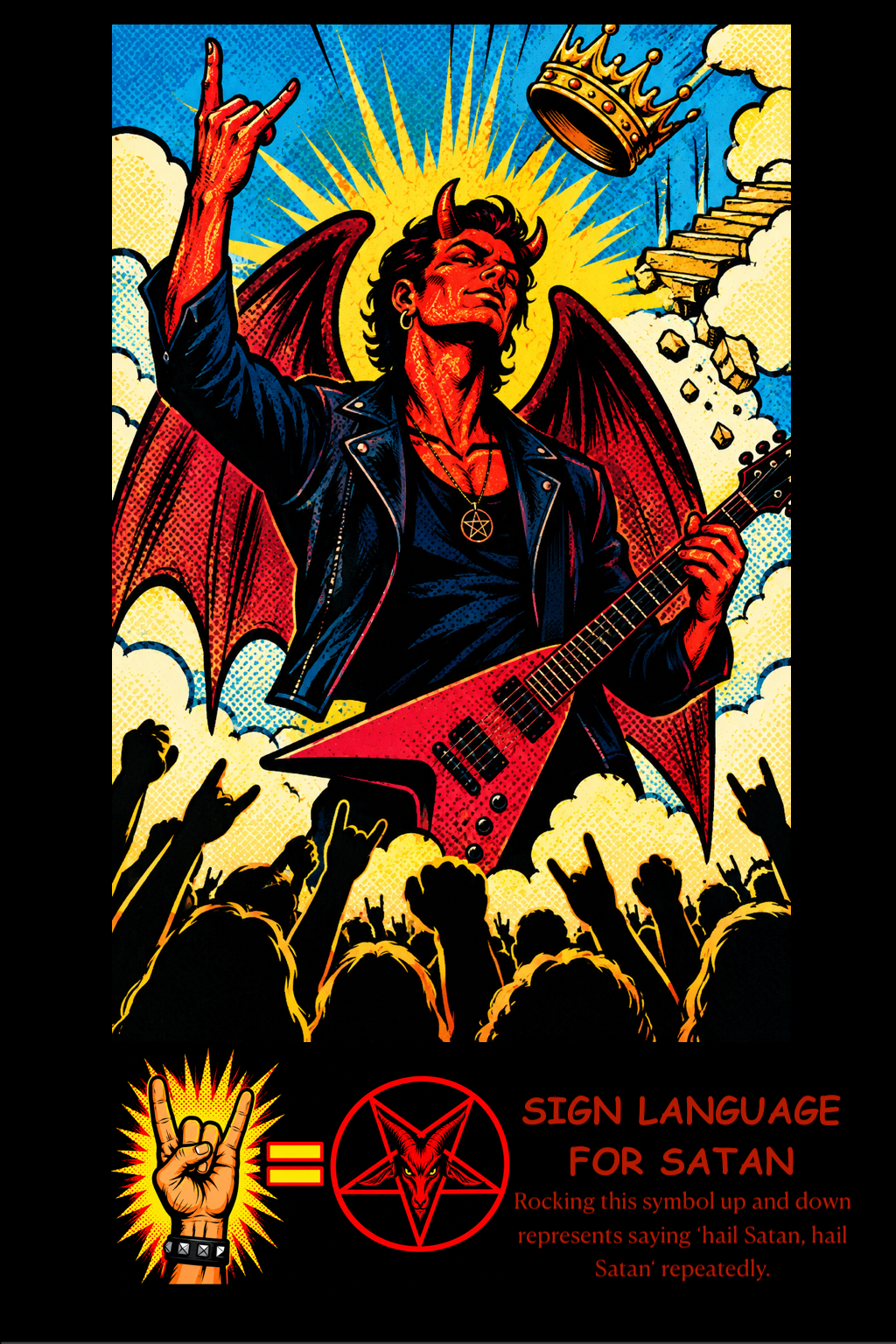
Remember Satan was the first Rock Star, so he fell like the average one.
One of the most difficult questions concerning the doctrine of Creation is this: If God created everything good, where did sin originate? Did God create sin? If not, why did He create beings capable of choosing evil? And if God is sovereign, why did He permit the possibility of rebellion within His creation?
These questions must be answered carefully because an inadequate explanation can create a false conclusion about the character of God. If God is perfectly good, then He cannot be treated as though evil were a good thing He arbitrarily manufactured. If God is sovereign, then the existence of rebellion does not establish that He has lost control of His creation. If human beings are morally accountable, their choices must be taken seriously rather than dismissed as meaningless movements of predetermined machinery.
The biblical argument begins with a fundamental distinction: God created beings capable of making choices, but the capacity to choose evil is not itself the commission of evil. The origin of sin must therefore be distinguished from the creation of the beings who subsequently chose to sin.
1. God Created a Good Order, Not a Sinful One
Genesis 1:31 declares, “Then God saw everything that He had made, and indeed it was very good” (NKJV).
This statement establishes God’s evaluation of His completed creative work. The created order, as God declared it, was very good. Sin should not therefore be treated as an original moral ingredient that God needed to place into creation to make it complete.
Genesis 2:1–3 records the completion of God’s work and His rest on the seventh day. Genesis 2:16–17 then records God’s command concerning the tree of the knowledge of good and evil, establishing a genuine boundary within humanity’s relationship with its Creator.
The command was not evidence that God had created an evil world. It established that humanity was responsible to God and was not authorized to determine its own moral boundaries independently of Him.
The distinction is essential. A prohibition identifies a boundary, but the existence of a boundary does not mean that violating it has already occurred.
For example, a command not to steal does not make theft a necessary component of a good society. It establishes the difference between faithful conduct and its violation. Likewise, God’s command in Eden established the boundary of obedience without making disobedience morally good.
Logical premise:
- God declared His completed creation very good.
- God established commands that distinguished obedience from disobedience.
- The existence of a command and the possibility of violating it do not mean that the violation has already occurred.
- Therefore, the existence of moral boundaries does not establish that God created sin as a good or necessary component of His original creation.
The biblical account subsequently identifies disobedience as a violation of God’s command, not as the fulfillment of a good command to commit evil.
2. The Creation of Freewill and the Possibility of Moral Choice
The question of sin’s origin leads to the question of freewill. Why create beings who can disobey rather than beings who can perform only programmed actions?
Scripture presents human beings as morally accountable. God commands, warns, instructs, corrects, and judges. Deuteronomy 30:19 presents a choice between life and death, blessing and cursing, and calls Israel to choose life. Joshua 24:15 likewise calls the people to make a decision concerning whom they will serve.
These passages demonstrate that human decisions are morally significant. They do not, by themselves, settle every philosophical debate about the precise nature or limits of human freedom. Nevertheless, they establish that biblical instruction treats human beings as responsible for their choices.
A robot that performs an action solely because it has been programmed to perform it does not possess moral responsibility in the same sense as a person who understands a command and deliberately violates it. The analogy illustrates the distinction between mechanical behavior and morally accountable action, although it should not be mistaken for a complete definition of human freewill.
The theological argument is that meaningful obedience involves a genuine response to God’s authority rather than the mere appearance of obedience.
Logical premise:
- Scripture treats obedience and disobedience as morally significant choices.
- Moral responsibility requires that an individual’s actions be attributable to that individual in a meaningful sense.
- Therefore, human choices cannot be dismissed as though they were morally irrelevant mechanical events.
Within this framework, freewill is understood as a gift that makes responsible obedience possible, while the misuse of that freedom makes rebellion possible.
It is important, however, to distinguish a theological argument from a mathematical proof. The existence of sin does not, by itself, prove every particular theory of freewill. Rather, the biblical treatment of commands, choices, and accountability provides the foundation for understanding human beings as morally responsible creatures.
God’s purpose was not to produce a universe in which rebellion was morally good. The argument is that God created responsible creatures whose obedience mattered, while the possibility of disobedience was not the same thing as an instruction to disobey.
3. God Did Not Tempt His Creatures to Sin
James 1:13 states, “Let no one say when he is tempted, ‘I am tempted by God’; for God cannot be tempted by evil, nor does He Himself tempt anyone” (NKJV).
James immediately directs attention to the operation of human desire in the process of temptation. In James 1:14–15, he explains that each person is tempted when drawn away by his own desires and enticed, and that desire gives birth to sin when it conceives.
Seriously, look at this: (Genesis 2:9 ) “And out of the ground the Lord God made every tree grow that is pleasant to the sight and good for food. The tree of life was also in the midst of the garden, and the tree of the knowledge of good and evil.”
God is actually “tempting” toward good! Never evil. God gave the over every tree in the garden PLUS the tree of life which is of Heaven verses the one tree of the knowledge of good and evil!!! (Genesis 2:9 and Genesis 2:17, Genesis 3, Revelation 2:7, 22:1–2.)
And after the FALL of Adam into sin we see this temptation in action via needing to keep people away from the attractive tree of life. (Genesis 3:24) “So he drove out the man; and he placed at the east of the garden of Eden Cherubims, and a flaming sword which turned every way, to keep the way of the tree of life.”
These passages distinguishes God’s character from the sinful process by which a creature becomes entangled in evil. God is not the moral author of temptation, and He cannot be blamed merely because a person has encountered an opportunity to disobey.
The presence of temptation and the commission of sin are not identical. A person may encounter an enticement without yielding to it. Jesus Himself was tempted, yet Hebrews 4:15 declares that He was without sin.
Remember it is Satan who invented lies. (John 8:44) “You are of your father the devil, and the desires of your father you want to do. He was a murderer from the beginning, and does not stand in the truth, because there is no truth in him. When he speaks a lie, he speaks from his own resources, being a liar and the father of it.”
God did not create the evil, as you see a created being God made created the evil through his freewill choice.
This distinction matters because the existence of temptation does not automatically establish that the Creator has done something evil. A temptation presents a moral test or enticement; the response to it remains morally significant.
Logical premise:
- God does not tempt anyone to do evil (James 1:13).
- Scripture nevertheless records occasions when people encounter temptation Satan brings and must respond faithfully (book of Job).
- Therefore, the existence of temptation must be distinguished from God’s enticing someone to commit sin.
- The presence of God allowing Satan to give a moral test does not make God the author of the sinful response.
God actually does not make tests. God redesigns attacks for the better good as shown through the book of James. Your painful situation was not painful divinely designed as a circumstance test, but instead is making the Devil’s approach into your life create an actual good over the intended evil. There is never a questions on the why a particular temptation has occurred. It is simply the question of how you will decide to use this situation Satan brought. For betterment? Or for your own destruction?
(Romans 8:28) “And we know that all things work together for good to those who love God, to those who are the called according to His purpose.”
This shows God’s responsiveness to situation, not show him as the creator of the situation. Written by the Apostle Paul, this verse reassures believers that God sovereignly orchestrates all circumstances—both positive and difficult—to accomplish a redemptive purpose for those who belong to Him. This is from a man blinded by God while on his way to murder more Christians, and later repentant him doing much of his ministry chained to a Roman Guard because jailed.
(Genesis 50:20) “But as for you, you meant evil against me; but God meant it for good, in order to bring it about as it is this day, to save many people alive.”
From the historic records taken from Egypt, spoken by famous Joseph to his brothers who had sold him into slavery, this verse reflects how God used their harmful actions to position Joseph in Egypt so he could preserve lives during a severe famine. He was sold as a slave by his own brothers! Put in jail through a lie! Forgotten! But look what happened: Bahr Yussef (also known as the Canal of Joseph or Joseph’s Canal) is a historic 180-mile (approx. 15 km to 300+ km system) waterway in Egypt that branches off the Nile River and carries water to the Faiyum Oasis to make sure there was water during the famine of the day (still in use today). Joseph also has a tiny pyramid that was built for his tomb in Egypt that holds a broken statue of himself and his long coat of many colors.
(1 Corinthians 10:13) “No temptation has overtaken you except such as is common to man; but God is faithful, who will not allow you to be tempted beyond what you are able, but with the temptation will also make the way of escape, that you may be able to bear it.”
It means that the believer must not confuse God’s permission of a circumstance with God’s moral approval of everything that happens within it, while knowing God’s got your back.
4. God Permits Temptation Without Approving Sin
Again look deeper at the scripture that portrays God as sovereign over His creation while also teaching that He does not approve of evil. These truths must remain together.
Remember Corinthians 10:13 teaches that God is faithful and will not allow believers to be tempted beyond what they are able to bear, but with the temptation will also make a way of escape so that they may be able to bear it.
The passage establishes God’s faithfulness in the midst of temptation. It does not promise that believers will never encounter severe pressure, never experience suffering, or never fall into sin. Rather, it directs them to God’s faithfulness and the provision of a way to endure or escape the temptation.
The believer must still respond to that provision. A way of escape does not become effective merely because it exists if the person knowingly refuses to take it.
This is another example of the relationship between God’s provision and human responsibility. God provides what is necessary for faithfulness, but His provision is not permission to become careless.
Logical premise:
- God is faithful and provides a way to endure or escape temptation (1 Corinthians 10:13).
- The presence of that provision does not eliminate the believer’s responsibility to respond.
- Therefore, Christians must neither blame God for their sinful choices nor assume that the existence of temptation makes obedience impossible.
The doctrine of Creation establishes God’s authority over the circumstances in which His creatures live. The doctrine of temptation establishes that God’s authority does not make Him the author of their sin.
5. The First Rebellion: Satan, Pride, and the Misuse of Created Freedom
The biblical account of humanity’s Fall appears in Genesis 3. However, the temptation of Eve presupposes the presence of a deceiving serpent, and later Scripture identifies Satan as the deceiver associated with that rebellion (Revelation 12:9; 20:2).
This raises a further question: If humanity’s Fall occurred in Genesis 3, when did Satan’s rebellion occur?
Genesis does not provide a chronological account of Satan’s fall or explicitly state the date on which it happened. The fact that the serpent appears in Genesis 3 establishes that the deception is already taking place by that point. A prior rebellion is therefore a theological inference from the biblical narrative, rather than an event whose precise date is supplied in Genesis. So sometime in those ten solar days between Man’s creation and the Fall eating the forbidden fruit. So Satan fell before he was fifteen solar days old (Day 7 God rested and said everything was declared on the sixth day “Very Good”, Genesis 1:31). Man fell when he was ten solar days old. We know this day-by-day timeframe since it is recorded as part of the Israeli feast system. NOTE: Genesis is written in Lunar Days, while today we calculate off of Solar Days.
The Jewish New Year that commemorates the creation of the world and the first man (Adam) is called Rosh Hashanah (also referred to biblically as Yom Teruah, this is the sixth day of creation, Earth’s Birthday), Leviticus 23:23–25, Numbers 29:1. There are exactly 10 solar days from the start of Rosh Hashanah to the Day of Atonement (Yom Kippur), Leviticus 16:1–34, Leviticus 23:26–32, Numbers 29:7–11. the Day of Atonement (Yom Kippur) is the Genesis 3:15 holiday declaring that a virgin born child will be born to atone for our sins. This also is Jesus’ true birthday date, the promised holiday that he would come.
The traditional Christian interpretation frequently associates Satan’s rebellion with pride, since this is the fruit we see off of his entire existence throughout scripture verse-by-verse. It seems to be what came first as (Proverbs 16:18) “Pride goes before destruction, And a haughty spirit before a fall [stumbling].” Seems like a direct declaration at this point. Timothy 3:6 warns against appointing a novice to leadership lest he become puffed up with pride and fall into the same condemnation as the devil. Other passages, including Isaiah 14:12–15 and Ezekiel 28:12–17, is interpreted by Christians as containing secondary imagery applicable to Satan’s pride and downfall. There is an immediate literary context addressing the kings of Babylon and Tyre, respectively, and a teachable application identifying the repeat pattern after Satan through this theological interpretation. Same style in how John the Baptist is said by Jesus to be a secondary fulfillment of Malachi 4:5-6 type of Elijah coming before His future return, Matthew 11:14, Matthew 17:11-13, Luke 1:17, John 1:21.
Pride is therefore a significant biblical explanation for rebellion against God, but Scripture does not provide a complete chronological biography of Satan’s first sinful thought.
The central principle remains clear: a creature’s rebellion does not establish that God created rebellion as a moral good. It establishes that a creature acted contrary to God’s authority.
6. Humanity’s Position in God’s Order and the Question of Satan’s Pride
Genesis 1:26–28 establishes that humanity was created in God’s image and entrusted with dominion over the earth and its living creatures. Psalm 8:4–6 describes humanity as crowned with glory and honor and appointed to exercise dominion over the works of God’s hands.
This is a remarkable appointment. Human beings are physical creatures, formed from the dust according to Genesis 2:7, yet they are entrusted with a distinctive position of responsibility within God’s creation.
The contrast invites a theological question: Could Satan’s pride have been aggravated by God’s appointment of humanity to a position of dignity and earthly dominion, despite humanity’s physical and creaturely limitations?
That possibility fits a broader biblical pattern in which pride resents God’s ordering of authority and seeks a position that God has not granted. However, Scripture again does not explicitly say that Satan rebelled because he was jealous of humanity, but instead most likely. This because in places like Hebrews 1:14 it clearly establish that humanity was originally ranked above Satan in every respect as he was now in a position to serve them, rather than the opposite even though man is a lower made creature. This makes Genesis 3 Fall in the Garden sensical, ‘oh, I will serve them alright!’ The Snow White’s Poison Apple Moment. Psalm 8 describes humanity’s position in relation to the created order, while Hebrews 2:5–9 discusses humanity’s temporary position below the angels and the ultimate fulfillment of God’s purpose in Christ to judge being above the angels.
(1 Corinthians 6:3): “Do you not know that we shall judge angels? How much more, things that pertain to this life?”
Sharing Christ’s Authority: Believers are united with Jesus Christ, who holds ultimate authority over all creation. Because saints will reign and sit on thrones with Christ (Revelation 3:21; 2 Timothy 2:12), they will share in His judicial and ruling role.
Judging Fallen Angels: The Greek word for “judge” (krino) can mean to pass a legal verdict or to rule/govern. The passage primarily refers to participating in the final judgment and condemnation of fallen angels (demons) who rebelled against God (2 Peter 2:4; Jude 1:6).
Humanity’s Position: Humans made in God’s image and redeemed by Jesus have a distinct spiritual standing. Scripture notes that angels serve believers as ministering spirits (Hebrews 1:14), pointing to an elevated future or administrative role as well for the redeemed.
Paul’s Practical Point: The Apostle Paul wrote this to the church in Corinth because believers were taking each other to secular pagan courts over minor daily arguments. His argument is simple: if Christians are competent enough to handle cosmic, future matters like judging angels, they are certainly capable of resolving petty daily disputes among themselves.
Consequently, the idea that Satan’s pride was specifically provoked by humanity’s appointment should be presented as a theological hypothesis, not a direct biblical statement, same as a prophecy. A hypothesis fueled by seeing his interactions with humans, such as in the book of Job proving that humans are his target point with pride being his drive, inferring that humans are the mark that hurt his pride into his fall from glory.
Satan saying “it should be me, not them — you have lost your mind God. I would be better at being God than you”. And he was able to rally together one third of the servants of Heaven with this proposed concept of a greater elitism over humanity, not them over us, Revelation 12:4.
The more firmly established principle is that God’s appointment determines a creature’s proper place. No created being has the right to overthrow God’s order simply because it desires a different position.
Logical premise:
- God assigned humanity a distinctive dignity and responsibility within creation.
- Created beings do not possess independent authority to redefine God’s appointments.
- Pride seeks elevation apart from submission to God’s authority.
- Therefore, rebellion against God’s ordering of creation is an expression of the creature attempting to place its own will above the Creator’s.
The point is not that humanity is superior to every other created being in every possible respect. The point is that God determines the role, dignity, and responsibilities of each creature. Pride becomes destructive when a creature refuses to accept that authority. God will make all things into a new better form, Revelation 21:1–5. This includes the animals and plants as God loves and cares for even the sparrow Matthew 6:26. I always imagine my Dalmatian who passed away recreated into her new for with rainbow polkadots and a helicopter tail so can fly! Because anything God makes new will be better than the old version as he has been sitting back on this for a good six thousand years already, much longer than a six day process. That mathematically means it wills be one thousand times better at this moment. And this is not even adding the thousand year reign of christ year as well making it seven thousand years, 1,167 (rounded up) times better!!
7. The Order of Creation and the Timing of the Fall
We already established the timing. But what about the meaning? Genesis 1 records God’s creative work and concludes with His declaration that everything He had made was very good. Genesis 2:1–3 then records the completion of creation and God’s rest on the seventh day. Genesis 3 introduces the serpent’s deception and the disobedience of Adam and Eve.
Again the Jewish New Year that commemorates the creation of the world and the first man (Adam) is called Rosh Hashanah (also referred to biblically as Yom Teruah, this is the sixth day of creation, Earth’s Birthday), Leviticus 23:23–25, Numbers 29:1. There are exactly 10 solar days from the start of Rosh Hashanah to the Day of Atonement (Yom Kippur), Leviticus 16:1–34, Leviticus 23:26–32, Numbers 29:7–11. the Day of Atonement (Yom Kippur) is the Genesis 3:15 holiday declaring that a virgin born child will be born to atone for our sins. This also is Jesus’ true birthday date, the promised holiday that He would come.
Scripture establishes that God declared His completed creation very good and that human sin entered the biblical narrative through disobedience to God’s command.
This distinction protects the doctrine from confusing God’s original creative work with the later corruption associated with rebellion.
God is a God of order, but the existence of rebellion does not mean that rebellion was part of His moral design as a good thing. A creature can violate an established order without proving that the order itself was defective.
A law against murder does not make murder part of the law’s moral purpose. A command to obey does not make disobedience a necessary ingredient of obedience. Likewise, the existence of sin does not establish that God had to create sin itself to complete creation.
8. God Remains Sovereign Even When His Creatures Rebel
The existence of sin raises one final question: If God is sovereign, how can rebellion occur?
A king being sovereign over his nation does not mean he is controlling all of their actions. He may make the overall rules, but people still have to choose to obey those rules. The same with God as He does not remote control us rather instead chooses a coaching and counseling methodology. So the answer requires distinguishing God’s sovereignty from the claim that God morally approves of every action that takes place within His creation.
Acts 2:23 describes the crucifixion of Christ as occurring according to God’s determined purpose and foreknowledge, while still identifying the human agents involved as responsible for their wicked actions. Genesis 50:20 likewise records Joseph’s recognition that others intended evil against him while God intended the events for good.
These passages demonstrate that human wickedness does not automatically defeat God’s purposes. God can govern events and accomplish His purposes without transforming the wicked intentions of the people involved into morally good intentions.
This does not mean that every detail of the relationship between divine sovereignty and creaturely freedom is easy to explain. Christians have developed different accounts of how God’s decree, foreknowledge, permission, and human freedom relate to one another. Nevertheless, Scripture clearly rejects the conclusion that human rebellion makes God powerless. Again this goes back to the essay and article referred to earlier to explain in full the proper interpretation of what God says in this matter here: https://vlgroup.org/i-am-chosen-by-christ-not-calvin-nor-arminius-what-the-bible-actually-says-about-salvation/ God instead shows us what He means and gives us the path through being “In Christ” to get there without confusion, Ephesians 1:10, 1 Corinthians 14:33, 2 Timothy 1:7, James 1:5, Proverbs 3:5–6.
Logical premise:
- God created and governs the created order.
- Creatures can act contrary to God’s commands.
- Scripture teaches that God can accomplish His purposes even through circumstances involving human wrongdoing.
- Therefore, the existence of rebellion does not establish that God has surrendered His sovereignty or that evil has become equal to His authority.
The Christian position must therefore reject two errors. The first is blaming God as though He were the moral author of sin. The second is treating sin as though it were a force beyond God’s ultimate authority.
God remains the Creator and Judge. His creatures remain accountable for their actions, and His purposes are not ultimately defeated by their rebellion, 2 Corinthians 5:10, Hebrews 9:27 , Ecclesiastes 12:14, Matthew 12:36, Revelation 20:12.
Freewill Does Not Make Sin Good
The doctrine of Creation establishes that God created a good order and assigned His creatures their respective places and responsibilities. The doctrine of freewill helps explain why obedience and disobedience carry moral significance. The biblical account of sin then demonstrates that the misuse of created freedom can corrupt what God created good.
God did not need to make sin morally good in order to create morally accountable beings. Nor does the possibility of rebellion prove that the Creator’s design was defective. The capacity to disobey and the act of disobedience are distinct realities.
God does not tempt His creatures to sin, and He does not approve of their rebellion. Nevertheless, He remains sovereign over His creation and faithful to His purposes, even when His creatures act wickedly.
The final principle is this: God created the order; the creature’s rebellion does not make the disorder God’s moral intention. The existence of sin demonstrates the seriousness of creaturely rebellion, not a defect in God’s goodness.
The Christian response is therefore neither to blame God for evil nor to deny the reality of human responsibility. It is to recognize God’s authority, reject pride, exercise the responsibilities He has entrusted to us, and submit our choices to His revealed Word.
The doctrine of Creation establishes who God is. The doctrine of the Fall explains how rebellion entered human experience. The doctrine of redemption reveals God’s answer to sin through Jesus Christ. Together, these doctrines demonstrate that the Creator’s purposes extend beyond the beginning of the world to the restoration of what sin has corrupted, Ephesians 2:8-10.
XVI. The Architecture of Eternity: Time, Space, Matter, and the Self-Existent Mind
“The fool has said in his heart, ‘There is no God.’”
— Psalm 14:1 (NKJV)
When examining the origin of reality, the human mind often makes the fatal error of trapping the Creator inside the physical limitations of His own creation. Skeptics ask, “Who made God?” or “What existed before God?” assuming that God must be bound by a timeline. Genesis 1:1 shatters this false premise by identifying God as already present before the clock of the universe ever started ticking.
To understand reality prior to the physical universe, we must examine the absolute structural prerequisites of existence: Time, Space, and Matter.
The Logical Sequence of Reality: Time, Space, and Matter
Logic dictates a strict hierarchy of dependency for any physical universe to exist:
- Time must exist first so that an event or dimension can occur.
- Space must exist second so that a volume or arena can be provided.
- Matter must exist third so that physical substance can fill that space over that time.
If you lack any one of these three elements in this exact order, physical existence is impossible. Matter cannot exist without space to occupy, and space cannot exist without time to measure its dimension.
Remarkably, the opening declaration of Scripture mirrors this exact logical and physical necessity with breathtaking precision:
“In the beginning [TIME CREATED] God created the heavens [SPACE] and the earth [MATTER].”
— Genesis 1:1 (NKJV)
In Hebrew, the text deploys specific foundational terms:
- Bereshit (בְּרֵאשִׁית): “In the beginning”—establishing the inception of linear time.
- Bara (בָּרָא): “Created”—denoting sovereign, ex nihilo divine origination.
- Shamayim (שָׁמַיִם): “The heavens”—representing the expanse of space.
- Eretz (אֶרֶץ): “The earth”—representing physical matter.
The Immaterial Pre-Creation State and the Self-Existent Mind
Before Genesis 1:1, there was no physical time, no spatial dimension, and no material substance. Therefore, all things prior to the physical universe were of an entirely immaterial nature.
Without linear time, successive moments do not exist; all states of reality coexist simultaneously. All of what we perceive as past, present, and future converged into an eternal, self-existing consciousness—a supreme Mind.
Logic, mathematics, and consciousness do not require physical matter or linear time to exist; they are immaterial, absolute realities. Because absolute logic and infinite consciousness converged in a timeless state, they manifested as an active, living Mind: God.
From within Himself—the ultimate immaterial source—God spoke physical reality into existence. This explains two core divine attributes logically:
- Omnipresence: Because God exists outside of linear time and spatial dimensions, He is present everywhere simultaneously, encompassing all of time at once.
- Omnipotence: Because He authored the very framework of time, space, and matter, His power influences every point of reality effortlessly and instantaneously.
The Logical Argument
- Premise 1: Physical reality requires a sequential foundation of Time, Space, and Matter to function.
- Premise 2: Logic, mathematics, and mind are immaterial concepts that exist independently of physical dimensions.
- Premise 3: Scripture explicitly presents God as existing prior to the physical universe, initiating Time (bereshit), Space (shamayim), and Matter (eretz) in exact logical order (Genesis 1:1).
- Conclusion: Therefore, God is the eternal, self-existent Mind outside of time who authored our physical reality from His own immaterial sufficiency.
Grace in the Constraint: Slowing Down Eternity for Human Life
Before Genesis 1:1, there were no measured “days” or ticking clocks—simply the eternal, simultaneous fullness of all that is.
For finite human beings, living in a timeless, simultaneous infinity would render choice, development, and relational appreciation impossible. In His grace, God instituted time and structured reality into measured increments, seasons (et), and days (yom). He slowed down the perception of existence into a structured framework—like walking up a series of deliberate staircases—so that human beings created in His image could consciously perceive, enjoy, and appreciate the gift of life.
The denial of this self-existent Creator is not a triumph of intellect; it is classified by Scripture as moral blindness (Psalm 14:1). The universe is not a cosmic accident; it is the deliberate, logically flawless architecture of an eternal God.
1. The Greek Philosophical Counter-Weight: Aion vs. Chronos
To deepen the exegesis for your our audience, we can contrast the human perception of time with God’s eternal state using Koine Greek:
- Chronos (χρόνος): Sequential, ticking, linear time—the ticking clock that young adults feel constantly crushed by.
- Aion (αἰών) / Aionios (αἰώνιος): Unbroken, eternal age—the timeless realm God inhabits (as seen in 1 Timothy 1:17, “Now to the King eternal, immortal, invisible, to God who alone is wise, be honor and glory forever and ever”).
The Shocking Application: Modern adults are consumed by the anxiety of chronos—panicking over being behind on career timelines, biological clocks, and social benchmarks. Yet the Creator who designed their life stands in aionios. When you bypass God’s order, you are letting the panic of linear ticking override the eternal Mind that holds reality together.
2. Quantum Physics Analogy: The Quantization of Time and Planck’s Unit
To match the scientific logic maps used throughout our curriculum (like Wave-Particle Duality and the Pauli Exclusion Principle), you can integrate the concept of Planck Time (5.39 x 10 [to the -44 power] seconds):
- Physics proves that time is not an infinitely smooth sliding ramp; it is quantized into the smallest possible indivisible packets of duration (Planck time units).
- The Logic: Just as energy moves in discrete steps (Quantization of Energy), God literally “quantized” time itself at the subatomic level during Genesis 1:1. He constructed the “staircase” of physical reality so that human consciousness doesn’t shatter under the infinite weight of eternity.
3. The Shock-Vertising Callout: “The Atheist’s Statistical Delusion”
You can add a sharp, direct confrontation anchored in Psalm 14:1 (Nabal – נָבָל, translated as “fool,” denoting a moral or spiritual senselessness rather than a low IQ):
“The atheist looks at the mathematical sequence of Genesis 1:1—Time, Space, and Matter appearing in exact logical order—and claims it was a random explosion out of nothing. That isn’t science; that is statistical delusion. To claim that an uncaused, unguided, mindless void accidentally generated the laws of logic, mathematics, quantum physics, and human consciousness is the ultimate intellectual cop-out. It takes far more blind, irrational ‘faith’ to be an atheist than it does to submit to the self-existent Mind of the Creator.”
4. Direct Bridge Back to Time Management & Accountability
This ties Section XVI back into the core practical counseling theme of the essay (stopping the “divine appointment” late-for-work excuse):
“Because the self-existent God of Genesis 1:1 intentionally slowed down eternity and created the quantized staircase of time (yom / chronos) for your benefit, wasting time is an act of spiritual treason against the Creator. When you treat your schedule as a chaotic suggestion, you are insulting the God who architected the exact dimensional physics required for your next breath.”
The concept that God is the self-created, Greater Nature itself that is demanded for Nature to exist touches on one of the deepest pillars of classical theology (study of God) and ontology (study of existence): Divine Aseity (God’s absolute self-existence) and the ontological dependence of the physical universe.
When we analyze this statement through rigorous logic and biblical theology, it dismantles both atheist materialism and pantheism, establishing why physical nature cannot account for itself.
1. The Fallacy of Self-Sustaining Physical Nature
Materialistic philosophy claims that physical nature is self-existent—that matter, energy, and physical laws somehow generated themselves out of a quantum vacuum or eternal loops.
Logic completely rejects this.
- Physical nature is contingent (it depends on something outside of itself to exist).
- Matter cannot move, organize, or code itself into complex biological and cosmic systems without an antecedent cause.
- Therefore, physical nature demands a non-physical, self-existent reality to bring it into being. If there were no “Greater Nature” (an eternal, uncaused, immaterial reality) standing behind the physical universe, physical nature would be an effect without a cause—an absolute logical impossibility.
2. Transcendent Reality vs. Pantheistic Confusion
Calling God the “Greater Nature” requires a vital theological distinction to avoid sliding into pantheism (the false belief that God is the physical universe, the trees, the stars, or the cosmos itself).
Scripture explicitly condemns worshiping the creature or creation rather than the Creator (Romans 1:25).
- Physical Nature (Natura Naturata – the created effect): The material universe of time, space, and matter bound by entropy, decay, and physical laws.
- The Greater Nature (Natura Naturans – the uncaused, self-existent source): God Himself. He is the ultimate reality, the infinite Mind, and the uncaused source of all life, power, and being.
God is not locked inside the machine of physical nature; He is the transcendent Architect who exists entirely outside of it, yet sustains it every microsecond by the word of His power (Hebrews 1:3). Physical nature exists because it draws its ongoing existence from His infinite, self-existent essence.
3. The Immaterial Precondition for Material Existence
Just as a computer simulation cannot run without a programmer who exists outside the digital code, physical nature cannot exist without an immaterial reality that transcends it.
- Time, space, and matter are physical creations that are subject to limits, decay (entropy), and beginning points.
- God, as the Greater Nature, is timeless, spaceless, and immaterial. He possesses aseity (from the Latin a se, meaning “from Himself”). He does not derive His existence, power, or logic from anything else. He simply is (Exodus 3:14: “I AM WHO I AM”).
Because He possesses life inherently in Himself (John 5:26), He is the reservoir of all reality. Physical nature is merely a localized, temporary expression of His sovereign will, willed into existence ex nihilo (out of nothing).
The Logical Proof
- Premise 1: Anything contingent and physical (the universe of time, space, and matter) requires an adequate external cause for its existence.
- Premise 2: An infinite regress of physical causes is logically impossible, as it never explains why physical reality exists in the first place.
- Premise 3: Therefore, reality demands a First Cause that is non-contingent, self-existent, immaterial, and infinitely powerful—what can be understood as the ultimate, self-existent “Greater Nature” (God).
- Conclusion: Physical nature cannot exist without God. He is the necessary precondition for all reality, acting as the self-sustained anchor upon which every physical law and subatomic particle depends.
So…
When a person looks at the universe, they are looking at a derivative reality. God is the Greater Nature—the uncreated, self-existent source of all existence. To deny Him is to claim that a shadow can cast itself without a light source, or that a clock can exist without a watchmaker. Physical nature demands a Creator because it possesses no internal power to create itself. A building has a builder. A painting has a painter. A car has a car manufacturer.
“For since the creation of the world His invisible attributes are clearly seen, being understood by the things that are made, even His eternal power and Godhead, so that they are without excuse.” — (Romans 1:20)
So Stop Scrolling and Start Rebuilding: The War for Your Life Begins Today
CLICK THIS OR STAY TRAPPED IN THE VOID. The Clock Is Ticking, and “Someday” Is Killing Your Soul
Let’s end the game right here.
You’ve read the exegesis. You’ve looked at the logical breakdowns. You’ve seen the ancient Hebrew and Greek mechanics laid bare. The curtain has been pulled back, and the holy-sounding excuses you’ve used to shield your undiscipline, your broken schedules, and your emotional chaos have been completely demolished.
You can no longer pretend that your modern-life crisis is a mysterious “spiritual wilderness” when it is simply the harvest of your own unwalled choices. You cannot keep blaming the Holy Spirit for your alarm clock failures or turning God into a convenient scapegoat (azazel) for your refusal to grow up.
The Creator of the universe didn’t design you to be an anxious, exhausted, digital zombie drifting from one blue-light anesthesia session to the next. He called you to be an image-bearer (selem / eikōn)—a creature of purpose, moral authority, and intentional stewardship.
So here is the final, shocking fork in the road:
You can close this tab, pick up your phone, drop right back into the algorithmic numb-zone, and let your life remain a breached, defenseless city (pérutsah / chomah) wide open to total pillaging. You can stay trapped in the comfortable paralysis of self-pity, waiting for a “divine appointment” that magically fixes a life you refuse to govern.
OR…
You can execute μετάνοια (metanoia) right now—this very second. A change of mindset that can lead you through your salvation into a true repentance. A total, radical, directional U-turn of your mind and your actions.
- Surrender the Sovereign Throne: Admit that you are not God. Stop trying to run a universe you didn’t create, and submit your life to the One who built it and upholds it by the word of His power.
- Rebuild Your Walls: Stop letting the culture, your feed, and your undisciplined desires dictate your day. Practice the internal governance of ma’atsar. Set hard boundaries, schedule your priorities, and let your “Yes” be “Yes” and your “No” be “No”.
- Walk in the Light of the Living: Get off the floor. Honor the physical temple God gave you with sleep, real food, and real fellowship. Stop living as a refugee in the ruins of your own making, and step into the אֹור הַחַיִּים (Or ha-Chayim)—the active, vibrant, ordered reality of a life fully surrendered to the Creator.
The choice is yours. God is not your scapegoat, and time is not your enemy—it is a sacred, finite trust.
Close the screen. Drop to your knees. Own your schedule. Rebuild your walls. And live like the Creator actually owns your soul.
“Therefore, my beloved brethren, be steadfast, immovable, always abounding in the work of the Lord, knowing that your labor is not in vain in the Lord.” (1 Corinthians 15:58, NKJV)