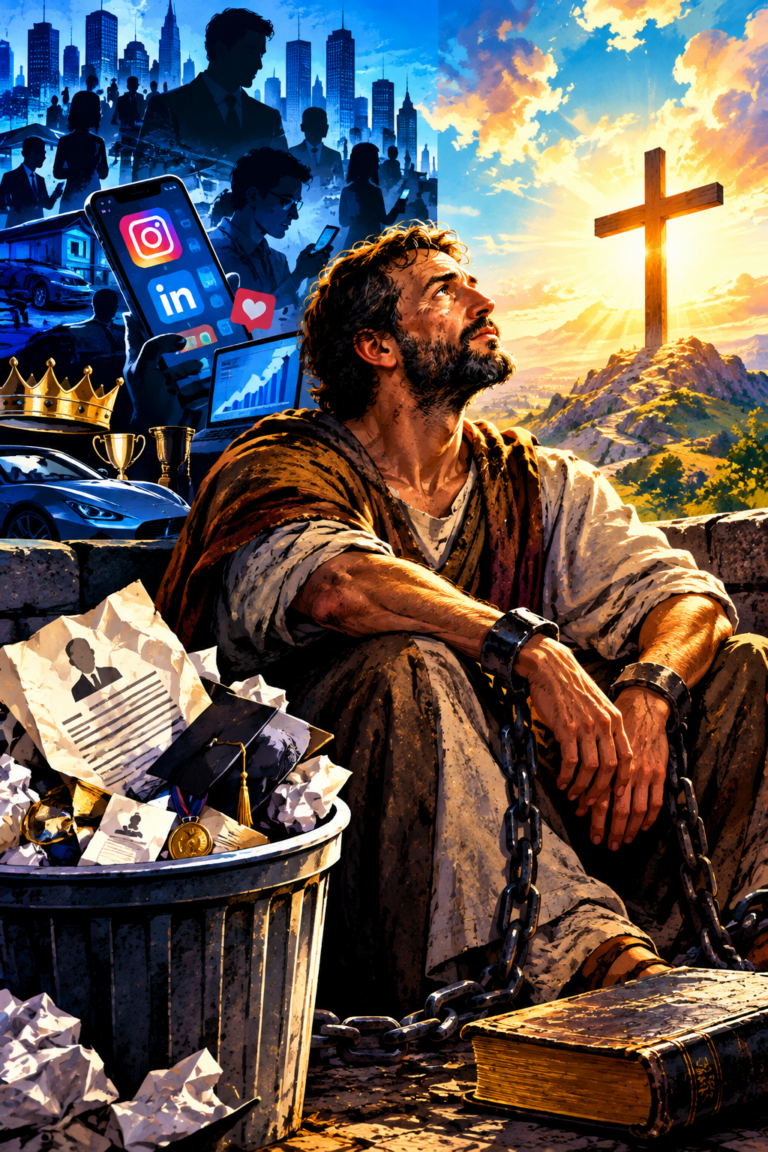

Let’s drop the religious performance right now and look in the mirror.
You think you are a deeply committed Christian because you caught the emotional wave of a popular spiritual movement, joined the crowd, and checked the right boxes. You treat following Jesus like a lifestyle upgrade—a risk-free, feel-good addition to make your career, your social life, and your weekend vibes a little smoother.
You are living in a catastrophic fantasy.
When Jesus traveled toward Jerusalem, massive multitudes surged around Him. They weren’t following Him out of humble repentance or spiritual starvation; they were drunk on populist hype. They were riding the bandwagon because they thought He was marching to overthrow the Roman government, sparking intense political ambition and jockeying for power among the ranks.
And how did Jesus respond to this massive, adoring crowd? Did He capitalize on the momentum, launch a seeker-sensitive branding campaign, or offer a soft, comfortable invitation?
No. He turned around and dropped a theological bomb designed to shatter them.
Jesus didn’t want a fan club; He didn’t want consumer-driven camp-followers who enjoyed the energy of the movement without ever enlisting as disciplined soldiers. Instead of watering down His message to keep the numbers up, He delivered words so harsh, severe, and uncompromising that He deliberately thinned the crowds down to the bone.
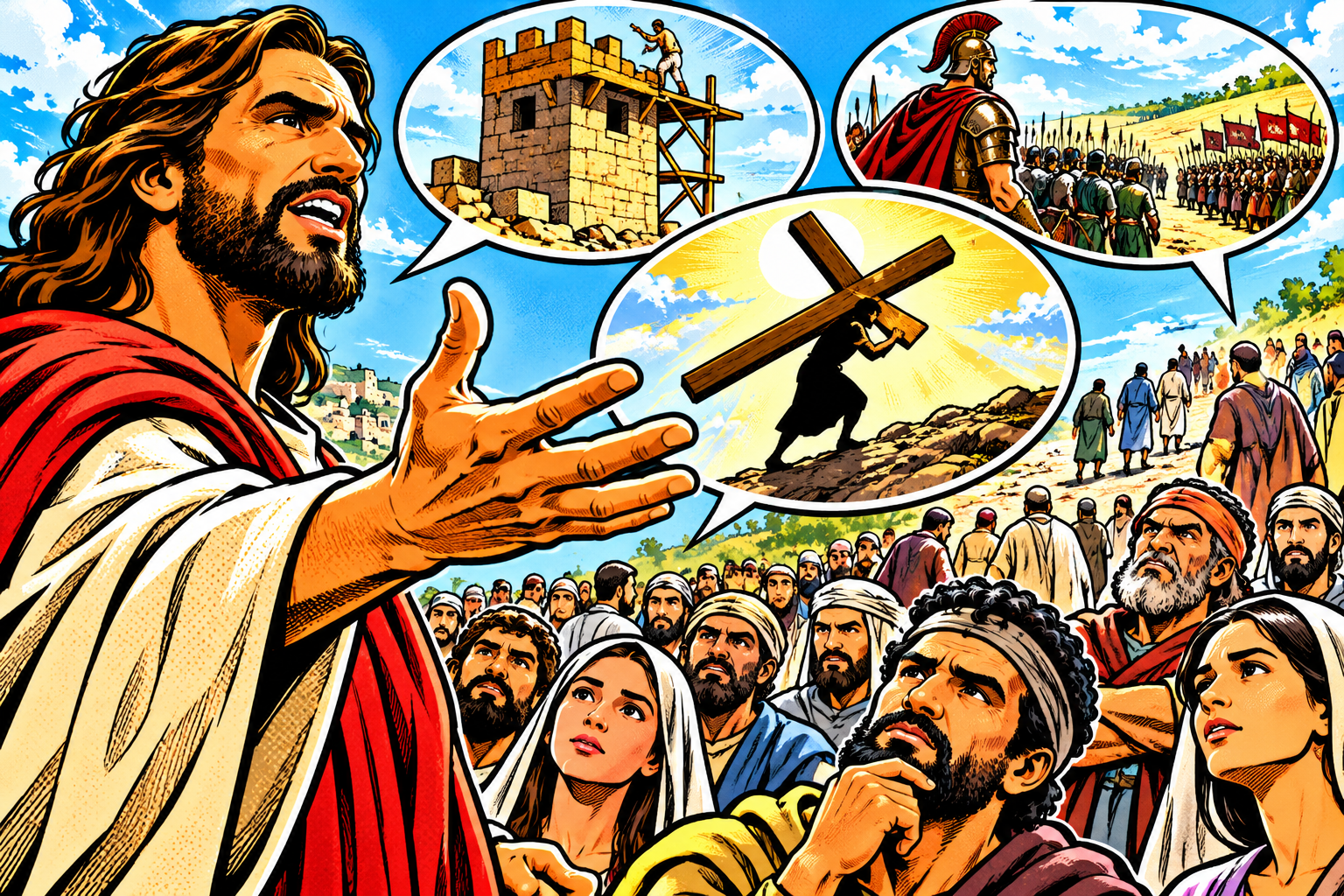
He laid down a terrifying ultimatum: unless your devotion to Him makes your love for your own family look like hatred, unless you pick up a one-way instrument of public execution and walk straight to your own self-death, unless you sit down and calculate the humiliating cost of an abandoned, half-built tower, and unless you wave the white flag of unconditional surrender like a starving king outmatched by an incoming army twice your size—you cannot be His disciple.
The Christianity you’ve signed up for—one that demands no sacrifice, no execution of self, and no absolute surrender—is a fake.
It’s time to stop playing soldier, drop your self-rule, and face the brutal, unvarnished reality of what it actually costs to follow the King.
The Office: The Weight of the Ruin
The office was quiet, save for the faint hum of a desk lamp cutting through the evening shadows. Across the heavy oak table sat twenty-year-old Caleb, his shoulders curved inward, staring blankly at his hands. The digital marketing agency and young adults’ outreach initiative he had spent the last eight months building had completely collapsed. Investors had pulled out, key team members had walked, and the venture was dead.
To anyone walking past, it looked like a public shipwreck. To Caleb, it felt like spiritual disqualification.
Pastor Thomas leaned forward, resting his forearms on the table. He didn’t offer cheap platitudes or therapeutic cliches. Instead, he slid a leather-bound notebook across the desk—open to a diagram of a Judean vineyard watchtower and a military ledger.
I. The Debris of the Half-Built Tower (Themelion)
Pastor Thomas: “Caleb, look at me. You look like a man staring at a pile of smoking rubble, wondering if God hates you. Let’s stop the emotional bleeding and look at the logic of what just happened. What did you think you were building?”
Caleb: (Voice tight) “I thought I was building something for the Kingdom, Pastor. I thought God was going to bless it because my heart was sincere. But it crashed. Everyone saw it. People are watching the wreckage. I feel like a complete fraud.”
Pastor Thomas: “Of course you do. Because you ran out onto the spiritual construction site driven by hype and emotional adrenaline, and you forgot to sit down first and count the cost (psēphizō). Look at what Jesus warned us about in Luke 14:28–30:
“For which of you, intending to build a tower, does not sit down first and count the cost, whether he has enough to finish it—lest, after he has laid the foundation, and is not able to finish, all who see it begin to mock him, saying, ‘This man began to build and was not able to finish’?”
Pastor Thomas: “You poured the initial concrete foundation—the themelion. Pouring a foundation is loud, exciting, and everyone applauds. But a foundation alone cannot shelter a family or guard a vineyard from thieves. You wanted the crown without the cross. You assumed that because your intentions were good, God would bypass the laws of structural engineering and strategic endurance. And now? The project stalled, and you’re feeling the sting of the watching world.”
Caleb: “It hurts, Pastor. It feels like God let me fail.”
Pastor Thomas: “No, Caleb. God didn’t let you fail; reality collided with your uncalculated fantasy. You ran out to build a tower with a ten-dollar budget and a million-dollar ego. You wanted to be a spiritual leader, but you skipped the most important command Christ gave: Prōton kathisas—sit down first.”
II. The Battlefield Audit: Outnumbered Two-to-One
Pastor Thomas: “Let’s look at the second parable Jesus told in that exact same breath (Luke 14:31). He shifts from architecture to total war.”
“Or what king, going to make war against another king, does not sit down first and consider whether he is able with ten thousand to meet him who comes against him with twenty thousand?”
Pastor Thomas: “Caleb, what army did you bring into this venture?”
Caleb: (Bitterly) “My own motivation, my own talent, and my own drive.”
Pastor Thomas: “That’s an army of ten thousand marching straight into an entrenched enemy force of twenty thousand—Sin, the Flesh, and structural opposition that vastly outpowers your natural human strength. You charged onto the battlefield of leadership thinking your positive attitude and youthful energy were enough to hold the line. You didn’t hold a formal council of war (bouleuatai). You didn’t realize that the Christian life is active, brutal spiritual warfare.”
Caleb: “So I should just quit? Is that what this means? Am I disqualified from leadership?”
Pastor Thomas: “If you stay in your pride, yes. But if you listen to the next verse (Luke 14:32), you’ll see the only rational move left for a broken king:
“Or else, while the other is still a great way off, he sends a delegation and asks conditions of peace.”
Pastor Thomas: “Right now, your ego is bruised because your little empire crumbled. You are treating the failure like a personal tragedy rather than a tactical mercy. God had to let your self-sufficient venture burn to the ground because He’s trying to save you. He’s bringing you to the breaking point of your own self-reliance.”
III. The Final Ultimatum: Handing Over the Deed (Apotassomai)
Pastor Thomas: (Tapping the page) “Do you know why Jesus told these parables back-to-back? Because He was thinning the crowds. He wasn’t looking for camp-followers who jump on a spiritual bandwagon when things are trendy; He was looking for disciplined soldiers (mathetes). Look at the final sentence of His discourse (Luke 14:33):
“So likewise, whoever of you does not forsake all that he has cannot be My disciple.”
Pastor Thomas: “The Greek word here is apotassomai. It doesn’t mean you casually hand over a tithe or volunteer on weekends while keeping the steering wheel of your life firmly in your own grip. It means to say goodbye to everything. It is the posture of a traveler standing at the dock, waving a permanent, final farewell to personal ownership, self-rule, and autonomous control, handing the deed of their entire existence over to the Master.”
Caleb: (Looking up, his jaw tight) “I thought I gave my life to Jesus when I got saved, Pastor.”
Pastor Thomas: “You gave Him your soul for eternity, but you kept the title deed to your career, your ambition, and your plans. You wanted Jesus to be the silent investor in your startup. You wanted His blessing on your kingdom, rather than surrendering your life to His Kingdom.”
The room fell dead silent. Caleb stared at the table, his chest rising and falling. The illusion of his own competence had been stripped away, leaving raw, unvarnished reality.
Caleb: (Softly) “What do I do now?”
Pastor Thomas: (Leaning back, his voice steady and pastoral)
“You stop mourning the half-built tower. You stop trying to fight a war in the pathetic, fragile strength of your own ego. You pull out your ledger, you wave the white flag of unconditional surrender, and you say: ‘Lord, I am bankrupt. I forsake all that I have.’ Only when you have nothing left of yourself can Christ build something that will actually last.”
Pastor Thomas pushed a blank sheet of paper and a pen across the table.
Pastor Thomas: “Now. Let’s sit down, write off the wreckage, and start counting the cost the right way.”
The Cost of the Crown: Why Jesus Demands Absolute Surrender and Destroys Cheap Discipleship
Luke 14:25-33:
G1
25 Now great multitudes went with Him. And He turned and said to them, 26 “If anyone comes to Me and does not hate his father and mother, wife and children, brothers and sisters, yes, and his own life also, he cannot be My disciple. 27 And whoever does not bear his cross and come after Me cannot be My disciple.
G2
28 For which of you, intending to build a tower, does not sit down first and count the cost, whether he has enough to finish it—?
G3
29 lest, after he has laid the foundation, and is not able to finish, all who see it begin to mock him, 30 saying, ‘This man began to build and was not able to finish’?
G4
31 Or what king, going to make war against another king, does not sit down first and consider whether he is able with ten thousand to meet him who comes against him with twenty thousand?
G5
32 Or else, while the other is still a great way off, he sends a delegation and asks conditions of peace.
G6
33 So likewise, whoever of you does not forsake all that he has cannot be My disciple.
The Danger of the Popular Bandwagon
As Jesus traveled along the road toward Jerusalem, great multitudes of people surged around Him. To the casual observer, His ministry was experiencing a massive populist wave—a spiritual movement gathering momentum by the day. However, the crowd’s enthusiasm was built on a fundamental misunderstanding. The multitudes were not following Him out of humble repentance or spiritual hunger; they were following Him because they believed He was marching to Jerusalem to violently overthrow the Roman government and establish an immediate earthly kingdom. This political and triumphalist expectation sparked carnal ambition, evidenced by disciples like James and John jockeying for positions of power at His right and left hand.
Instead of leaning into the applause, capitalizing on the political momentum, or offering a soft, seeker-sensitive invitation, Jesus did something radical. He stopped, turned around, and delivered a stark, uncompromised, and severe message designed to shock the crowds and thin their ranks.
This text serves as a severe warning for modern leadership and biblical counseling: Popular spiritual movements are often dangerously shallow. When the Gospel is commercialized and packaged as a risk-free ticket to a better life, it attracts camp-followers rather than disciplined soldiers. Here, Christ lays down the non-negotiable terms of true discipleship.
The Unbroken Chain of Surrender: Why Jesus Shattered the Crowd with One Greek Sentence (Luke 14:25–27)
The Anatomy of a Populist Illusion
As Jesus walked toward Jerusalem, massive crowds surged around Him. To anyone watching from the outside, it looked like the ultimate spiritual movement—a populist wave gathering unstoppable momentum. But the crowd was intoxicated by a profound illusion. They were not following Him out of repentance; they were following Him because they believed He was marching to Jerusalem to violently overthrow the Roman government and establish an immediate earthly kingdom.
Instead of riding the wave, milking the applause, or offering a soft, seeker-sensitive welcome, Jesus stopped dead in His tracks, turned around, and delivered a unified, unyielding, and shocking theological blow.
In the original Koine Greek text, Luke 14:25–27 operates as a single, unbroken sentence. It begins with a surging multitude and drives inexorably toward a brutal, uncompromising disqualification: “he cannot be My disciple.”
Let’s break down this single syntactical chain and expose what true discipleship actually demands.
The Shocking Comparison (Miseo — Luke 14:26)
“If anyone comes to Me and does not hate his father and mother, wife and children, brothers and sisters, yes, and his own life also, he cannot be My disciple.” — Luke 14:26 (NKJV)
The Greek Reality: Jesus uses the strong, offensive word miseo (μισέω)—to hate. To modern ears, this sounds jarringly contradictory to a Gospel built on love. Yet in Hebrew and Koine Greek idiom, this term is used in a strictly comparative sense.
The Application: Jesus is not commanding emotional malice toward family members. Rather, He is declaring that our devotion to Him must be so absolute, supreme, and all-consuming that every other human relationship—even the most sacred family bonds—looks like “hate” by comparison.
The Counseling Truth: The greatest threat to the “best” (absolute allegiance to Christ) is almost never something explicitly evil; it is the “second best”—good things like family, comfort, and security elevated to an ultimate status. If your loyalty to your family or your own self-preservation outranks your obedience to Christ, you have failed the first link in the chain.
The One-Way Execution (Stauros — Luke 14:27)
“And whoever does not bear his cross and come after Me cannot be My disciple.” — Luke 14:27 (NKJV)
The Historical Reality: When Jesus spoke of bearing a cross (stauros up right), His listeners did not spiritualize the imagery. In the Roman world, a condemned criminal carrying his crossbeam was on a one-way trip to public execution. No one picked up a cross for recreation or comfort. It was an instrument of absolute torture, humiliation, and death.
The Theological Correction: Popular culture frequently misinterprets “bearing a cross” as passive, inevitable human suffering—such as an annoying neighbor, chronic illness, financial strain, or arthritis. These are simply the common trials of a fallen world experienced by everyone.
The True Meaning: True cross-bearing is the active, deliberate surrender of all self-seeking, personal rights, and autonomous ambitions for the sake of Christ. Just as Jesus walked a literal path to self-death, His followers must embrace a lifestyle of dying to self to serve and redeem others.
The Absolute Disqualification (Ou Dunatai — The Unbroken Conclusion)
Because verses 25, 26, and 27 are bound together as a single grammatical unit, Jesus refuses to let anyone separate coming to Him from surrendering to Him. Twice in this single sentence, the text hits an unyielding wall: ou dunatai einai (οὐ δύναται εἶναι)—”he cannot be.”
The Illusion Shattered: You cannot choose to be a “camp-follower” who enjoys the spiritual energy of the crowd without enlisting as a disciplined soldier.
The Definition of a Disciple: A disciple (mathetes) is literally a “disciplined one”—a learner unreservedly committed to the cause of the kingdom.
The Verdict: If a person’s devotion is measured by convenience, if their family loyalties outrank their obedience, or if they refuse the execution of their old self, Jesus issues an absolute, unchangeable verdict: They cannot be My disciple.
Counting the Cost of the Single Sentence
Jesus did not inflate His ministry numbers by watering down His message. By packing absolute supremacy, cross-bearing execution, and total surrender into one unbroken Greek sentence, He deliberately thinned the crowds.
For the biblical counselor and Christian leader, this text is a severe and necessary corrective against cheap grace. We are not called to recruit consumer-driven church attendees looking for a spiritual bandwagon. We are called to make disciples who have read the entire sentence, looked at the cross, said a permanent goodbye to self-rule, and staked their entire existence on the supreme lordship of Jesus Christ.
The Architecture of Calculation: The Sovereign Command to Sit Down and Count the Cost (Luke 14:28)
The Shift from Execution to Construction
Having just delivered the unbroken, single-sentence mandate of verses 25–27—demanding supreme love (miseo hate) and self-execution (stauros upright)—Jesus turns to a vivid, practical illustration. He transitions from the execution of the old self to the deliberate architecture of the new life.
In Luke 14:28, Jesus introduces a distinct, second Greek sentence that shifts the focus from the initial decision to follow Him to the ongoing, calculated endurance required to finish.
“For which of you, intending to build a tower, does not sit down first and count the cost, whether he has enough to finish it—?”
— Luke 14:28 (NKJV)
The Parabolic Context — The Vineyard Watchtower (Pyrgos)
To understand Christ’s command, we must look at the physical reality behind the imagery. The “tower” (pyrgos) Jesus refers to was a common sight throughout ancient Judea.
The Historical Purpose: Families generally lived in fortified cities but managed farms out in the countryside. During the spring, summer, and fall harvest seasons, farmers would move out to their vineyards and build two-story stone towers. The lower level provided living quarters, while the elevated upper deck served as a watchtower to guard the crop against thieves, wild animals, and pillagers.
The Public Risk: A half-built tower in the middle of a vineyard stood as a prominent, unhideable monument to failure. Everyone walking along the agricultural roads would see the bare, abandoned foundation—a constant, public testament to a builder who lacked foresight, resources, or discipline.
The Greek Mechanics of Deliberate Evaluation
Syntactically, verse 28 establishes a logical, step-by-step imperative for anyone claiming a desire to follow Christ. The original Koine Greek text hinges on three crucial verbs:
Intending to Build (Thelōn Oikodomēsai): The word thelō indicates a conscious desire, intent, or ambition. Jesus addresses the crowd’s initial enthusiasm—their “wanting” to build a kingdom life. But desire without calculation is mere fantasy.
Sit Down First (Prōton Kathisas): This is a deliberate, unhurried posture. To “sit down” (kathizō) means to stop the emotional momentum of the crowd, pull back from the hype of a popular movement, and enter a state of quiet, disciplined evaluation. Discipleship is never meant to be a hasty, unthinking emotional jump onto a spiritual bandwagon.
Count the Cost (Psēphizei Tēn Dapanēn):
Psēphizō: Derived from psēphos (a small pebble or stone used in ancient times for counting, calculating, or voting). It means to calculate with exact, mathematical precision.
Dapanē: Expense, cost, or financial burn-rate.
Jesus demands that every prospective follower pull out the ledger, count every single pebble, and measure whether they are prepared to pay the total cost of finishing.
Counseling & Leadership Application — Preventing Half-Built Foundations
In biblical counseling and leadership development, Luke 14:28 serves as a severe warning against cheap grace and premature emotional commitments.
The Danger of Emotional Altars: Presenting the Gospel as a risk-free, easy fix where accepting Jesus instantly solves all earthly problems sets people up for catastrophic collapse. When trials, family opposition, or intense spiritual battles arrive, the uncalculated foundation crumbles.
Building Is Costly: The Christian life is not merely a passive state of believing facts; it is an active construction project (oikodomē). It requires continuous spiritual discipline, the governance of one’s spirit (ma’atsar), and the systematic laying down of personal autonomy.
The Pastoral Mandate: Counselors and mentors must force counselees to “sit down first”. Before celebrating an altar response or launching a young leader into ministry, we must walk them through the ledger. We must ask: Have you counted what it will cost to surrender your relationships, your time, your reputation, and your self-rule to the King?
The Mandate to Finish
Jesus is not trying to discourage true seekers; He is systematically dismantling shallow, uncalculated enthusiasm. A foundation laid without the resources or will to finish brings shame to the name of Christ and leaves a broken, half-built life open to public mockery.
True discipleship demands that we pull up a chair, sit down in the quiet presence of God, count every pebble of sacrifice required, and say: “I have counted the cost, I have surrendered all that I have, and by His grace, I will finish the tower.”
The Public Spectacle of Spiritual Shipwreck: The Danger of the Half-Built Life (Luke 14:29–30)
The Tragedy of the Abandoned Foundation
In the previous verse, Jesus commanded every prospective follower to “sit down first and count the cost”. Now, in the next continuous Greek sentence (Luke 14:29–30), He reveals the catastrophic alternative: what happens when a person charges into the Christian life on pure emotional momentum, fails to calculate the demands of surrender, and flames out under pressure.
“Lest, after he has laid the foundation, and is not able to finish, all who see it begin to mock him, saying, ‘This man began to build and was not able to finish’?”
— Luke 14:29–30 (NKJV)
The Illusion of the Initial Foundation (Themelion)
Every conversion starts with a beginning. A person hears the Gospel, feels the conviction of sin, experiences an emotional surge of hope, and pours the concrete for a new life.
The Greek Reality: Jesus uses the word themelion (θεμέλιον)—the foundation or substructure.
The Danger: Laying a foundation is loud, visible, and exciting. People see the activity and applaud. But Jesus points out a brutal, sobering truth: Starting is not finishing.
The Counseling Reality: Anyone can get excited during an emotional retreat, an inspiring worship night, or a season of high enthusiasm. Pouring the first layer of concrete requires very little long-term stamina. But a foundation alone cannot shelter you from a storm, protect a vineyard from thieves, or withstand the weight of a completed structure. Starting strong does not guarantee you can bear the long, unglamorous weight of endurance.
The Public Spectacle of Ridicule (Empaizō)
What happens when the initial emotional high fades, the trials of life hit, and the builder realizes he lacks the resources, discipline, or surrender to keep going? The structure stops rising. The project is abandoned.
The Greek Reality: Jesus states that onlookers will begin to mock him—using the verb empaizō (ἐμπαίζειν), which means to deride, ridicule, hold up to public scorn, and treat with contempt.
The Vineyard Context: In the ancient world, again an abandoned, half-built stone tower sitting in the middle of a vineyard could not be hidden. It stood as a permanent, humiliating monument to human foolishness. Every merchant, traveler, and neighbor walking down the road would point at the jagged, empty walls and jeer:
“This man began to build and was not able to finish.”
The Spiritual Parallel: When a believer makes a loud, public profession of faith, enters leadership, or starts a ministry with great fanfare, but later collapses morally, abandons their post, or walks away from Christ because it got too hard, the watching world does not shrug it off. They mock Christ. They weaponize that failure as proof that Christianity is a fraud, leaving a public scar on the reputation of the Gospel.
Counseling & Leadership Application — The Cost of Cheap Discipleship
In biblical counseling and leadership training, Luke 14:29–30 exposes the devastating fruit of cheap evangelism.
The Flawed Gospel of Ease: When modern pulpits market Jesus as an easy, risk-free life hack that instantly eliminates all personal suffering and demands no structural surrender, they manufacture spiritual casualties. They rush people to “lay a foundation” at an emotional altar without warning them about the cross, the cost, or the war.
The Casualty of Burnout: When those uncalculated believers hit their first major financial crisis, relational betrayal, or spiritual battle, they realize they don’t have the spiritual stamina (ischousin) to finish. They quit. They walk away, leaving behind broken families, shattered ministries, and a cynical spirit.
The Mentor’s Mandate: As leaders, we must stop pressuring people for quick, superficial decisions that result in half-built spiritual ruins. We must tell the unvarnished truth: Following Christ requires dying to self. It is better to count the cost before you pour the concrete than to become a tragic, mocked monument of spiritual shipwreck halfway down the road.
Built to Endure
Jesus isn’t telling people not to follow Him; He is demanding that they follow Him with their eyes wide open. He wants disciples whose foundations are anchored in absolute surrender, supported by the self-governing power of the Spirit, and built to withstand every storm.
Stop aiming for an easy start. Count the cost, lock your hands to the plow, and make sure that when you begin building your life on Christ, you have the grace, the grit, and the cross-bearing resolve to finish all the way to the end.
The Battlefield Audit: Why Your Casual Christianity Will Be Annihilated (Luke 14:31)
From Construction Site to Active War Zone
In the previous parable, Jesus used the half-built tower to expose the tragedy of starting the Christian life without spiritual endurance. Now, in the next continuous Greek sentence (Luke 14:31), He shifts metaphors from architecture to total war.
He strips away the therapeutic, feel-good marketing of modern religion and drops the hammer on anyone who thinks following Him is a casual hobby.
“Or what king, going to make war against another king, does not sit down first and consider whether he is able with ten thousand to meet him who comes against him with twenty thousand?”
— Luke 14:31 (NKJV)
The Tactical Disparity — Outnumbered Two-to-One
Jesus presents a chilling military scenario: a king with a meager army of 10,000 soldiers is facing an incoming hostile king marching with 20,000 seasoned troops.
The Reality of the Odds: Mathematically, tactically, and logically, 10,000 men cannot defeat 20,000 without a miracle, overwhelming advantage, or unconditional surrender.
The Spiritual Parallel: The Christian life is not a peaceful self-help seminar; it is active, brutal spiritual warfare against an entrenched, overwhelming enemy (Sin, the Flesh, and Satan) that vastly outpowers our natural human strength.
The Fatal Delusion: Most young adults stumble into the faith thinking their own moral resolve, positive attitude, and emotional enthusiasm are enough to hold the line. They charge into the spiritual battlefield unarmed, undisciplined, and uncalculated—and they get spiritually slaughtered the moment real temptation or suffering hits.
The Greek Mechanics of Military Deliberate Calculation (Bouleuatai)
Syntactically, verse 31 commands a rigorous, sober-minded operational assessment before a single shot is fired.
Sit Down First (Prōton Kathisas): Just as the tower builder had to pause, the king must halt all emotional momentum, pull back from the war-drums, and sit down in the war room.
Consider (Bouleuatai / Βουλεύεται): Derived from boulē (counsel, deliberate purpose). It means to hold a formal council of war, to deliberate with strict, unsparing realism, and to calculate whether your resources can actually survive the incoming assault.
The Implication: Jesus is saying, “Sit down and see if you can afford to refuse My demands—because the enemy coming against you outnumbers your natural capacity by double.”
Counseling & Leadership Application — The Cost of Refusing the King
In biblical counseling and leadership training, Luke 14:31 shatters the popular lie that accepting Jesus eliminates all earthly problems and grants a frictionless life.
The Work of the Kingdom is War and Building: Jesus explicitly links the kingdom to building and battle. Both endeavors are invariably far more costly than a casual seeker realizes before beginning.
The Only Rational Option (Verse 32): In the immediate next verse, Jesus notes that if the king realizes he cannot win, he must send a delegation while the enemy is still a great way off and ask for conditions of peace. In spiritual terms, this is absolute surrender. You cannot fight God, and you cannot defeat sin on your own terms. You must wave the white flag of surrender, lay down your self-rule, and yield entirely to Christ.
The Mentor’s Mandate: As leaders, we must stop telling people that following Jesus is an easy emotional decision. We must conduct a “battlefield audit” with every person who steps into our ministries. We must ask: Do you realize what war you are walking into? Have you calculated that your own strength will fail? Are you ready to surrender everything to the King before the enemy wipes you out? Jame 4:7 submission to God before enemy will flee. 1 Peter 5:6-9 humbling self first allows you to cast your cares to God prevent the roaring lion, Satan, who is hunting from getting you.
Surrender or Annihilation
Jesus is not trying to scare true disciples away; He is demanding that they stop playing soldier. If you refuse to count the cost, if you refuse to surrender your autonomy, you are marching 10,000 men against an unstoppable force of 20,000.
Sit down in the war room. Realize your total helplessness. Wave the white flag of absolute surrender to Christ, and let the King fight your battles.
The White Flag of Surrender: Suing for Peace Before Total Annihilation (Luke 14:32)
The Wisdom of Early Surrender
In the previous verse, Jesus forced the king with 10,000 troops to conduct a sober, unsparing military audit against an incoming enemy of 20,000. Having realized the mathematical and tactical impossibility of victory, what is the king’s next logical move?
In the continuous Greek sentence of Luke 14:32, Jesus provides the only rational alternative to absolute slaughter.
“Or else, while the other is still a great way off, he sends a delegation and asks conditions of peace.”
— Luke 14:32 (NKJV)
The Strategic Timing — “While the Other Is Still a Great Way Off”
The timing of this surrender is everything.
The Tactical Reality: If a weaker king waits until the invading army breaches the gates, surrounds the palace, and draws their swords, it is too late. Surrender at that point is no longer negotiation; it is unconditional destruction.
The Strategic Window: The wise king acts while the enemy is still a great way off. He recognizes his fatal disadvantage early, swallows his pride, and initiates diplomatic contact before a single drop of blood is spilled.
The Spiritual Parallel: Human beings enter this life in active, treasonous rebellion against the Creator. We try to fight God with our own moral credentials, our self-rule, and our fragile autonomy. Jesus is warning every proud skeptic and self-sufficient rebel: You cannot win this war. The longer you wait, the closer the judgment gets. The only path to survival is to sue for peace before the final collision occurs.
The Greek Mechanics of Diplomatic Surrender (Presbeia)
Syntactically, verse 32 highlights a total abdication of personal power and self-reliance:
Sends a Delegation / Embassy (Pempsas Presbeian): A king who sends an ambassador is officially acknowledging that he lacks the strength to defend his kingdom. He is surrendering his right to dictate the terms of engagement. He hands his sovereignty over to the conquering king.
Asks Conditions of Peace (Erota Ta Pros Eirēnēn): To ask for conditions of peace means you accept the victor’s terms entirely. You do not negotiate from a position of power; you throw yourself on the mercy of the king.
The Leadership Insight: In His commentary on these parables, Jesus is driving home a hard truth: “Sit down and see if you can afford to refuse My demands.” You cannot out-negotiate God. You cannot set the terms of your own salvation or morality. You must send the white flag of unconditional surrender.
Counseling & Leadership Application — Dropping Your Weapons at the Cross
In biblical counseling and leadership development, Luke 14:32 dismantles human pride and self-righteousness.
The Illusion of Neutrality: Modern culture tells young adults that they are neutral observers who can pick and choose pieces of spirituality that suit their lifestyle. Jesus shatters this illusion. You are either an enemy king marching against an overwhelming force, or you are a humble ambassador suing for peace. There is no middle ground.
The Cost of Refusing Peace: Stubbornly pressing forward into spiritual battle against God results in a ruined foundation and a catastrophic public wreck. True repentance is spiritual diplomacy—waving the white flag, admitting your utter helplessness, and surrendering your life to the lordship of Christ.
The Mentor’s Mandate: As leaders, we must bring our counselees to the breaking point of their own self-reliance. We must ask: How long are you going to fight a war you cannot win? While grace is still accessible, while the judgment is still a great way off, will you send the embassy of surrender and bow to the King?
The Terms of Peace
Jesus does not offer a treaty where you retain control of your own life. His conditions of peace require the total surrender of verse 33: “forsaking all that you have”.
Stop fighting God. Drop your weapons, wave the white flag of surrender, and sue for peace on the Creator’s terms before the battle is permanently lost.
The Final Ultimatum: Saying Goodbye to Everything (Luke 14:33)
The Verdict of the Ledger
In the tower builder, Jesus showed us the tragedy of the half-built life. In the warring king, He exposed the folly of fighting God without surrendering early. Now, in the final, culminating Greek sentence of this entire discourse (Luke 14:33), Jesus brings all the threads together into a single, unyielding ultimatum.
He strips away every religious loophole, every cheap substitute, and every reserved right, driving the truth home with absolute finality.
“So likewise, whoever of you does not forsake all that he has cannot be My disciple.”
— Luke 14:33 (NKJV)
The Greek Mechanics of Renunciation (Apotassomai)
Syntactically, this verse serves as the summation of the tower and the war: So likewise (houtōs oun). Just as a builder must have sufficient funds and a king must surrender his sovereignty, every single person who approaches Christ must face the ultimate economic and relational audit.
Forsake (Apotassomai / ἀποτάσσομαι): This ancient Greek term carries a profound, visceral imagery. It does not merely mean to lose something accidentally; it means “to say goodbye to”.
The Posture of the Traveler: It is the picture of a traveler standing at the dock, waving a permanent, final farewell to personal possessions, self-ownership, and autonomous control, handing the deed of their entire existence over to the Master.
The Absolute Disqualification: Once again, the sentence ends with the unchangeable wall: ou dunatai einai—”cannot be My disciple.” There are no partial exemptions, no VIP lounge access, and no secret backdoors where you get to keep ownership of your own life while wearing the label of a Christian.
Navigating the Pastoral Ditches — Cheap Grace vs. Legalism
When communicating this heavy, uncompromising demand, biblical counseling and leadership training must navigate carefully between two spiritual ditches:
The Ditch of Legalism: We can never give people the impression that they have to clean up their own lives morally before they come to Jesus. That is like trying to wash up before you step into a bath. Christ accepts broken, helpless, bankrupt sinners exactly as they are. This thinking have to make self right first is sadly also pushed by the mistranslation of verses like John the baptist Matthew 3:2. Places where he is stating metanoeō which means “have a change of mindset”, but instead the Roman Catholic old school influence of “Do Penance” used in places for this word lead to people translating it wrong as “repent” and be saved Bible verses. This style of incorrect translating wrongly is contradicting Ephesians 2:8-10 save by God’s grace not our own work so our lives will be following up by verse 10 the good works of repentance. Not started by our works of repentance, but grace accepting us as we are now. Many make excuses around it as having a change of mindset is part of repentance. But the reality is that repentance is a follow-on of having a change of mindset, not before it.
The Ditch of Cheap Grace: Conversely, we can never give people the impression that Jesus accepts an initial emotional confession while demanding no ongoing cooperation, no lordship over their lifestyle, and no surrender of their personal kingdom. Christ never leaves people as He finds them.
Romans 6:1-2: “1 What shall we say then? Shall we continue in sin that grace may abound? 2 Certainly not! How shall we who died to sin live any longer in it?”
And through true discipleship we avoid both errors. It invites the sinner to come empty-handed, but demands that upon arrival, they lay down everything they own at the foot of the cross.
Counseling & Leadership Application — The Total Abdication of Self
In counseling young adults trapped in anxiety, entitlement, and spiritual paralysis, Luke 14:33 is the ultimate diagnostic tool.
The Illusion of Compartmentalized Faith: Most want a Jesus who saves their soul on Sunday while leaving their career, their dating life, their finances, and their digital habits entirely under their own control. Jesus rejects this division entirely. You cannot follow Him with a reserved section in your heart.
The Cost of Rejection vs. The Cost of Following: It costs something to be a disciple of Jesus—it costs you your self-rule. But it costs infinitely more to reject Him, leaving your life as an unwalled, pillaged ruin.
The Mentor’s Mandate: As leaders, we must bring our people to the dock of apotassomai saying good bye. We must ask the hard, surgical question: Have you said goodbye to your right to run your own life? Are you holding your relationships, your career, and your future with open hands, or are your knuckles white as you try to keep the throne?
The Ultimate Surrender
Jesus did not inflate His follower counts with slick marketing or comfortable promises. He laid out the terms with terrifying clarity: supreme love (miseo hate), cross-bearing execution (stauros upright), calculated construction, wartime surrender, and the total renunciation of everything you possess.
Drop your weapons. Step off the throne. Forsake all that you have, and step into the unyielding, victorious discipleship of the King.
The Great Threshold: Step Off the Bandwagon and Onto the Battlefield
The time for soft options, spiritualized excuses, and partial commitments is officially over.
You have seen the raw, unvarnished terms laid down by Christ Himself. He did not offer a soft, risk-free self-help package to the crowds, nor does He offer one to you today. He demanded supreme, unrivaled allegiance over every human relationship (miseo hate). He commanded you to pick up the wooden crossbeam of your own execution (stauros upright) and walk the one-way street of self-death. He forced you to pull out the ledger, sit down in the quiet, and count the exact cost of building a tower to the end (psēphizō). And He called you to wave the white flag of unconditional surrender before an Almighty King (apotassomai forsaking).
This is not a message meant to crush your spirit—it is a trumpet call meant to awaken your soul.
Jesus thinned the crowds because He was not looking for passive, consumer-driven spectators who jump on a spiritual bandwagon when it’s popular and vanish when it gets hard. He was—and still is—looking for true μαθηταί (mathetes): disciplined, resolute, cross-bearing followers who are ready to build a life that actually stands.
Stop settling for the tragic spectacle of a half-built foundation that leaves your life open to public ridicule and spiritual ruin. Stop trying to fight a war against sin in the pathetic, fragile strength of your own ego.
Today, step across the threshold:
Say goodbye to self-rule: Hand over the deed to your time, your relationships, your career, and your future.
Embrace the cross: Die to your need for worldly approval, convenience, and comfort, and pick up the duty of loving and serving others for the Kingdom.
Finish the tower: Commit to the long, unglamorous, disciplined work of abiding in the Word, honoring your commitments, and standing firm until the end.
As the Master Himself declared at the absolute climax of His warning:
“So likewise, whoever of you does not forsake all that he has cannot be My disciple.”
— Luke 14:33 (NKJV)
The cost is everything you have—but the reward is Christ Himself. Step off the bandwagon, lay down your pride, pick up your cross, and follow the King all the way through.